






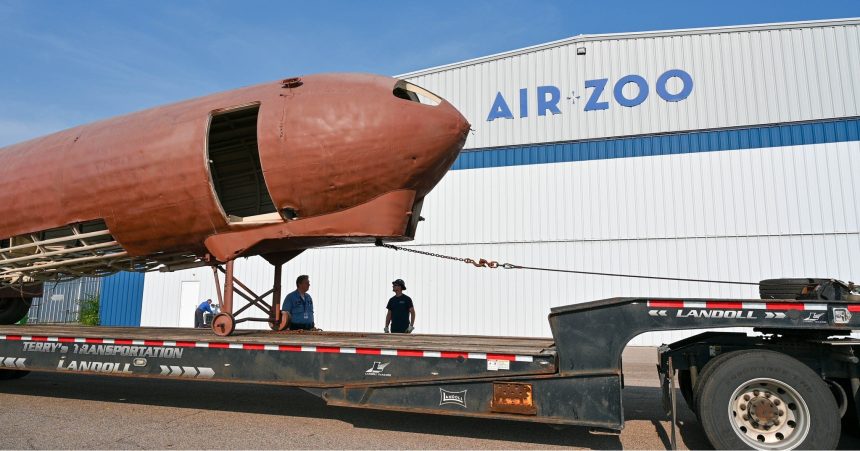

The Air Zoo Aerospace & Science Experience in Kalamazoo, Michigan, has announced plans to restore one of the most unusual traveling promotional artifacts of the 1950s: the Silvercup Rocky Jones Rocket. Built in 1954 to promote Rocky Jones, Space Ranger and its sponsor, Silvercup Bread, the futuristic rocket-on-wheels delighted children across the Midwest with blinking lights, a cockpit to climb into, and even miniature loaves of bread as souvenirs. This ambitious restoration has been made possible through the generous support of the Tyler-Little Family Foundation, ensuring that a unique artifact from the dawn of the space age will be preserved for future generations.
A Rocket from the Golden Age of Science Fiction
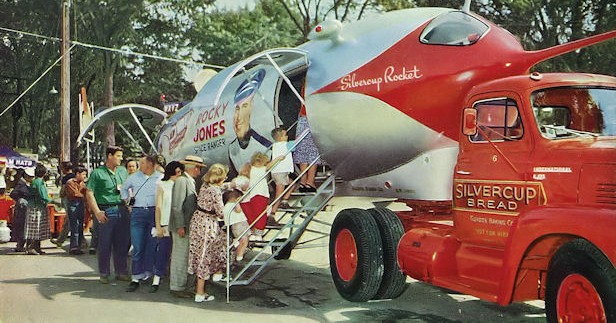
At the height of America’s fascination with outer space, Silvercup Bread joined forces with Gordon Bakeries to sponsor Rocky Jones, Space Ranger, one of the earliest science-fiction series filmed for television. At a time when space travel was still confined to pulp magazines and Hollywood soundstages, the show captured the imagination of millions of children, offering adventures aboard Commander Rocky Jones’ spaceship, the Silver Moon.
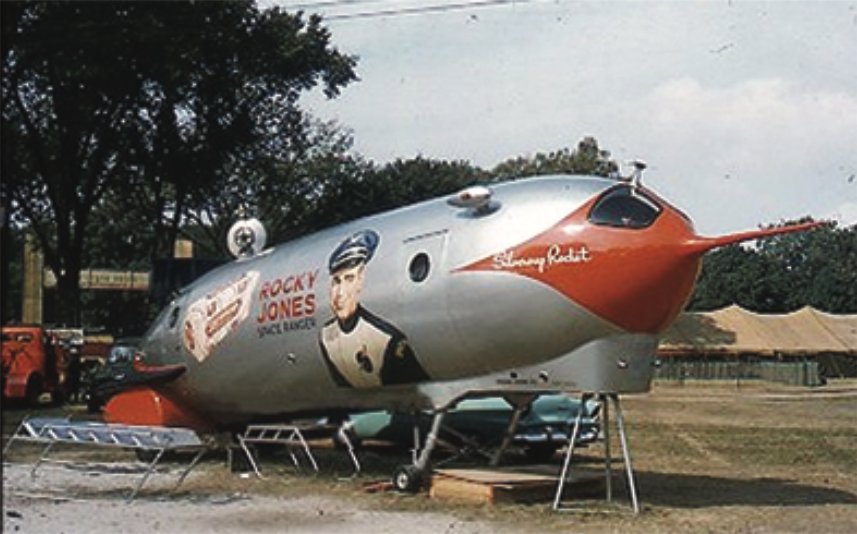
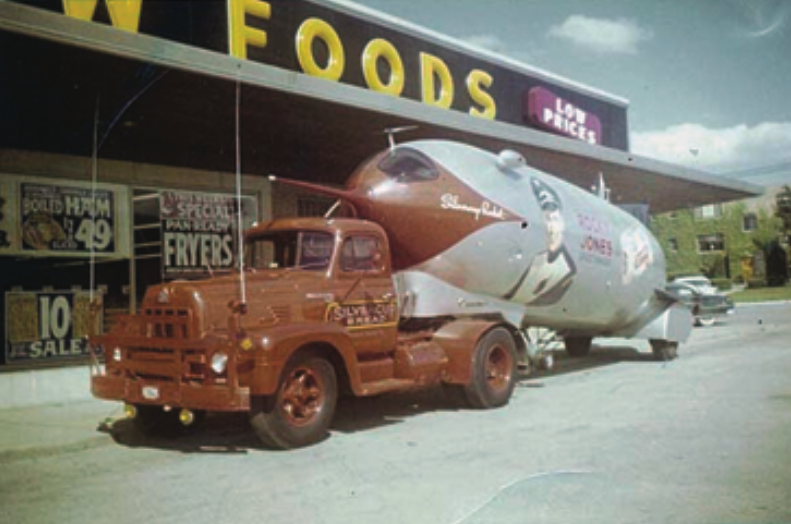
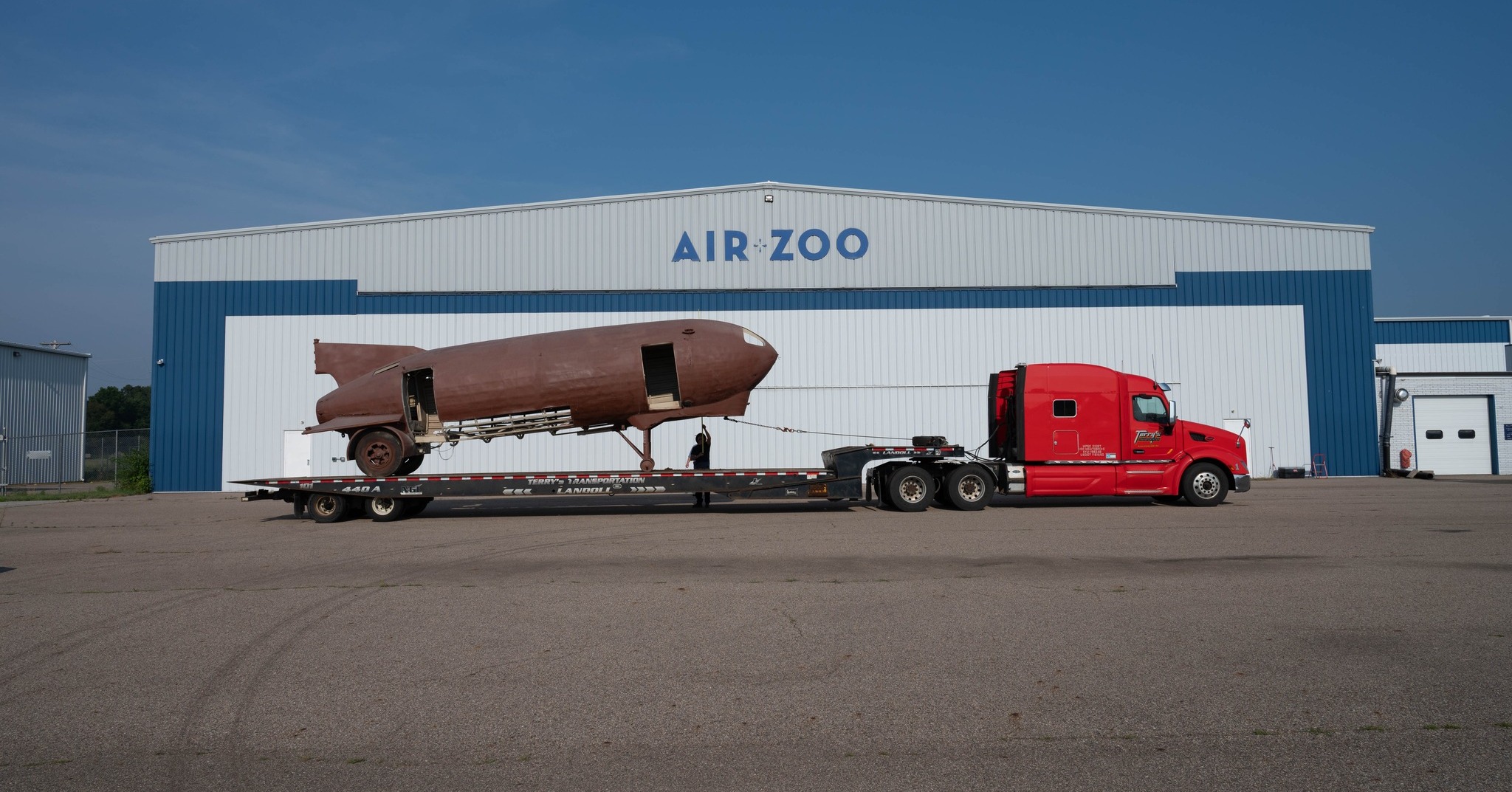
To promote both the program and the brand, Gordon Bakeries commissioned a semitrailer custom-built to resemble a “life-sized” rocket ship. The Silvercup Rocket toured state fairs, parades, grocery stores, and amusement parks across the Midwest, creating long lines of eager children who wanted to meet “Rocky Jones,” sit inside the cockpit, and dream of exploring distant worlds. “Kids were absolutely mesmerized,” recalls Air Zoo Aircraft Restoration Manager Greg Ward. “For a generation growing up before NASA had even launched its first satellite, the Silvercup Rocket made space travel feel possible.”
From Contest Prize to Forgotten Relic
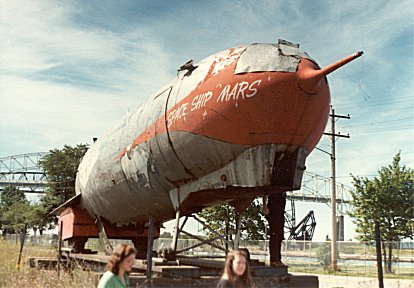
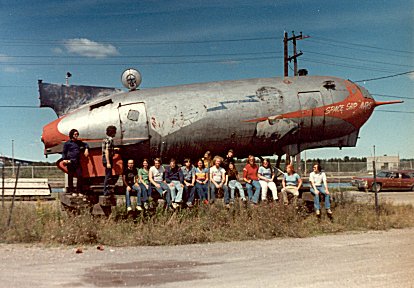
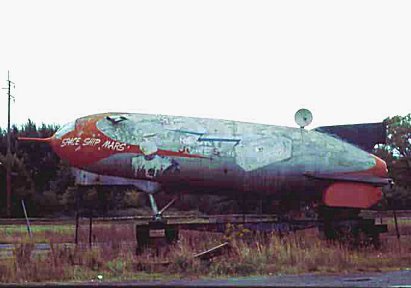
Once the promotional campaign ran its course, Gordon Bakeries faced the question: what to do with the rocket? Their answer was pure mid-century marketing flair. They launched a contest where children could enter by filling out forms printed on Silvercup Bread wrappers. The grand prize? The Silvercup Rocket itself. The rocket was delivered to one lucky family’s yard, where neighborhood children likely enjoyed the most imaginative playhouse in America. But as the years passed, the novelty wore off. The rocket eventually moved to Sault Ste. Marie, Michigan, where it stood outside a gift shop. Exposure to harsh winters and neglect took its toll. By the 1970s, it was described as a rusting hulk occasionally occupied by transients, an undignified fate for a once-beloved icon. Later, Montague, Michigan, resident Wayne Huddleston acquired the rocket. Township officials, happy to see it removed from public land, gave it to him outright. Huddleston towed it home on dry-rotted tires—a feat he later described as “a miracle” since the trailer could have collapsed at any moment. The following photos are courtesy of www.mst3ktemple.net.
 |
 |
 |
 |
The Air Zoo Steps In
By the early 2000s, the rocket had slipped into obscurity. That changed in 2003 when Air Zoo leadership tasked Greg Ward with finding and securing the artifact. His search included aerial flights over Muskegon, phone calls to state police, and finally a tip that led him directly to Huddleston’s home. Ward remembers arriving to find a time capsule: the Silvercup Rocket weathered but intact, with its cockpit still accessible. Huddleston and his wife welcomed him inside, serving homemade pie and ice cream while screening old Rocky Jones episodes on VHS. The meeting ended with a handshake deal, sealed not just with money but also with a unique clause: the Huddlestons would deliver the rocket to Kalamazoo, along with two of Mrs. Huddleston’s pies. “It was the sweetest restoration deal I’ve ever made,” Ward laughs. By September 2003, the Silvercup Rocket had officially joined the Air Zoo’s collection.
Restoration and Renewal
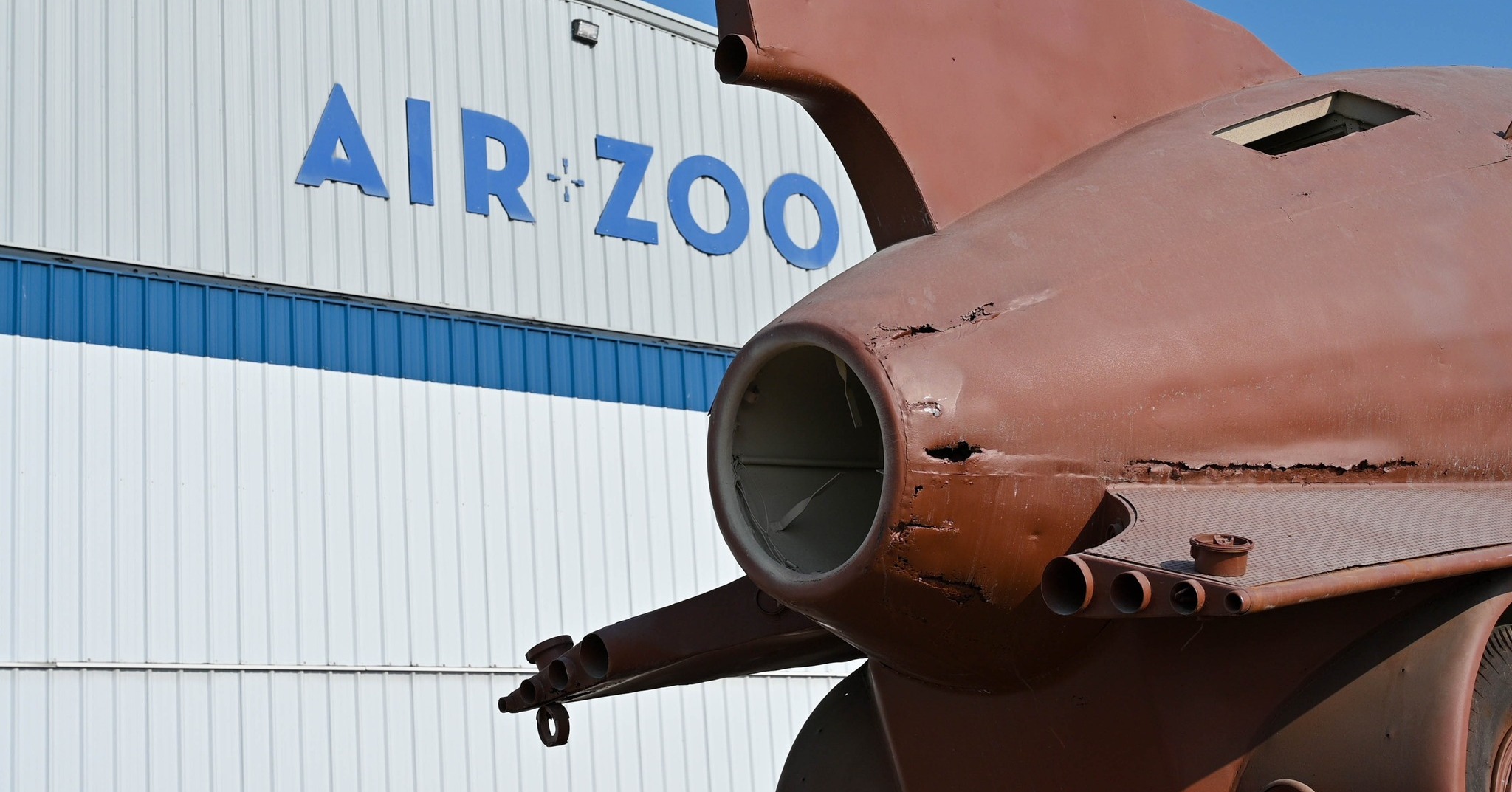
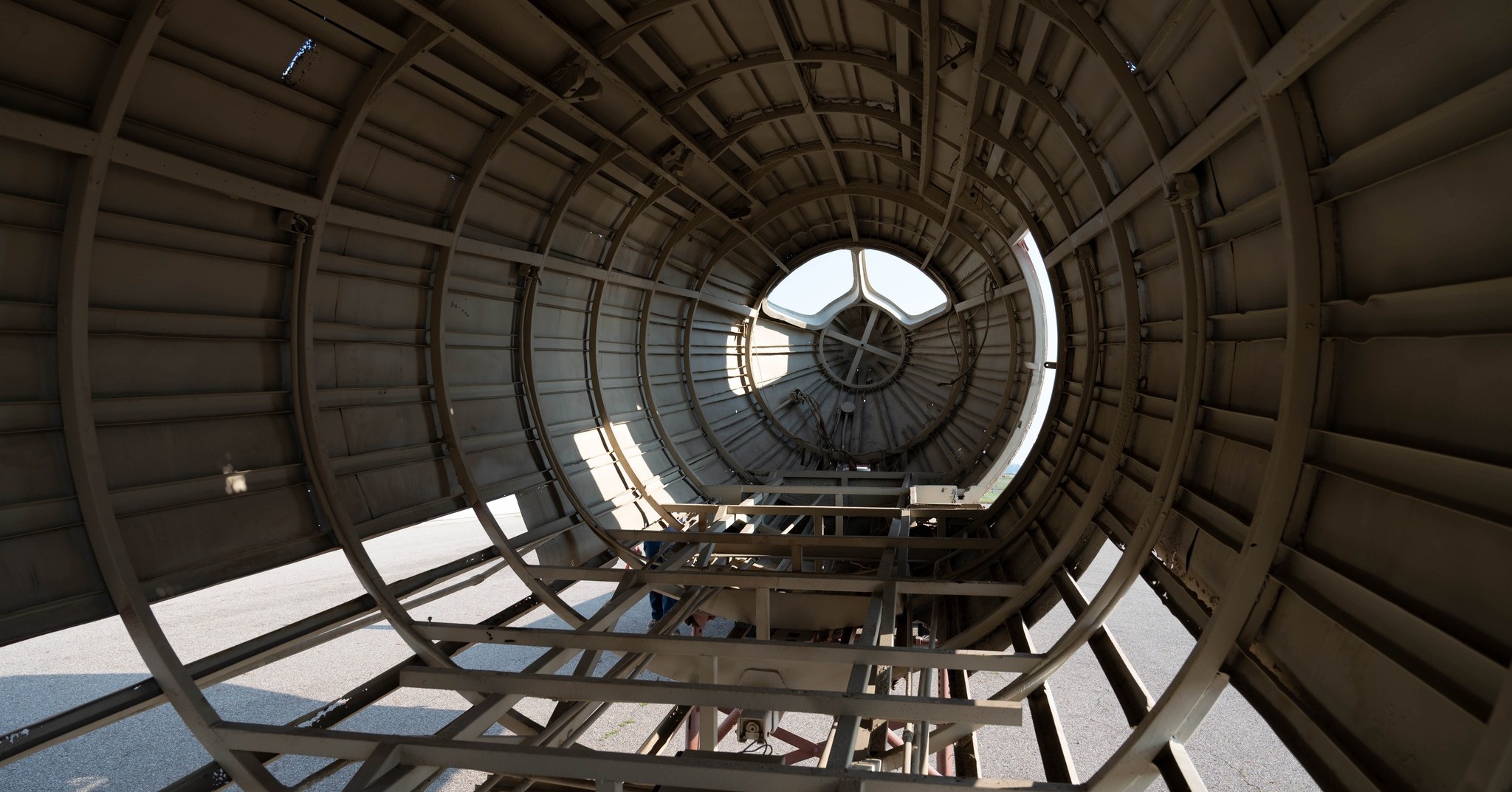
For years, the rocket has been displayed in its unrestored condition at the Air Zoo’s East Campus Restoration Facility, drawing curiosity from visitors. Now, with funding from the Tyler-Little Family Foundation, the Air Zoo’s restoration experts will begin a meticulous effort to stabilize and restore the trailer to its 1954 appearance. The project will involve repairing extensive corrosion, replacing structural elements, and recreating the rocket’s original futuristic details. When complete, the Silvercup Rocket will once again embody the optimism and imagination of postwar America’s early fascination with space. “This isn’t just about restoring a trailer,” says Ward. “It’s about preserving the dreams of an entire generation of kids who looked up at the stars and believed they might travel there someday.”
A Rocket for Future Generations
Once restored, the Silvercup Rocket will continue to inspire, just as it did more than 70 years ago. The Air Zoo hopes the project will spark conversations not only about the golden age of science fiction but also about the power of imagination to fuel real-world progress—from comic-book spaceships to the rockets that ultimately carried humans to the Moon. Following is a personal account by Greg Ward, who tells the full story of how the Silvercup Rocket was found and brought to the Air Zoo, ensuring that this extraordinary artifact—and the memories it holds—will never be forgotten. To support the museum and its restoration efforts, visit www.airzoo.org












Episodes of Rocky Jones were combined into feature length movies, two of which were used in episodes of Mystery Science Theater 3000.
The 1950’s were, for Children and Adults alike, an Age of Wonders … and, above all, Certainties.
Perhaps, apart from Seniors of a ‘certain age’, the Newly Refurbished Rocket will thrill the next generation of ”Rocketeer’s”; those under the ‘Sophisticated Age’ of ten!
Being a Time Traveller from the period, it reminds me of ”Flash Gordon’s” Ship from the UK ‘Early Saturday Morning Rush’ Cinema!
And, who knows, it might even help bring back some of the Certainty into today’s very volatile and unpredictable World?
I sincerely hope so; for today’s Children, and young minds, it must sometimes be a place of terror.