







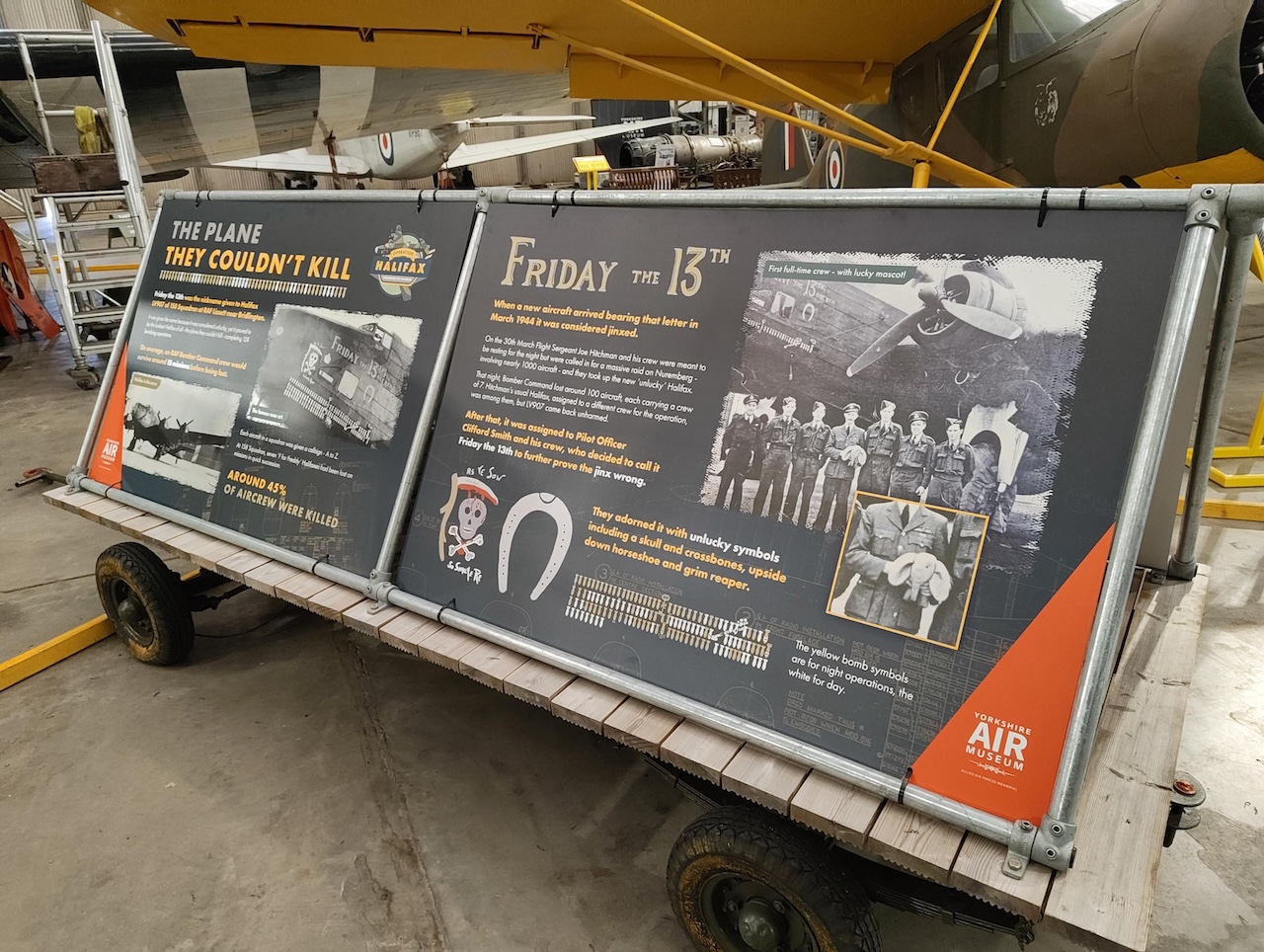
Thirty years ago, a remarkable ten-year restoration project reached completion at the Yorkshire Air Museum near York, culminating in the unveiling of a Handley Page Halifax bomber—representing the type that once flew from RAF Elvington during the Second World War. To mark this milestone anniversary, the museum has launched a new exhibition, Operation Halifax, which not only celebrates the restoration itself but also explores the immense wartime effort behind the construction of thousands of Halifax bombers. The exhibition also highlights the story of one of the most famous aircraft of its type, Friday the 13th, often referred to as “the plane they couldn’t kill.”
(Image credit: Yorkshire Air Museum)
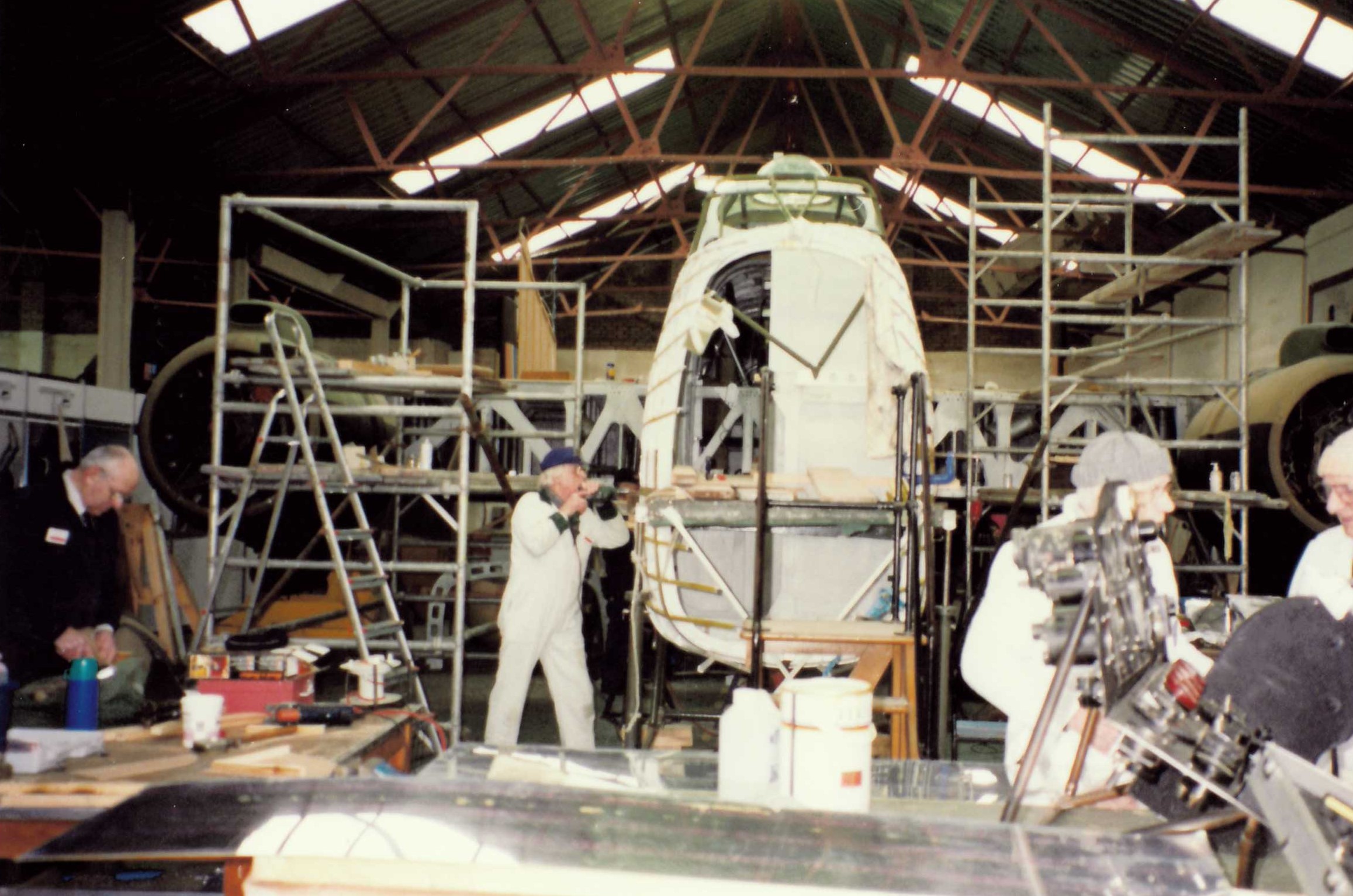
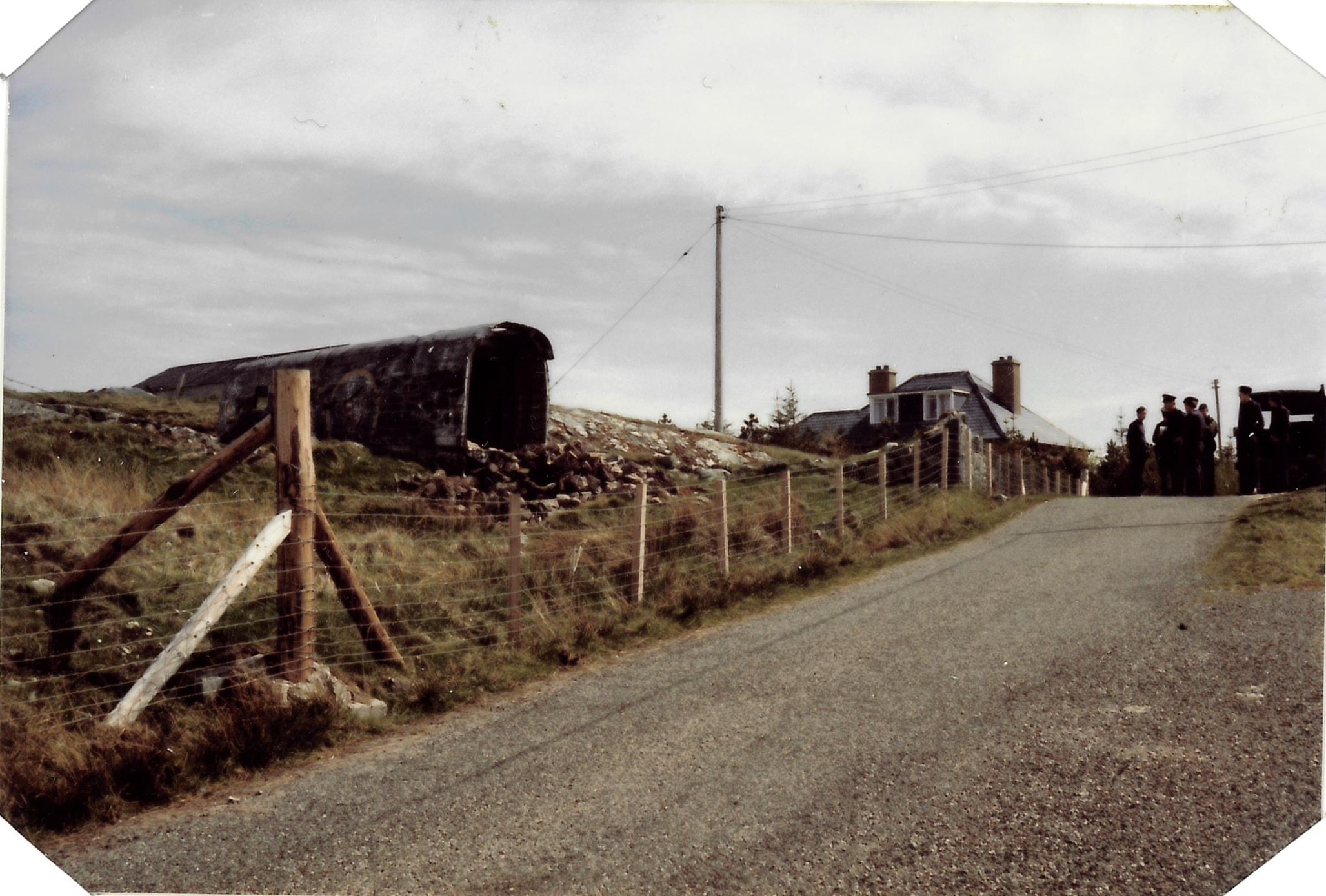
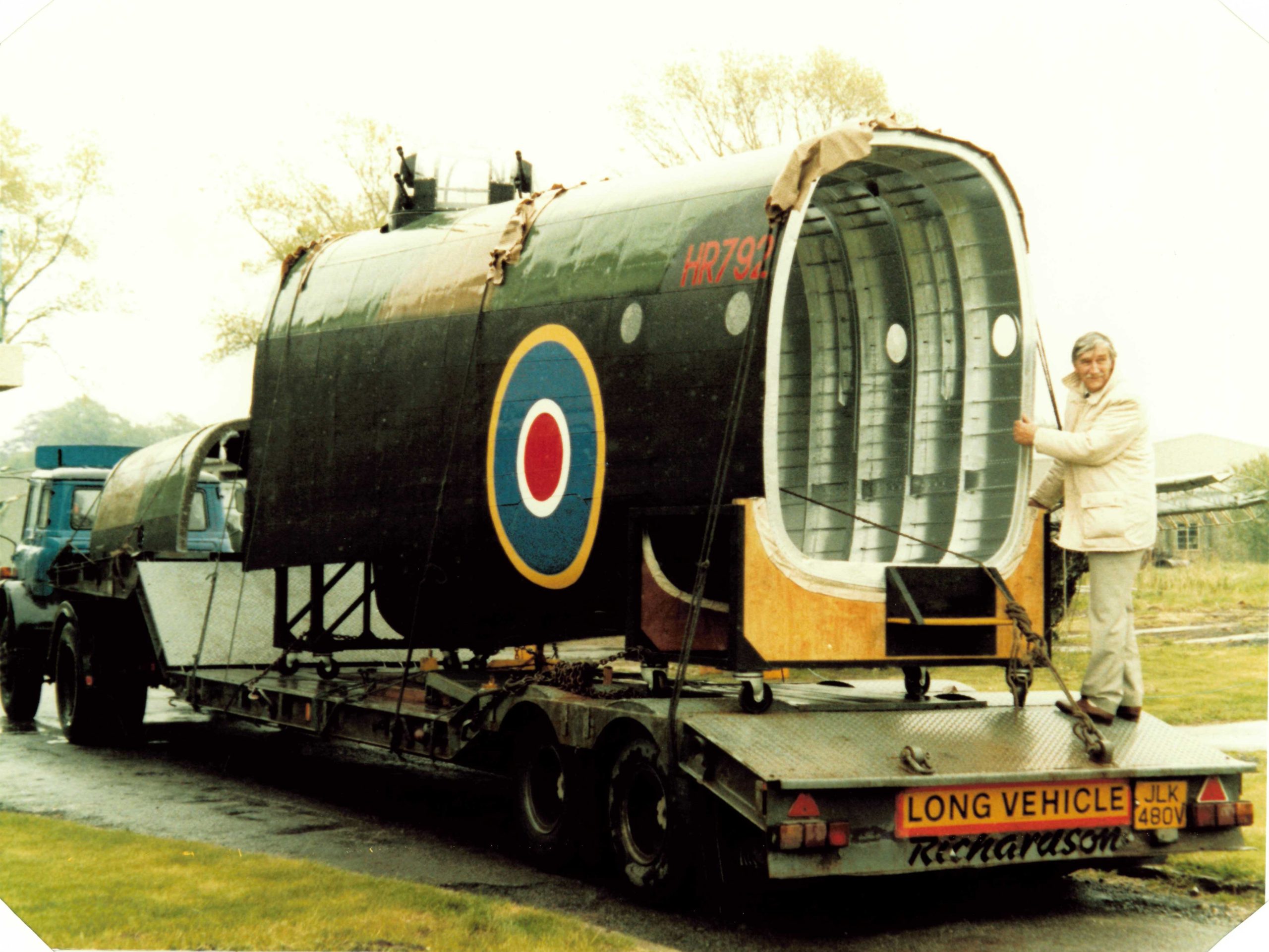
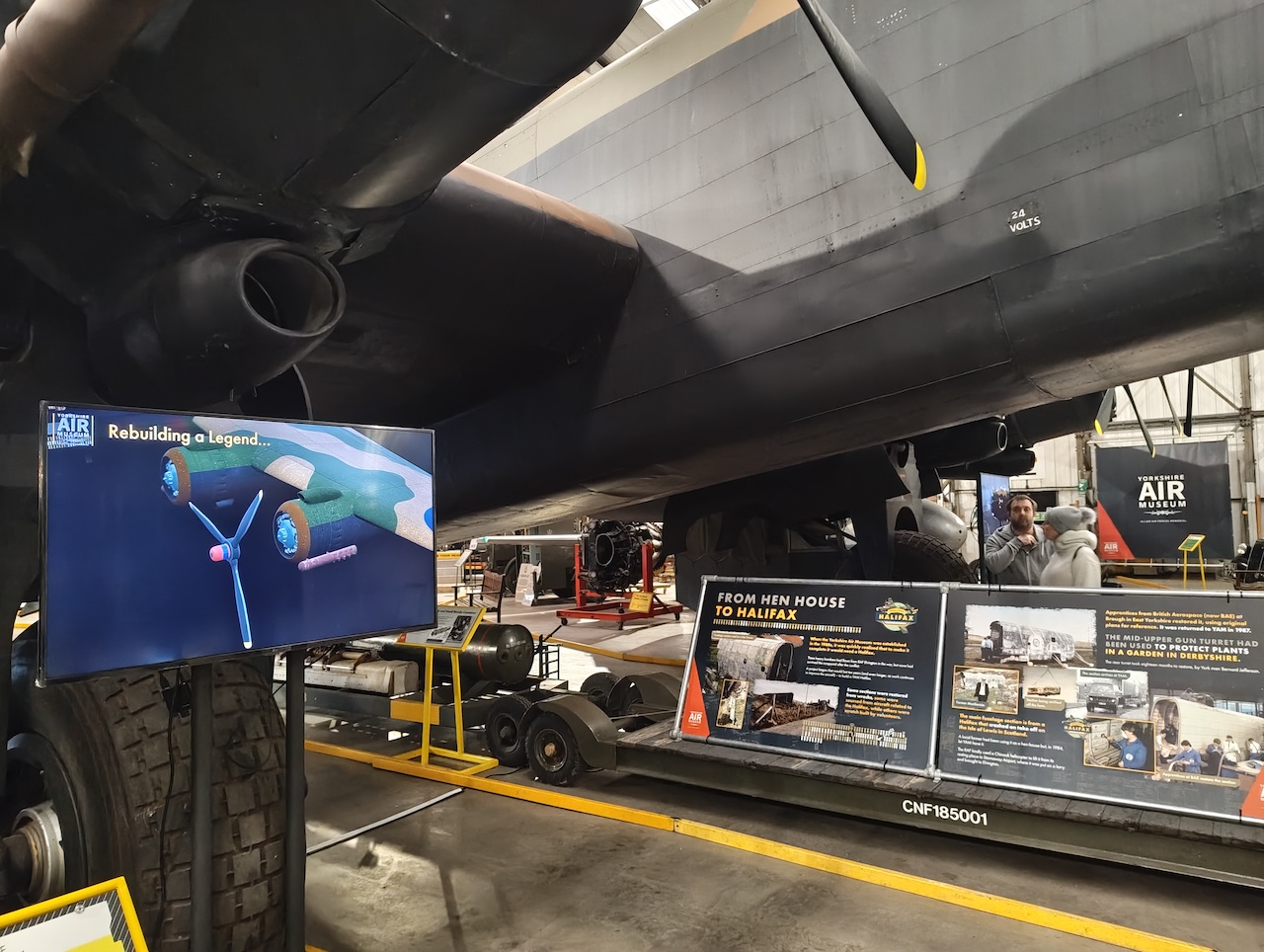
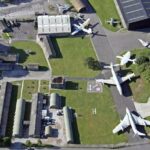
The museum is located on the former site of RAF Elvington, once home to three RAF Bomber Command squadrons. From here, aircrews flew dangerous missions over Germany and occupied Europe, with nearly half of them failing to return. In the years following the war, every remaining Halifax was scrapped. Undeterred, volunteers at the Yorkshire Air Museum set out to address this absence when the museum opened in the 1980s. With no complete examples left, they embarked on an ambitious effort to rebuild the aircraft using salvaged crash remains, donated components, and newly fabricated sections. Among the more unusual elements used in the reconstruction was a section of fuselage recovered from the Isle of Lewis, where it had been repurposed as a hen house. The project took ten years to complete and was carried out largely by dedicated volunteers, many of whom were RAF veterans.
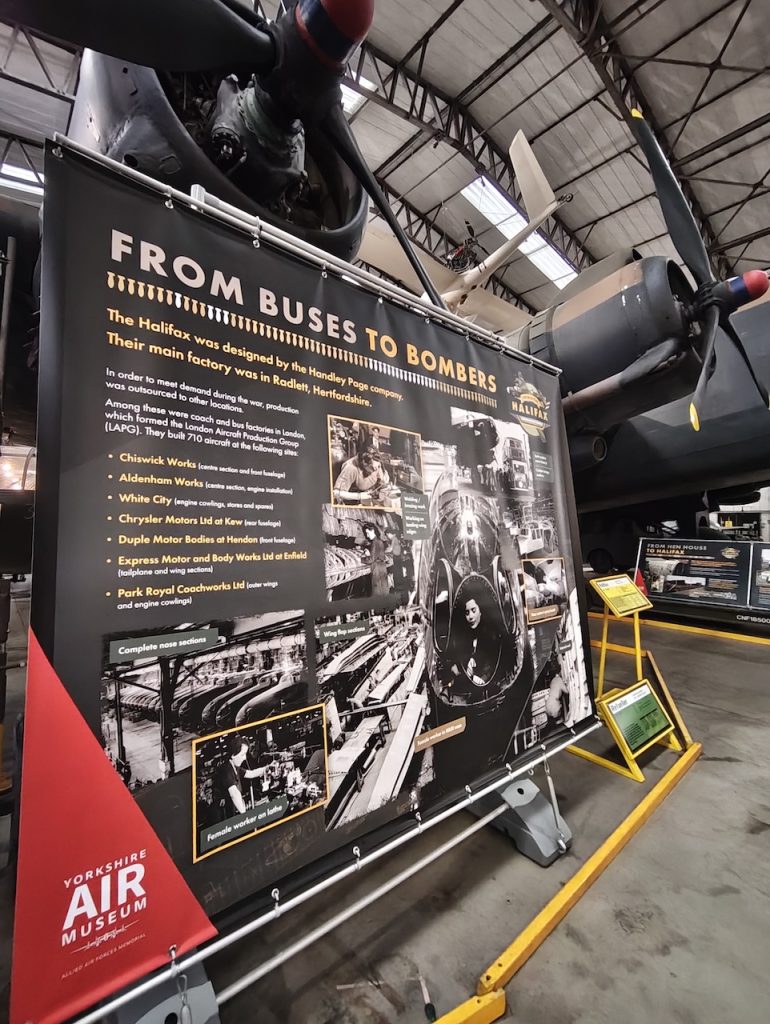
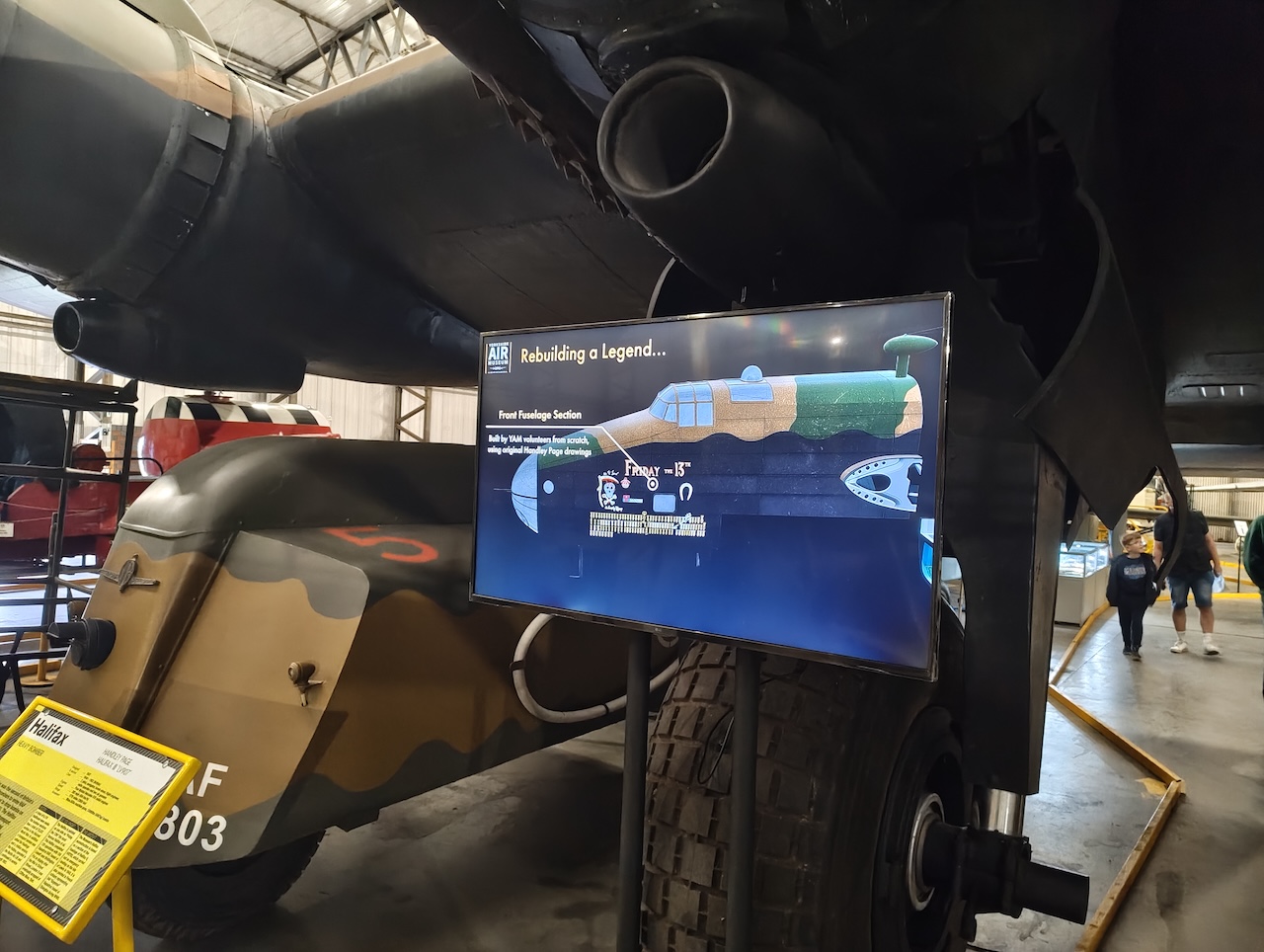
Today, the restored Halifax remains the centerpiece of the museum. The new Operation Halifax exhibition is housed in the main hangar beneath the aircraft and features displays, video presentations, and an animation illustrating the origins of each reconstructed component. The exhibition also examines wartime production, including the use of requisitioned civilian factories and the vital role played by a workforce that increasingly included women. “Rebuilding the Halifax was a staggering project 30 years ago, and it is easy to forget just how much effort was involved,” said Yorkshire Air Museum Communications Manager Jerry Ibbotson. “This exhibition highlights both what was achieved during the restoration and how these aircraft were originally built during the war, often in repurposed factories by workers—many of them young women—supporting the war effort.” Operation Halifax is now open to visitors and is included with museum admission. For more information about the Yorkshire Air Museum, visit www.yorkshireairmuseum.org












The Halifax, one of the Trio of Great 4-Engine British Bombers, Built to carry a Heavy Load, and the War, into the Heart of Hitler’s Reich. A tough War Horse which served to the War’s End; though the later Stages as a Glider Tow for the Airborne Brigade.
The Great Pity is we are missing the Very First … ‘The Shorts Sterling’. Built to Air Ministry Requirements – hence the Silly Wing Span (to occupy smaller Hangers) which limited Maximum Loaded Altitude to … 18,000ft.
From that read; on Massed Mixed Raids – Lanc.s, Halis & Sterlings – ‘Grim Humour’ accompanied Briefings … the Crews of the first two Knowing, The German Night Fighter ‘Experten’ would be Climbing-Up, Through The Sterlings First Off … and have less ammunition for spending on them.