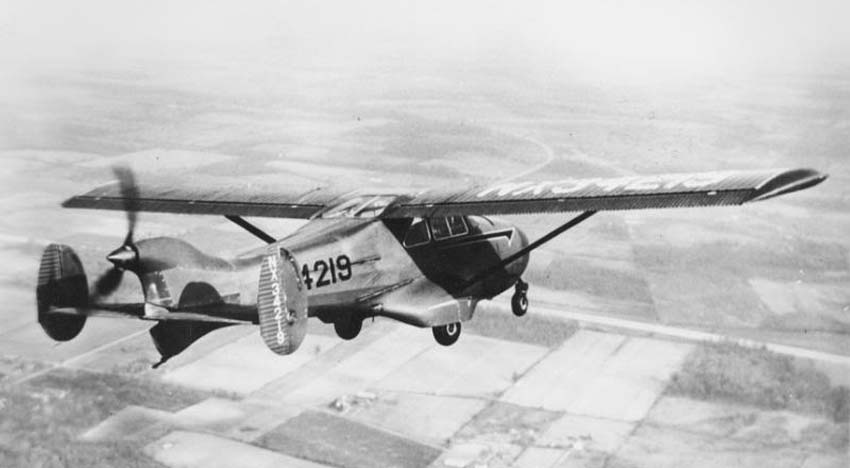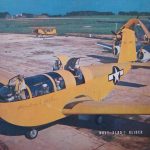
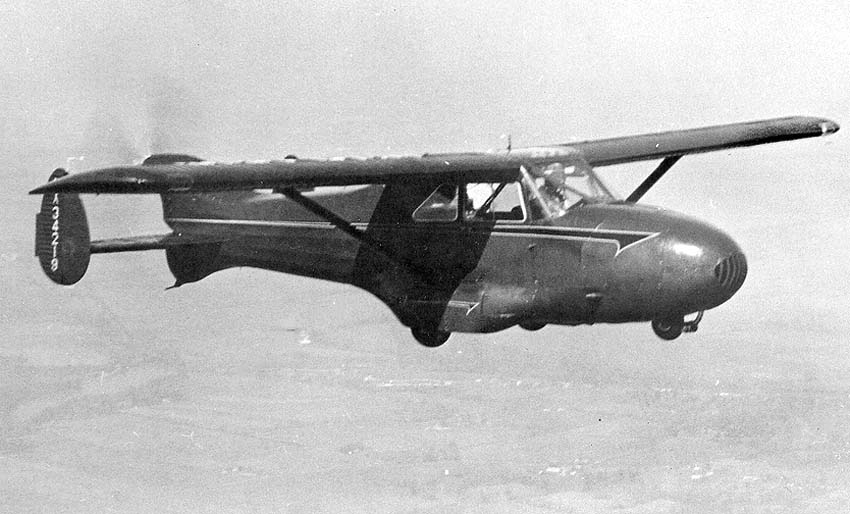


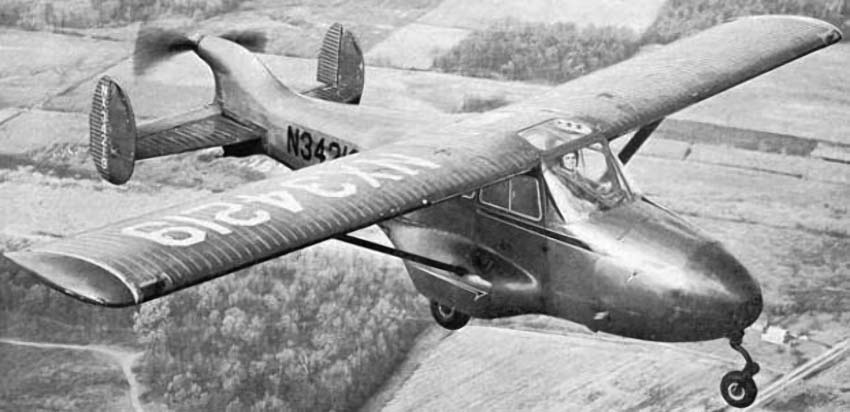
After WWII, Waco Company designed an aircraft to enter the light aircraft market. The aircraft, designated the Waco Model W Aristocraft, was the company’s last ever built. The company began work on the aircraft in 1945, and by 1946, it had developed a full-scale mockup of the Waco Model W Aristocraft. Later in the year, the company developed a prototype of the aircraft, which first flew on December 31, 1946. The Waco Model W Aristocraft was an unconventional aircraft with a twin-fin tail. It was powered by a Franklin 6AL air-cooled, six-cylinder engine that produced 215 horsepower. The engine was located in the nose and drove a two-bladed propeller through a shaft. The drive shaft had two sections, one connected the engine to the tail, and the other connected the gearbox in the tail to the propeller. The decision to place the engine in the nose may have helped with cooling. The wings had flaperons for better control, and the cabin could hold four passengers with 57 kg of baggage. It had car doors that were easy to access from the ground. The landing gear included a semi-retractable nose wheel, which helped ensure safe landings in emergencies, and the feature proved useful during testing, when the aircraft made two emergency landings without serious damage.
Design of Waco Model W Aristocraft
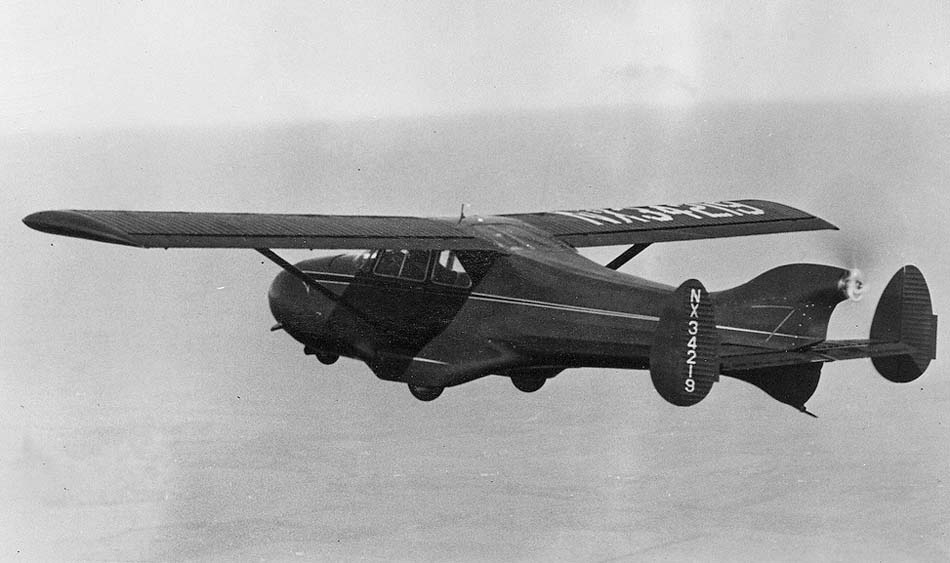
The Waco Model W Aristocraft was 25 feet long, 7.8 feet high, with a wingspan of 38 feet. It had a two-bladed Hartzell reversible-pitch propeller with a 7-foot diameter. The maximum speed of the aircraft was 154 mph with a cruise speed of 152 mph. The range was 657 miles, the service ceiling was 17,500 feet, and the aircraft could climb 950 feet per minute. Some sources suggest the Aristocraft as an all-metal aircraft, but its last owner, Terrence O’Neill, mentioned wooden doors, a control column, and rear fairings made of wood-polymer composite. It also had a fiberglass nose and lower section, and the tail section was fabric-covered over frame tubes. During the testing, the Waco Model W Aristocraft prototype logged over 40 flight hours. The Franklin engine was unreliable, so a change in the propeller drive design was needed. Initially, the gearboxes were lubricated by the engine’s oil system; later, it was decided that each gearbox should have its own oil system, with a separate pump and oil tank. The change affected the aircraft’s balance, so the main landing gear had to move back by 4 inches. The engineers planned these changes on the second prototype, which was expected to be ready by mid-1947. They also wanted to update the brakes and engine mounts. In addition, a reversible propeller was planned for the second prototype.
The Cancellation
However, when the second Waco Model W Aristocraft prototype was partly finished, the program was canceled in June. Waco decided to exit the aviation business, despite having 300 orders for the Model W Aristocraft with a $100 deposit. After receiving orders, the company decided that mass-producing the aircraft would be too expensive in a shrinking market, so no further Aristocrafts were built. In 1962, Terrence O’Neill bought the Waco Model W Aristocraft prototype that had been in a Waco hangar for 15 years. He restored it and, in 1963, rebuilt the original Waco Model W Aristocraft. He removed the shafts, turned the engine upside down, and converted it into a basic high-wing monoplane with a front propeller, designating it the O’Neill Aristocraft II. In 1968, O’Neill modified the airplane again. He increased the seating capacity to six, added a 200-hp Lycoming IO-360 engine, and changed the tail to a single-fin tail, designating it Model W Winner. O’Neill offered to build the Model W Winner for others or to provide versions with different engines. However, only two orders were received, and the project ended when funding ran out before certification was completed. In the Grounded Dreams series, very few aircraft with such large orders as the Waco Model W Aristocraft were still canceled. It was a good aircraft with good performance, but its run ended every time due to funding. Read more Grounded Dreams articles HERE.