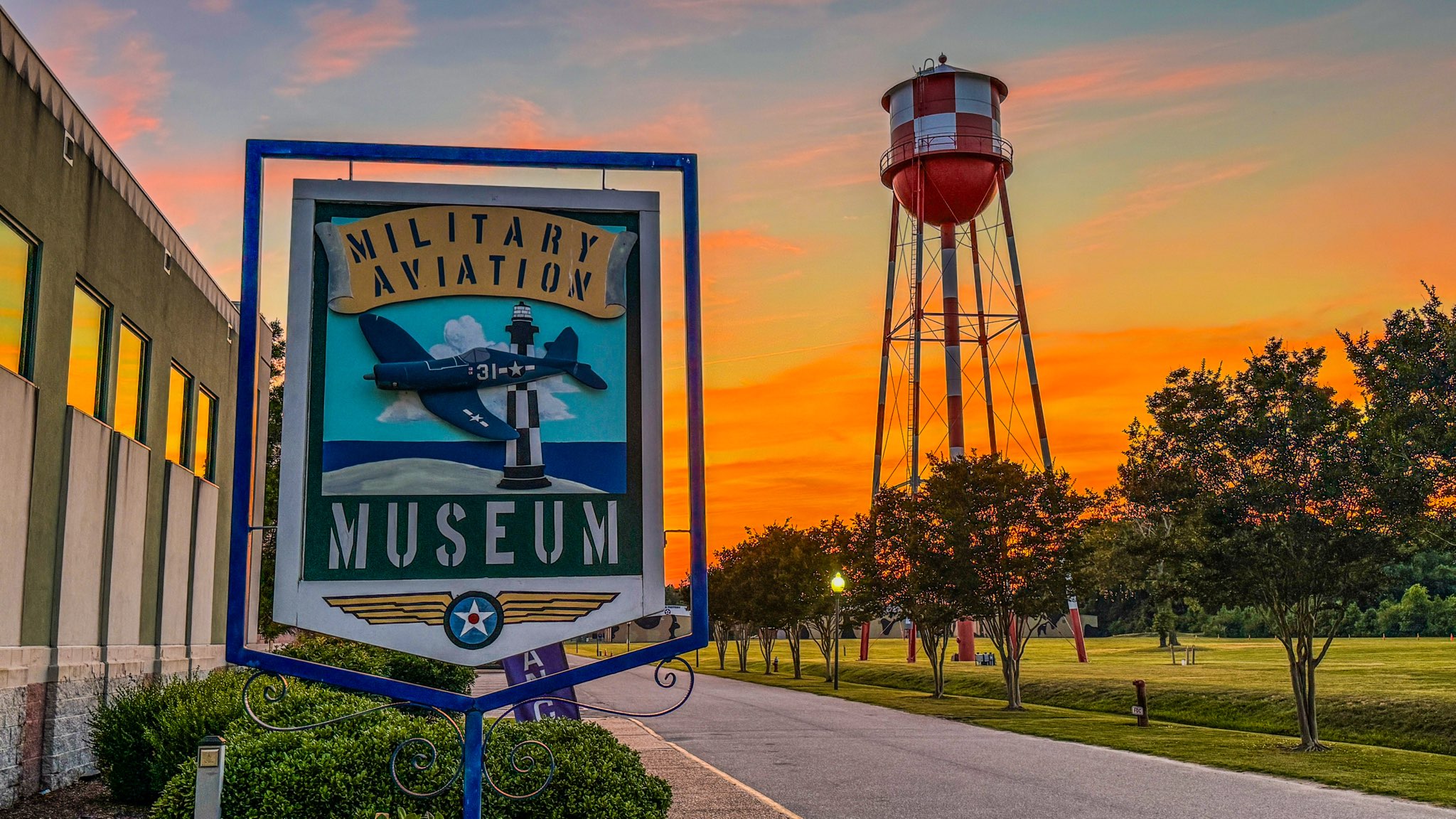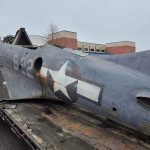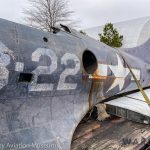
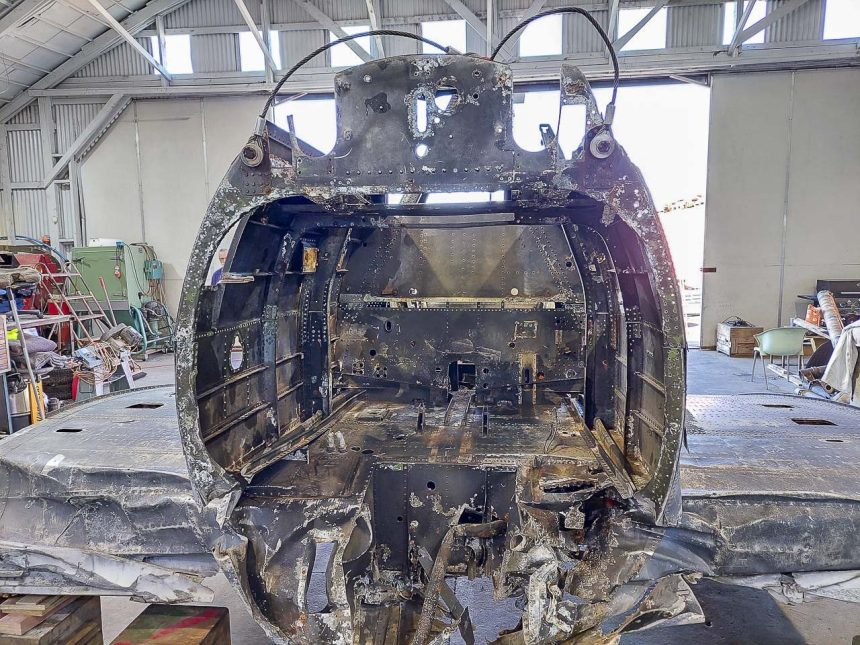

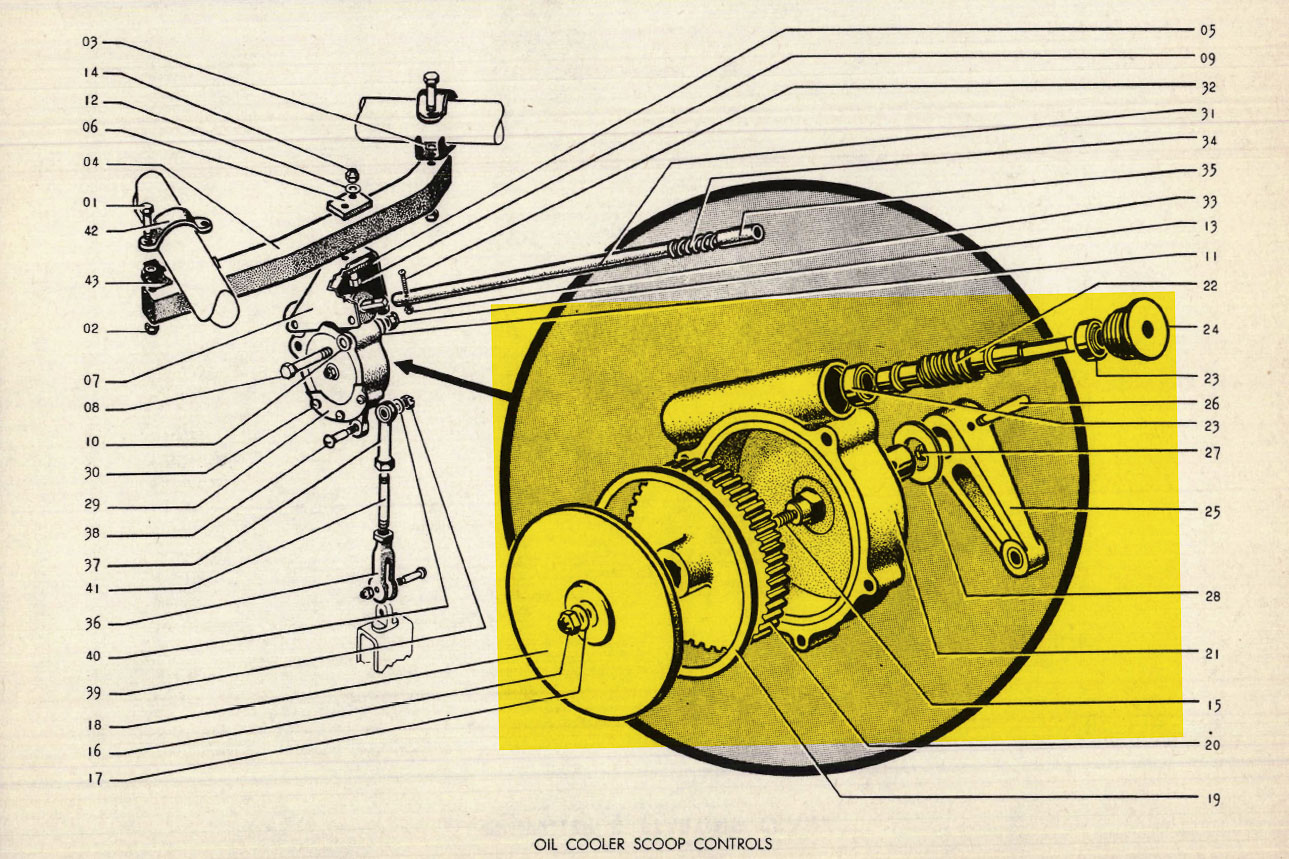
The restoration of the Military Aviation Museum’s SBD-5 Dauntless is making impressive progress, thanks to the efforts of Pioneer Aero. Since our previous update (HERE), significant milestones have been achieved, many of which have been documented in detail on the museum’s blog. That said, there remain several hard-to-find parts that the museum will either need to source or begin remanufacturing soon—perhaps you can help track them down. The museum has reached out to the most likely sources for the parts listed in this article, but it’s possible that someone reading this may have a direct lead on some—or even all—of the components. If you can help, the museum would greatly appreciate hearing from you. Click HERE to get in touch.
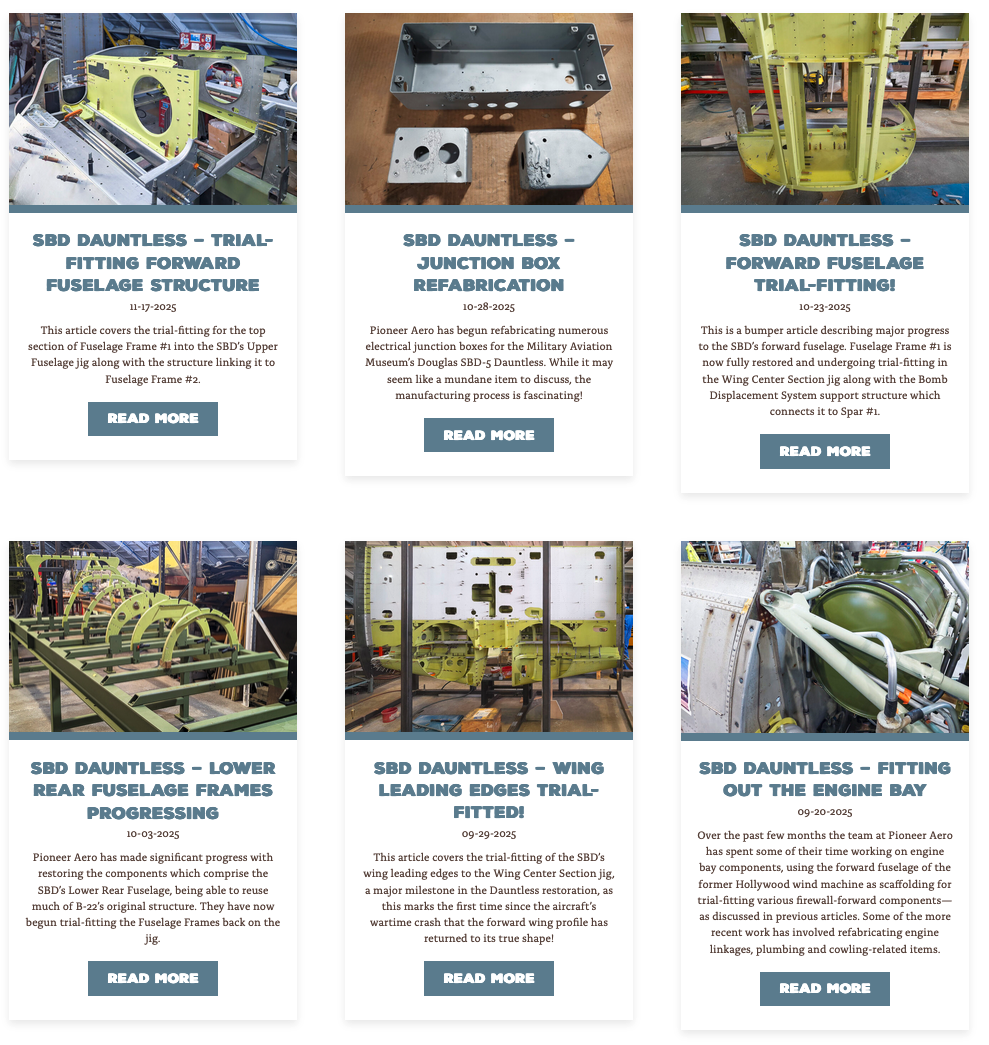
Richard Mallory Allnutt, VAN Editor and Curator of Digital Media at MAM, has been meticulously chronicling the restoration on the museum’s blog. The latest posts highlight work on the SBD’s wing center section, the right-hand inboard leading edge, and several internal fuselage components. To follow the project firsthand, click the image below or visit the restoration blog HERE.
SBD-5 Dauntless BuNo.36175 – A Brief History
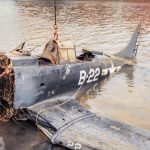
BuNo.36175 was accepted into U.S. Navy service on October 4, 1943. With the SBD nearing frontline obsolescence, the aircraft was quickly assigned a training role, helping prepare young naval aviators for carrier operations over the safety of the Great Lakes. Her time in service was short: On January 20, 1944,] Lieutenant Charles L. Ford III was attempting a landing on the training carrier USS Wolverine. Approaching too slowly, he received ‘come on’ signals from the Landing Signals Officer. When a subsequent ‘wave-off’ command was issued, the pilot banked away with insufficient power, resulting in a crash. The airplane struck the water nearly vertically on its back, but fortunately, the pilot survived with only a few deep cuts to his forehead.”
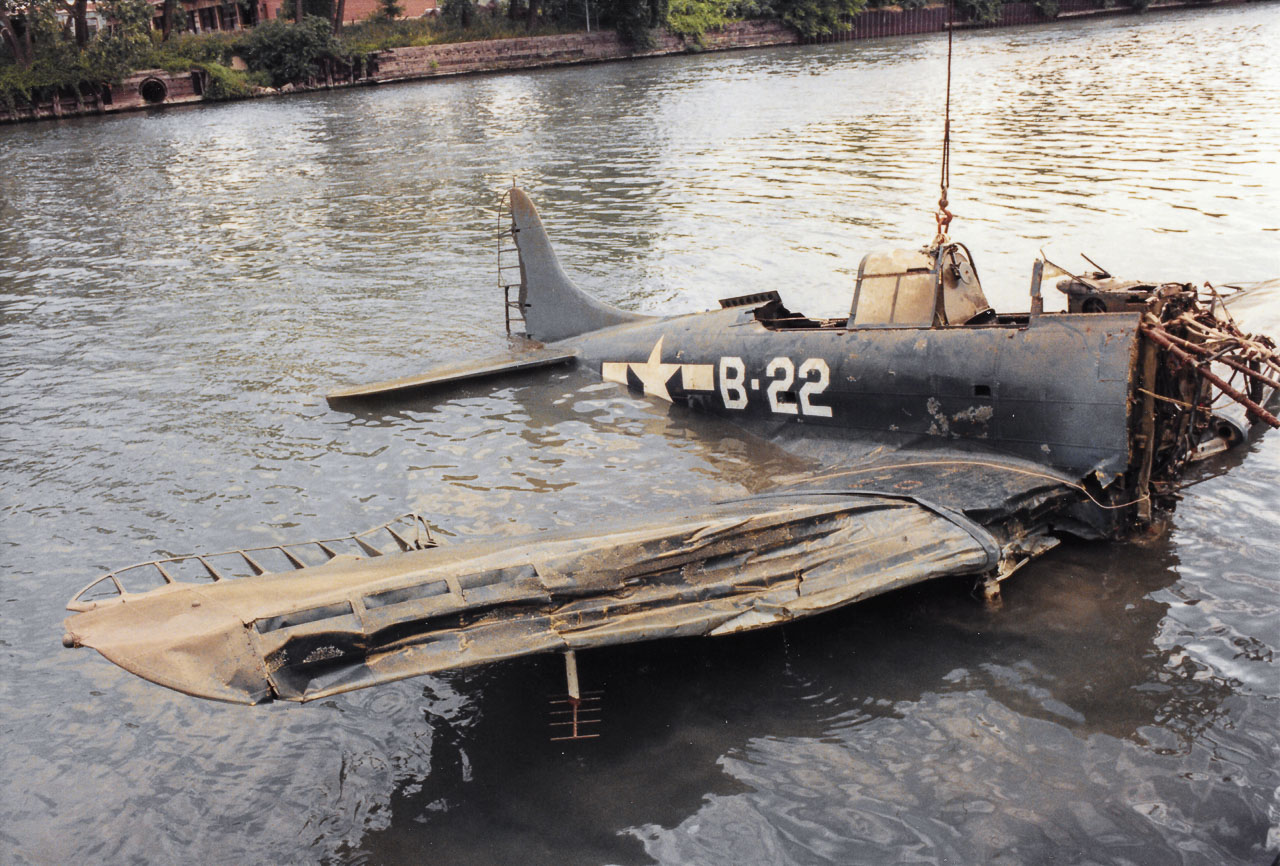
The aircraft’s engine was torn away, and its wing leading edges were badly damaged. The Dauntless sank into Lake Michigan, resting 177 feet below the surface for fifty years until A&T Recovery raised the wreck in 1994. Over the years, A&T Recovery has been instrumental in preserving numerous rare WWII naval aircraft from the Great Lakes and beyond, saving examples of types that might otherwise have been lost to history. Due to her brief service life and lack of combat, BuNo 36175 spent 25 years in storage at the Naval Aviation Museum in Pensacola, with many parts cannibalized to repair other SBDs. Today, what remains of the aircraft includes most of the fuselage (from the firewall aft) and the tail section. Interestingly, through careful research, MAM discovered that the set of outer wings previously used for another project is now being restored at Aero Trader in California, effectively coming full circle. Since arriving with Pioneer Aero in New Zealand, the SBD restoration has seen considerable progress, and the team looks forward to sharing further updates in the coming weeks. To support the Military Aviation Museum and its mission, please visit www.militaryaviationmuseum.org. Those interested in receiving the museum’s monthly restoration newsletter can sign up HERE.