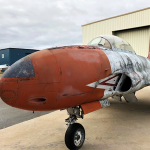
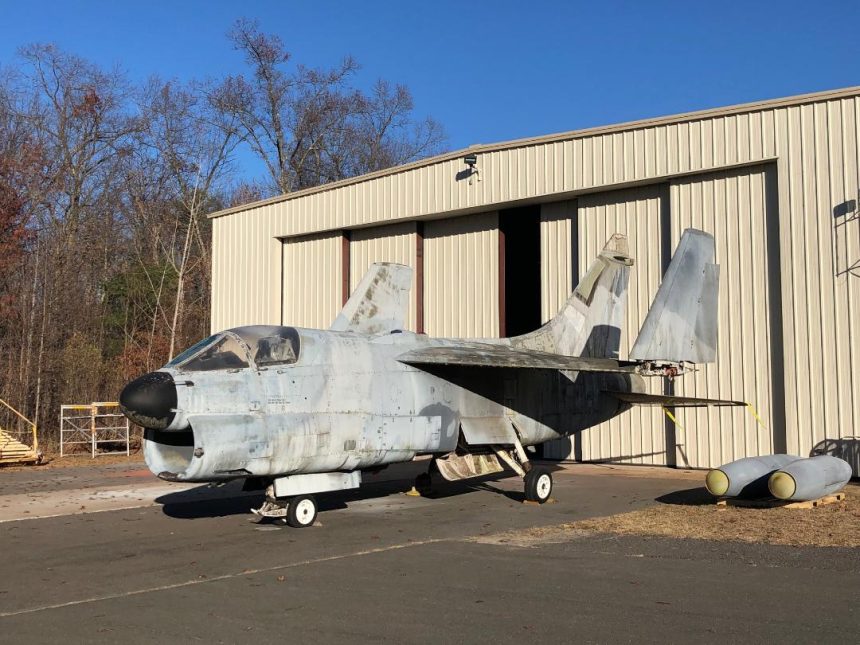

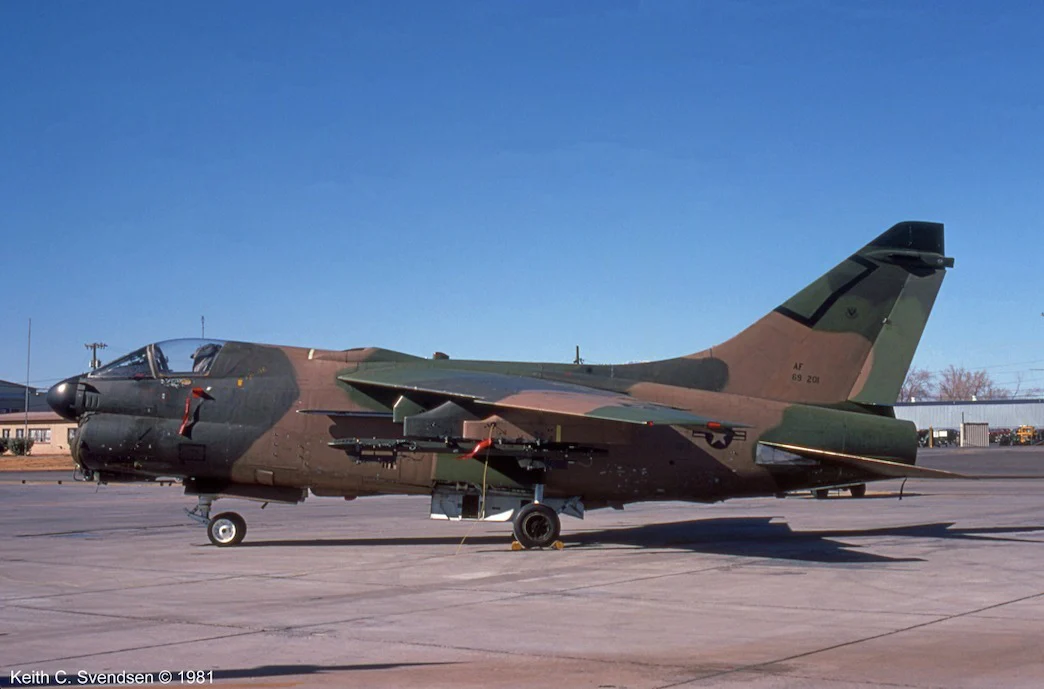
After more than a decade of exposure to the New England weather, the New England Air Museum’s LTV A-7D-4-CV Corsair II, serial number 69-6201, has begun a careful and methodical journey toward restoration. The goal is not to return the aircraft to flight, but to preserve it to a high standard for long-term static display, ensuring that one of the U.S. Air Force’s most effective Cold War attack aircraft is properly represented for future generations.
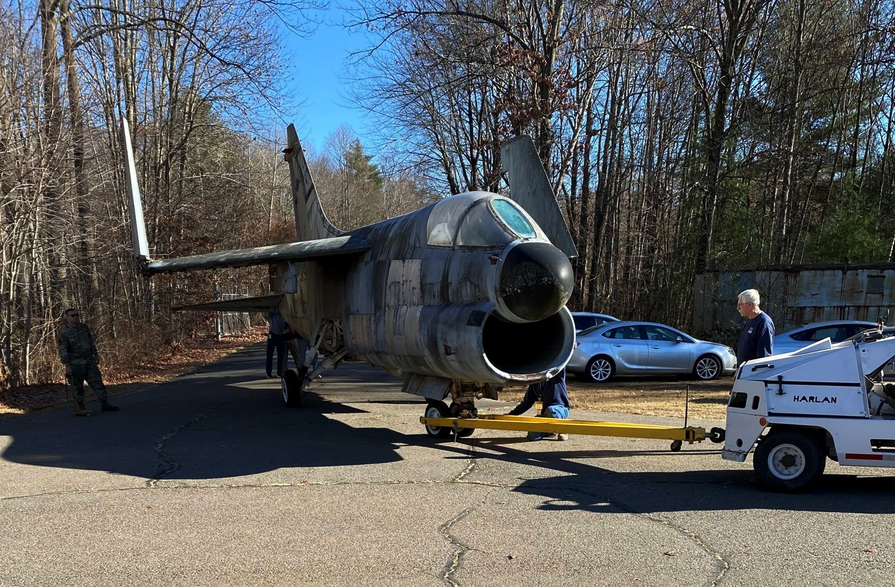
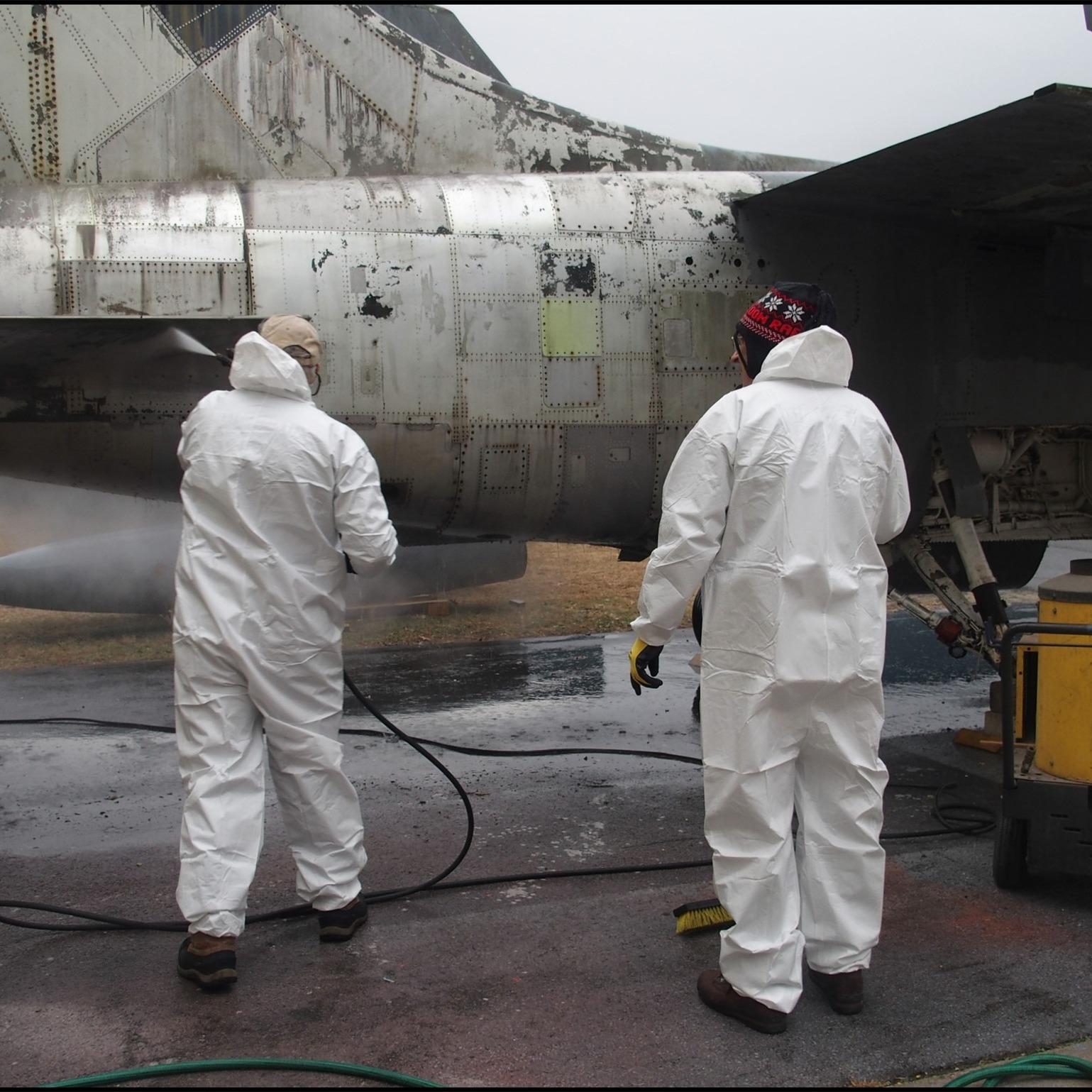
For years, the Corsair sat outdoors in museum storage, its airframe gradually succumbing to oxidized paint, corrosion, and environmental damage. In November 2024, the project took its most significant step forward when the fuselage was relocated into the museum’s restoration hangar. This move immediately allowed volunteers to begin hands-on work in a controlled environment, starting with a thorough steam cleaning to remove years of accumulated grime and weathering.
The restoration effort is being carried out entirely by volunteers, working primarily on Tuesdays and Thursdays, and is expected to span several years. Early tasks focused on basic structural and cosmetic stabilization. Replacement nose and main tires were sourced, mounted, and installed after the wheel assemblies were cleaned and repainted, restoring the aircraft’s proper stance for display. As work progressed, attention turned to the Corsair’s external stores and control surfaces. The restoration of the aircraft’s external fuel tanks began shortly after the fuselage was moved indoors, while corrosion issues on a munitions pylon—caused in part by animal infestation—required the replacement of floating nut plates and the fabrication of new aluminum panels. In one welcome development, the right-side main landing gear doors, long believed to be missing, were discovered stored inside the fuselage, eliminating the need for time-consuming reproduction work.
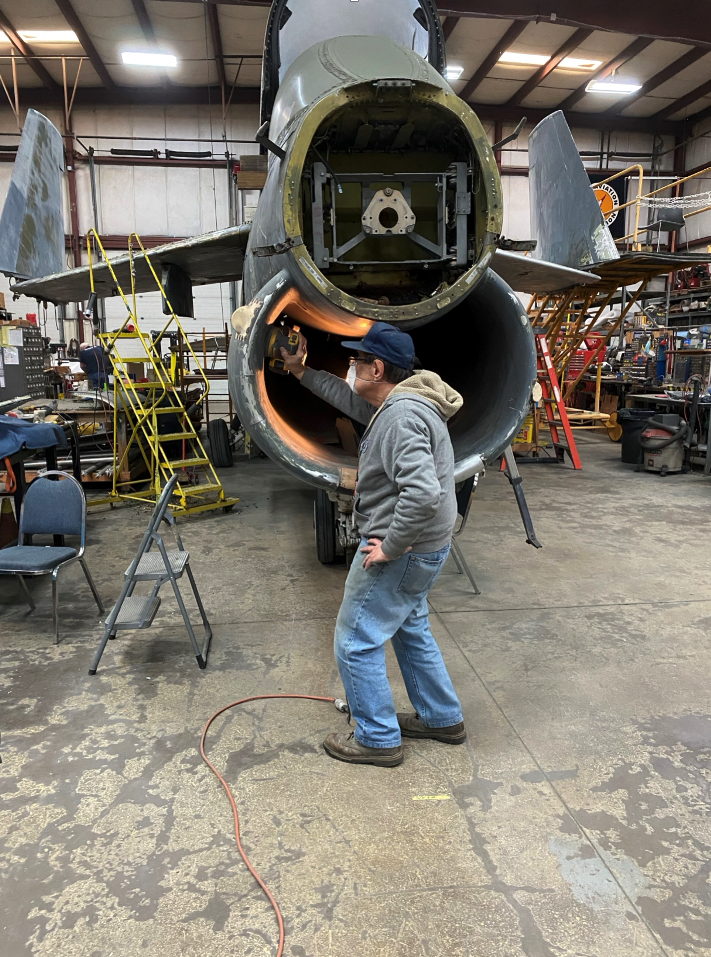
Much of the restoration has involved classic sheet-metal craftsmanship. Volunteers have fabricated replacement panels using plexiglass patterns, aluminum sheet stock, and flush-riveted repairs, including a scab patch for damage to a nose gear door. Significant effort has also gone into repairing a large dent in the engine inlet leading edge, a complex task that required creating fiberglass patterns, forming molds, and producing a properly contoured aluminum replacement section with a doubler for strength. Surface preparation has been a constant theme throughout the project. Large areas of oxidized paint on the fuselage and wings have been sanded back, often with coarse grit, to reach a stable base suitable for primer. Both wings’ movable sections have undergone extensive hand sanding, sometimes with the help of visiting student volunteers, underscoring the educational aspect of the museum’s restoration program.
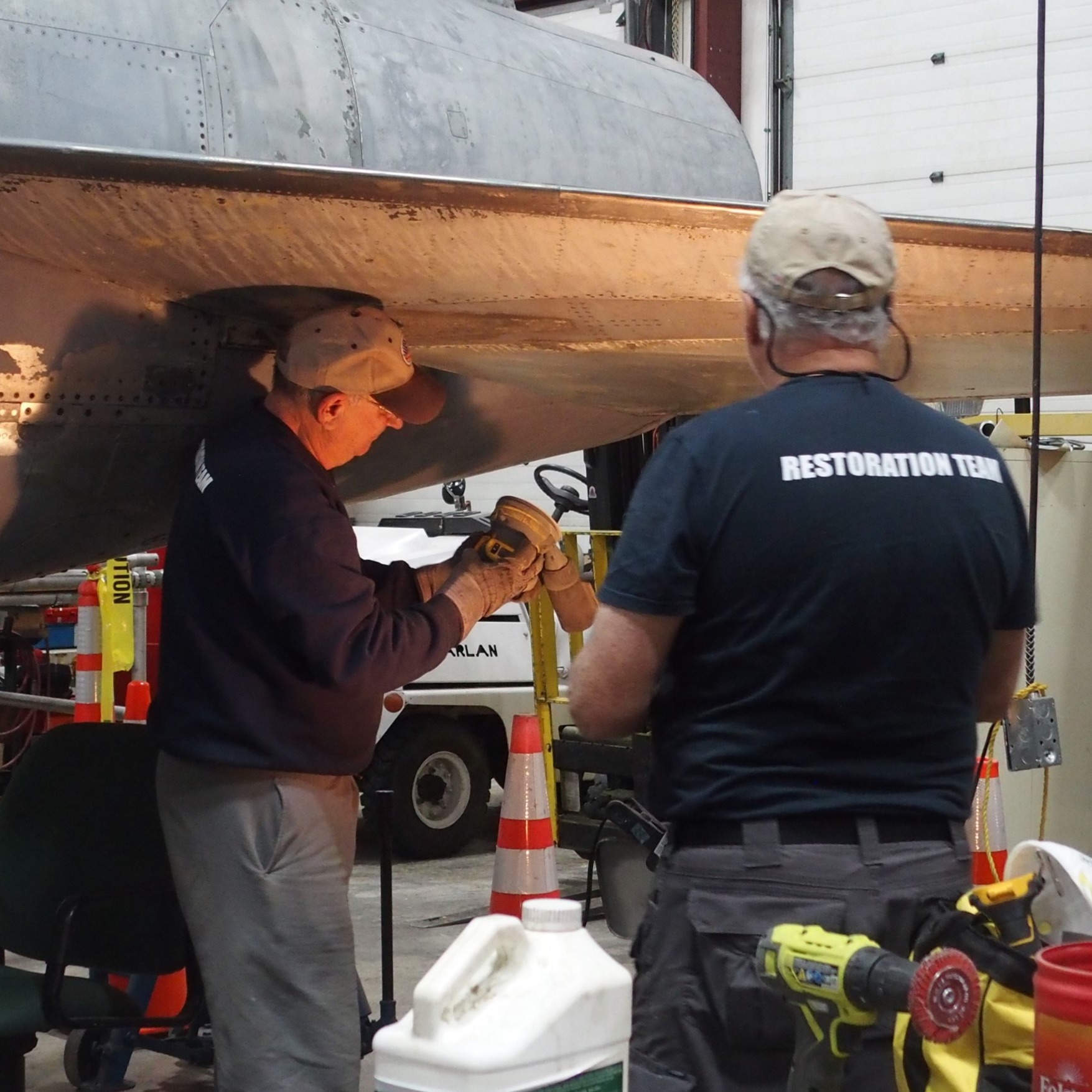
Work has extended beyond the airframe skin. Canopy surfaces and adjacent fiberglass areas have been repaired and prepared, nose gear components cleaned, and hydraulic tubing stripped of old coatings in preparation for repainting in historically appropriate finishes. Even small details have received attention, such as priming steel bolt heads and color-coding fittings to match original specifications. One distinctive addition to the project has been the design and fabrication of a bright red engine inlet protective barrier. Created to prevent damage and debris ingress during restoration, the barrier is removable and secured with thumb screws, reflecting the team’s practical approach to balancing preservation with ongoing access. Updates about the restoration are well documented by my project manager, Jim Bennett, on this page.
By late 2025, major components such as the external fuel tanks had been moved into the hangar, signaling steady progress toward the next phases of cosmetic finishing and final assembly. While much work remains, the restoration of A-7D 69-6201 already stands as a testament to the dedication of volunteer restorers and the importance of preserving Cold War-era aircraft with the same care traditionally afforded to their World War II predecessors. Once complete, the Corsair II will not only serve as a static exhibit but as a tangible reminder of the aircraft that carried the burden of close air support and interdiction missions during the Vietnam War and beyond. For more information about the New England Air Museum, visit www.neam.org.