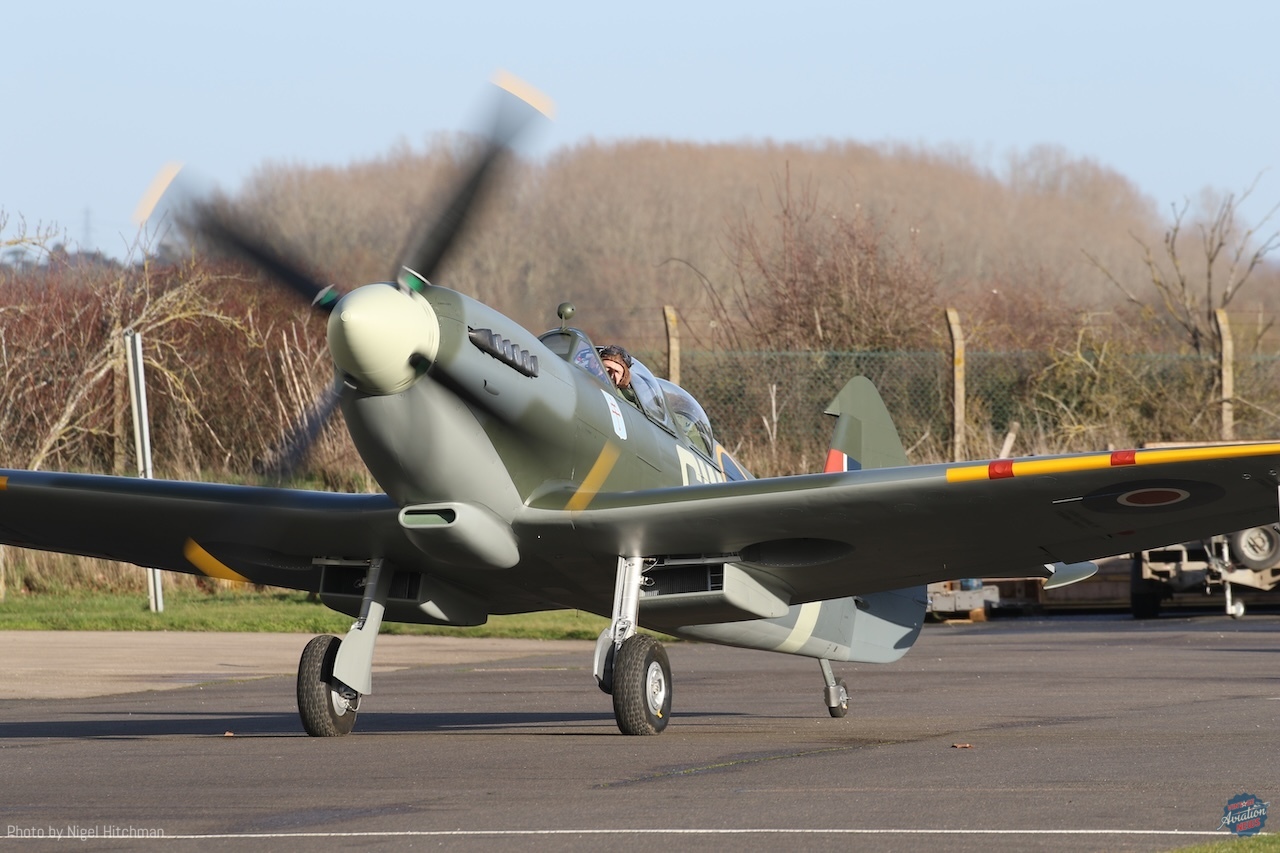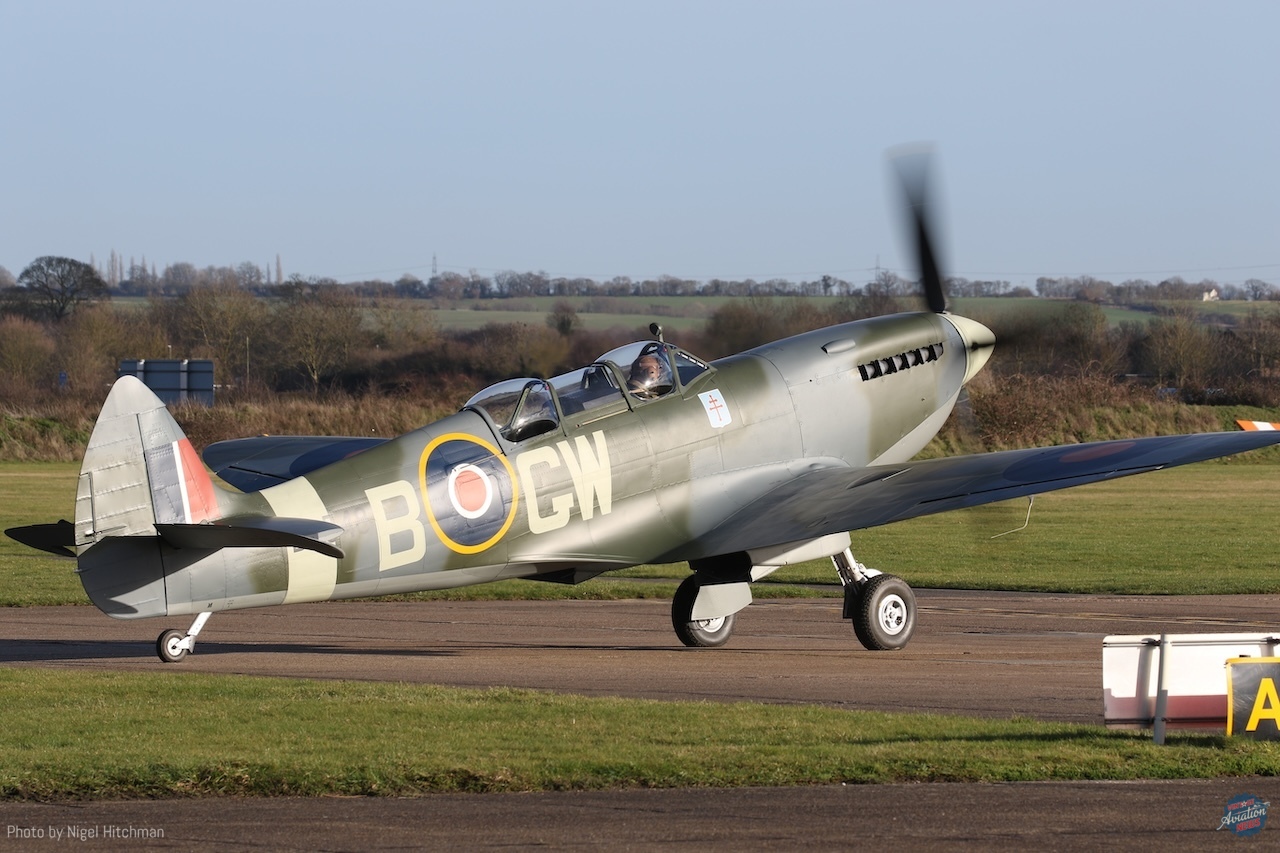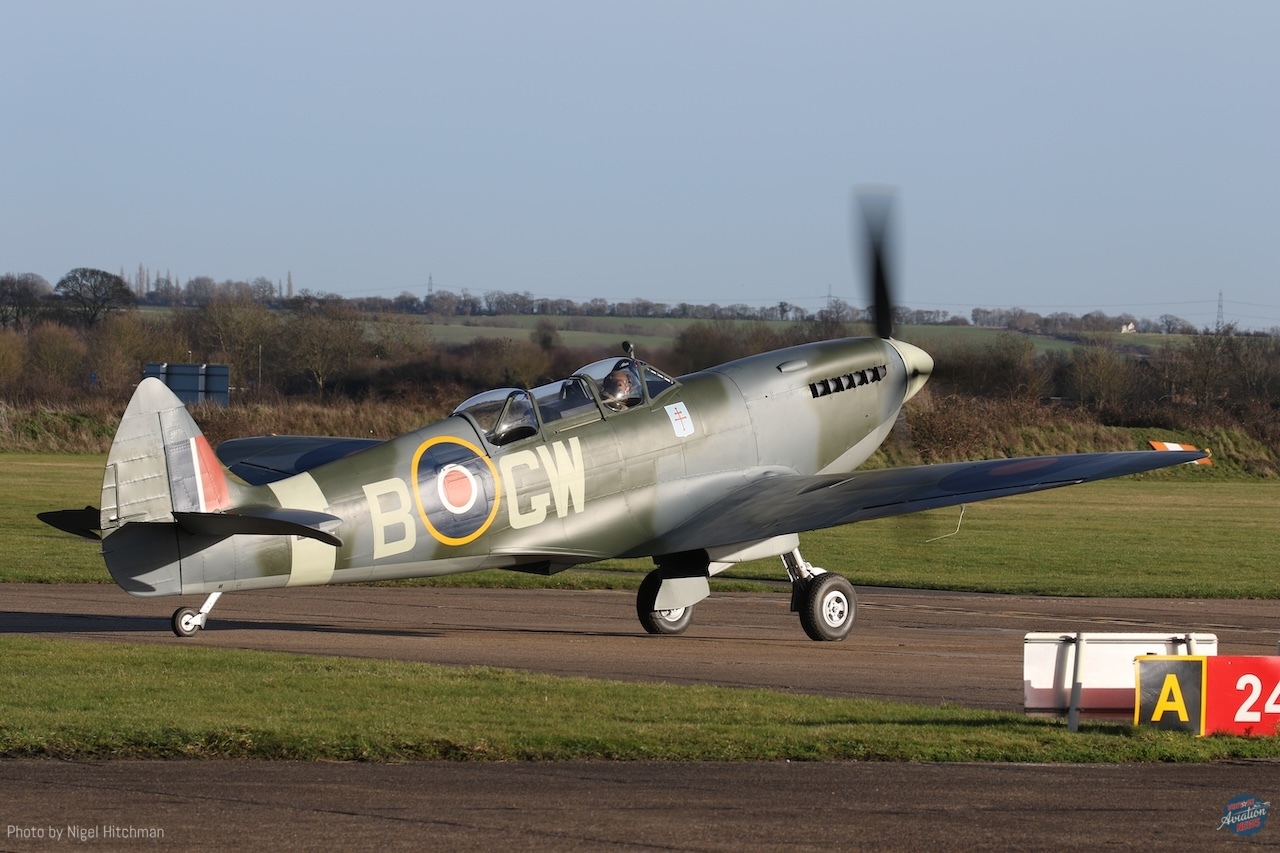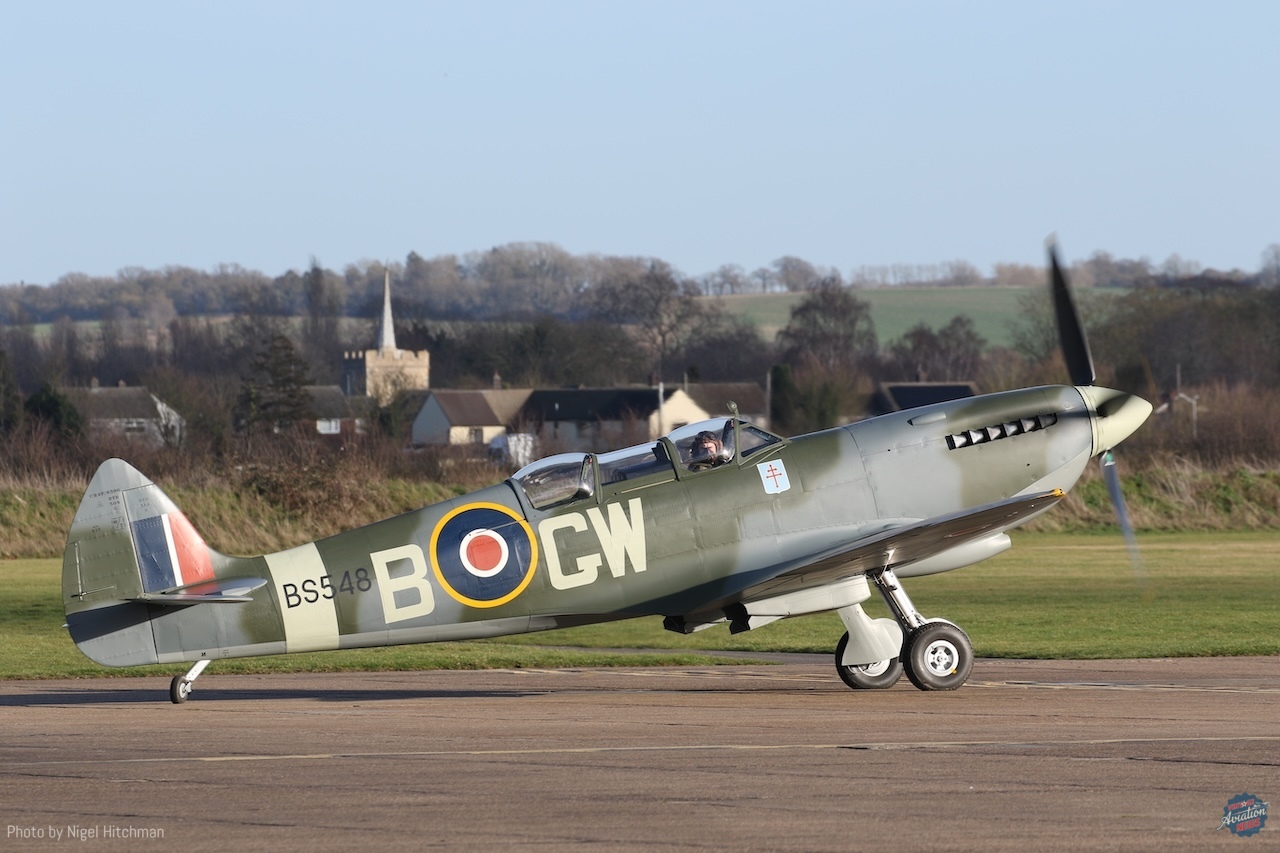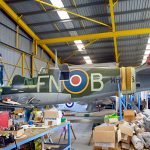
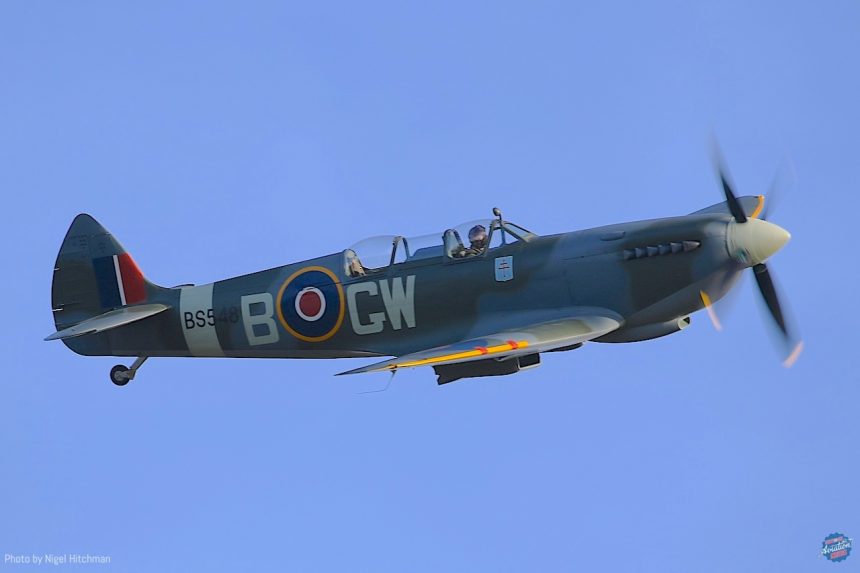

This article was originally written by John Parker for Warbirds Online and is republished by Vintage Aviation News as part of an ongoing cooperative arrangement between the two websites. The article has been updated following the aircraft’s first flight, with additional details and photography provided by Nigel Hitchman. Supermarine Spitfire Mk.IX BS548 successfully completed its long-awaited first post-restoration flights at Duxford, United Kingdom, marking a major milestone for the Australian warbird community. The aircraft flew during the afternoon, completing three short sorties with no reported technical issues, just a couple of minor adjustments.
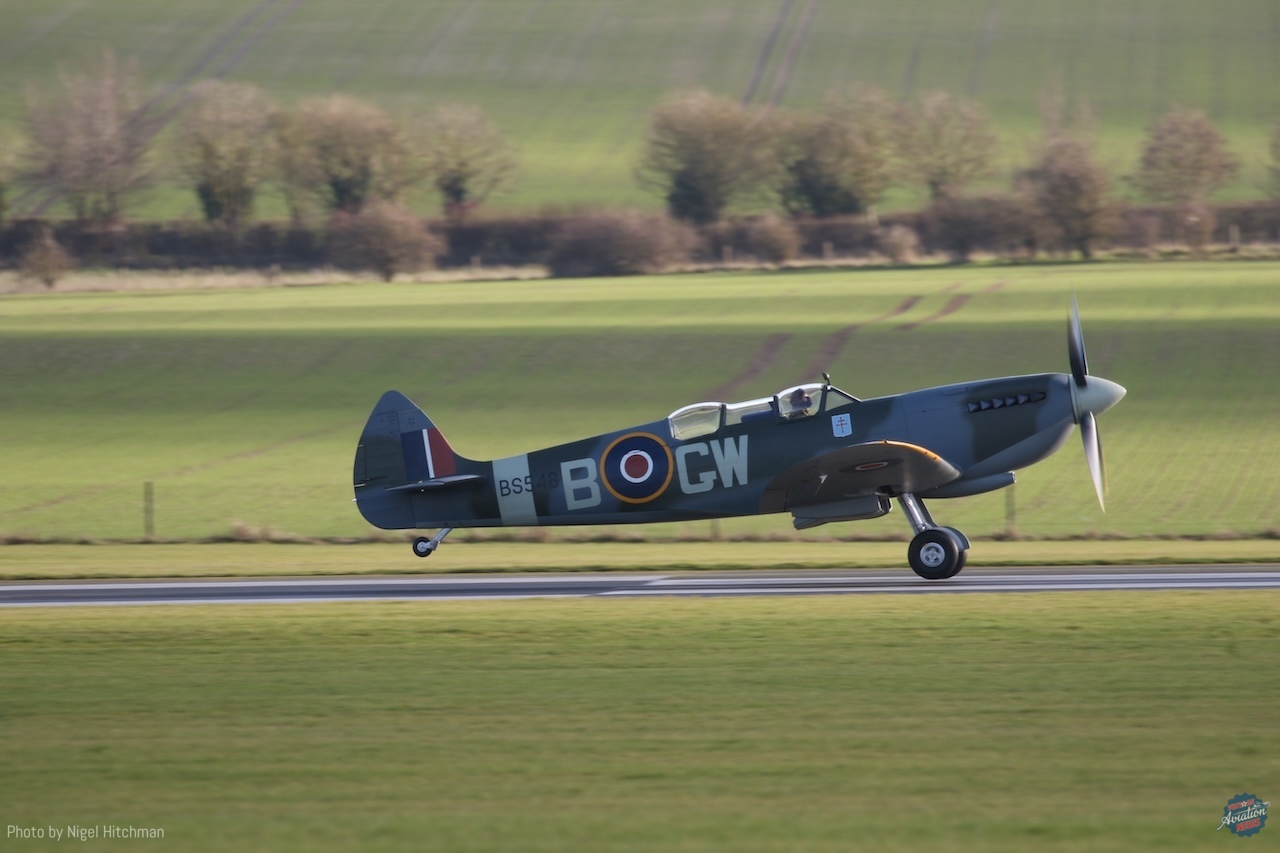
The first flight took place at approximately 14:30 local time and lasted around 13 minutes. According to those present, the sortie remained local to the airfield and included handling checks, stalls, and a slow roll, before concluding with a flypast and a break to land. Following a brief post-flight inspection, additional fuel and oil were added, and the aircraft was cleared to fly again. The second take-off occurred at approximately 15:30, around 90 minutes before last light. A third short flight was also completed later in the afternoon, with all sorties necessarily brief due to daylight constraints. No issues were reported during any of the flights. The aircraft was flown by experienced Spitfire pilot Martin Overall. Aviation historian and photographer Nigel Hitchman was present to witness and photograph the event, confirming that all flights were conducted smoothly.
Built in the UK, With a Clear Path to Completion
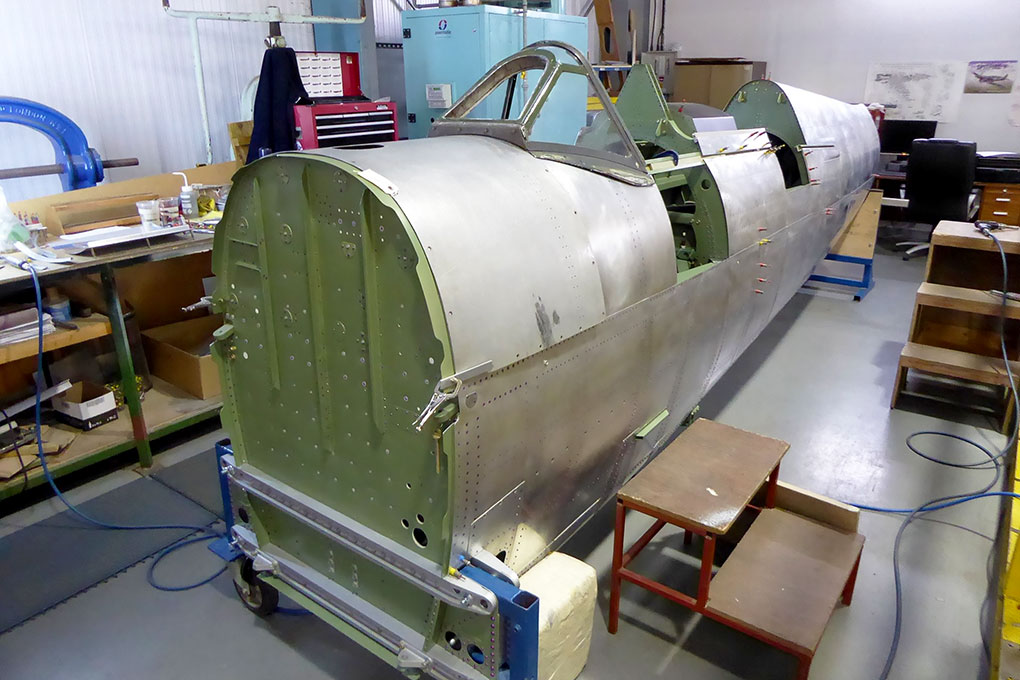
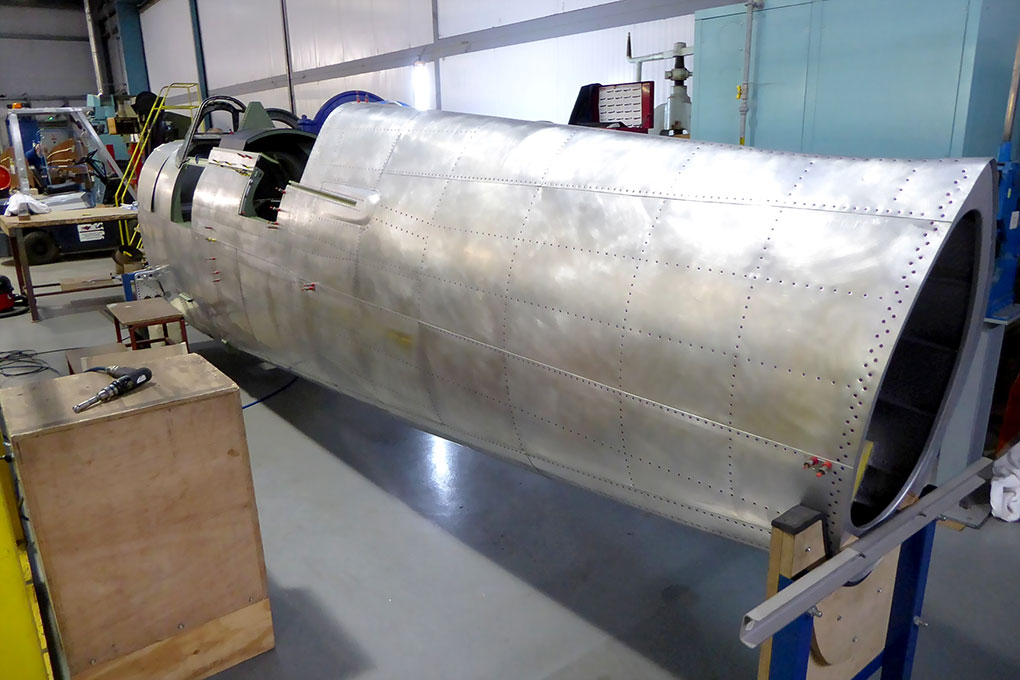
The project is owned by Pay’s Aviation, based in Scone, New South Wales, and has been under development in the United Kingdom for an extended period. Initial construction work was undertaken by Airframe Assemblies on the Isle of Wight, where the fuselage, tail, and wings were built. The airframe was subsequently transferred to Aircraft Restoration Company (ARCo) at Duxford for final fit-out and completion. Over the past several years, progress has been intensive, with the aircraft now approaching readiness for its maiden flight.
A Wartime Spitfire With an Impressive Operational History
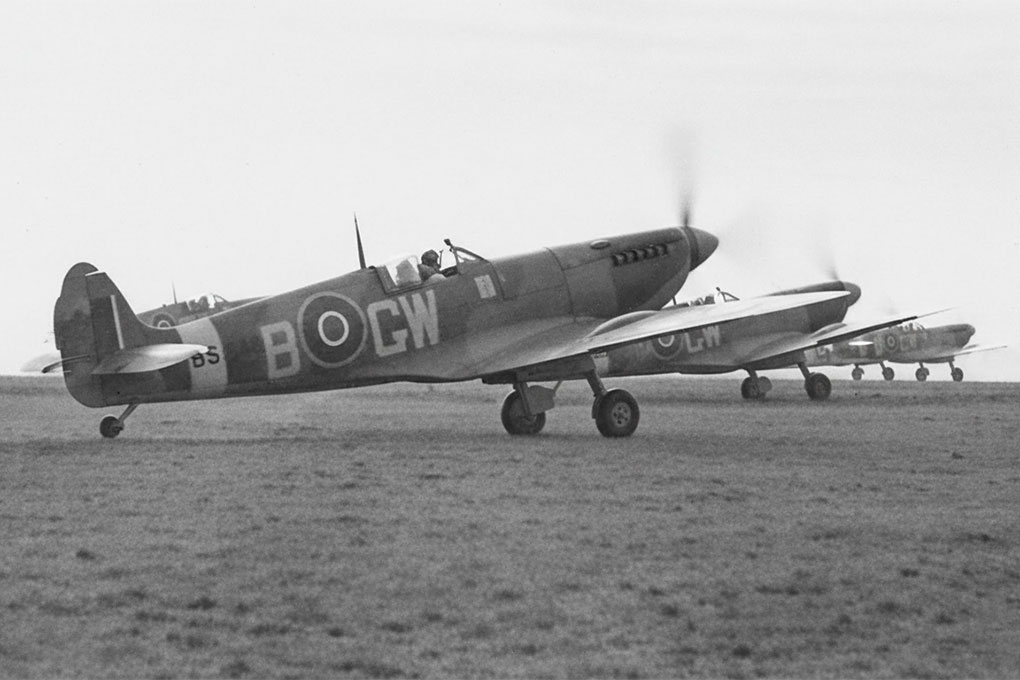
BS548 possesses a substantial World War II operational history, which Warbirds Online has previously documented in detail (HERE). Originally constructed as a Spitfire Mk.V, the aircraft was almost immediately converted by Rolls-Royce at Hucknall to Mk.IX standard. Powered by a Rolls-Royce Merlin 61-series engine, BS548 first flew on 31 October 1942 and subsequently served with No. 340 Squadron, No. 402 Squadron, and later No. 341 Squadron.
Superb Workmanship and the “Grace” Style Second Cockpit
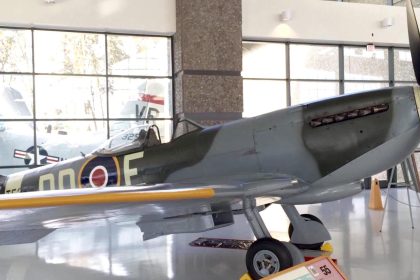
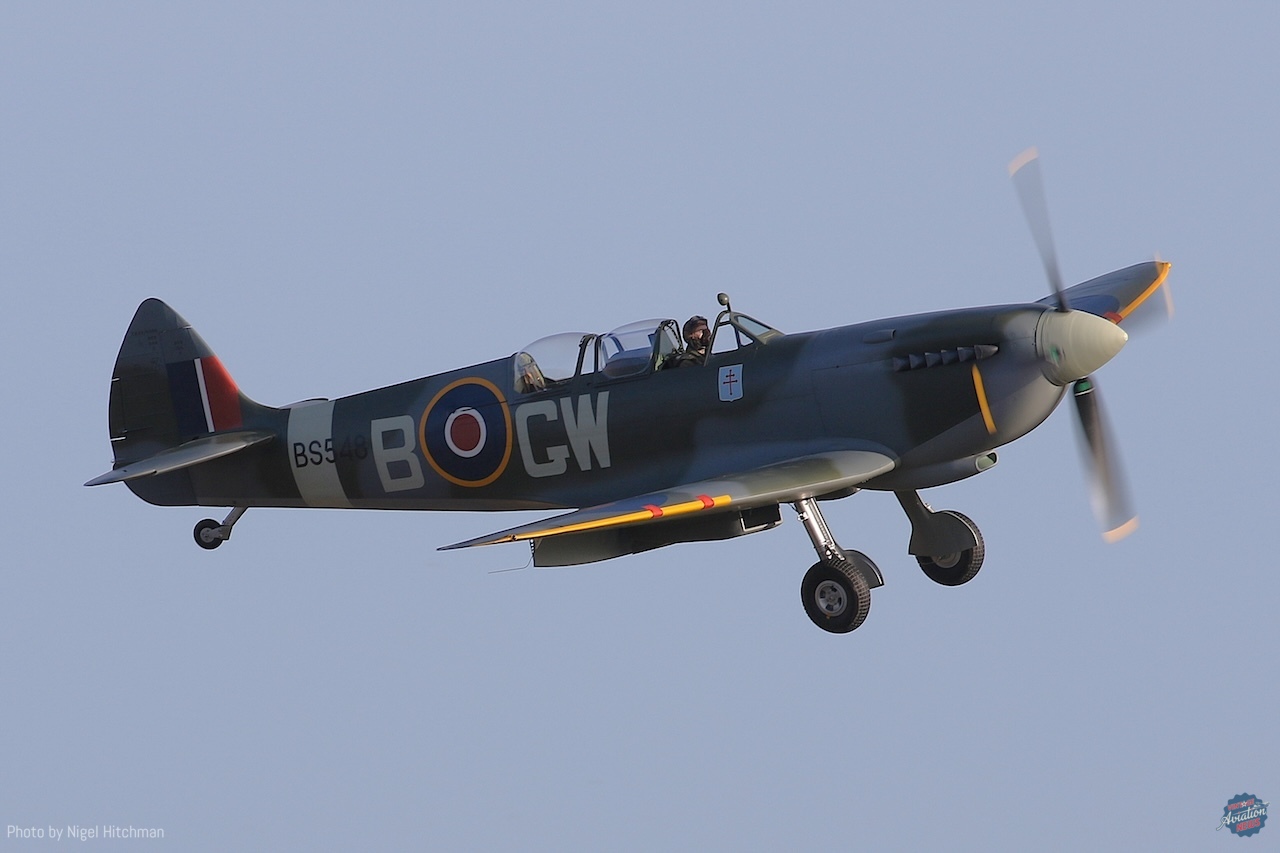
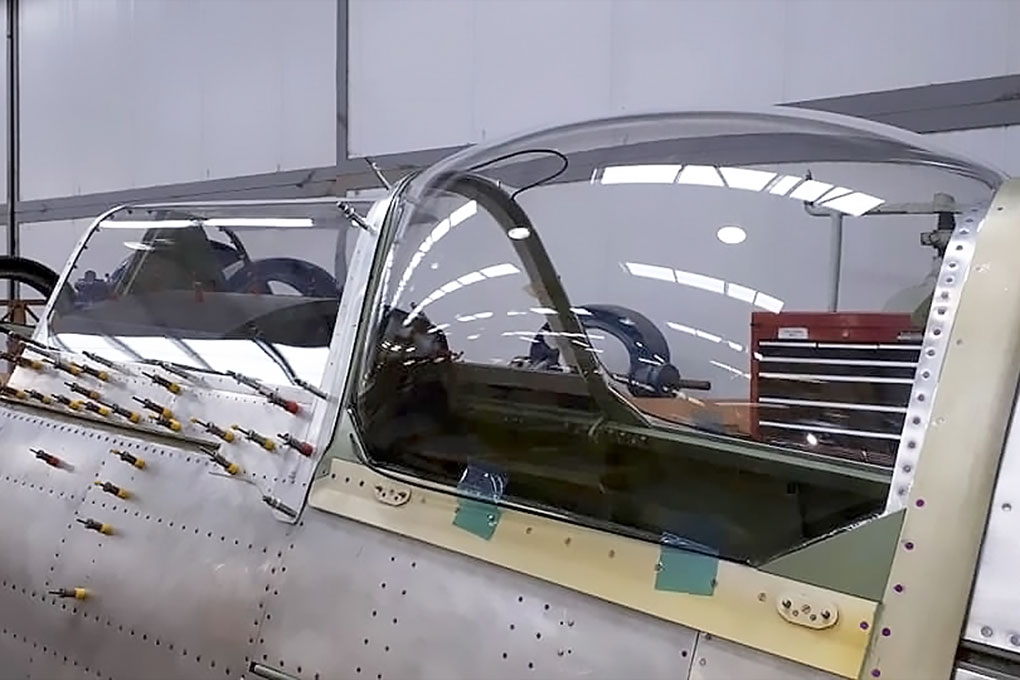
The quality of workmanship throughout the restoration reflects a very high standard. The project has included a complete structural rebuild of the fuselage, along with the installation of a “Grace” style second cockpit. This configuration offers a more authentic appearance and a lower profile than the earlier twin-bubble canopy conversions. The aircraft is being finished in the historically accurate colour scheme it carried while serving with No. 340 Squadron RAF at Biggin Hill in 1942. As part of its restoration, BS548 has been converted to a two-seat configuration, enabling passenger flights. Once operational in Australia, it will represent the only opportunity currently available in the Southern Hemisphere for members of the public to fly in a genuine World War II Spitfire.
First Flight, Test Program, Then Home to Scone
Following its first flight in the UK, BS548 will undergo a test flight program (about 5 hours) before being dismantled and shipped to Australia. Upon arrival in Scone, the aircraft will be reassembled by the VFR team and flown for additional hours before being cleared for passenger operations. Warbirds Online will continue to monitor and report on the imminent first flight of BS548 in the United Kingdom—more than 80 years since the aircraft last flew—and will provide further updates as this historic project reaches its next major milestone.