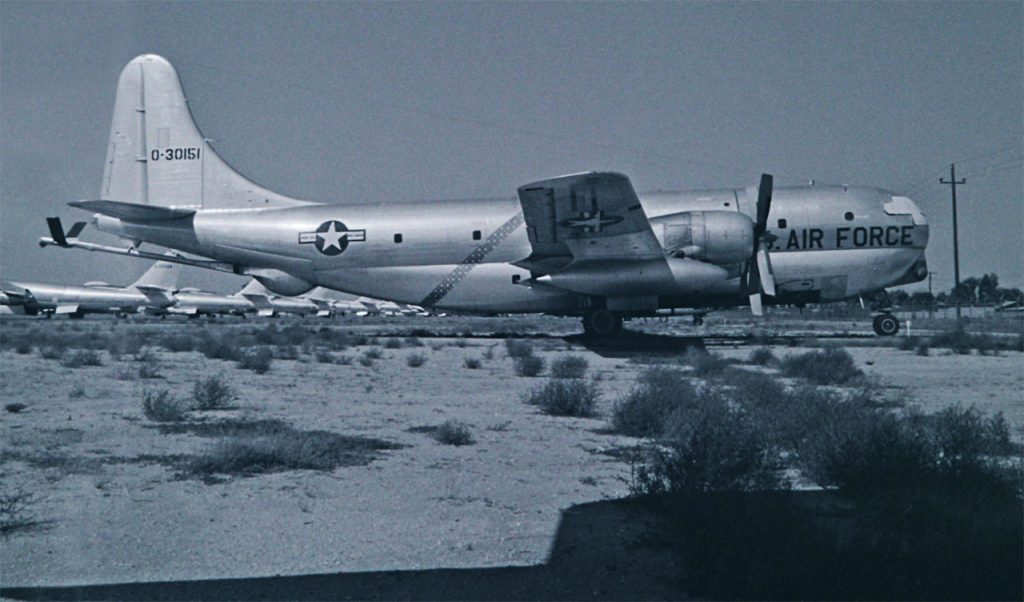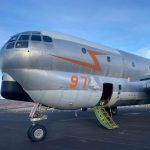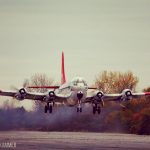
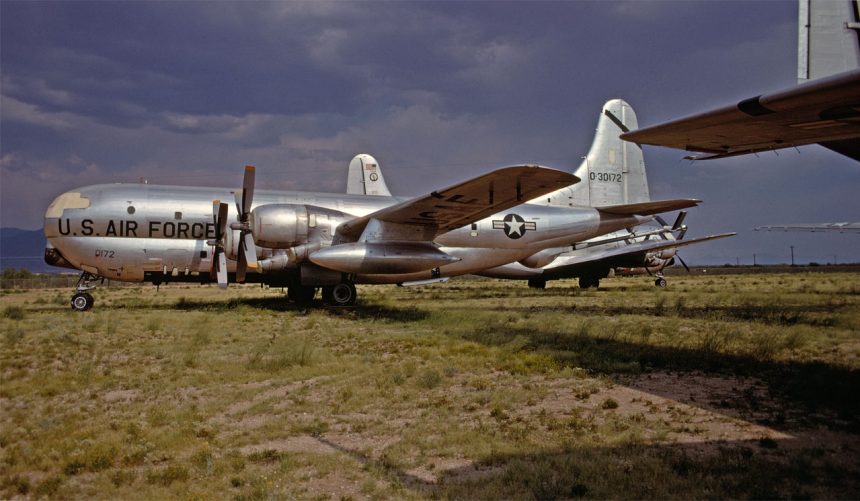

As we initiate the Boneyard Files series, which will showcase some of the retired aircraft resting at U.S. Air Force Davis-Monthan Air Force Base in Tucson, Arizona, in the late 1960s, through the lens of Neil Aird’s “Monthan Memories” photos, the first story is about the Boeing KC-97 Stratofreighter. The US military used the KC-97, which was an aerial refueling tanker version of the C-97 Stratofreighter heavy military cargo aircraft, from the 1950s to the 1970s. In June 1942, three months before the B-29 bomber’s first test flight, Boeing presented a new freight-carrying airplane to the US Army Air Forces. The aircraft was designed to match the B-29 in speed, range, and durability, using as many of its parts as possible. These parts included the wings, tail, engines, landing gear, and other components. The success of the B-29 was largely due to its wing design, created by Boeing engineers. The wing had a lower drag-to-lift ratio than any other wing at the time. It also had better stall warning and the largest, most efficient flaps available. Additionally, the wing was stronger and offered more fuel storage space than other wings at the time.
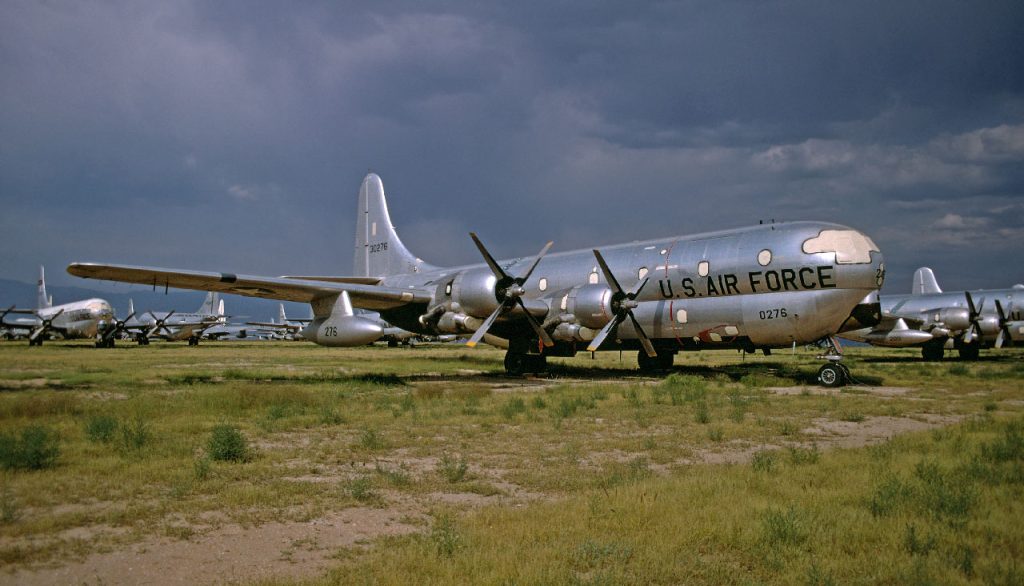
For the C-97, Boeing decided to use the same B-29 wing and the four 2000-hp Wright Cyclone engines. Adapting the B-29 fuselage to carry cargo was a tough job. The shape of the fuselage didn’t work well for the missions planned. To solve this, designers created an inverted “figure 8” fuselage. The lower section matched the diameter of the B-29 fuselage. The wings and landing gear stayed the same. They designed the upper section of the fuselage to fit smoothly with the lower section. The new double-deck cargo area made good use of space and was designed for easy loading. The upper deck cargo compartment measured 74 feet long and featured large rear “clam shell” doors for quick loading of items up to 61 feet long. Overall, the C-97 offered 6,140 cubic feet of usable cargo space, more than double that of any other transport at the time. On June 16, 1949, the first of 44 C-97A production models flew for the first time. In September 1950, the first of three C-97D transport planes for Strategic Air Command (SAC) was delivered.
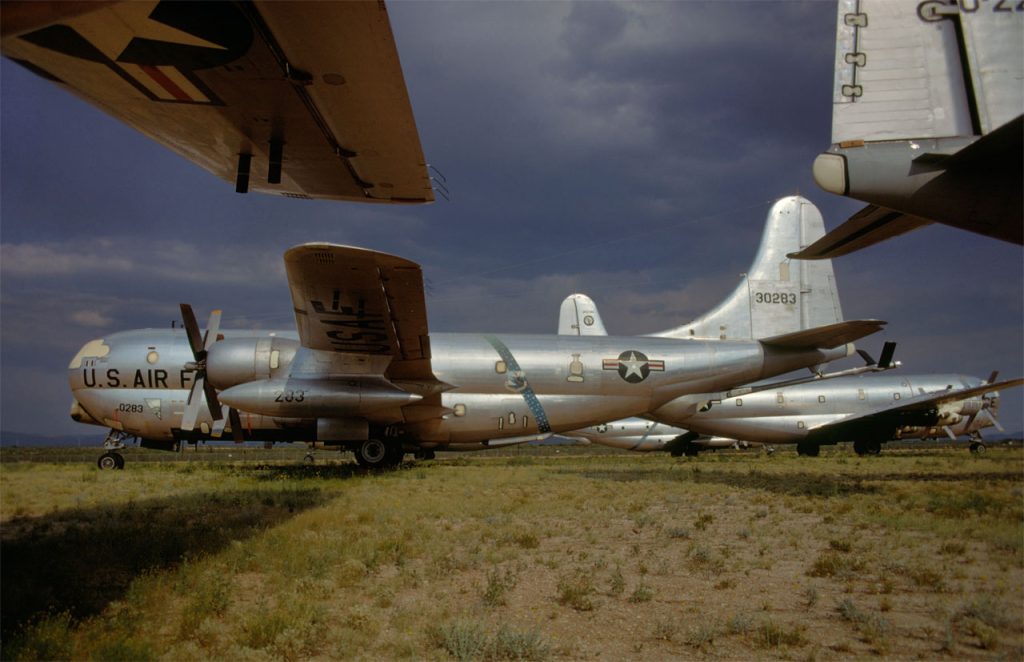
Based on the C-97, Boeing developed the KC-97 Stratofreighter as a multi-purpose tanker. The basic freighter could quickly convert to an aerial tanker due to a special design of the tanker equipment. The flying boom, controls, and operator station came as a single unit, mounted under the Stratofreighter’s fuselage, where the loading doors were usually located. The first of 60 production tankers, called the KC-97E, was delivered in July 1951. It was followed by 159 KC-97Fs that had Pratt & Whitney engines. Lastly, the production ended with the KC-97G, of which 592 were built. The KC-97G model featured external wing tanks and a new internal refueling setup. The design allowed the plane to carry troops or cargo without removing the refueling equipment. The last production KC-97G was delivered to SAC on November 16, 1956. Used as a personnel carrier, the C-97 accommodated 96 fully equipped combat troops, while with refueling equipment installed in a KC-97 Stratofreighter, the load was reduced to 65 troops.
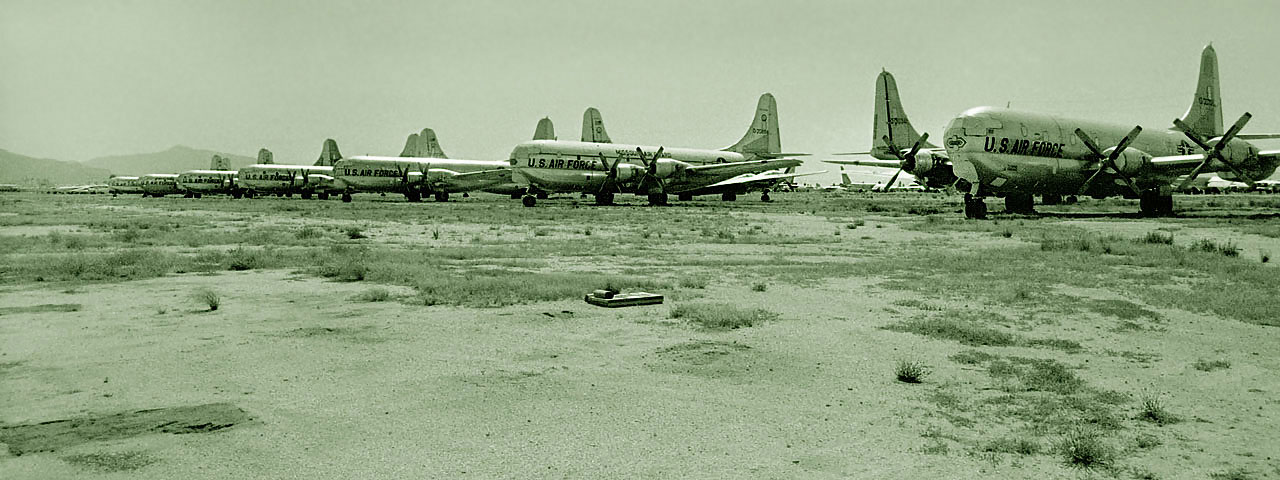
As modern aviation was growing rapidly, the introduction of refuelable jets introduced new challenges for the KC-97 Stratofreighter. Refueling a faster jet bomber from a piston engine tanker was tricky. The process was called “tobogganing.” The refueling happened at high altitudes, and then the bomber and tanker flew “downhill” together to gain speed. To solve this issue, the KC-97L was developed, featuring an extra jet engine under each wing, which gave it the speed needed for flying and takeoff. The addition improved the KC-97L’s ability to refuel jet aircraft. The KC-97 carried both aviation gasoline (AVGAS) and jet fuel. The AVGAS powered its piston engines, while the jet fuel powered its jet engines and was also used to refuel other aircraft. In total, the US Air Force ordered 816 KC-97s. To keep its tankers compatible with new high-performance jets, the US Air Force started replacing the slower KC-97 Stratofreighters with Boeing KC-135 jet tankers after 1956. The retired KC-97s were sent to the US Air Force aircraft storage and maintenance facility at Davis-Monthan Air Force Base in Tucson, Arizona. Some modified KC-97s were still in use for other purposes. In 1964, a few of these aircraft were upgraded with two jet engines, making the KC-97L faster and better suited to high-performance jets. These aircraft mainly served with the Air National Guard. The USAF retired its last KC-97 Stratofreighter in 1973, but some continued to be used by the Air Force Reserve and Air National Guard as tankers or for search and rescue.