

(Image credit: VAN)
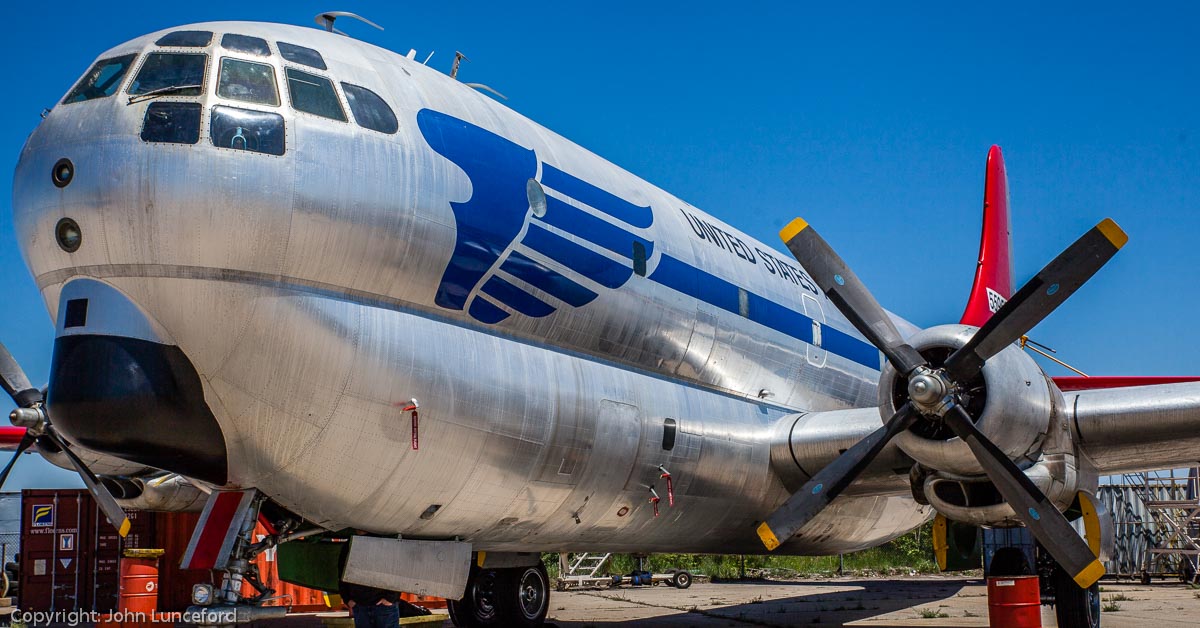
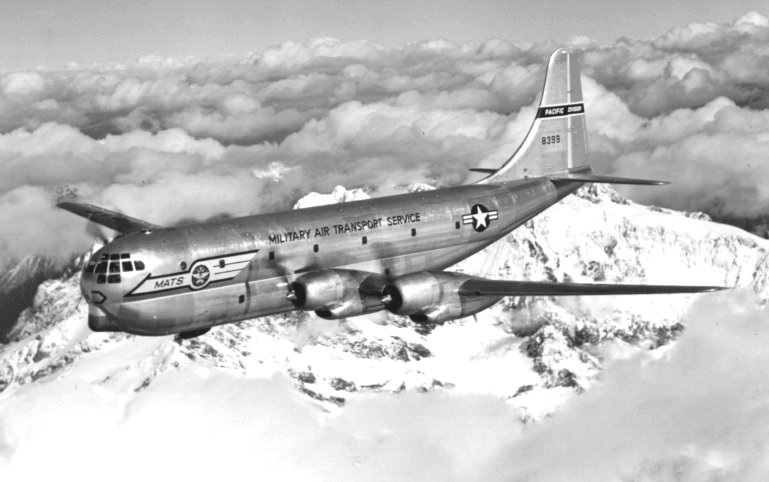
On this day in aviation history, 81 years ago (November 9, 1944), the Boeing C-97 Stratofreighter took to the skies for the first time. The Stratofreighter was a heavy military cargo transport aircraft that had long-range capability. Design work on the C-97 began in 1942 – the aircraft was developed from the Boeing B-29/B-50 Superfortress bomber airframes. Three prototype XC-97s were built, with the first one flying on 11/9/44. Boeing created the C-97 by adding a second “lobe” atop the fuselage and also on the wings, which gave the Stratofreighter its signature bloated Superfortress look.
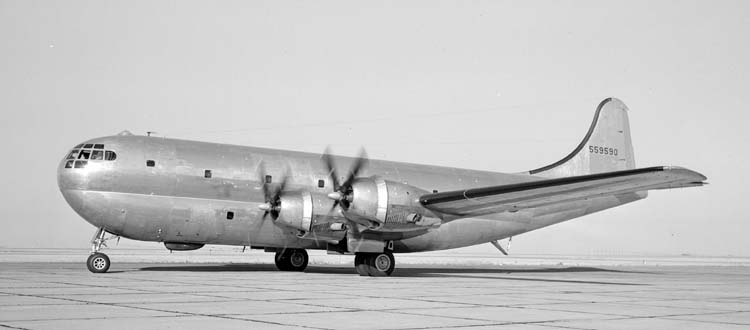
The C-97’s engine, wing, and tail layout were nearly the same as the B-29; it was the added “lobes” and rear cargo access that really set the airframes apart. Stratofreighters had a set of clamshell doors underneath the rear fuselage that featured retractable ramps – making loading and unloading of cargo a much simpler process. The C-97 was not designed or intended to be a tactical airlifter, meaning it could not serve front-line bases with less than ideal runways. C-97s were able to deliver cargo via airdrops, but seeing as the doors could not be opened in flight, they had to be removed before the mission.
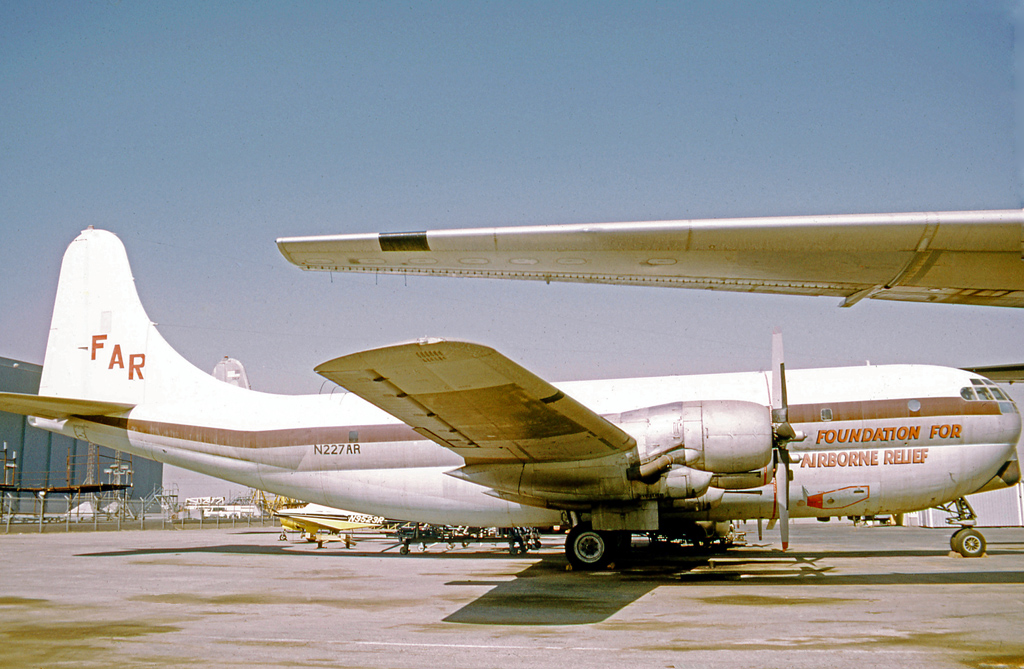
Boeing’s C-97 Stratofreighter entered service in 1947. Along with flying cargo, Boeing developed the KC-97 variant – a tanker version used for aerial refueling. Boeing built 77 C-97s and 811 KC-97s between 1947 and 1958. The C-97 had a crew of 5 to 6 – including a pilot, copilot, navigator, flight engineer, and 1 to 2 loadmasters. Stratofreighters had a capacity for either 134 troops or 69 stretchers. Four 3,500-horsepower Pratt & Whitney R-4360B Wasp Major 28-cylinder radial engines powered the C-97 to a maximum airspeed of 375 miles per hour, though the typical cruise speed was closer to 300. The Stratofreighter had a range of 3,700 nautical miles and a service ceiling of 35,000 feet.
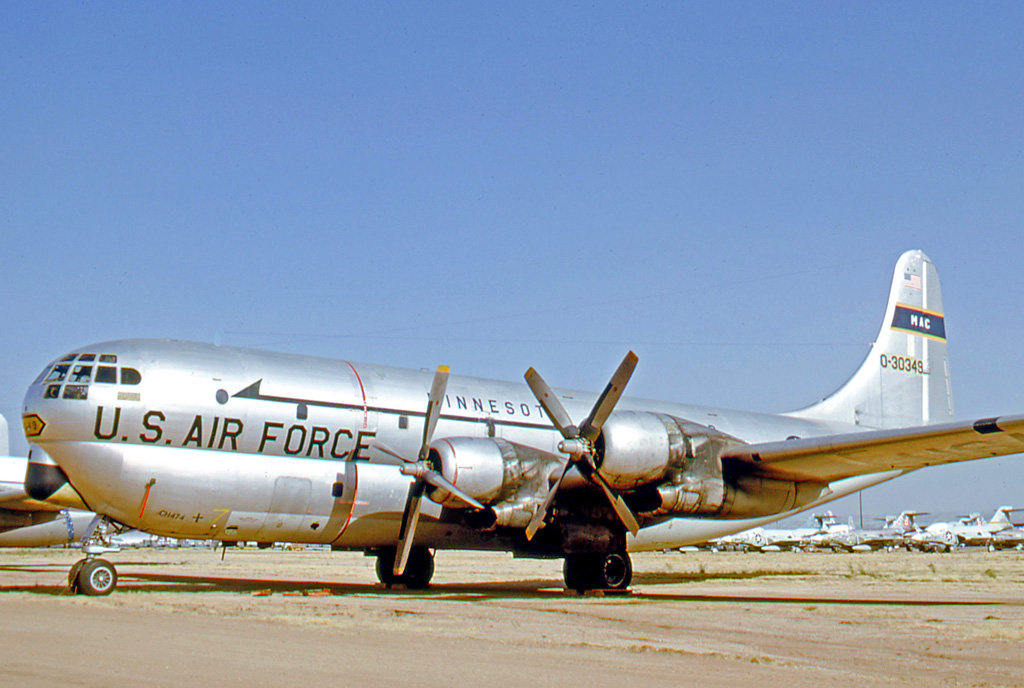
Of the 888 C-97/KC-97s built, only a handful survive. A C-97G, which was converted from a KC-97G, still flies today. C-97G 52-2718, named “Angel of Deliverance,” is proudly operated by the Berlin Airlift Historical Foundation. Based in Farmingdale, New Jersey, this C-97 flies as YC-97A 45-59595, representing a Stratofreighter that served a very important role during the Berlin Airlift.