
By Paola Bertoni
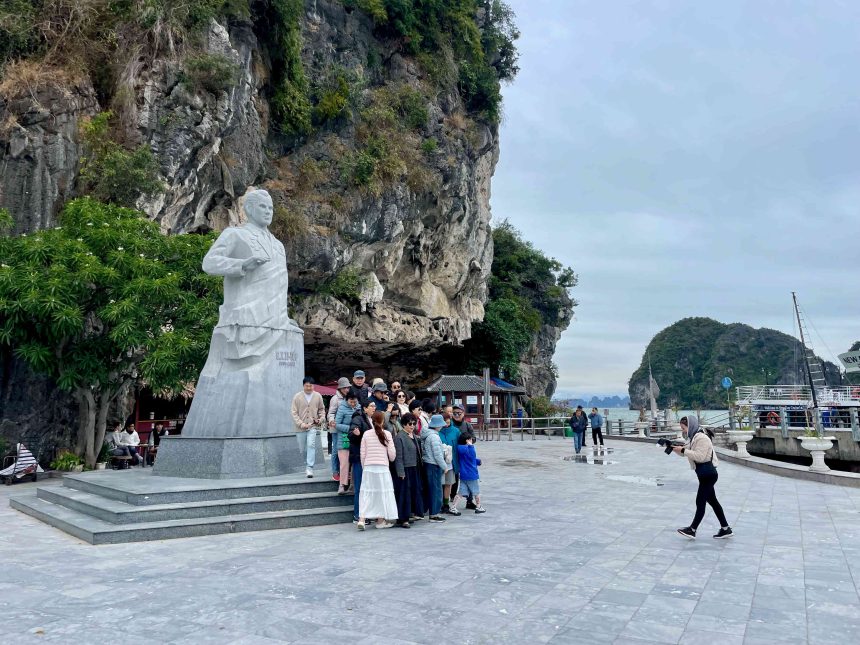
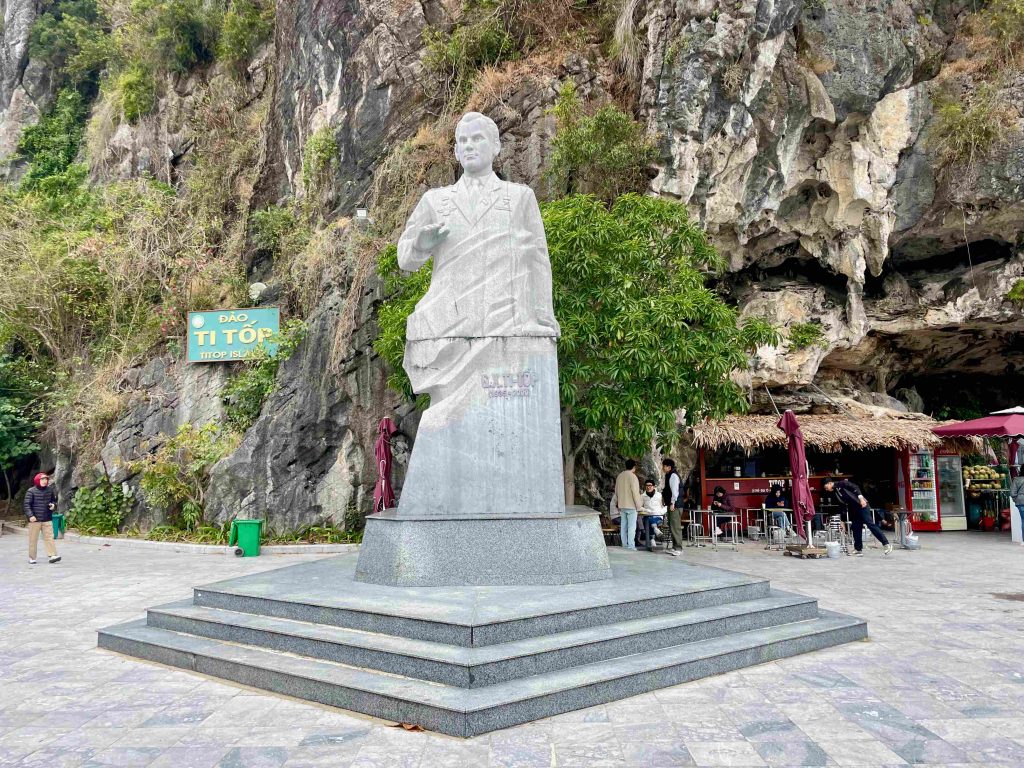
Gherman Titov, a Soviet military pilot who became the second human to orbit the Earth aboard Vostok 2, is an unlikely name to encounter in Ha Long Bay. Yet one of Vietnam’s most visited viewpoints, Ti Top Island, is named in his honor, linking a Cold War aviator to a modern tourist destination. The connection is not immediately obvious. Organized tours regularly bring visitors to this small island, directing them along a steep path toward a panoramic viewpoint and a beach below. Near the pier stands a large statue of Titov in uniform, an unexpected presence in a tropical setting and a reminder of a very different historical context. The name “Ti Top,” a Vietnamese transliteration of “Titov,” reflects more than a linguistic variation. The island itself becomes a point where aviation history, early human spaceflight, and Cold War geopolitics converge, preserving the legacy of a military pilot far beyond the cockpit.
Military Aviation Roots: The Making of a Soviet Pilot
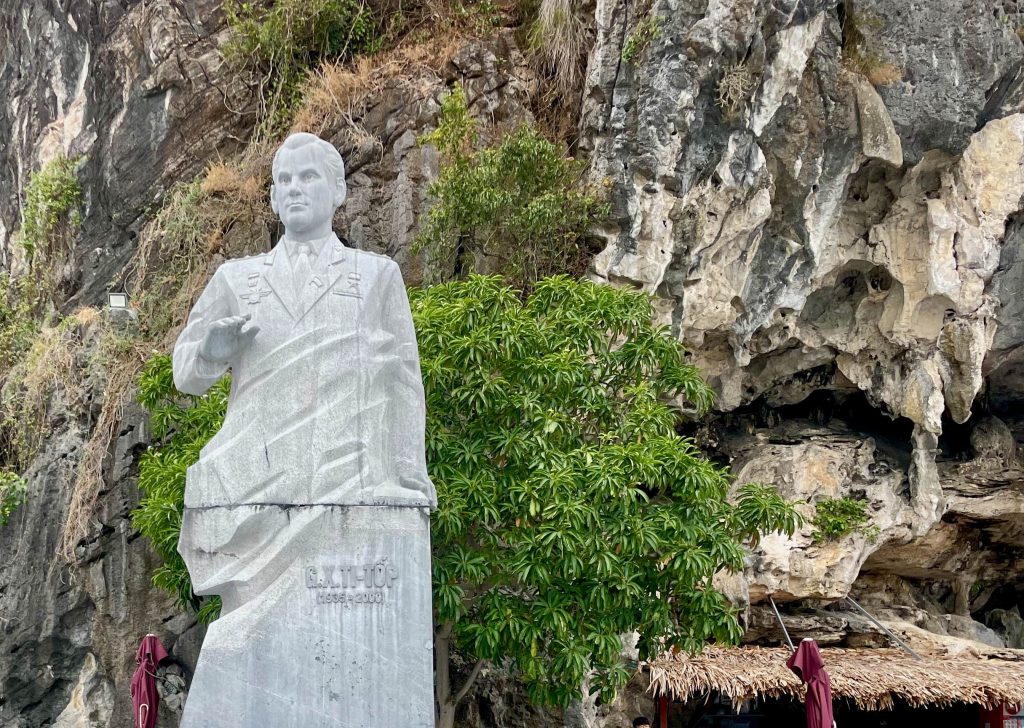
Before becoming a cosmonaut, Gherman Titov was a trained pilot in the Soviet Air Force. Like many early space candidates, his background in military aviation was not incidental. It was essential. At the time, as in modern space programs, selection prioritized pilots capable of operating under extreme pressure, managing complex systems, and maintaining control in unpredictable environments. These were core skills developed in high-performance jet aviation. Soviet selection in the late 1950s focused heavily on military jet pilots. After graduating as an Air Force pilot, Titov was selected for cosmonaut training in 1960. His technical proficiency and discipline made him a strong candidate for the emerging Soviet space program, where the boundary between aviation and spaceflight was still closely linked. During his military career, Titov continued to serve in the Soviet Air Force, eventually attaining a senior rank within the Soviet Air Force.
From Cockpit to Orbit: The Vostok Program
In August 1961, just months after Yuri Gagarin’s historic flight, Titov launched aboard Vostok 2 at the age of 26, becoming the youngest human to fly in space, a record that stood for decades. His mission marked a critical step forward in the early phase of human spaceflight. While Gagarin’s flight demonstrated that orbital spaceflight was possible, Titov showed that humans could remain in space for extended periods. His mission, lasting just over 25 hours and completing 17 orbits, represented the first extended-duration human spaceflight. Titov also achieved several operational firsts. He was among the first humans to take photographs of Earth from orbit and the first to sleep in space. These milestones, often presented as records, provided valuable data on human performance in microgravity. Titov later trained as a test pilot for advanced aerospace systems, including early concepts of orbital spaceplanes. However, after Yuri Gagarin’s death in a military aircraft accident in 1968, Soviet authorities restricted his flight activities, effectively ending his career as an active test pilot.
A Diplomatic Mission: Titov in Vietnam, 1962
In the early 1960s, North Vietnam and the Soviet Union maintained a close political and strategic relationship within the broader context of the Cold War. Aviation and space achievements played a key role in this alignment, serving not only as technological milestones but also as instruments of international influence. In 1962, Titov traveled to Vietnam as part of an official visit representing the Soviet Union. During the trip, he was hosted by Ho Chi Minh, who personally accompanied him to Ha Long Bay, now one of the most visited destinations in Vietnam. At the time, spaceflight carried global significance beyond engineering. Early orbital missions demonstrated not only technical capability but also ideological and industrial strength. Cosmonauts, many of whom were military pilots, became representatives of their national systems on the international stage. During his career, Titov received numerous honors from the Soviet Union and allied countries, reflecting his status within the Soviet sphere of influence and its international partnerships. Among these were Vietnam’s Order of Ho Chi Minh, the Friendship Order, and the title Hero of Labour of Viet Nam. In this context, Titov’s presence in Vietnam symbolized more than scientific achievement. It reflected a shared ideological and strategic partnership during the Cold War, extending the influence of aviation and space exploration into diplomacy and international relations.
Naming Ti Top Island: A Political Gesture in a Natural Landscape
During the visit, Ho Chi Minh made a symbolic decision. He named one of the small islands in Ha Long Bay after Titov. The name “Ti Top” is a Vietnamese transliteration of “Titov” (Титов), reflecting local pronunciation while preserving the original reference. This act transformed a previously unremarkable island into a geopolitical marker. It linked a natural site, at the time not yet affected by mass tourism, to the broader narrative of aviation and space exploration. In later years, Titov remained active in public life and became a political figure in post-Soviet Russia, extending his role beyond aviation and spaceflight.
Legacy: From Military Pilot to Tourist Landmark
Today, Ti Top Island is a standard stop on most Ha Long Bay cruises. Visitors climb its steep steps for panoramic views or relax on the beach below, often unaware of its origin story. The deeper significance of the name is easy to miss without context, partly due to the Vietnamese transliteration. Tourists frequently take photographs in front of the statue of Gherman Titov without knowing his history or the reason for its presence. The statue of the Soviet pilot and cosmonaut, installed decades later, quietly reinforces the connection between the site and its past. Titov’s legacy is most often associated with spaceflight. However, this island reflects a different dimension of his impact. It shows how aviation and early space exploration extended beyond technology, shaping diplomacy and leaving a lasting imprint on the physical landscape of the Cold War.
About the Author
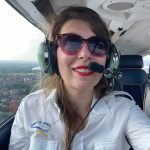
Paola Bertoni is an Italian travel writer and aviation enthusiast. She explores the intersections of history, culture, and aviation on her blog Paola Everywhere, aiming to inspire meaningful travel through research-driven storytelling.