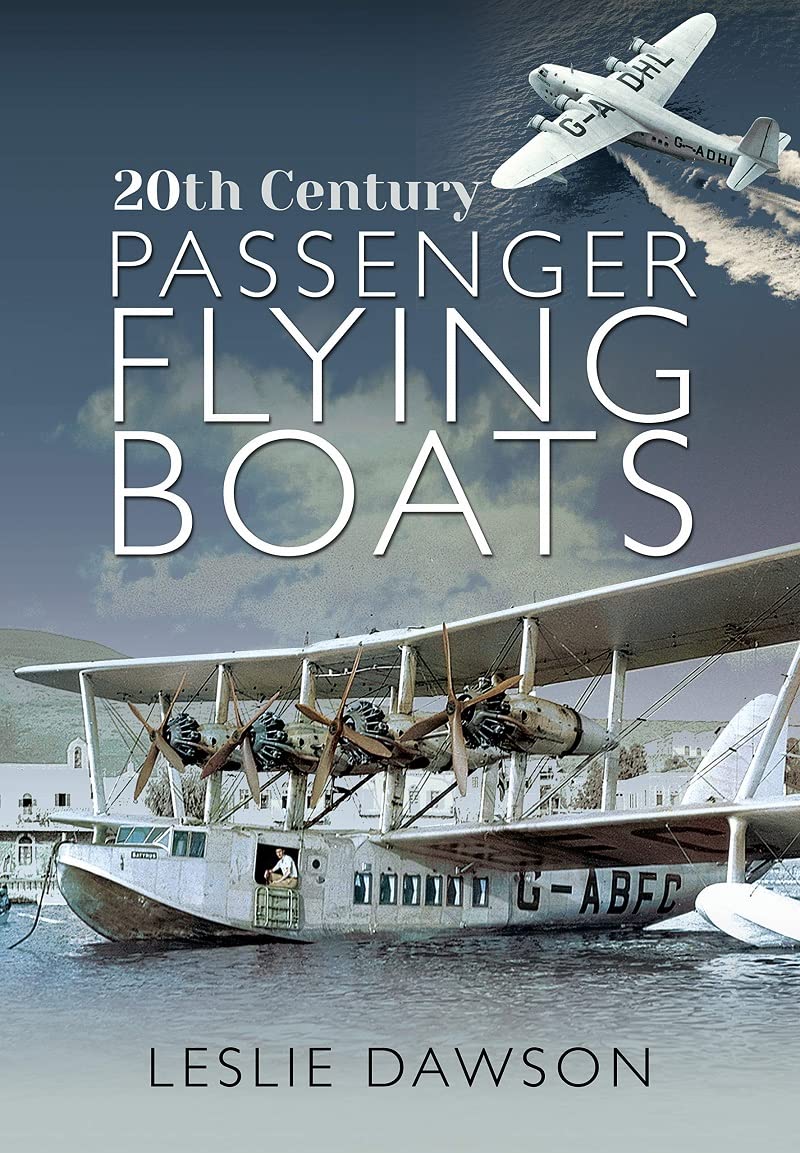
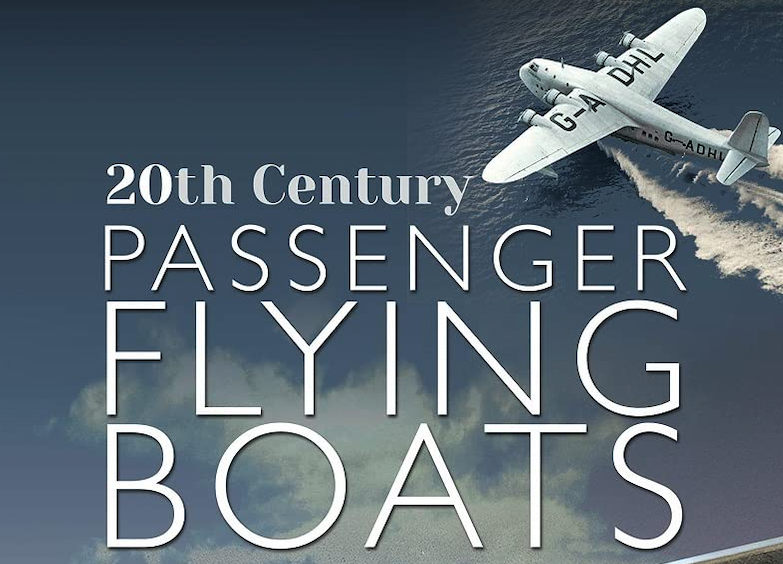

Passenger Flying Boats by Leslie Dawson, reviewed by Joe May, available on Amazon.
Leslie Dawson’s superb authorship and superior history detective work have, again, paid off. His previous book—Fabulous Flying Boats: a history of the World’s passenger flying boats—has been extremely well received. It is jam-packed with unique photos as well as researched stories, giving the flavor as well as the adventure that was the world of flying boats in their heyday. Fabulous Flying Boats: A History of the World’s Passenger Flying Boats is a fantastic read and required by anyone who follows aviation history, but it just could not hold all the amazing images brought to light by Dawson. So…Passenger Flying Boats was written as a sequel, and happily so. Dawson has liberated more treasures of poignant moments captured on film from many private collections and albums. Another of the author’s talents is relating the reader to the human dimension of this history. Yes, the human dimension—not the dry recitation of numbers and dates, or the description of events with none of their context or feel. It is viscerally telling how, back in the day, men and women muscled or finessed, whichever was required at the time, these fantastic flying machines through the air and along the water. The stories and photographs are excitingly placed in the backdrop of one of aviation’s most adventurous periods, through the wartime of World War II, as well as after.
My favorite chapter is the fourth one, C-class to Africa. A pleasure to read, coming entirely unexpectedly and so brilliantly written in Dawson’s silky style. Here, the author vicariously takes readers on a luxurious series of flights aboard a Short Brothers Empire Class Flying Boat. London to Durban, taking five days and traveling 7000 miles over several countries. The travel begins with the arrival at London’s Empire Terminal Building for the weighing-in and then hopping onto one of the specially designated last two cars of the train, destination Southampton. Dawson’s style easily has readers then imagining the journey’s yesteryear experience of the plush days of flying, dining, and overnighting. Flying first from the historic English waters of Southampton to a final landing in culturally resplendent Durban, South Africa, with refueling and rest stops along the way at intriguing, exotic locales. Getting on and off the aircraft—into and out of hotels of varying types—the food service—the maintenance at stopovers—and, of course, flying at vista-viewing altitudes in the Empire class flying boat are described so well that I could sense the anticipation and enjoyment of flying, as so few were able to afford to do at the time.
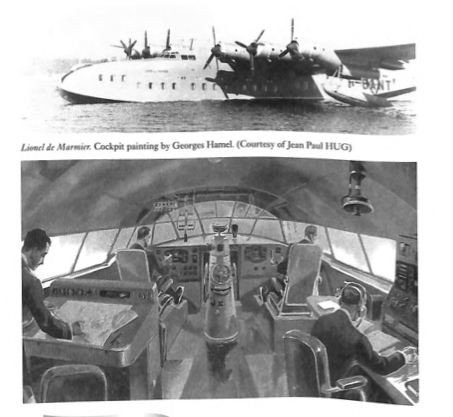
Naturally, post-World War I flying boats begin the book as this is the time when flying boats developed into revenue passenger business vehicles. And Dawson does not solely concentrate on the United Kingdom’s contribution but also those of Italy, the United States, France, Germany, Australia, New Zealand, and Norway. Indeed, the author does not focus on Great Britain’s passenger flying boats, as could easily be done, but concisely addresses those of other countries in chapter-by-chapter order. The Pan American Airways flying clippers are noted in charming detail, as expected. Though it is the flying boats produced elsewhere that this book luminesces. For example, the description of France’s magnificent Latécoère 631 and the cockpit illustration of it have to be seen to be believed. It should not be missed.
Dawson’s recollection of the tremendous international competition to fly across the Atlantic Ocean is excellent and includes both the North Atlantic and the South Atlantic. Notably, he did not forget João Riberrio de Barros, who piloted the first private non-stop flight spanning the South Atlantic in the Jahú, the wildly beautiful twin-hulled Italian Savoia-Marchetti S.55 flying boat (photo included, of course). Flying boats were the aircraft of choice back in the day for passenger airlines and international airmail service. They were the long-range aircraft of the period with no second. The aircraft that could thrive in a world yet to be filled with airports possessing generous runways. The appendix in Passenger Flying Boats attests to this by naming far more than the two or three that commonly come to mind.
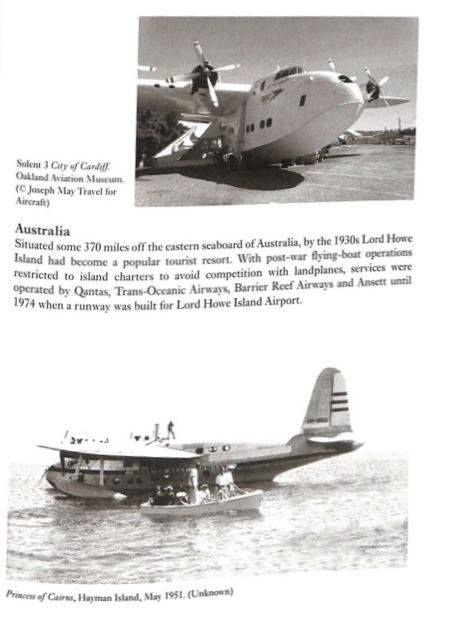
Pioneering efforts using Short Brothers aircraft in aerial refueling, as well as the Short Mayo Composite to transit the North Atlantic, were nearly like science fiction in their day, and Dawson gives readers the thrill that existed in the era. Wartime during World War II is ably described, as is the post-war period. Finally, Dawson leaves readers with an enticing end chapter where the remaining great passenger flying boats can be seen today—whether in museums or in flight. An added bonus is an appendix listing passenger flying boat operations. This book will be enjoyed by both the casual reader as well as enthusiast. Evocative writing and poignant images, the vast majority of which cannot be seen elsewhere, make Passenger Flying Boats special. It is an absolute treasure, as are Dawson’s previous books on flying boats, Wings Over Dorset: Aviation’s History in the South, and Fabulous Flying Boats: a history of the World’s passenger flying boats.
| Softcover
Publisher: Pen & Sword (2021) Size: 9-½” x 6-½” Index: none but a thorough appendix on Flying Boat Fleets Bibliography: none Notes: none (but a thorough appendix on Passenger Flying Boat Fleets) Photos: ✔︎ (galore) Cost: £13/$15 ISBN: 978-1-52679-974-6 Page Count: 91 Available on Amazon |