






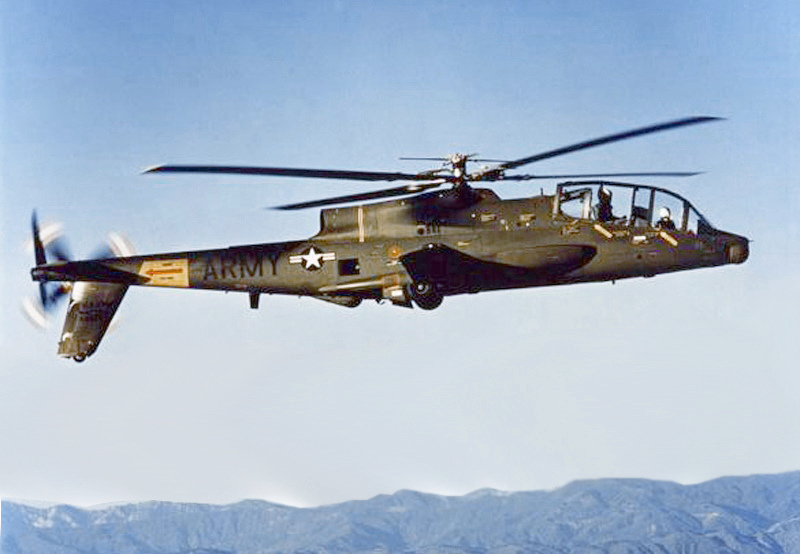

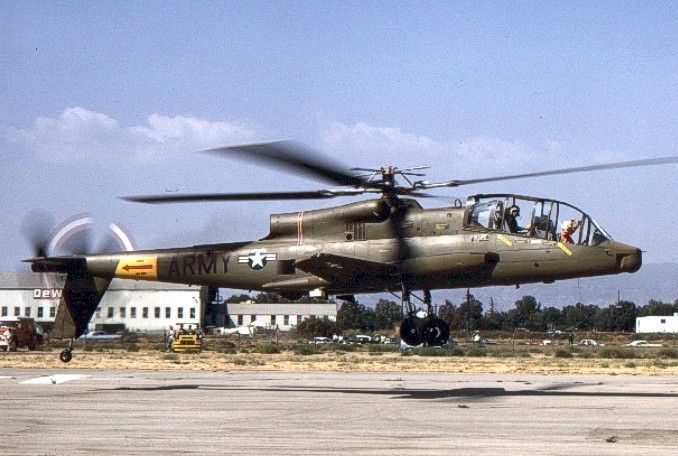
During the early years of the Vietnam War, the US Army found success by adapting the Bell UH-1 Iroquois helicopter, known as the Huey, into an aerial gunship. The success led Army leaders to believe they needed a special helicopter designed for close air support. The search for this attack helicopter began on August 1, 1964, with a Request for Proposal (RFP) to develop the Advanced Aerial Fire Support System (AAFSS). The AAFSS was intended to be an all-weather aircraft capable of reaching a top speed of 220 knots, hovering at 6,000 feet, with a flying range of 2,415 miles. Its weapons system was intended to include a 40mm grenade launcher, a 30mm cannon, and six missiles such as the BGM-71 TOW or MGM-51 Shillelagh. It was also expected to operate at night and feature an advanced all-weather fire control system, which was new for helicopters. The Army set a November 24, 1964 deadline for proposals and aimed to award a contract by November 1, 1965, for the AAFSS. Twelve companies submitted their proposals, which led the Army to recognize the need for an interim attack helicopter. In 1965, the service looked at alternatives such as the CH-47 Chinook and the UH-2A Seasprite. Bell Helicopter proposed the Model 209 HueyCobra, combining parts from the Huey with new weapon systems. On April 13, 1966, the Army ordered 112 Cobras. Among the submitted proposals, the Army selected the Lockheed CL-840, which stood out because of its patented hingeless rotor to improve speed and maneuverability. The CL-840 had a crew of two, a downward-pointing rear tail, and a pusher propeller.
Design of Lockheed AH-56 Cheyenne
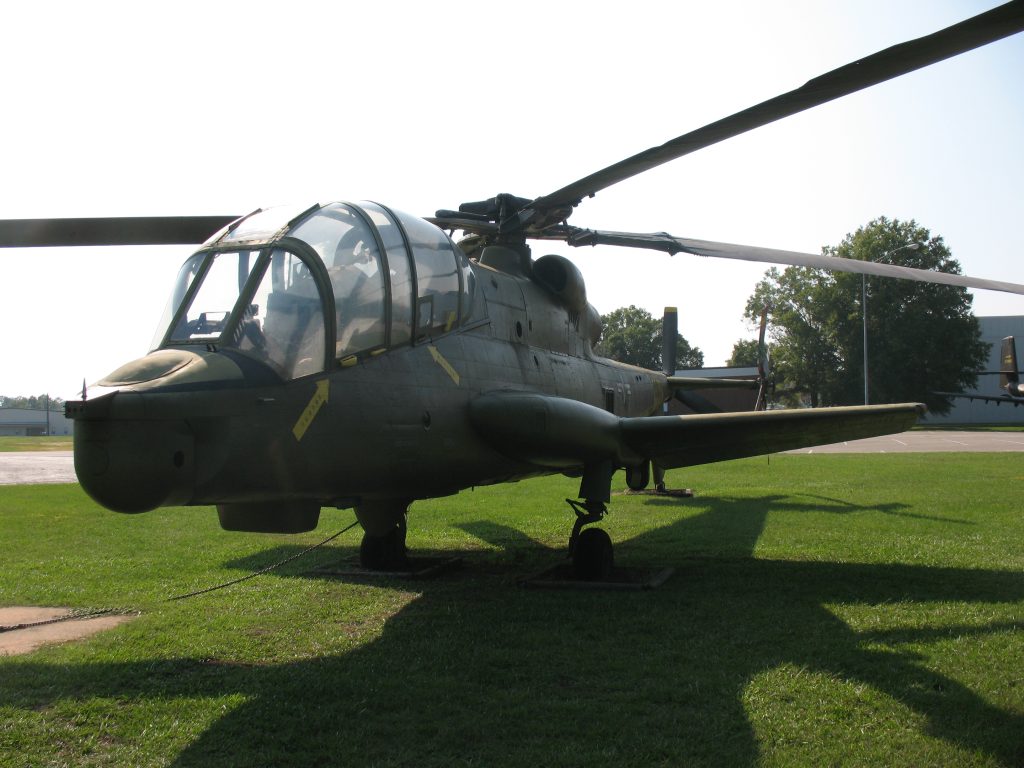
Lockheed planned to use a single General Electric T64-GE-16 turboshaft engine, producing 3,425 horsepower, in the helicopter. It would allow the aircraft to go from zero to 200 knots in just 38 seconds and back to zero in 17 seconds. Lockheed estimated a top speed of 220 knots at sea level, a service ceiling of 26,000 feet, a cruising distance of 872 miles, and a ferry distance of 2,870 miles. On August 11, 1965, Lockheed submitted a technical proposal and followed it with a cost proposal a few weeks later. On November 3, 1965, the Army expressed interest in buying 200 CL-840s at a unit price of $500,000 each. On March 23, 1966, the Army signed a contract for 10 prototype CL-840s at a total cost of $12.75 million, which included a static ground test vehicle, a prototype without weapons, and eight flying prototypes. The Army named the helicopter the Lockheed AH-56 Cheyenne. The production of the Lockheed AH-56 Cheyenne began soon after that. The Army aimed for 1,500 units by the end of 1972, but costs had risen to $1 million each. The Cheyenne flew for the first time on September 21, 1967, piloted by Don Segner. On November 15, Lockheed AH-56 Cheyenne completed a cross-country flight, reaching speeds of 115 knots at 2,000 feet. The helicopter’s public debut was on December 12, when pilot Don Segner flew it at 170 knots, at a 30° bank angle, and with precise hovering control. As a result, by March 1968, the Lockheed AH-56 Cheyenne achieved forward speeds of 170 knots, sideways speeds of 25 knots, and backward speeds of 20 knots. However, on March 12, 1969, the project faced a setback when, during a test flight of the third prototype, the rotor hit the fuselage, causing the aircraft to crash and killing the pilot, David A. Beil. The pilot was trying to create a specific vibration in the rotor during the flight.
The Cancellation
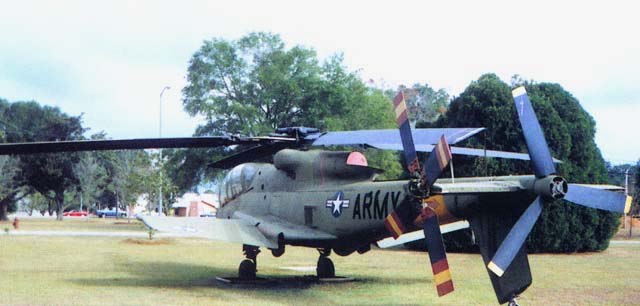
An investigation showed that safety features on the controls had been turned off. The findings indicated that the pilot’s actions caused a vibration in the rotor system couldn’t handle. Following the investigation, engineers redesigned the rotor and control systems of Lockheed AH-56 Cheyenne. On April 10, 1969, the Army issued a formal notice to Lockheed, requiring them to fix certain issues within 15 days. However, on May 19, the Army canceled production of the Lockheed AH-56 Cheyenne because Lockheed did not meet performance standards. By claiming Lockheed had broken the contract, the Army aimed to recover $54 million. However, the development contract remained active, with $17 million budgeted for fiscal years 1970 and 1971. More testing continued until another serious accident occurred on September 17, 1969, at the NASA Ames Research Center wind tunnel when a Cheyenne was destroyed. Even though the conditions that caused the accident were artificial and would not happen during flight, it contributed significantly to the Lockheed AH-56 Cheyenne’s eventual cancellation. Further testing continued until 1972 and revealed additional problems, which were fixed one by one. But by then the Air Force’s A-10 Thunderbolt II program was well underway, and the Lockheed AH-56 Cheyenne’s price tag had climbed to more than $3 million. Congress began to question whether two similar programs were needed. A demonstration of the Lockheed AH-56 Cheyenne’s firepower was held at the Yuma Proving Grounds to win over the Senate Armed Services Committee. Despite having fired 130 TOW missiles successfully before, the first missile fired that day failed to launch. Even with this failure, the Lockheed AH-56 Cheyenne was already in trouble. After spending over $400 million and with the unit cost at the time reaching over $4 million, the Cheyenne was ultimately canceled on August 9, 1972. In the Grounded Dreams series, although the Lockheed AH-56 Cheyenne was never deployed, the helicopter and its test pilot, Don Segner, received awards for engineering and piloting achievements. Read more Grounded Dreams articles HERE.









Wk’d “human factors “ on the AH 56 while assigned with
USAPEG at Ft Huachuca Arizona 1969.