







By Randy Malmstrom
Since his childhood, Randy Malmstrom has had a passion for aviation history and historic military aircraft in particular. He has a particular penchant for documenting specific airframes with a highly detailed series of walk-around images and an in-depth exploration of their history, which have proved to be popular with many of those who have seen them, and we thought our readers would be equally fascinated too. This installment of Randy’s Warbird Profiles takes a look at the Heritage Flight Museum’s Cessna O-2A Skymaster.

Cessna O-2A Skymaster, s/n 68-6892 owned and flying out of Heritage Flight Museum in Burlington, Washington. Nicknames for the aircraft type included “Oscar Deuce”, “The Duck”, “Mixmaster”, “Push-Pull”, “Cessna Suck-Blow”, or “The B.S. Bomber” (for the O-2B psychological warfare — PSYOPS — variant). In 1966, the U.S. Air Force commissioned Cessna Aircraft Company for an observation and close air support aircraft. The O-2 was based on the civilian Cessna 337 Super Skymaster (the 336 Skymaster was introduced in 1961) and had fixed landing gear and a smaller engine; the 337 was fitted with a more powerful engine and retractable landing gear, and the “Super” was later removed from the name (I never knew it to be referred to by that name while my dad flew and sold Cessna and other aircraft, and I rode in a civilian Mixmaster).

First flights took place in 1967 and the U.S. Air Force took its first deliveries in March of that year. The aircraft had a crew of two: pilot and observer. It was fitted with two Continental IO-360-C fuel-injected, flat six-cylinder engines. Among other possible considerations, the “push-pull” design allowed for a simpler one-engine operating procedure and a high wing mount for better visibility (and the handling characteristics should an engine fail).

Armament included: an SUU-11/A 7.62 mm Minigun pod, rocket pods on fixed underwing hard points to deliver smoke rockets, bombs or flares for defensive purposes or to designate targets for air strikes. The crew could carry machine guns and grenades.

The tandem twin engine arrangement — which Cessna called Centre Line Thrust — with the nose-mounted tractor engine and rear-mounted pusher engine, mitigated asymmetrical thrust issues in an engine failure, and had the added advantage of more easily allowing for a high-wing configuration for a clear field of view for observation. The U.S. Federal Aviation Administration (FAA) created a new center thrust rating for pilots.

Among others, the O-2 was flown by the U.S. Air Force, U.S. Navy, U.S. Air National Guard, and many militaries and civil air guards flew them including the South Vietnamese Air Force. During the Vietnam War, the O-2 was seen as a replacement for the O-1 Birddog. The O-2A flew Forward Air Control (FAC) missions for the 20th Tactical Air Support Squadron. The O-2B variant was equipped with loudspeakers and a leaflet dispenser for use in the psychological operations (PSYOPS) role.

U.S. Air Force records indicate that a total of 178 of its O-2s were lost in the Vietnam War. The 336 & 337 Skymasters have had issues regarding wing attachment points and Cessna promulgated a Supplemental Inspection Document (SID) for “relatively involved” inspection procedures and, in a brief search of FAA records, I found several Service Difficulty Reports (SDR’s).


The logs of this particular aircraft reveal it was stationed Hurlburt Air Force Base, Florida, as a FAC training aircraft during the Vietnam War era: in fact, records indicate that all FAC squadron pilots received their training at Hurlburt during the Vietnam War. In 2005, this aircraft was acquired by Heritage Flight Museum, Burlington, Washington, where I took these photos.


About the author
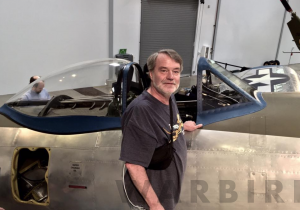 Randy Malmstrom grew up in a family steeped in aviation culture. His father, Bob, was still a cadet in training with the USAAF at the end of WWII, but did serve in Germany during the U.S. occupation in the immediate post-war period, where he had the opportunity to fly in a wide variety of types which flew in WWII. After returning to the States, Bob became a multi-engine aircraft sales manager and as such flew a wide variety of aircraft; Randy frequently accompanied him on these flights. Furthermore, Randy’s cousin, Einar Axel Malmstrom flew P-47 Thunderbolts with the 356th FG from RAF Martlesham Heath. He was commanding this unit at the time he was shot down over France on April 24th, 1944, spending the rest of the war as a prisoner of war. Following his repatriation at war’s end, Einar continued his military service, attaining the rank of Colonel. He was serving as Deputy Wing Commander of the 407th Strategic Fighter Wing at Great Falls AFB, MT at the time of his death in a T-33 training accident on August 21, 1954. The base was renamed in his honor in October 1955 and continues to serve in the present USAF as home to the 341st Missile Wing. Randy’s innate interest in history in general, and aviation history in particular, plus his educational background and passion for WWII warbirds, led him down his current path of capturing detailed aircraft walk-around photos and in-depth airframe histories, recording a precise description of a particular aircraft in all aspects.


I was assigned to the 603rd Direct Air Support Squadron, from November ’70 until December ’71, That flew the O2a out of Osan AB Korea. I have read numerous articles about the O2 and have never seen this mentioned.