
By Randy Malmstrom
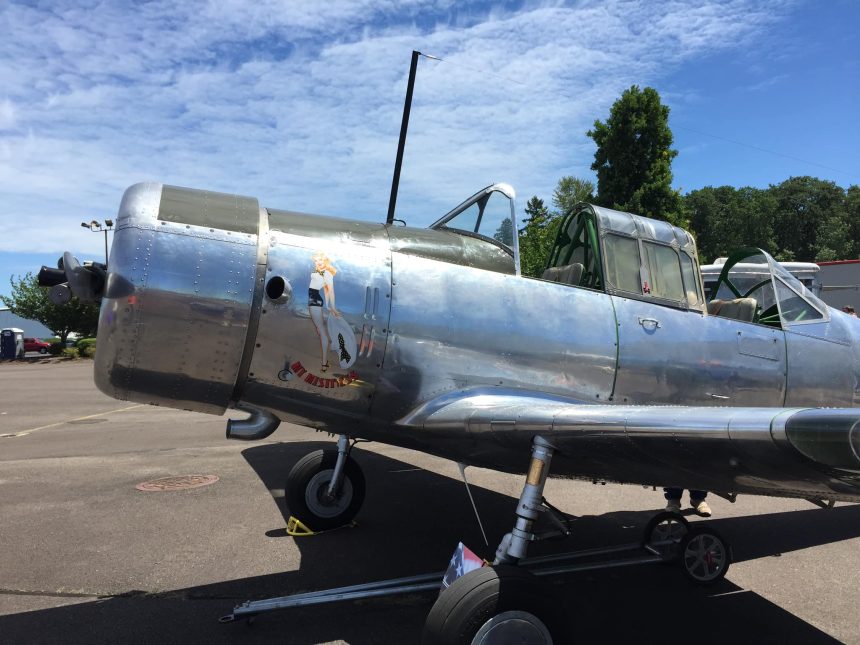
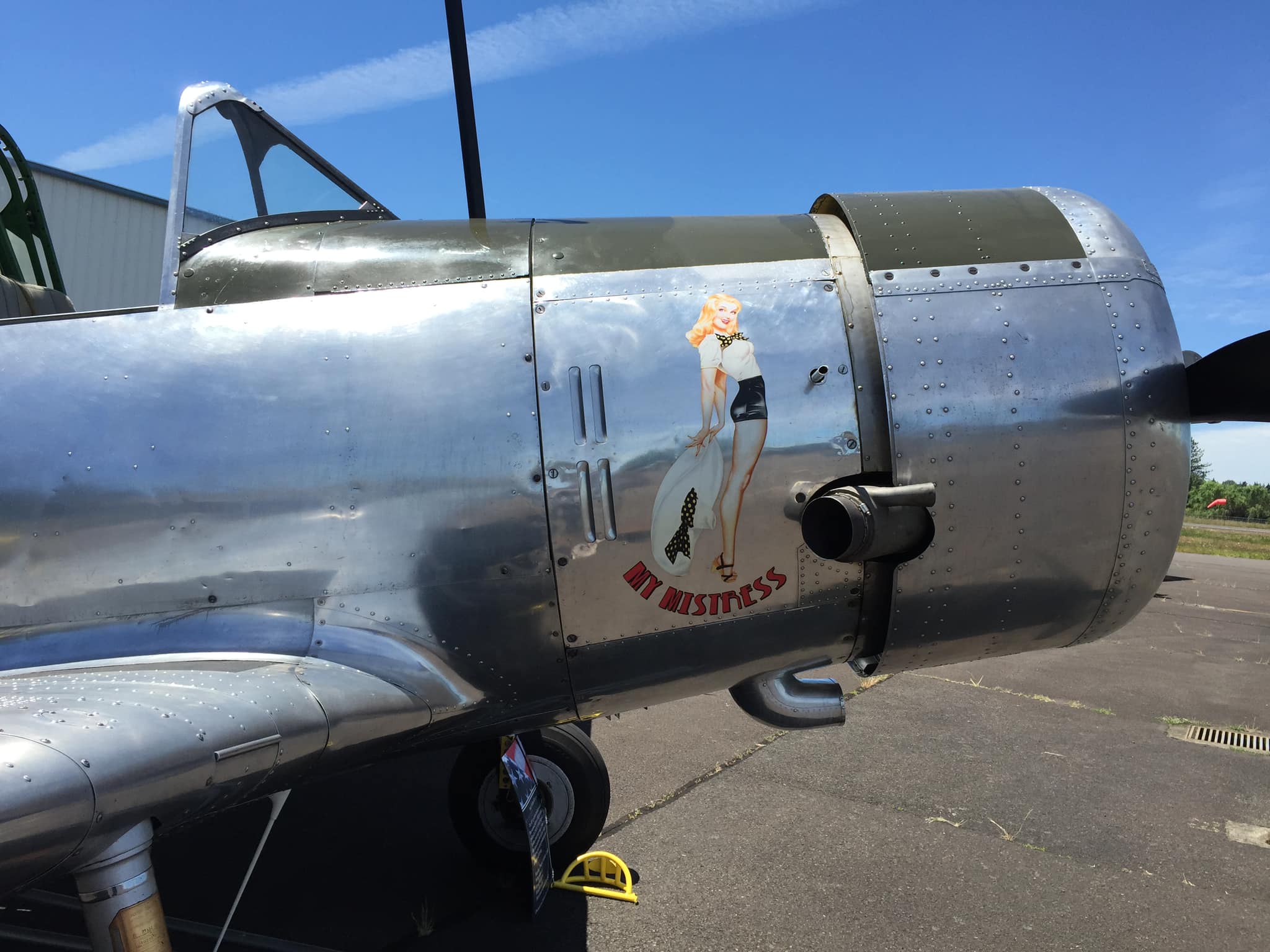
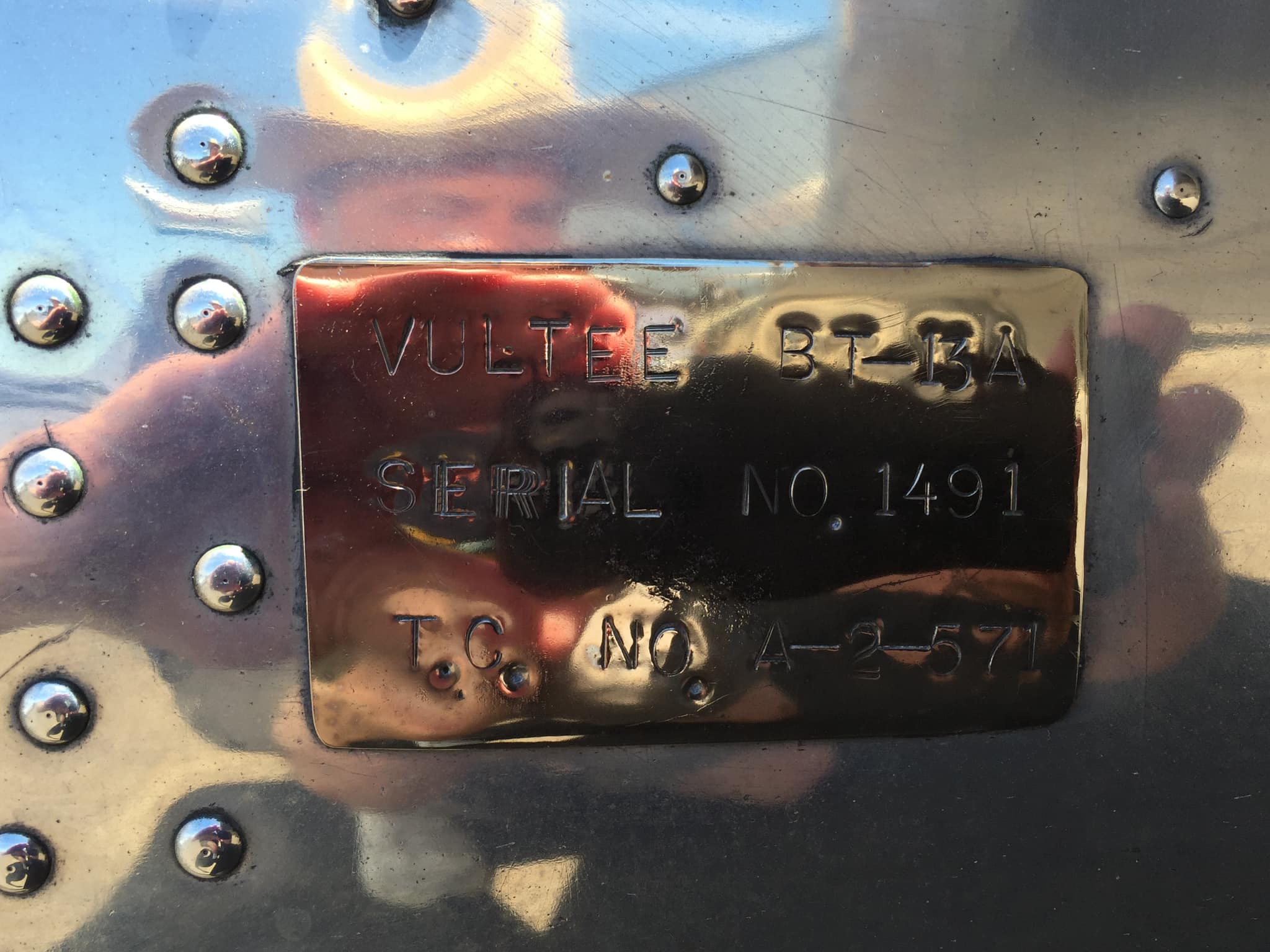
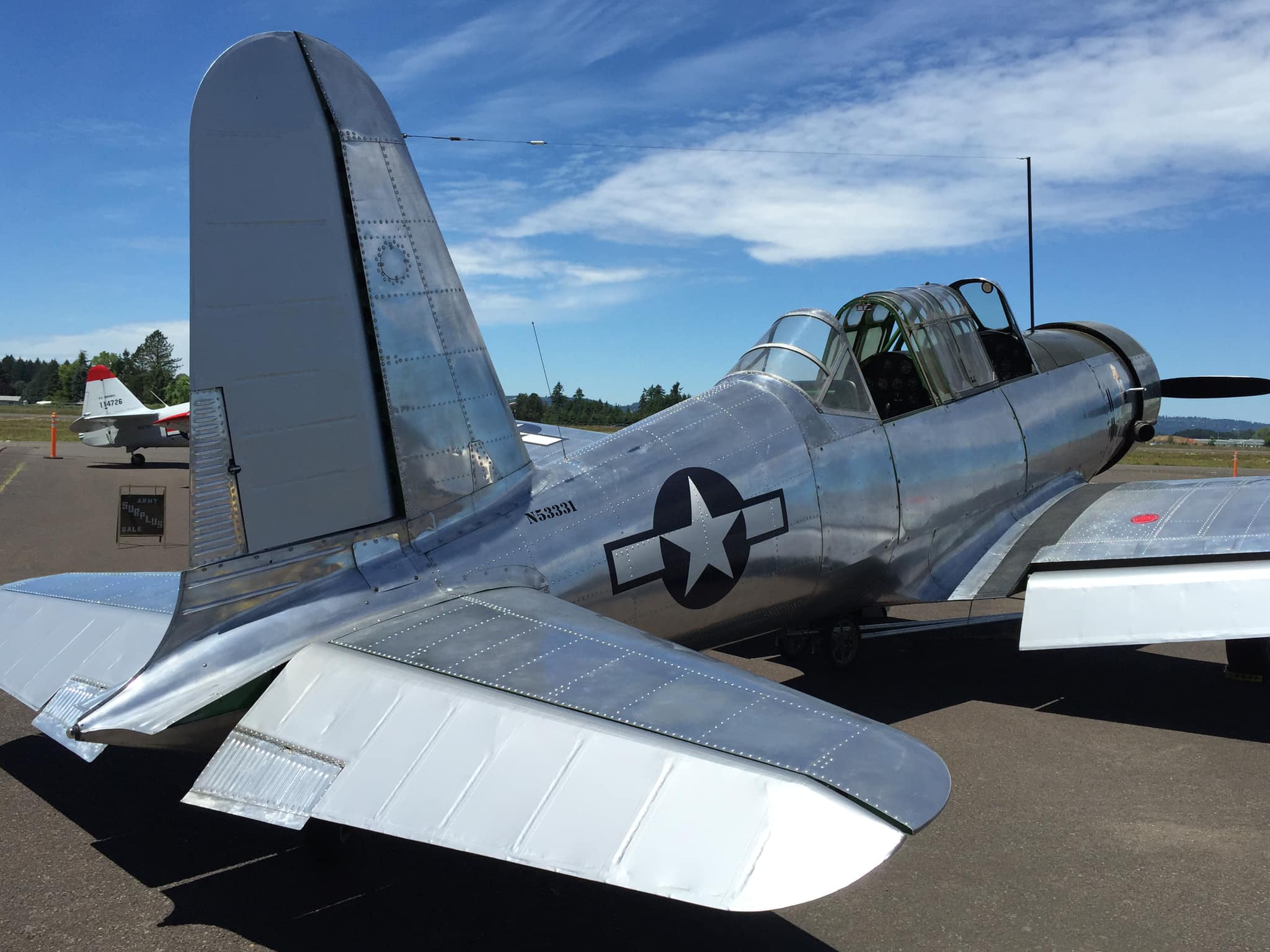
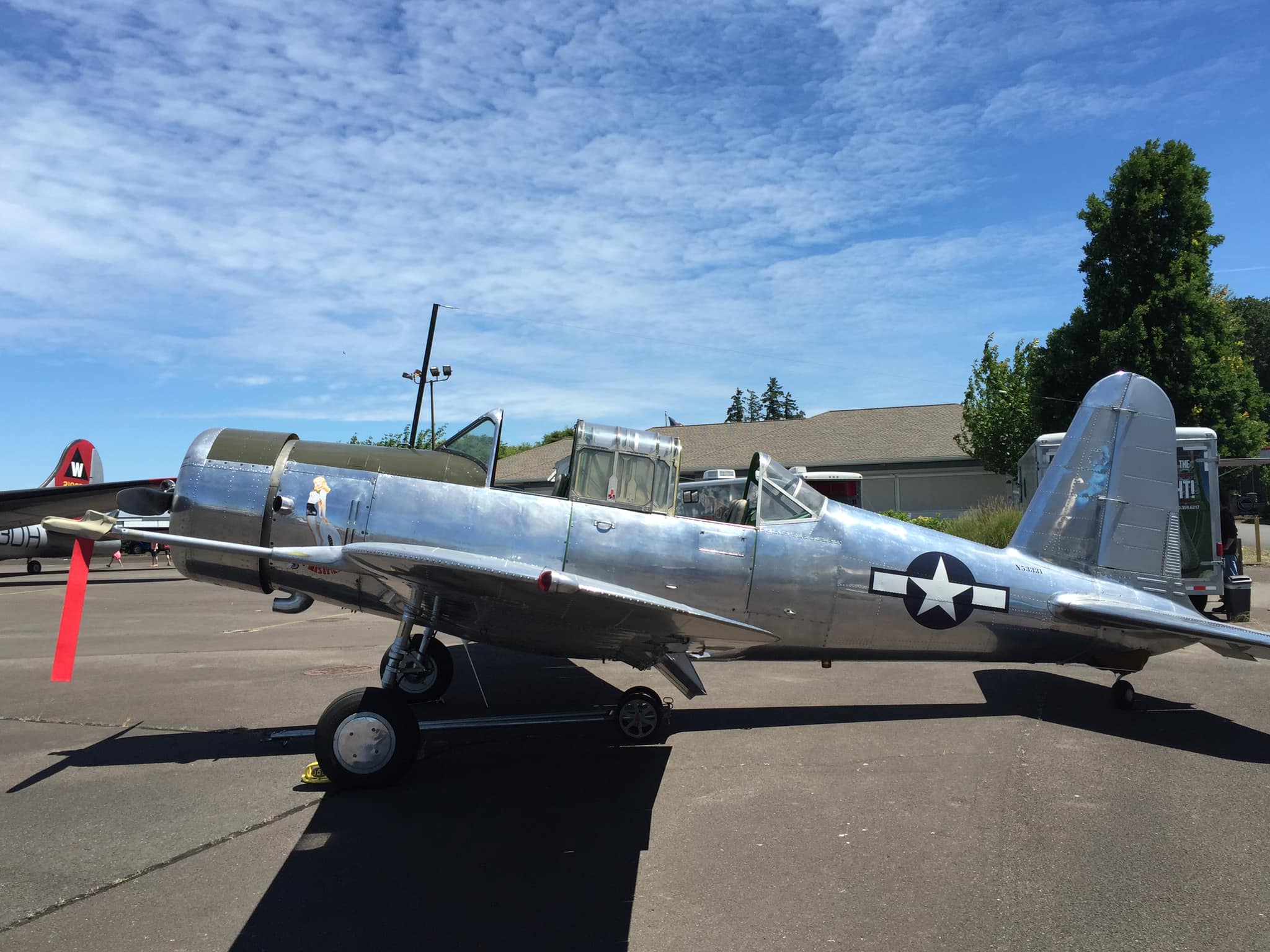
Vultee BT-13A Valiant “Vibrator“, s/n 1491, N53331. As far as I have been able to determine, this particular airplane was built in 1940 by Vultee Aircraft Company (named for Gerald F. “Jerry” Vultee) as a BT-13A, s/n 1491, with the designation FAA Approved Model List (AML) Original Type Certificate No. A-2-571 (now FAR-23, revised May 4, 2009, for all fabric-covered components). It apparently served (at least) with the Army Air Forces Eastern Flying Training Command (EFTC), a unit of the United States Army Air Forces, and based at Bainbridge Army Airfield, Georgia (airfield code B) – see historical photos.
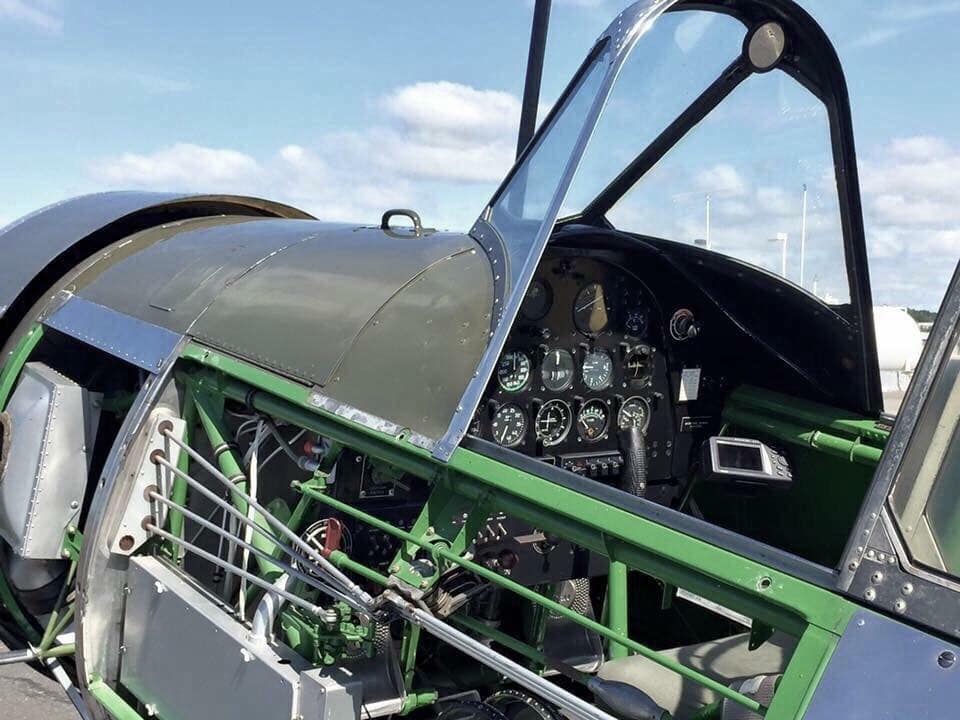
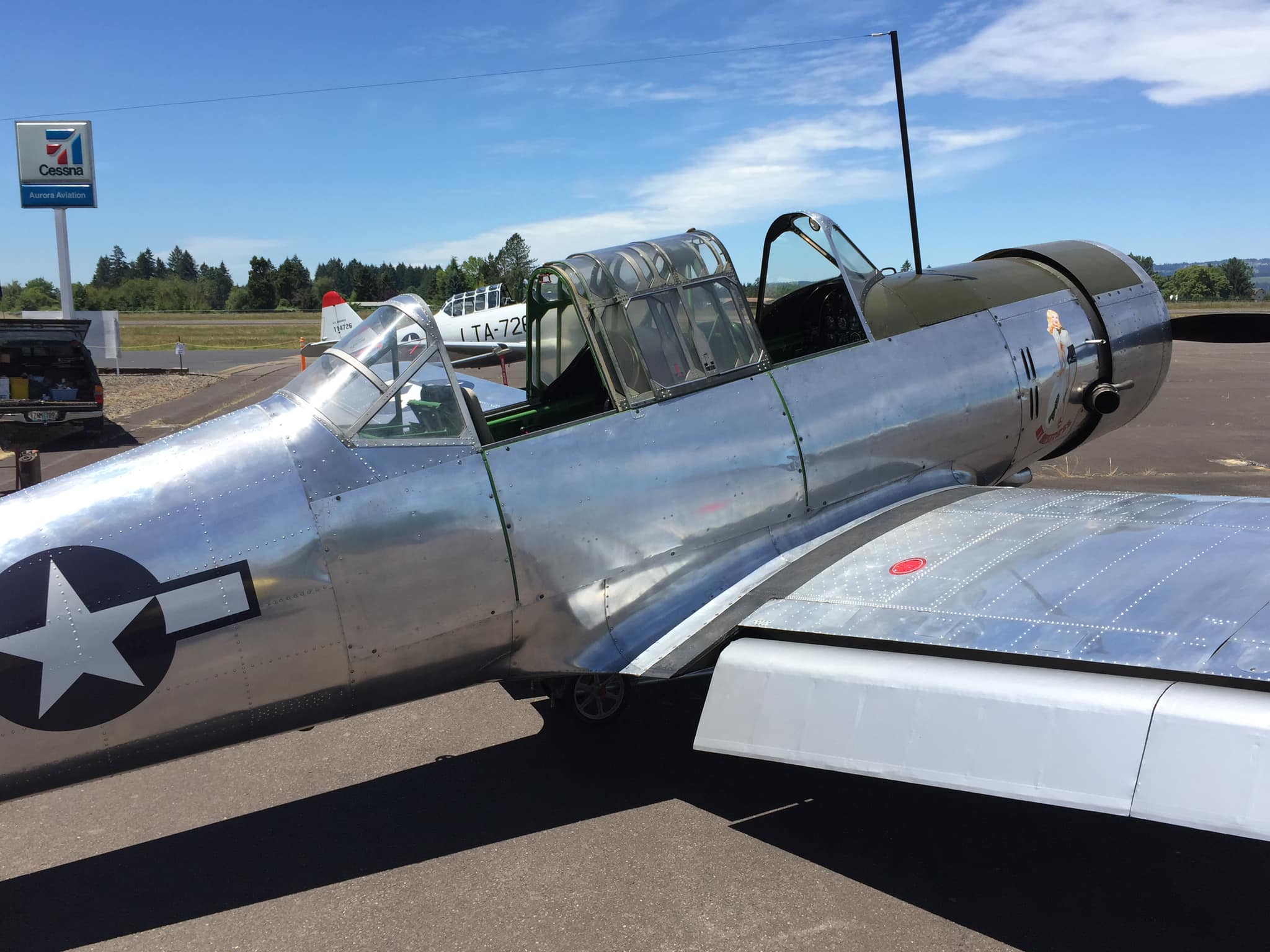
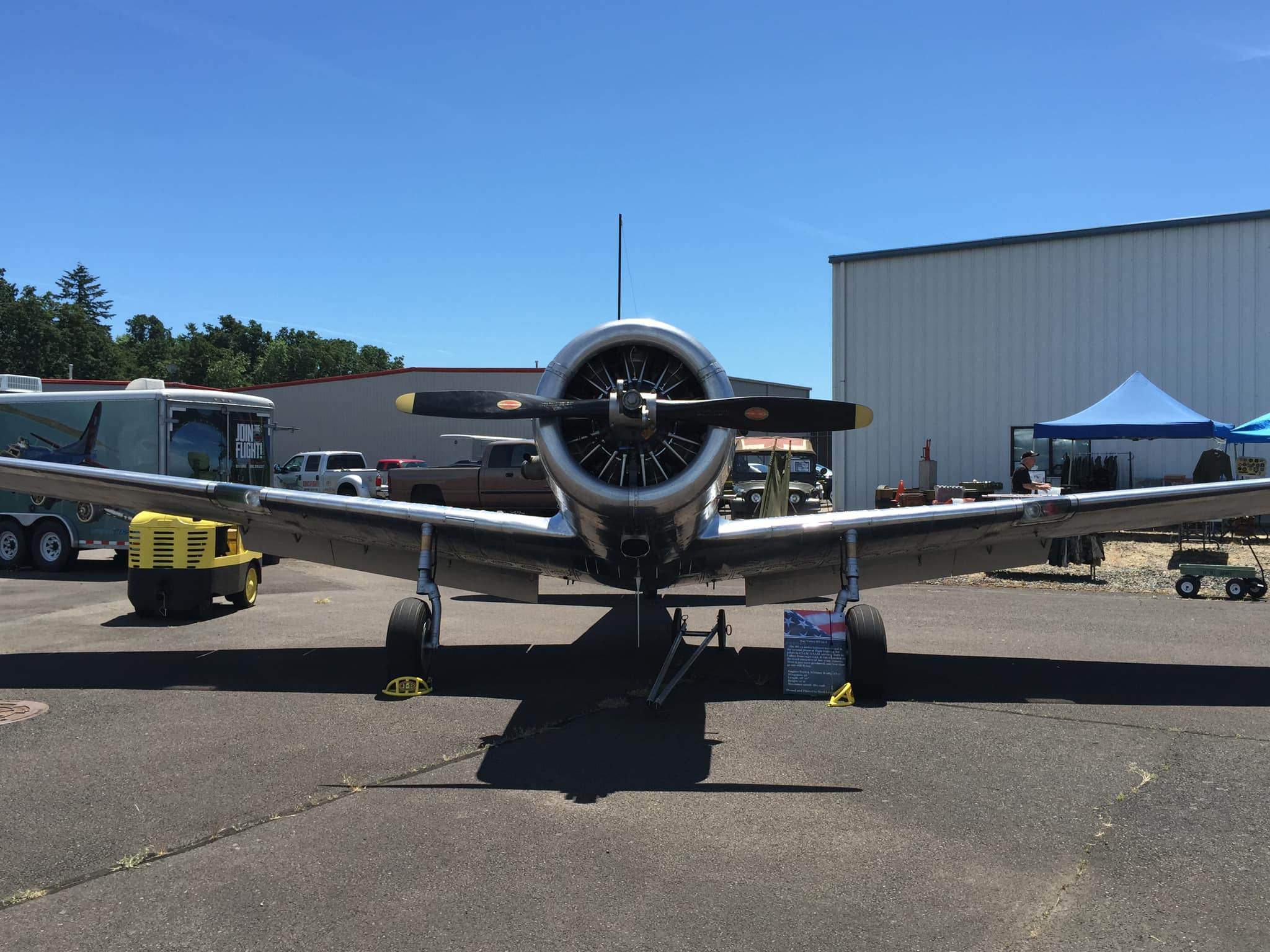
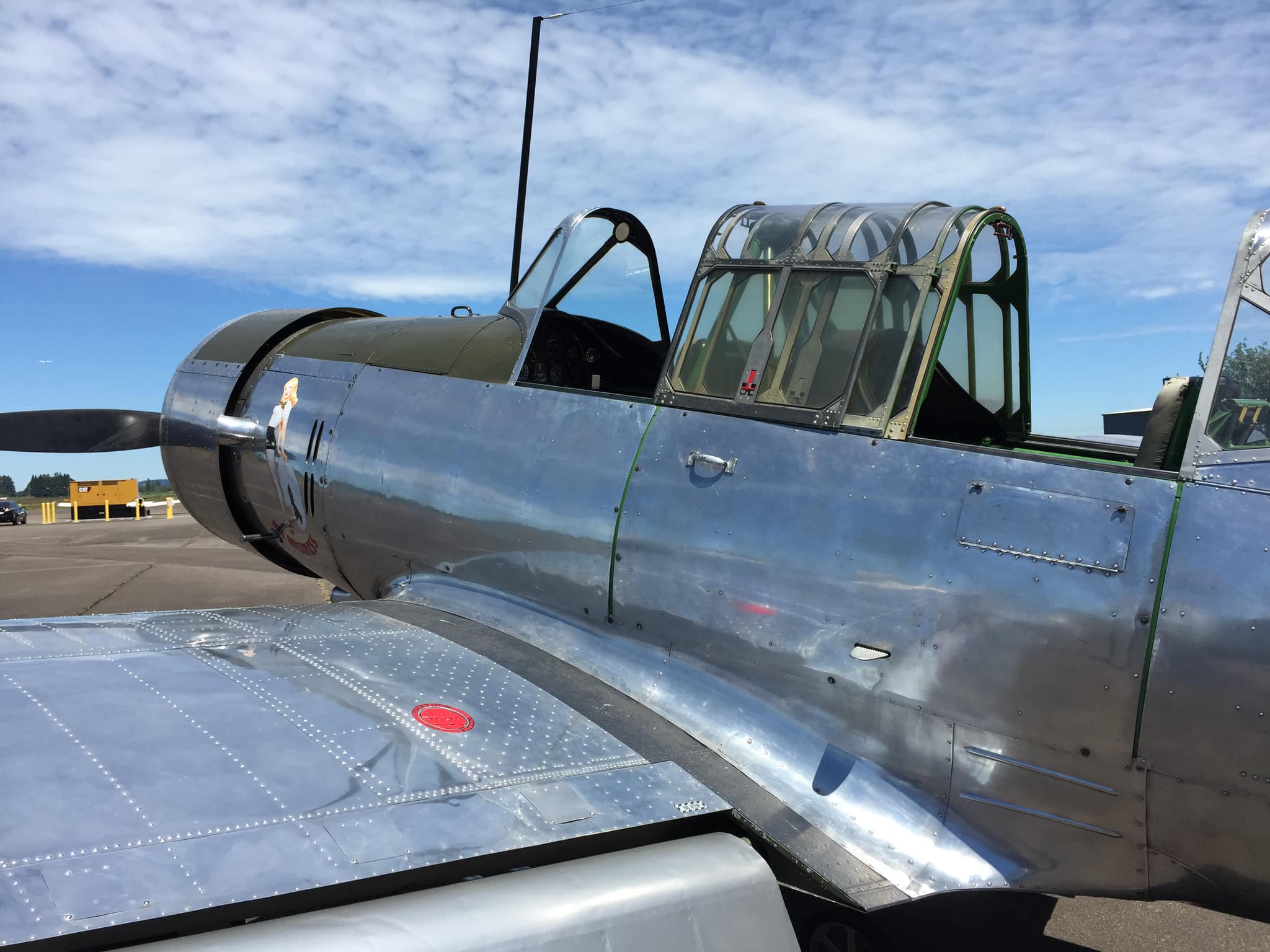
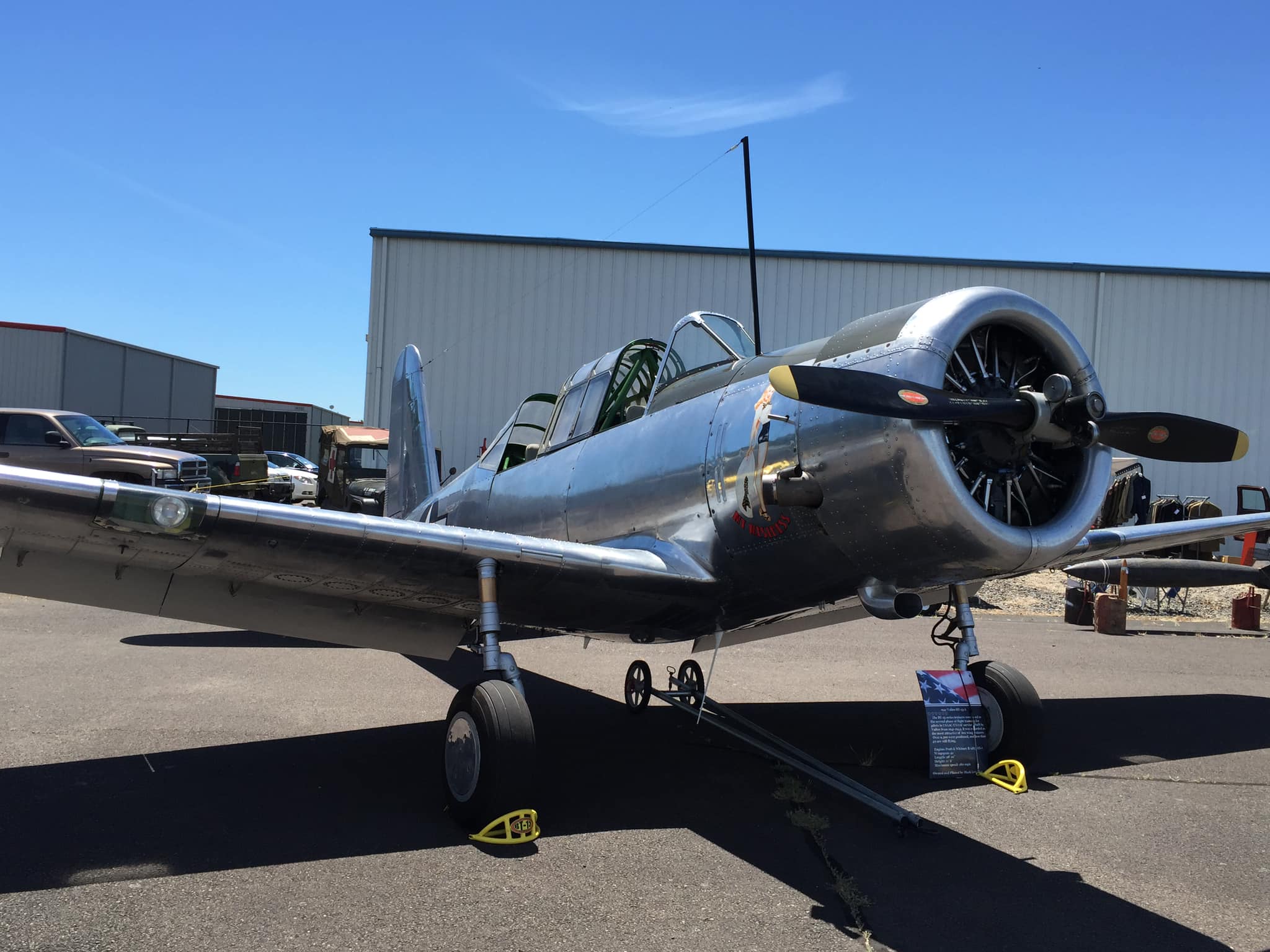
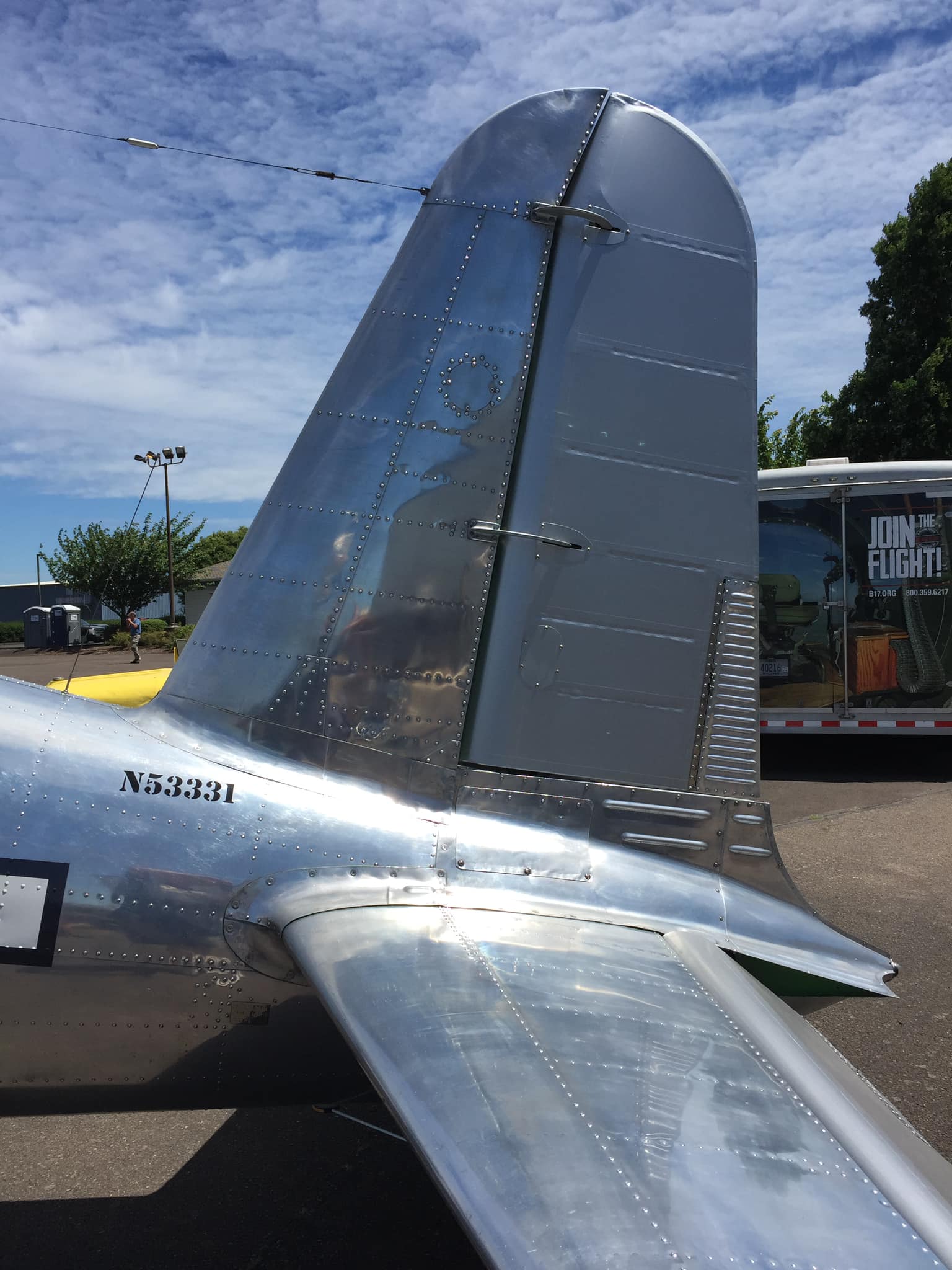
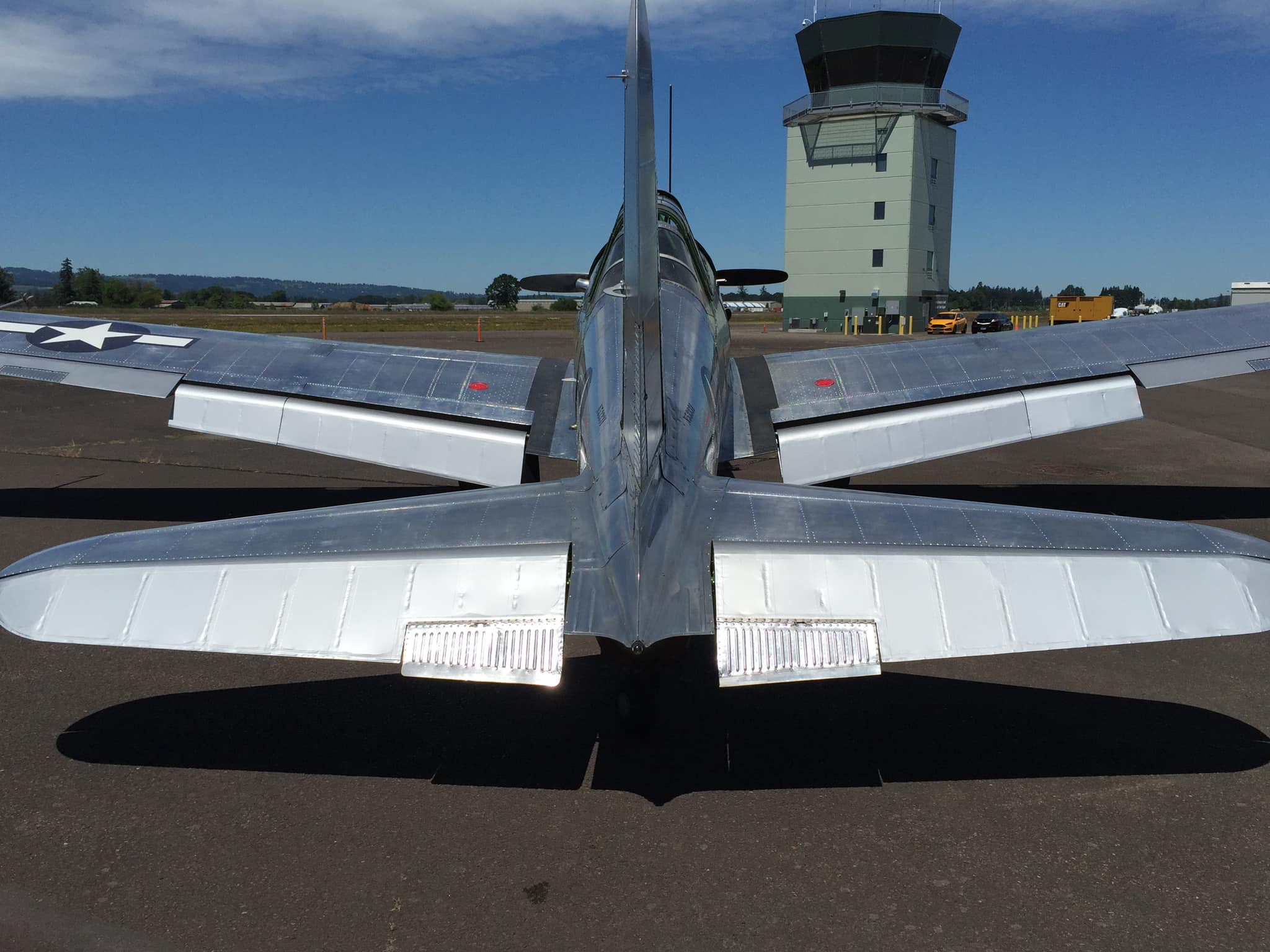
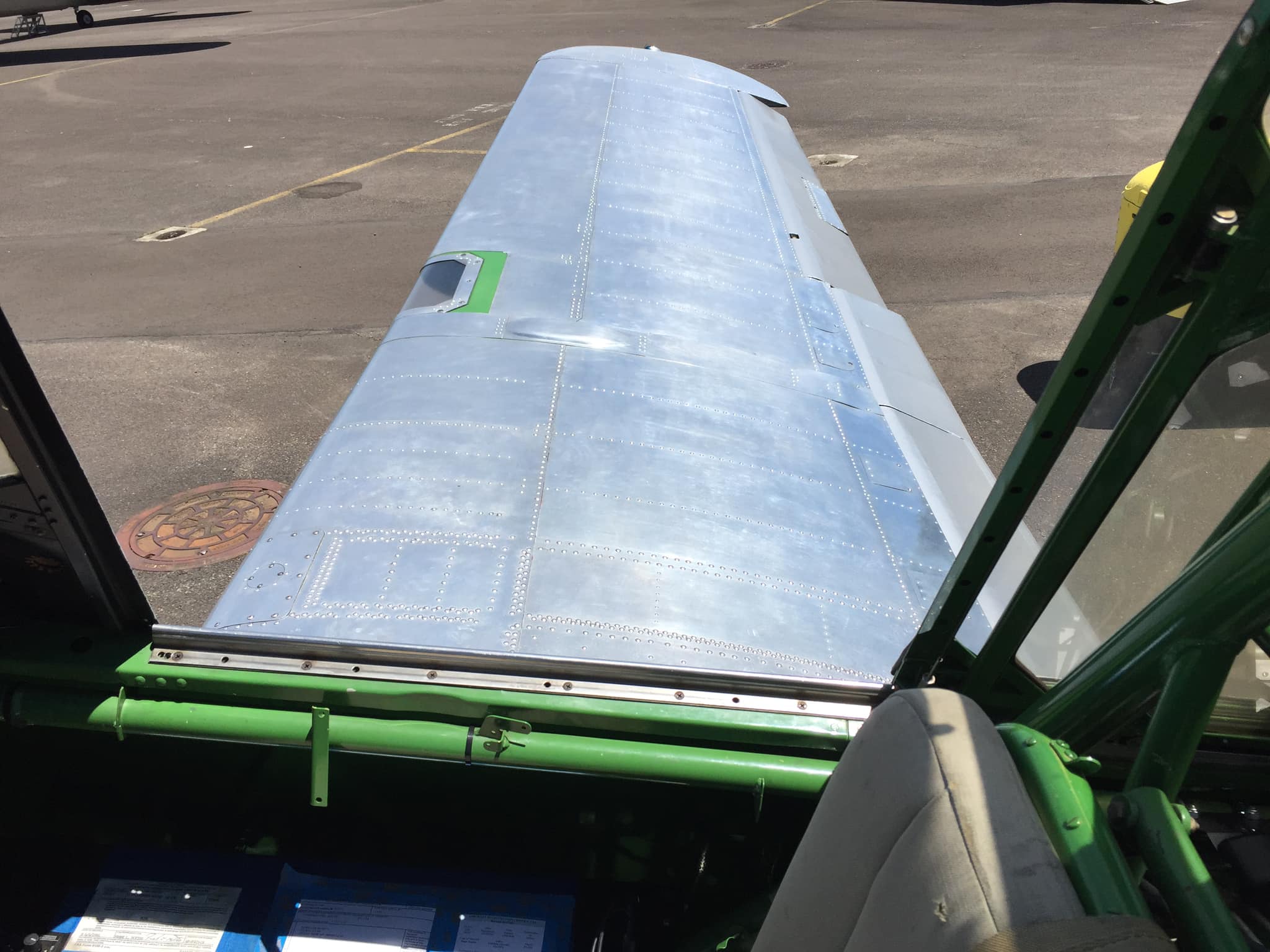
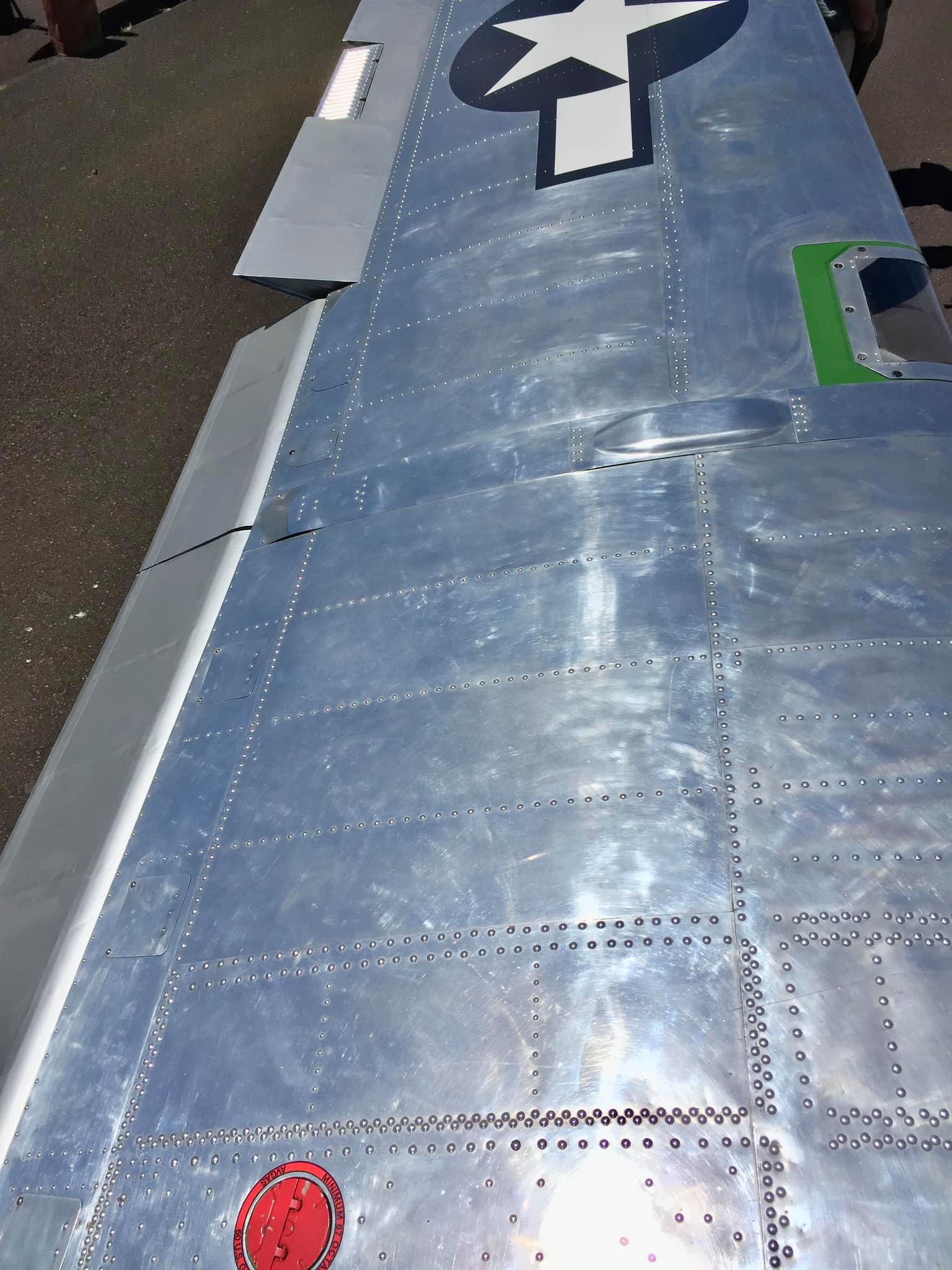
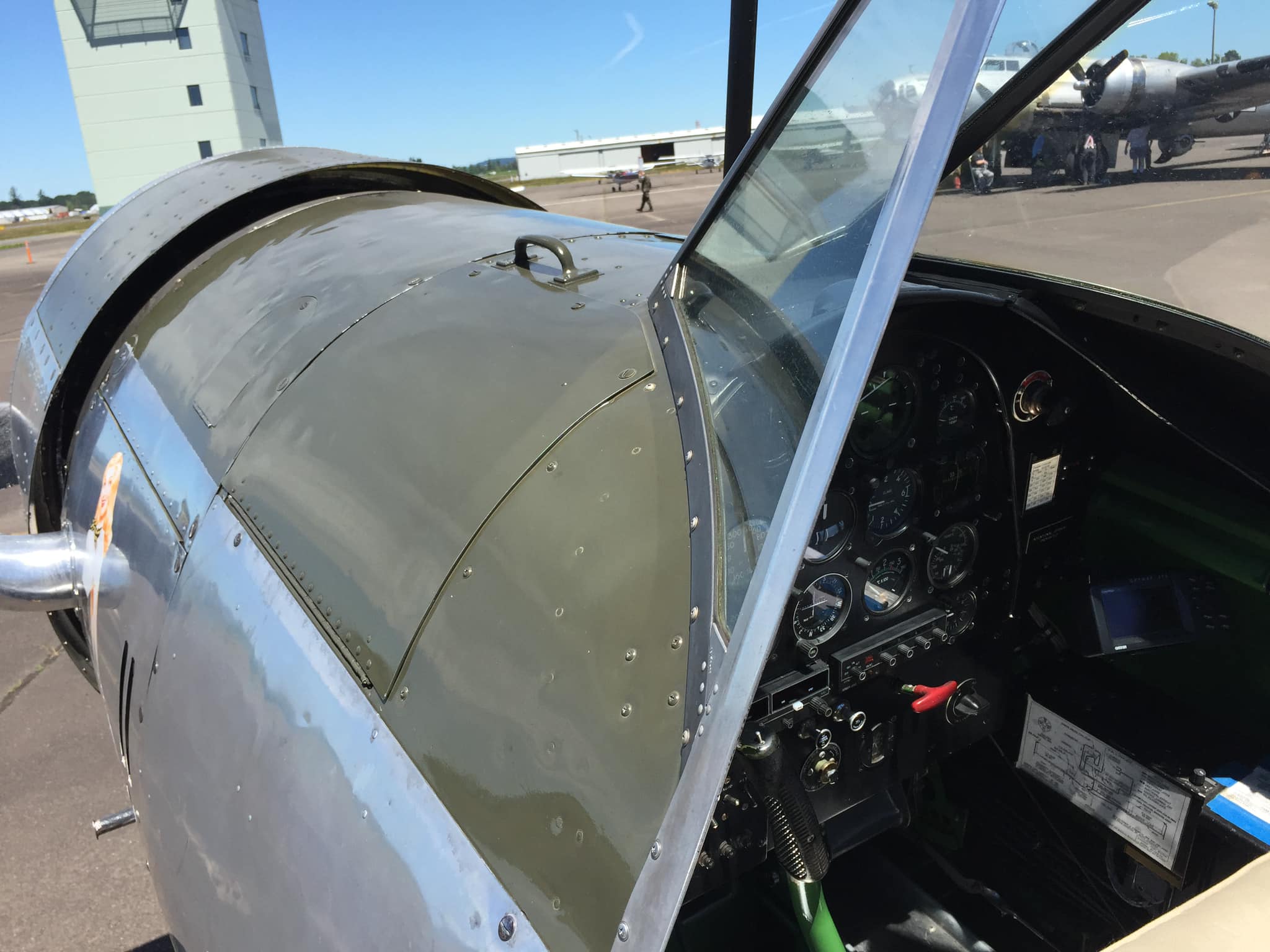
All in all, the BT-13 Valiant Basic trainer represented the largest order ever placed by the Army Air Corps. Before FAA deregistration and as of this writing, this airworthy aircraft was painted as “My Mistress” and owned by Mark Lewallen of Ocean Park, Washington, who was unable to provide me with, nor have I found, details of the aircraft’s history following its being stricken from service. Powerplant in this aircraft is a Pratt & Whitney R-985-AN-14B Wasp Junior (s/n AN-2035) nicknamed “The Dancing Engine.” I think it is generally agreed that the Valiant received the “Vultee Vibrator” nickname because of its very pronounced buffet when near stalling, canopy vibrations at high air speed, and the irritating harmonic sound and vibration of the two-stage propeller setting at high pitch (rattling of the airframe and/or canopy on maneuvers, back pressure on the stick brought the nose up and the airspeed down, causing a tremor in the airframe, and in a spin the canopy would clatter “like a tub full of rocks“).
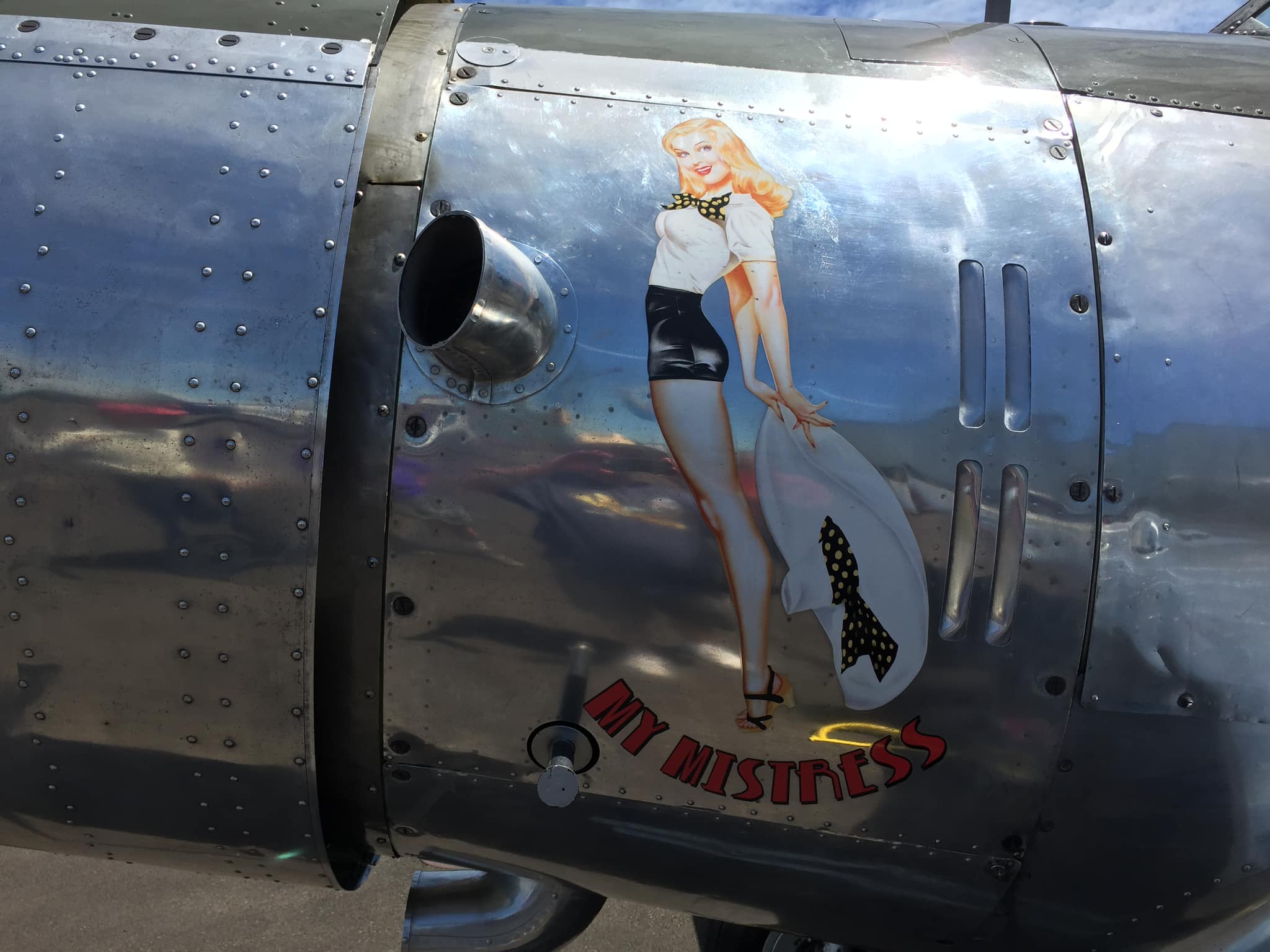
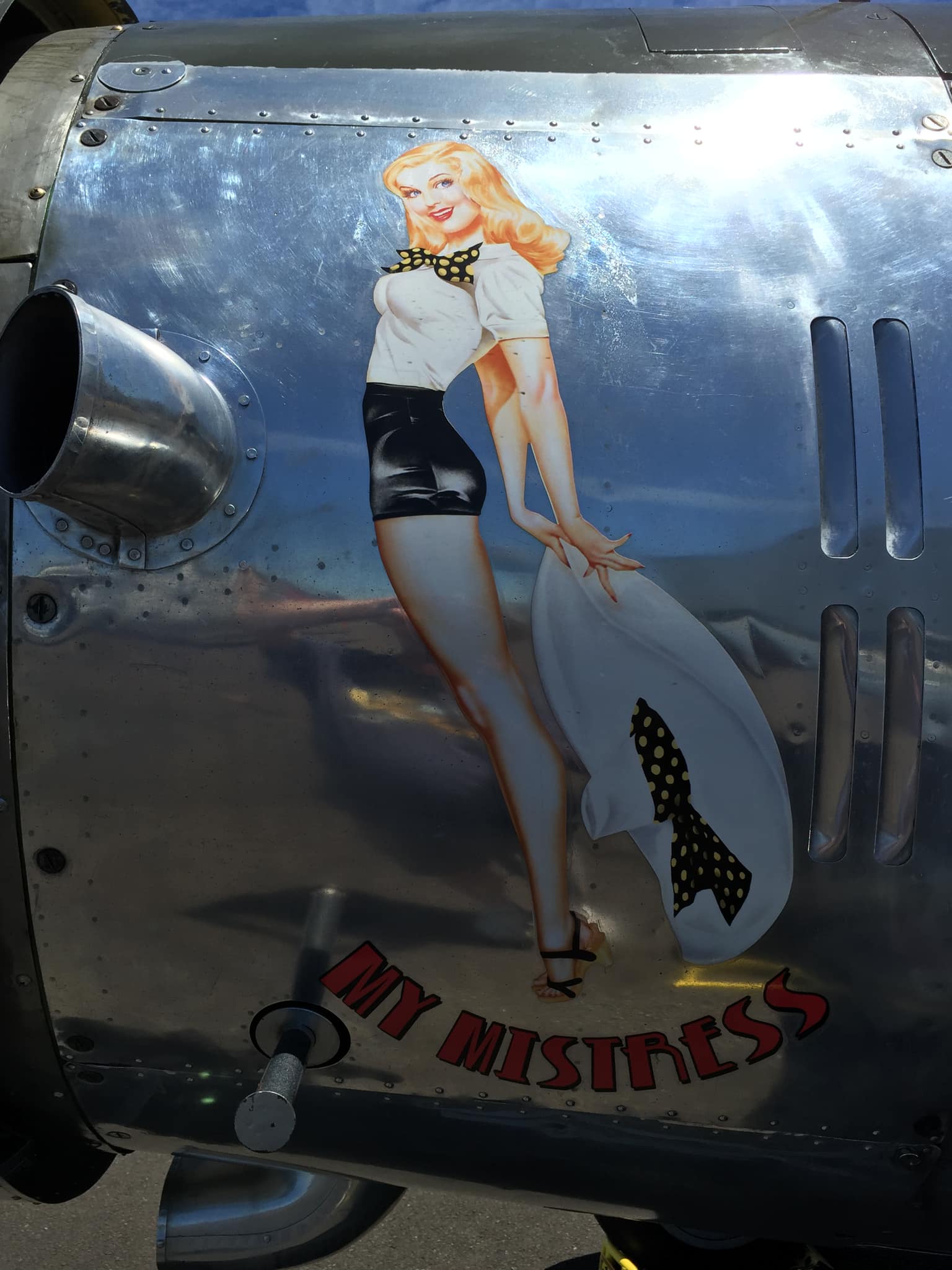
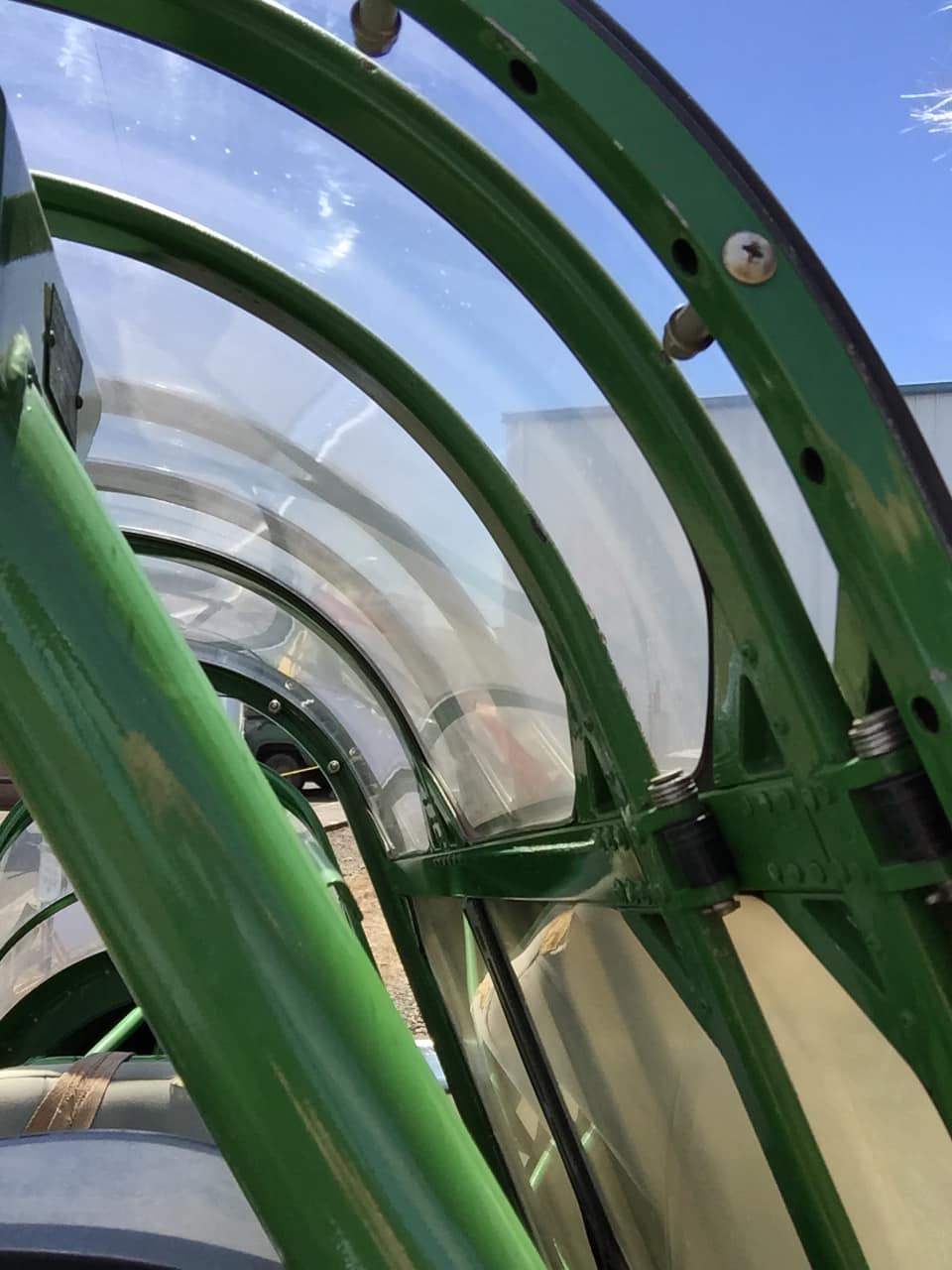
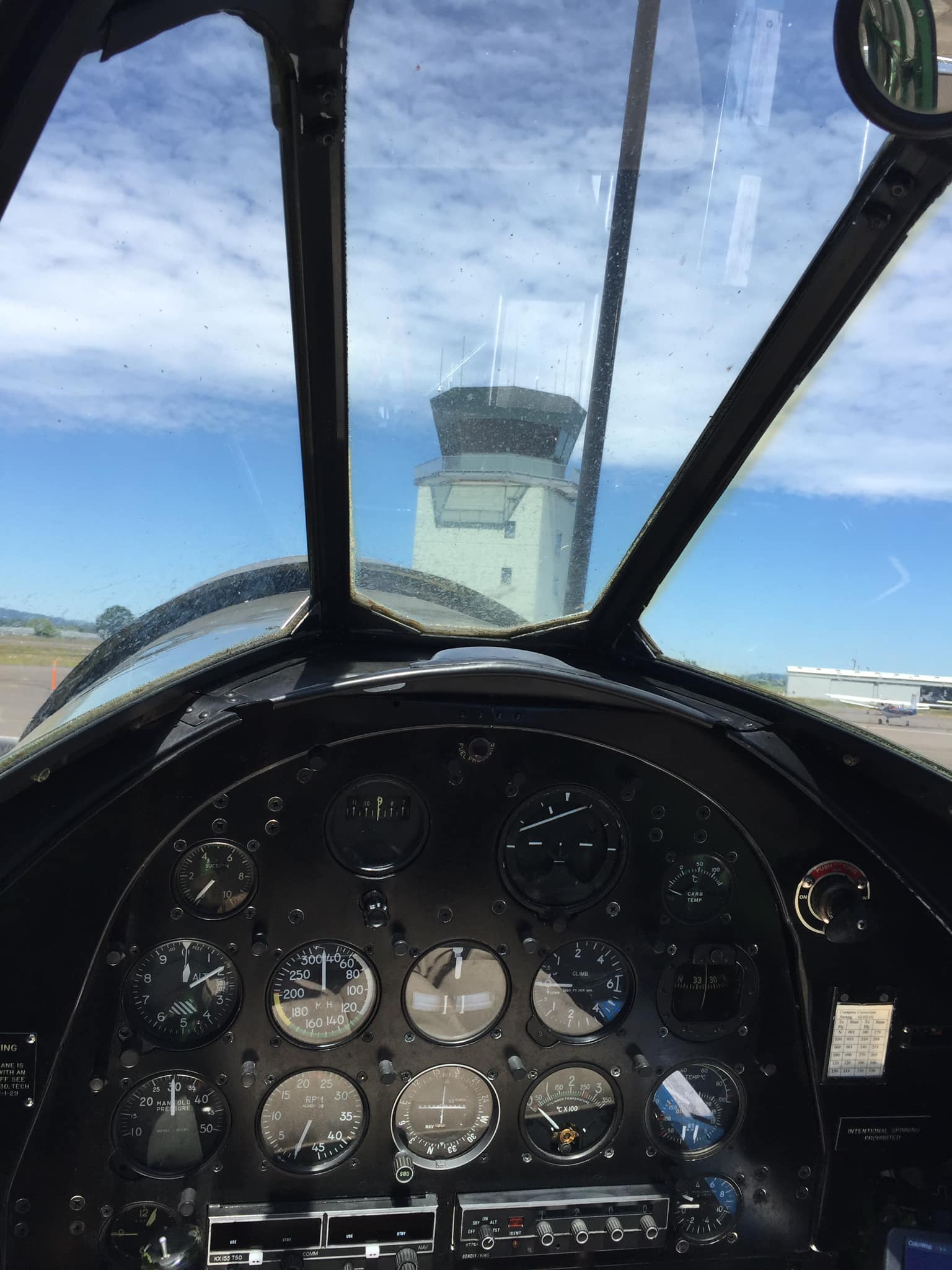
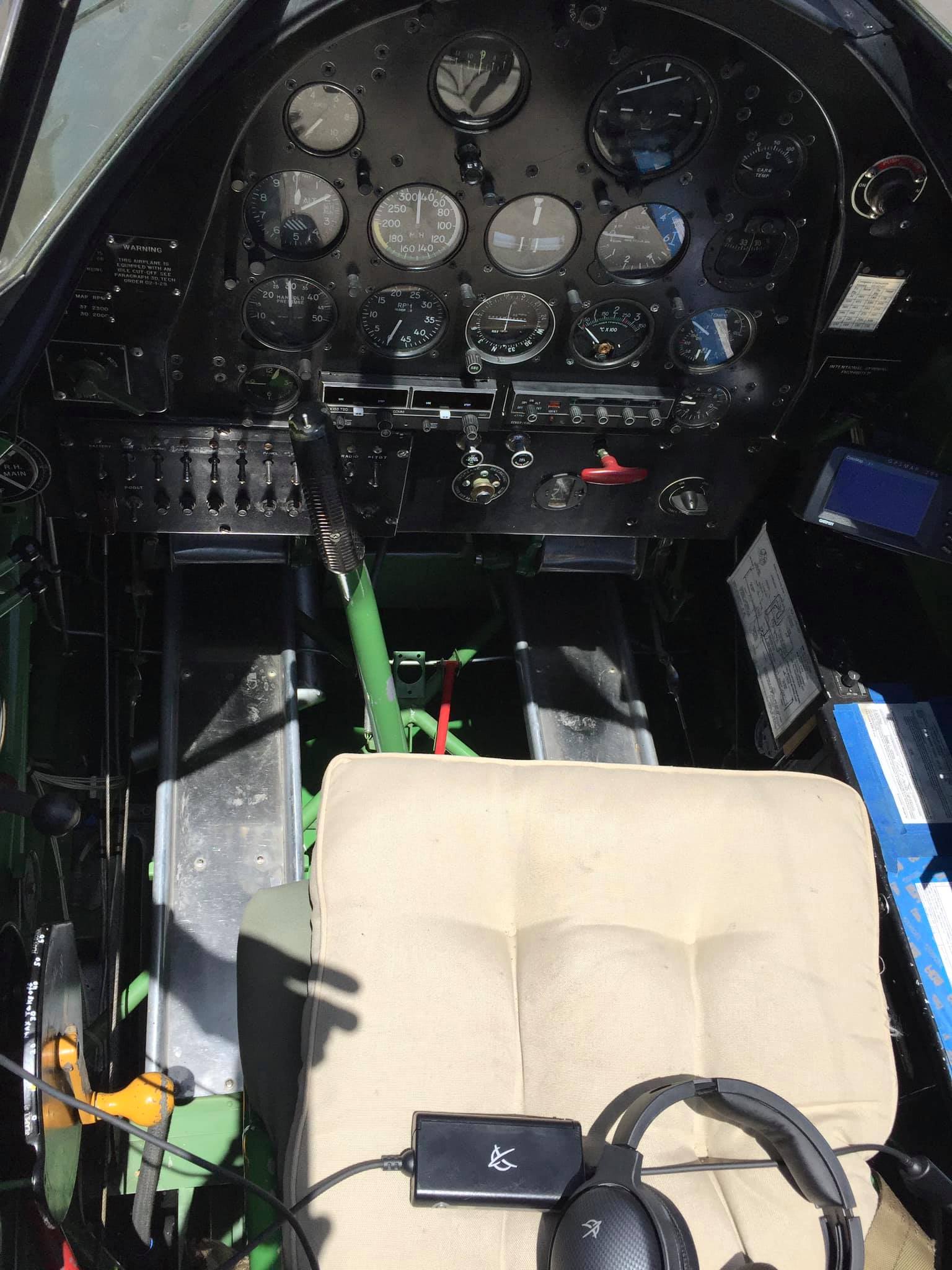
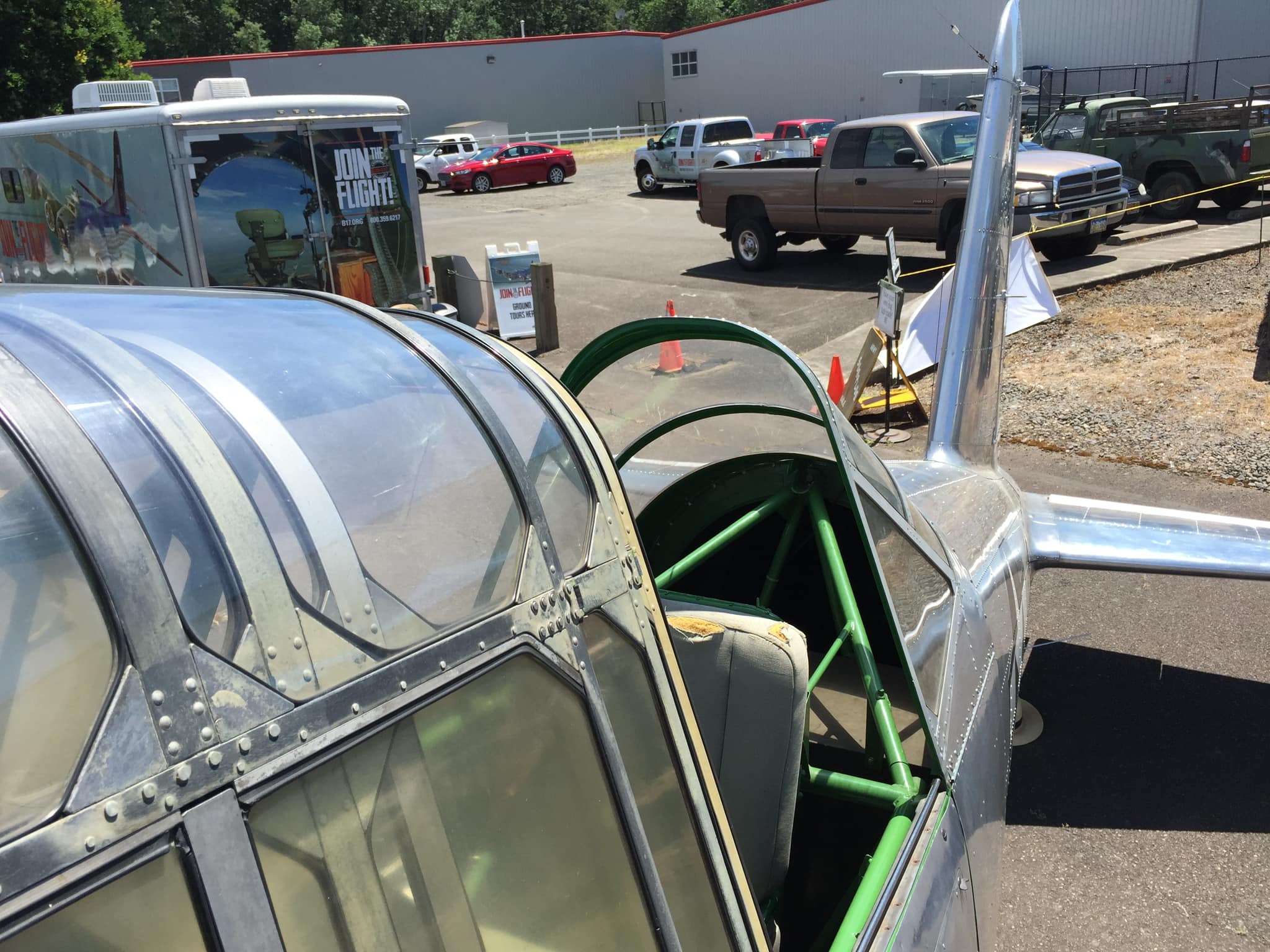
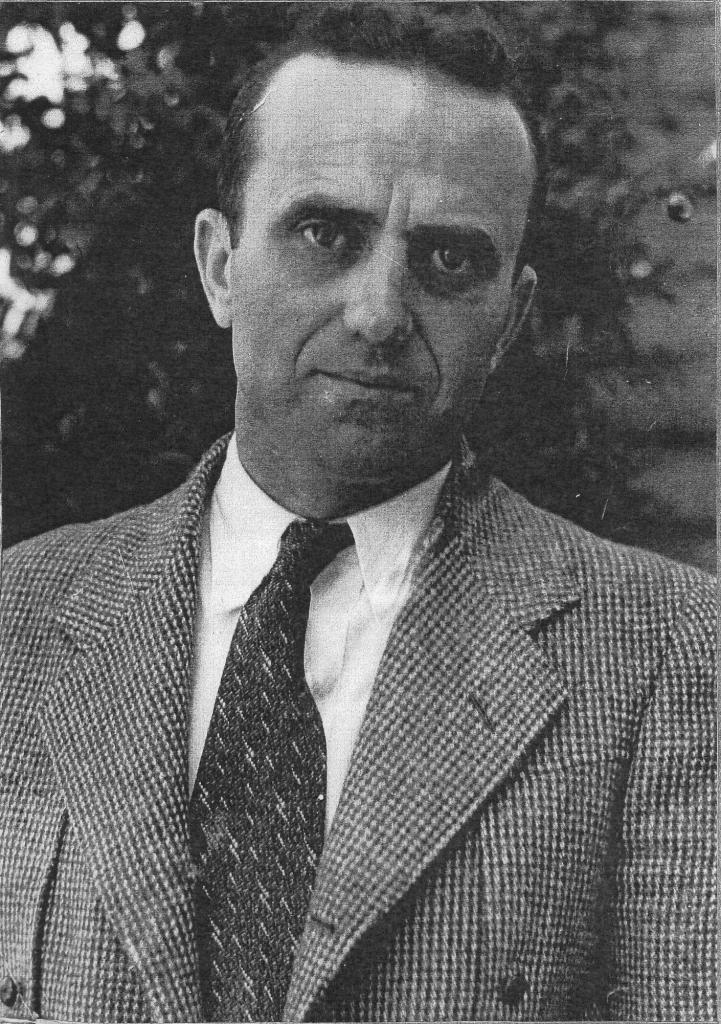
In 1938, the U.S. Army Air Corps (USAAC) sought a new tandem-seat, dual-control basic trainer. Richard Palmer, Chief Designer for Vultee Aircraft Corporation of Downey, California, produced the prototype V-51 in March 1939. Gerard “Jerry” Freebairn Vultee had worked for some of the early aircraft manufacturers, and among them were Lockheed and Douglas, before starting his own firm, the Vultee Aircraft Division of the Aviation Manufacturing Corporation, in 1937. Vultee is credited with helping introduce the engine nacelle or cowling, the fully retractable landing gear, replaceable fuselage panels, the V-type windshield, and Vultee’s large wing flaps that made it possible to reduce landing speeds.
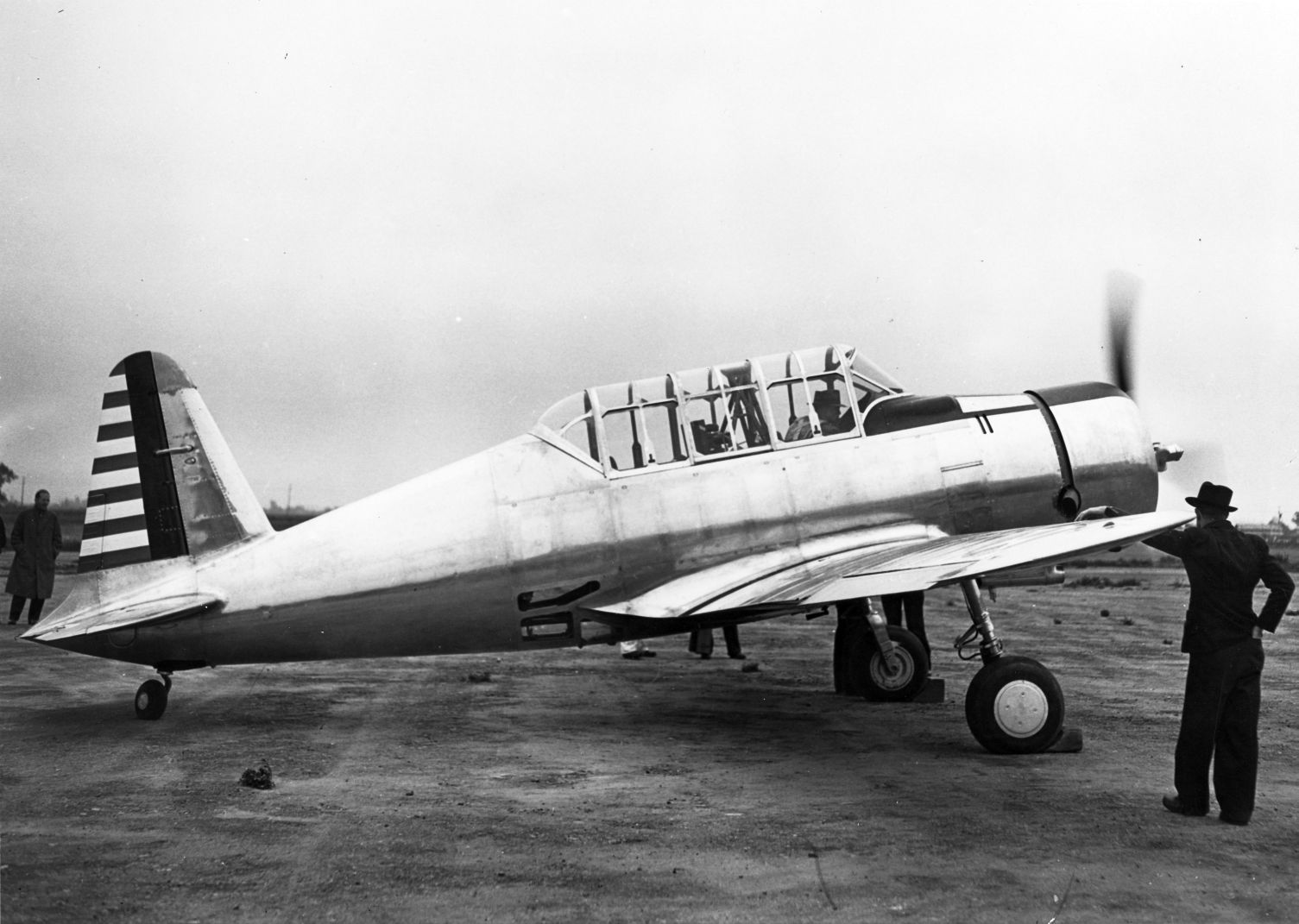
By 1936, he was aware of the growing threat of war on many fronts, and he converted the Vultee V-1A passenger plane to the V-11 dive-bomber, which became known as the Vultee Vengeance Dive Bomber. That aircraft was sold in what at that time was considered large numbers to Brazil, China, Turkey, and the USSR; they flew in the Spanish Civil War, and in defense of the Chinese Nationalist government. Vultee and his wife, Sylvia, were killed when they crashed in his personal 1936 Stinson Reliant SR-9C in Arizona on January 29, 1938, but the Vultee name endured with the incorporation of Vultee Aircraft Corporation in 1939. Also in 1939, the USAAC placed an initial order for 300 aircraft and took its first deliveries by June 1940.
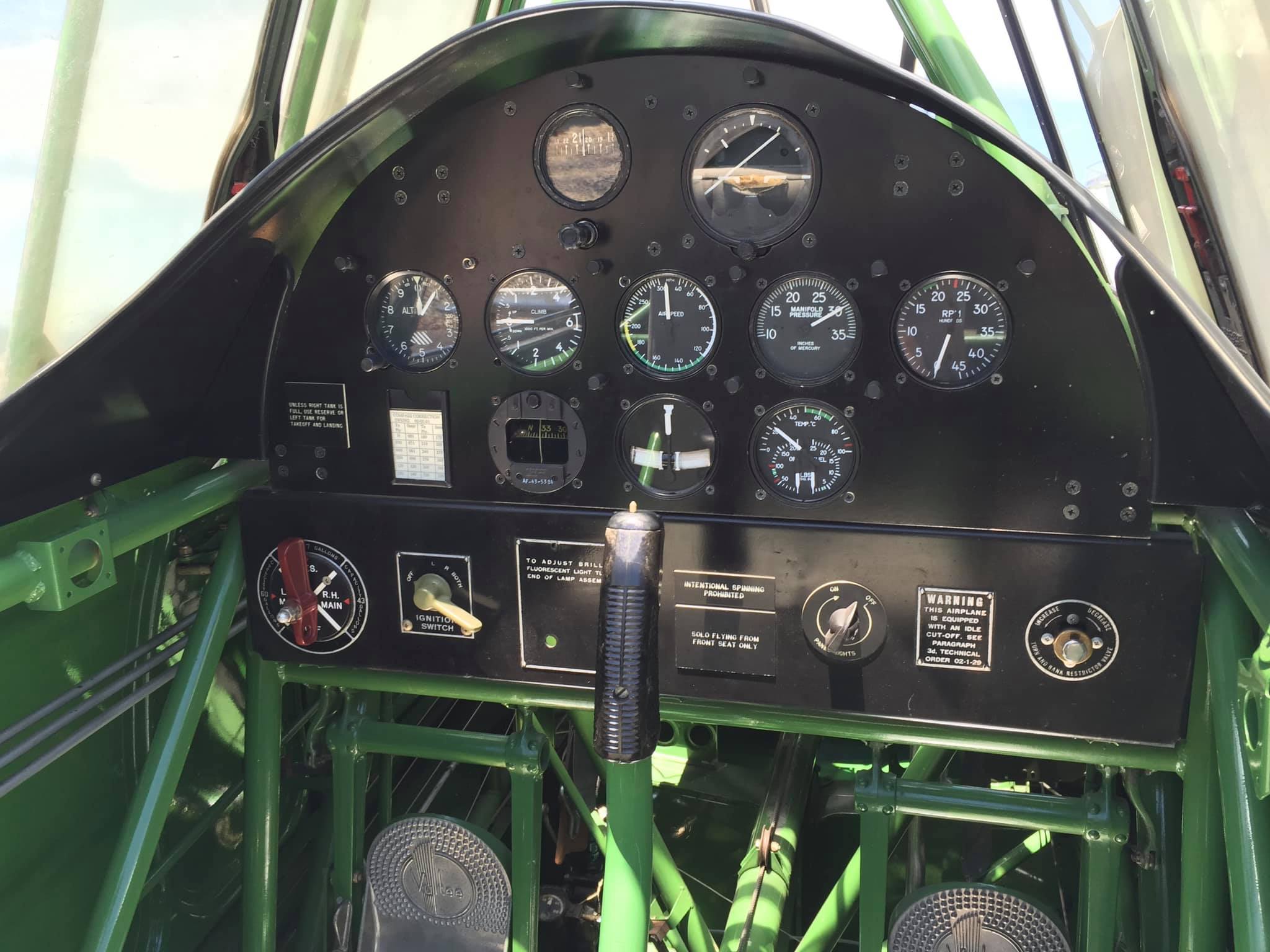
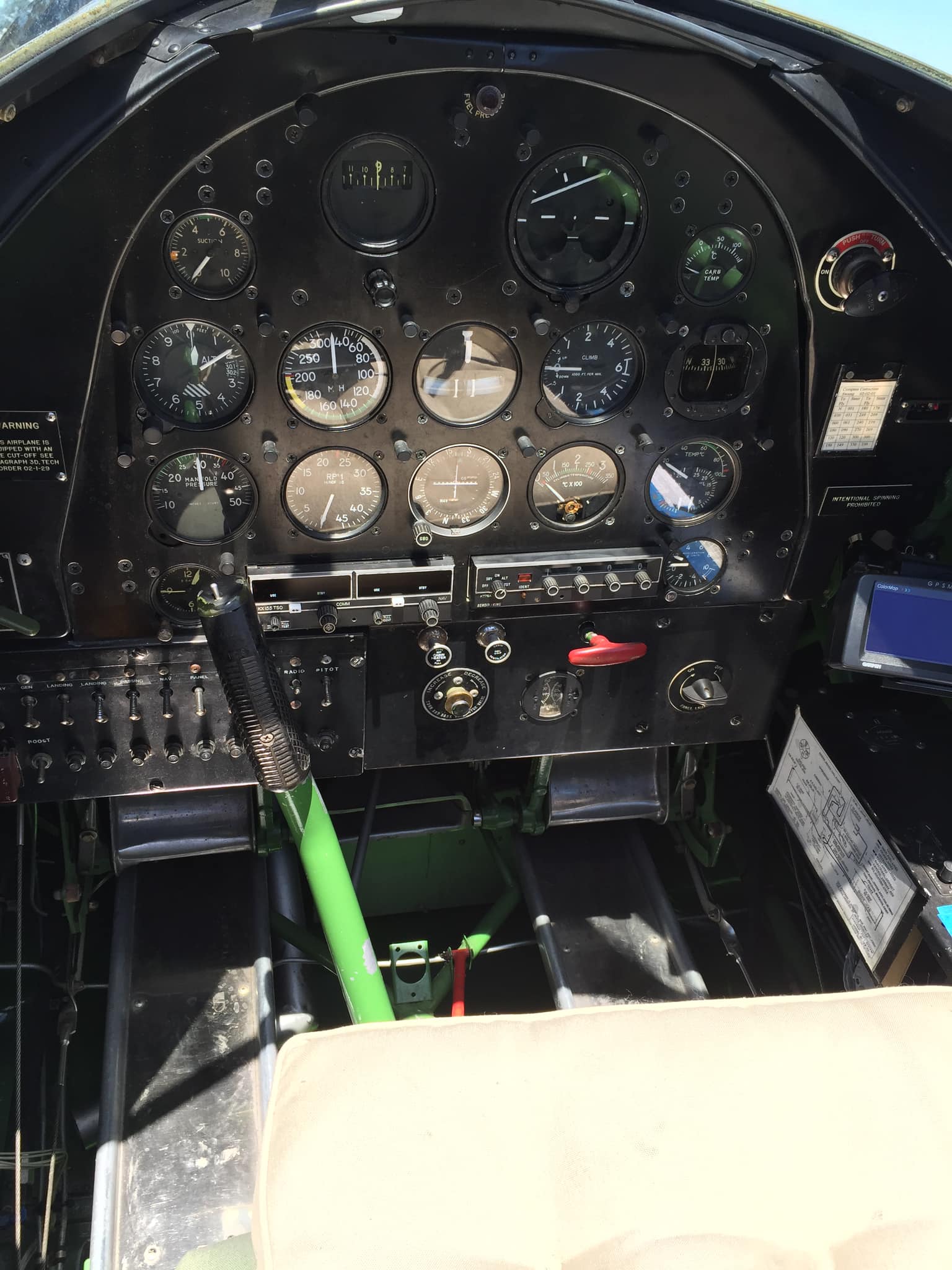
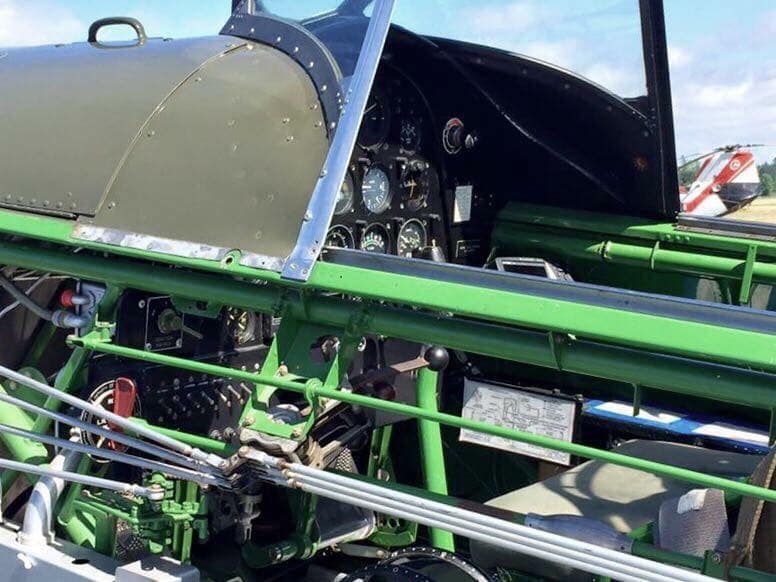
The BT-13 (“BT” being Basic Trainer under the U.S. Army Aircraft Designations 1939-1945 and the U.S. Navy designation SNV) featured all-metal construction (except for the fabric-covered control surfaces: flaps, rudder, elevators). Although late in WWII, plywood was partially used so as to conserve on aluminum for war materiel, an electric starter (although the flywheel could also be spun manually by a ground crewman standing on a retractable foot stand and using a hand crank), variable pitch propeller (rather than fixed in some cases at least, such as this version), radio (the student was instructed on the use of two-way radio communications with the ground), interphone between instructor and student, a continuous and sliding Plexiglas canopy with tandem seating, a symmetrical airfoil, and instrumentation for the cadet that included a retractable canvas hood in the rear cockpit for blind-flying (there were no portable hoods in those days), the aircraft were used extensively as instrument trainers, and before soloing, a student had to sit blindfolded in the front cockpit and be able to put his hands on any of the 33 controls and switches as his instructor called them out.
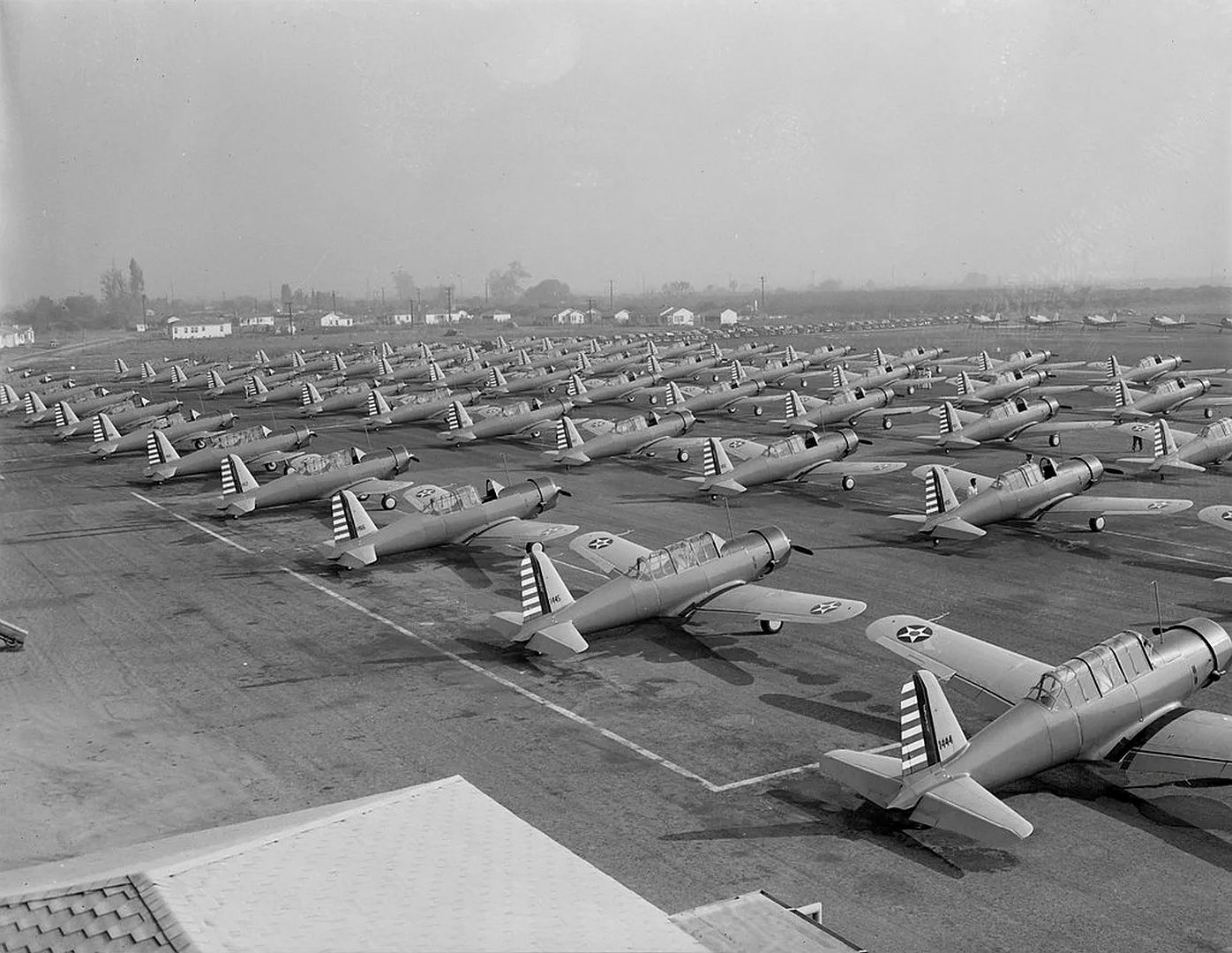
The aircraft type did not, however, have retractable landing gear nor a hydraulic system, and the flaps were operated by a crank-and-cable system (the hand crank being on the port side of the cockpit). The fuel tanks on BT-13s are called “wet wings” as they are notorious for leaking, and there are about 8 under-wing panels per fuel tank. The tail was held on with only three bolts, and after several in-flight failures, the U.S. Navy restricted the aircraft from aerobatic and violent maneuvers. There are leather pads in the cowling formers, and the access panels are attached with Dzus fasteners. Between September 1939 and 1944, a total of 11,537 Vultee V-1s were built for the USAAC and the U.S. Navy, 1,350 of which went to the Navy under the designations SNV-1 and SNV-2B, which at the time represented the largest aircraft order ever placed by the Army Air Forces. In addition, the U.S. Coast Guard procured two examples to serve as instrument trainers at Coast Guard Air Station (CGAS) Biloxi, Mississippi. Under the designation XBT-16B, one BT-13A was rebuilt with a plastic fuselage for evaluation. In 1943, Vultee merged into Consolidated Aircraft Corporation, with the resulting company being Consolidated Vultee Aircraft Corporation (Convair). (So, it stands to reason that the BT-13 is the “Vultee BT-13” rather than the “Consolidated Vultee B-13” since the aircraft was designed before the merger).
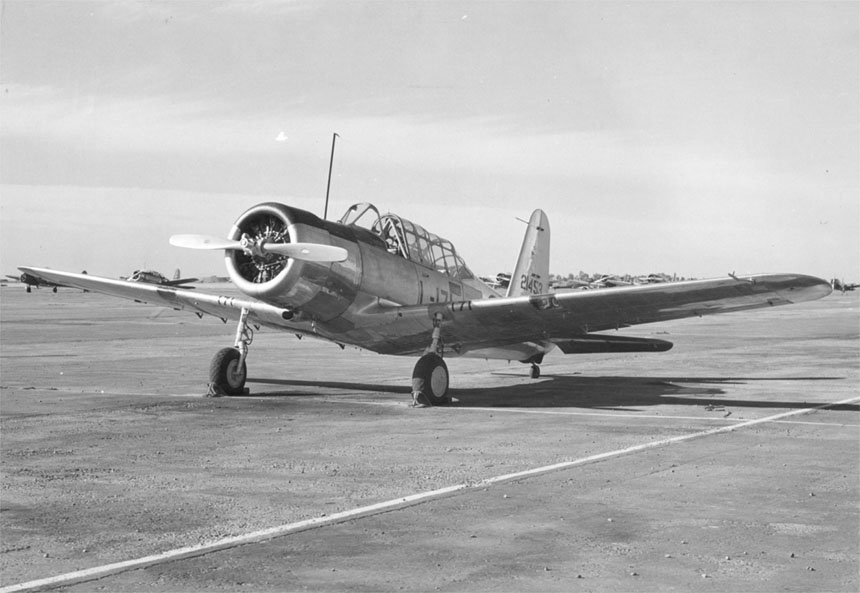
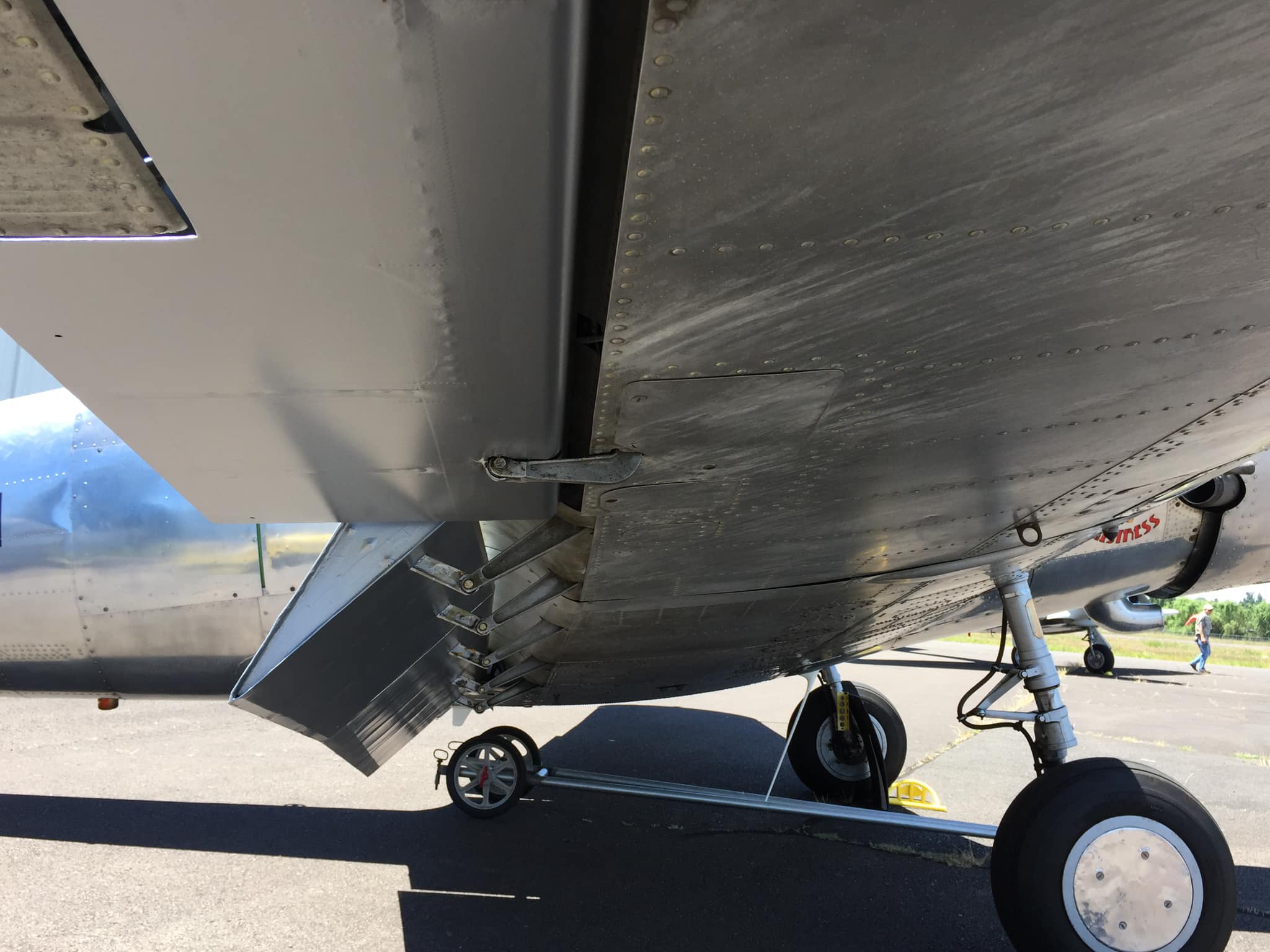
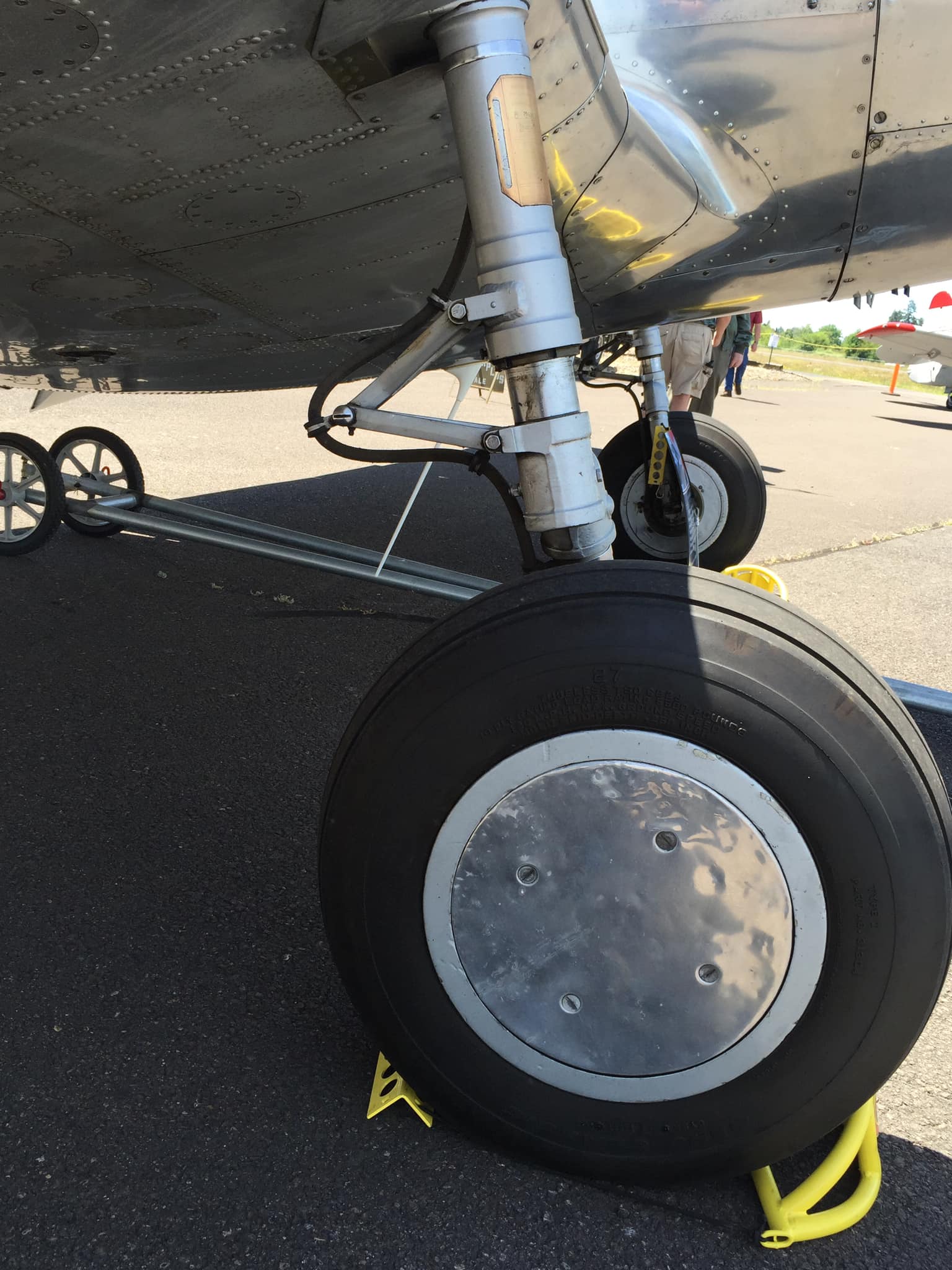
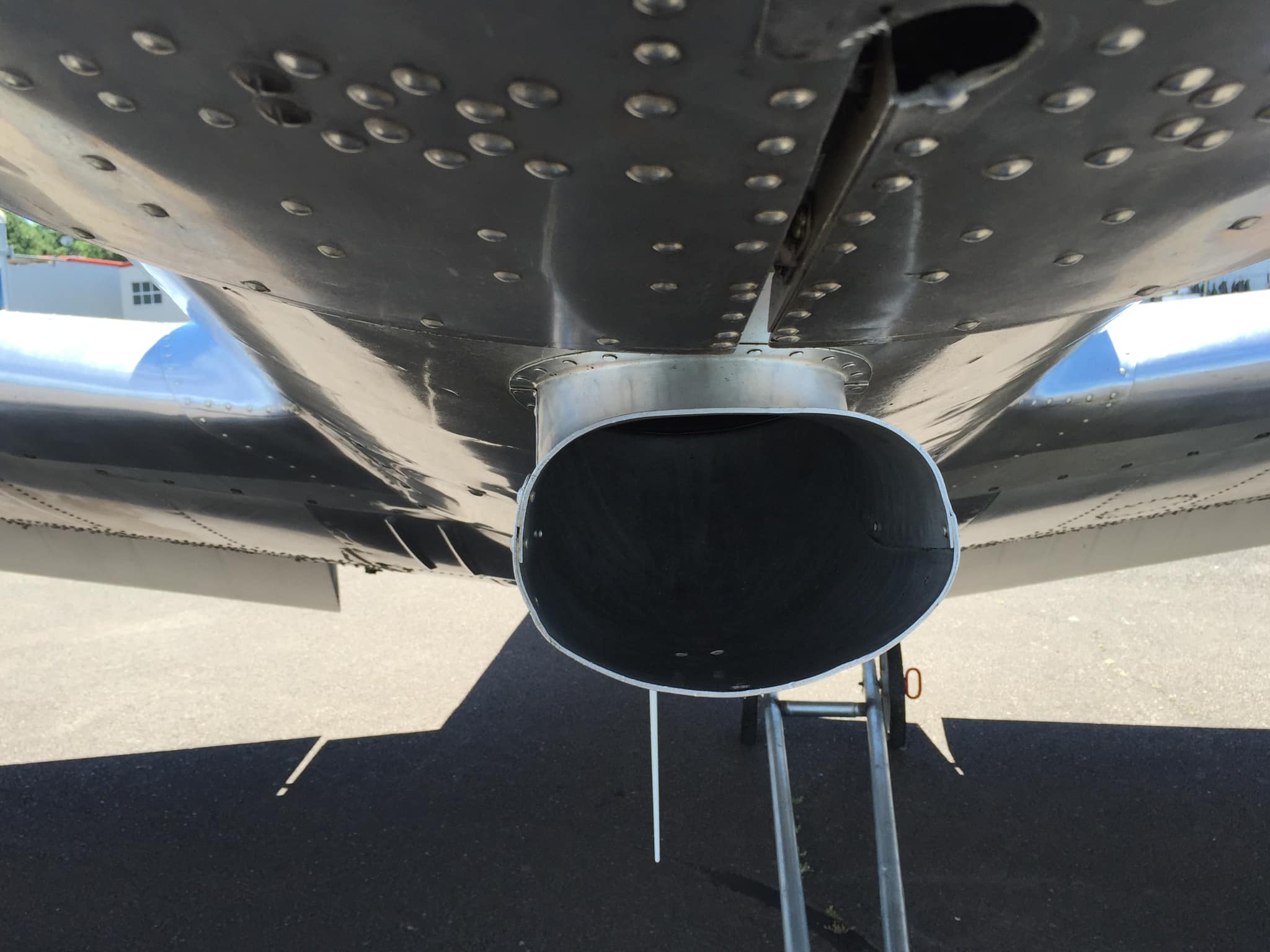
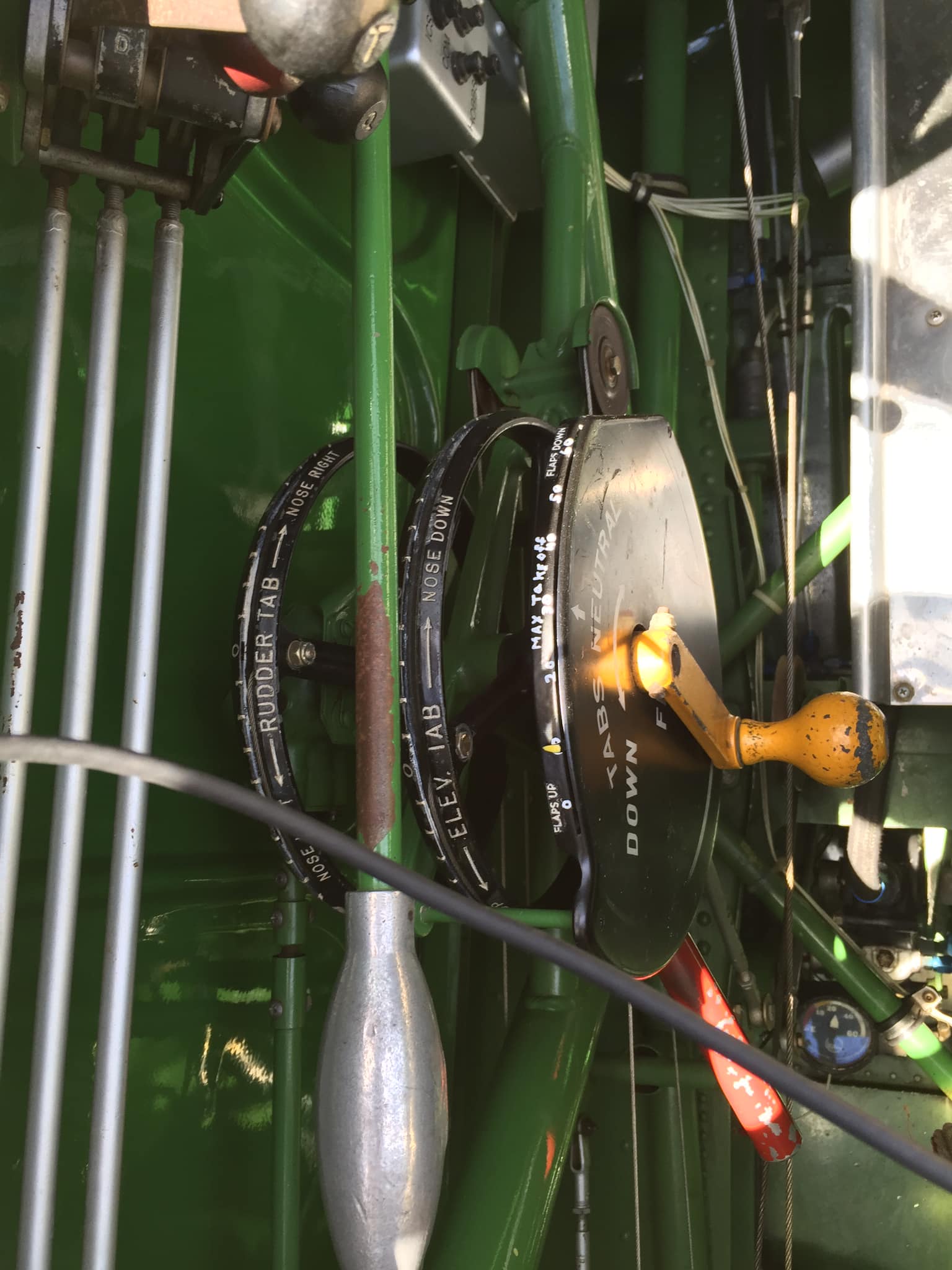
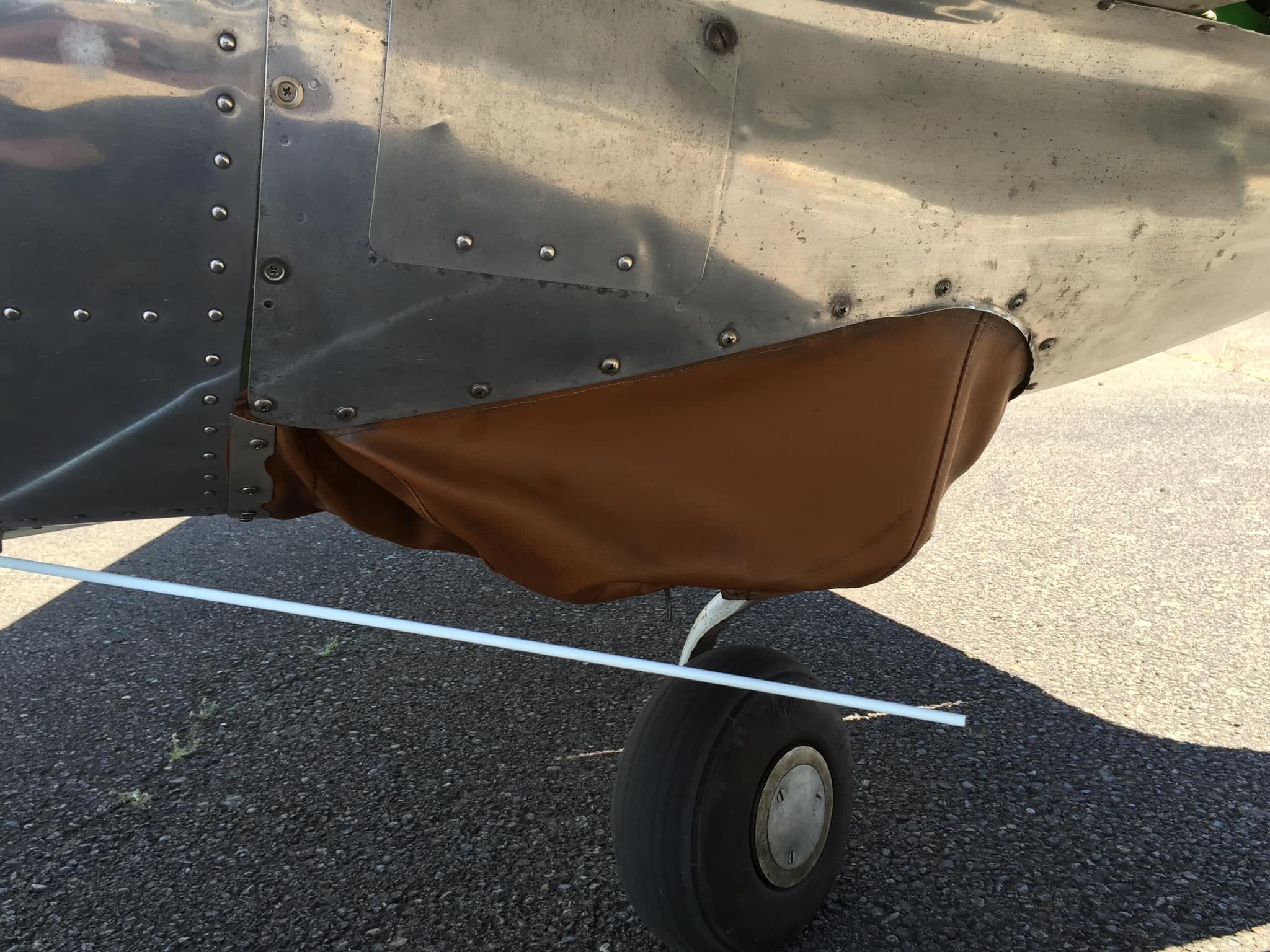
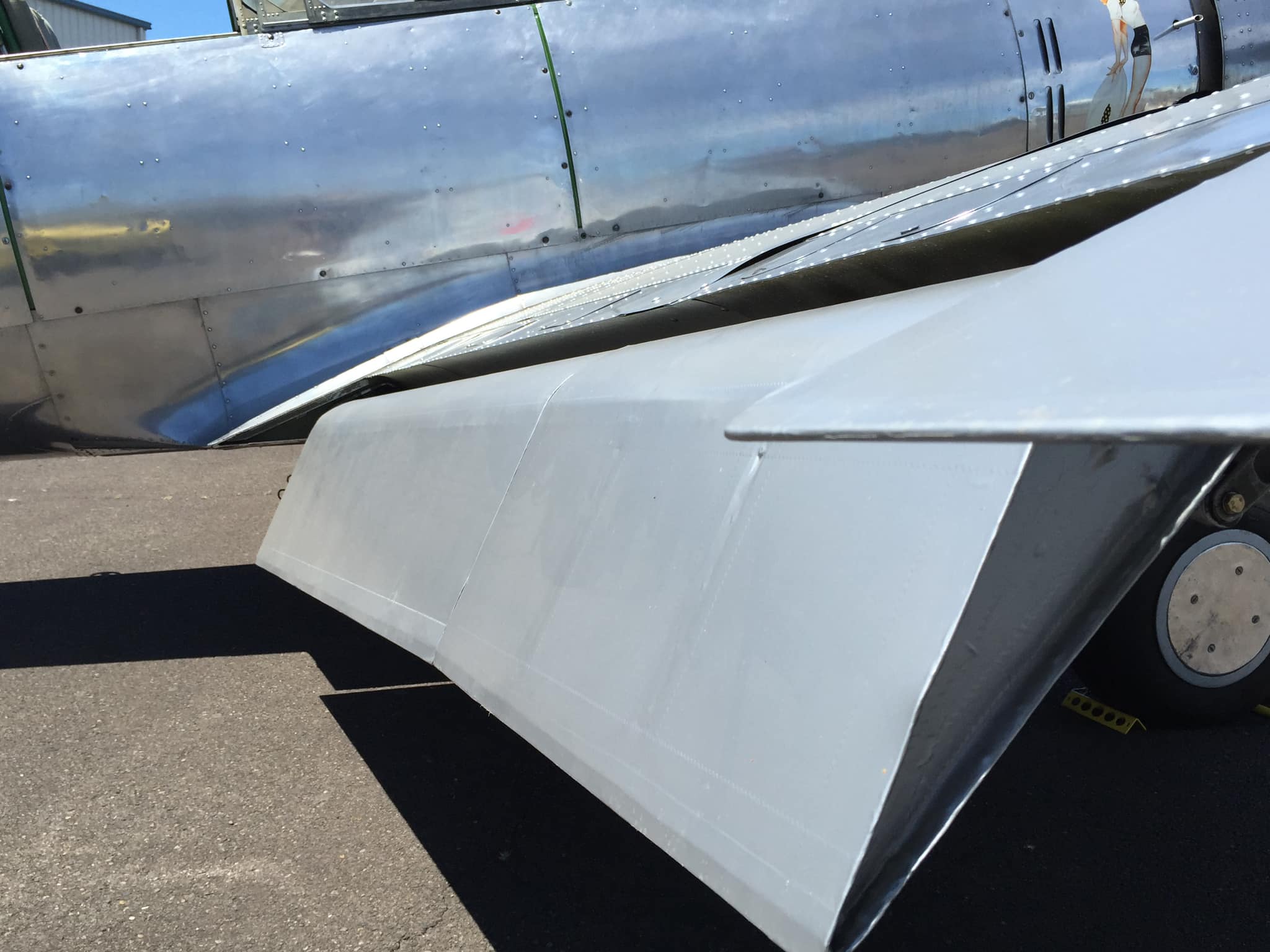
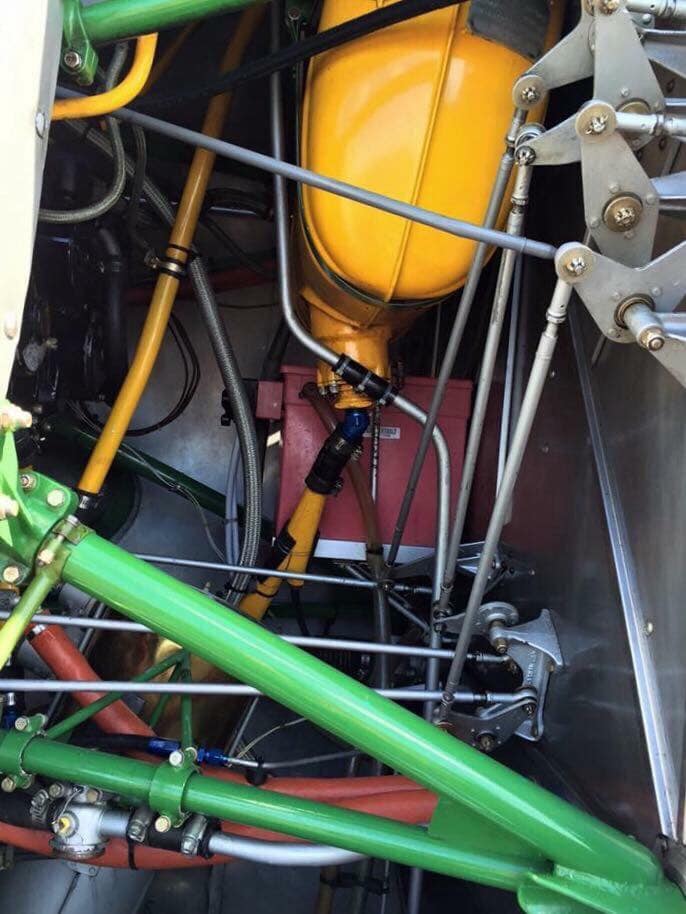
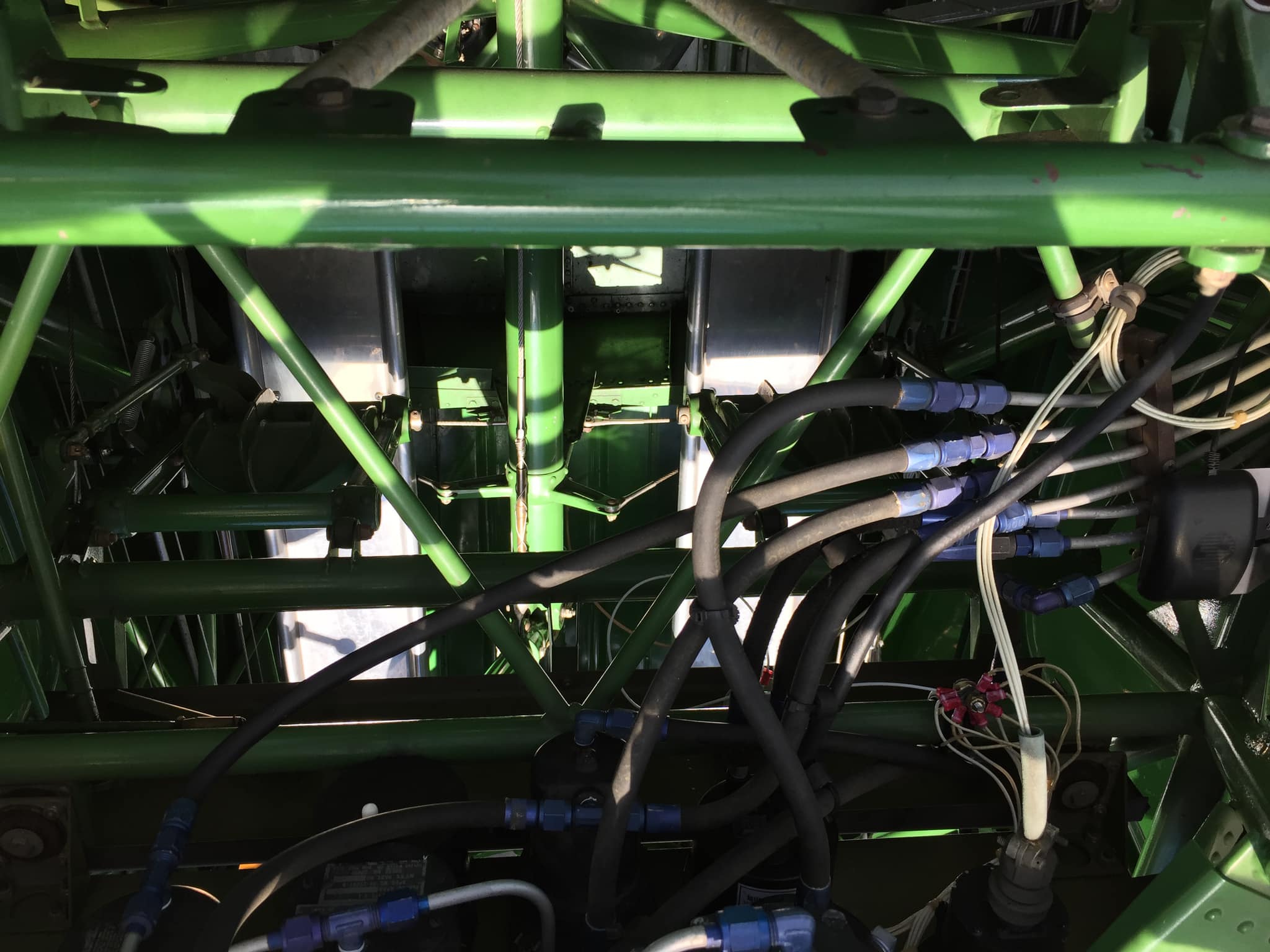
During WWII, pilot cadets, having gained their initial experience in primary trainers such as the Boeing/Stearman PT–17 Kaydet, Ryan PT–22 Cadet, Fairchild PT–19, PT-23, PT-26 Cornell, or Naval Aircraft Factory N3N, continued with their 10 weeks of basic training in this type of basic trainer, then earned their wings in the advanced trainers such as the AT-6/SNJ (which featured retractable landing gear and, among other things, for the gunnery practice trainers, included up to four .30 cal. machine guns). The standard powerplant for the BT-13A version is the Pratt & Whitney R-985-AN-1 Wasp Junior.
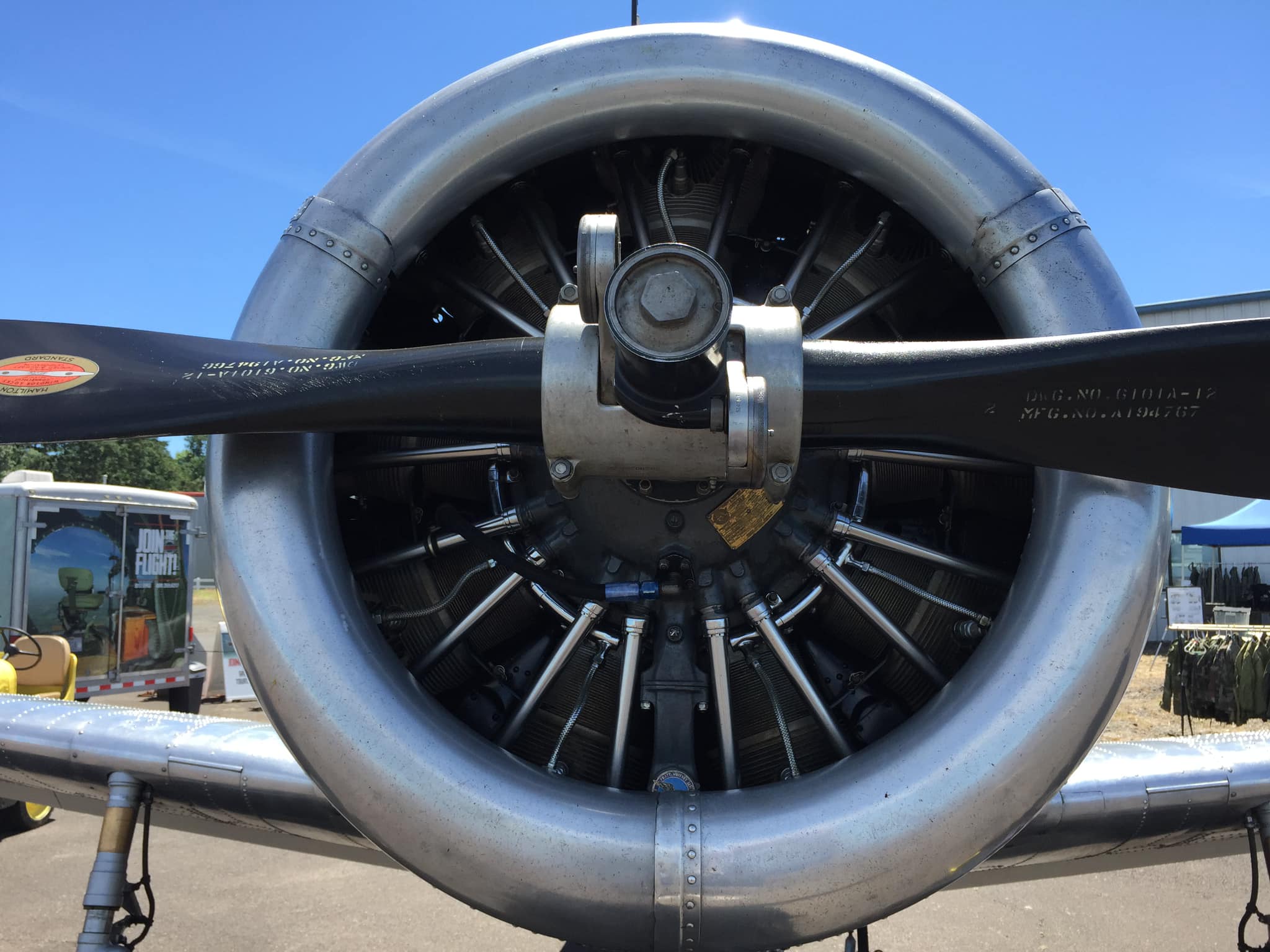
By the end of WWII, the Army and Navy had scrapped the BT-13 in favor of the T-6/SNJ, and nearly all were sold as surplus for a few hundred dollars, sometimes just for their engines, which were then mounted on surplus biplanes (such as Stearmans) to replace their less powerful engines for use as crop dusters. Also, a number of surplus aircraft of these types were purchased by Twentieth Century Fox in the 1960s to be converted to resemble both the Japanese Aichi D3A1 “Val” and the Nakajima B5N1 “Kate” carrier-based torpedo bombers for the movie “Tora! Tora! Tora!“
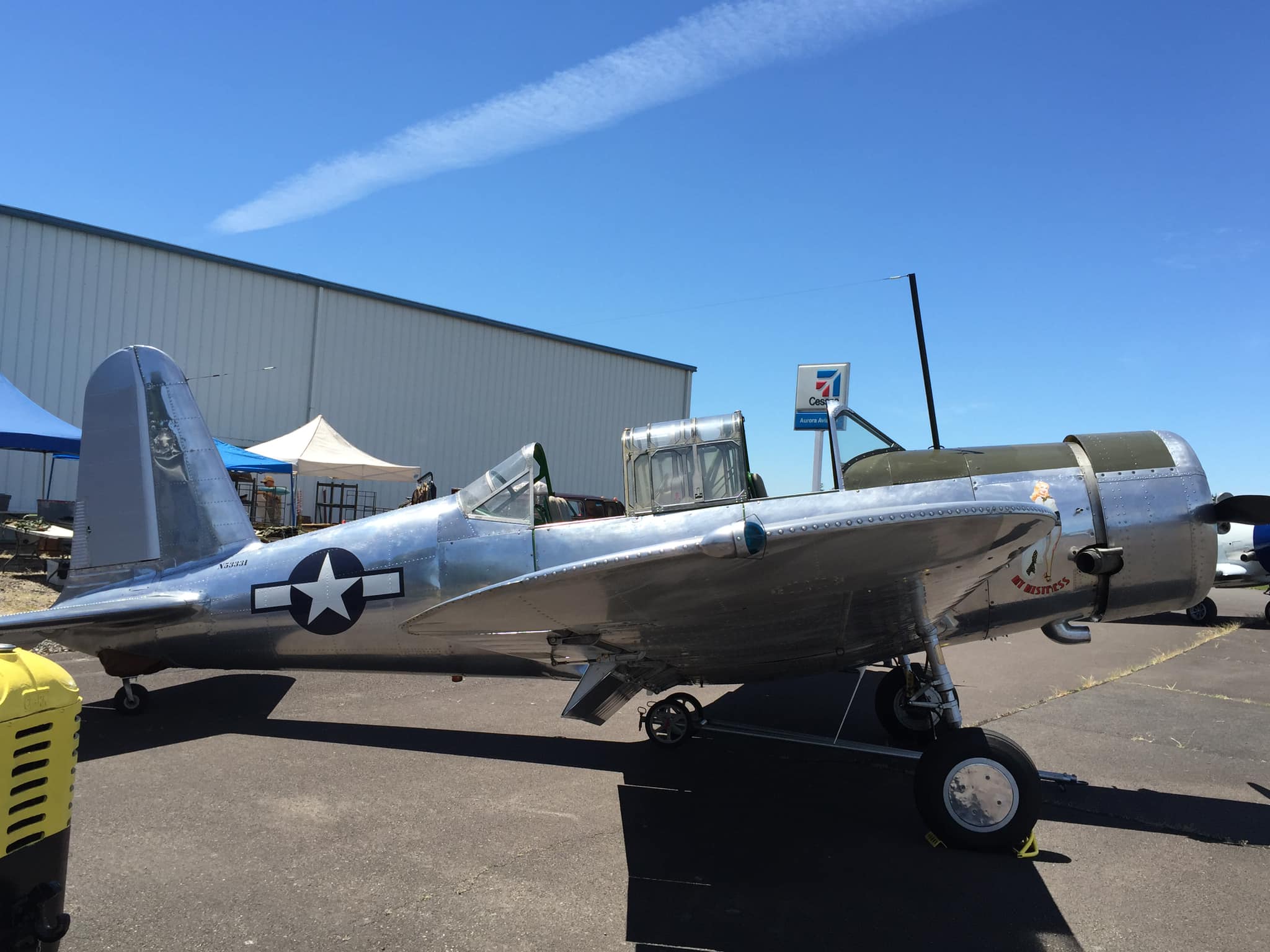
Editor’s notes: Since this profile was written, this aircraft was involved in a fatal accident on April 21, 2021, at Grove Field Airport, Camas, Washington. Owner Mark Lyn Lewallen was receiving recurrent training with a flight instructor and practicing touch-and-goes at the small airport. According to the NTSB final report, the aircraft exited the runway veering left following a three-point landing. The pilot applied full power, and the aircraft pitched up, but the aircraft exceeded its critical angle of attack, causing the BT-13A to stall. Tragically, Lewallen was killed at the scene, and the instructor was seriously injured but survived. Further details on this incident can be found HERE.
About the author 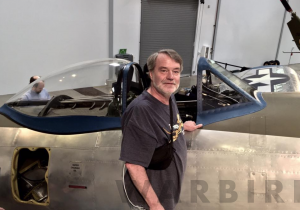
Randy Malmstrom grew up in a family steeped in aviation culture. His father, Bob, was still a cadet in training with the USAAF at the end of WWII, but did serve in Germany during the U.S. occupation in the immediate post-war period, where he had the opportunity to fly in a wide variety of types that flew in WWII. After returning to the States, Bob became a multi-engine aircraft sales manager and, as such, flew a wide variety of aircraft; Randy frequently accompanied him on these flights. Furthermore, Randy’s cousin, Einar Axel Malmstrom, flew P-47 Thunderbolts with the 356th FG from RAF Martlesham Heath. He was commanding this unit at the time he was shot down over France on April 24th, 1944, and spent the rest of the war as a prisoner of war. Following his repatriation at war’s end, Einar continued his military service, attaining the rank of Colonel. He was serving as Deputy Wing Commander of the 407th Strategic Fighter Wing at Great Falls AFB, MT at the time of his death in a T-33 training accident on August 21, 1954. The base was renamed in his honor in October 1955 and continues to serve in the present USAF as home to the 341st Missile Wing. Randy’s innate interest in history in general, and aviation history in particular, plus his educational background and passion for WWII warbirds, led him down his current path of capturing detailed aircraft walk-around photos and in-depth airframe histories, recording a precise description of a particular aircraft in all aspects.