







Photos and story by Gary Daniels
For Russell Armstrong, it took decades of fixed-wing flying before he became a rotorcraft convert. Since soloing on his 16th birthday in a 1939 Piper J-3 Cub, Armstrong has progressed through many aircraft and ratings. In 2018, he made the jump from prop to jets when he purchased a 1970 BAC Jet Provost Mk.5. After a year, he sold the Provost to purchase a Czechoslovakian 1984 Aero Vodochody L-39 Albatros Soviet-era jet trainer. He also became involved in the Classic Jet Aircraft Association (CJAA), organizing and attending formation clinics, and has become an accomplished formation lead pilot. He has partnered with several Texas CJAA members to form the Lone Star Jet Team, flying two-ship or three-ship formation routines at air shows in Texas and Oklahoma. For Armstrong, slow or fast fixed-wing flying had always been his comfort zone. He had no desire to keep a “whirlybird” in his hangar.
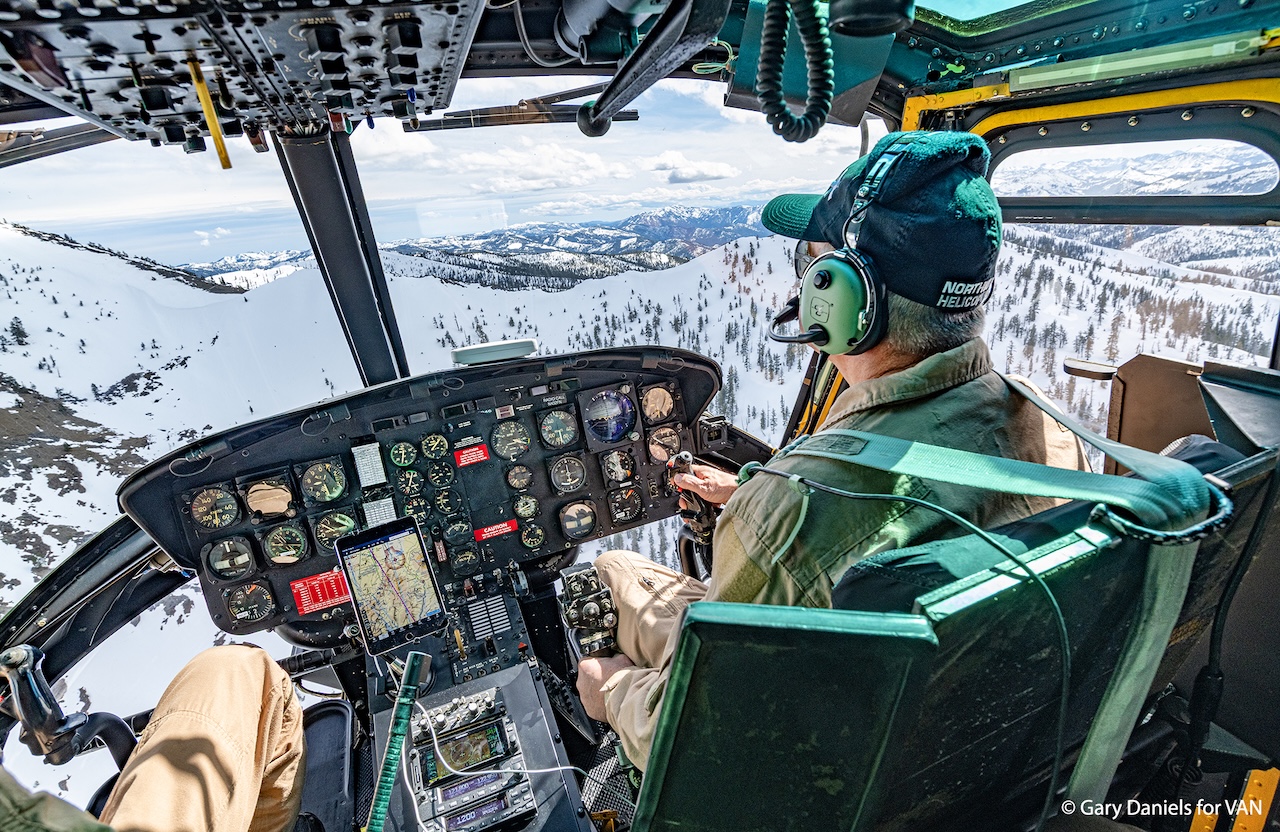
Over the years, Armstrong would occasionally accept a ride in a friend’s helicopter, though he always viewed the machines as overly complicated and dangerous. With fixed-wing aircraft, you fly forward to keep the airflow sufficient over the wings to create lift—simple enough. But with a helicopter, the “wings” are spinning at high speed, attached to a complex rotor mast, gearbox, and transmission bolted to either a piston or turbine engine mounted on an unusual-looking airframe. Not to mention, it takes both hands and feet, working simultaneously at all times, to fly one. For a fixed-wing pilot, the vertical-lift contraption hardly made sense—it had too many moving parts. Armstrong always cast a wary eye at the “eggbeaters.”
Never say never. Armstrong hangars his L-39 at Sulphur Springs Municipal Airport (KSLR) in Sulphur Springs, Texas. On the field is a branch of Volo Mission, owned by Andre and Kim Hutchings. Volo offers training for helicopter long-line and aerial firefighting. Andre asked Armstrong several times if he would like to take a flight in their Robinson R44. Armstrong kept putting him off until, in 2022, he reluctantly accepted. With instruction from Hutchings, Armstrong’s misunderstanding of the helicopter was erased—and another aviation passion was born. Even though Armstrong began his rotorcraft training in an R44, he purchased a 1972 Vietnam-era OH-58A Kiowa to complete his training and obtain his Rotorcraft add-on rating. For Armstrong, the turbine-powered Kiowa is a joy to fly, and he appreciates the U.S. Army livery. In the fall of 2024, he set his sights on something that could carry more people—something with a lot more muscle.
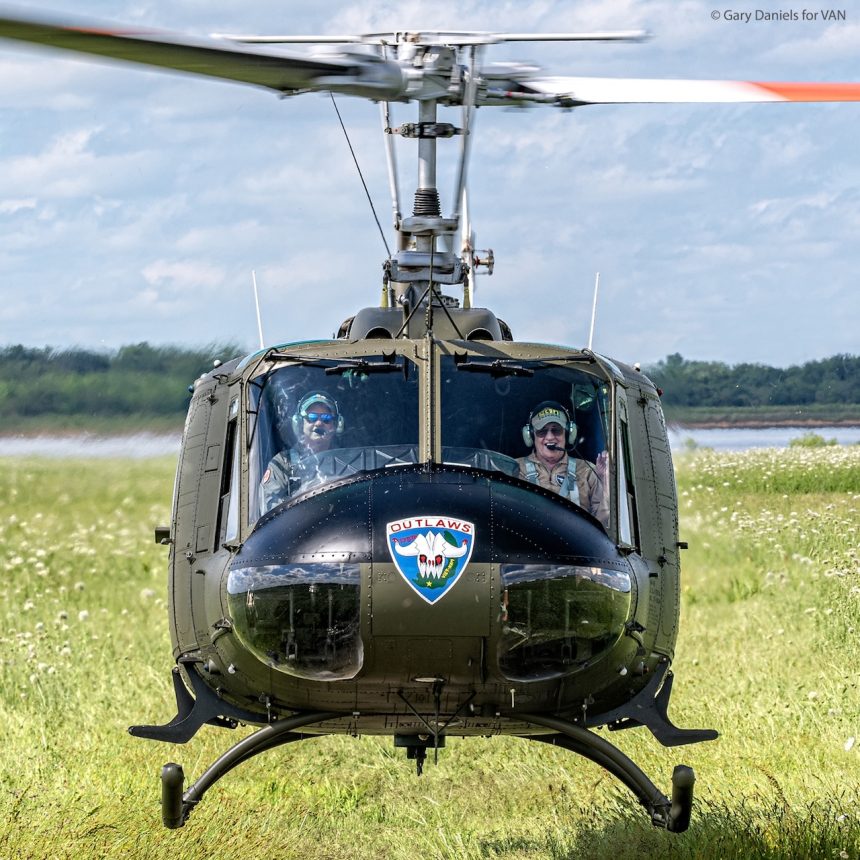
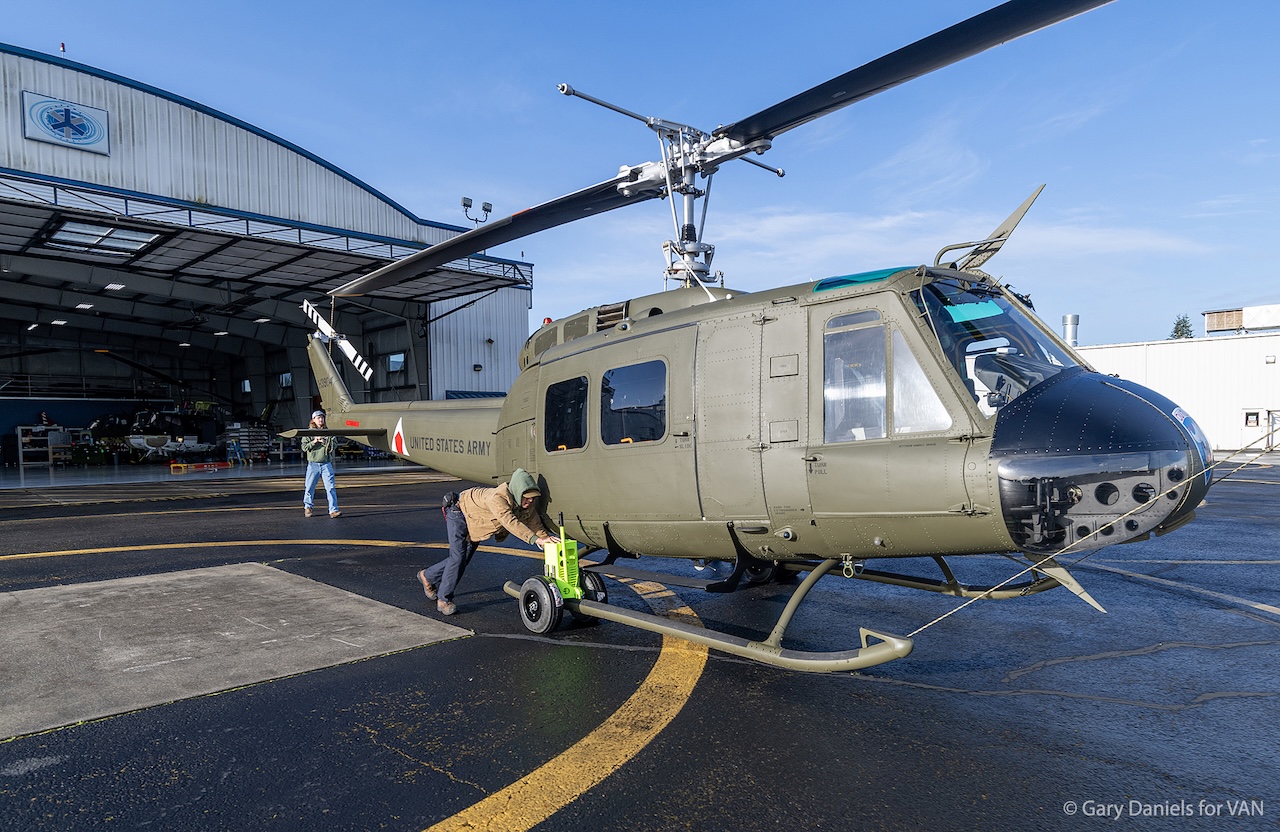
In January 2025, Armstrong contacted Brian Reynolds, owner of Northwest Helicopters (NWH) in Olympia, Washington, to see what airframes they had available. NWH has been restoring and refurbishing the iconic Bell UH-1H Huey for 40 years. In 1977, the Royal Singapore Air Force (RSAF) purchased 20 UH-1Hs from Bell Helicopter. Ten of those Hueys were the last to be built before Bell ended production of the helicopter in 1977. In 2007, NWH purchased the 20 aircraft when they were decommissioned by the RSAF. Over the years, NWH had sold all but two of the batch. Armstrong selected SN 13904 (N432FN), which is the second-to-last Huey produced before production ceased. Refurbishment of 13904 began in 2020, and it received its FAA Special Airworthiness Certificate in January 2022. After a few component upgrades at Armstrong’s request, 13904 was painted in the livery of the 175th Assault Helicopter Company (AHC) “Outlaws,” who served in the Mekong Delta region of Vietnam. In April 2025, Armstrong flew to NWH to spend a few days in flight training and to take delivery of the aircraft. On April 11, Armstrong, along with NWH instructor pilot Ken Collins, lifted off from the Olympia helipad and ferried the freshly painted Outlaw Huey to Sulphur Springs, arriving on April 13. Joining Armstrong on the trip home were Steve Jones and Gary Daniels.
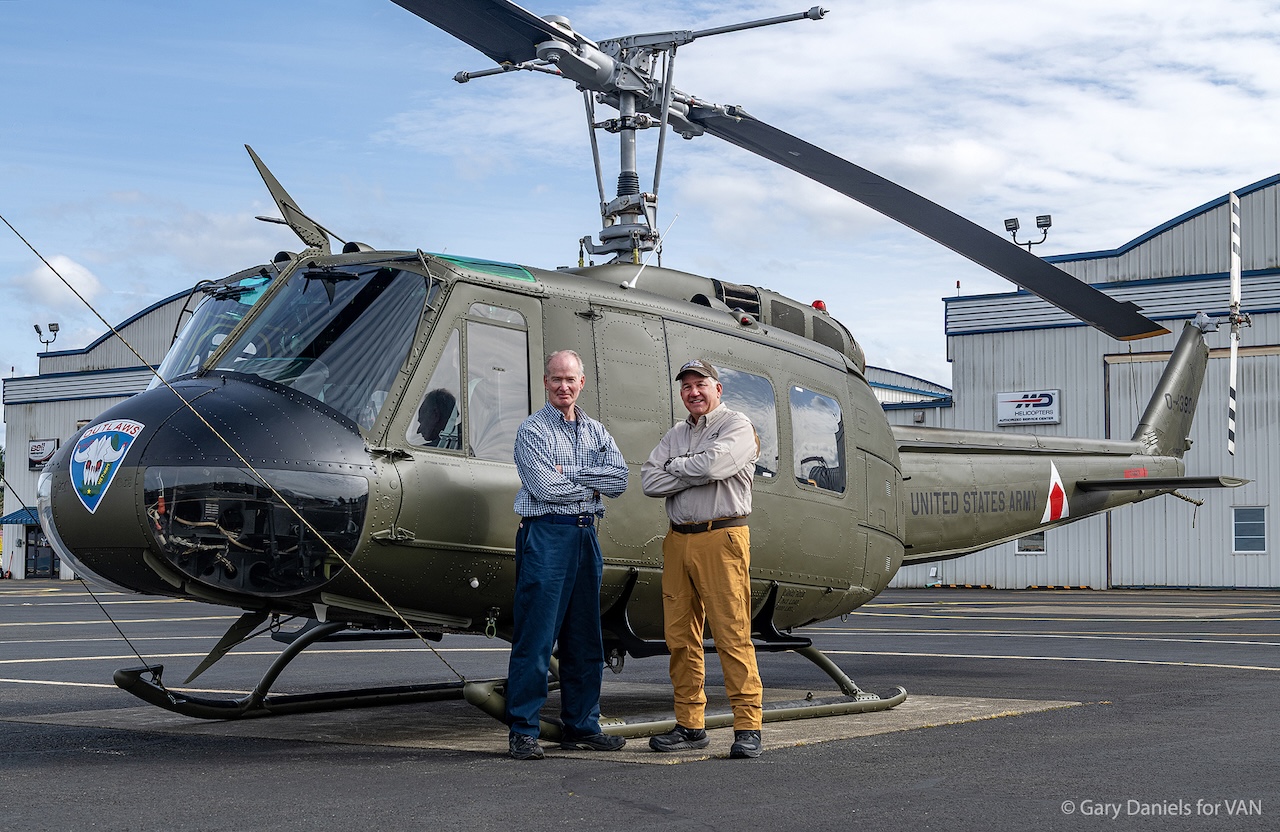
Armstrong finds his greatest joy in flying with the Outlaw Huey for Vietnam War veterans. His first veteran flight was with Dewayne “Willie” Williams, a 175th AHC Outlaw Huey pilot. Armstrong had learned of the Arlington, Texas, native and his connection to the 175th before locating 13904 at NWH. That connection inspired Armstrong to research the unit further. Having his Huey represent the Vietnam War as authentically as possible was important to him, and once he discovered the 175th’s distinguished service record in Vietnam, he knew painting his Huey as an Outlaw was the right choice. It was only fitting that Williams would be his first veteran flight.
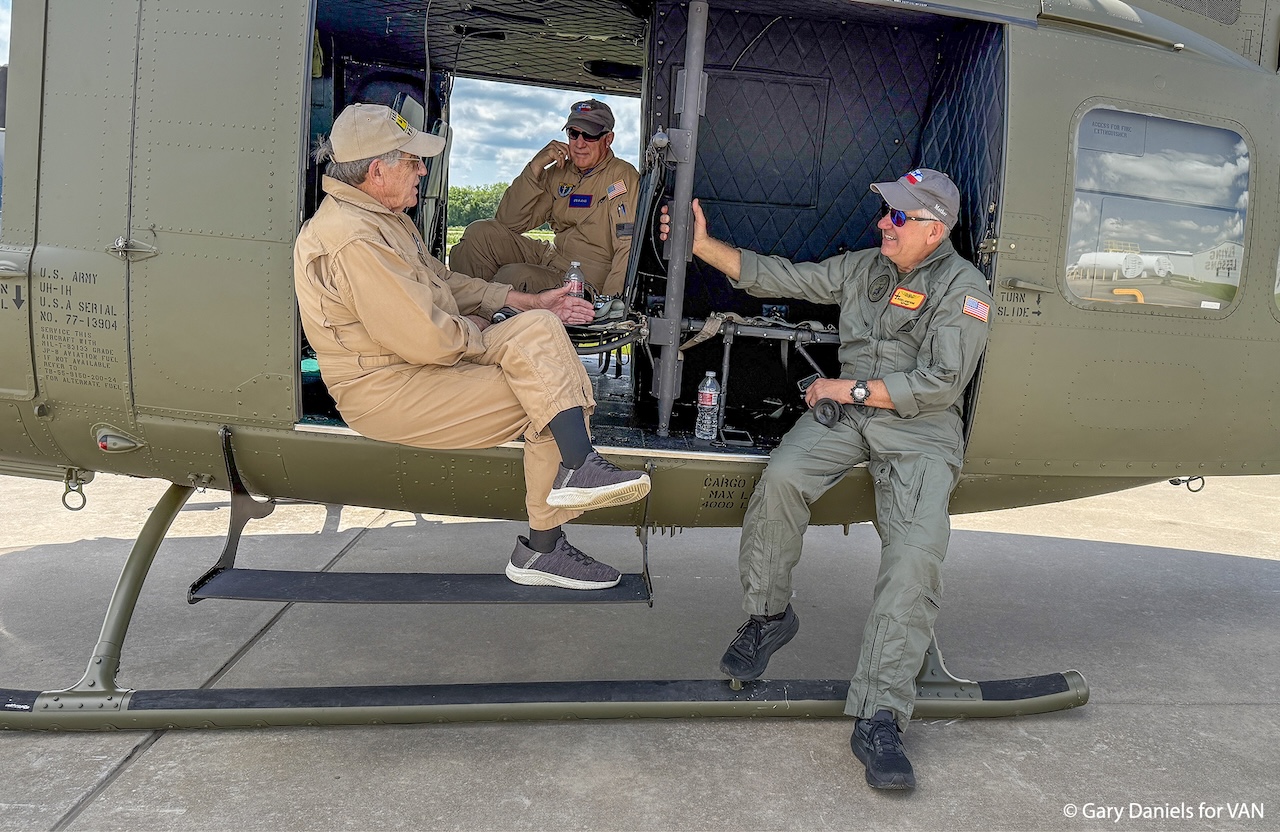
Veteran Flight – May 7, 2025: Williams arrived at Armstrong’s hangar at KSLR, excited to see a Huey up close again. It had been more than 30 years since he last flew his “old friend,” as he called it. “The Huey always did what I asked it to do in combat,” Williams recalled. “I wore this aircraft like a jacket; I strapped it on and off we went.” As the turbine spun up and the rotors began to turn, it was clear Williams was back in his element. Armstrong raised the collective and lifted the bird off the ramp. The plan was to fly over and literally “drop in” on the Mid-America Flight Museum at Mount Pleasant Regional Airport (KOSA). Once on the proper heading, Armstrong looked at Williams and asked, “Are you ready to fly?” A big smile crossed Williams’ face as he replied, “I have the controls.” He flew the Huey to and from Mount Pleasant. After landing back at Sulphur Springs, Williams admitted, “I had a lot of memories flooding back to me during the flight.”
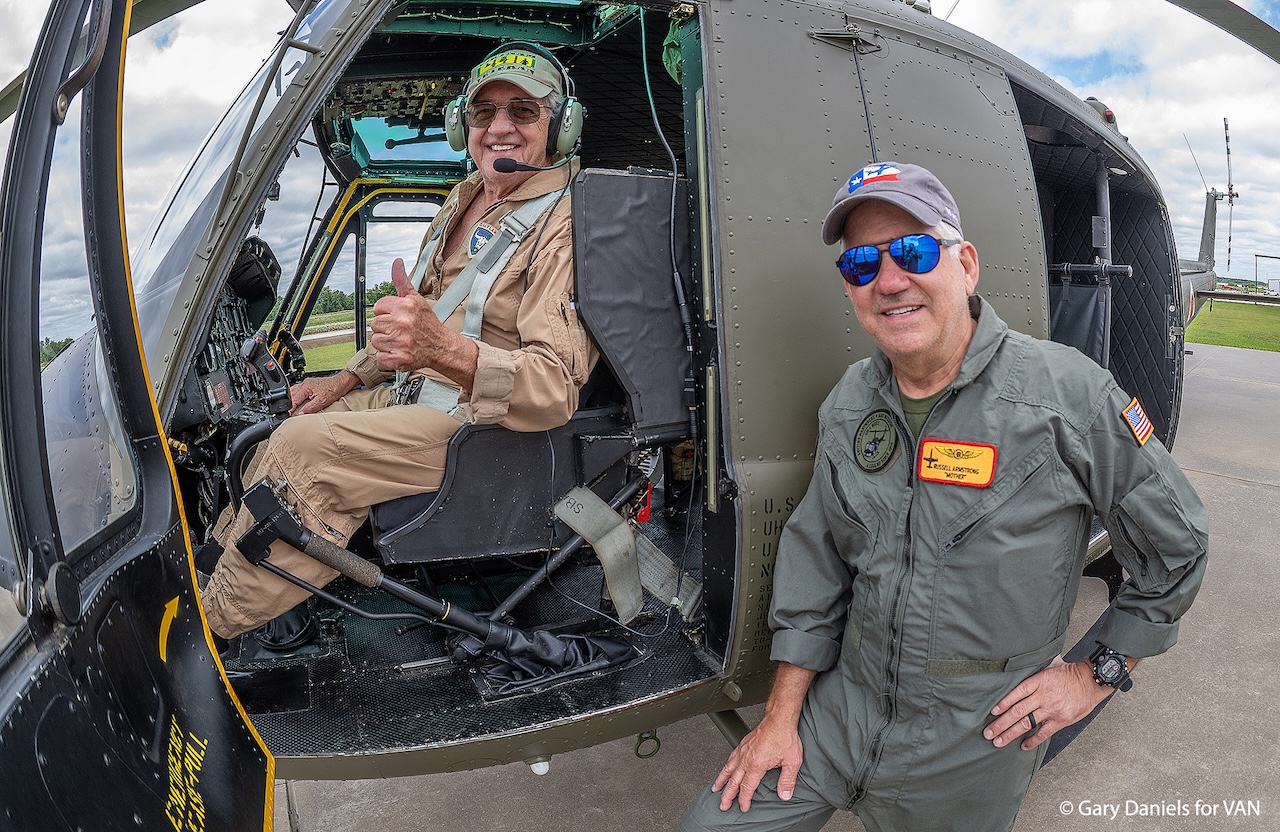
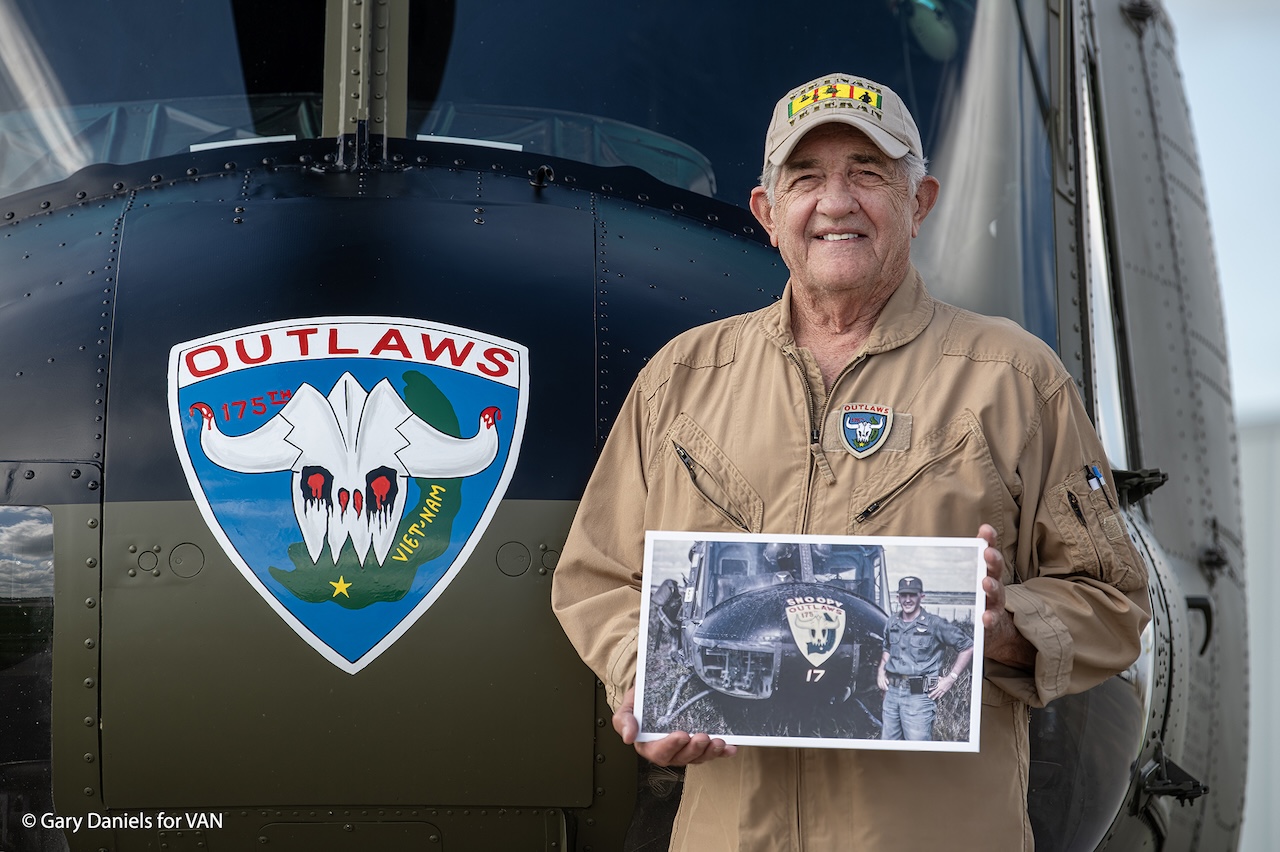
Williams had served with the 175th AHC in Vietnam from November 1966 to November 1967, most of his time “in country” spent as a gunship pilot. The 175th patrolled and provided ground attack support in the Mekong Delta region. After Vietnam, Williams worked at Bell Helicopter for 34 years as a test pilot. He was test pilot on the XV-15, the precursor to the V-22 Osprey Tiltrotor, and later documented his long rotorcraft career in his book Cottonfields to Copters.
Veteran Flight – August 22, 2025: Armstrong met Texas Department of Public Safety helicopter pilot Kris Edgmon at a Commemorative Air Force fly-in in Greenville, Texas, in May. Edgmon, a close friend of Robert Camp, knew Robert’s father, Major Ivan C. Camp III, U.S. Army (Ret.), a decorated Vietnam War Huey pilot. Edgmon asked if a Huey flight could be arranged for Major Camp, and Armstrong couldn’t say “yes” fast enough. Camp served in the U.S. Army from 1963 to 1983, retiring as a Major. He served in Vietnam in 1967–1968 as a First Lieutenant with the 1st Cavalry Division and was awarded the Distinguished Flying Cross (DFC) for action on May 27, 1967. While flying a UH-1D Huey, Camp flew into a hot landing zone (LZ) during a combat assault near Duc Pho, delivering badly needed reinforcements and supplies under heavy fire to support an infantry platoon that had become surrounded.
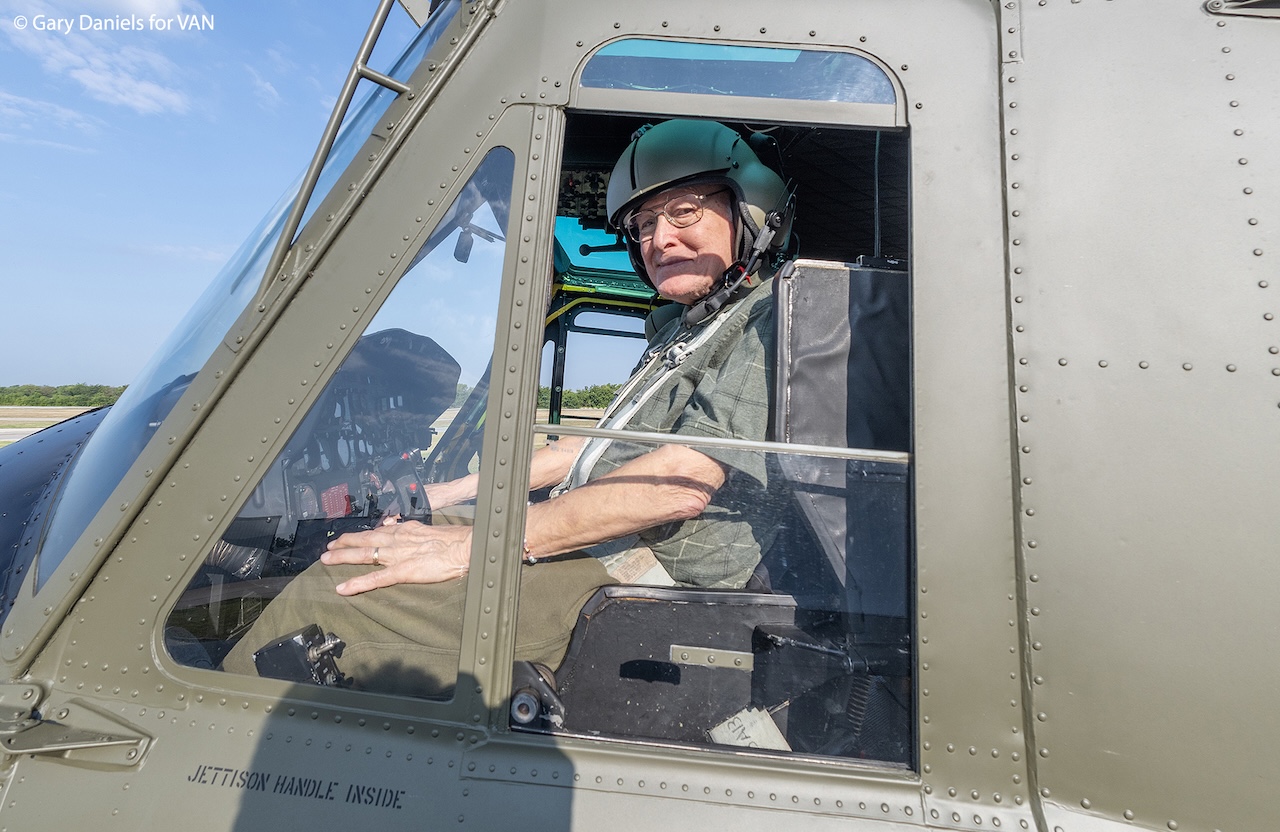
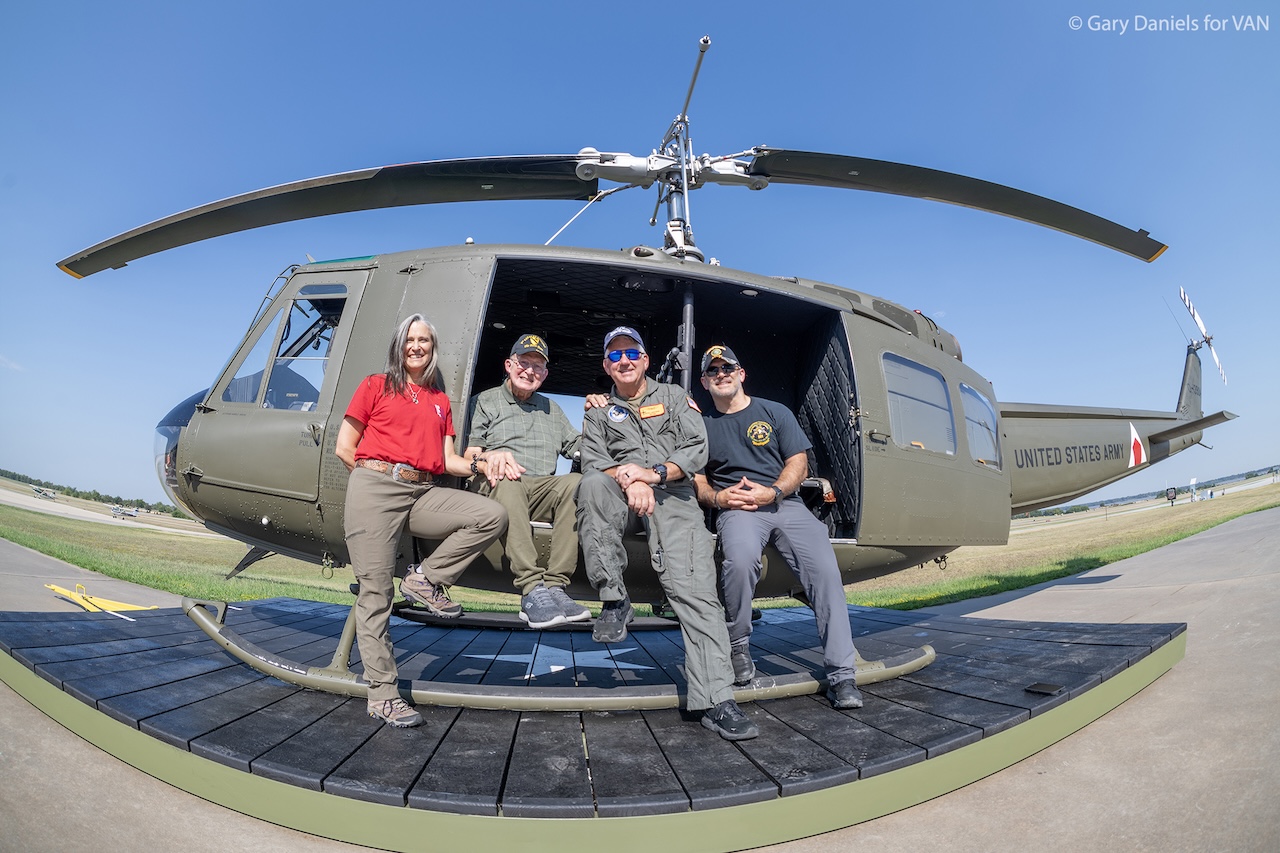
Camp, his son Robert, and his daughter Kathleen arrived at KSLR excited to see the Outlaw Huey on the landing platform. Robert and Kathleen, both retired from the U.S. Army, quietly listened as Armstrong described the history of the Huey. Camp noted, “I flew the ‘D’ model most of my time in Vietnam—we got the ‘H’ near the time I left.” Once airborne, Armstrong turned over the controls to Camp, who flew most of the 45-minute flight. Though Major Camp said little, it was clear he was channeling the young lieutenant of 57 years ago.
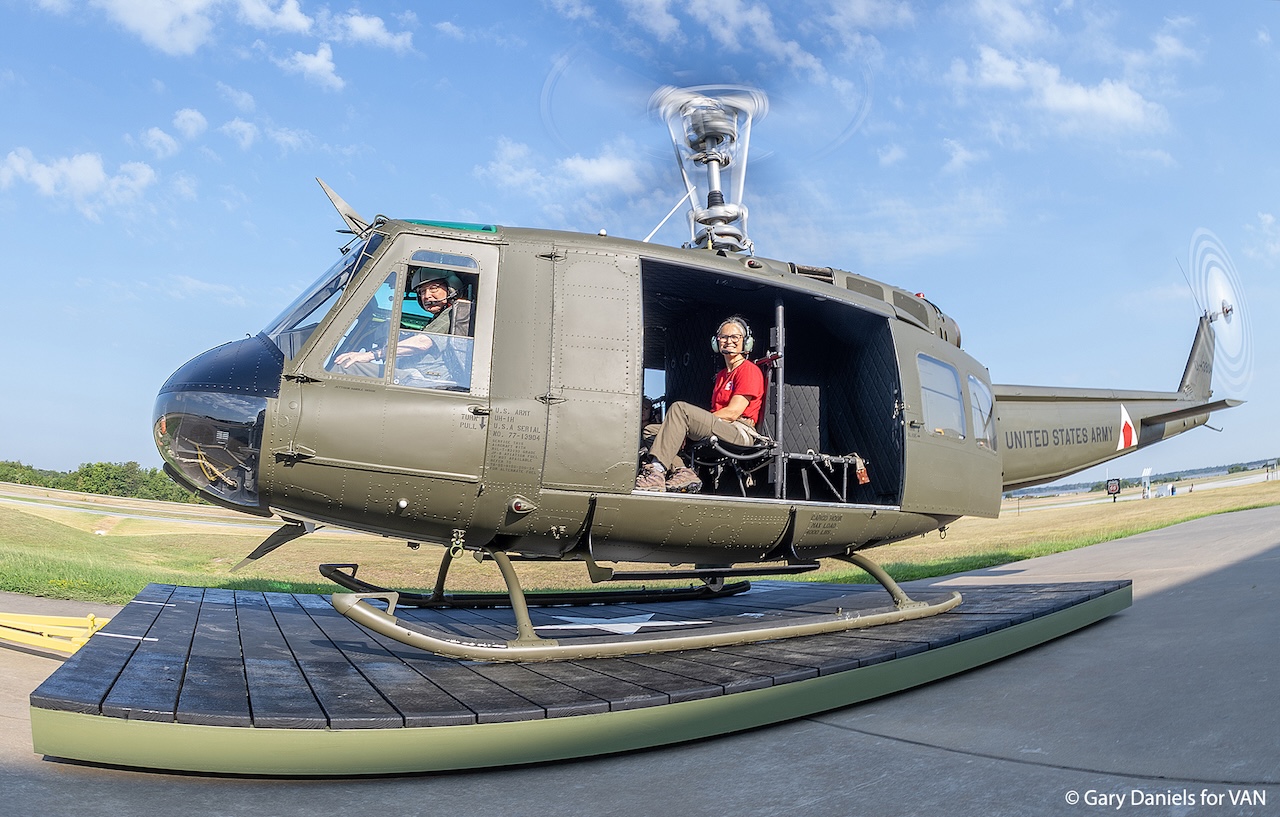
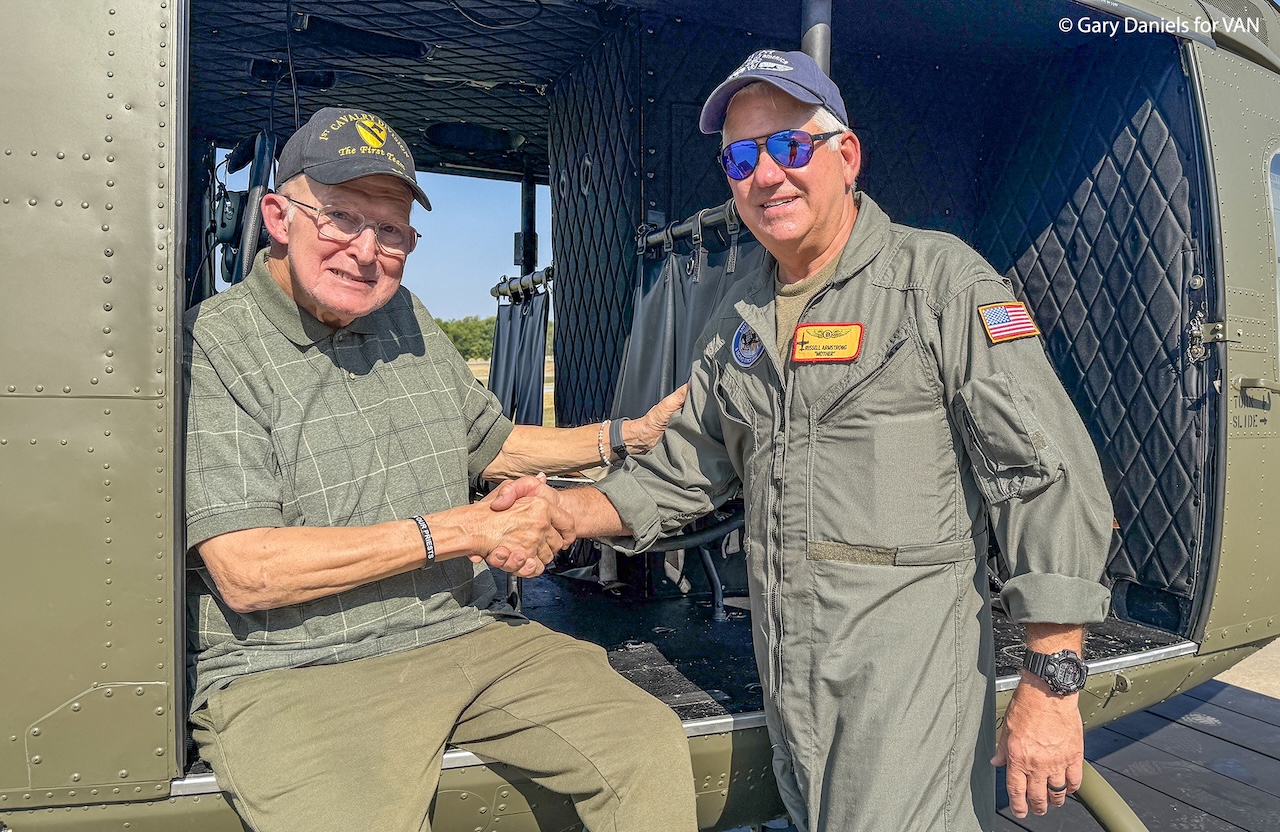
Armstrong’s main mission with the Outlaw Huey is to honor Vietnam War veterans by providing flights. He also plans to attend area airshows, fly-ins, and special events, including visits to Fort Wolters and the National Vietnam War Museum in Mineral Wells, Texas. Fort Wolters was where Vietnam-era helicopter pilots received their primary helicopter training. Armstrong is sincere when he says, “Flying a veteran is my way of thanking our Vietnam War veterans for their bravery, service, and sacrifice to our great country. It’s my way of saying, ‘Welcome Home.’”


I was a crew chief on the Uh-1H as part of the 9th AVN stationed at Ft. Lewis. My helicopter 71-20241 was the best ride ever. Flying around the Pacific North West for three years were the best of times. Anytime I hear a huey I stop and look for it. It would be both a pleasure and most of all an honor to fly in one again. Great story and very jealous.
Good morning James,
Shoot me an email with your contact information and maybe we can get together for a flight.
Mr Armstrong, I would love to find out about your flights. My dad an AC, flew slicks with the Kingsmen 17th AHC in Vietnam in 67-68. He turned 80 last month and I know it would thrill him to no end to get back up in a Huey. Please let me know how I nominate him, or complete the process to get a chance. Thanks!
Texas Chopper Pilot Honors Vietnam War Veterans with His Outlaw Huey
How can I get in touch to arrange a flight for a Vietnam Veteran who was a door gunner during the war. He has stated that he would love to take one more flight on a Huey.
I flew Hueys in the 90s in the Army National Guard. I flew Blackhawks and Apaches in the early 2000s. If you’ve ever flown a Huey you know that unmistakable sound. There’s nothing quite like them anymore and those that did fly them in combat are becoming ever fewer. Thanks for this story and for the recognition and tribute to those brave warriors from a forgotten war.
Good morning Edward. Shoot me an email with your contact information and I will give you a call.
Russell A.
What a beautiful tribute to aircrew veterans of Vietnam. I flew with the “Outlaws” in 69-70, callsign Outlaw20, and Outlaw27. I live in Columbus, Ohio and would be delighted to be your co-pilot.
How cool. I see you flying over my house in Rockwall on occasion. I am originally from Sulphur Springs and so it is cool to see someone from the hometown fly over! I believe I used to see you fly on old war plane in and out of KSLR when I worked there as a young fellow. What a beautiful aircraft with incredible sentiment! I love that you give war vets an opportunity to relive the glory days!
I was a pilot flying Huey’s in the Mekong Delta during 1969-1970 with the EMUS 135th AHC. (ASSUALT Helicopter Company NOT AVIATION company as incorrectly named in the article). This was a sister unit of the Outlaws in the 1st Aviation Brigade of the US Army and was an Experimental Military Unit (EMU) based in Camp Bearcat South Vietnam. So-called because it was a joint unit formed with pilots and maintenance personnel of the Royal Australian Navy. It operated in the years 1968-1971 and was heavily decorated.
Making men a proud Papa!