
(Image credit: VAN)
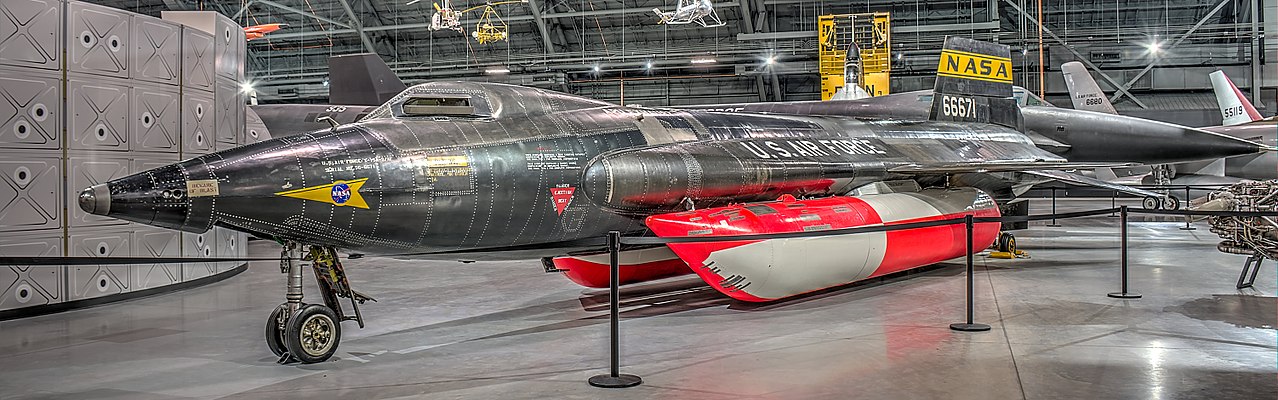
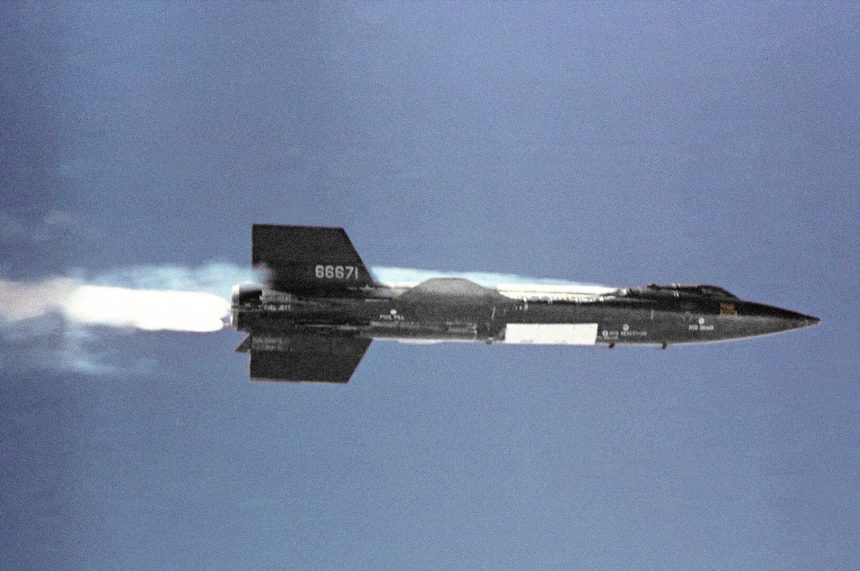
On this day in aviation history, 66 years ago (September 17, 1959), the North American X-15 made its first powered flight. At the controls was legendary test pilot Scott Crossfield, renowned for his distinguished naval and experimental flight career. Crossfield had already flown the X-15 in an unpowered glide test, but this flight marked the moment the rocket plane truly came to life. The X-15 was a rocket-powered hypersonic research aircraft developed as a joint program between the U.S. Air Force and NASA as part of the X-plane series. Its mission was to explore the edges of speed, altitude, and aerodynamics—pushing beyond what was previously thought possible and paving the way for manned spaceflight during the early years of the Space Race.
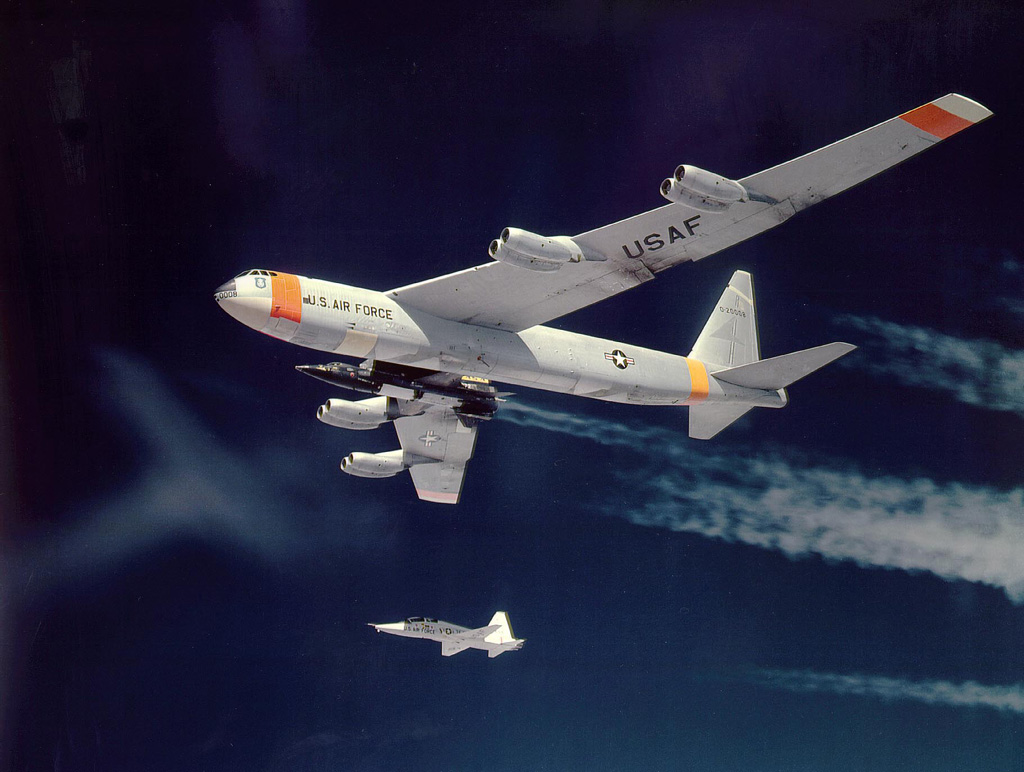
For the first powered flight, a Boeing NB-52A Stratofortress once again served as the mothership, carrying X-15 serial number 56-6670 to an altitude of 35,000 feet. At 8:08:48 a.m., over Rosamond Dry Lake west of Edwards Air Force Base, the X-15 was released. Crossfield dropped 2,000 feet before igniting the aircraft’s two XLR-11 rocket engines, beginning a steep “uphill” climb. With 224.3 seconds of burn time available, Crossfield accelerated the X-15 to Mach 2.11—roughly 1,393 mph—marking a major milestone in hypersonic flight research.
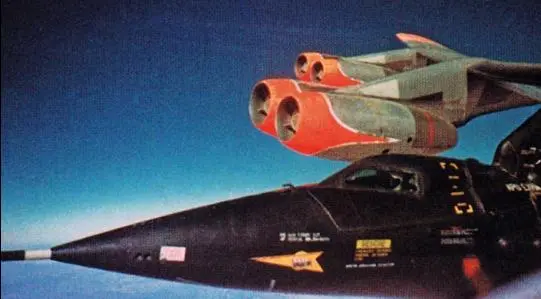
The X-15 would go on to set records that stand to this day. On October 3, 1967, pilot William J. “Pete” Knight flew the aircraft to its fastest recorded speed—Mach 6.70 (4,520 mph). Later variants were equipped with a single Reaction Motors XLR99-RM-2 liquid-fueled rocket engine, producing 70,400 pounds of thrust. The aircraft’s design was as radical as its performance: 49 feet, 2 inches long, with stubby 22-foot, 4-inch wings. It could climb at an astonishing 60,000 feet per minute and reach altitudes as high as 354,330 feet—well into the fringes of space.
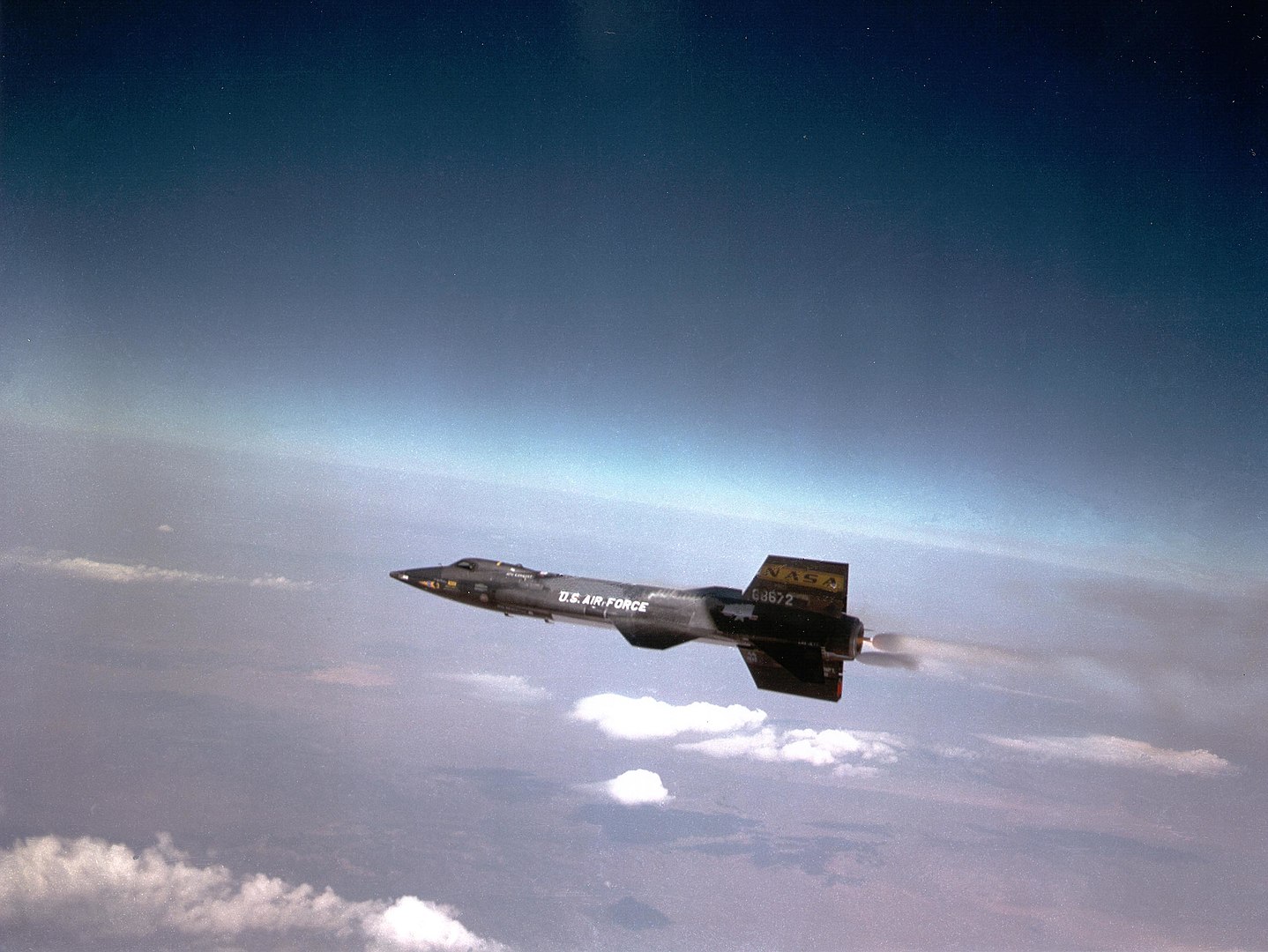
North American Aviation built three X-15s, and two survive today. X-15-1 (USAF s/n 56-6670)—the very aircraft Crossfield flew on this historic day—resides at the Smithsonian National Air and Space Museum in Washington, D.C. X-15A-2 (USAF s/n 56-6671) is proudly displayed at the National Museum of the United States Air Force in Dayton, Ohio, preserving the legacy of one of the most extraordinary aircraft ever built.