
(Image credit: VAN)
On this day in aviation history, 107 years ago (October 30, 1918), noted American aviator Eddie Rickenbacker scored his final aerial victory. Edward was born on October 8, 1890, in Columbus, Ohio, to Wilhelm and Lizzie Rickenbacher. He would add his middle name, Vernon, and also change his last name to Rickenbacker later on in life. Eddie was an industrious young man, working before and after school to support his family. His role as a hard worker became especially critical when Eddie lost his father in 1904.
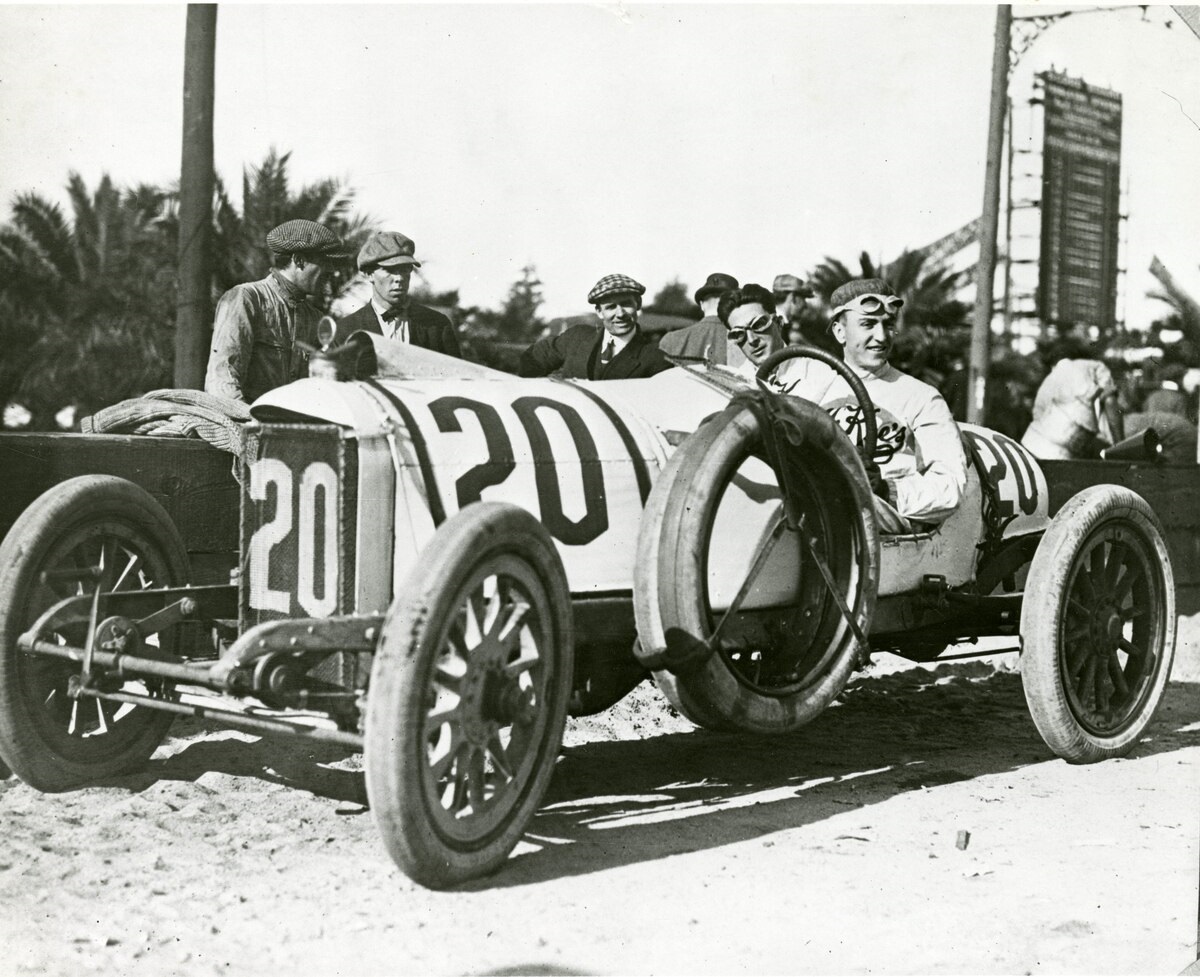
Eddie spent time working in the automotive industry, learning all about “things that go fast.” He would soon be involved in racing and develop his need for speed. Rickenbacker won multiple races as a driver, including the Sioux City, Tacoma, and Sheepshead Bay races. While racing in England, Eddie was enthralled with Royal Flying Corps airplanes that were flying over the Thames from the Brooklands aerodrome. This sight ignited Eddie’s interest in aviation; he kept the idea of flying for the United States, in the brewing European War, in the back of his mind.
After the Zimmermann Telegram, Rickenbacker would find his way into the First World War. General John J. Pershing invited Eddie to sail to England, knowing of his desire to fly and also handle a Squadron of his own. In June of 1917, Rickenbacker enlisted in the United States Infantry. Rickenbacker drove Army officials between Paris, A.E.F. HQ (Chaumont), and other points on the Western Front. During this phase of service, Rickenbacker made the rank of Sergeant First Class. During his driving, Eddie met Captain James Miller. This put his training as a fighter pilot on the fast track – five weeks of flight training and 25 hours accumulated by September of 1917.

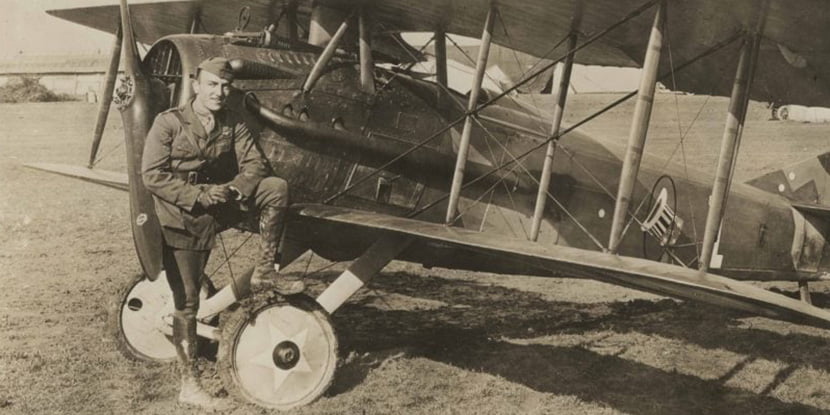
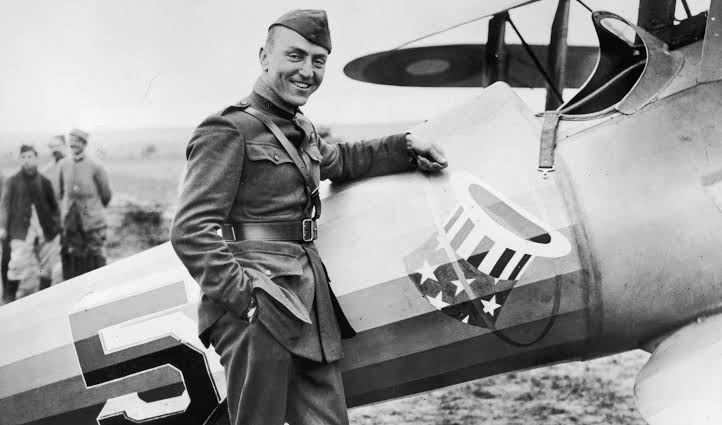
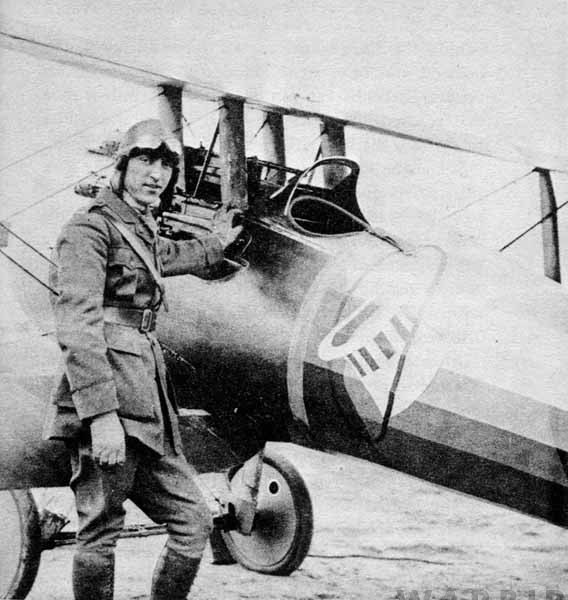
Captain Eddie Rickenbacker would eventually go on to command the 94th Aero Squadron – the famed “Hat in the Ring” squadron. During World War I, Rickenbacker claimed 26 aerial victories. On October 30, 1917, while flying his SPAD XIII, Rickenbacker brought down a Balloon over Remoiville (north-eastern France) at approximately 1040. Eddie Rickenbacker would go on to serve in World War II. In his fighter pilot career, Rickenbacker was bestowed many notable awards, such as the Medal of Honor, Distinguished Service Cross, Medal for Merit Legion of Honour (France), and the Croix de Guerre (France.)