






(Image credit: VAN)
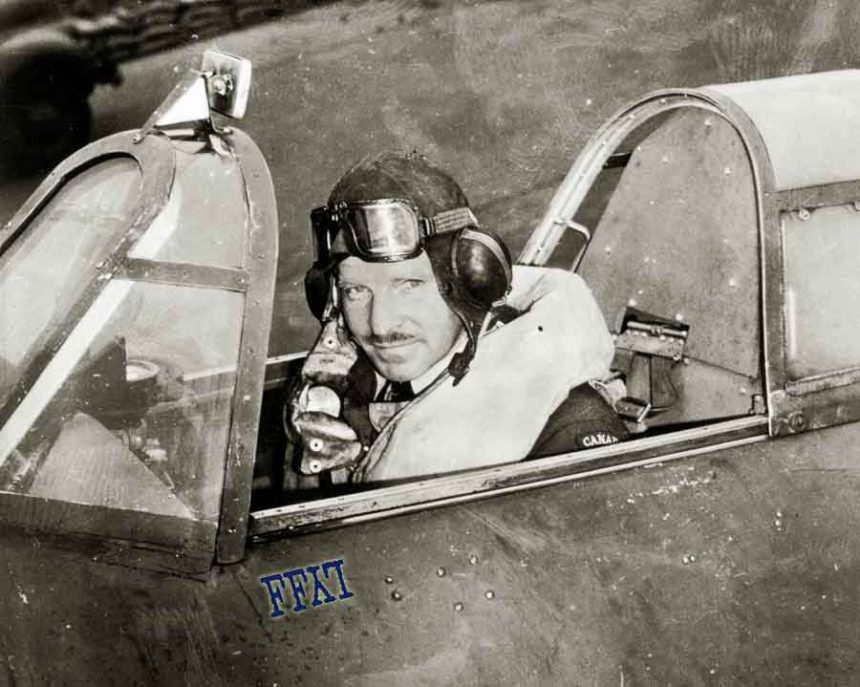
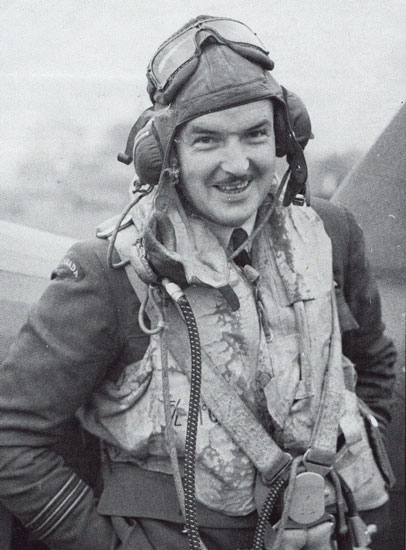
On August 15, 1940, 85 years ago, the Royal Canadian Air Force (RCAF) secured its first aerial victory of the Battle of Britain. Squadron Leader Ernest Archibald “PeeWee” McNab, commanding a Royal Canadian Air Force (RCAF) fighter formation, engaged a Luftwaffe Dornier Do 17 with his Hawker Hurricane. Despite the enemy aircraft’s attempts to evade, McNab’s relentless pursuit and precise gunfire brought down the Do 17, marking the first confirmed RCAF aerial victory in the Battle of Britain.
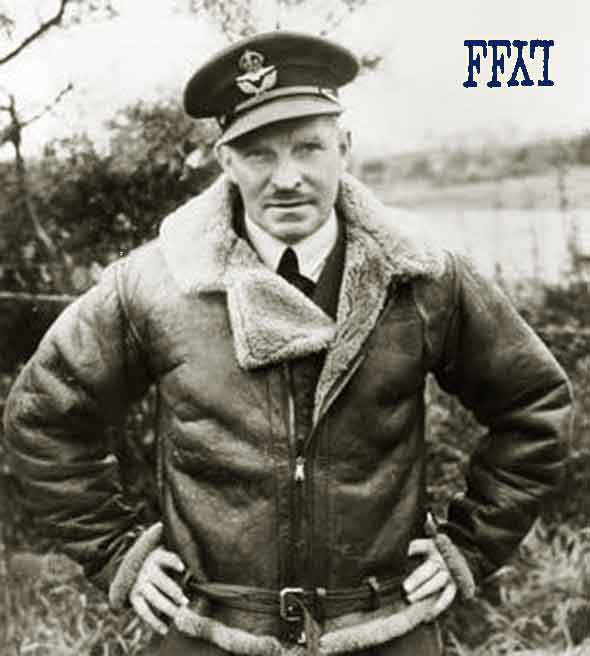
Ernest “Ernie” McNab, son of Saskatchewan’s Lieutenant Governor Archibald Peter McNab, was 34 years old during the Battle of Britain, making him one of the older pilots in the RCAF. His experience earned him the respect of his 102 fellow Canadian pilots and extensive support staff who fought in Britain’s first major air campaign of World War II. The Battle of Britain began on July 10, 1940, peaked on September 15, and concluded on October 31. For his leadership and success in downing the Dornier while commanding No. 1 Squadron, McNab was awarded the Distinguished Flying Cross.
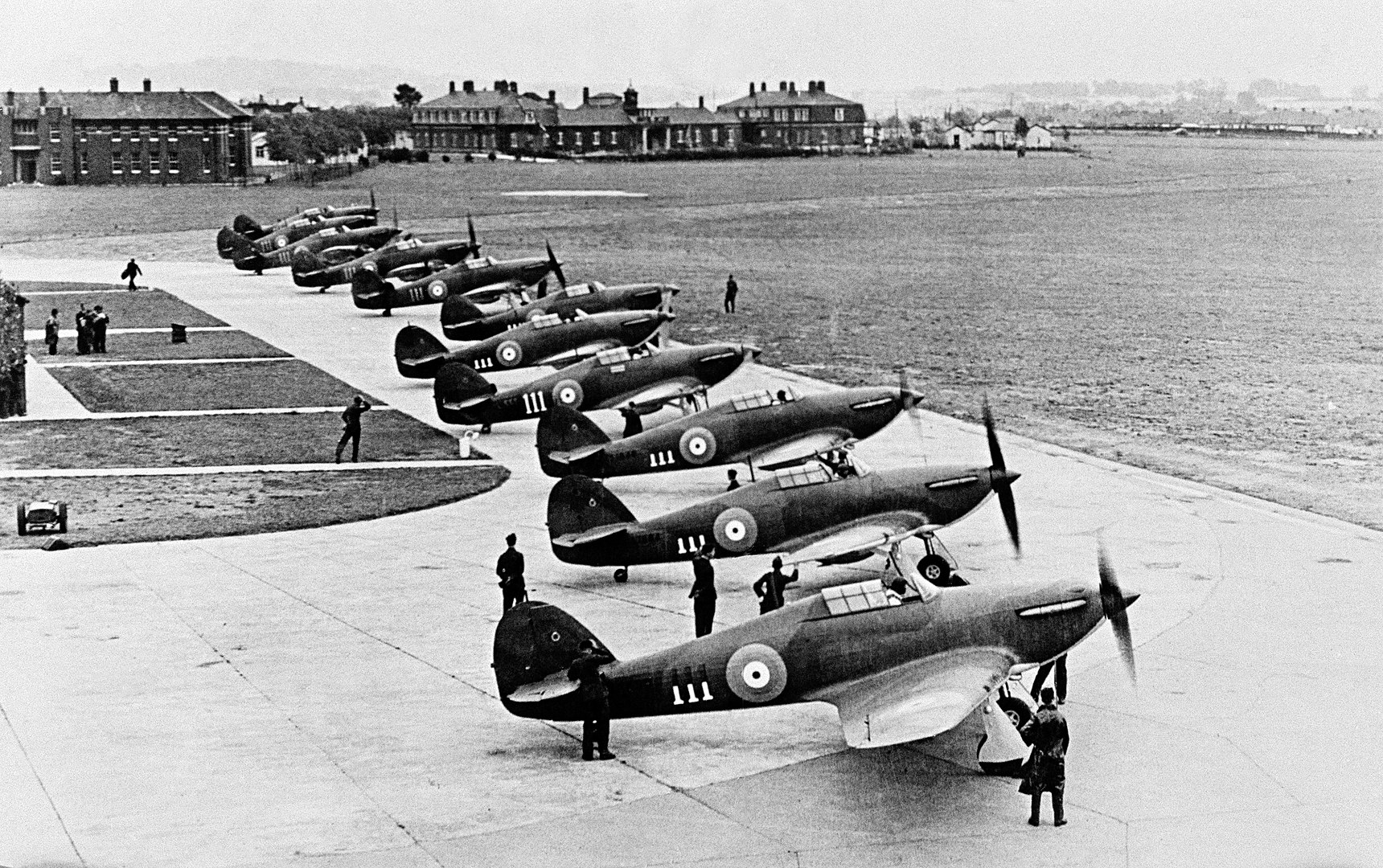
The Hawker Hurricane, often overshadowed by the Supermarine Spitfire, was a cornerstone of the RCAF’s success in the Battle of Britain. While the Spitfire was celebrated for its sleek design and agility, the Hurricane proved indispensable in the early stages of the conflict. Both aircraft played critical roles in securing Britain’s victory and shaping the outcome of World War II. The Hawker Hurricane Mk. I, used during the battle, was powered by a 1,030-horsepower Rolls-Royce Merlin III engine, achieving a top speed of 316 miles per hour and a service ceiling of 33,200 feet. It could climb to 15,000 feet in 6.3 minutes and was armed with eight 7.7mm machine guns, delivering the firepower needed to counter the German offensive at a pivotal moment in the war.
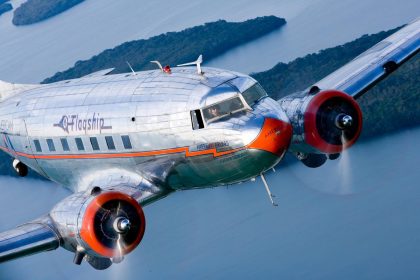


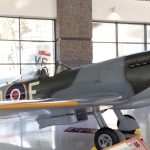

“On August 15, 1940, Squadron Leader Ernest “PeeWee” McNab, a 34-year-old Canadian, piloted his Hawker Hurricane into battle. Spotting a Luftwaffe Dornier Do 17, he dove, his eight 7.7mm machine guns blazing…”
The Battle of Britain began on July 10th, with Luftwaffe attacks on shipping convoys in the English Channel. Many German aircraft were brought down before August 15th. And please, the Hawker Hurricane was armed with eight .303 browning machine guns, not 7.7 mm. No-one in Britain in 1940 used mm!
Hi Leo,
My source was Canadian in nature, and they referred to the BoB and measurements in reference to their entrance into the war (and the metric system!) Thanks for the details.
I’m a veteran of the RAF for 28 years, I’m 67 and enjoy living in The Republic of Alberta in Calgary.
One day soon 🤞
I met Stanford Tuck on The Isle of Mann, the TT in 1978.
We chatted about life and enjoyed many happy hours. Great Day’s.
Stay Safe and
Stay Free 🆓
So, what happened to McNab? Did he have any other kills? Did he survive the war? How difficult could it have been to include a bit more background?
Gladly! McNab went on to have an eventful World War II experience as a pilot. On 8/26/40, he shot down another Do 17. On 9/7 and 9/9, he claimed a Bf 109 each day. On 9/11, he damaged an He 111. On 9/15, he shot another He 111 down, while damaging a second. On 9/27, he became an Ace by downing a Bf 110 and Ju 88.
McNab became the RCAF’s first Ace, and he was awarded the Distinguished Flying Cross on 10/2240 for his “skill and valour in battle.” He’d go on to serve as Wing Commander and earned a post at RCAF HQ in London in November of 1940. After this, McNab returned to Canada to help train new RCAF pilots. In July 1941, he took command of the No. 118 RCAF Squadron in Rockcliffe, Ottawa. Shortly after, McNab was transferred to No. 45 FTS in Saskatoon, eventually becoming Captain in June of 1942.
In August 1942, McNab returned to Britain and took command of Digby Air Base – where’d he’d remain until April 1945. He was awarded “Officer of the Order of the British Empire” and the “Czechoslovak War Cross 1939–1945” amd continued to serve with the RCAF as Senior Air Staff Officer at Western Command until 1957. After retirement, McNab lived in Vancouver until his death on January 10, 1977.
Love your mixed measurement units, “1,030-horsepower Rolls-Royce Merlin III engine, achieving a top speed of 316 miles per hour and a service ceiling of 33,200 feet. It could climb to 15,000 feet in 6.3 minutes and was armed with eight 7.7mm machine guns”.
Usually referred to as “.303 in. Brownings”, I think…
Terry
Correct, most of my sources were via Canadian outlets, and they had mixed measurements as a result.
The Battle of Britain didnt start on the 15th August, it began a month earlier with the Luftwaffe attacking shipping in the channel……and there had been >100 German planes shot down by then.
Please come and visit RAF Hendon and take a Battle of Britain tour, we’d love to see you
Correct, apologies for my wording. This article is meant to read as “First RCAF Aerial Victory,” rather than RAF. My mistake for working on multiple articles in one go! That is a trip I would love to make. One day!
This is incorrect, the Battle of Britain began on 10th May 1940
Correct, apologies for my wording. This article is meant to read as “First RCAF Aerial Victory,” rather than RAF.
Incorrect details on this post. Not the first victory for the RAF, what nonsense! The Battle of Britain started on 10 July 1940!
What it should say is that this the first for a member of the RCAF….Royal Canadian Air Force.
Correct, apologies for my wording. This article is meant to read as “First RCAF Aerial Victory,” rather than RAF. My mistake for working on multiple articles in one go!
Austin Hancock,
You need to get back to your ‘Books’ and research the Battle of Britain, as you stated above the Battle ‘officially’ began on July 10th 1940, the RAF didn’t wait until McNab claimed the Destruction of a Do17z on August 15th to start shooting down the attacking Luftwaffe!
Even Sqn Ldr Douglas Bader (OC No.242 (Canadian) Fighter Squadron – Destroyed a Dornier Do17z on July 11th 1940!
The very first Luftwaffe aircraft of the Battle shot down was a Heinkel He111H-2 of 7/KG53 by Sub-Lieutenant (A) Richard Gardner, RN on loan to 242 Sqn from the Royal Navy’s Fleet Air Arm on July 10th 1940 at 07.50 Hrs off of Lowestoft in Suffolk.
Correct, apologies for my wording. This article is meant to read as “First RCAF Aerial Victory,” rather than RAF. My mistake for working on multiple articles in one go!