
(Image credit: VAN)
On this day in aviation history—June 8, 1921—the first successful experiments in cabin pressurization were conducted, marking a major milestone in the advancement of high-altitude flight. The pioneering effort took place at McCook Field in Dayton, Ohio, where U.S. Army Air Service test pilot Harold R. Harris took off to open a new chapter in aviation innovation. McCook Field was a hotbed of aeronautical progress in the early 20th century, with breakthroughs that included constant-speed propellers, free-fall parachutes, and bulletproof fuel tanks. Today, a historical marker honors the field’s legacy as a cradle of aviation research and experimentation.
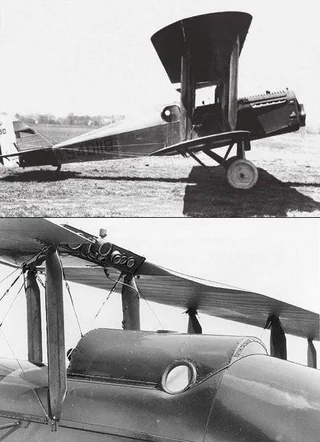
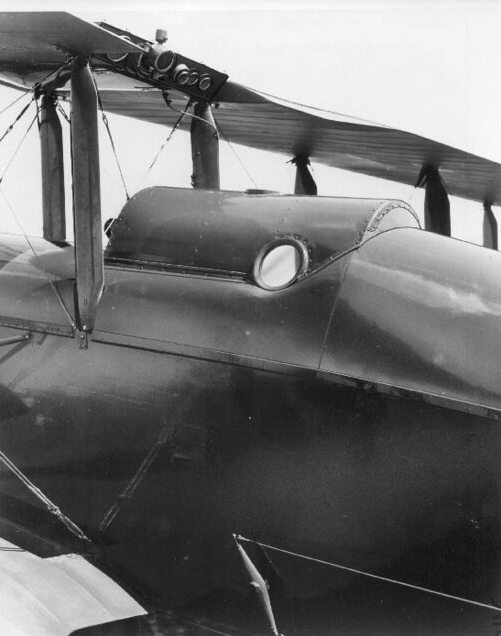
On that historic day, Harris piloted a modified Dayton-Wright USD-9A biplane—an aircraft outfitted with a specially designed, pressurized cockpit chamber. This flight marked the first time an airplane had taken off and flown with a sealed, pressurized compartment for the pilot. Prior attempts by other aviators, including altitude record-holder Lt. John A. Macready, had failed due to technical issues. Macready had previously reached record altitudes in oxygen-equipped but unpressurized aircraft. The USD-9A’s pressurized compartment replaced the standard open cockpit with an airtight chamber. The setup was spartan: it featured only a control stick inside and small portholes for visibility. Flight instruments were mounted outside the sealed compartment to prevent pressurization from skewing their readings.
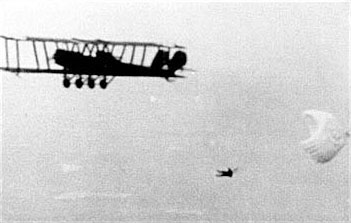
Although these initial tests in the 1920s were groundbreaking, cabin pressurization was not immediately adopted in commercial aviation. The technology required further refinement, and it wasn’t until 1938 that it reached operational maturity with the introduction of the Boeing 307 Stratoliner—the first pressurized passenger airliner. Only ten Stratoliners were built, and by 1950 they were already obsolete. However, they paved the way for more advanced designs, such as the Lockheed Constellation, which brought pressurized comfort to long-range passenger travel and saw widespread service in the 1940s and ’50s. Today, pressurization is an essential part of modern aviation—an innovation that has made high-altitude, long-distance air travel not only possible but comfortable. While it’s easy to overlook this critical technology, it all began over a century ago with a bold experiment in a sealed cockpit over Dayton, Ohio. Interestingly enough, McCook Field Engineering Division chief test pilot Lt Harold R. Harris also became the first person to successfully bail out of a plane in an emergency using the freefall, ripcord-operated parachute.