

(Image credit: VAN)
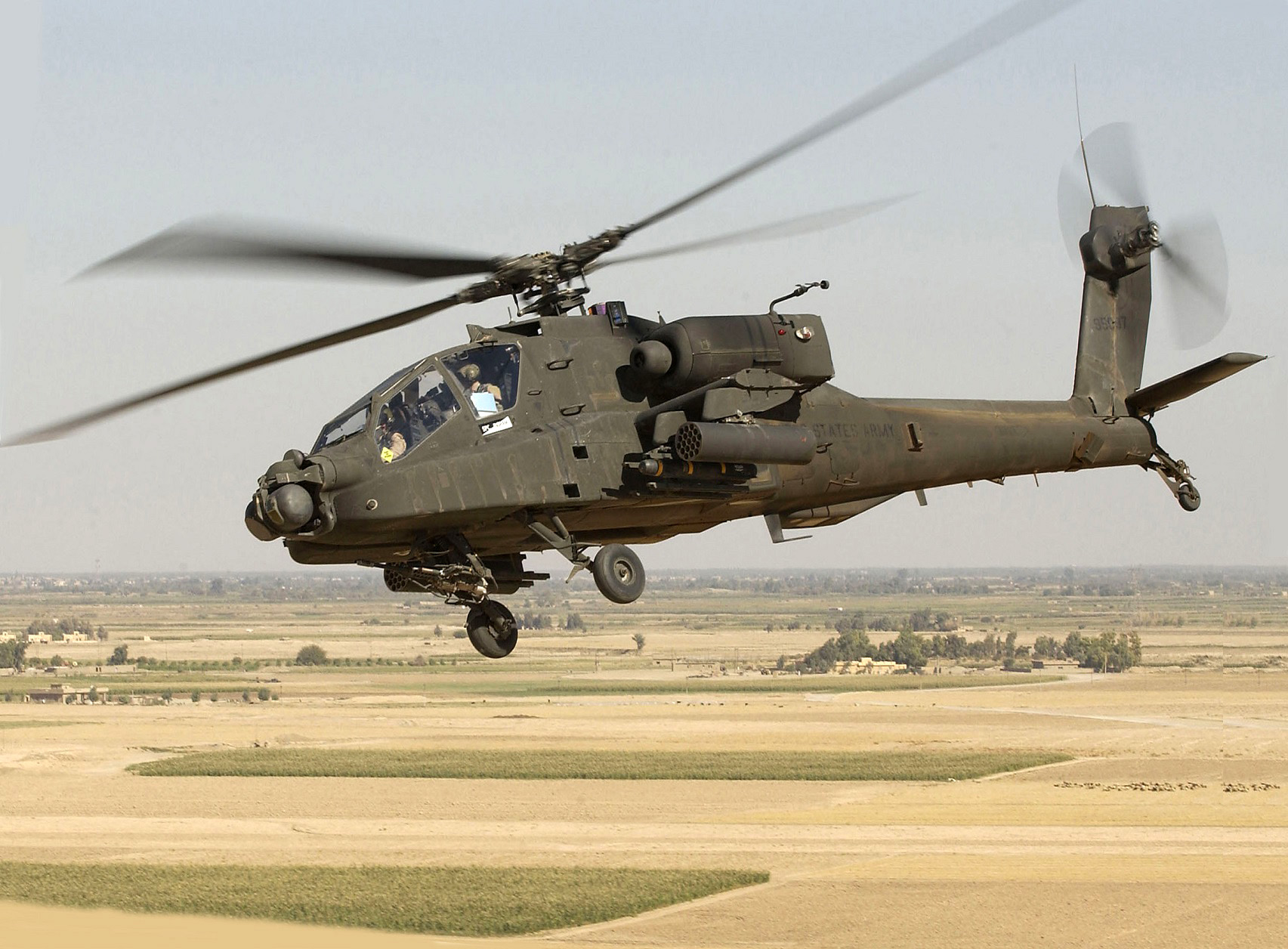
Fifty years ago today (September 30, 1975), the first flight of the AH-64 Apache took place. This iconic American attack helicopter was originally developed by Hughes Helicopters as the Model 77. The YAH-64 prototype AV-02 (serial 74-22248) became the first advanced attack helicopter to take to the skies, with Hughes Chief Test Pilot Robert Ferry and Raleigh Ellsworth Fletcher at the controls. Notably, this flight occurred just one day before the Bell YAH-63 competitor’s first flight.
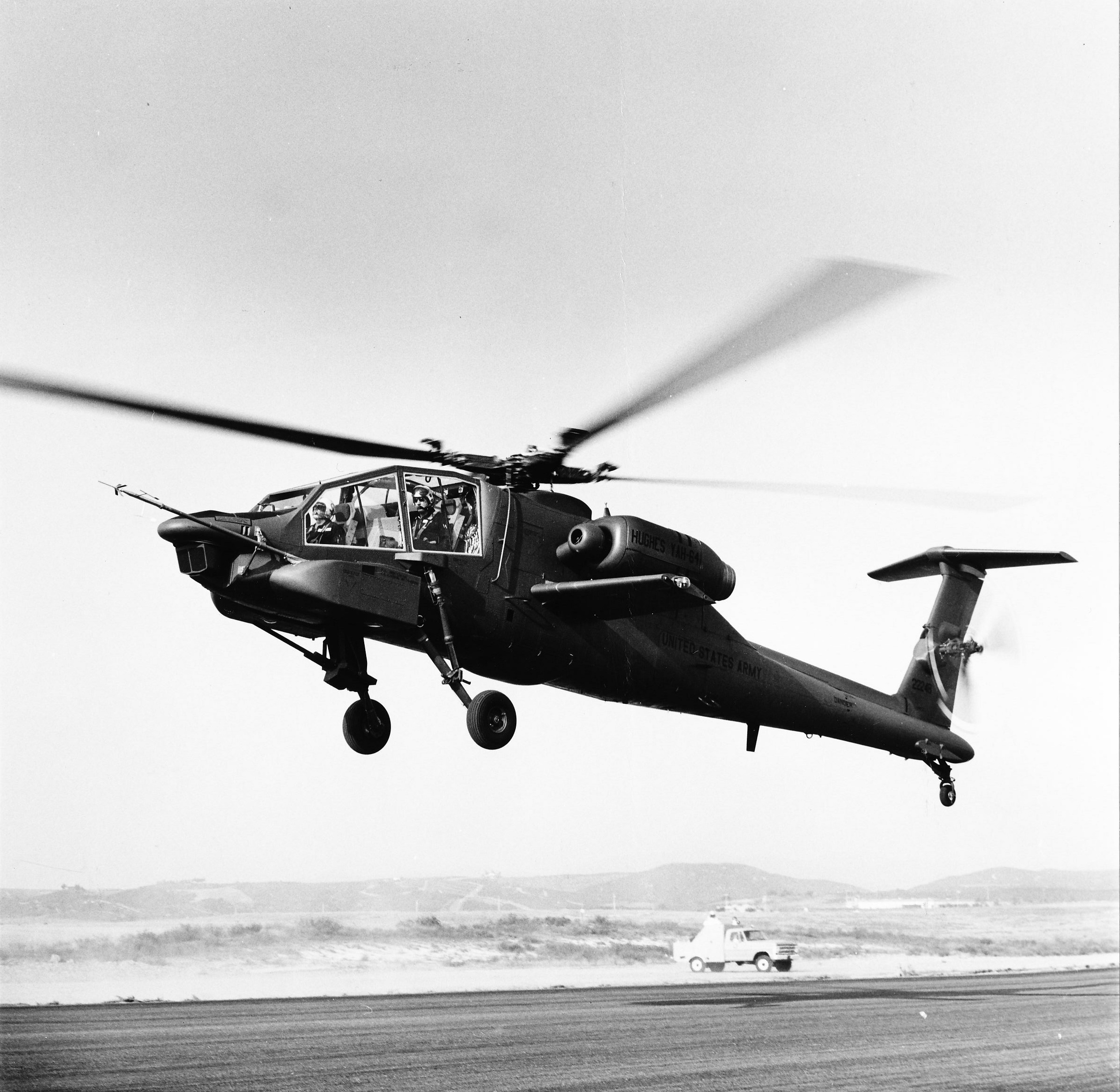
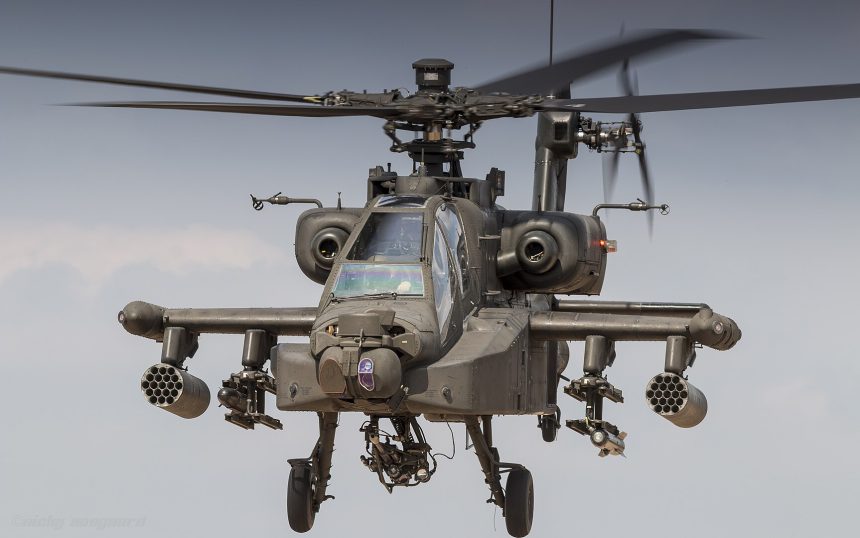
Hughes built the AH-64 from 1975 until 1984, when McDonnell-Douglas took over production after acquiring Hughes Helicopters. Boeing continued production following its merger with McDonnell-Douglas in 1997, and today the AH-64 remains in active production. To date, more than 2,700 Apaches have been built. The aircraft features a tandem cockpit for a two-person crew, twin-turboshaft engines, and tailwheel landing gear, optimized for both survivability and combat effectiveness.

AH-64A and AH-64D models are powered by two General Electric T700-GE-701 turboshaft engines, each producing 1,690–1,890 shaft horsepower depending on the variant. The main rotor spans 48 feet, with an overall length of 58 feet, 2 inches. The Apache can reach a maximum speed of 182 mph, cruise at 165 mph, and operate within a combat range of 160 nautical miles, with a service ceiling of 20,000 feet. Armament includes the 30 mm M230 Chain Gun with 1,200 rounds and four underwing hardpoints capable of carrying a mix of rockets and missiles.
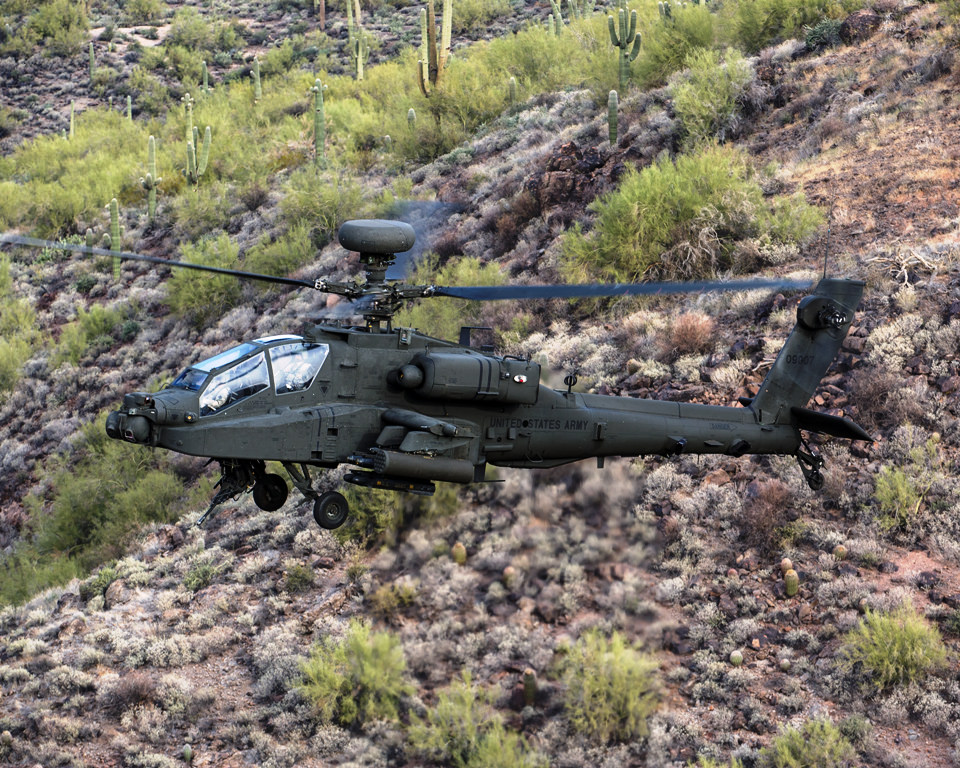
While primarily serving the United States Army, the AH-64 is also used internationally by countries including India, Greece, Poland, Japan, and Australia, which recently ordered 29 AH-64E models. The Apache has seen combat in Panama, the Middle East, and numerous conflicts since the 1980s, consistently proving its effectiveness as a strike platform. Continual upgrades and new technologies ensure the AH-64 remains a vital component of modern battlefield operations, excelling in close and precise engagement scenarios.