






(Image credit: VAN)
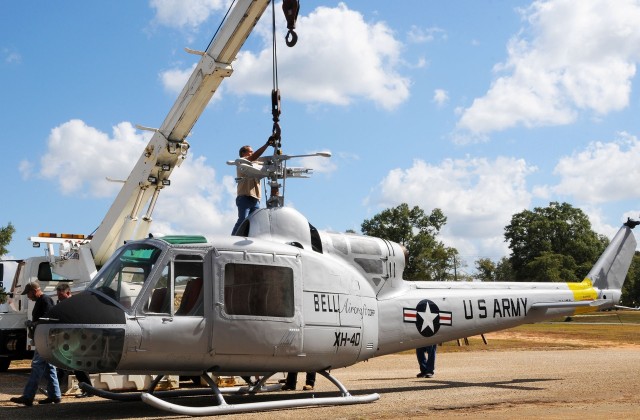
On this day in aviation history, 69 years ago (October 20, 1956), the first flight of the Bell UH-1 Iroquois took place. More commonly known as the “Huey,” the UH-1 is a utility military helicopter designed and built by Bell Aerospace. The first Huey to fly was the Bell XH-40 prototype, serial number 55-4459. Internally, Bell referred to the helicopter as the Model 40, while XH-40-BF was the military designation assigned by the U.S. Army. Bell Chief Pilot Floyd Carlson and Chief Experimental Test Pilot Elton Smith were at the controls for the Model 40’s maiden flight, which took place at Bell’s helicopter facility in Hurst, Texas.
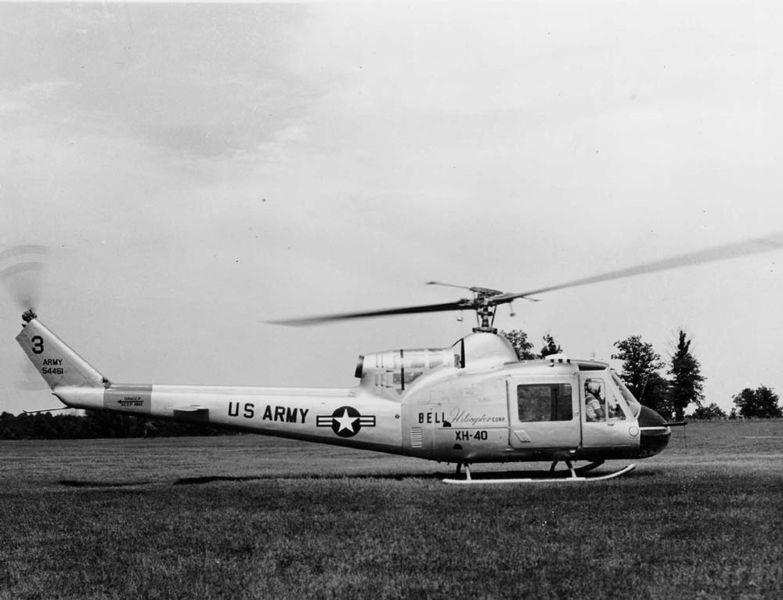
The Bell XH-40 prototype was powered by a Lycoming LTC1B-1 turboshaft engine capable of producing 825 shaft horsepower. Bell’s XH-40 could reach a maximum speed of 153 miles per hour at 2,400 feet. It had a hover ceiling in ground effect (HIGE) of 17,300 feet and a service ceiling of 21,600 feet. The Model 40 carried 165 gallons of fuel, providing a range of 212 nautical miles. Three XH-40 prototypes were built, followed by six YH-40 service test helicopters. The designation XH-40 was later changed to XHU-1.
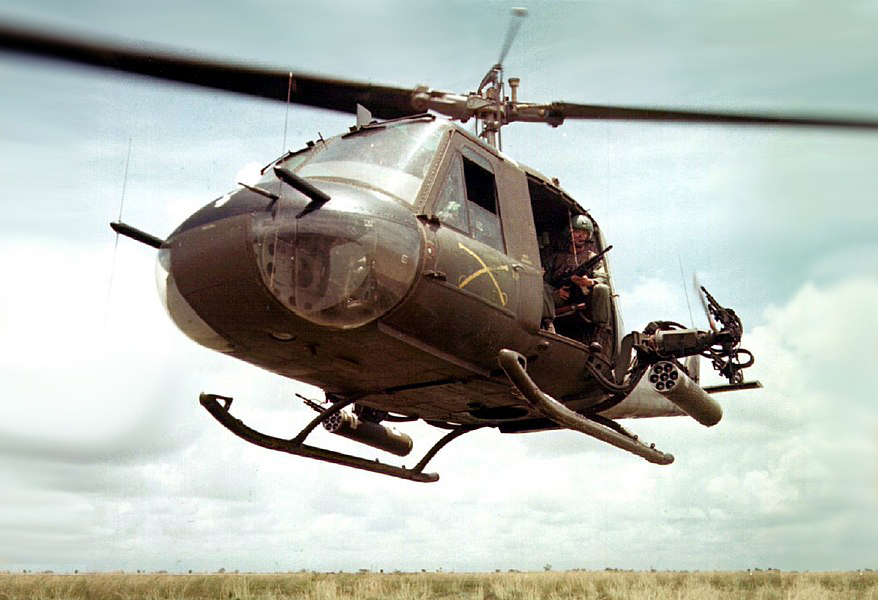
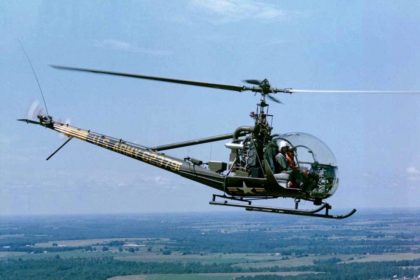
Bell’s Model 40/XH-40/XHU-1 became the foundation for the UH-1 Iroquois—a helicopter that would play a pivotal role in combat operations during the Vietnam War. Numerous variants of the Huey were developed for a wide range of missions, including transport, medevac, and light attack (the “Huey Hog”). More than 16,000 helicopters from the UH-1 family were produced between 1956 and 1987, with some still serving in military roles today, including with the Japan Ground Self-Defense Force and the Canadian Army.
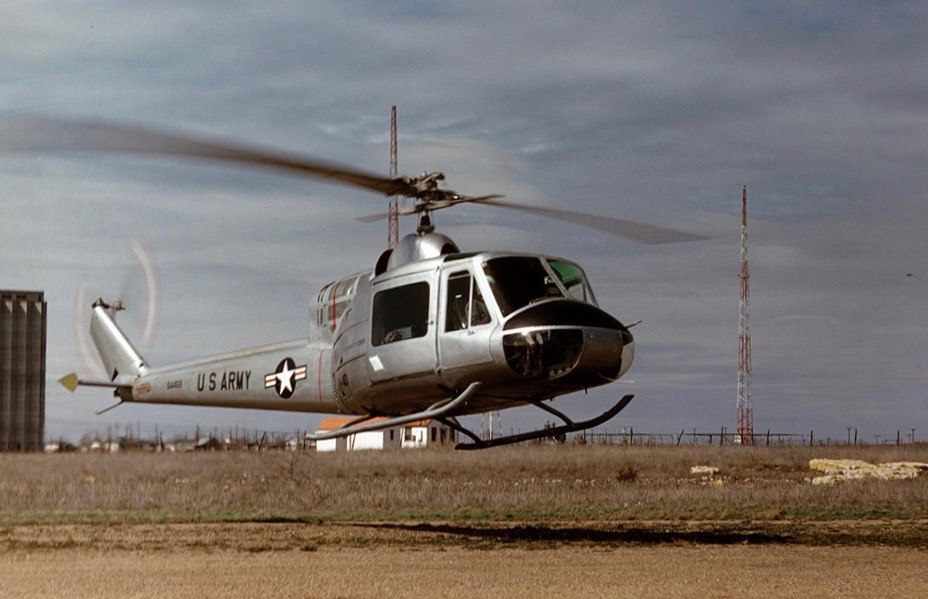
The UH-1H variant had a crew of one to four and could carry up to 3,880 pounds of cargo, 11 to 14 troops, or six stretchers and a flight nurse. Powered by a single Lycoming T53-L-13 turboshaft engine producing 1,400 shaft horsepower (limited to 1,100), the Huey had a top and cruise speed of 127 miles per hour, a range of 276 nautical miles, and a service ceiling of 12,600 feet. This version could also be equipped with 7.62 mm machine guns and 2.75-inch rocket pods. The first Huey to fly—Bell XH-40, serial number 55-4459—still exists today. The aircraft is preserved and on display at the United States Army Aviation Museum at Fort Rucker, Alabama.




With over 1500 hours in the UH-1, including 786 Combat Hours, I loved the “feel” of the Huey. One mission I had was to burn off fuel in brand new Hueys on their way to Vietnam aboard C-5s They were flown from Bell to Ft. Hood. Our mission was to bring the fuel load down to a minimum (like 200 lbs) and then they were loaded on the C-5. A new out of the factory HU-1H climbed like a homesick angel when 50 # of torque was pulled on an empty (just two pilots on board) ship.
I reached a point in my flying the Huey that control was instinctive. I didn’t move the controls to get the helicopter from place to place. I just thought myself to where I wanted to be and the machine went there. Truly the epitome of “strapping it on my back and flying!”