
(Image credit: VAN)
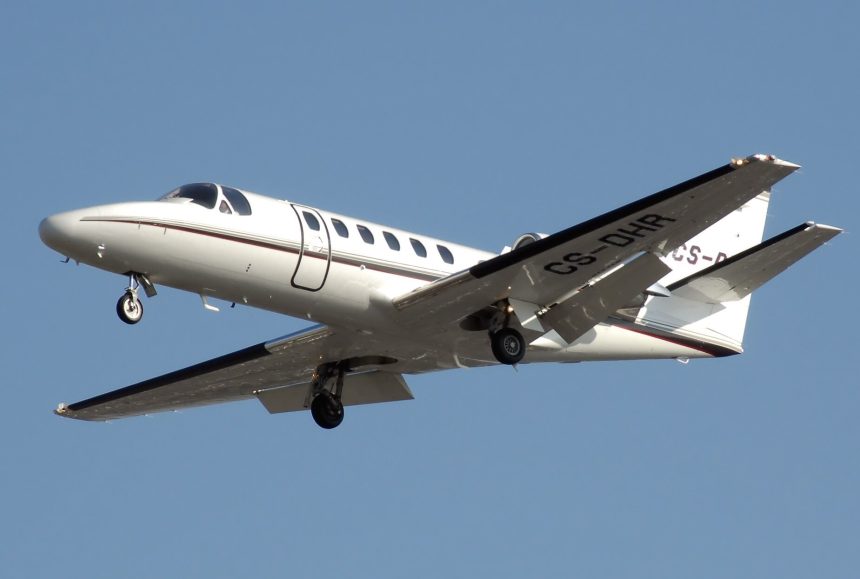
On this day in aviation history, 49 years ago (January 31, 1977), the Cessna Citation II flew for the first time. The Citation II represents a complete line of light corporate jets built by Cessna, a company originally known for its success in manufacturing light training aircraft. Cessna developed the Citation II, also known as the Model 550 (CE-550), from their Citation I. The aircraft is essentially a stretched version of the original, adding more capacity for passengers. Development of the CE-550 was announced in September 1976, with the first flight taking place four months later.
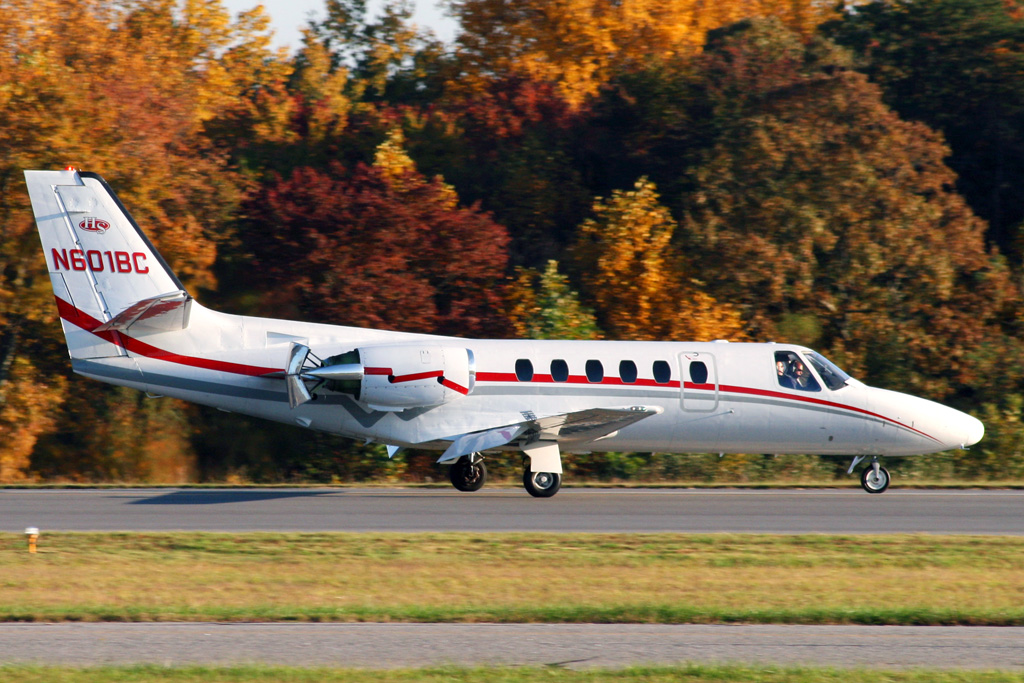
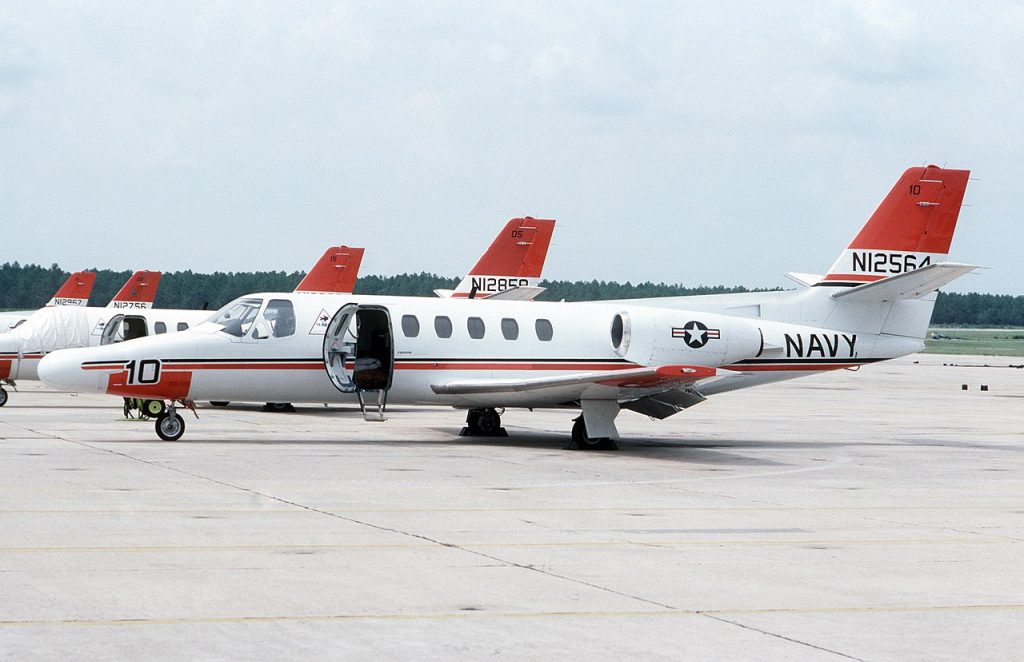
Cessna developed the Model 550 to address the criticisms of the Citation I, which included a rather lackadaisical cruise speed of around 350 KIAS (402 mph) at altitude. Keeping the exceptional low-speed handling and short-field characteristics of the Citation I, Cessna set to work to improve the business jet. Since the aircraft’s introduction, it has proven itself as a solid performer in the world of corporate aviation. The United States Navy has also made use of the CE-550, under the designation T-47A. This military variant of the Citation II had upgraded control surfaces, engines, and avionics. Fifteen T-47s were purchased in 1984 to be used as a radar systems training aircraft, preparing naval radar intercept officers. Training Air Squadron VT-86, based at Naval Air Station Pensacola, Florida, flew the T-47As until a hangar fire destroyed ten of the aircraft. The remaining five were sold to the civilian market.
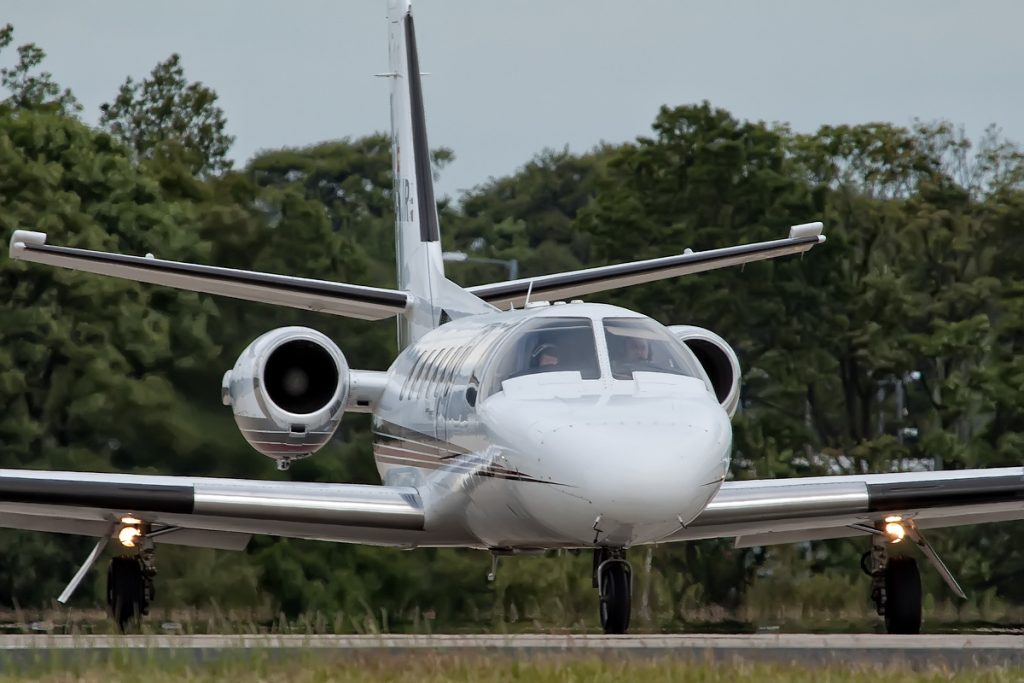
The Cessna S550 Citation S/II variant has a crew of one or two pilots, depending on certification and operator specs. Six to eight passengers can be comfortably flown on the S550, which has a range of 2,299 nautical miles and a service ceiling of 43,000 feet. Two Pratt & Whitney Canada JT15D-4B turbofan engines, each with 2,500 pounds of thrust, power the Citation S/II to a maximum airspeed of Mach 0.721 (553 mph). The S550 is no slouch in cruise either, with an airspeed of 464 miles per hour. The S/II can also climb at 3,040 feet per minute. Between 1978 and 2006, Cessna built a total of 2,368 Citation II aircraft of different variants. Many are still serving today as corporate aircraft.