
(Image credit: VAN)
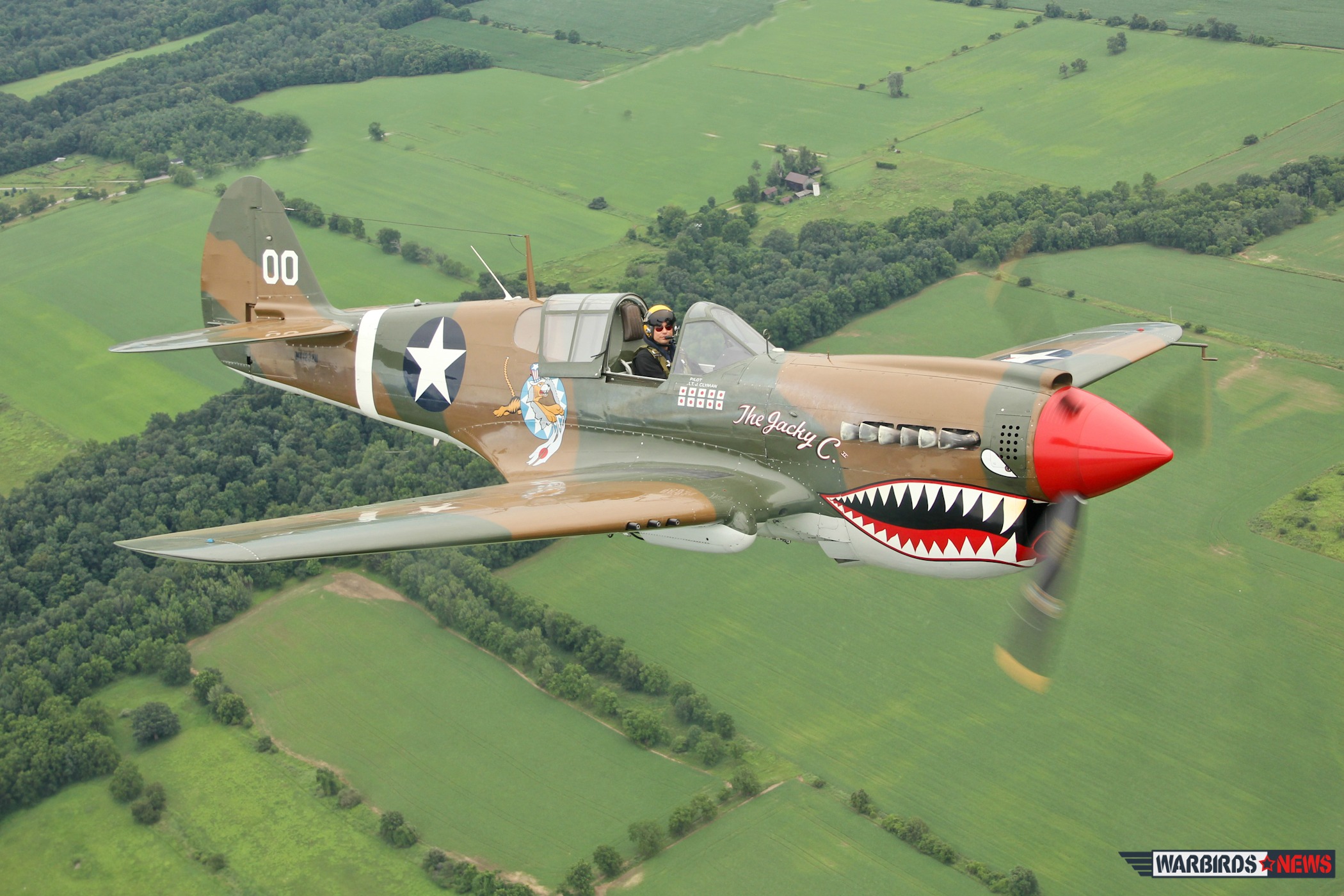
On this day in aviation history, 87 years ago (October 14, 1938), the Curtiss P-40 took to the skies for the first time. The P-40 was an American single-engine fighter aircraft capable of both air combat and ground attack missions. Known variously as the Warhawk, Tomahawk, or Kittyhawk—depending on the operator—the P-40 was derived from the earlier Curtiss P-36 Hawk. By building on an existing design, Curtiss was able to accelerate development and production at a critical time for American and Allied air power. During World War II, the P-40 saw extensive service with many Allied nations, including the United States, the British Commonwealth, and the Soviet Union. Early variants—the P-40, P-40B, and P-40C—were designated Tomahawk by Commonwealth forces, while the U.S. Army Air Corps referred to all versions as Warhawk. Later models, beginning with the P-40D, adopted the name Kittyhawk in Commonwealth service. A noticeable design change came with these later versions: the relocation of the machine guns from the engine cowling to the wings, resulting in a distinctive new nose profile.
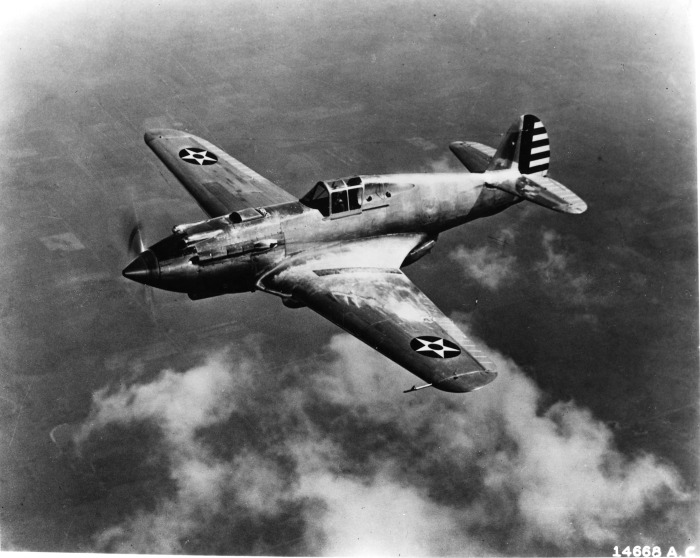
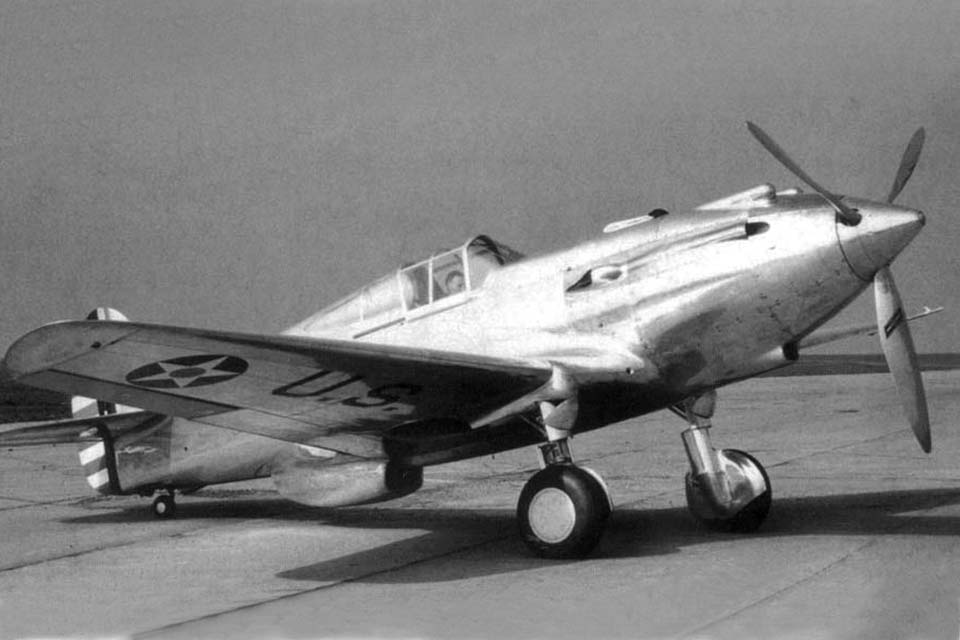
The Curtiss P-40 gained fame in the hands of several notable groups, most prominently the American Volunteer Group (AVG)—the famed Flying Tigers—who flew shark-mouthed P-40Bs and Cs in defense of China, as well as the Tuskegee Airmen, who trained and fought in P-40s during their early missions in the Mediterranean Theater. Powered by an Allison V-1710-39 liquid-cooled V-12 engine producing 1,240 horsepower, the P-40 was rugged, reliable, and well-suited to low- and medium-altitude combat. However, its single-stage supercharger limited performance at higher altitudes. Later variants—the P-40F and P-40L—were fitted with Packard-built Rolls-Royce Merlin engines (V-1650), rated at 1,400 horsepower and featuring a single-stage, two-speed supercharger. This significantly improved high-altitude capability, though the more advanced two-stage Merlin supercharger used in the P-51 Mustang was never installed on the P-40.
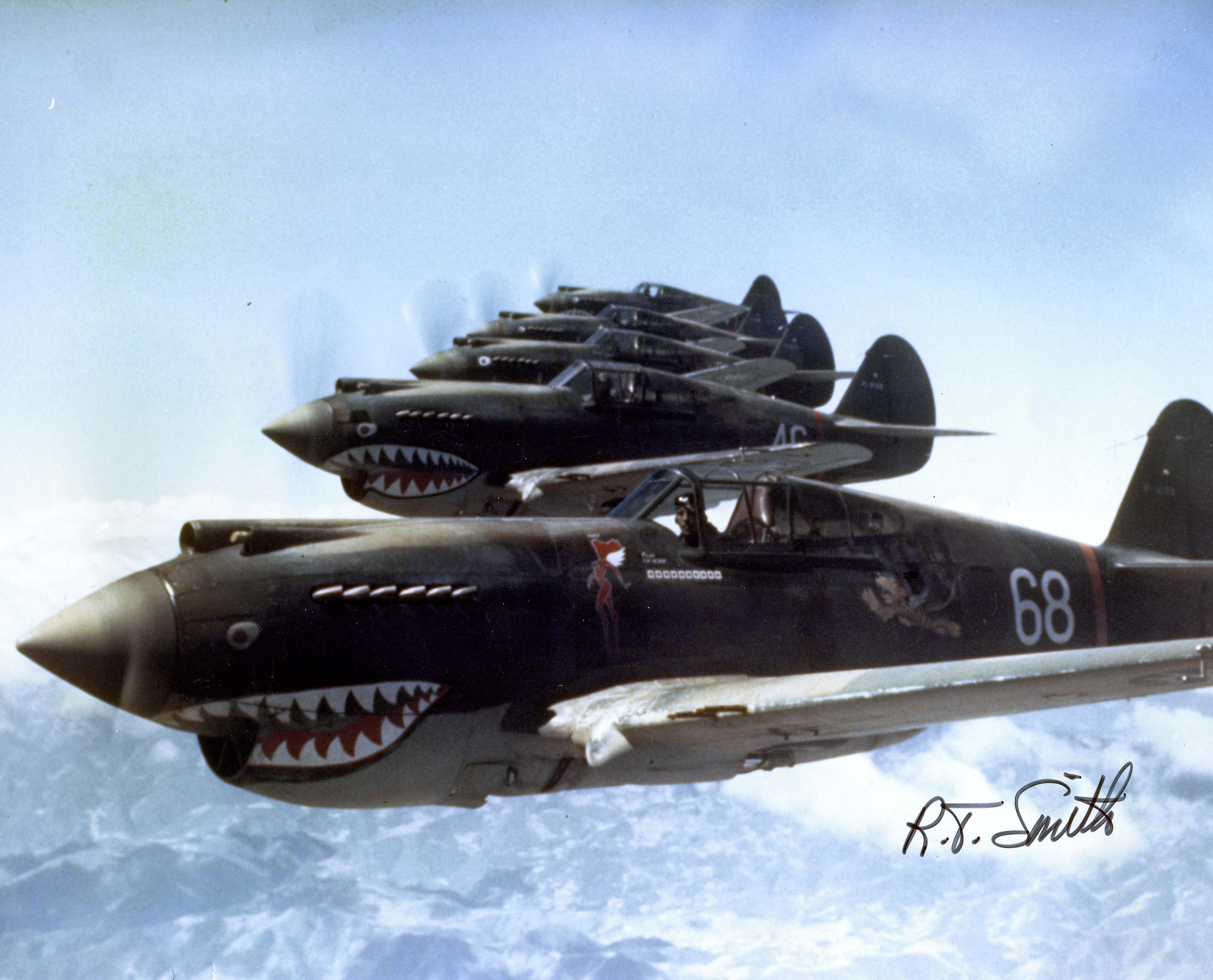
The P-40E Warhawk had a top speed of 361 miles per hour, a cruising speed of 308 mph, and a range of 622 nautical miles. Its service ceiling reached 29,100 feet. Armament consisted of six .50 caliber M2 Browning machine guns mounted in the wings, complemented by up to 2,000 pounds of bombs on underwing and fuselage hardpoints—making it effective as both a fighter and a fighter-bomber. Between 1939 and 1944, Curtiss produced 13,738 P-40s, making it one of the most widely built American fighters of World War II. Today, a number of P-40s survive in museums and private collections, with several restored to airworthy condition. These warbirds continue to perform at airshows around the world, preserving the legacy of a fighter that stood on the front lines of nearly every major theater of the war.