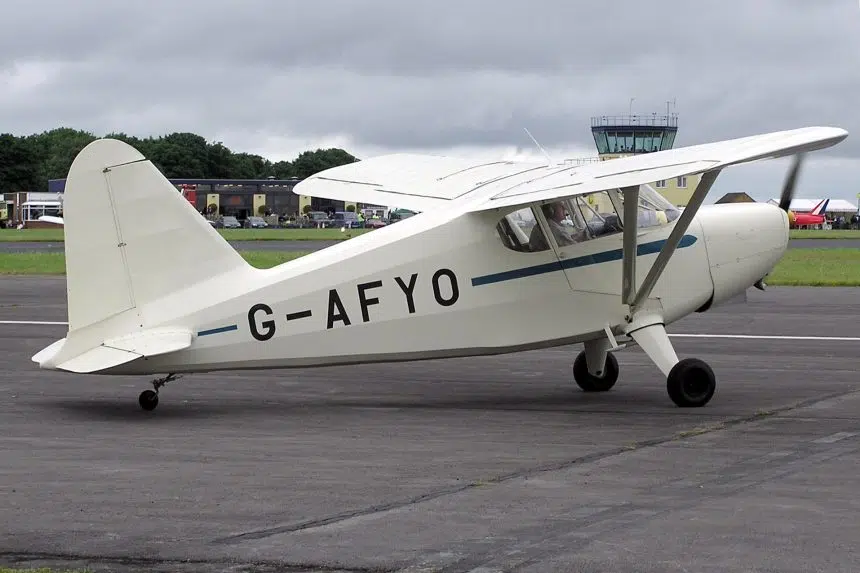

In 1920, aviator Edward Stinson, also the brother of aviator Katherine Stinson, founded the Stinson Aircraft Company in Dayton, Ohio. After five years, Stinson moved his focus to Detroit, Michigan, for his future aviation projects. At the same time, he worked as a stunt pilot and earned $100,000 a year, which was a large amount at the time. He discovered that Detroit’s business community was open to his idea of developing his own airplane. Supported by Alfred V. Verville and local businessmen, members of the Aviation Committee of the Detroit Board of Commerce, Stinson set up the Stinson Aircraft Syndicate in 1925. The committee provided $25,000 to design and build a prototype. This prototype was a biplane with an enclosed cockpit that could carry four passengers and was powered by a Whirlwind J-4 air-cooled radial engine. The test flights took place at Packard Field in Roseville, Michigan, a suburb northeast of Detroit. The Stinson Detroiter SB-1 first flew from Packard Field on January 25, 1926. The airplane was unusual for the time, with an enclosed cabin. It was also equipped with heat, upholstered seats, and an electric cigar lighter, making it comfortable for passengers during cold Michigan winters. The plane became popular, and in February, Stinson offered flights to 70 riders.
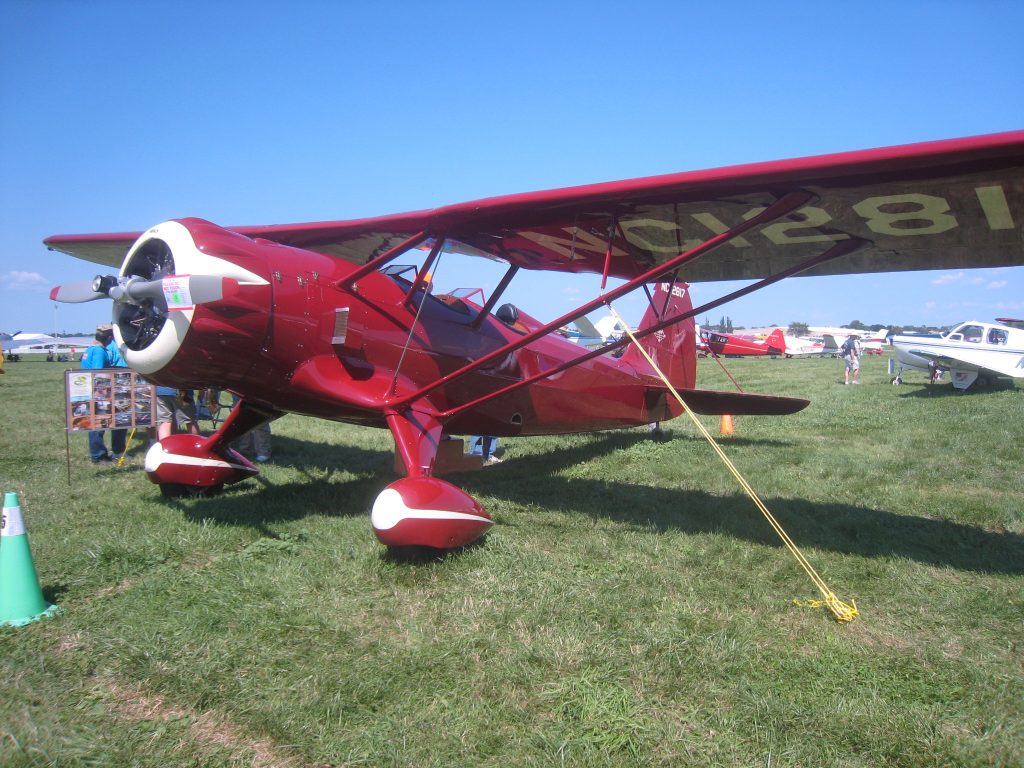
The success helped raise $150,000 in public stock capital to start production. Stinson then became the Stinson Aircraft Corporation in Michigan. On May 4, 1926, Eddie moved into the Stimson Scale Manufacturing building in Northville, Michigan, next door to the famous Ford Valve Plant. Just three months later, in August 1926, the first production model of the SB-1 was completed. At that time, Stinson had over 250 workers at the Northville factory. The aircraft were too large to be fully assembled at the Northville plant. Instead, workers attached the wings to the fuselage at the nearby Northville Airfield, which local entrepreneurs created to support the Stinson factory. After assembly, the aircraft were flown from the airfield to their buyers. By the end of 1926, Stinson Aircraft Corp. sold 18 SB-1 Detroiters and completed the manufacture of 10 aircraft. Additionally, the prototype SB-1 was sold to Horace Dodge, son of one of Dodge Motor Cars’ founders. In July 1927, Northwest (now Delta Air Lines) sold its first passenger ticket for a flight using its SB-1 planes, and later, SM-1 planes. At that time, Stinson Corp. built a concrete-floored steel hangar at the airfield to assemble the aircraft. The company transported the completed fuselages by pulling them through the town on Ford Model TT trucks, while the wings were placed on trailers. In late 1926, Stinson Aircraft Corp. began developing the SM-1 (Stinson Monoplane type 1), a six-seat monoplane powered by the Wright J-5 engine. The first flight happened in the spring of 1927.

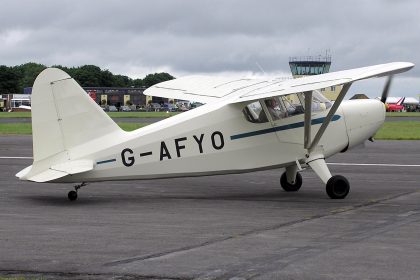
The new monoplane had similar wing sizes and design features as the Ryan monoplane used in Lindbergh’s famous transatlantic flight in May 1927. The model eventually replaced the biplane entirely, and by 1928, production of the SB-1 stopped, and the aircraft received Approved Type Certificate No. 24 on January 1 that year. The company built and flew the early SM-1s from Northville, but it grew and left by 1929, moving to Wayne, Michigan, near the Detroit Industrial Airport. Stinson saw steady business growth and delivered 121 aircraft in 1929. In September 1929, automobile leader Errett Lobban Cord bought 60 per cent of Stinson’s stock. His company, the Cord Corporation, invested more money, allowing Stinson to sell its aircraft at competitive prices while also working on new designs. At the peak of the Depression in 1930, Stinson offered six aircraft models, including the four-seat Junior and the Stinson 6000 trimotor airliner. Eddie Stinson died in a plane crash in Chicago, Illinois, on January 26, 1932, while he was on a sales trip. He was 38 when he died. At that point, Stinson had more than 16,000 hours of flight time, more than any other pilot at that time. The Stinson name faded fast after WWII. Eddie Stinson’s death sped up the merger of Stinson Aircraft Corporation with larger companies. It first joined Cord Corporation, then Aviation Corporation (AVCO), and later Consolidated Vultee. In 1948, Piper Aircraft Corporation bought Stinson. Piper turned an original Stinson design, the “Twin Stinson,” into the successful Piper Apache, which became the world’s first all-metal twin-engine modern aircraft for general aviation. Read more Forgotten Factories articles HERE.