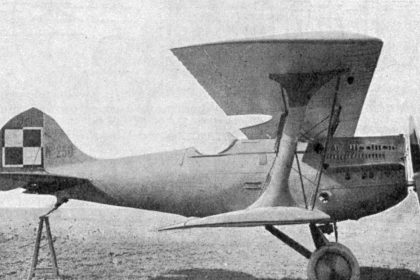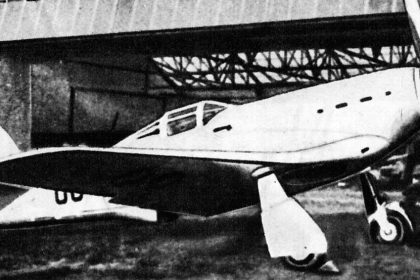
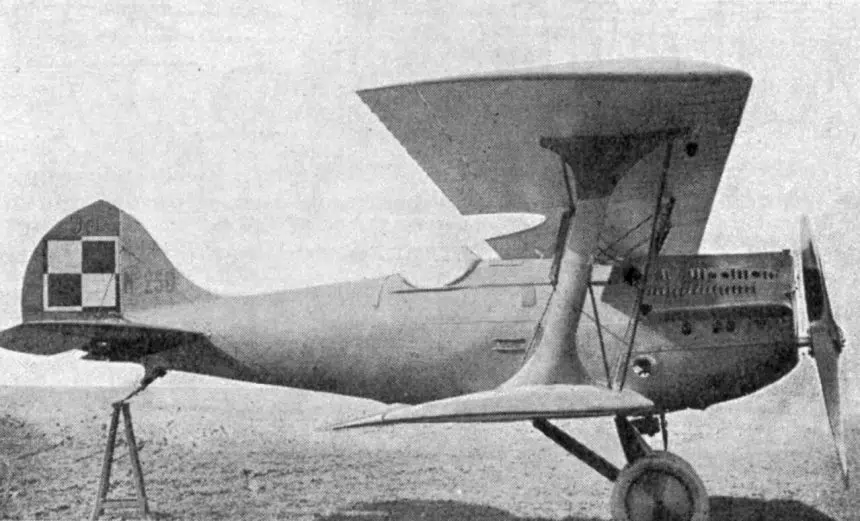

On this day in aviation history, 103 years ago (November 6, 1923), the Blériot-SPAD S.61 took flight for the first time. Designed by André Herbemont, the single-seat French biplane fighter was developed as a potential replacement for existing French military aircraft. The first prototype, designated S.61/1, was powered by a 430-horsepower Lorraine-Dietrich 12E W-12 engine fitted with a supplementary supercharger. The S.61 represented a departure from several of Herbemont’s earlier designs, abandoning the distinctive swept upper wing arrangement in favor of a more conventional biplane configuration. The prototype was evaluated by the French Air Force alongside the related Blériot-SPAD S.51, but neither aircraft was selected for French service. Despite this rejection, the S.61 attracted considerable interest from foreign air forces.

Poland ordered 250 aircraft and acquired a license for domestic production, while Romania purchased another 100. Approximately 30 additional aircraft were constructed in Poland by the Central Aviation Workshops, a predecessor of PZL. Although the S.61 served throughout the late 1920s, it developed a poor reputation in Polish service due to numerous accidents, some attributed to weaknesses in the wing attachments. Between 1926 and 1931, 26 Polish pilots were killed in S.61 accidents. The aircraft also achieved success in aviation competitions, including victory in the 1925 Coupe Michelin cross-country race. The production S.61/2 measured 21 feet 8 inches in length with an upper wingspan of 31 feet 7 inches and was powered by a 450-horsepower Lorraine-Dietrich 12E W-12 engine. It could reach a maximum speed of approximately 160 mph, had a range of 250 miles, and a service ceiling of 27,900 feet. The fighter could climb to 13,000 feet in nine minutes and 29 seconds, and its armament consisted of two fixed, forward-firing 7.7 mm Vickers machine guns.