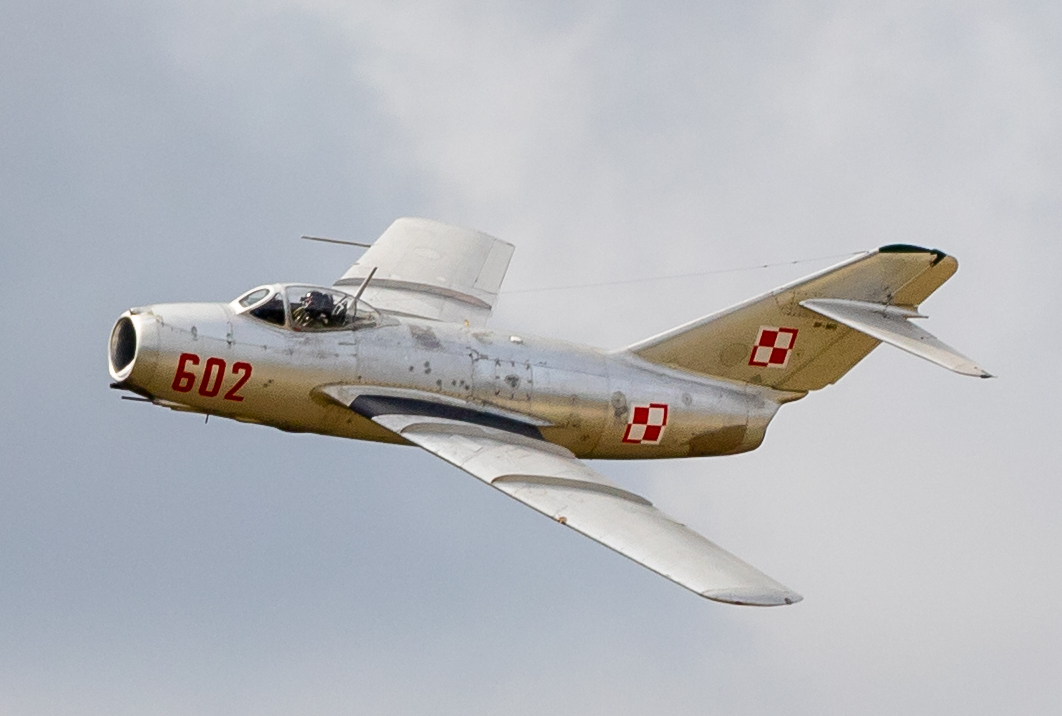
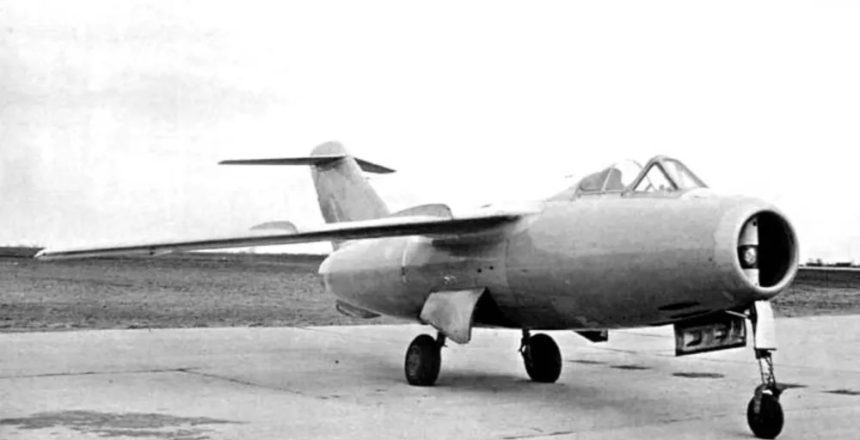


On this day in aviation history, 78 years ago (April 22, 1948), the first flight of the Lavochkin La-168 took place. The La-168 was a Soviet jet fighter that was designed in response to a 1946 request for an advanced swept-wing jet fighter capable of transonic performance. Lavochkin would use a new turbojet engine, based on the successful Rolls-Royce Nene, on the new aircraft. They would face stiff competition from the likes of both Mikoyan-Gurevich and Yakovlev. Lavochkin’s Aircraft 168 would begin life as a further development of the company’s La-160 Strelka (Arrow) design. The La-160 was the first to use the same style of swept-wing surfaces that the Germans had researched. On the Model 168, the engine was relocated from the nose to behind the pilot. The La-168 looked similar to the MiG-15, plus it used the same cannon armament, and also shared the Rolls-Royce Nene II engine. Differences in the La-168 from the MiG-15 included shoulder-mounted wings and a T-tail empennage.
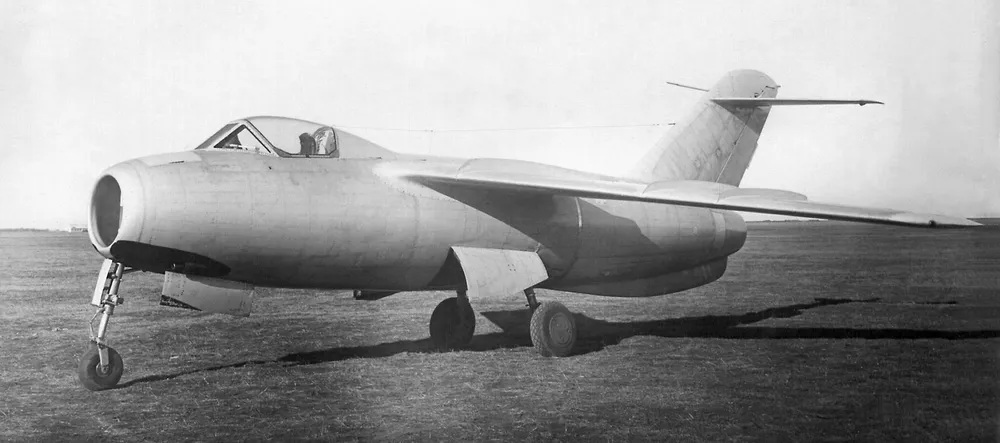
The La-168 lost ground to the MiG-15 during development due to the company’s insistence that the aircraft first fly with the Nene II engine. This powerplant was not yet ready, Mikoyan-Gurevich instead used the less-powerful Nene I to test fly their MiG-15, giving them the advantage in the jet fighter competition. Four months later, the La-168 would finally take flight at the hands of pilot I. E. Fedorov. On February 19, 1949, a high-altitude test of the cannons caused the canopy to collapse, nearly leading to a fatal crash. The aircraft was never able to make up ground on the MiG-15 during flight testing and lost out on the competition as a result. The Model 168 used a Klimov RD-45 Centrifugal compressor turbojet engine initially, which provided 5,000 pounds of thrust. The 168 could attain a maximum airspeed of Mach 0.95, or 670 mph. Aircraft 168 had a range of 810 nautical miles, an endurance of 2 hours and 12 minutes. Lavochkin’s swept-wing fighter could climb at a rate of 7,440 feet per minute and had a thrust-to-weight ratio of 0.49. If the Model 168 had been employed by the Soviet Air Force, the aircraft would have been armed with two 23 mm Nudelman-Suranov NS-23 autocannons and one 37 mm Nudelman N-37 cannon. A derivative of the La-168 was created by Lavochkin, the La-176. This further development of the Model 168 would become the first Soviet aircraft to achieve supersonic flight (in a shallow dive) on December 26, 1948. Lavochkin also attempted to create a 0.9-scale version of the La-168, which was productionised as the La-15. The La-15 was well-liked and even outperformed the MiG-15. However, the aircraft was more expensive and harder to mass-produce than the MiG fighter.