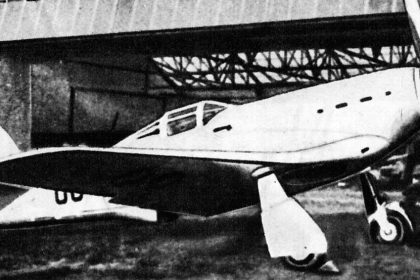
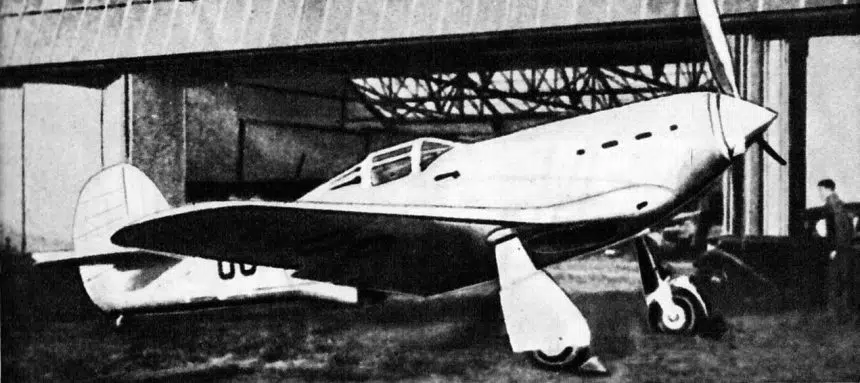


On this day in aviation history, 89 years ago (November 5, 1937), the Renard R.36 took flight for the first time. Designed by Belgian aircraft engineer Alfred Renard, the all-metal, single-seat fighter was developed as a potential replacement for the Belgian Air Force’s aging Fairey Firefly IIM biplanes. The prototype, registered OO-ARW, represented an important effort to modernize Belgium’s fighter force during the years leading up to WWII. The R.36 was developed from Renard’s earlier Epervier fighter design, which had failed to secure a Belgian government order. Unlike the biplanes then serving with the Belgian Air Force, the R.36 featured a streamlined, low-wing monoplane configuration, retractable landing gear, and an enclosed cockpit. Powered by a Hispano-Suiza V-12 engine, the aircraft was designed to combine modern aerodynamic performance with substantial firepower.

Flight testing demonstrated promising performance, and the Belgian Air Force selected the R.36 in late 1938, with a provisional order for 40 aircraft. However, on January 17, 1939, the prototype crashed near Nivelles, killing test pilot Lieutenant Viscount Eric de Spoelberch. Investigators were unable to establish a definitive cause, although jammed controls or pilot incapacitation were considered possible explanations. The order was subsequently abandoned in favor of license production of the British Hawker Hurricane. Renard continued developing related designs, including the radial-powered R.37 and Merlin-powered R.38, but none entered production. The Renard R.36 measured 28 feet 10 inches in length with a wingspan of 38 feet 2 inches and was powered by a 910-horsepower Hispano-Suiza 12Ycrs V-12 engine. It could reach a maximum speed of 314 mph at 13,000 feet and had a range of approximately 620 miles. The fighter could climb to 13,000 feet in four minutes and 56 seconds, while its planned armament consisted of one engine-mounted 20 mm cannon and four wing-mounted 7.7 mm FN Browning machine guns.