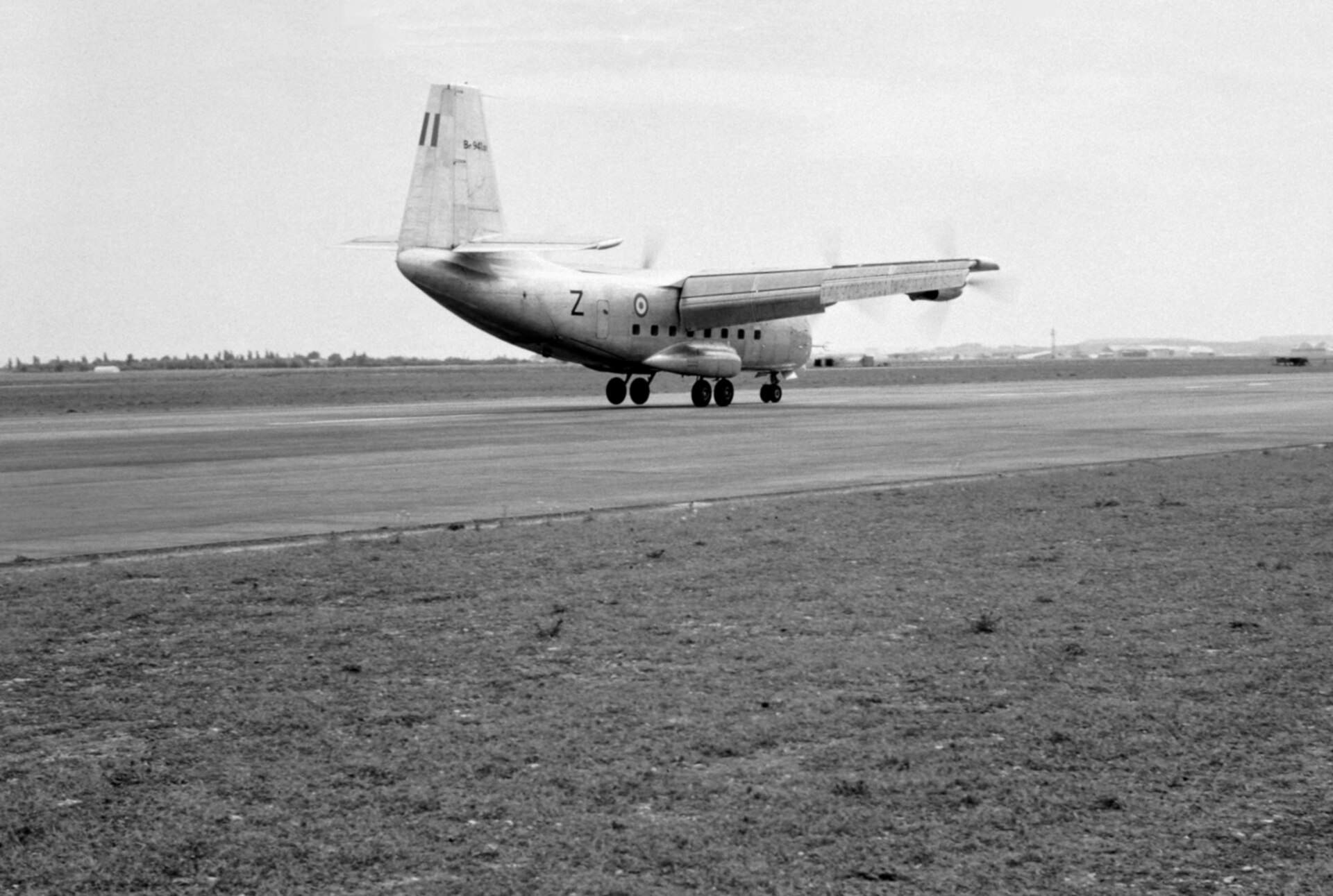
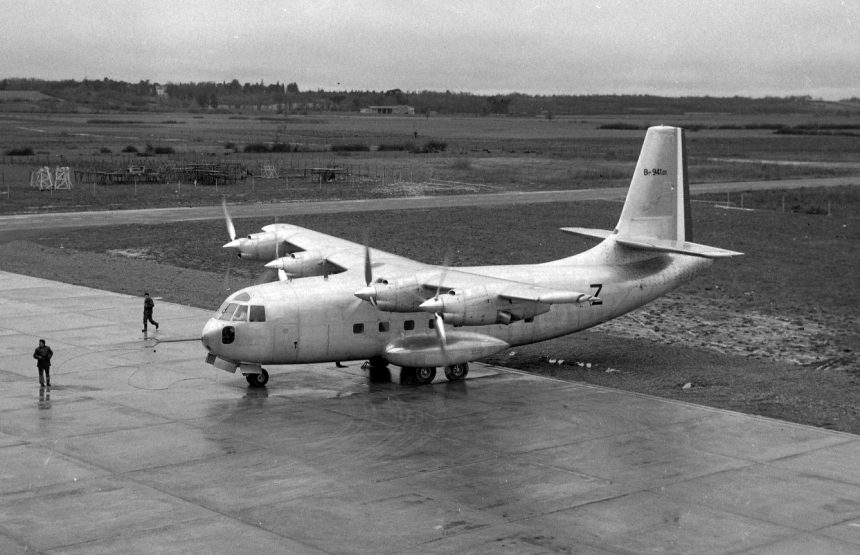


On this day in aviation history, 59 years ago (April 19, 1967), the production variant of the Breguet 941S first took flight. A four-engine turboprop transport with short takeoff and landing (STOL), the 941 was developed by Breguet in the 1960s. The aircraft was heavily promoted during its development, especially by McDonnell Douglas in the United States, yet little interest was received from potential operators in the 941. Only one prototype Breguet 941 was built, followed by four production aircraft. Conceptualization of the Model 941 began in the late 1950 to early 1960s via the great mind of French aviation pioneer Louis Charles Breguet. He had begun to develop a concept for a short takeoff and landing aircraft using four free-turbine turboshaft engines to drive a common powershaft. This shaft, in turn, drove four propellers that were evenly spaced along the leading edge of the wing. The wing featured large, full-span, slotted flaps. This arrangement became known as “l’aile soufflée” or “blown wing.” The first prototype Breguet 940 Integral was powered by four Turbomeca Turmo II engines. The Integral first flew on May 21, 1958, demonstrating exceptional short-field performance.
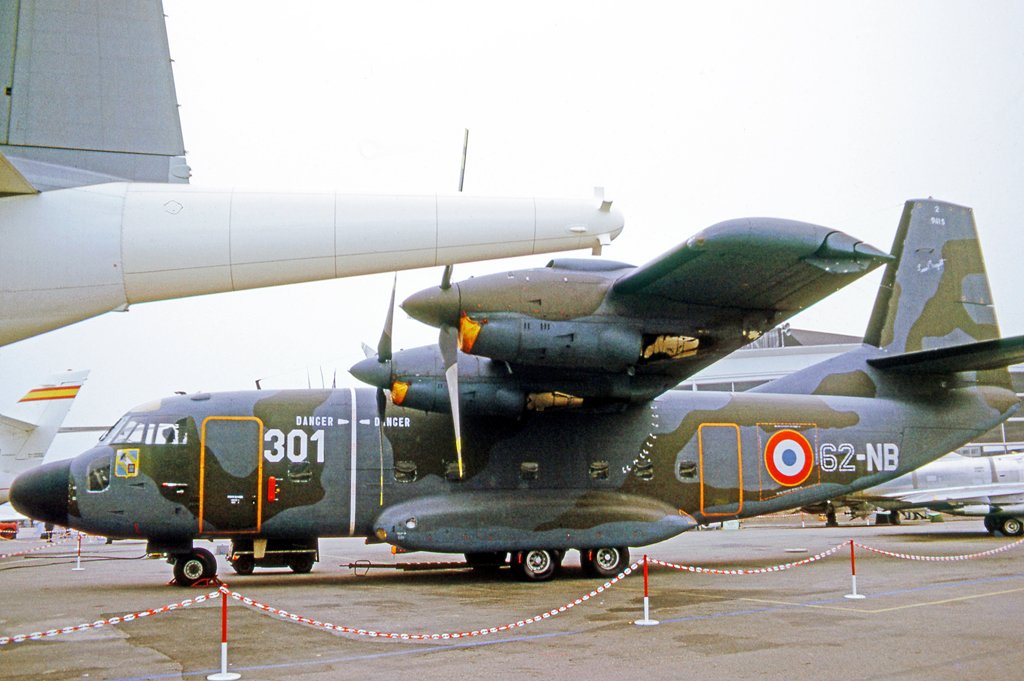
An order was placed in February 1960 for another prototype Breguet, capable of carrying useful loads. The Breguet 941 was developed as a result of this order, first flying on June 1, 1961. After initial flight testing of the 941, the French Air Force placed an order for four improved production aircraft, to be designated the 941S. The first Breguet 941S production aircraft flew on April 19, 1967. The Br 941S was powered by four 1,501-horsepower Turbomeca Turmo IIID3 turboprop engines. It was flown by a crew of 2, and had a capacity for 57 passengers (civilian), 40 fully loaded troops, or 24 stretchers (military). The Br 941S could cruise at 250 mph and attain a maximum airspeed of 280 mph. The aircraft had a range of 540 nautical miles and a service ceiling of 31,200 feet. The STOL characteristics of the Breguet were quite impressive, with a take-off run of 607 feet, at a weight of 48,502 pounds.
Breguet intended to further develop the 941 with a pressurized fuselage, to be designated the Br 942. The limited popularity of the 941 led to the 942 idea being abandoned. McDonnell Aircraft bought a production licence for the Br 941 and began marketing the aircraft, with slight tweaks, as the McDonnell 188 in the United States. McDonnell also marketed a pressurized version to be created, the 188E. The marketing campaign continued even after the merger with Douglas, which gave birth to the McDonnell Douglas 210. The 210 was to be a larger and more powerful variant of the 188.
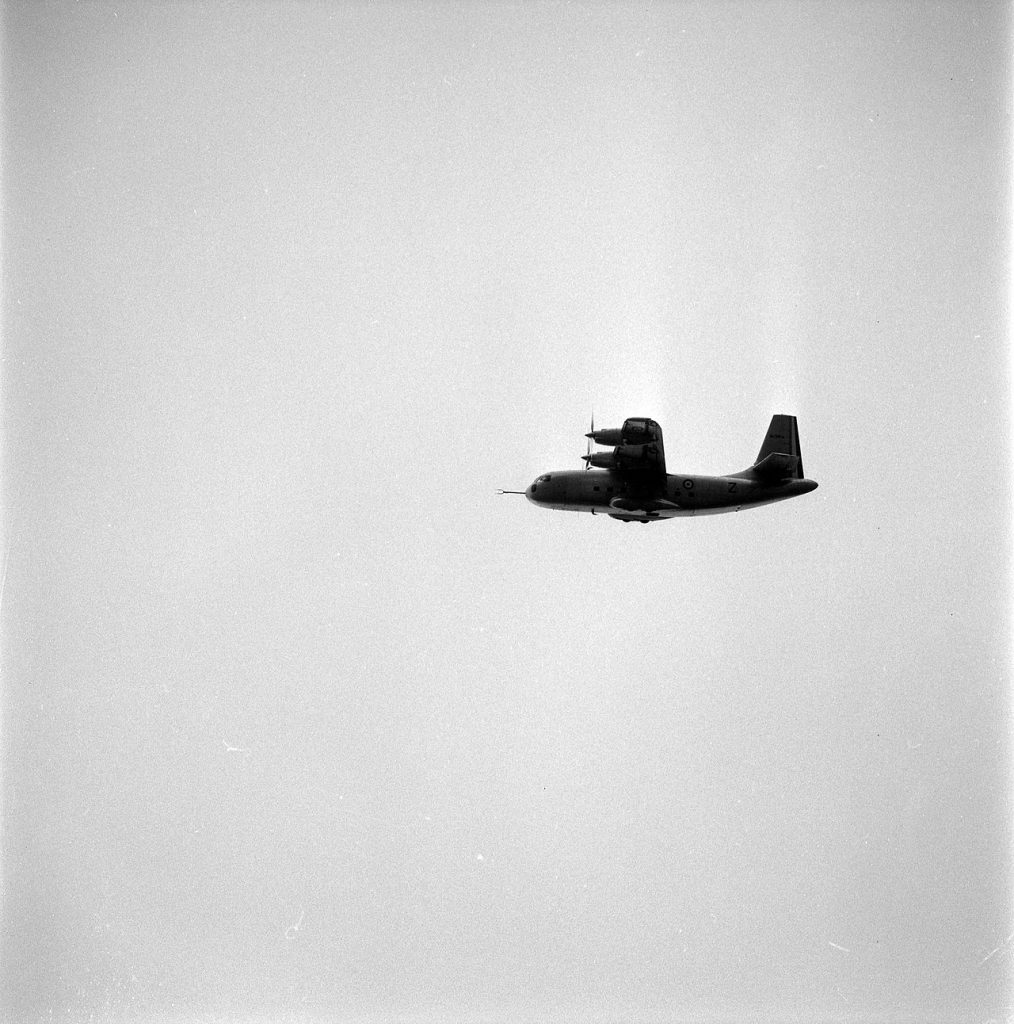
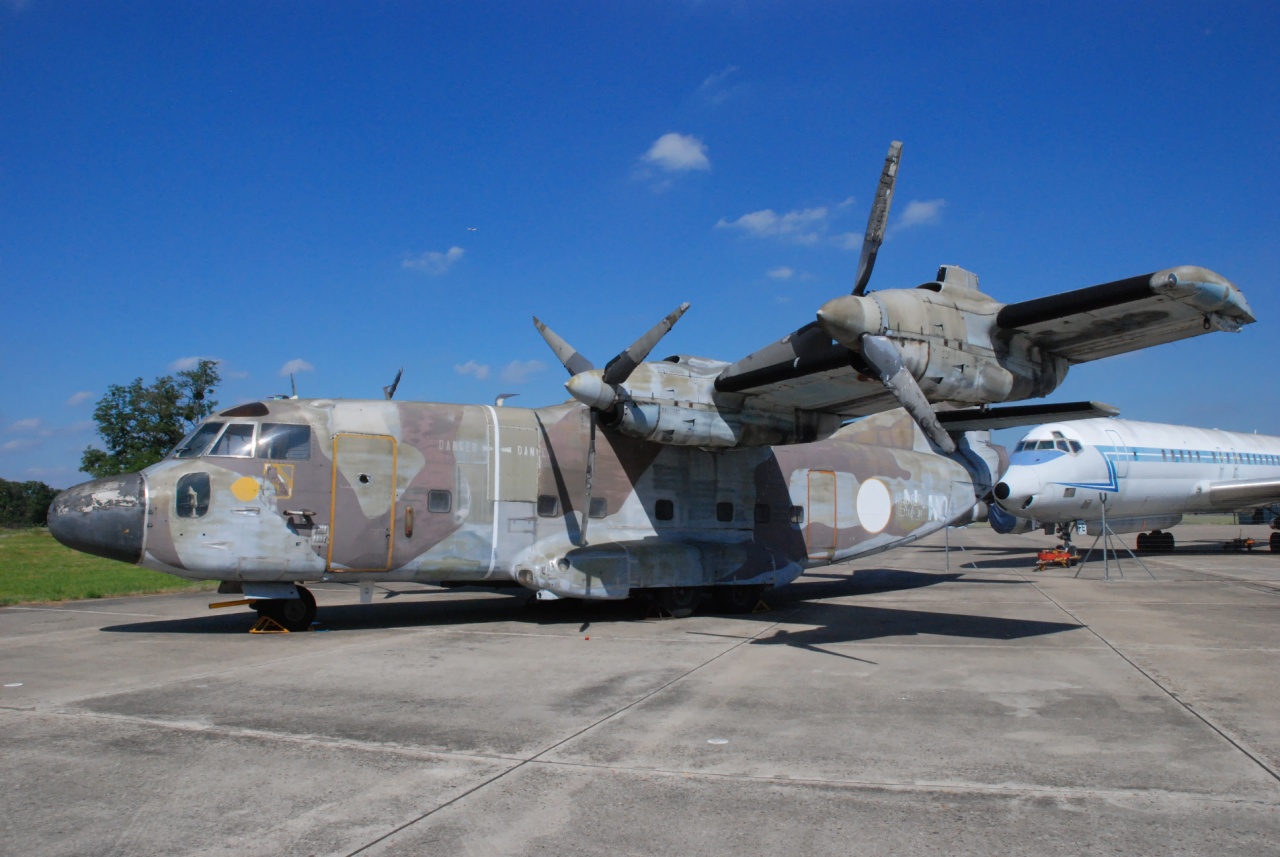
McDonnell Douglas flew a production 941S for limited passenger operations briefly in 1968, contracting with Eastern Air Lines and American Airlines. They tested the feasibility of using STOL aircraft at small city airports. The Federal Aviation Administration next evaluated the STOLport concept for commercial operations. McDonnell Douglas found that airlines were more interested in operating jets from conventional airports, not embracing the STOLport concept. No aircraft were ordered, and the four production Breguet 941s instead served with the French Air Force from 1967 until 1974. Two of the Br 941S variants built survive today. The third built, 941S-03 (coded 62-NC) resides on display at the Ailes Anciennes Museum at Toulouse Blagnac Airport. The fourth Br 941S, 941S-04 (coded 62-ND), is stored with the Musée de l’Air et de l’Espace in Paris.