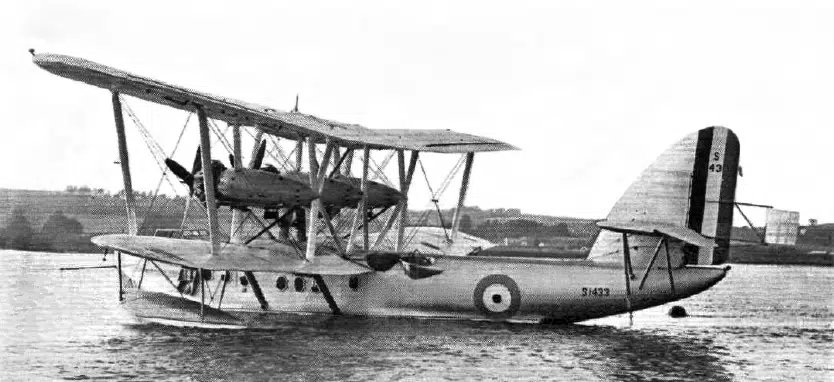

On this day in aviation history, 96 years ago (September 24, 1930), the Short S.8/8 Rangoon took flight for the first time. Shorts chief test pilot John Lankester Parker flew the first aircraft, S1433, from the River Medway at Rochester. Developed for the Royal Air Force, the Rangoon was a three-engine military flying boat intended primarily for operations in the Middle East. Development began after the RAF sought an urgent replacement for the Supermarine Southampton IIs operated by No. 203 Squadron at Basra, Iraq. The Air Ministry issued Specification S.18/29 calling for a military adaptation of the Short S.8 Calcutta flying boat. The resulting S.8/8 Rangoon retained much of the Calcutta’s basic design while adding an enclosed cockpit, increased fuel capacity, crew rest bunks, defensive armament, bomb racks, and a large freshwater tank for tropical operations.

The first three Rangoons entered RAF service in 1931 and were flown in formation to No. 203 Squadron at Basra. There they conducted surveying and anti-smuggling patrols over Iraq and the Persian Gulf. Three additional aircraft were later built, bringing total production to six. Rangoons remained in service until 1935, when they were replaced by the larger Short Singapore III. The original S1433 later had its military equipment removed and was used to train Imperial Airways crews. The Short Rangoon measured 66 feet 9½ inches in length with a wingspan of 93 feet and was powered by three 540-horsepower Bristol Jupiter XIF radial engines. It could reach 115 mph, cruise at 92 mph, and had a range of 650 miles with an endurance of approximately seven hours. Its service ceiling was 12,000 feet, while armament consisted of three .303-inch Lewis machine guns and up to 1,000 pounds of bombs.