

(Image credit: VAN)
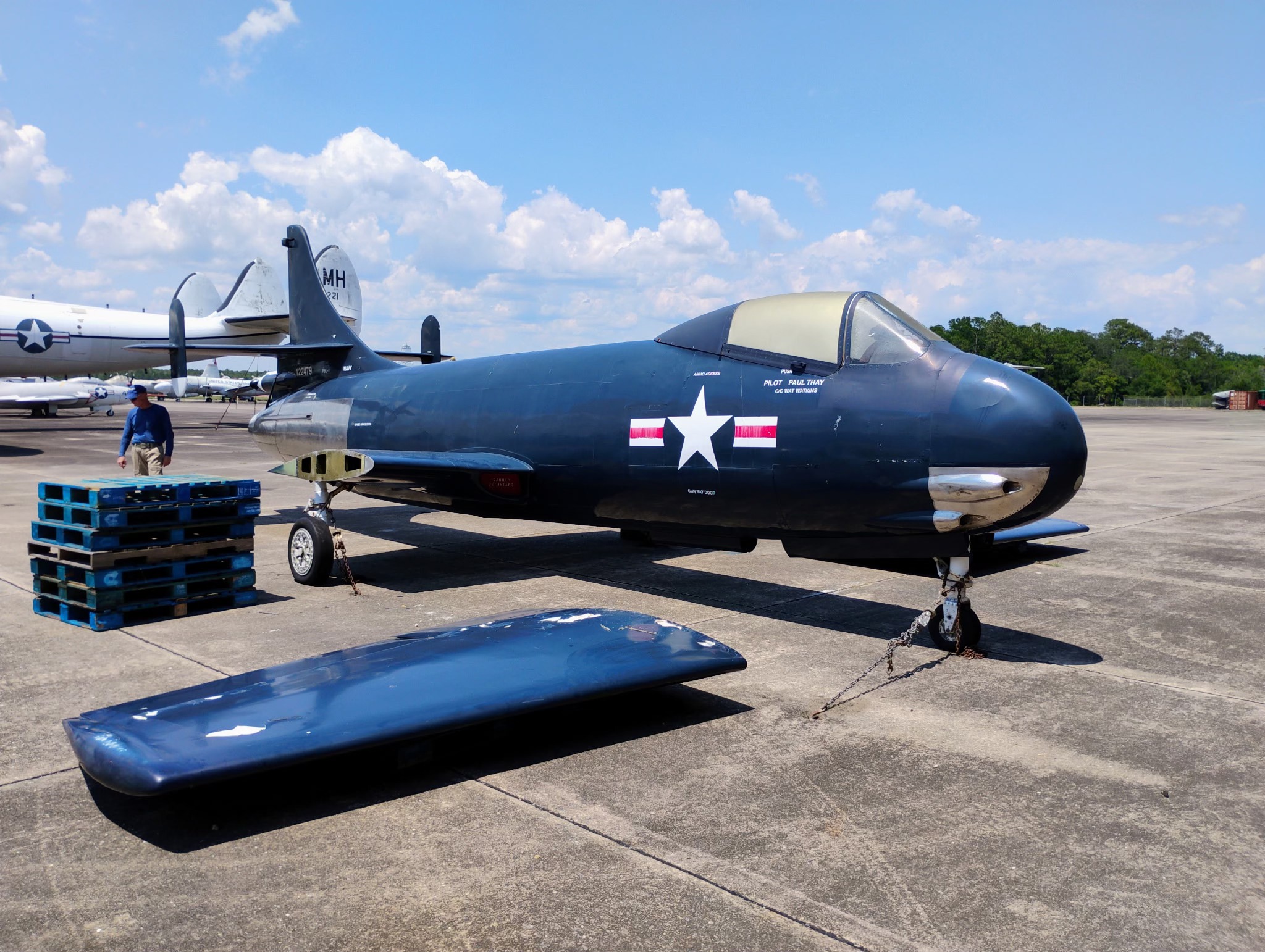
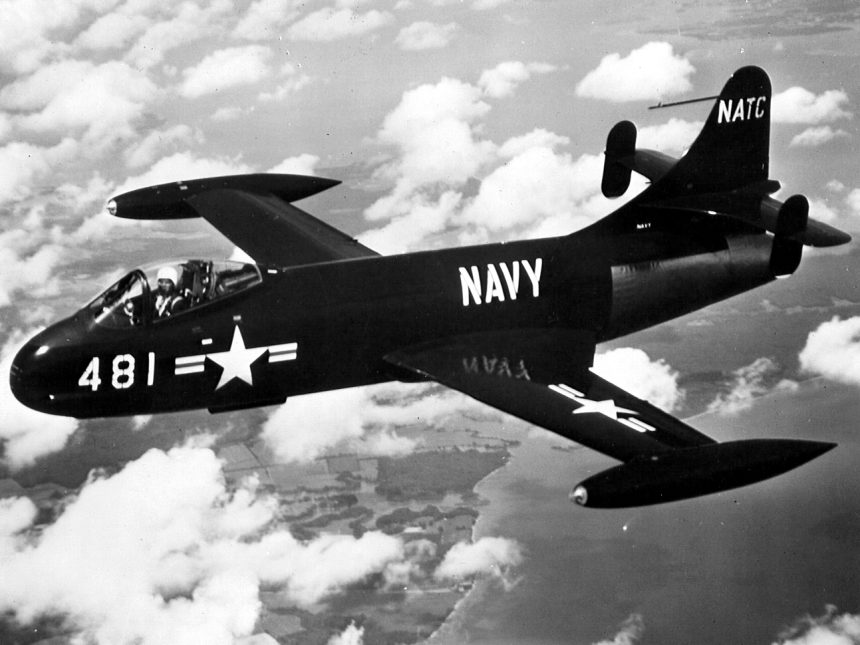
Seventy-nine years ago today, on October 2, 1946, the Vought XF6U prototype took to the skies for the first time. The XF6U was the precursor to the F6U Pirate, Vought Aircraft’s first jet fighter developed for the United States Navy. Though ultimately considered underpowered and unsuitable for combat, the Pirate introduced innovative technologies that would influence future U.S. naval aviation.
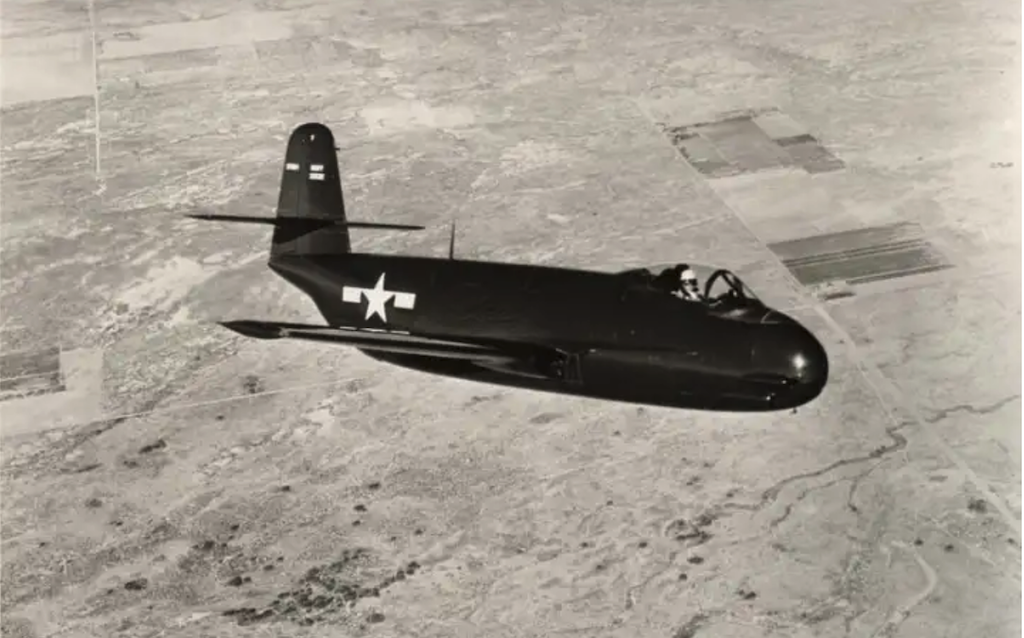
The XF6U, company designation V-340, was designed in response to a 1944 Bureau of Aeronautics (BuAer) specification for a carrier-based fighter powered by a Westinghouse 24C axial turbojet engine. Vought received a contract to build three prototypes on December 29, 1944. The XF6U featured tricycle landing gear, straight wings, and tail surfaces. Its compact wing design eliminated the need for folding mechanisms, a space-saving advantage aboard aircraft carriers. The retractable nose wheel allowed the aircraft to be positioned nose-to-tail in hangars, further maximizing deck space.
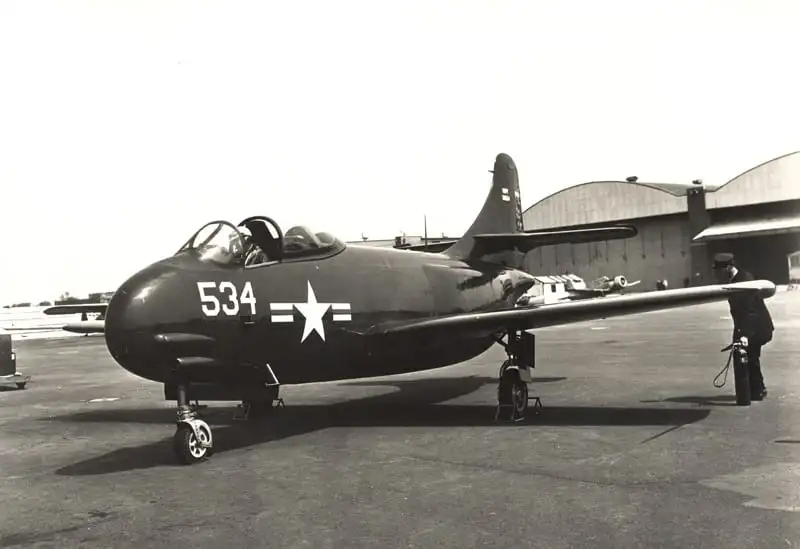
A distinctive feature of the Pirate was its use of composite materials. The aircraft’s skin was constructed from Metalite, a sandwich of balsa wood between thin aluminum sheets, while the vertical stabilizer and rudder were made from Fabrilite, a fiberglass-based composite. The F6U was powered by a Westinghouse J34-WE-30A turbojet producing 3,150 pounds of thrust, enabling a maximum speed of 596 mph, a service ceiling of 46,260 feet, and a climb rate of 8,060 feet per minute. Its operational range was 1,020 nautical miles, and armament consisted of four 20 mm M3 cannons mounted beneath the nose.
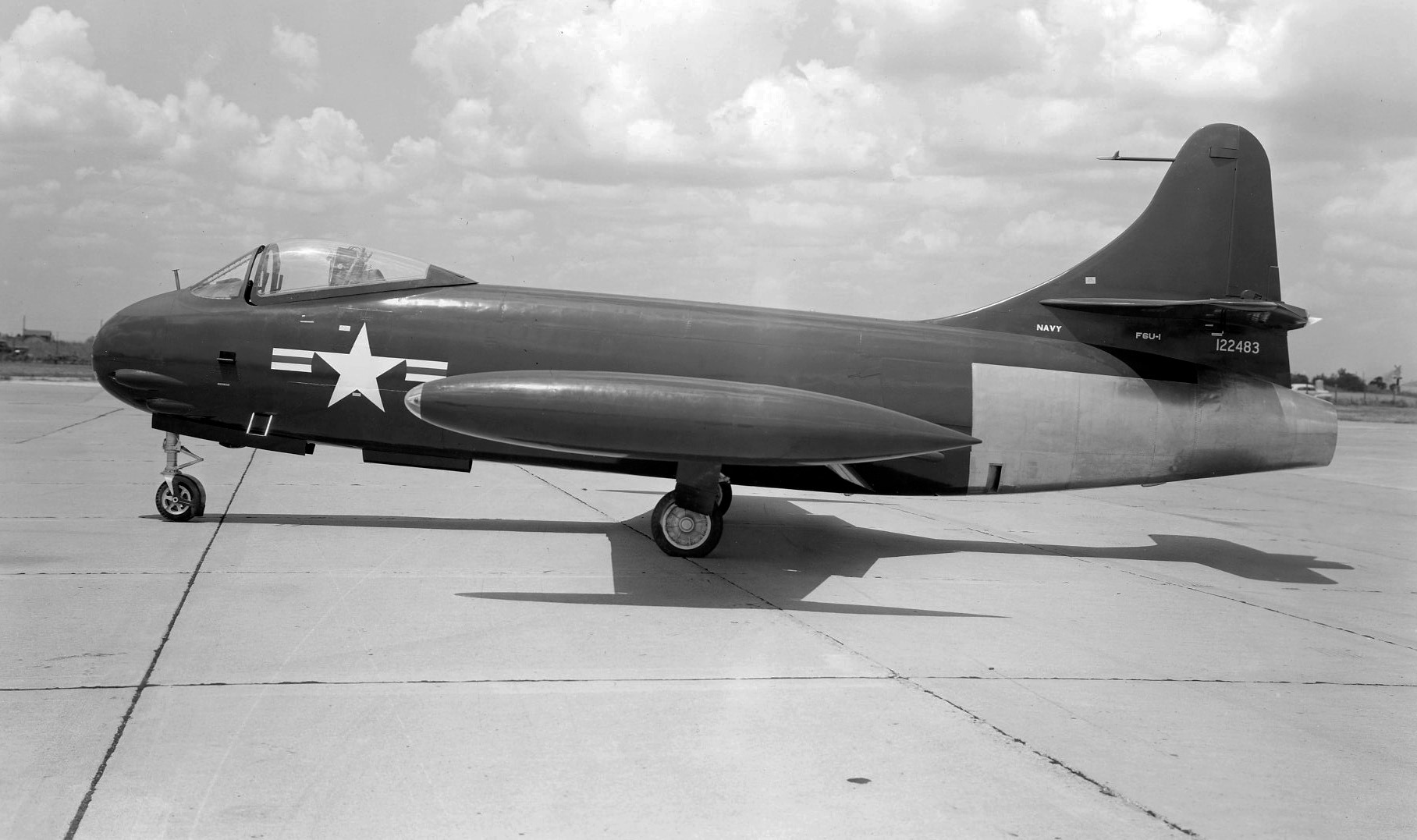
Vought built a total of 33 F6Us, most of which were used for operational evaluations at Naval Air Station Patuxent River in Maryland. Despite limited service due to performance shortcomings, the Pirate remains historically significant for its technological innovations. Today, a single F6U survives: F6U 122479 (Vought p/n 2), restored by the Vought Aircraft Heritage Foundation at the original Vought factory in Grand Prairie, Texas. This aircraft is currently on display at the Fort Worth Aviation Museum, on loan from the National Naval Aviation Museum.