

(Image credit: VAN)
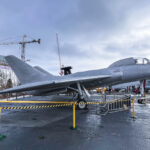
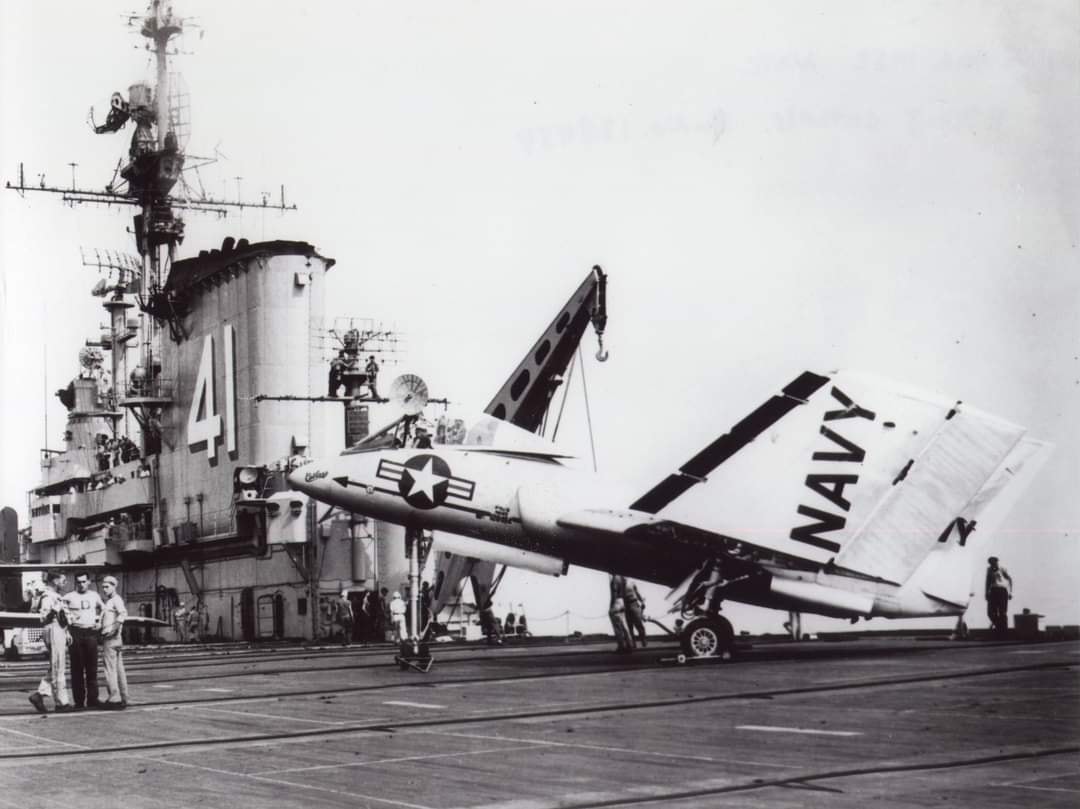
Seventy-seven years ago today (September 29, 1948), the Vought XF7U-1 Cutlass made its first flight. This prototype carrier-based jet fighter-bomber eventually evolved into the F7U Cutlass production model. The Cutlass was a revolutionary aircraft for its time—the first tailless production aircraft in the United States and the first U.S. Navy plane to feature both swept wings and an afterburner. Development began soon after June 1, 1945, when the Navy issued a requirement for a high-performance carrier-based jet.

The Navy sought a day fighter capable of reaching 600 mph and operating at altitudes up to 40,000 feet. Vought took an unconventional approach, designing a tailless, swept-wing aircraft influenced by data gathered from German World War II jets and experimental projects. By 1946, the Navy approved Vought’s design, leading to the development of the XF7U-1 prototype. The first prototypes were powered by two Westinghouse J34 turbojets, which proved underpowered for the aircraft’s ambitions. They were later replaced by Westinghouse J46-WE-8B afterburning turbojets, delivering 4,600 pounds of thrust each (6,000 pounds with afterburner). These engines pushed the Cutlass to a top speed of 697 mph, with a combat range of 800 nautical miles and a service ceiling of 40,600 feet. Armament included four 20 mm M3 cannons with 180 rounds each, along with four hardpoints capable of carrying up to 5,500 pounds of bombs or missiles, including the AAM-N-2 Sparrow I.
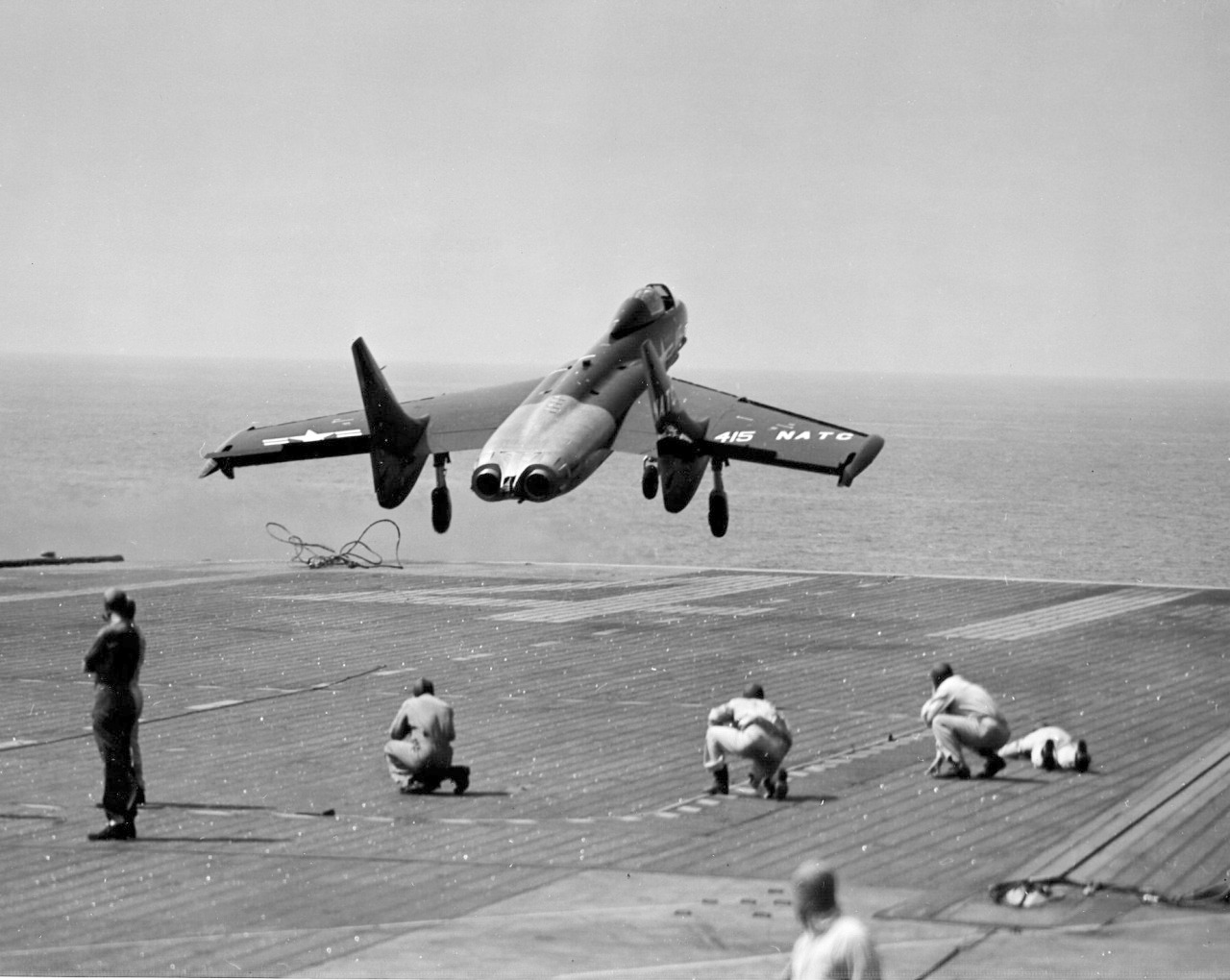
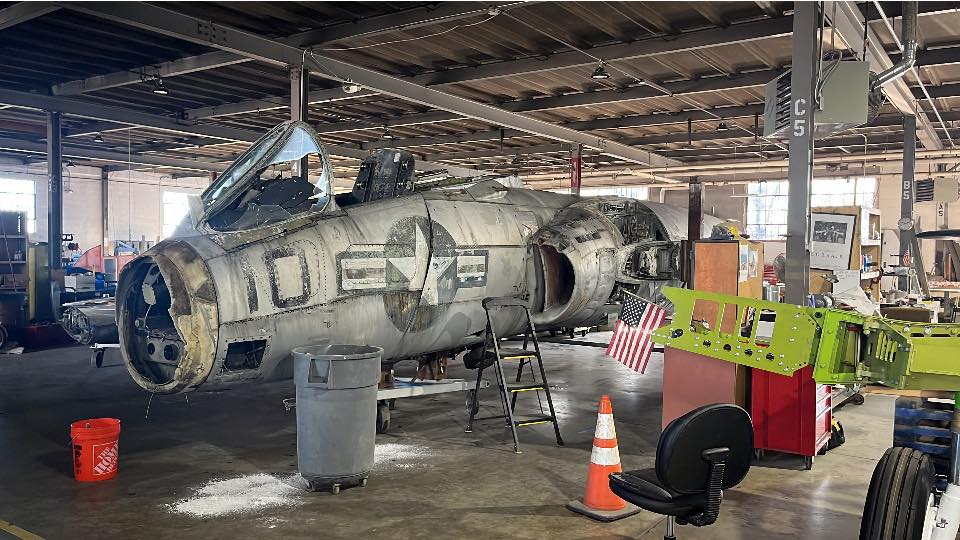
Flying the F7U was notoriously challenging. Early models lacked sufficient thrust, making carrier takeoffs and landings particularly hazardous. The Cutlass developed the highest accident rate in the U.S. Navy, often with severe consequences. It was eventually replaced by the Grumman F9F-8 Cougar. The aircraft even flew with the Blue Angels in 1953 as a demonstration aircraft, but repeated mechanical issues and “close calls” forced its retirement from the team. Despite its quirks, 320 Cutlasses were produced between 1948 and 1955. A few survive today, including s/n 129554 at Falcon Field, Arizona, which is privately owned by Al Casby and undergoing restoration to airworthy condition, and the MAPS Air Museum’s Chance Vought F7U-3 Cutlass (BuNo 129685). Witnessing a Cutlass fly again would be a remarkable sight, offering a rare glimpse of a unique and daring chapter in naval aviation history.