

(Image credit: VAN)
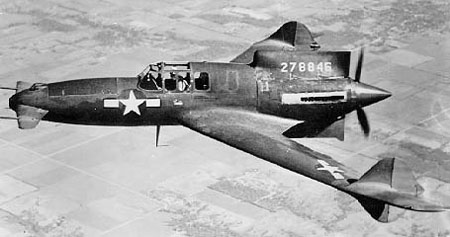
On this day in aviation history, 83 years ago (July 19, 1942), the Curtiss XP-55 Ascender made its first flight. Designated as the CW-24 by Curtiss-Wright, the Ascender was a prototype fighter aircraft developed during the Second World War. It emerged from U.S. Army Air Corps proposal R-40C, issued on November 27, 1939. This proposal called for a fighter with superior performance, heavier armament, and improved pilot visibility compared to existing aircraft—and it notably encouraged unconventional designs.
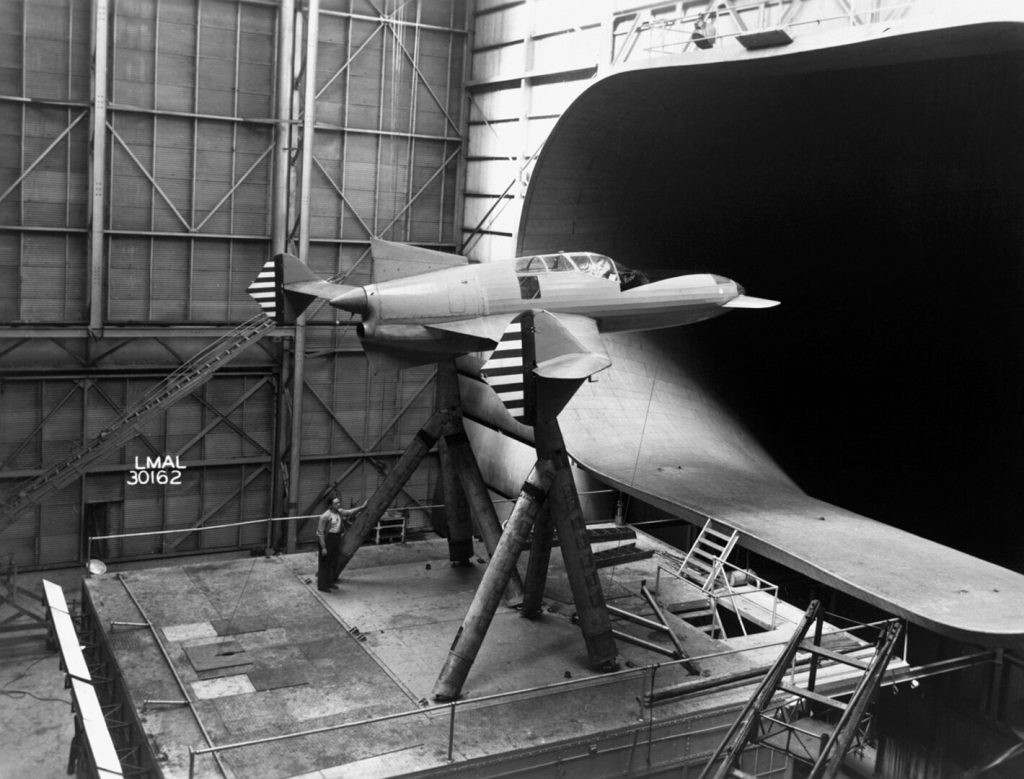
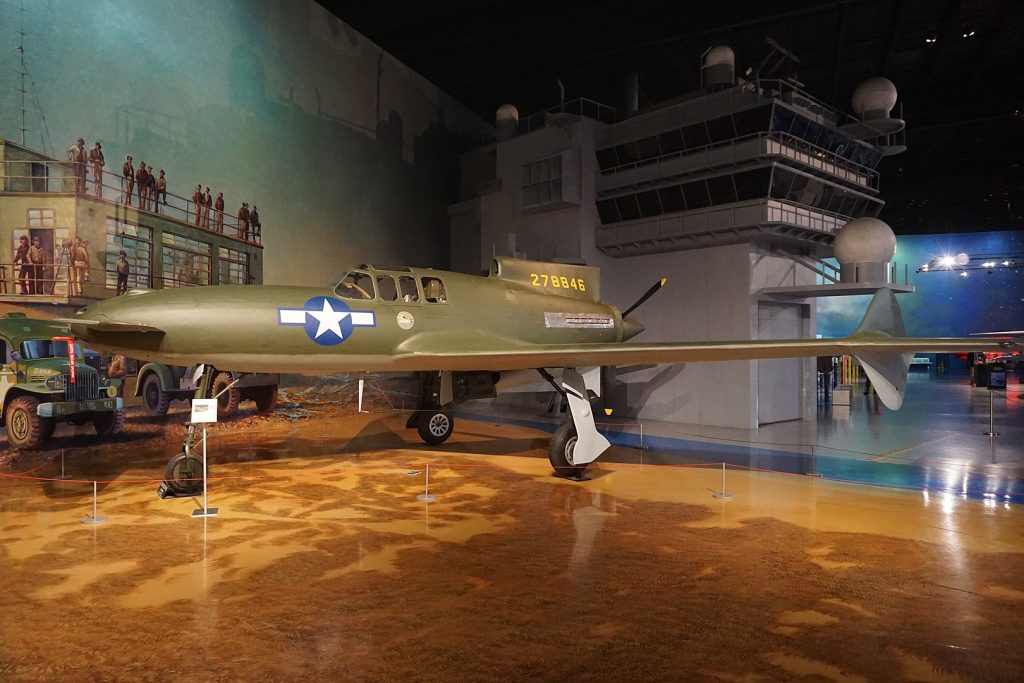
In response, Curtiss developed the XP-55 as a radical canard configuration aircraft, featuring a horizontal stabilizer at the nose. Its vertical stabilizers were integrated into the wingtips, while its single engine—an Allison V-1710-95 producing 1,275 horsepower—was mounted at the rear in a “pusher” configuration. Among its unique features was a propeller jettison system, allowing the pilot to eject the propeller for a safer bailout—an innovative safety measure for its time. The XP-55 had a maximum speed of 390 miles per hour, a range of 552 nautical miles, and a service ceiling of 34,600 feet. Armament consisted of four 0.50-caliber machine guns mounted in the nose.
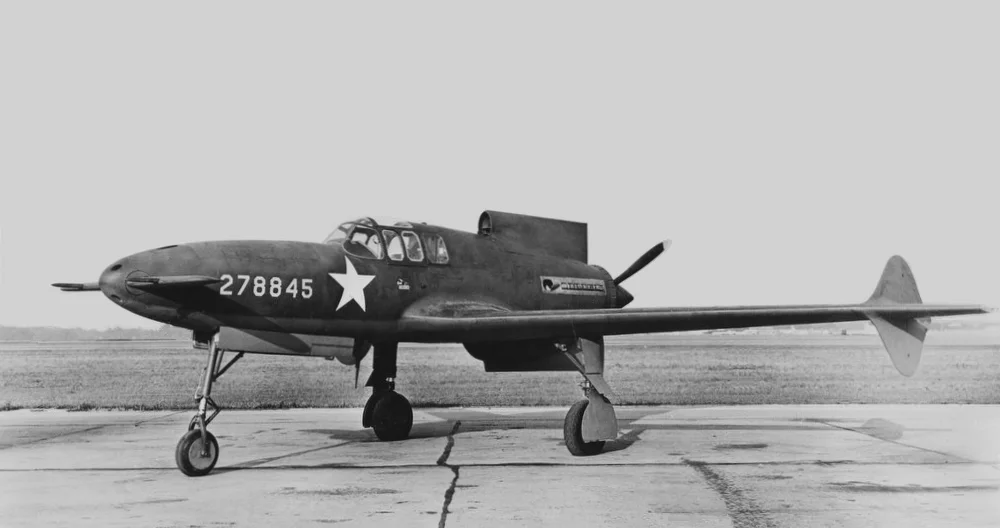
During flight testing, however, the XP-55 was plagued by engine problems and dangerous stall characteristics. Ultimately, its overall performance did not surpass that of contemporary fighters already in service with the USAAF, leading to the project’s cancellation. Only three prototypes were built, and just one survives today: XP-55 serial number 42-78846, which is on display at the Air Zoo in Kalamazoo, Michigan. The aircraft is on long-term loan from the Smithsonian National Air and Space Museum. Though the XP-55 never reached operational service, it remains a striking example of World War II-era experimental aviation and a testament to the bold design ambitions of the time.