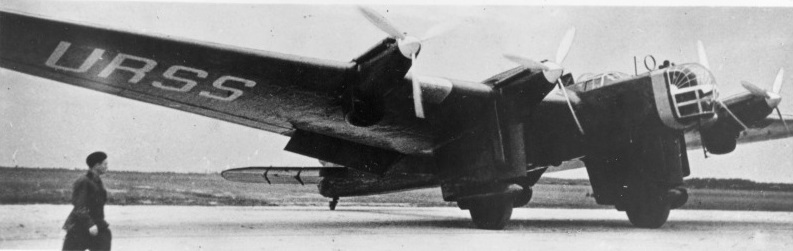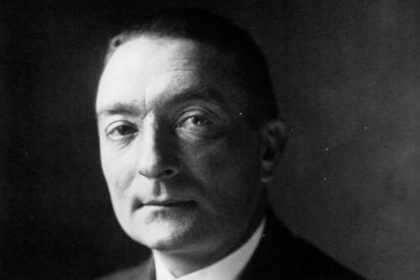
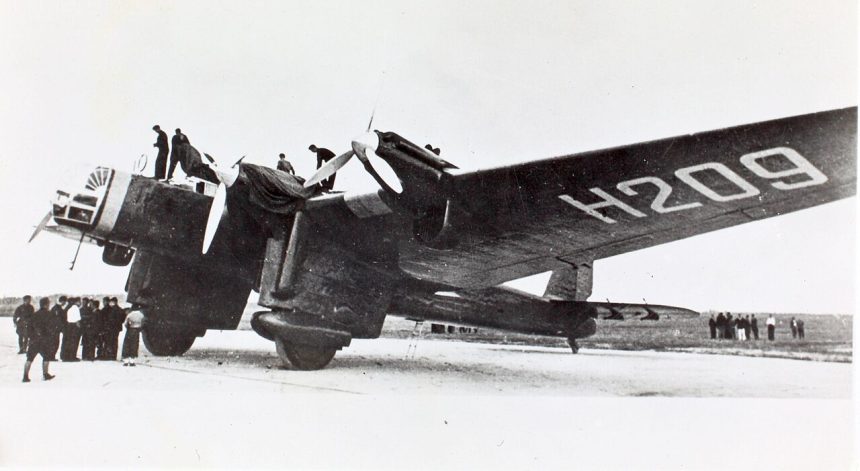

On this day in aviation history, 91 years ago (May 2, 1935), the Bolkhovitinov DB-A took flight for the first time. Russian for Dal’niy Bombardirovshchik-Akademiya, long-range bomber academy, the DB-A was a heavy bomber designed for the USSR military use. Development of the bomber began in 1934 at the hands of Viktor Bolkhovitinov, who had recently become the head of the VVIA design group at the VVA Zhukovsky. The intent of the DB-A was to replace the Tupolev TB-3 heavy bomber.
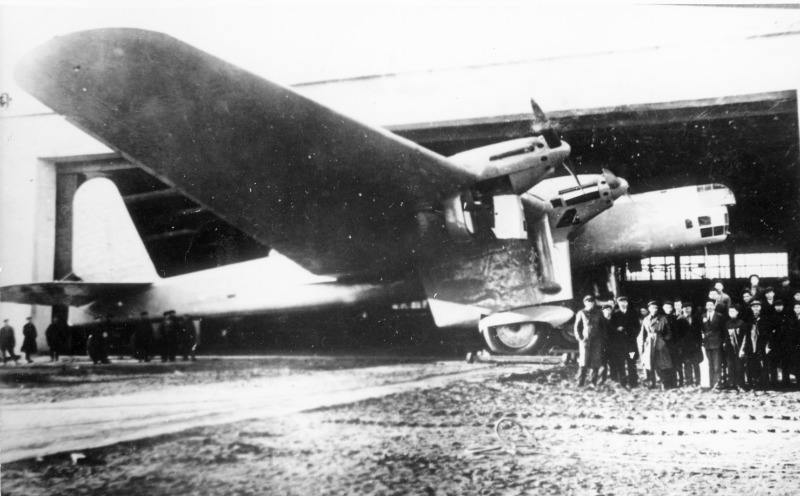
The Bolkhovitinov DB-A was ahead of its time, featuring stressed-skin aluminium-alloy construction. The bomber had a smooth design, with cowled engines and “trousered” landing gear that fully retracted. The aircraft’s flaps, landing gear, nose turret, and bomb bay doors were all powered by a pneumatic system, which was recharged by engine-driven compressors. The first flight of the DB-A occurred at Khodinka, with pilots N.G. Kastanyev and Ya.N. Moseyev at the controls. Flight tests continued through June 1935, proving that the DB-A had superior performance. The bomber sustained flight at an altitude of 8,202 feet with two engines shut down. Additionally, the DB-A demonstrated a 2,800-mile flight range.
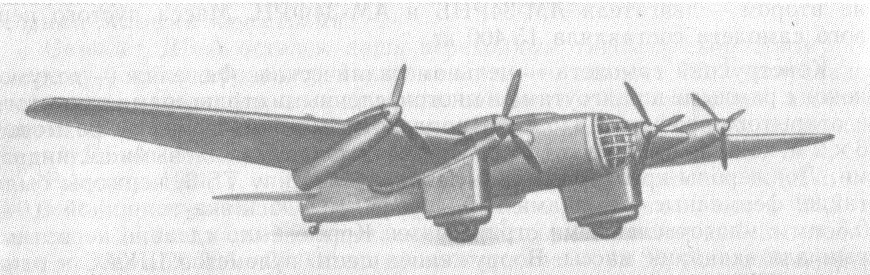
In August of 1937, an attempt was made to fly a modified DB-A from Moscow to Fairbanks, Alaska. The aircraft was fitted with long-range fuel tanks and additional payload capacity. After 14 and a half hours, pilot Sigizmund Levanevsky relayed that one engine had failed and that he’d be later than expected. No further transmissions were received, and the aircraft’s disappearance has been a mystery ever since. The Bolkhovitinov DB-A had an eight-man crew and was powered by four 900-horsepower M-34FRN turbocharged engines. The bomber could attain a maximum airspeed of 196.4 mph and had a service ceiling of 25,360 feet. Armament on the DB-A included two ShKAS 7.62mm machine guns (one in each of the inner nacelles), ShKAS 7.62mm machine guns in both the nose and tail positions, and a ShVAK 20mm cannon in the dorsal turret. The DB-A had a capacity for 5,000 kilograms of bombs in its internal bomb bay. A total of 14 DB-As were manufactured by Bolkhovitinov.