
(Image credit: VAN)
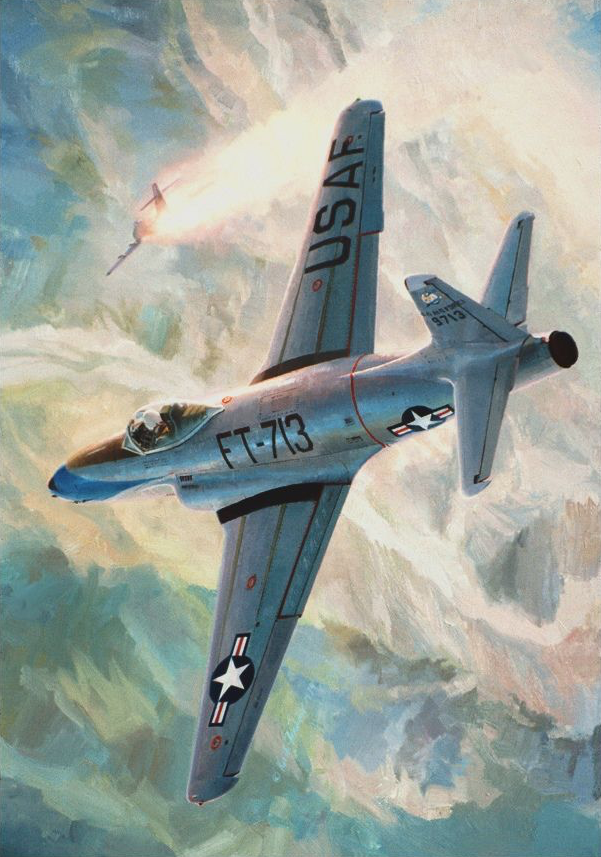
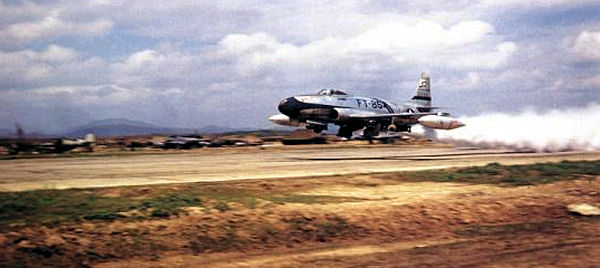
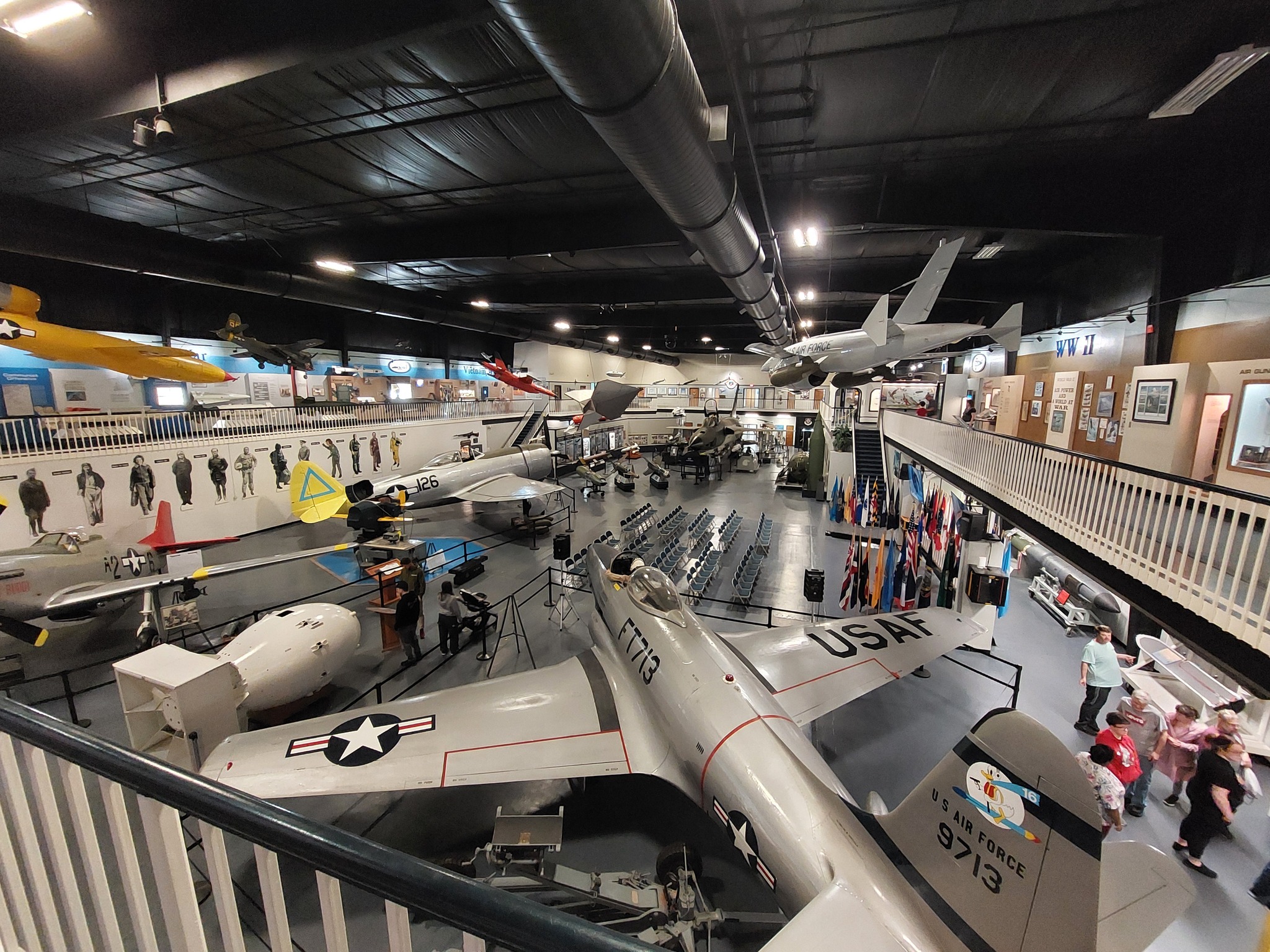
On this day in aviation history, 75 years ago (November 8, 1950), the United States’ first aerial victory over a Soviet MiG-15 occurred. First Lieutenant Russell J. Brown is credited with the victory, which occurred near the Yalu River, between China and North Korea. Lt. Brown was a member of the 16th Fighter Interceptor Squadron, 51st Fighter Interceptor Wing. As part of this group, Lt. Brown flew the Lockheed F-80C-10-LO Shooting Star – America’s first operational jet fighter. There is some debate as to the exact serial number of Lt. Brown’s F-80, either 49-713 or 49-717.
Lt. Brown described his MiG-15 encounter in a newspaper shortly after it occurred – “We had just completed a strafing run on Sinuiju antiaircraft positions and were climbing when we got word that enemy jets were in the area. Then we saw them across the Yalu, doing acrobatics. Suddenly, they came over at about 400 miles an hour. We were doing about 300. They broke formation right in front of us at about 18,000 or 20,000 feet. They were good-looking planes – shiny and brand-new.”
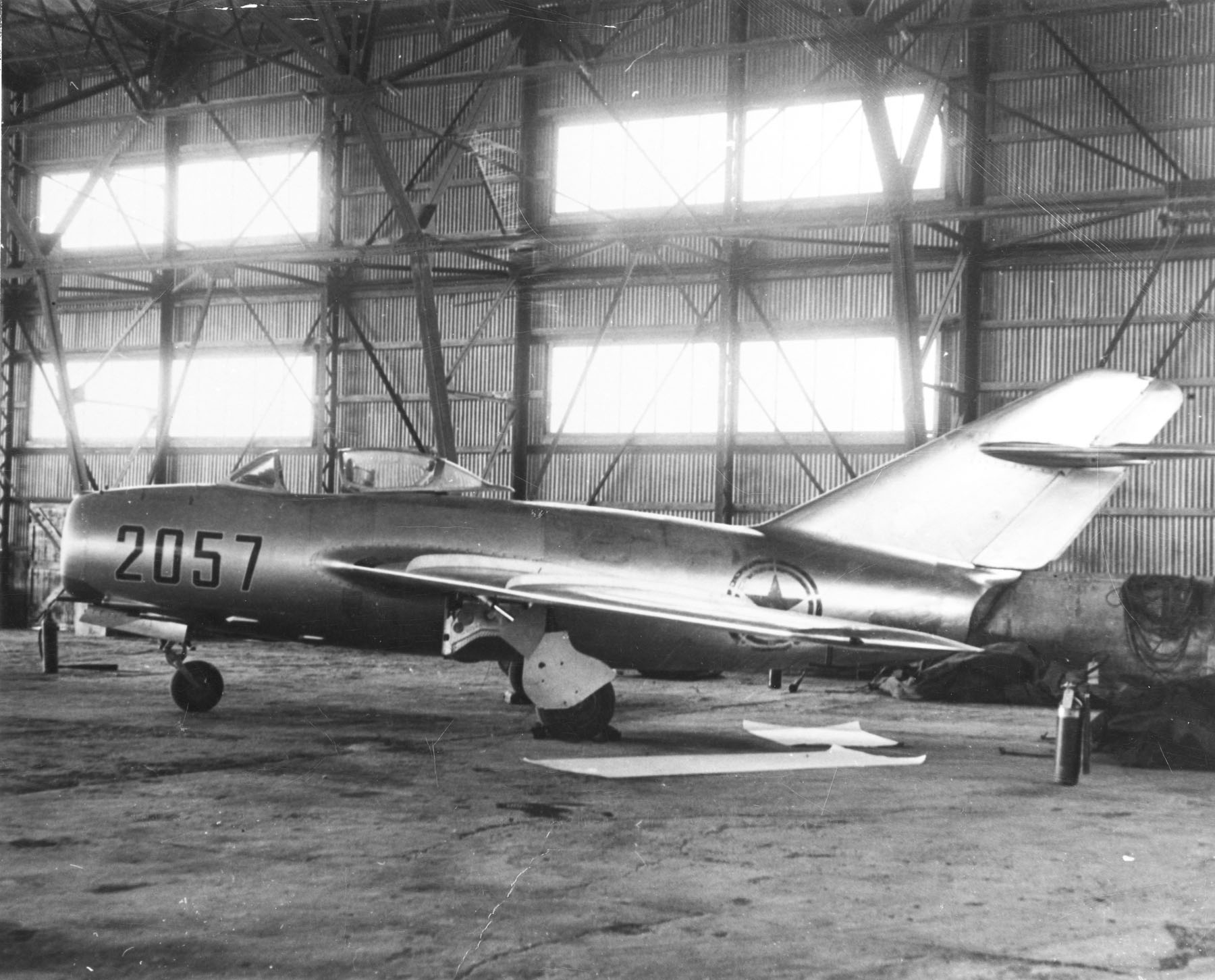
Lt. Brown was intrigued with the MiGs, but not distracted. He immediately went to work to down one of the Soviet fighters. Soviet records do not report any MiG-15s lost on this day, in this fashion. Senior Lieutenant Kharitonov, of the 72nd Guards Fighter Aviation Unit, reported that an F-80 attacked him under the conditions that Lt. Brown also reported. Kharitonov successfully evaded the F-80 after diving and dropping the external fuel tanks. Despite the uncertainty of the victory, it was now clear that the Soviets were providing MiG-15s to the Chinese and North Koreans, while also supplying pilots of their own. Equally evident was the rapid response of the UN forces towards this threat.
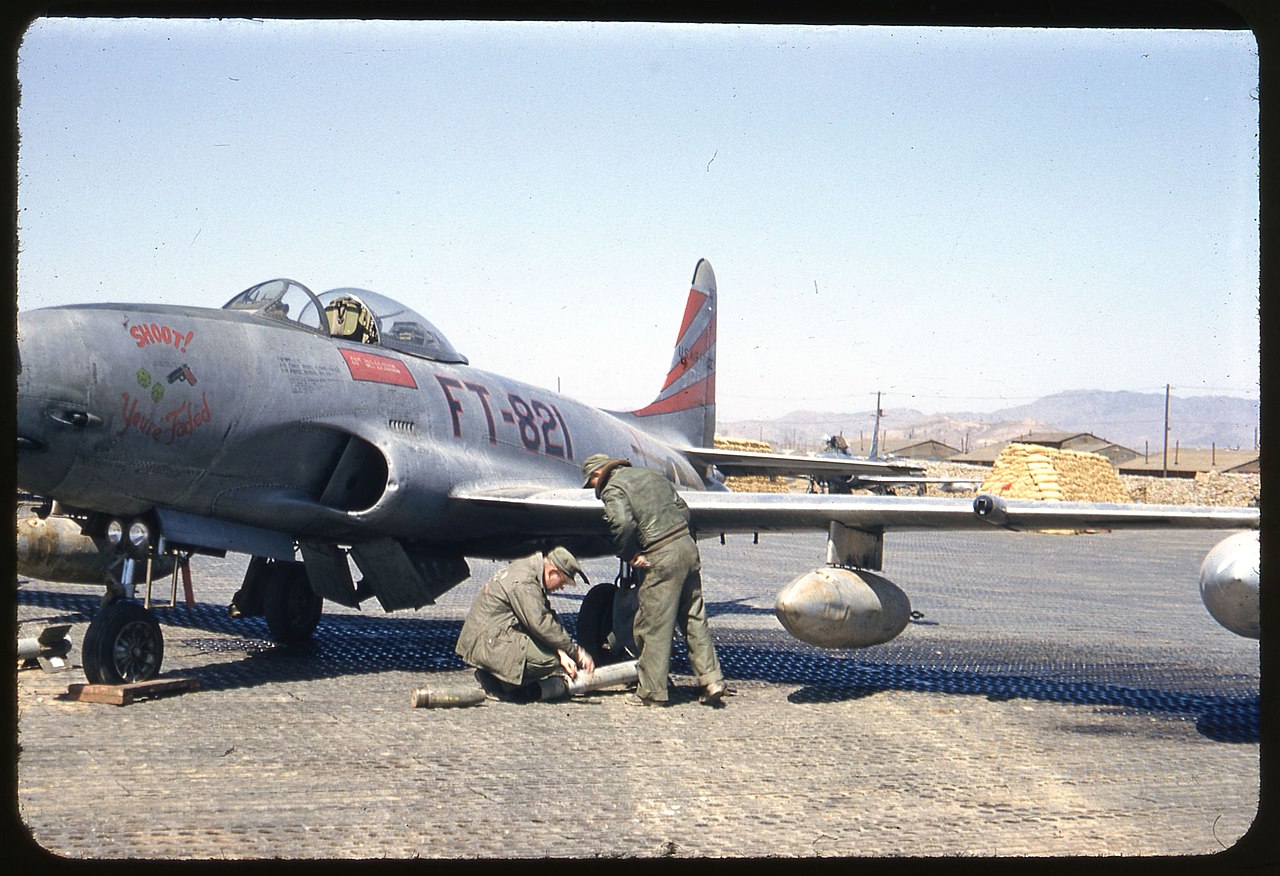
The Lockheed F-80 began life as the P-80 Shooting Star – America’s first operational jet fighter. The P-80 was developed during the Second World War, but it only saw limited service via two YP-80s based in Italy. These Shooting Stars served with the USAAF on reconnaissance missions between February and March 1945. The P-80C/F-80C variant was powered by an Allison J33-A-35 turbojet engine with 4,600 pounds of thrust dry. With water injection, the J33 could produce 5,400 pounds of thrust. The F-80C could attain a maximum speed of 594 miles per hour and climb at a rate of 6,870 feet per minute. A range of 717 nautical miles and a service ceiling of 46,800 feet gave the Shooting Star an ample envelope within which to fight. F-80Cs were armed with six 0.50 calibre M3 Browning machine guns, eight 5-inch HVAR unguided rockets, and two 1,000-pound bombs.