







By Ian Doyle
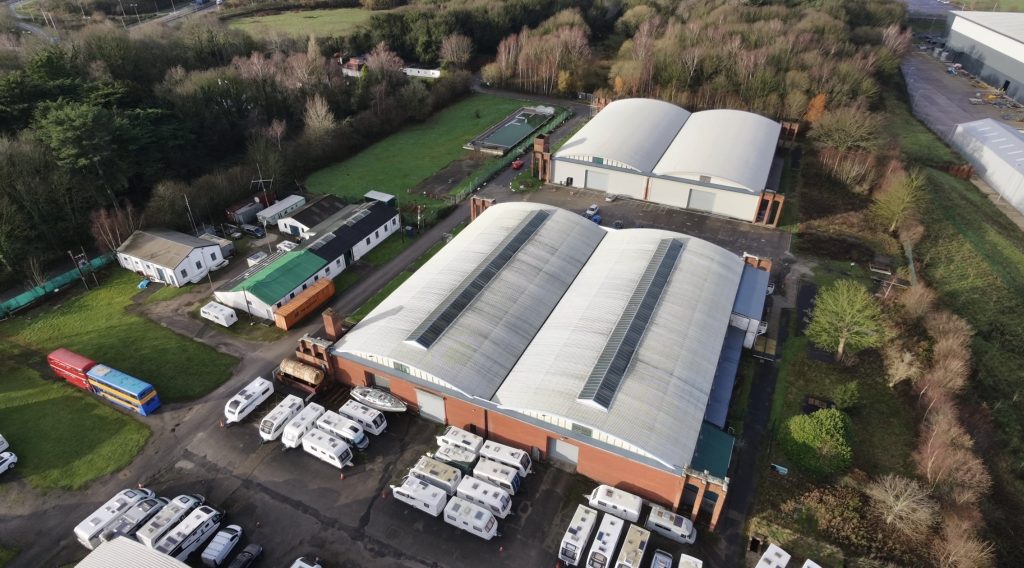
Ian Doyle takes a look at this historical aviation gem tucked away by the banks of the River Mersey near Liverpool, England. Located on the banks of the River Mersey, the city of Liverpool might be the home of the Fab Four, The Beatles, but on the opposite side of the river, on the Wirral Peninsula, the Hooton Park Heritage Museum continues to go from strength to strength with an ever-growing collection of interesting aviation artefacts. Located on land which itself was once part of Hooton Hall, at the time one of the finest stately homes and racecourses in the North West of England, the land was subsequently requisitioned by the British Army in 1914 for basic training following the advent of World War One, eventually going on to become a Royal Flying Corps pilot training aerodrome by 1917. In order to accommodate the requirements of training aircraft for the R.F.C., three large hangars were built incorporating a unique Belfast truss design, this being a lattice infrastructure made up of timber and corrugated iron. After the end of WWI and the Armistice, the site was returned to civilian use, but by 1927 it had been purchased to serve as Liverpool’s major airport, a somewhat odd decision as the city of Liverpool lies on the opposite bank of the River Mersey. Despite this geographical disadvantage, Hooton Park Aerodrome buzzed with glamour and innovation throughout the 1920s and 30s. Records from the time show aviation pioneers in UK aviation, such as Amy Johnson and Sir Alan Cobham, visiting the site, and air races and derbies drew large crowds. Local aircraft manufacturers thrived and included the Comper Aircraft Company, producing the sleek CLA.7 Swift, while the Pobjoy Aeromotor Company built radial engines. At the time, Hooton was the only commercial aerodrome in northern England until Speke (now Liverpool John Lennon Airport) took over in 1933.
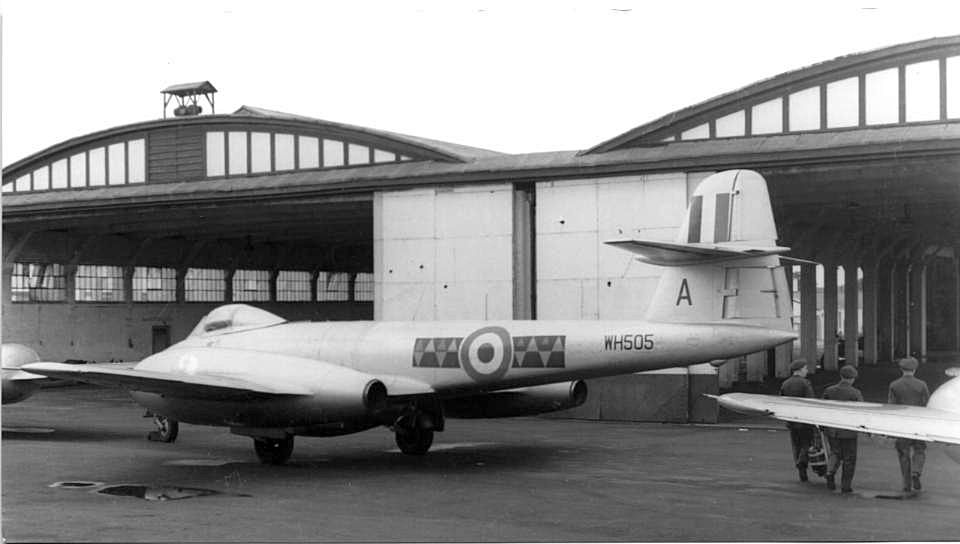
Between WWI and the start of WWII, the aero club continued to thrive, becoming one of Britain’s busiest outside London, but with storm clouds gathering prior to WWII, 1936 saw the formation of No. 610 (County of Chester) Squadron, created as an Auxiliary Air Force light bomber unit, later converting to fighters in what was now the Royal Air Force. By 1939, Britain was at war once again, with the station supporting Coastal Command patrols over the Irish Sea, utilising the twin-engined Avro Anson. Aircraft repair and assembly continued post-war; 610 Squadron reformed with the Spitfire XIVs and XXII, but the end of the war saw more changes at Hooton as 610 Squadron transitioned to Gloster Meteor jets, with 1949 seeing the formation of another Auxiliary Air Force Squadron, 663, reforming with Tiger Moths, Austers, and later Chipmunks. The aerodrome finally closed to flying in 1957, and in 1962, the site was purchased by Vauxhall Motors, which later became one of the largest vehicle manufacturers in Europe. Eventually, they consumed most of the land, but fortunately, a small core, including the three hangars and small parts of taxiways, remains to this day.
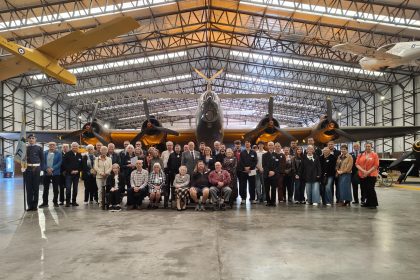
By the late 20th century, the hangars faced dereliction, but fortunately, the Hooton Park Trust was formed in 2000. They recognised the importance of these structures and specifically sought to save these unique hangars and open them to the public alongside various aviation artefacts representative of the North West of England. Over the years, the addition of various aircraft from other sites has grown to form an impressive collection. Central to the aviation displays, which share space with other forms of transport, is The Aeroplane Collection (TAC), one of Britain’s oldest voluntary aircraft preservation groups. Founded in 1962 as the Northern Aircraft Preservation Society and renamed in 1974, TAC has been based at Hooton Park for many years, occupying two of the hangars and focusing on aircraft with the aforementioned Northwest English bias, either built onsite, based at the aerodrome, or representative of types that flew from Hooton.
In 2024 the collection was complemented by the acquisition of several aircraft and exhibits from the Manchester Museum of Science and Industry’s former Air and Space Hall, following its closure in 2021, adding to the trust’s own items from The Aeroplane Collection. The collection is, to say the least, eclectic, blending rare survivors, restoration projects, and locally significant machines. Among the unique or noteworthy aircraft is Comper Swift G-ACGL (on loan from the RAF Museum). This aircraft was actually built at Hooton Park in the early 1930s by the Comper Aircraft Company; this tiny single-seat racer is a direct product of the airfield’s manufacturing heyday. Its presence underscores Hooton’s role as an innovative aviation hub.
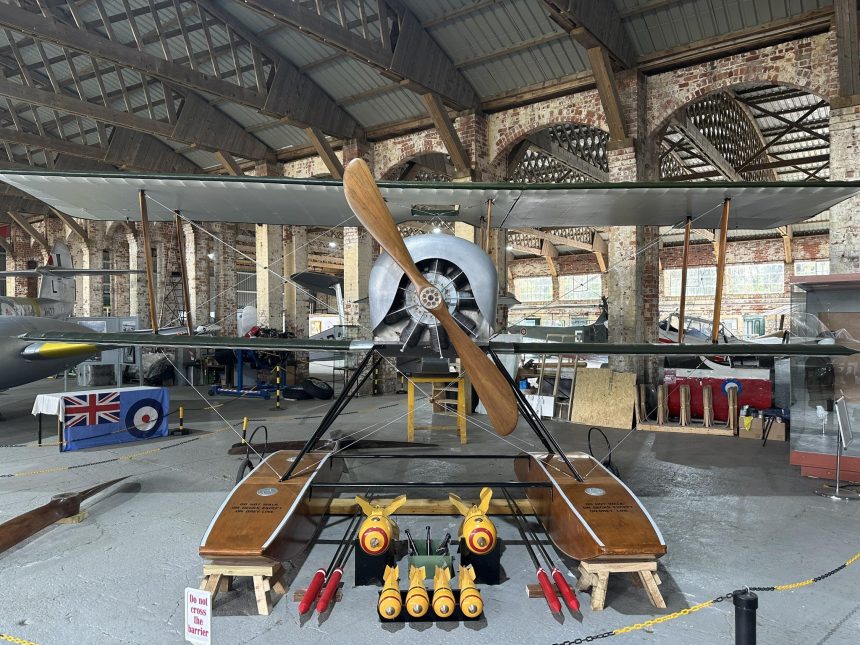
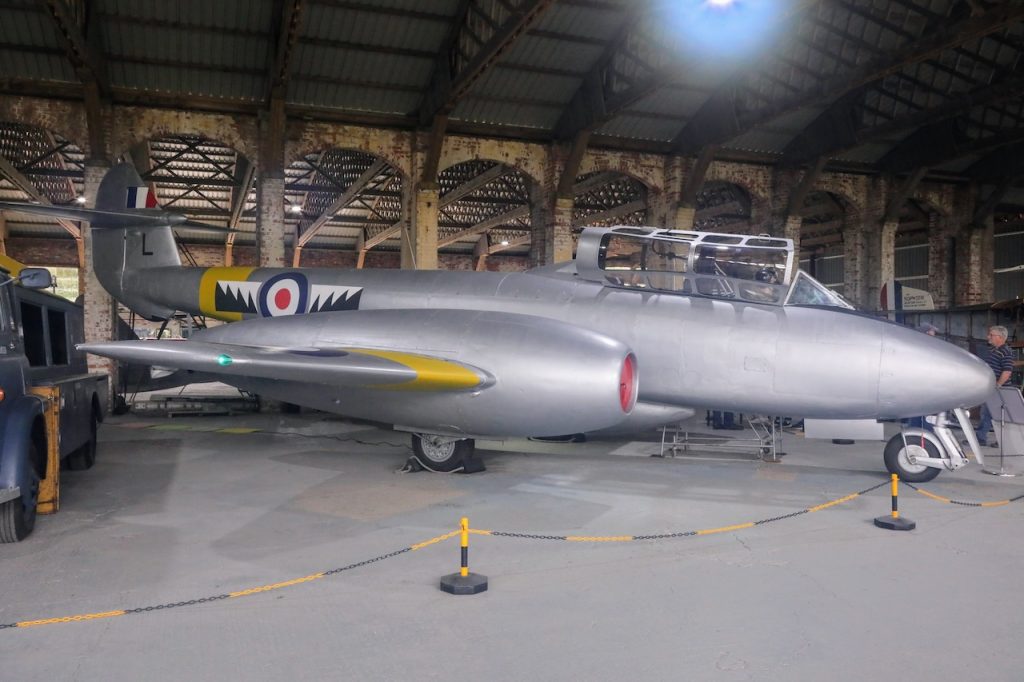
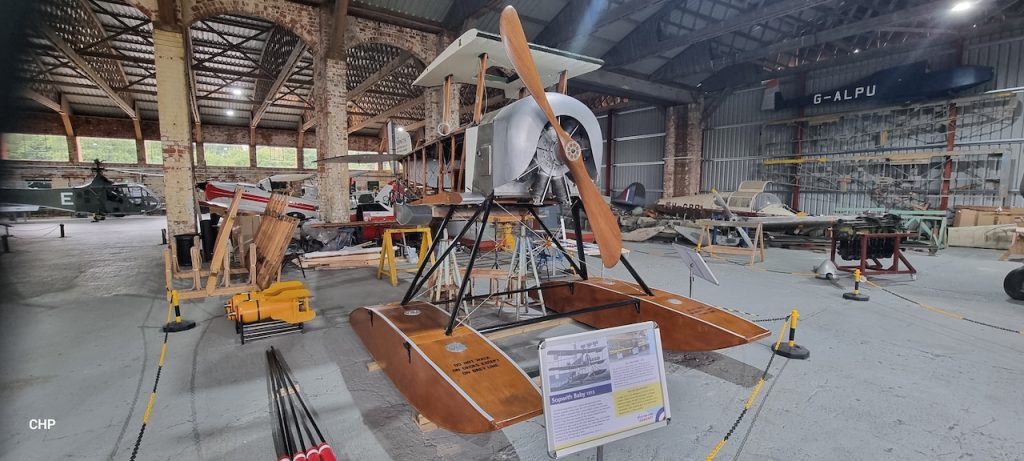
In terms of the author’s highlights, these include but are not restricted to: Avro 594 Avian Mk IIIA (G-EBZM) – which originally belonged to the Liverpool & District Aero Club at Hooton in 1928. Sopwith Baby (BAPC.137, serial 8188): A First World War seaplane replica/project under restoration. Its presence ties the museum to the earliest days of naval aviation and the RFC training era that began at Hooton. Gloster Meteor T.7 WH132: Another post-war jet link, currently under canopy restoration after years of volunteer effort. The Meteors succeeded the Spitfires at Hooton in the late 1940s–1950s. Miles Gemini Mk. 1A G-AKHZ, De Havilland Tiger Moth EM-840, a superb replica of the 1909 Roe I Triplane, and a Bensen B-7M Gyrocopter
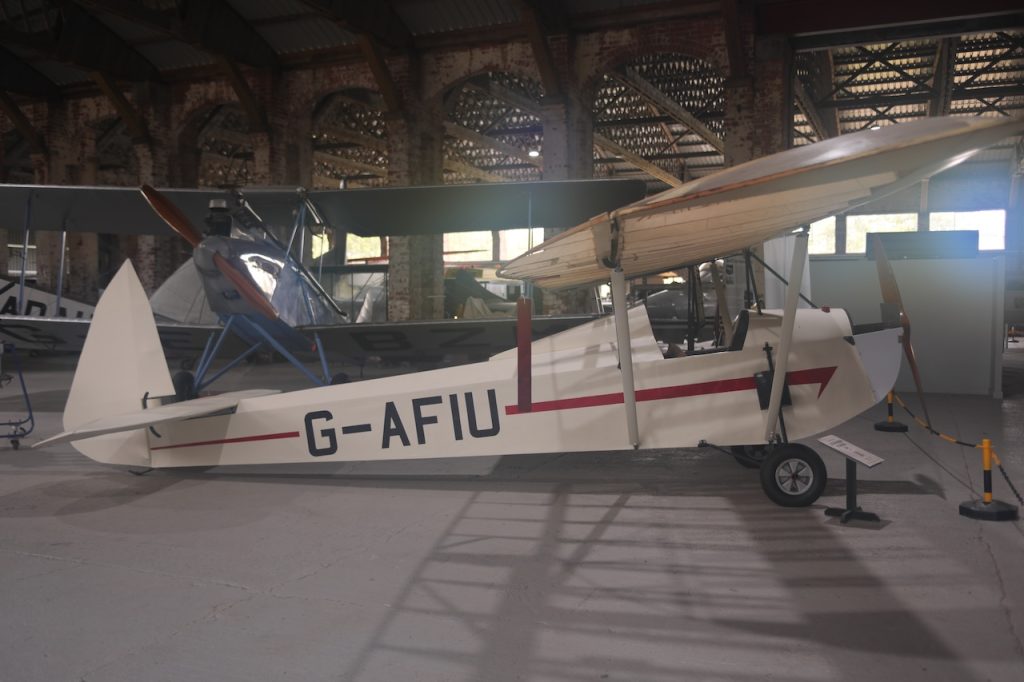
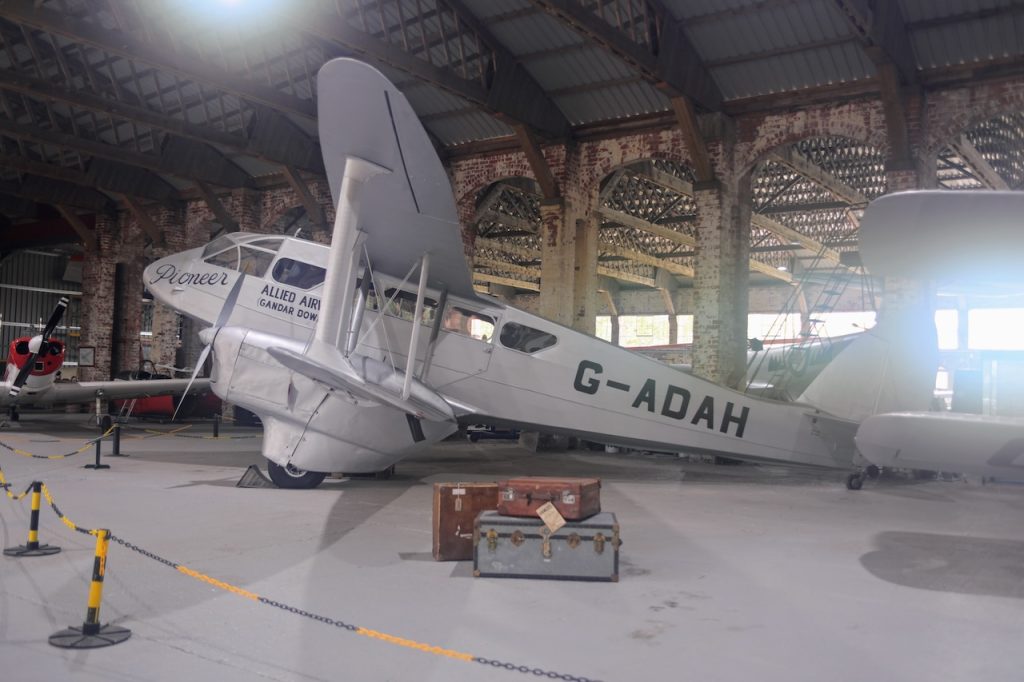
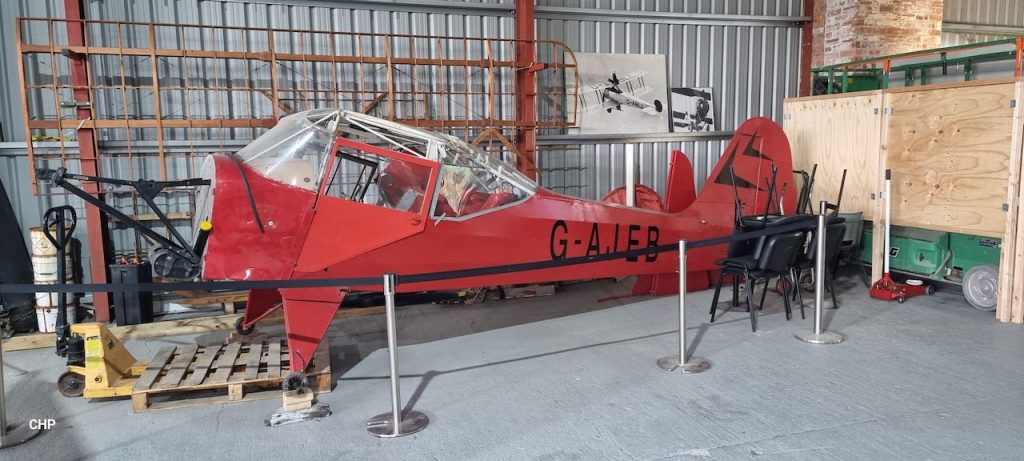
Rarer curiosities include a Mignet HM.14 Pou-du-Ciel (“Flying Flea”) homebuilt, a Bensen B-7M gyrocopter, an Avro Avian, a Dragon Rapide, and even a Fairey Gannet cockpit section. These illustrate the breadth of British light aviation and experimental designs. De Havilland DH.115 Vampire T.11 XD624: Under active restoration, this twin-boom jet represents the post-war transition to jet fighters that 610 Squadron flew from Hooton. It is one of the few surviving trainer variants still being returned to display condition by volunteers. Miles Gemini G-AKDK: Acquired in late 2025, this elegant 1940s twin-engine light aircraft adds a civilian post-war flavour and is currently being assembled for display. De Havilland Canada DHC-1 Chipmunk variants (including WB730/G-AOUO and cockpit sections): Representative of the Auster and Chipmunk trainers operated by 663 Squadron at Hooton in the 1950s. Auster J.1N Alpha G-AJEB and other light types: Evoking the Army Air Training Corps and civilian flying that persisted alongside military operations.
The trust secured planning permission in 2024 to enlarge the public museum area, creating new galleries and further protecting the hangars, interpreting the full sweep of Hooton’s story, from stately home and racecourse to race-winning aircraft factory, wartime fighter base, and jet-age training ground. The long-term goal is sustainability: using part of the site for revenue-generating activities while keeping education and public access at the core. What sets Hooton Park apart from larger national museums is its intimacy and authenticity. You stand beneath the same soaring timber trusses that sheltered RFC trainees in 1917 and 610 Squadron Spitfires in 1940. You are also able to watch volunteers painstakingly fabricate canopy frames for a Meteor or fit new fabric to a Sopwith Baby wing.
In a major coup for the museum and its volunteers, April 2026 saw the trust acquire a star exhibit from the RAF Museum Cosford in the form of Spitfire PR.XIX PM651. This is the embodiment of the museum’s philosophy: bringing historic aircraft home to the places that shaped them. Originally based at nearby RAF Woodvale, the aircraft was written off that year in an accident in 1954, and having been stripped of all usable parts, it subsequently led a nomadic life as a gate guardian at various RAF aerodromes until transfer to the RAF Museum Cosford in 2010, where it was eventually restored. PM651 previously flew weather-data sorties, climbing to extreme altitudes in an unarmed configuration to gather vital atmospheric information for forecasting. Placing this Spitfire back at its spiritual home is a powerful act of heritage reconnection. Unlike the static replica Mk. IX already under restoration at the site (being finished in an early C-wing configuration worn by 611 Squadron), PM651 is an authentic, service-worn airframe that visitors can now see up close. Trust members have hailed its arrival as inspirational, reflecting the RAF Museum’s confidence in curating aircraft at smaller independent collections.
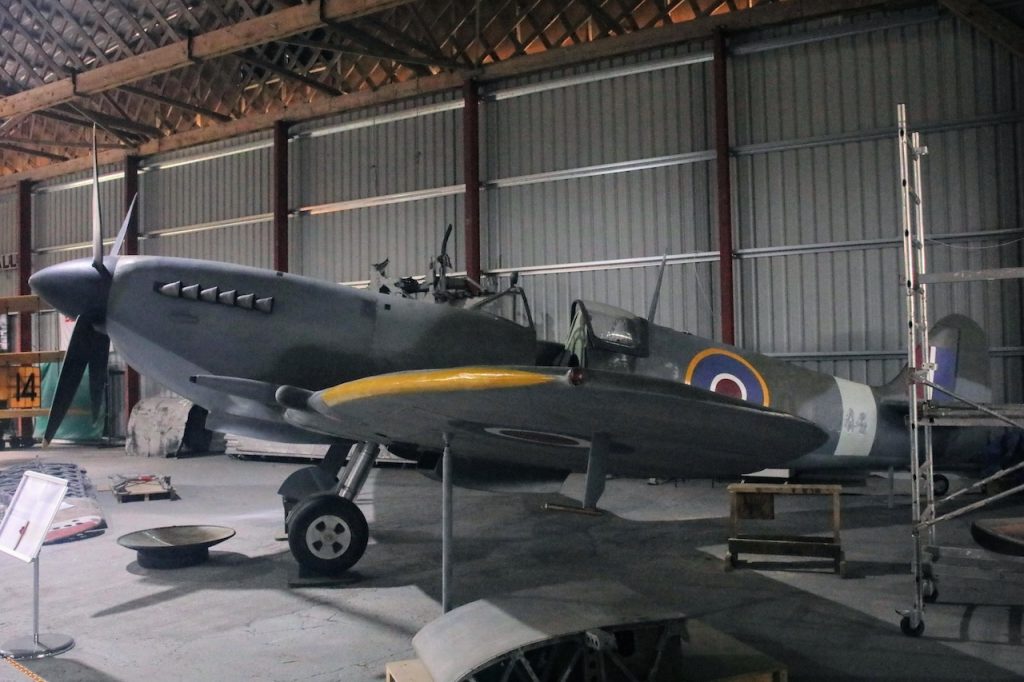
For anyone fascinated by British aviation, Hooton Park Hangars offers something increasingly rare: a living, breathing slice of history where the past is not only preserved but actively revived. Whether you come for the Spitfire, the locally built Comper Swift, the roar of a restored Merlin in your imagination, or simply to chat with the dedicated volunteers over a cup of tea in the Amy Johnson Room, you leave with a deeper appreciation of how a small corner of Cheshire, England, helped Britain take to the skies. With the arrival of a real Spitfire, the museum’s story is still being written—one restored rivet, one open day, one new exhibit at a time. With the arrival of PM651, Hooton Park has secured its place as a must-visit destination for anyone tracing the evolution of flight in the Northwest.
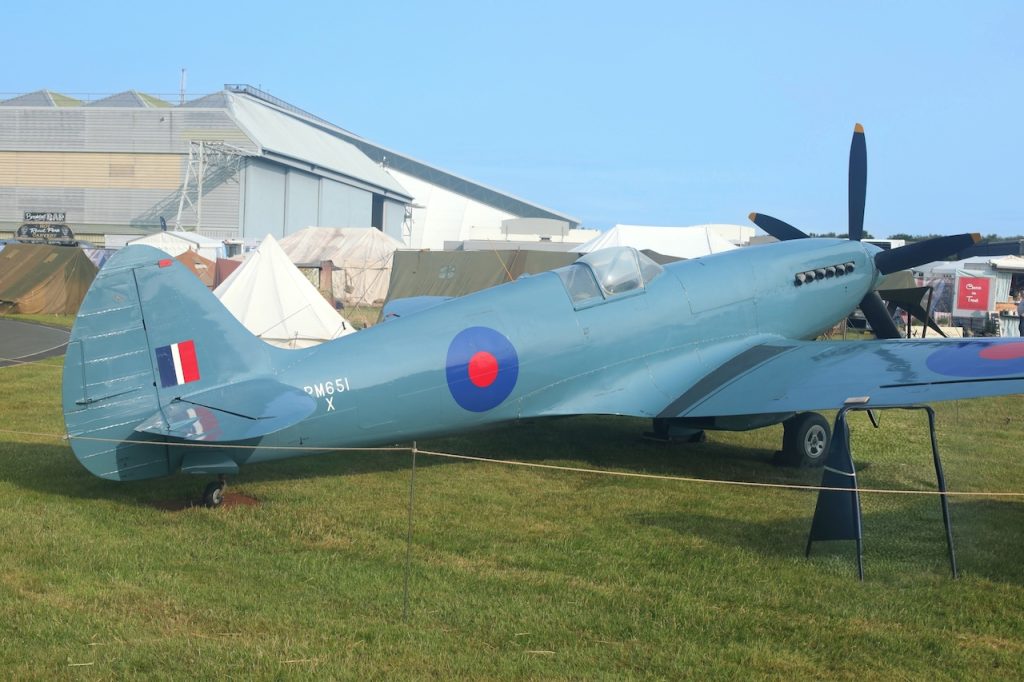
It should be noted that beyond aircraft, Hooton Park Hangars is also a true transport museum, with a tram restoration project occupying space alongside period bicycles, cars, and commercial vehicles. The site opens 10:00–16:00 (last admission 15:00) every Saturday from 11 April 2026 and on the last Sunday of each month (with full facilities including shuttle, tea room, and air-raid experience). Admission is £9 for adults, £7 for concessions, with family tickets available. Under-fives enter free. The museum is entirely volunteer-run, so the atmosphere is personal rather than corporate. Wheelchair access is good within the hangars, though the historic nature of the site means some outdoor areas have uneven surfaces. For more information about the Hooton Park Hangars, visit www.hootonparkhangars.co.uk.











Spent 34 yrs at vauxhall as an electrician, spent many happy hours as an apprentice working in those wonderful hangars installing power supplies, lighting and other electrical repairs. I spent most of my time admiring those magnificent roof beams.
Not mentioned in your notes,is that during the Second World War most of the American fighter aircraft which came across the pond on ships into Liverpool docks were transported through the Mersey Tunnel to Hooton Park to be stripped of the protection and reassembled and flown on to other airfields.