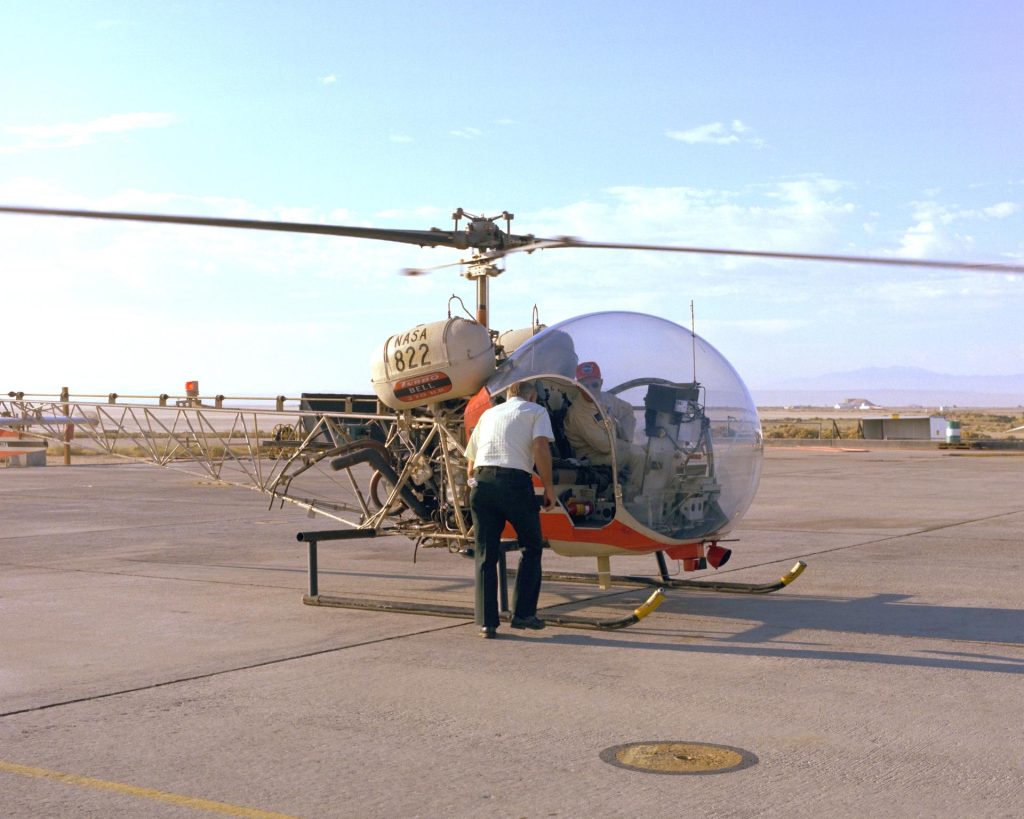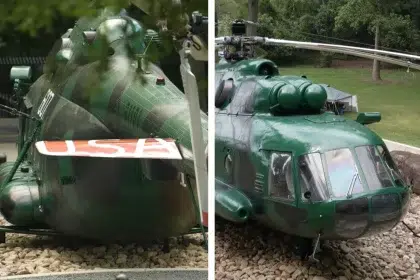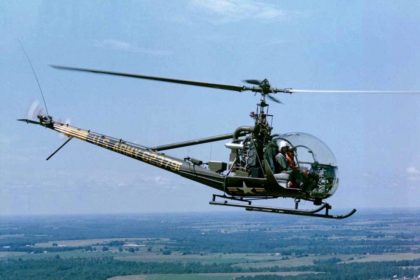
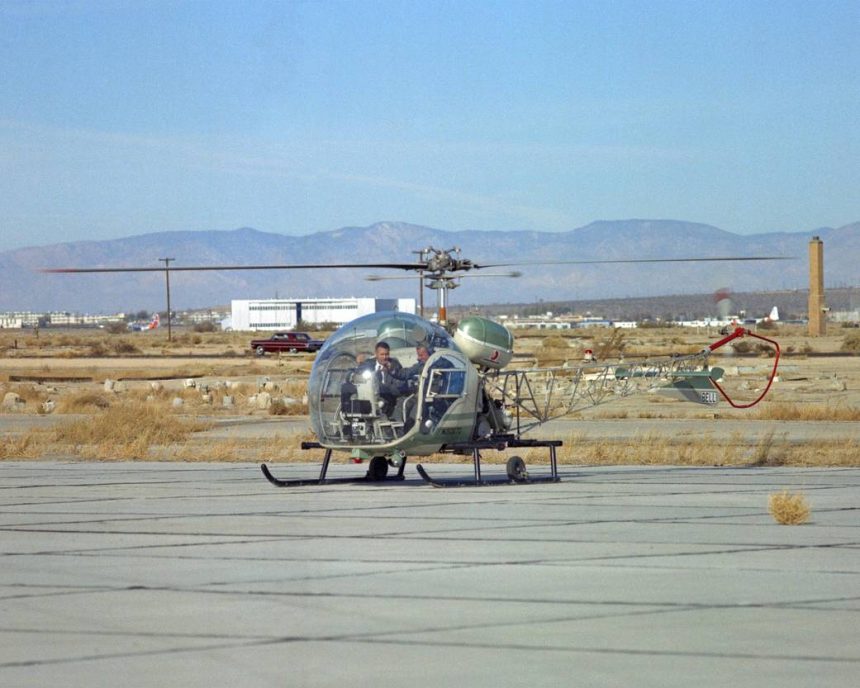

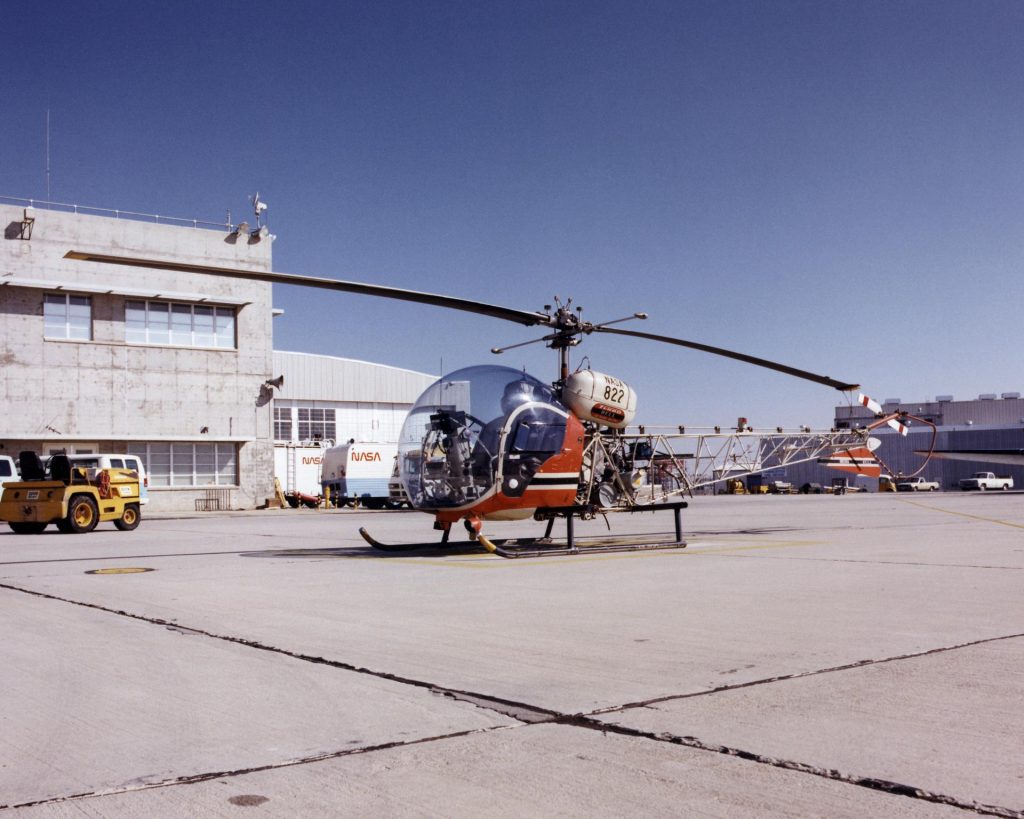
The Bell 47 became the first helicopter certified for civilian use on March 8, 1946. Designed by Arthur M. Young, more than 5,600 Bell 47 helicopters were produced until 1974, including 1,200 under license in Italy, 239 in Japan, and 239 in the UK. The Bell 47 entered the US military service in 1947 and was used in various versions for three decades. During the Korean War, the US Army designated it the H-13 Sioux, and many countries also used it as the primary helicopter for basic flight training. NASA used several Bell 47 helicopters during the Apollo program to train astronauts for the Lunar Lander. From January 16, 1961, the Bell 47 provided chase support for the Lunar Landing Research Vehicle (LLRV). The use of chase planes has long been essential for flight research, even before the NACA Muroc Flight Test Unit, now called the NASA Armstrong Flight Research Center, was established in September 1947. The chase planes were used to alert the research pilot to any issues. When LLRV test flights started in October 1964, a Bell 47 helicopter provided support. It could hover nearby and monitor altitude and descent rate information during testing. LLRV test operations were completed by late 1966 and early 1967.
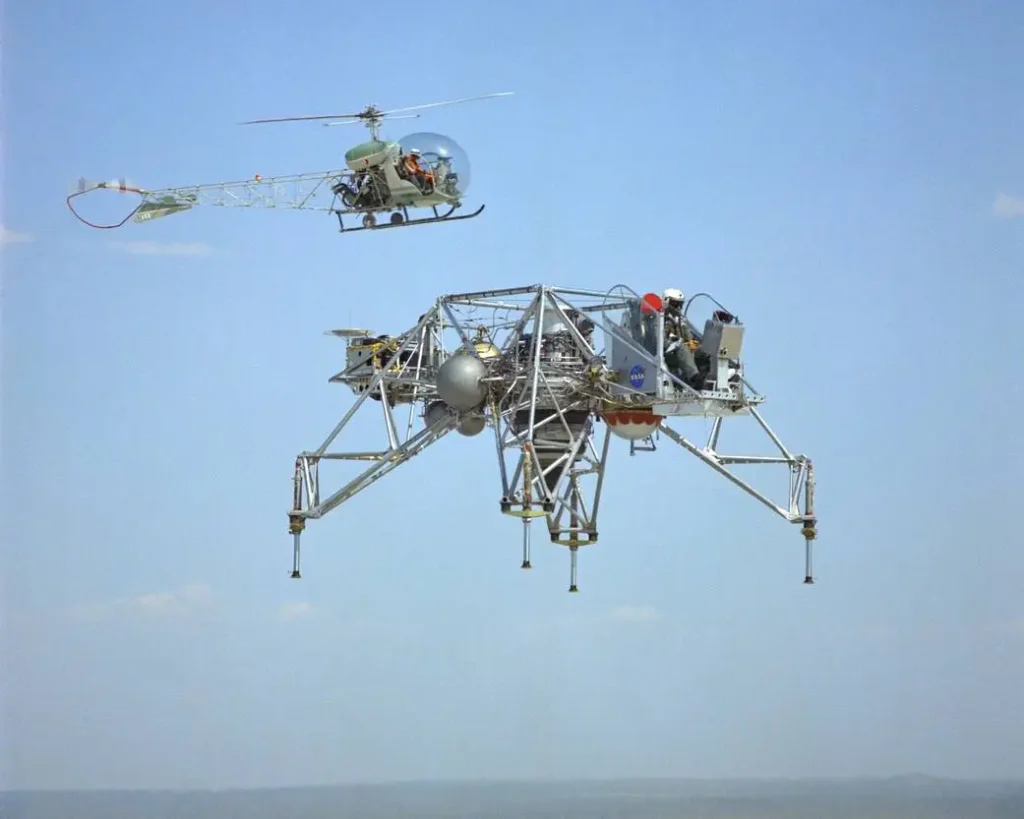
In 1960, NASA was planning the Apollo missions and needed a simulator to help with the descent to the Moon’s surface. The researchers considered three options, including an electronic simulator, a tethered device, and a more advanced free-flying vehicle from the NASA Flight Research Center (FRC). All three concepts were explored, but the LLRV from NASA FRC became the most important project. After discussions with engineers from Bell Aerosystems Company in Buffalo, NASA FRC awarded a $3.6 million contract in 1963 to produce the first two vehicles for flight studies. The vehicle, made of tubular aluminum alloy like a giant four-legged bedstead, was designed to simulate a lunar landing from about 1,500 feet to the Moon’s surface. It was powered by a vertical turbofan engine that produced 4,200 pounds of thrust. The engine lifted the vehicle to the test altitude and then reduced power to support five-sixths of the vehicle’s weight to simulate the reduced gravity of the Moon. Two lift rockets, with thrust ranging from 100 to 500 pounds, controlled the LLRV’s rate of descent and movement sideways.
Additionally, 16 smaller rockets, arranged in pairs, allowed the pilot to maneuver in multiple directions. The pilot’s seat was located between two legs of the structure, while an electronics platform extended backward. The pilot had a “zero-zero” ejection seat that would lift him to safety in case of an emergency. In April 1964, Bell shipped two LLRVs to the FRC. The program was focused on the first vehicle for early test flights. NASA research pilot Joe Walker flew it for the first time on October 30, 1964. He completed three flights, totaling just under 60 seconds, and reached a peak altitude of about 10 feet. By mid-1966, the FRC had gathered enough data from the LLRV flights to allow Bell to take a contract for three LLTVs for $2.5 million each. At the end of 1966, the FRC stopped its part of the LLRV program. The first vehicle had completed 198 flights, totaling 9.5 minutes of flight time and altitudes of around 750 feet. In December 1966, NASA shipped the first vehicle to the Manned Spacecraft Center. The second followed in mid-January 1967 after completing six flights. The three LLTVs soon joined the two LLRVs. Together, all five vehicles were used to simulate and train for Moon landings. In the Flight Test Files series, the LLRV proved critical to the success of NASA’s Apollo program, and the Bell 47 served as a second set of eyes, providing crucial data as a chase aircraft. Read more Flight Test Files series articles HERE.