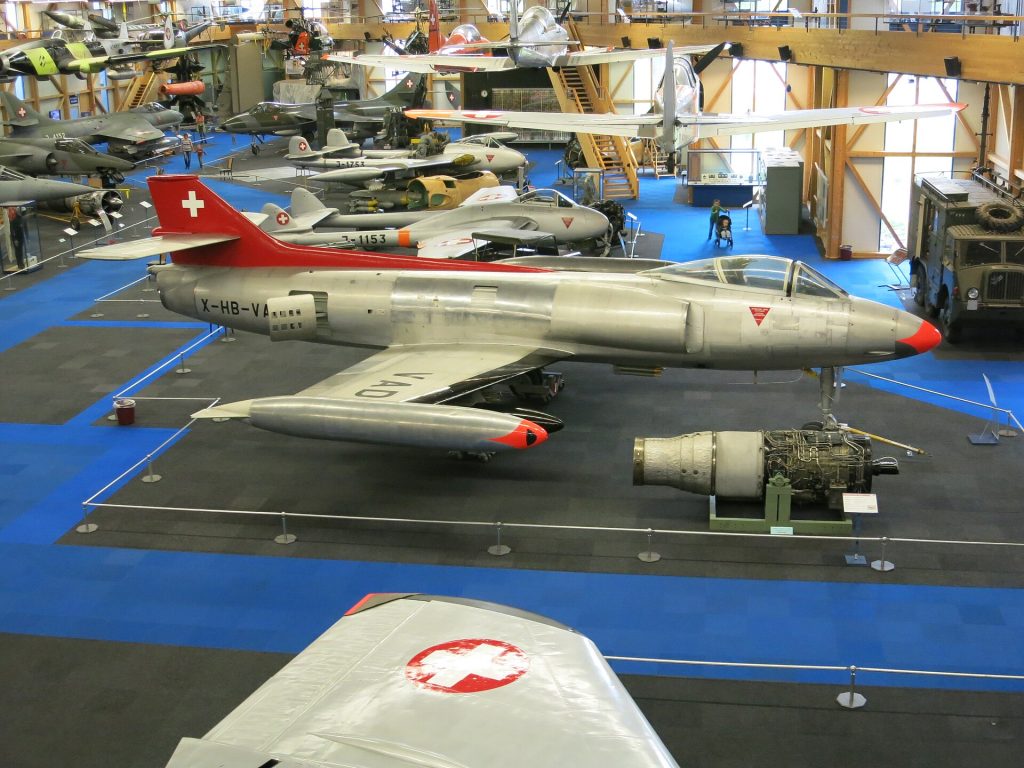

On this day in aviation history, 71 years ago (April 25, 1955), the FFA P-16 flew for the first time. The P-16 was a prototype ground attack jet fighter developed by Flug- und Fahrzeugwerke Altenrhein (FFA), intended to be Switzerland’s first “in-house” jet fighter. FFA’s attempt to create a domestic fighter jet would be the second by a Swiss aviation manufacturer, preceded by the Eidgenössische Flugzeugwerke Emmen (EFW) N-20 Aiguillon (Stinger). The N-20 never flew as a full-scale prototype.
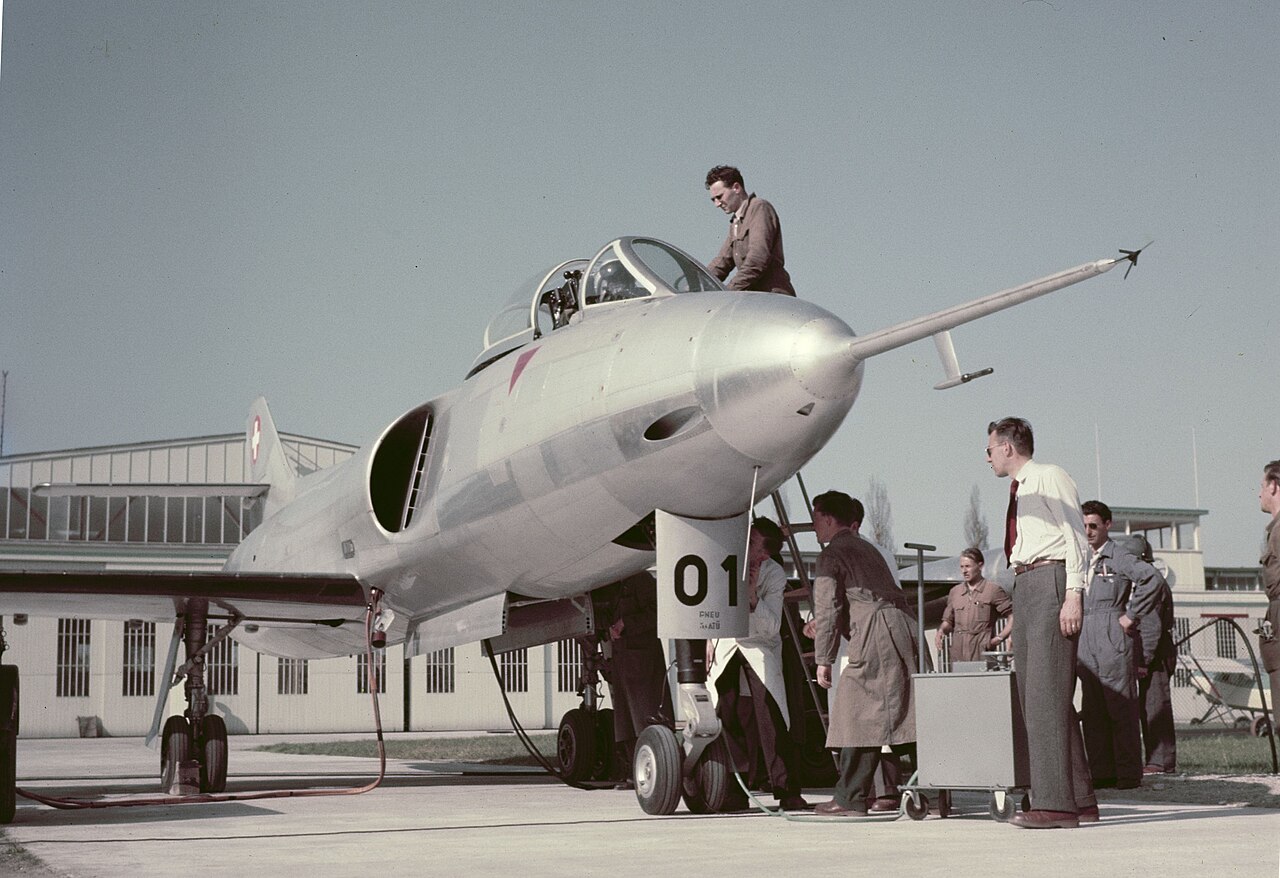
Development of Switzerland’s native fighter jet began in the late 1940s. The goal of the new fighter project was to replace the fleet of piston-engined aircraft that were currently in service with the Swiss Air Force. An order for two prototypes of the proposed fighter was placed in 1952, with the first prototype taking flight 3 years later on 2/25/55. On August 31, 1955, this prototype would be destroyed in a crash, having amassed 22 flights and a cumulative flight time of 12 hours 38 minutes. On August 15, 1956, the second prototype broke the sound barrier for the first time. By March of 1958, the second prototype would have 310 flights under its belt.
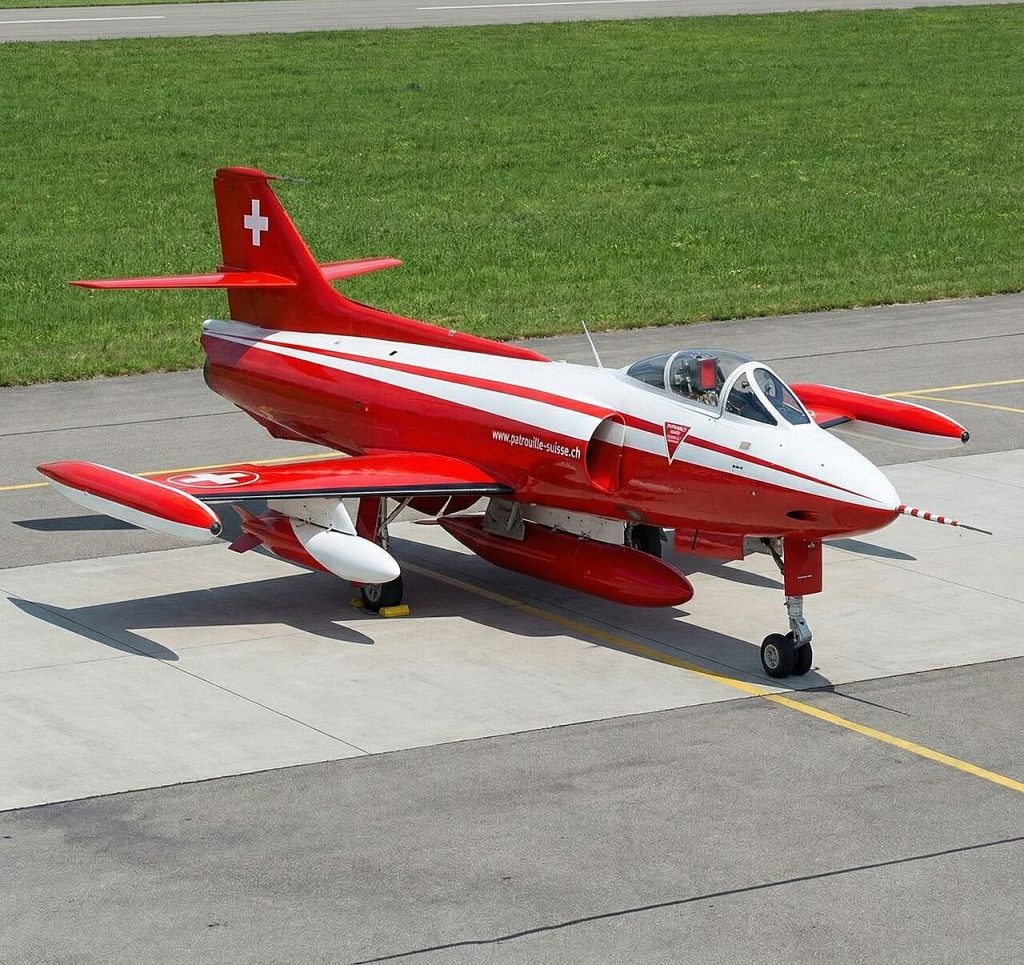
With the two initial P-16 prototypes showing signs of promise, a development contract for a batch of four pre-production aircraft was awarded. Designated as the Mk. II, these P-16s featured upgrades, including the more powerful Armstrong Siddeley Sapphire 7 engine. Flight testing of these P-16s began on a positive trajectory; the aircraft demonstrated admirable performance and positive flight control characteristics. In 1958, an order for 100 production aircraft was placed with FFA. On March 25, 1958, the first pre-production P-16 – J-3003 was destroyed in a crash. This second P-16 accident did not do FFA any favors, and it is believed to be the cause of the Swiss government’s decision to cancel the order for 100 fighters. It was decided to procure British-built Hawker Hunters instead.
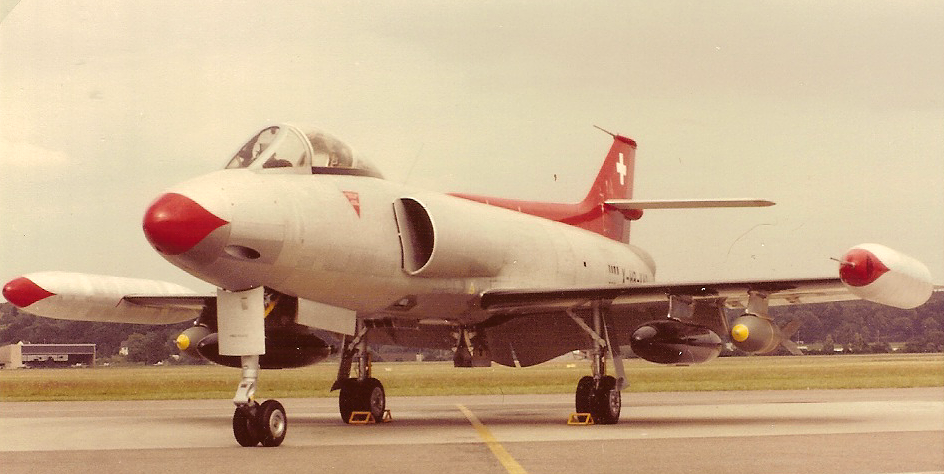
The FFA P-16 was powered by an Armstrong Siddeley ASSa.7 Sapphire turbojet engine, with 11,000 pounds of thrust. At sea level, the P-16 could attain a maximum airspeed of 695 mph, with a 111-mph stall speed. FFA designed the P-16 to have a range of 781 nautical miles, a service ceiling of 46,000 feet, and a climb rate of 12,800 feet per minute. Had the P-16 been chosen for military service, the aircraft would have been armed with two 30 mm Hispano-Suiza HS.825 or Oerlikon KCA cannons, up to 5,700 pounds of external stores, and 44 68 mm SNEB rockets in a retractable Matra launcher. The Swiss Air Force Museum at the Dübendorf Air Base is home to the only surviving example of a P-16 anywhere in the world. The sole P-16 on display was assembled from elements of two separate prototypes.