
In April 2025, Vintage Aviation News explored the ongoing efforts of the Flying Leatherneck Aviation Museum (FLAM) to re-establish itself on the former site of Marine Corps Air Station El Toro in Irvine, California (which you can read HERE). Now, significant changes have been made in the progress of the museum, including the official groundbreaking ceremony for the museum’s new building, which is set to open by the spring of 2027.

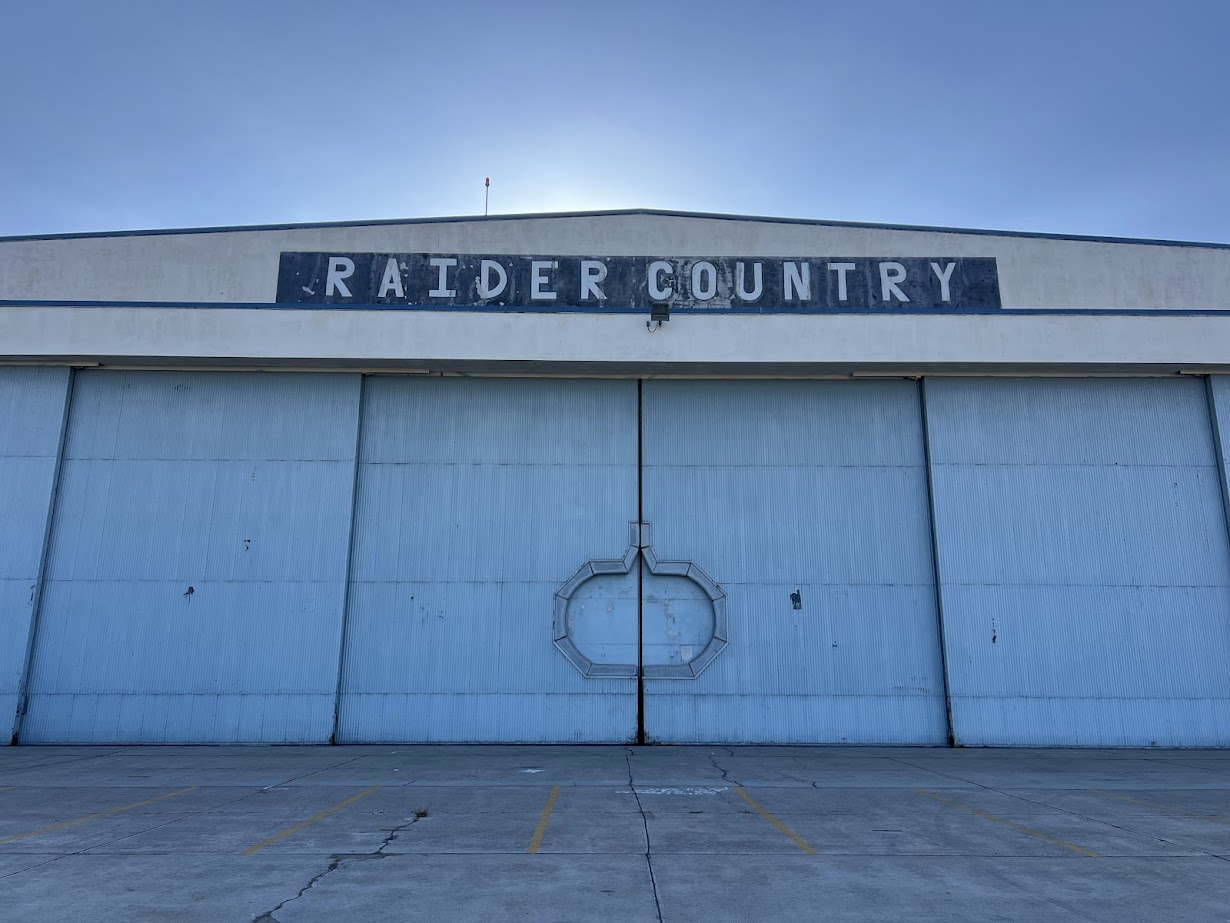
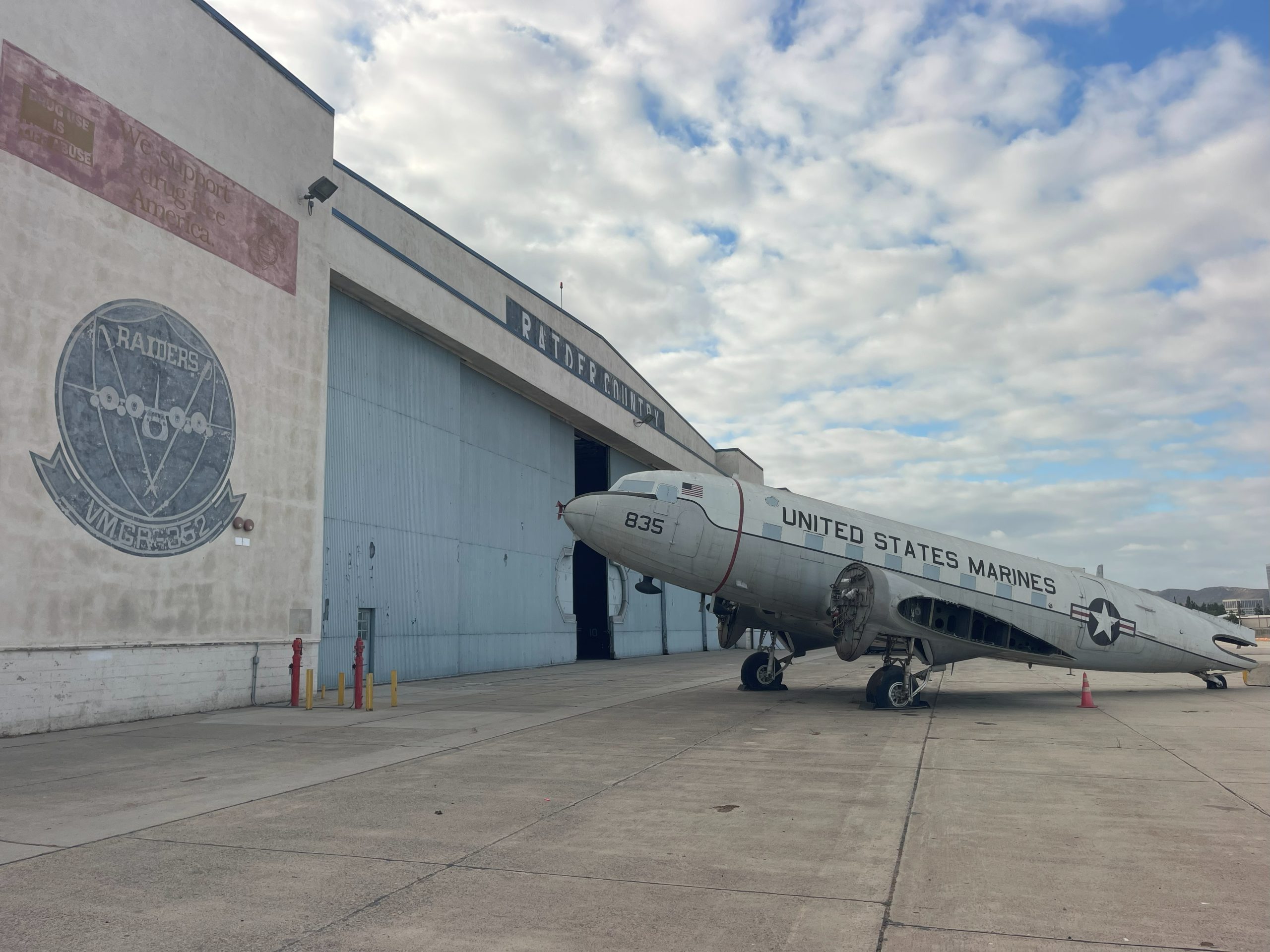
On the morning of October 28, 2025, the long-awaited groundbreaking ceremony for the Flying Leatherneck Aviation Museum was held just outside of the museum’s current temporary home, the old Hangar 297, still bearing the name Raider Country from its time housing Lockheed KC-130 Hercules tankers of Marine Aerial Refueler Transport Squadron 352 (VMGR-352), the Raiders. Overhead, two North American SNJ-5 Texans made a flyover, including John A. Collver’s SNJ-5 Texan BuNo 90917 “War Dog”, which was once assigned to MCAS El Toro as part of Marine Training Squadron 2 (VMT-2) and even performed at airshows held at MCAS El Toro during the 1980s and 1990s.

After the flyover was complete, a number of short speeches were made against the backdrop of the museum’s Bell AH-1J Sea Cobra BuNo 157784 – once flown by FLAM’s president/CEO, Brigadier General Michael Aguilar. Among those who spoke were General Aguilar, Great Park Board Chairman and Councilmember Mike Carroll, Irvine Mayor Larry Agran, and Major General James B. Wellons, commander of the 3rd Marine Aircraft Wing (MAW), which once operated from both MCAS El Toro and nearby MCAS Tustin before moving to its current headquarters at MCAS Miramar.
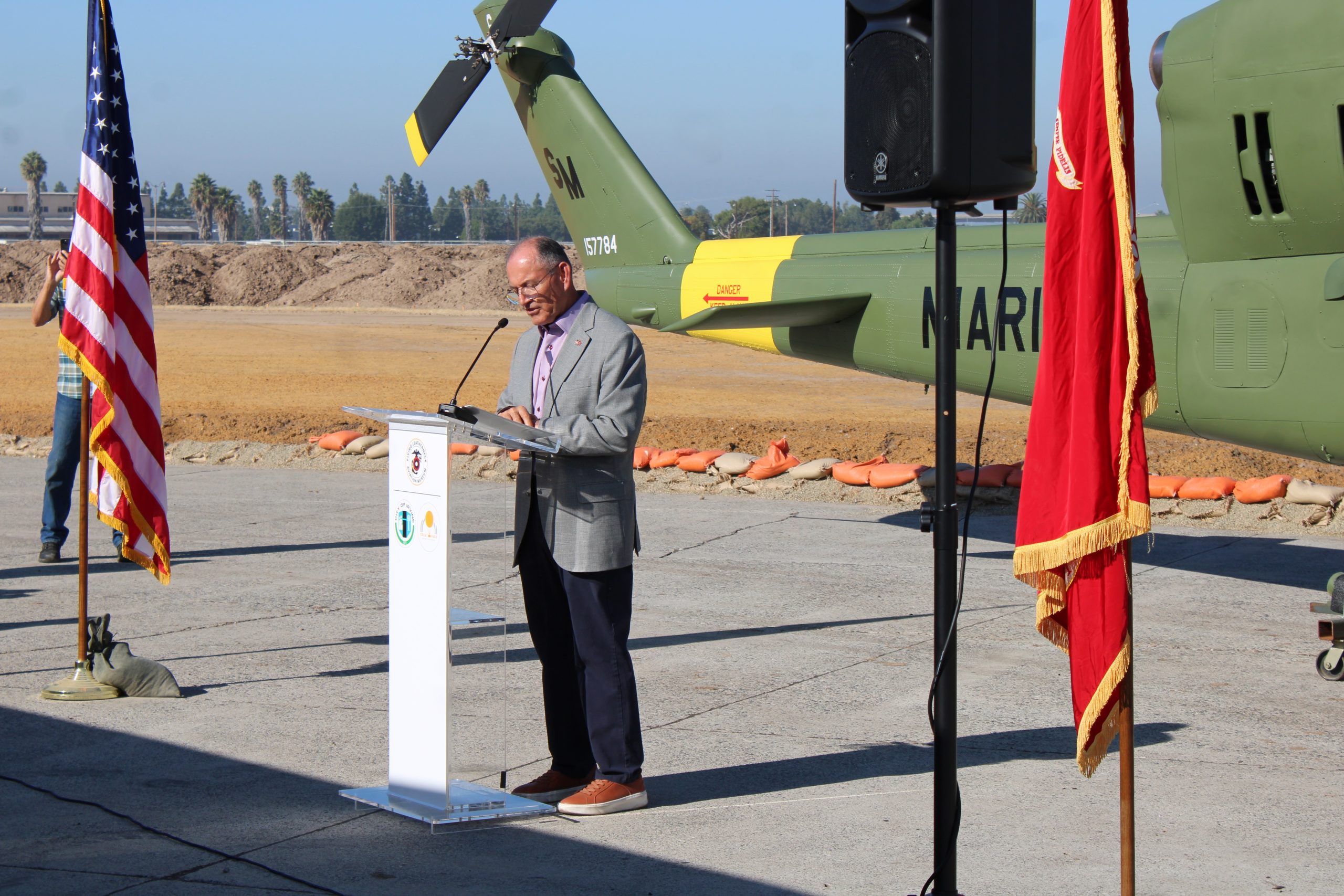
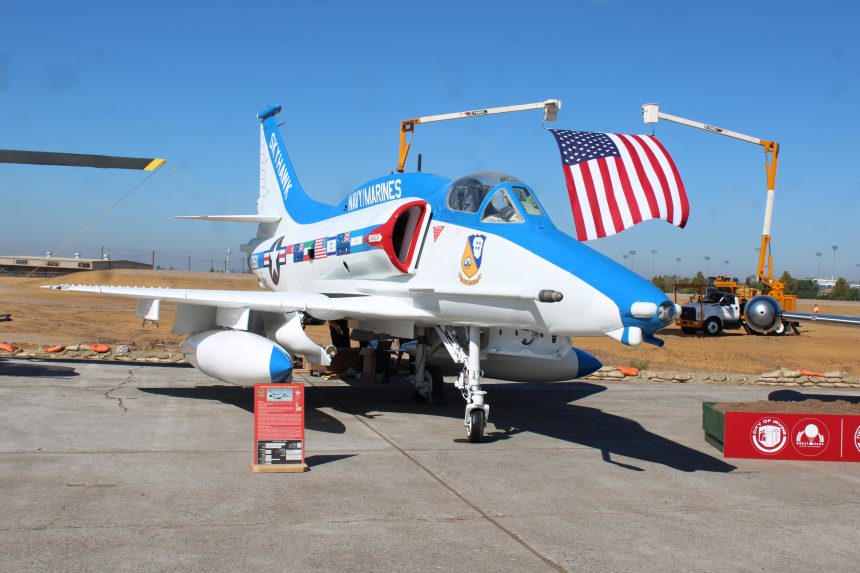
After these speeches, the members of the museum’s board, officials from the city of Irvine, and sponsors of the museum came to a box of dirt with golden shovels and hard hats to cap off the event. Flanking these officials were the museum’s restored Grumman F9F-2 Panther BuNo 148492 and Douglas A-4M Skyhawk BuNo 160264 – the very last A-4 ever built, as a large American flag fluttered above, held by two cherry-pickers.

Since the museum’s move from MCAS Miramar to Irvine, progress continues on the expansion of the museum’s new home, the Orange County Great Park. With the closure of MCAS El Toro in 1999, the city of Irvine, California, has spent the last 25 years cleaning the site of contaminants, and already, a number of residential neighborhoods, public park space, and schools sit on the grounds of El Toro. But now, the newest addition to the Great Park has begun to take shape, even as recycling efforts managed by Tierra Verde Industries continue around Hangars 297 and 296.
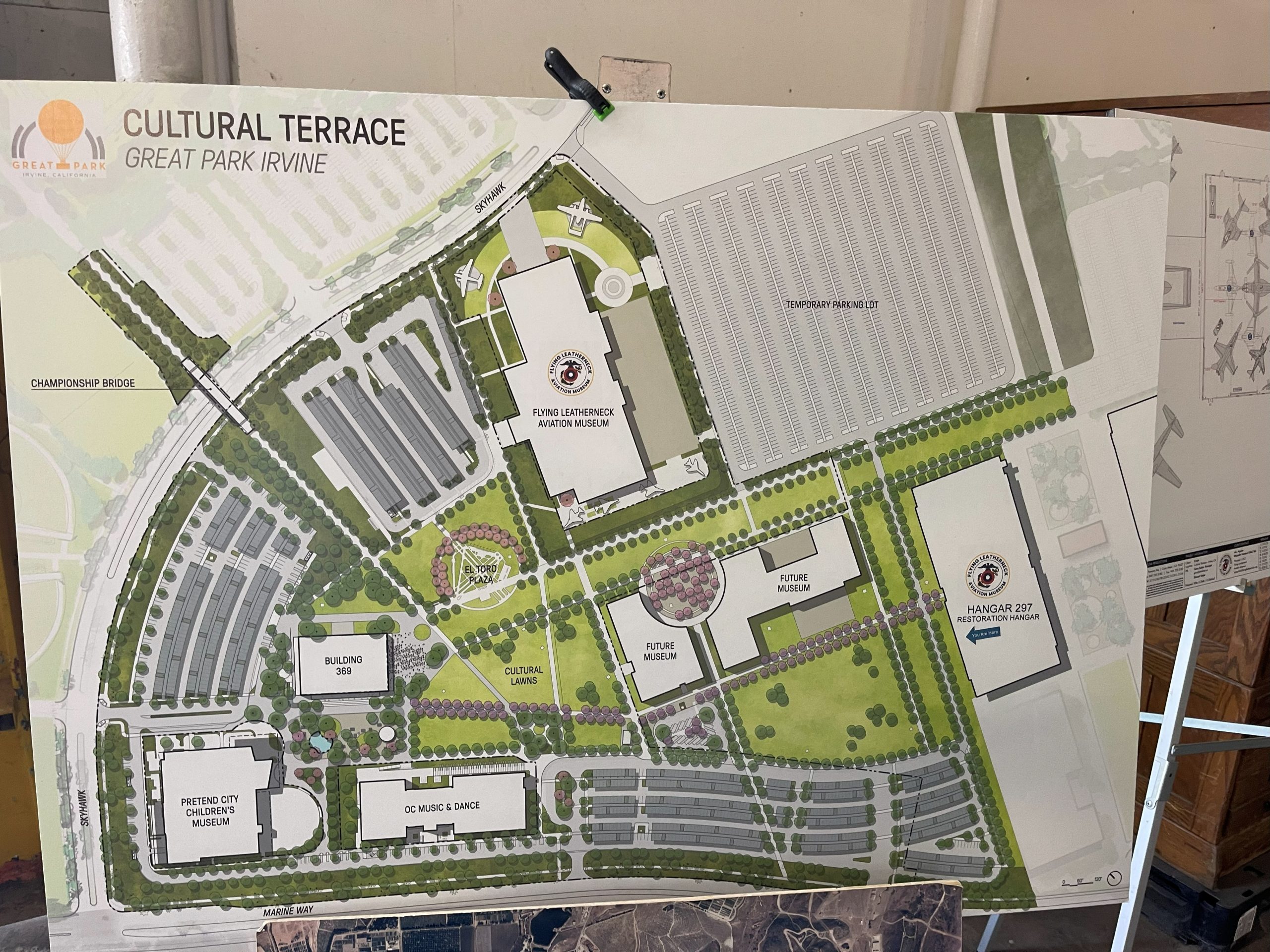
Called the Cultural Terrace, this 70-acre space will be a hub for several new museums and galleries, and among these museums is the Flying Leatherneck Aviation Museum. In some sense, the building of the new museum is a homecoming, as the FLAM was originally established at MCAS El Toro during the 1990s, operating first as the El Toro Historical Center and Command Museum, then as the Jay W. Hubbard Command Museum before moving to Miramar following the closure of El Toro.
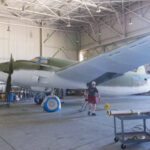
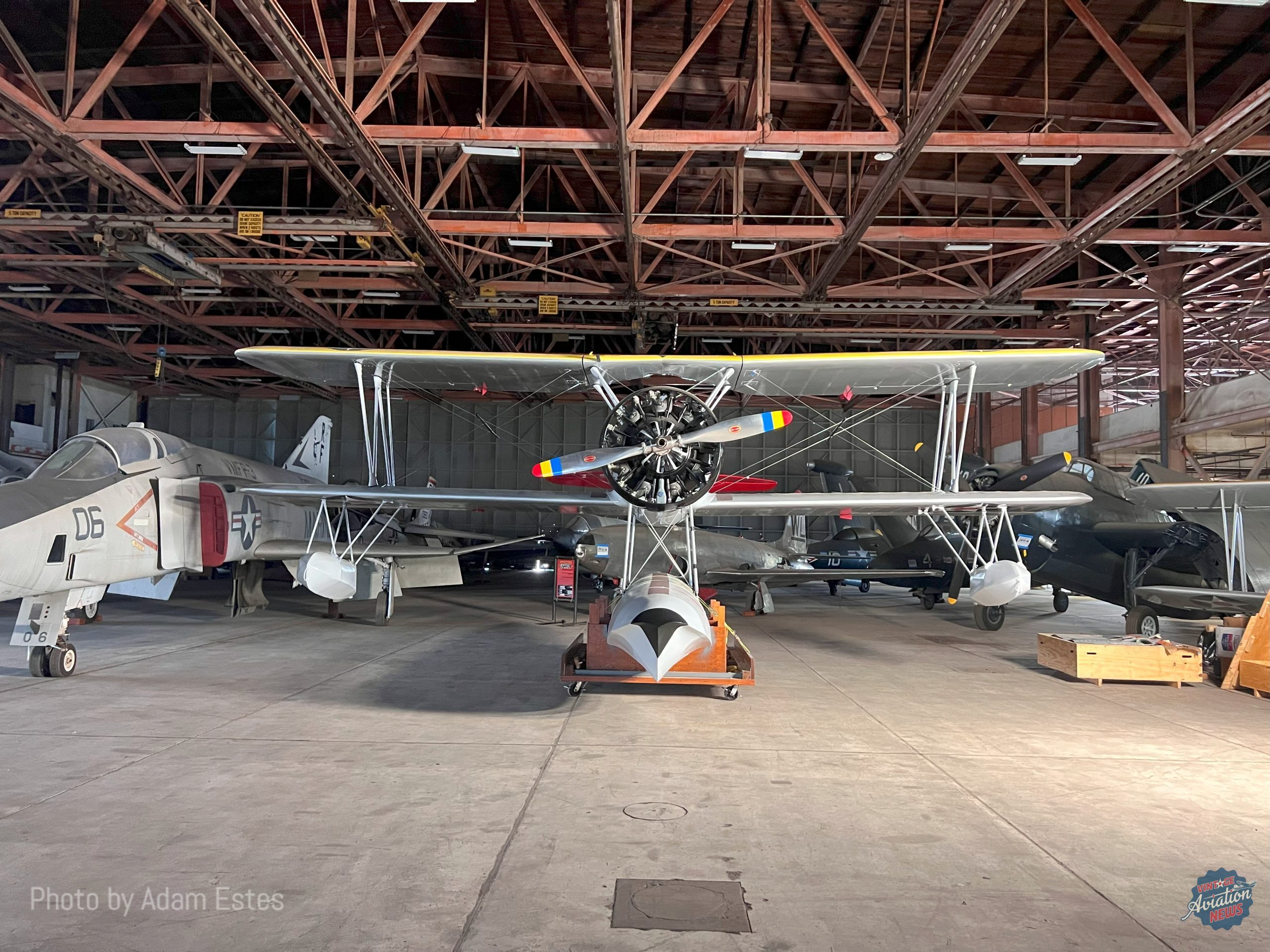
With the site of the future FLAM building being prepared for a foundation to be laid, the collection of over 40 airplanes and helicopters has been stored inside Hangar 297, one of two large WWII-era hangars on what was once the southwestern part of MCAS El Toro. The north wing of Hangar 297 has been turned into the museum’s storage wing, with previously restored aircraft, such as the museum’s North American Rockwell OV-10D Bronco and Bell HTL-3 helicopter sharing space with currently unrestored aircraft such as the museum’s Douglas F3D Skyknight, two Vought F-8 Crusaders, and Sikorsky CH-53A Sea Stallion, along with some new acquisitions, such as a Beech Staggerwing project and Vought O3U-3 Corsair reproduction mentioned in our prior article.

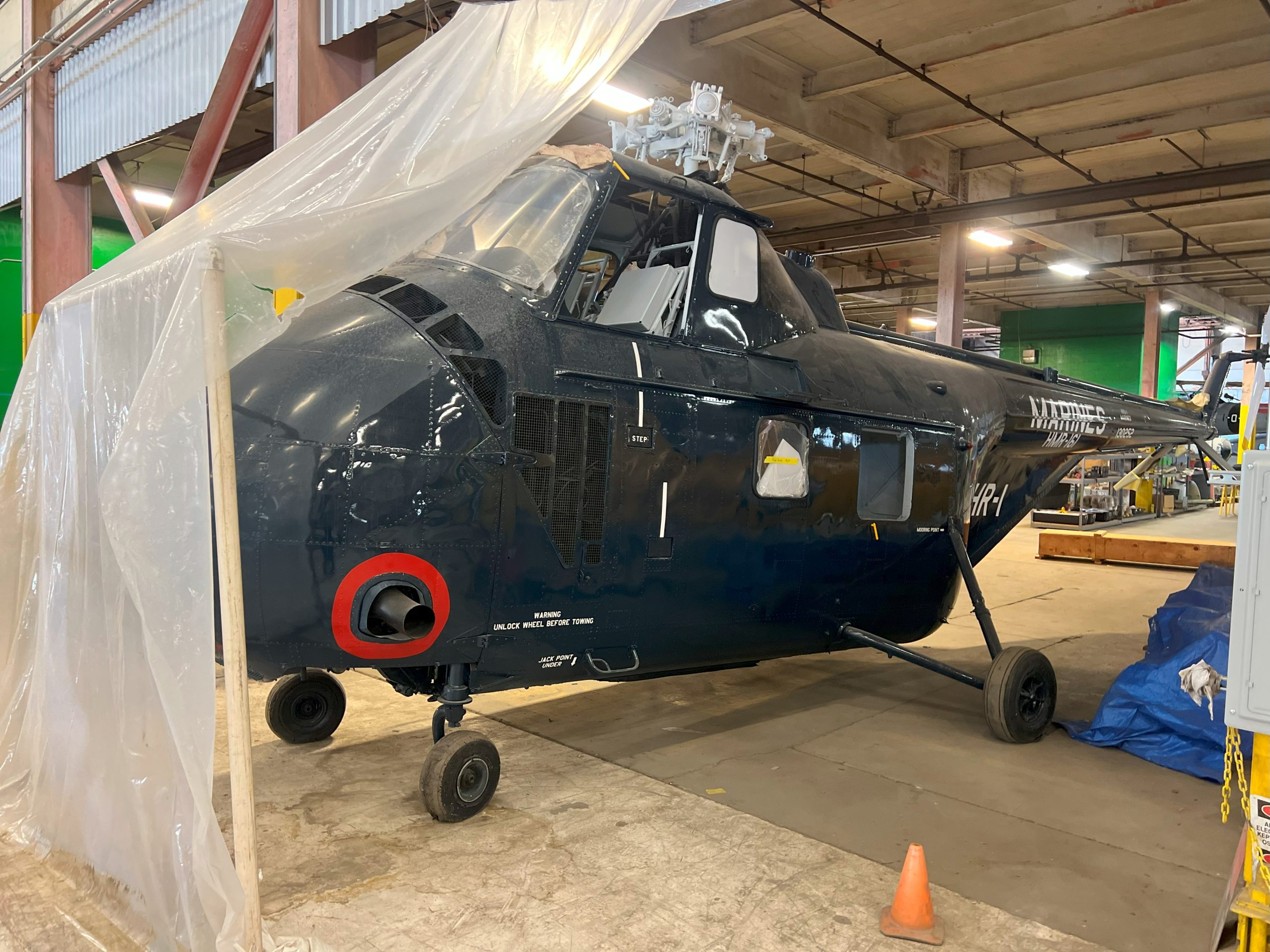
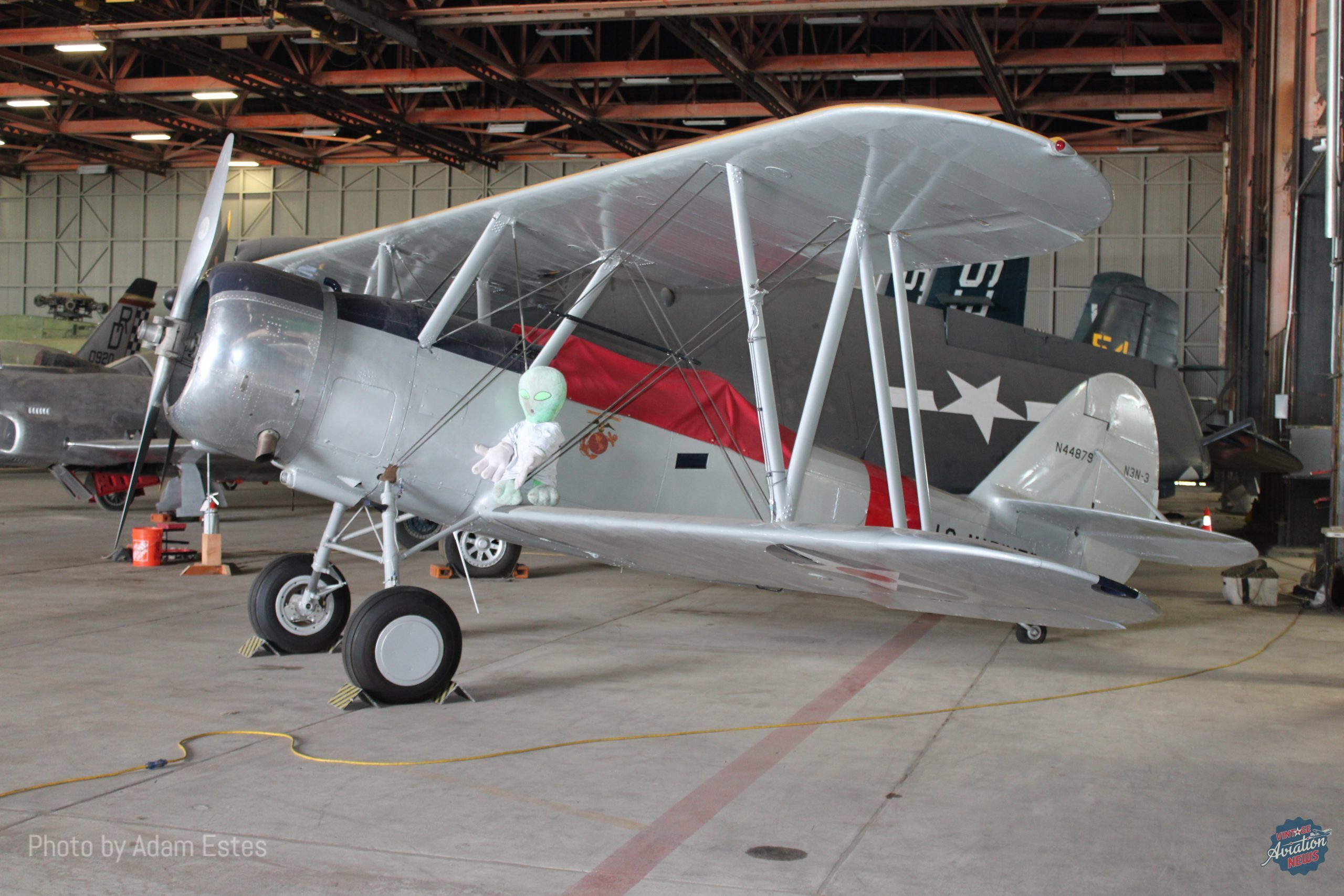
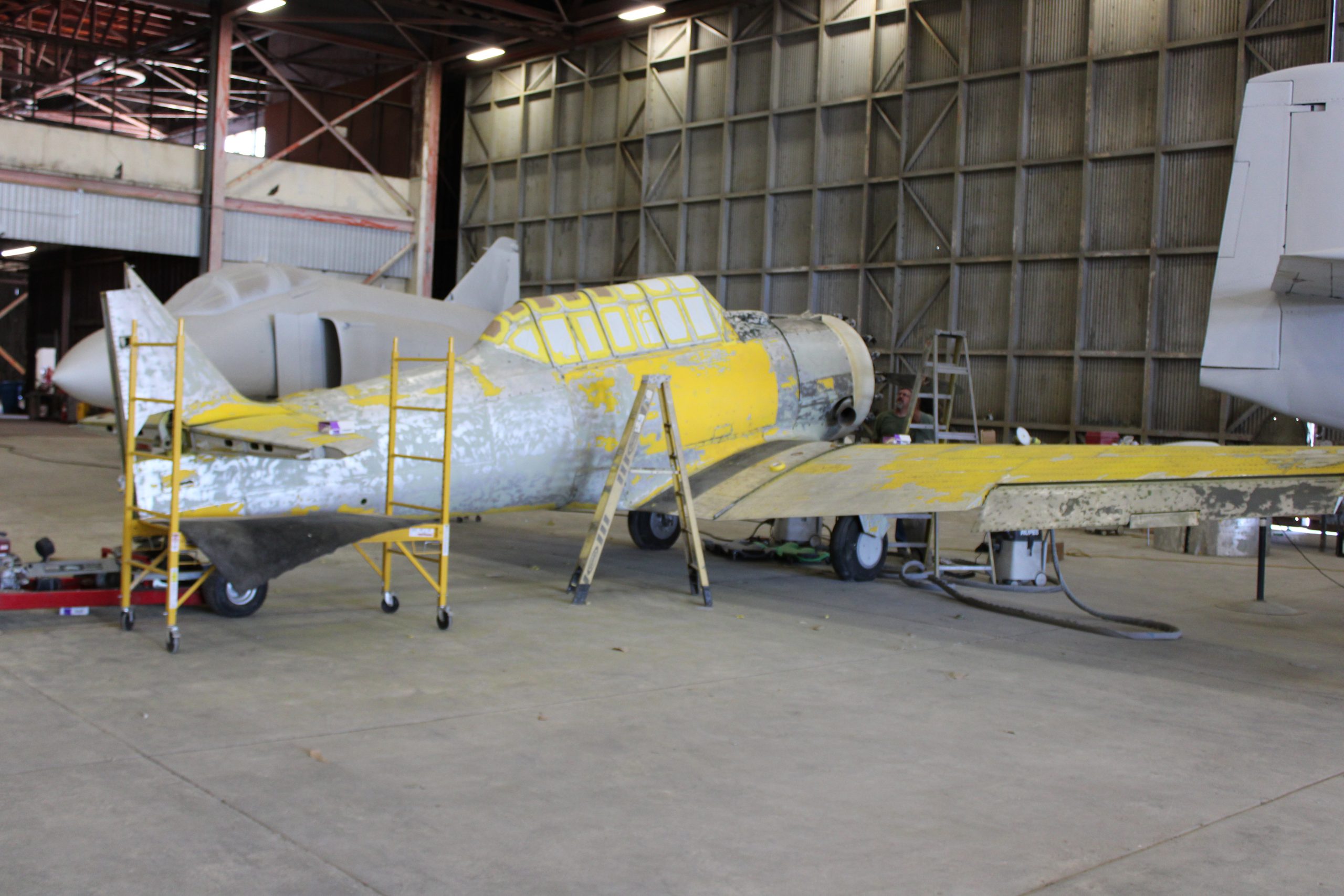
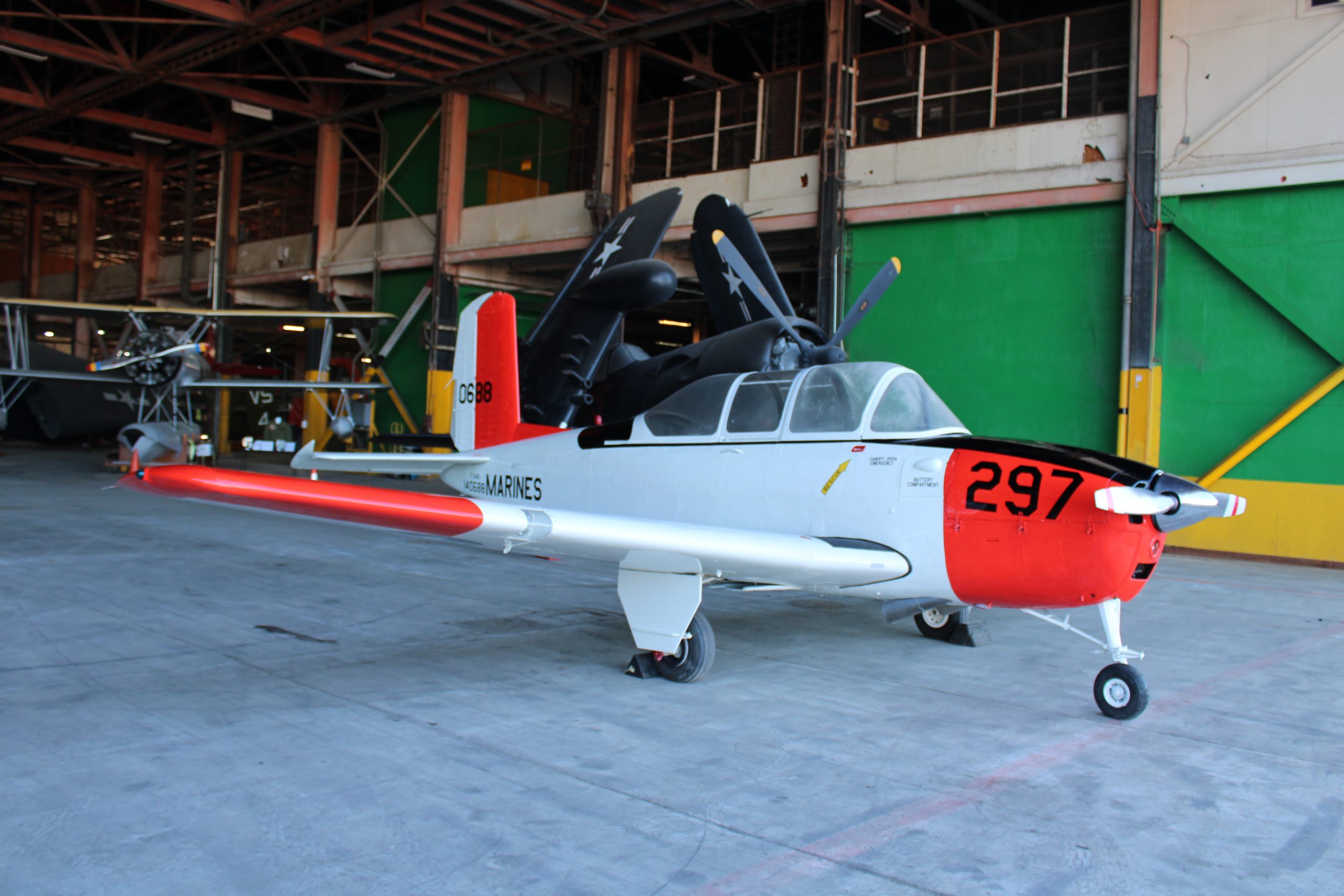
Inside the south wing of Hangar 297 is the museum’s restoration facility. Here, contractors from the Georgia-based firm Ponsford Ltd. have been refurbishing the museum’s collection of aircraft, many of which bear the deterioration of having sat for nearly 20 years outdoors at the museum’s prior location at MCAS Miramar. Among the current projects are the museum’s North American SNJ-5 Texan (BuNo. 90866), Grumman F9F-8P Cougar (BuNo 141722), Beechcraft T-34B Mentor (BuNo 140688 (one of the first three arrivals from Miramar in March 2024)), and McDonnell F2H Banshee (BuNo 124988). Several other aircraft have received intermittent work, such as the museum’s North American B-25J Mitchell (to be painted as a USMC PBJ-1J bomber) and McDonnell-Douglas F-4S Phantom II (BuNo 157246). Day in, day out, the contractors strip weather-beaten paint from the surfaces of the museum’s airplanes and helicopters and repaint them in the colors that they wore while in operational service. Fittingly, some of these aircraft once served at MCAS El Toro, and these will be repainted to reflect that aspect of their service lives.
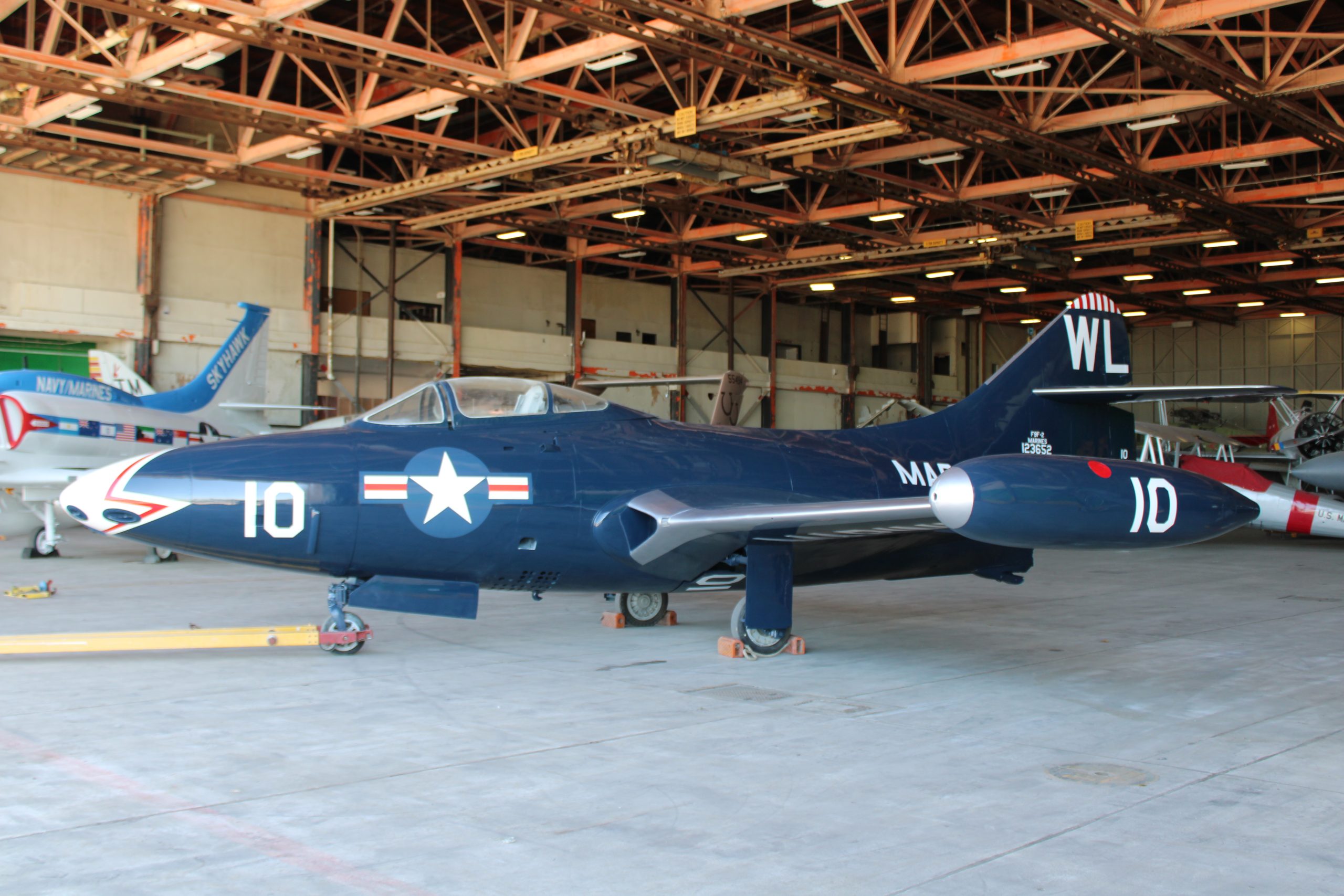
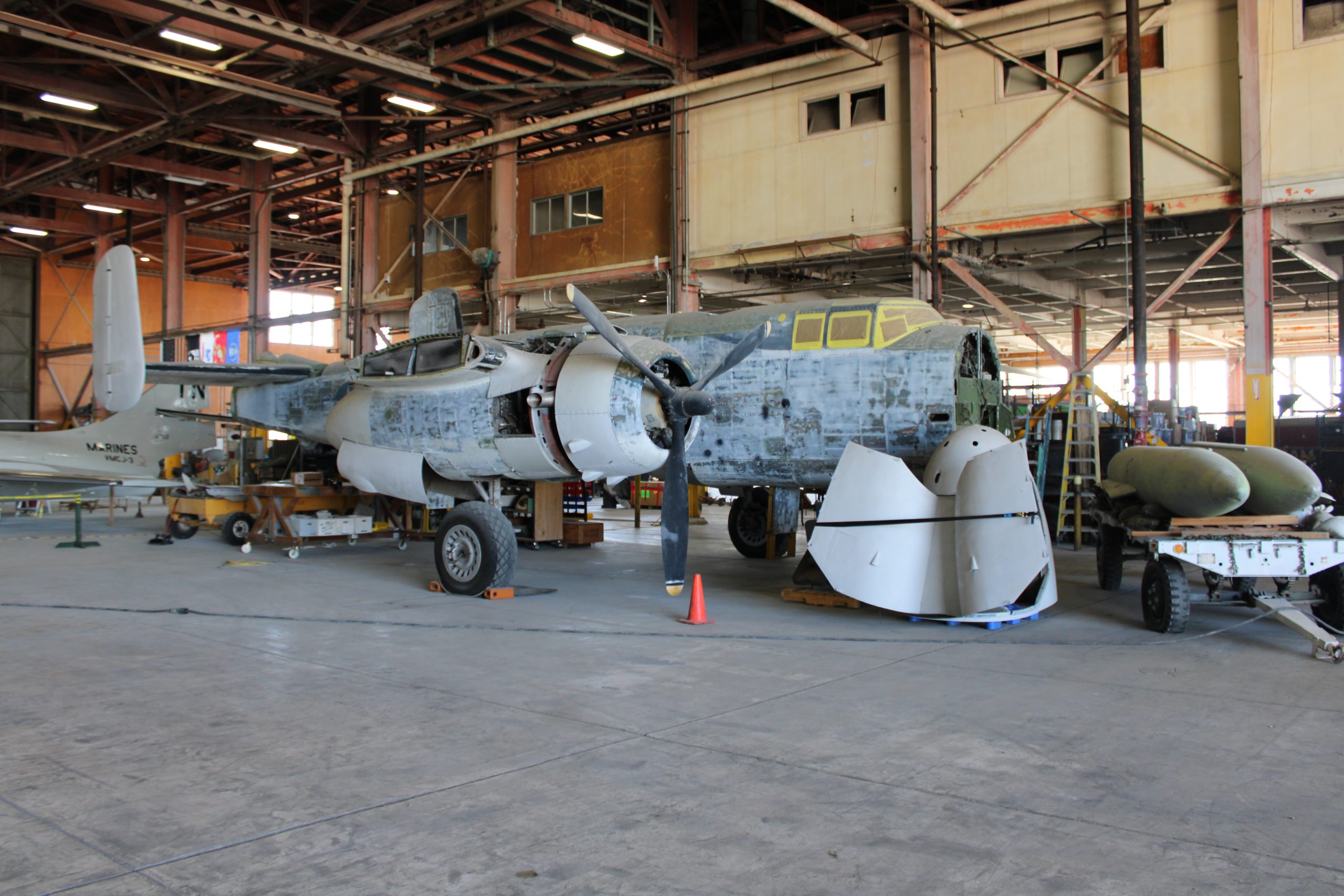
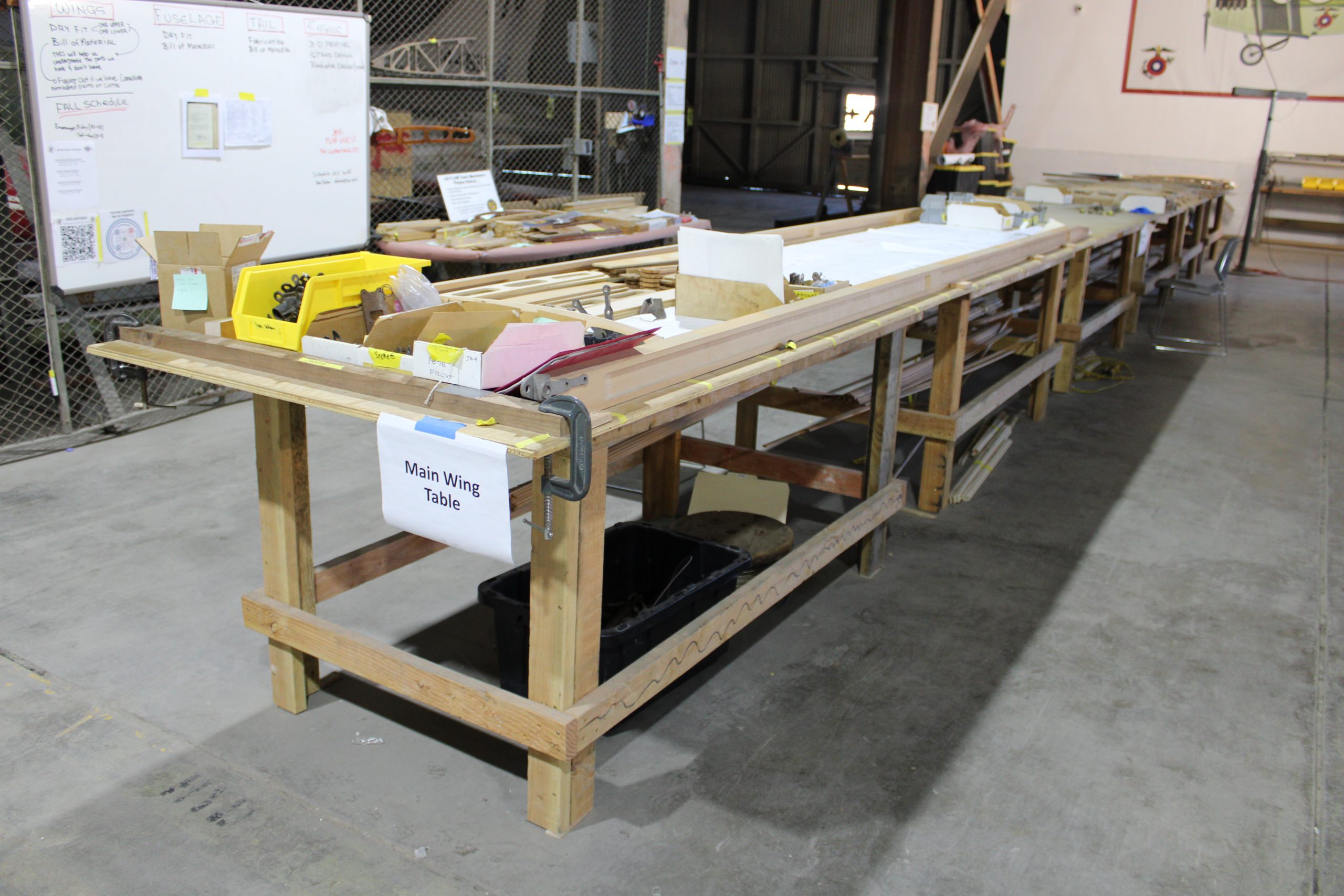
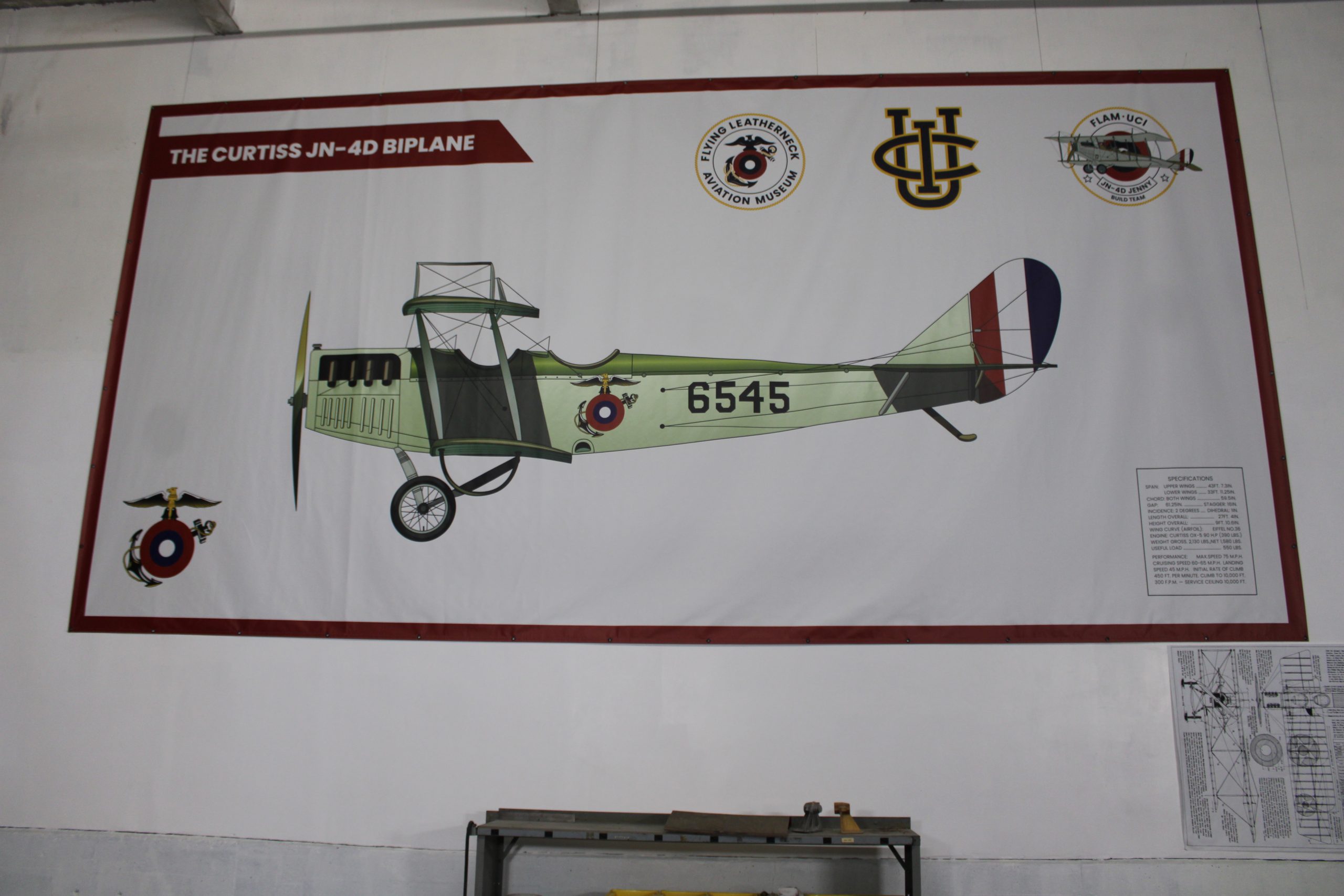
Besides the work from Ponsford’s contractors, the museum has also been at work rebuilding a Curtiss JN-4D “Jenny” WWI trainer. This is being done in partnership with the University of California, Irvine (UCI), where students from UCI’s Department of Mechanical and Aerospace Engineering (MAE) have volunteered to work on rebuilding the Jenny from original plans and using reference photos of several JN-4Ds preserved in airworthy or static display condition in museums across the U.S. The FLAM’s Jenny is intended to be displayed in a rotunda near the entrance of the new museum building. Restoring the Jenny will not only provide an educational opportunity for the engineering students at UC Irvine but placing the Curtiss JN-4D will also help the Flying Leathernecks tell the story of how the first Marine aviators to see combat were trained to fly and to fight in the air. Additionally, the FLAM still has engineering drawings to build a reproduction of a British-designed de Havilland DH-4 light bomber of the type in which Marine aviators flew into combat during WWI. However, the museum currently remains focused on having the students from UCI complete the Jenny.
Meanwhile, history students from California State University Fullerton (CSUF) have been at work cataloging the museum’s archival collections, which are currently stored in a section of Hangar 297 known as “The Vault”, which also serves as the museum’s current archives. When the new building will be constructed, these items will be moved into the museum’s new building set to be constructed. As mentioned in a prior article, CSUF’s Lawrence de Graaf Center for Oral and Public History (COPH) recorded hundreds of oral accounts of local Marine Corps veterans who had served at MCAS El Toro, and since providing FLAM with the transcripts of these oral histories, they will be held in the museum’s archives before being used for planned exhibits on the history of MCAS El Toro. Currently, there is no set date for when the Flying Leatherneck Aviation Museum’s new building will begin construction. Still, with the museum currently set to open by the spring of 2027, it is likely that construction will proceed through 2026 as more aircraft are restored by Ponsford Limited, more artifacts and books in the museum’s library and archives are catalogued. More work continues on cleaning the site that will in the coming years be home to the Orange County Great Park’s Cultural Terrace. The Flying Leatherneck Aviation Museum will eventually be joined by other museums and cultural centers, which will include the Pretend City Children’s Museum, a child-size city with interactive exhibits designed to familiarize local children with the day-to-day functions of a community, the proposed Asian American History Museum, the performing arts school Orange County Music & Dance, and the already-operating Wild Rivers waterpark.
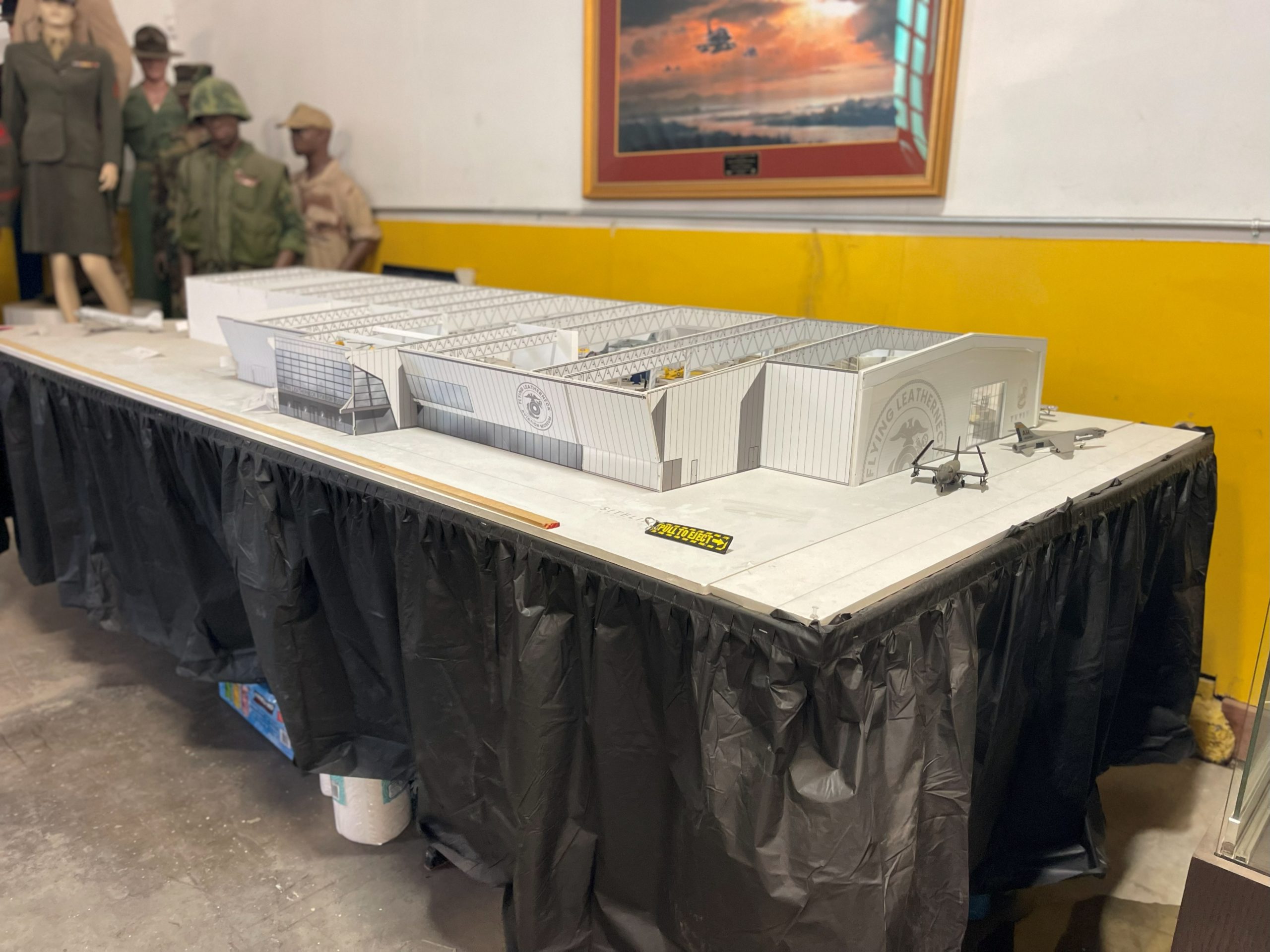
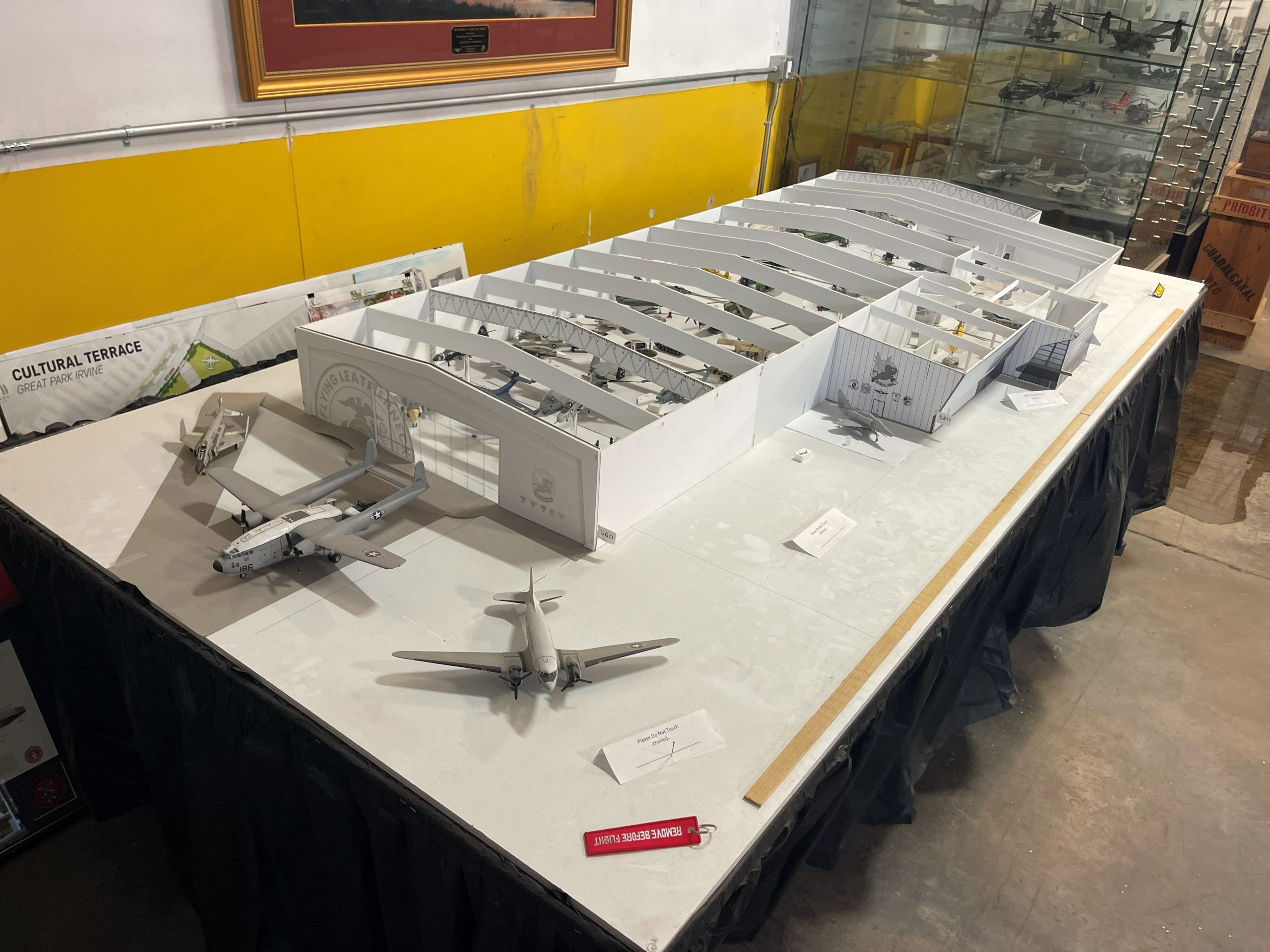
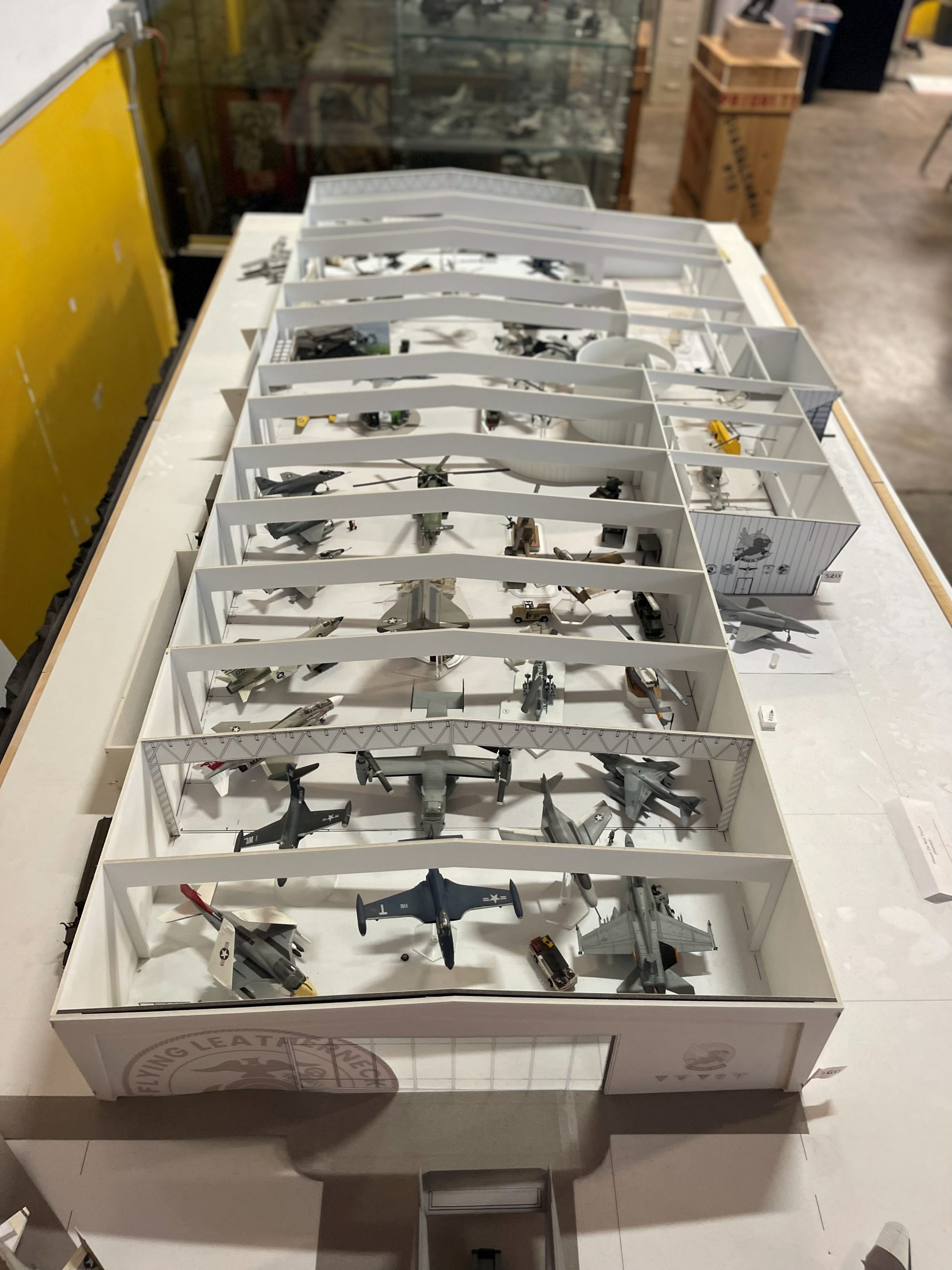
The story of the Flying Leatherneck Aviation Museum’s revival is one that is still ongoing, but the museum’s board of directors hope to steer the institution’s course on a path to becoming a world-class aviation museum in southern California, where the history of United States Marine Corps aviation will be preserved and future generations will be inspired to pursue careers in aerospace, engineering, and science, and the museum will be at the center of culmination of the effort to transform Marine Corps Air Station El Toro, which served honorably for over 50 years in the defense of the United States, into one of the largest public parks in the entire country. But for the Flying Leatherneck Aviation Museum that started at El Toro in 1989, moved to Miramar in 1999, and moved back to the site of El Toro in 2024, it has come full circle to settle in its permanent home.
For more information about the Flying Leatherneck Aviation Museum, visit the museum’s website HERE