








By John Alexander
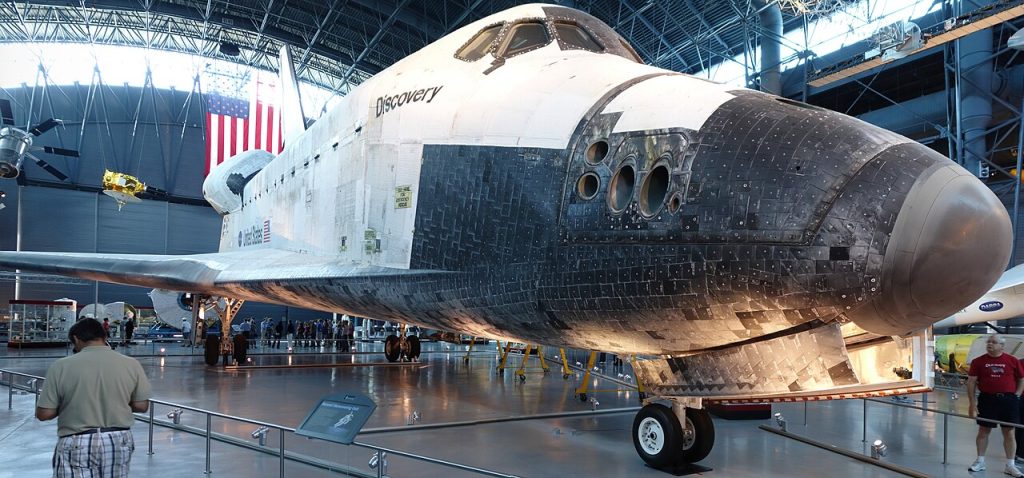
In a move that has sparked both political debate and public outcry, Congress recently approved $85 million in federal funding to potentially relocate the Space Shuttle Discovery from the Smithsonian’s National Air and Space Museum in Virginia to Houston, Texas. While supporters of the move frame it as a correction of geographic injustice—after all, Houston was the nerve center of the Shuttle program—critics argue that such a transfer undermines curatorial independence, compromises historical integrity, and places an irreplaceable artifact at unnecessary risk.
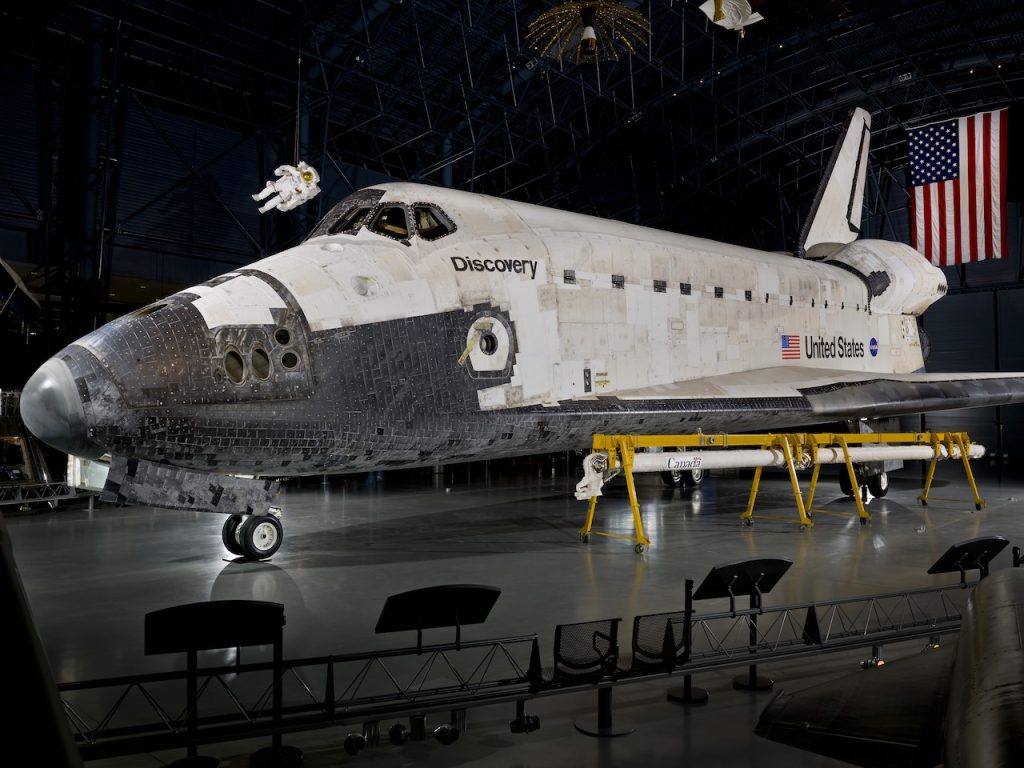
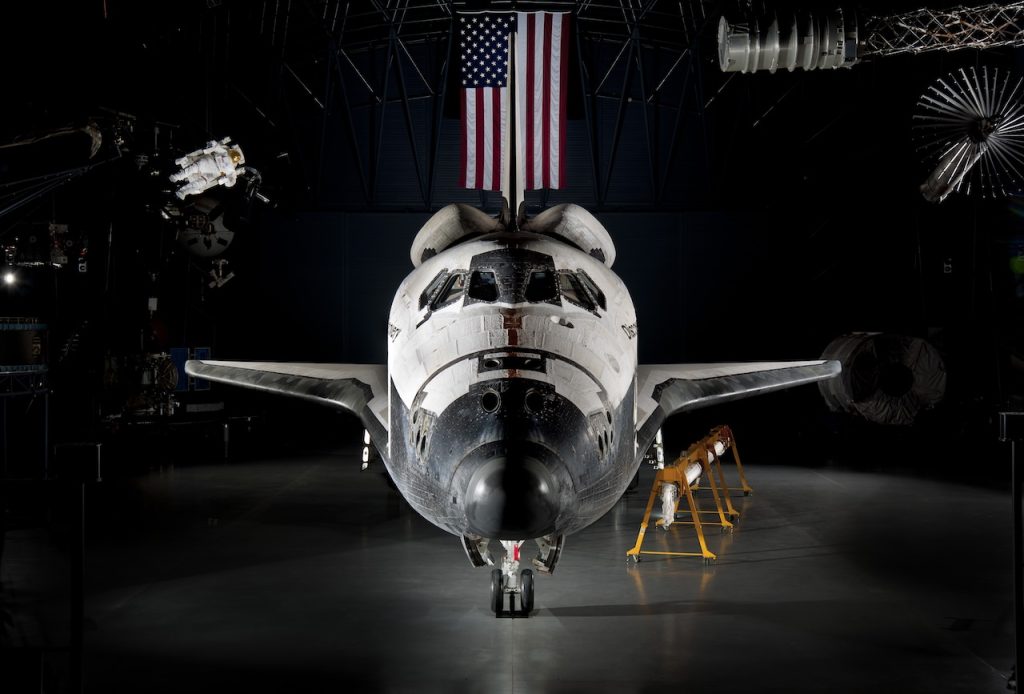
At the heart of the opposition is KeepTheShuttle.org, a grassroots initiative advocating for Discovery to remain at the Smithsonian’s Steven F. Udvar-Hazy Center in Chantilly, Virginia. The organization maintains that the shuttle is already in its rightful place—preserved and displayed with the same level of care, expertise, and contextual richness as the rest of the museum’s world-renowned aerospace collection. “The Smithsonian is not just another museum,” the group’s website states. “It is the national repository of our aerospace legacy.” Alongside Discovery in the Udvar-Hazy Center are other pillars of aviation history: the Enola Gay, the SR-71 Blackbird, and the Concorde, among many others. Together, they form a carefully curated narrative of innovation, exploration, and technological triumph. Removing Discovery would not only fracture that story but would also diminish its educational impact on the millions of visitors who pass through the center each year. KeepTheShuttle was founded by Joe Stief, who grew up near Washington, D.C. during the Space Shuttle era and frequently visited the National Air and Space Museum as a child. His lifelong passion for aerospace is shared by his wife, and in 2024, the couple celebrated their wedding at the Udvar-Hazy Center—fittingly, in front of the Space Shuttle Discovery. For Stief, both the museum and Discovery hold deep personal significance. He recognizes, however, that millions of others share a similar connection to the shuttle program, the museum, and the Smithsonian Institution. Through KeepTheShuttle, he hopes to unite supporters in defending and preserving these national treasures.
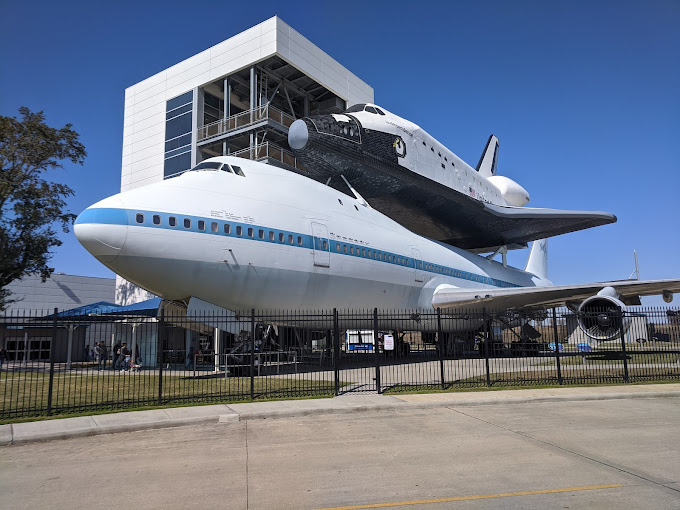
Houston, of course, has deep ties to NASA and to the Shuttle program. The Johnson Space Center was the operational heart of human spaceflight for decades, and many astronauts called Texas home. But Houston already has a full-scale Shuttle replica—Independence—permanently displayed atop the original Shuttle Carrier Aircraft (SCA) at Space Center Houston. While impressive in its own right, the Texas exhibit is not a flown orbiter.
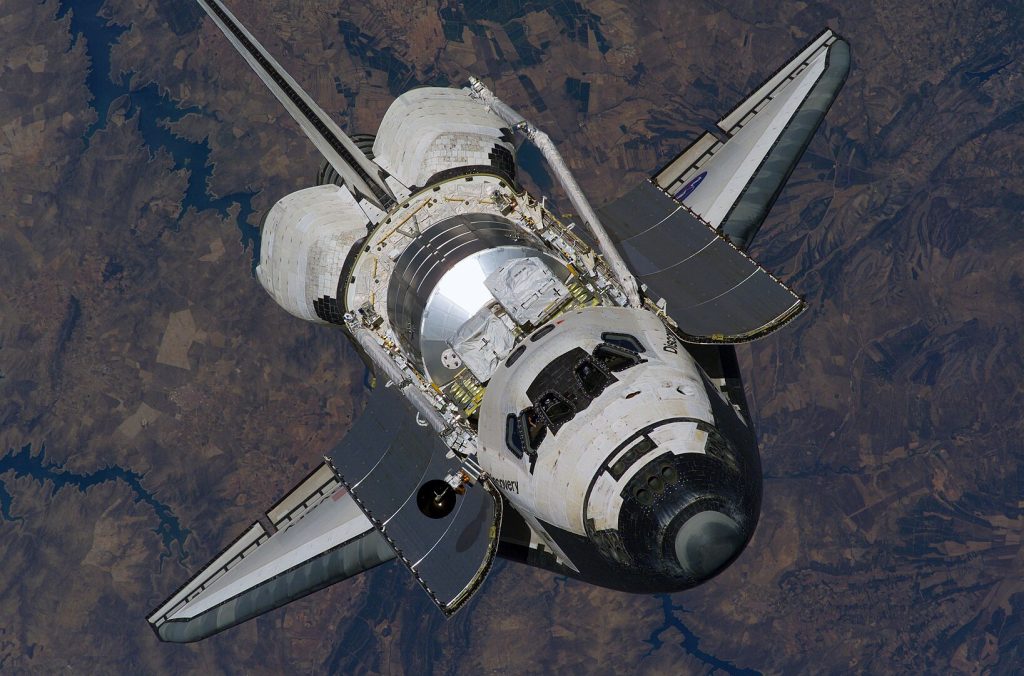
By contrast, Discovery flew 39 missions, spent a total of 365 days in space, and played a key role in some of NASA’s most ambitious undertakings. It deployed the Hubble Space Telescope, serviced the International Space Station, and carried the first female shuttle commander, Eileen Collins. It is, in short, a national artifact—one that, its defenders argue, should remain in the nation’s museum.
The proposed move is controversial not only in principle but also in process. The effort to transfer Discovery was not debated in public hearings, nor was it championed by any major aerospace heritage institution. Instead, it was quietly inserted into a much larger congressional budget bill by Texas Senators Ted Cruz and John Cornyn, following earlier failed legislative attempts to force the Smithsonian to relinquish the orbiter. Critics see this as a troubling precedent: elected officials overriding the judgments of museum professionals in service of regional politics.
And then there’s the matter of logistics. While $5 million of the proposed funding is earmarked for physically moving the shuttle, experts estimate the true cost of such an operation could easily exceed $300 million. That figure includes disassembly, transport, custom facility construction, artifact stabilization, and long-term maintenance—all of which are currently managed with Smithsonian-level precision at the Udvar-Hazy Center. Additionally, with NASA’s shuttle ferry aircraft now retired, transporting Discovery would likely involve hazardous and complex overland logistics. There is no viable water or rail route to safely move an artifact of such scale and fragility, and any attempt to do so could permanently damage it.
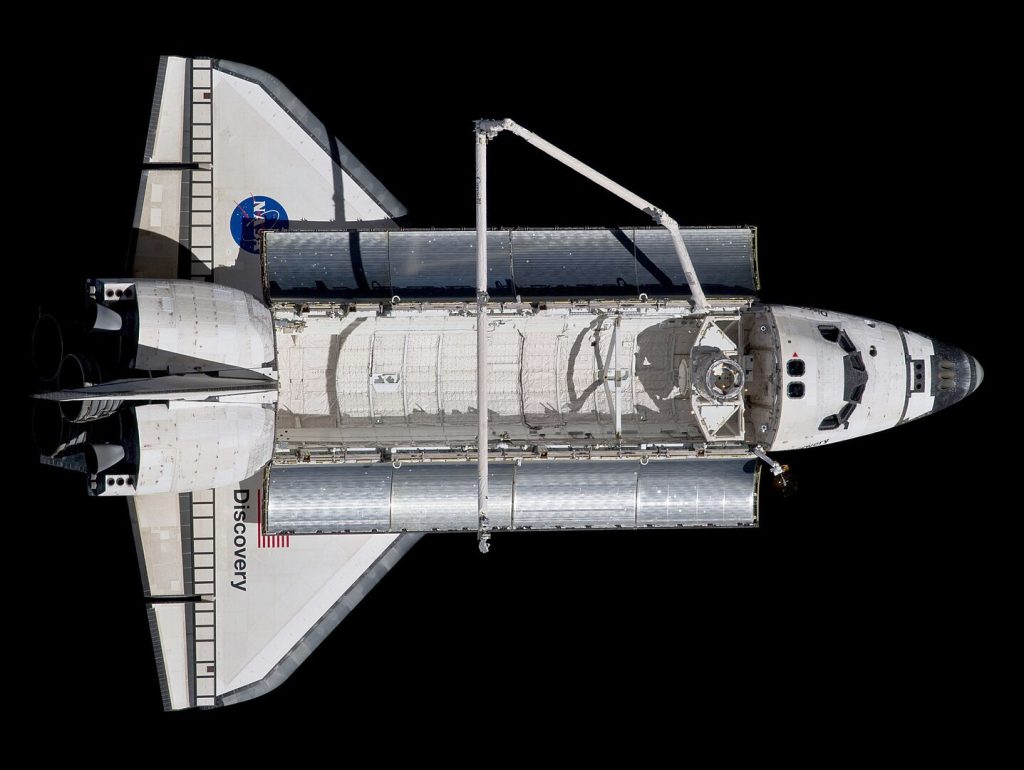
From a preservation standpoint, the risks are immense. From a financial standpoint, the costs are staggering. And from a curatorial standpoint, the move would represent a dramatic rupture in the coherent presentation of America’s space history. This isn’t the first time questions have been raised about the stewardship of the shuttles. After the end of the program in 2011, NASA awarded orbiters to institutions across the country. While many expected Houston to receive one, it ultimately went to New York, Florida, California—and the Smithsonian. That decision, based on a transparent scoring system of facilities, audience reach, and curatorial capability, was controversial in some quarters. But it was ultimately rooted in expertise, not politics.
Today, more than a decade later, that decision still stands—at least for now. Advocates for Discovery’s continued residence at the Smithsonian are urging the public to speak out before the funding becomes a mandate. “This shuttle doesn’t belong to one state or one city,” reads a recent post on KeepTheShuttle.org. “It belongs to all of us.” Whether the movement can preserve Discovery in place remains to be seen. But one thing is certain: the outcome of this battle will help define how America treats its most important artifacts—not just today, but for generations to come. To learn more or to join the effort, visit KeepTheShuttle.org















I from Texas, bred, born, raised and still here. Let’s leave it in the Smithsonian and spend the 85 million on upgrading our military!
Suddenly the British museum is getting all sweaty and nervous and biting its lip.
I am from Texas. The OV-103 Discovery belongs in the Smithsonian where it will be cared for properly and viewable free of charge in our nation’s most regarded museum. Not in some hole in Houston that charges upwards of $50.00 for 1 adult ticket. The admission prices are on their site https://spacecenter.org/visitor-information/
So, as I understand from the articles, Houston already has a replication
Shuttle (Independence) and while not actual flown model, never the less representation?
Also, to add to, this conversation of moving Shuttles, New York has
The original Shuttle Enterprise which would be easier to move by Boat/ barg from Aircraft Carrier in their harbor, to make things simpler and
Probably more economical?.
My, and many others people opinions, can be ignored but it makes
More sense to transfer the Enterprise to Houston if they’ll pay for it?
The money, saved needs to go back to the government and the people
To pay their Bills and paychecks, which there not getting NOW !!!
Just a honest evaluation to many questions people are asking
Where’s our money going? Not in someone’s pockets !!!!!!
Washington DC?
Dale Holley
7 days ago
For me it comes down, to ownership, the museum has the Shuttle and paperwork to backup?
If Houston, wants it let it citizens and Space center pay for it, raise the amount nesscary to buy, transportation and move it?
But don’t tear, the shuttle apart their are ways to transport it, once purchased sea ports have massive
Cranes to load onboard a ship, and as said very few aircraft availability to fly- by- air capacity?
Personally I, don’t think they deserve it , anymore than any other facilities, leave it where it, has home, and specifically, care for best?
Just a honest opinion !!!!
DSV-90-91 🪖👍
repl