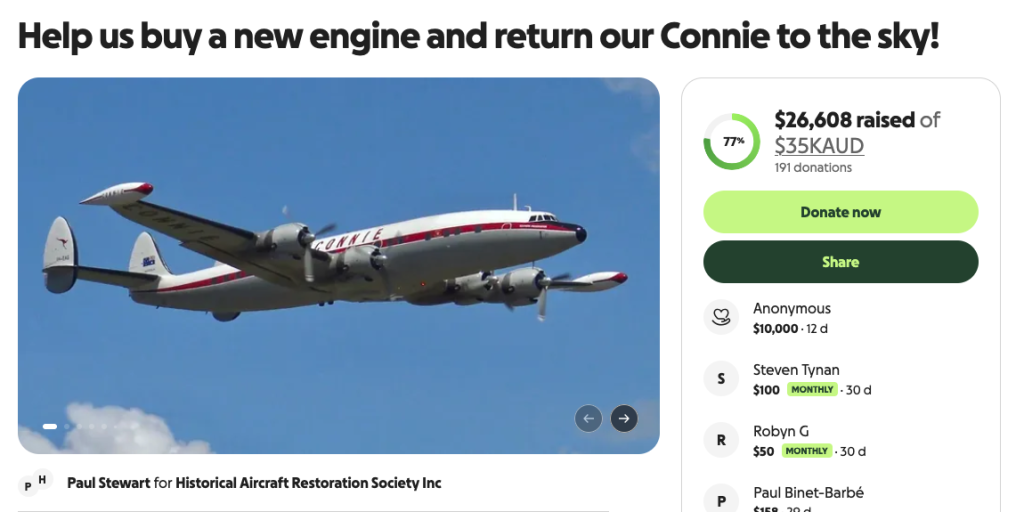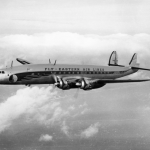
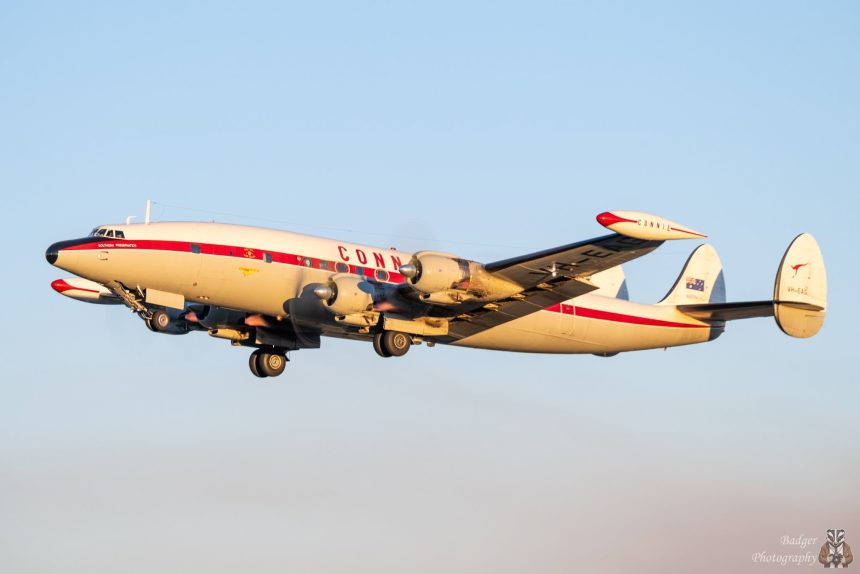

The Historical Aircraft Restoration Society (HARS) Aviation Museum has launched a fundraising campaign to return its Lockheed L-1049 Super Constellation, VH-EAG Southern Preservation, to the skies after an engine issue forced the aircraft out of service. Based at Shellharbour Airport in New South Wales, Australia, HARS operates what is currently the world’s only flying Lockheed Super Constellation. While several earlier Constellation variants remain airworthy, VH-EAG is the last operational example of the stretched L-1049 Super Constellation, making it one of the most significant surviving piston-engine airliners in the world. Museum officials say the aircraft now requires a replacement Wright R-3350 Duplex-Cyclone engine before it can resume flying displays and museum operations. “We need your help,” HARS said in announcing the campaign. “Your kind contribution will help fund a new engine and return her to the skies for all of us to enjoy.”
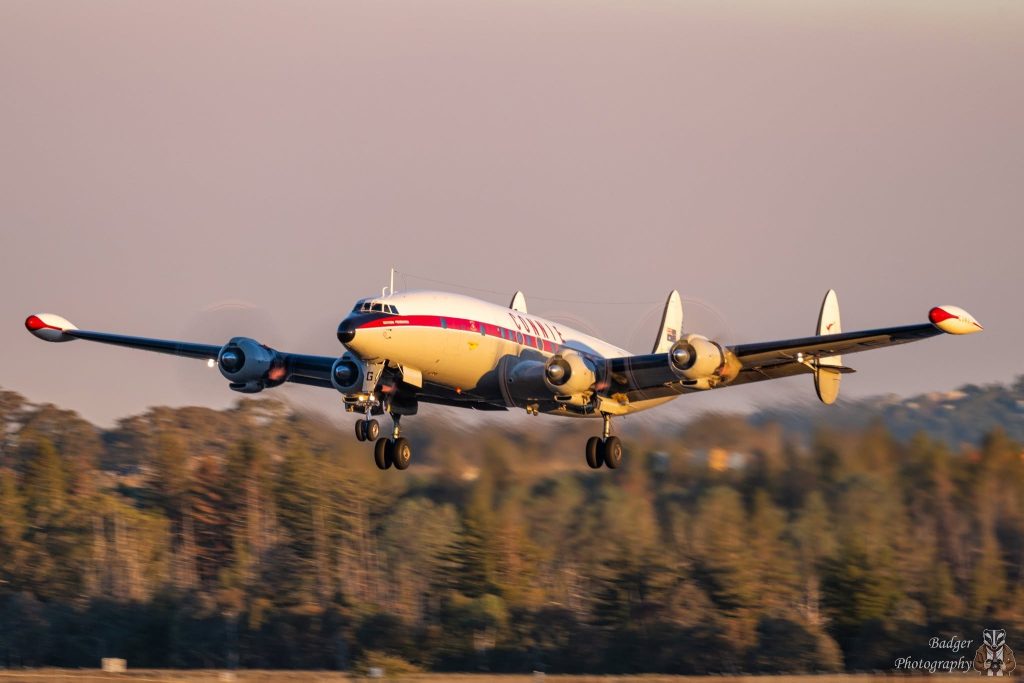
(Image credit: HARS/Badger Photography)
A Rare Engine Becomes Increasingly Difficult to Replace
Originally delivered to the U.S. Air Force as Lockheed C-121C serial number 54-0157 on October 6, 1955, the aircraft celebrates its 70th anniversary this year. As one of the last surviving military Super Constellations, sourcing serviceable components has become increasingly difficult and expensive. HARS is currently evaluating several options, including rebuilding an existing spare Wright R-3350 engine already in its inventory. However, if that engine proves unsuitable, the museum may need to purchase another fully serviceable powerplant at an estimated cost of approximately AU$300,000 (about US$220,000). As a volunteer-run organization, HARS is appealing to supporters worldwide to help fund the purchase. GoFundMe LINK.
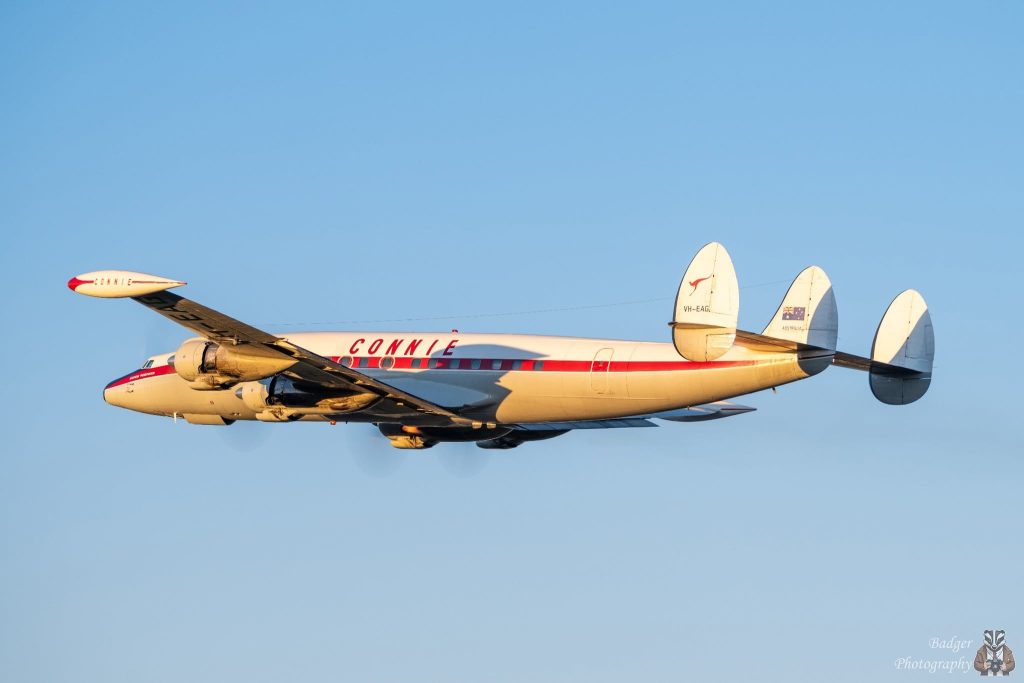
(Image credit: HARS/Badger Photography)
From Military Transport to Museum Icon
Before becoming Australia’s most famous piston airliner, VH-EAG spent more than two decades serving with the United States Air Force and Air National Guard. Following delivery in 1955, the aircraft entered service with the 1608th Military Air Transport Wing at Charleston Air Force Base, South Carolina. During its military career, it later served with the Mississippi, West Virginia, and Pennsylvania Air National Guard before being retired to Davis-Monthan Air Force Base in Arizona in 1977. Like many retired military aircraft, the Super Constellation appeared destined for the scrapyard. Storage maintenance ceased in 1981, and the aircraft gradually deteriorated as engines, instruments, and accessories were removed for spare parts. Years of exposure left the interior heavily contaminated by nesting birds, discouraging even scrap dealers from purchasing the aircraft. Everything changed in 1990 when members of the Historical Aircraft Restoration Society discovered the derelict transport while collecting parts for a Lockheed P-2 Neptune restoration project at Davis-Monthan. Recognizing the aircraft’s historical importance, the group began negotiations to rescue it.
Five Years of Volunteer Restoration
The restoration officially began in 1991 and would become one of the most ambitious aviation preservation projects ever undertaken in Australia. Working almost entirely with volunteer labor, HARS members traveled repeatedly between Australia and the Pima Air & Space Museum in Tucson, Arizona, where the restoration was carried out. Supported by numerous volunteers, aviation organizations, and Qantas Airways, the project required five years of painstaking work. The Super Constellation returned to the air in September 1994 after nearly 18 years on the ground. Following another year of preparation and crew training, the aircraft departed the United States for Australia. On February 3, 1996, VH-EAG arrived safely in Sydney after a 39.5-hour trans-Pacific ferry flight that included stops in Oakland, Honolulu, Pago Pago, and Nadi.
A Unique Flying Ambassador
Since arriving in Australia, Southern Preservation has become one of HARS Aviation Museum’s signature attractions, appearing at airshows across the country while introducing new generations to one of aviation’s most elegant propliners. Its significance has only grown over time. Until recently, the Breitling Super Constellation in Switzerland also remained airworthy. Remarkably, that aircraft and VH-EAG were built consecutively on the Lockheed production line, with VH-EAG carrying construction number 4176 and the Swiss aircraft following immediately as c/n 4177. Today, with the Breitling aircraft retired from flying, VH-EAG stands alone as the world’s only flying Lockheed Super Constellation. Meanwhile, Lufthansa continues restoring an even rarer Lockheed L-1649A Super Star in the United States, though that project has yet to return to flight. For HARS, replacing the aircraft’s engine represents more than simply returning another museum exhibit to flying condition. It will ensure that one of the most iconic piston-powered airliners ever built continues to fly as a living ambassador for aviation history. Donations to the engine campaign will help preserve that legacy and return the last flying Super Constellation to the airshow circuit. For more information about the Historical Aircraft Restoration Society (HARS) Aviation Museum, visit www.hars.org.au.