







From an original article published on the Australian War Memorial’s Blog.
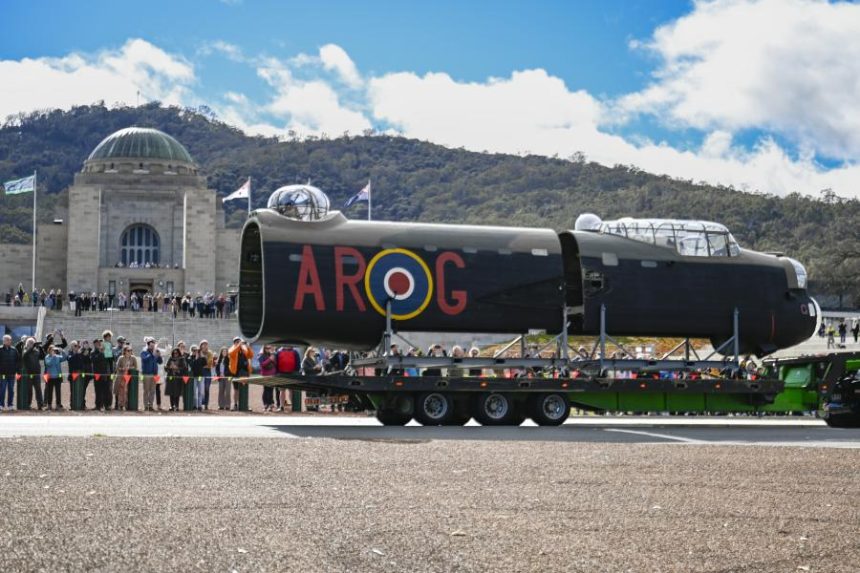
Earlier this year, the iconic Avro Lancaster G for George was carefully disassembled at the Treloar Technology Centre, the Australian War Memorial’s conservation facility, ahead of its relocation to the newly expanded Anzac Hall. In late July, the beloved aircraft completed its journey home. A crowd gathered on the Memorial’s Parade Ground to witness the final stage of George’s return, marking a major milestone in the development of the new Anzac Hall and the forthcoming Australians in Bomber Command exhibition.
“We have brought a national icon back home, and next year people will get to see G for George as you have never seen her before in the new Anzac Hall,” said Matt Anderson, Director of the Australian War Memorial.
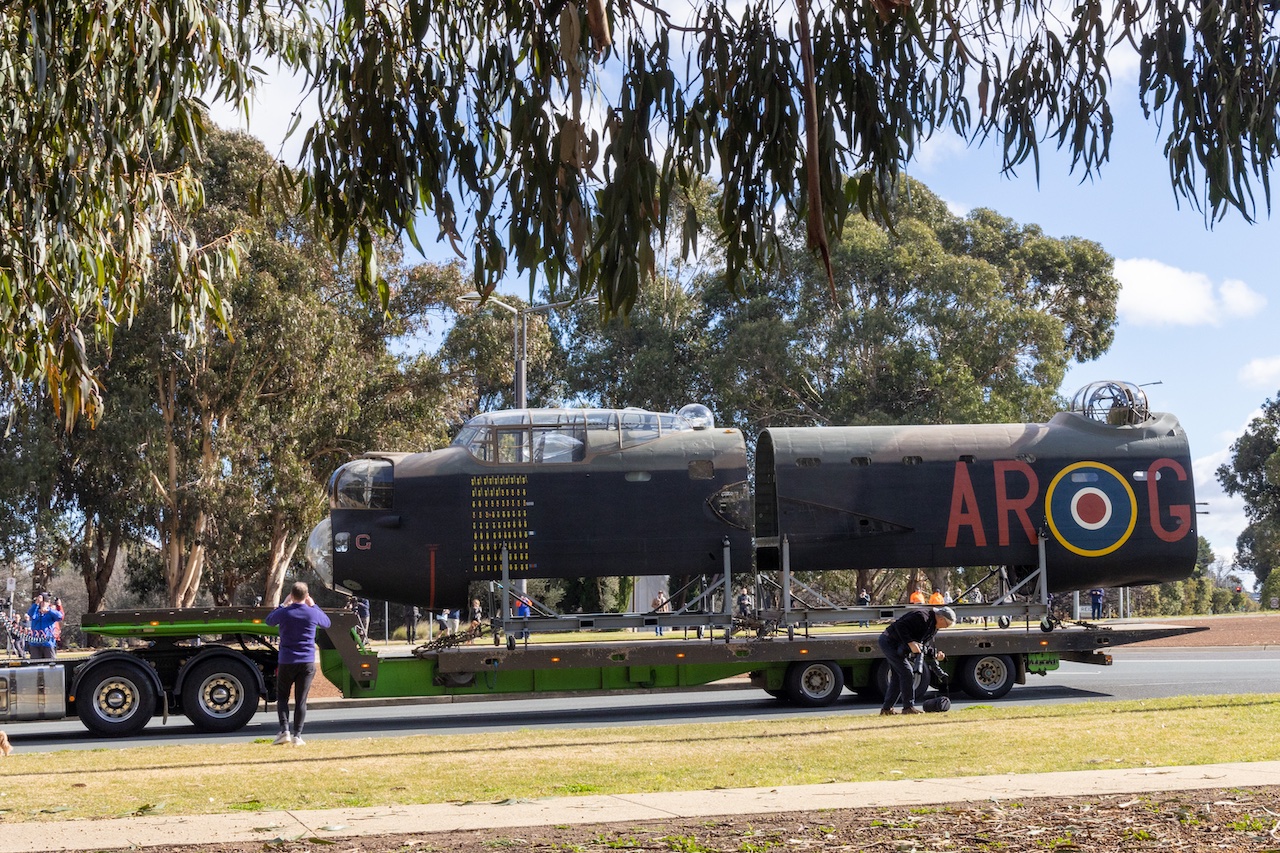
Built in mid-1942 by Metropolitan Vickers Ltd. in Manchester, the Lancaster flew its first mission on December 6 of that year. Between 1942 and 1944, George completed 89 operations over Germany and occupied Europe with No. 460 Squadron RAAF—remarkably, without the loss of a single crew member. Its final mission was against Cologne on April 20, 1944; the aircraft was retired the very next day.
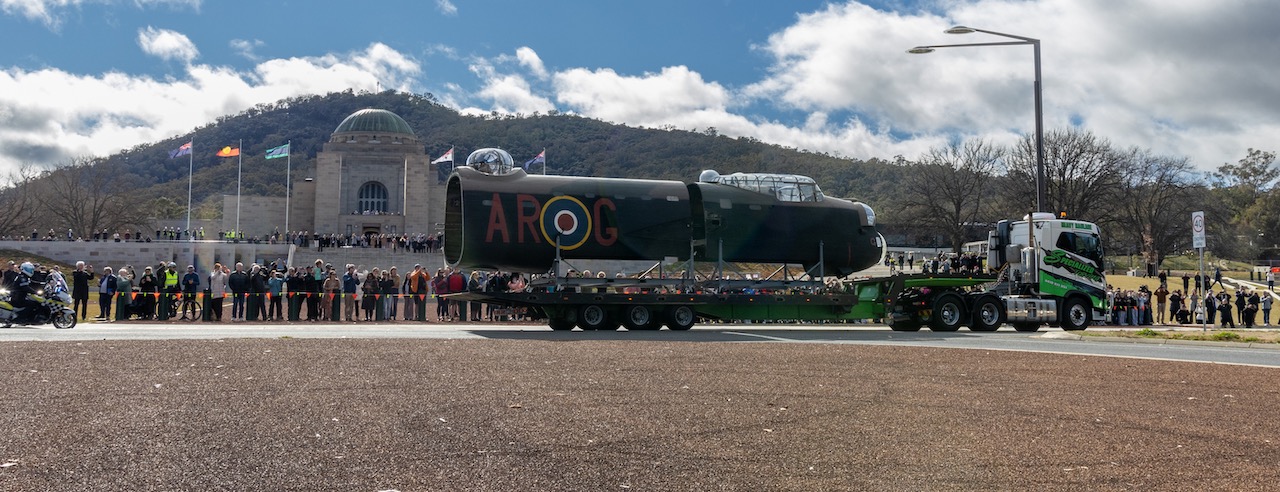
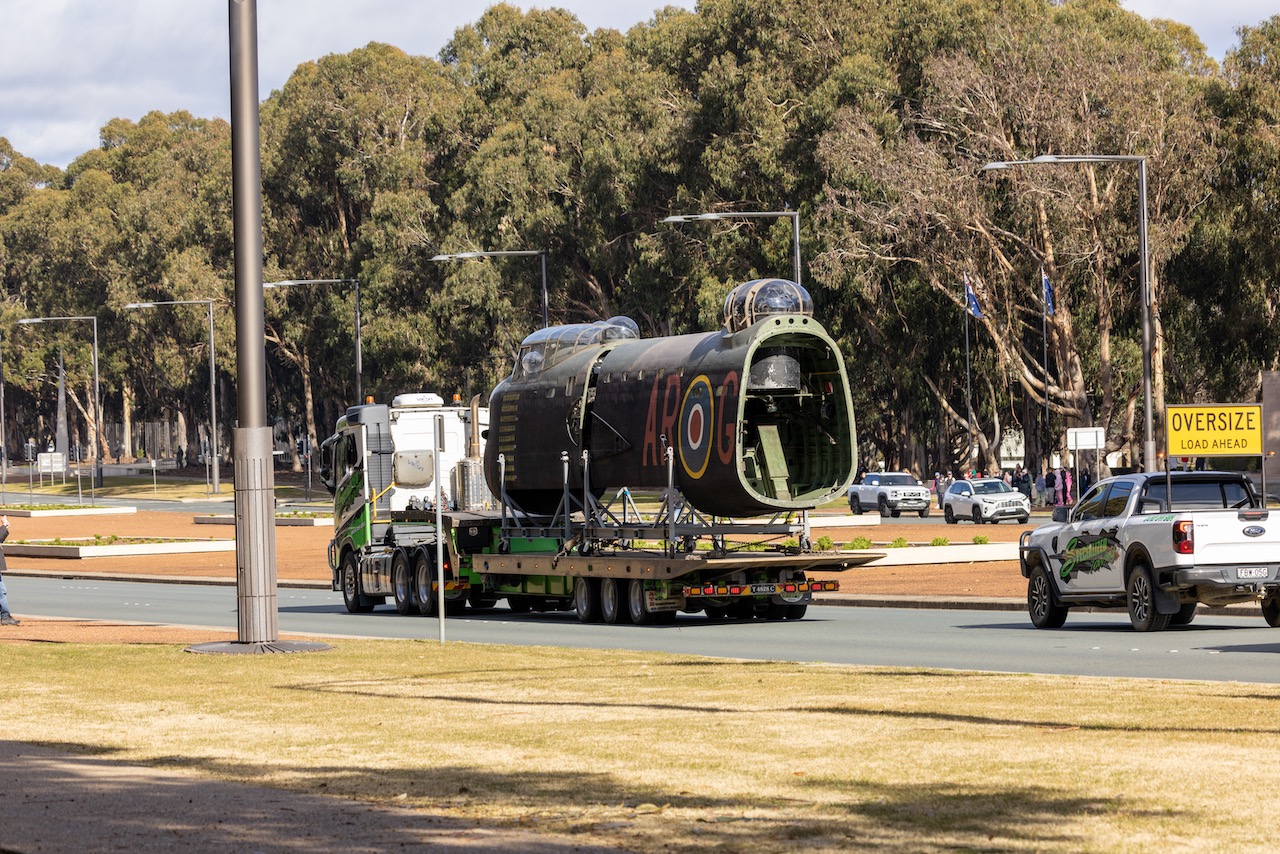
Mr. Anderson emphasized George’s enduring significance: “G for George is loved by generations of Australians. It will stand as a centrepiece in our new galleries, helping to tell the stories of the 10,000 Australians who served in Bomber Command, the 4,100 who made the ultimate sacrifice, and their loved ones back home.” The new Bomber Command gallery will showcase hundreds of veteran stories through personal artifacts, artworks, and rarely displayed collection items. The permanent exhibition is set to open in 2026 within the new Anzac Hall, offering a deeper exploration of Australia’s role in the air war over Europe.

Australian War Memorial senior historian Dr. Lachlan Grant underscored the Lancaster’s symbolic power: “The Lancaster was one of the most iconic aircraft of the Second World War. It became a symbol of the Allies’ determination to win by striking at the heart of Germany—but at a terrible cost. More than 55,000 British and Commonwealth aircrew were killed in Bomber Command, over 40 percent of those who served. For Australians, one third never came home. Many were listed as missing, and families often waited years to learn the fate of their sons—if they ever found out at all.”

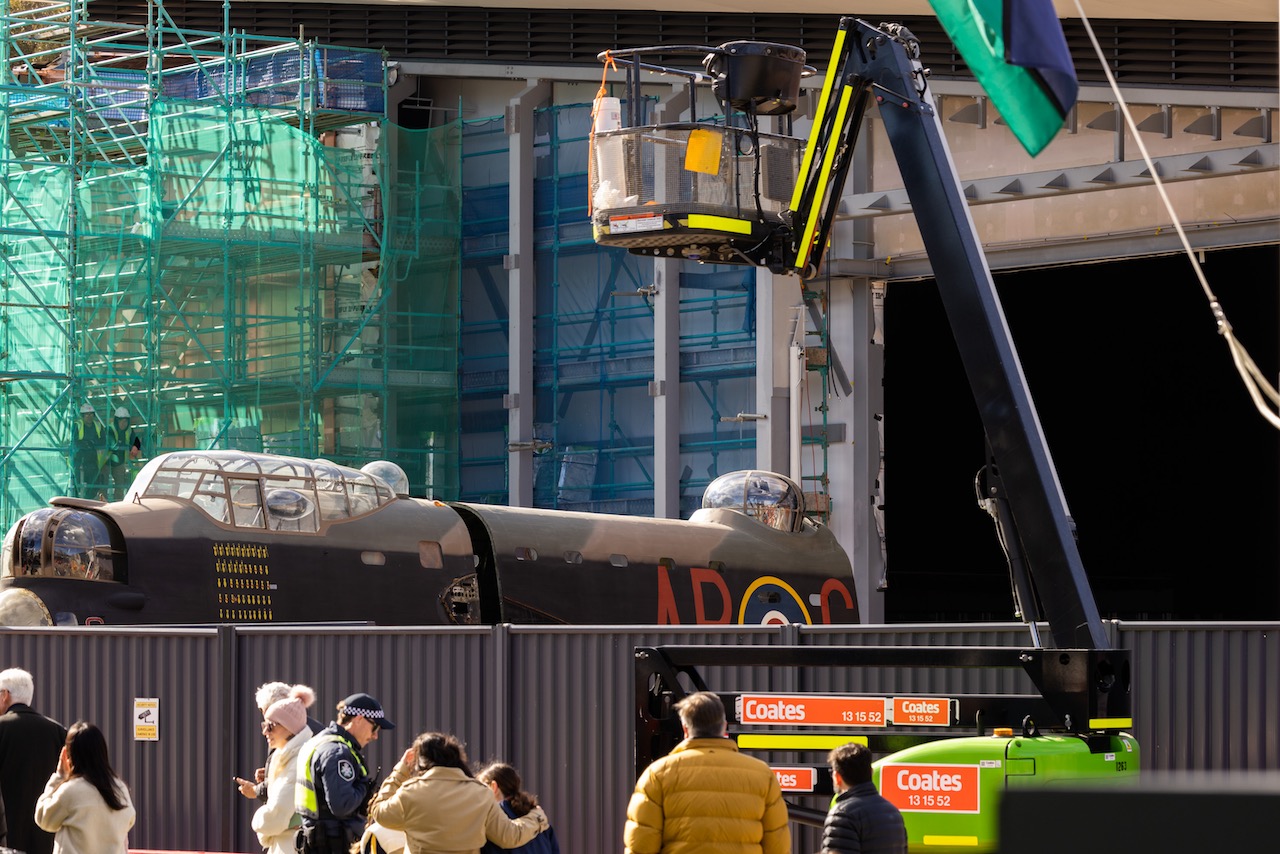
By war’s end, more than 7,000 Lancasters had been built, though over half were lost in battle or accidents. G for George, however, survived and was transferred to the Australian War Memorial in 1945. For decades, it has been preserved in the collection, with recent conservation efforts—supported by the Royal Australian Air Force—ensuring it is ready to return to public display in a new and powerful way. For more information about the Australian War Memorial, visit www.awm.gov.au.






Thank you! A great piece of Aussie history.How did one aircraft survive 89 missions?? Miraculous. Personal connect;my dad served in RAAF 43-46. Interesting retired date;last mission April 20. Hitler’s birthday! (mine too,47.)