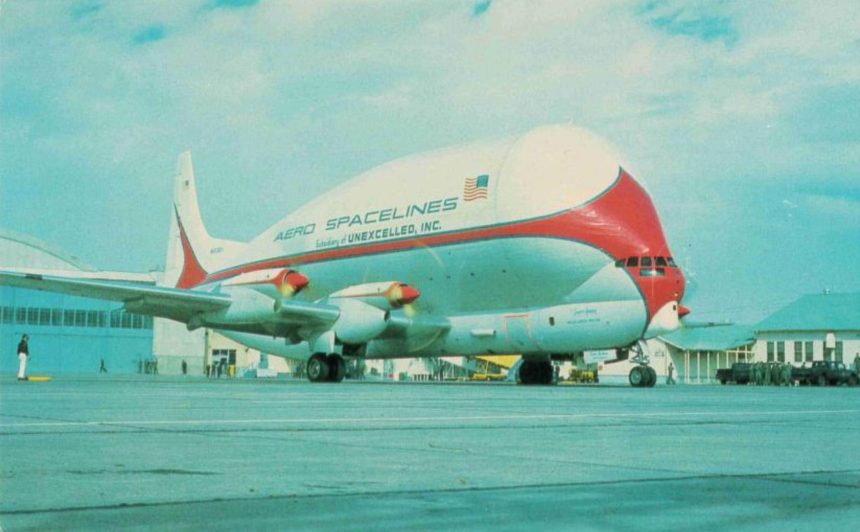


(Image credit: VAN)
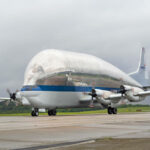
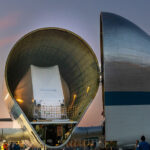
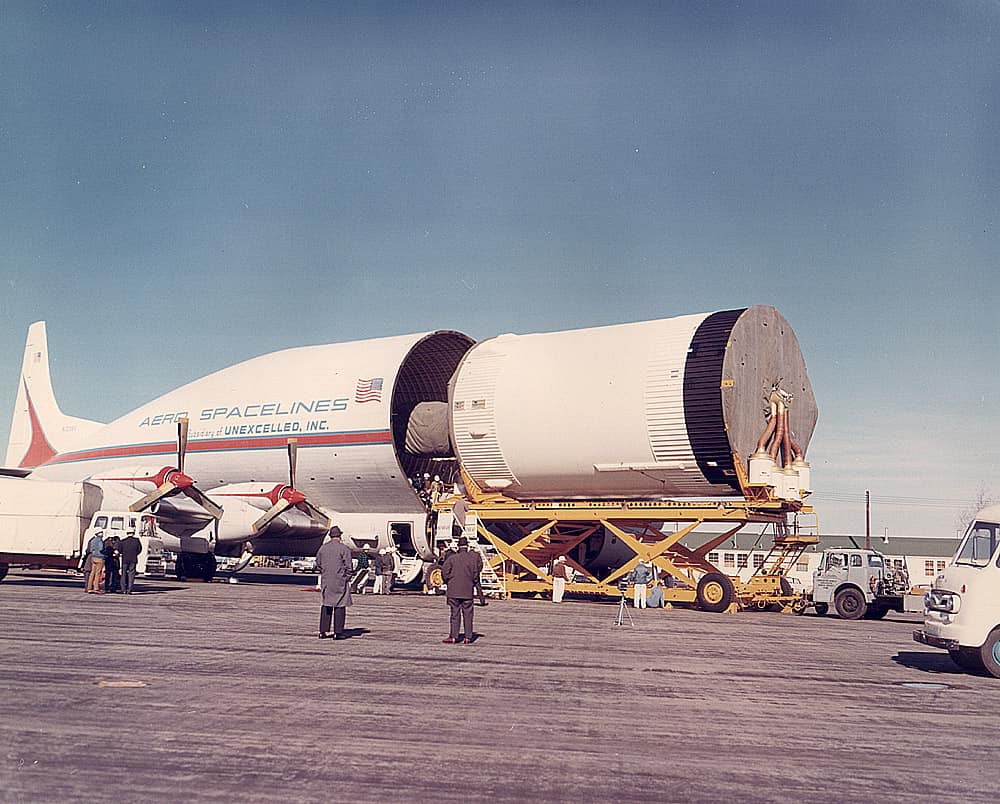
On September 19, 1962—63 years ago today—the Aero Spacelines Pregnant Guppy took to the skies for the very first time. Built from the fuselage of a Boeing 377 Stratocruiser, the Guppy was a one-of-a-kind, wide-bodied transport aircraft created to haul oversized and unusually shaped cargo. Its primary mission was to transport components for NASA’s Apollo space program, a critical step in America’s effort to win the Space Race.
In the early days of NASA, rocket stages and other large components had to be shipped from their manufacturing facilities on the West Coast to Cape Canaveral by barge or rail. This process was slow, costly, and fraught with logistical challenges. Meanwhile, airlines were retiring their piston-powered Boeing 377 Stratocruisers in favor of new jetliners. Recognizing an opportunity, entrepreneur Leo Mansdorf began acquiring surplus Stratocruisers at low cost.
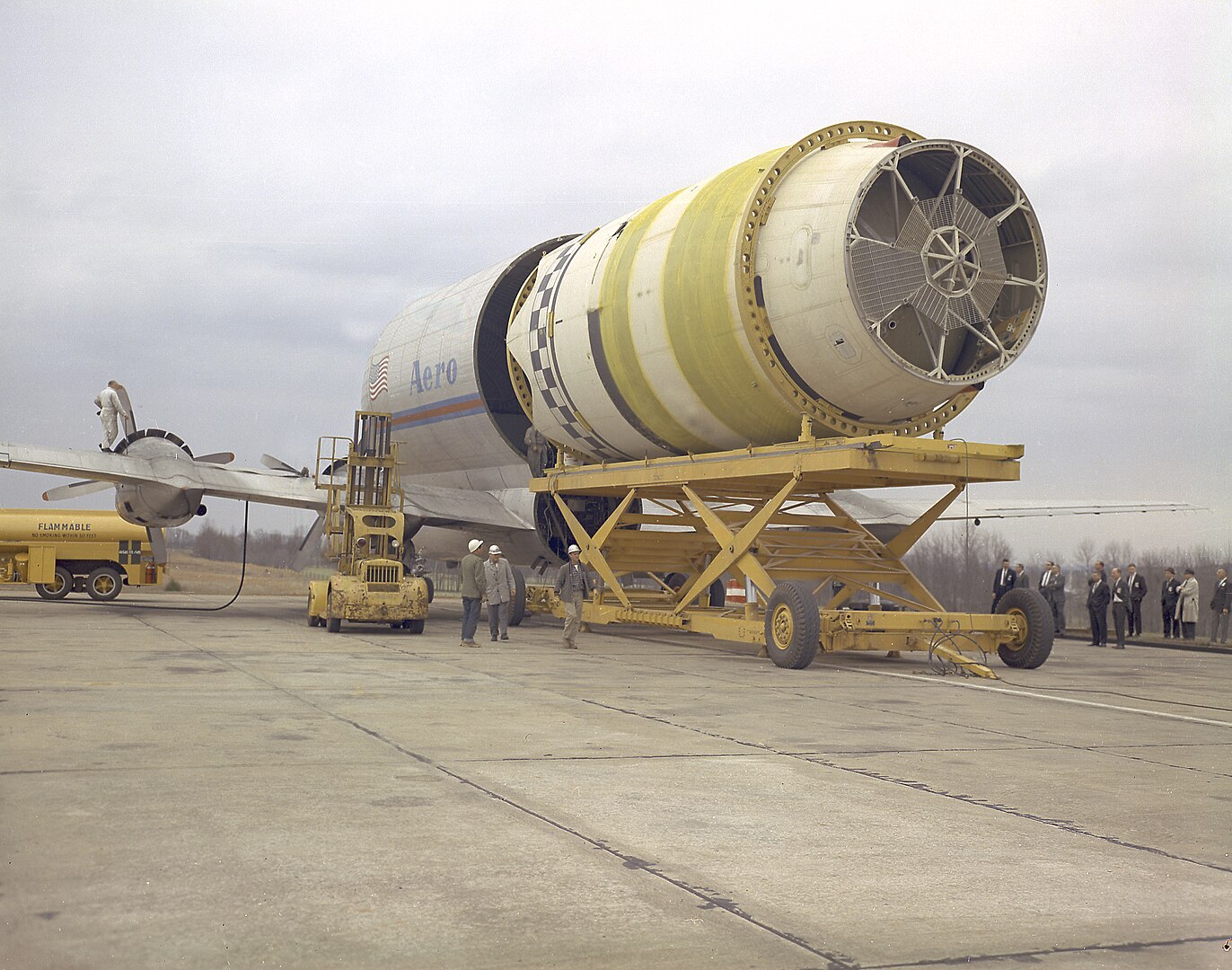
Former U.S. Air Force pilot John M. Conroy saw even greater potential. He believed the 377 could be modified to carry massive rocket sections by air—dramatically reducing transit time. Conroy founded Aero Spacelines and pitched his idea to NASA, which initially expressed only mild interest. It was reportedly NASA engineers who nicknamed the aircraft the “Pregnant Guppy” due to its bulbous fuselage.
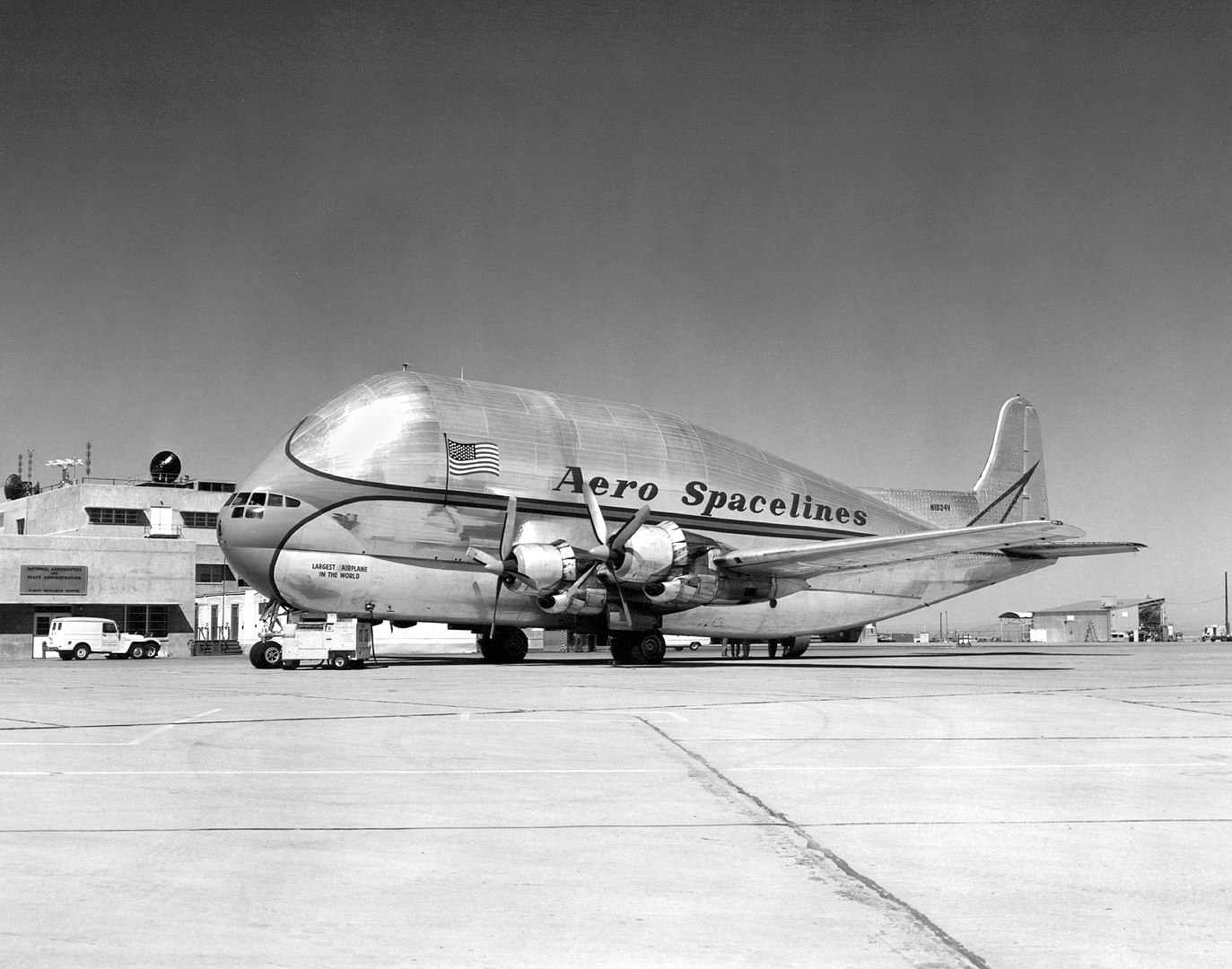
The first Guppy was created by On Mark Engineering, which extensively modified a former Pan American 377 Stratocruiser (registration N1024V). On September 19, 1962, John Conroy himself piloted the aircraft on its maiden flight, joined by legendary aviator Clay Lacy as co-pilot.
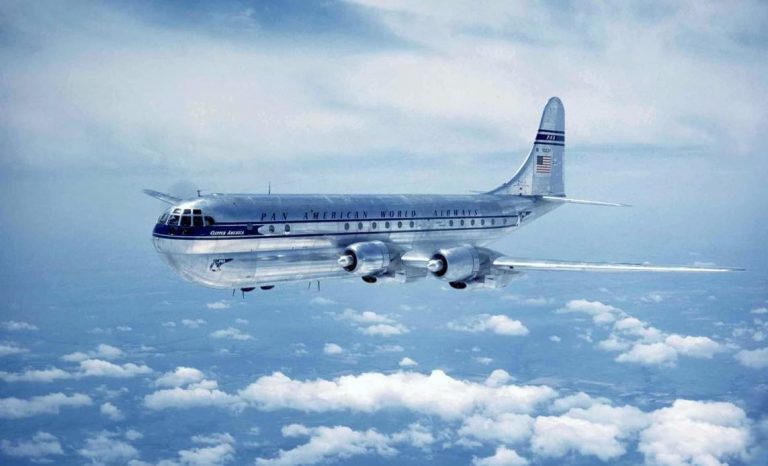
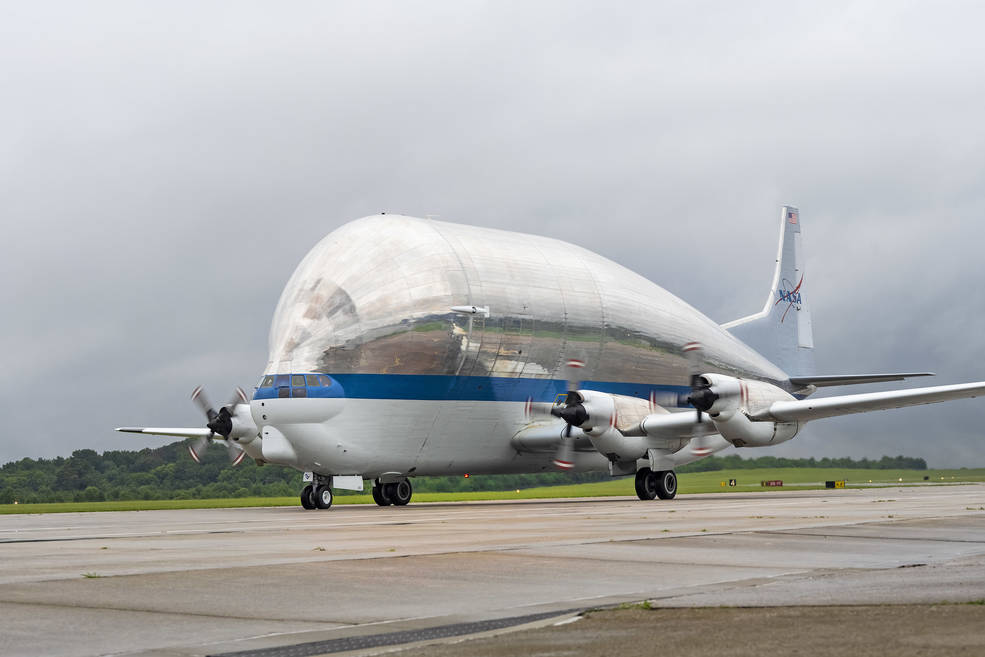
By the summer of 1963, the Pregnant Guppy was officially flying Apollo components, helping keep the ambitious program on schedule. It remained in service until 1974, when it was acquired by American Jet Industries and re-registered as N126AJ. Despite plans to continue using the aircraft, the original Pregnant Guppy was scrapped at Van Nuys Airport in 1979. Its legacy, however, lives on. Parts of the Guppy’s fuselage and empennage were incorporated into the turbine-powered Super Guppy (N941NA)—the last operational aircraft of its type, still flying today in support of NASA missions.
Credits: NASA/Charles Beason