






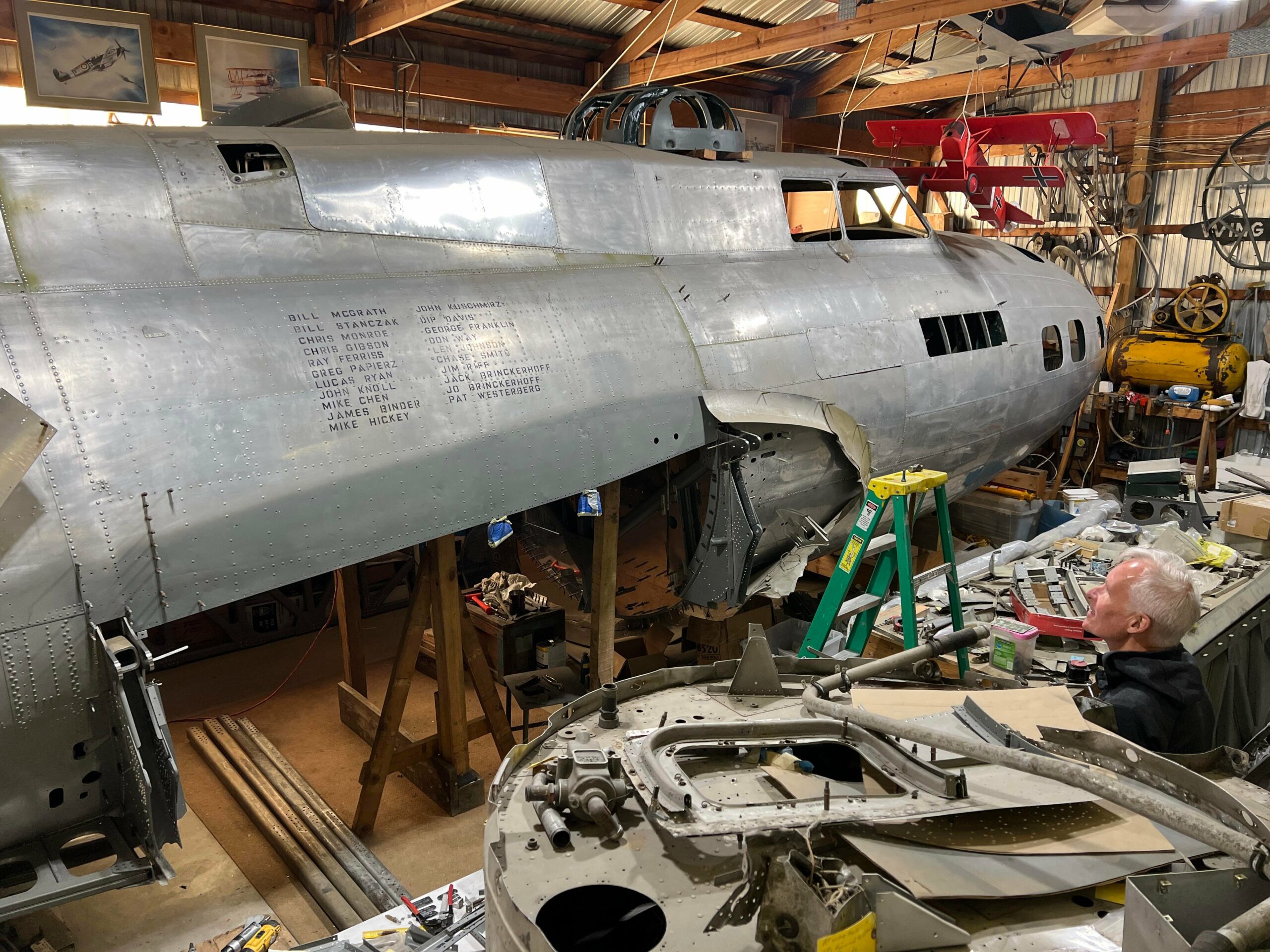

Following our last update in Spring 2025, work continues at a steady pace on Mike Kellner’s Boeing B-17E Desert Rat (s/n 41-2595) in Marengo, Illinois. While progress on such a complex restoration is never linear, the past year has brought several important structural milestones, along with new challenges that underscore the scale of the effort. We recently spoke again with longtime volunteer Bill Stanczak, who has been involved with the project since 2001, to learn more about the latest developments. Monetary donations can be placed HERE.
- Major Structural Decision: Splitting the Fuselage
- Tail Section Nearing Completion
- Wings and Structural Components
- Cockpit and Systems Progress
- Nose and Plexiglass Work
- Looking Ahead
- Desert Rat also has its own dedicated Facebook page HERE, which some of our readers may enjoy viewing too. If you wish to contribute to the restoration of this important aircraft, whether it be with parts, labor, or cash, please contact the Desert Rat team HERE. Monetary donations can be placed HERE.
- Related Articles
Major Structural Decision: Splitting the Fuselage
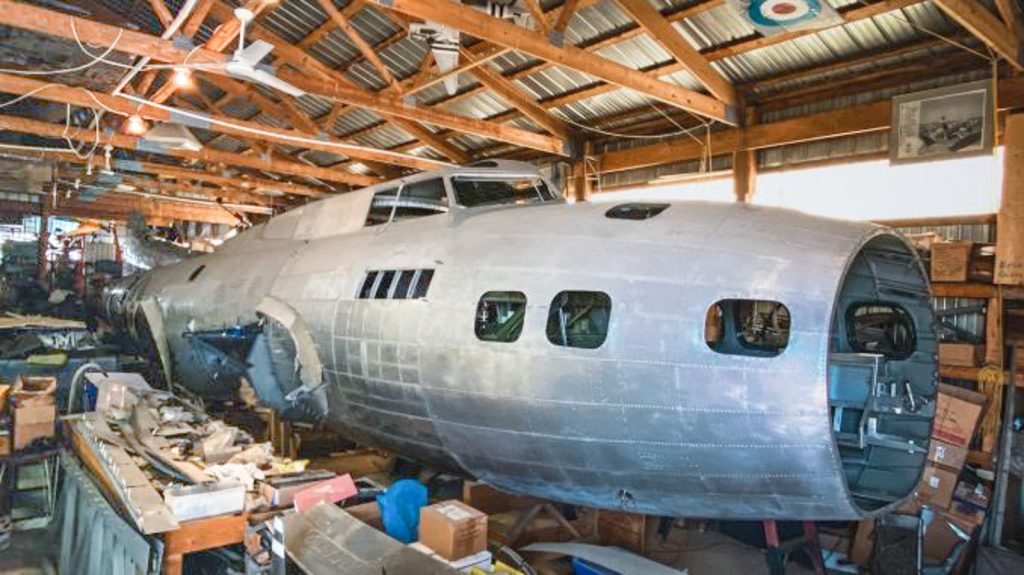
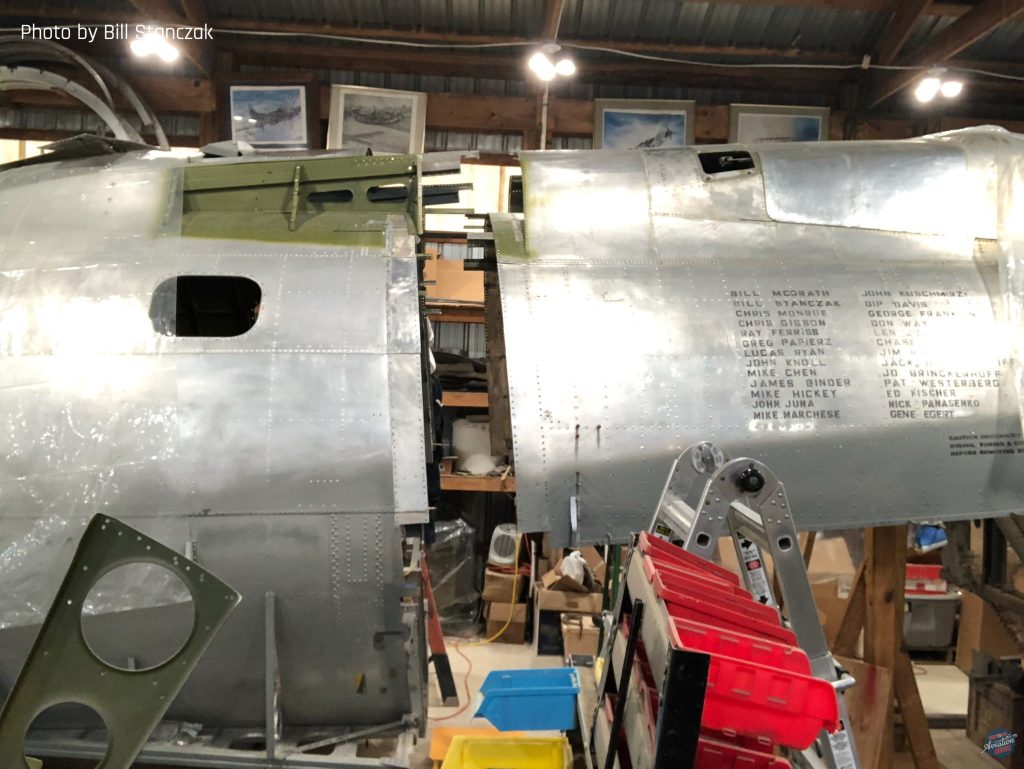
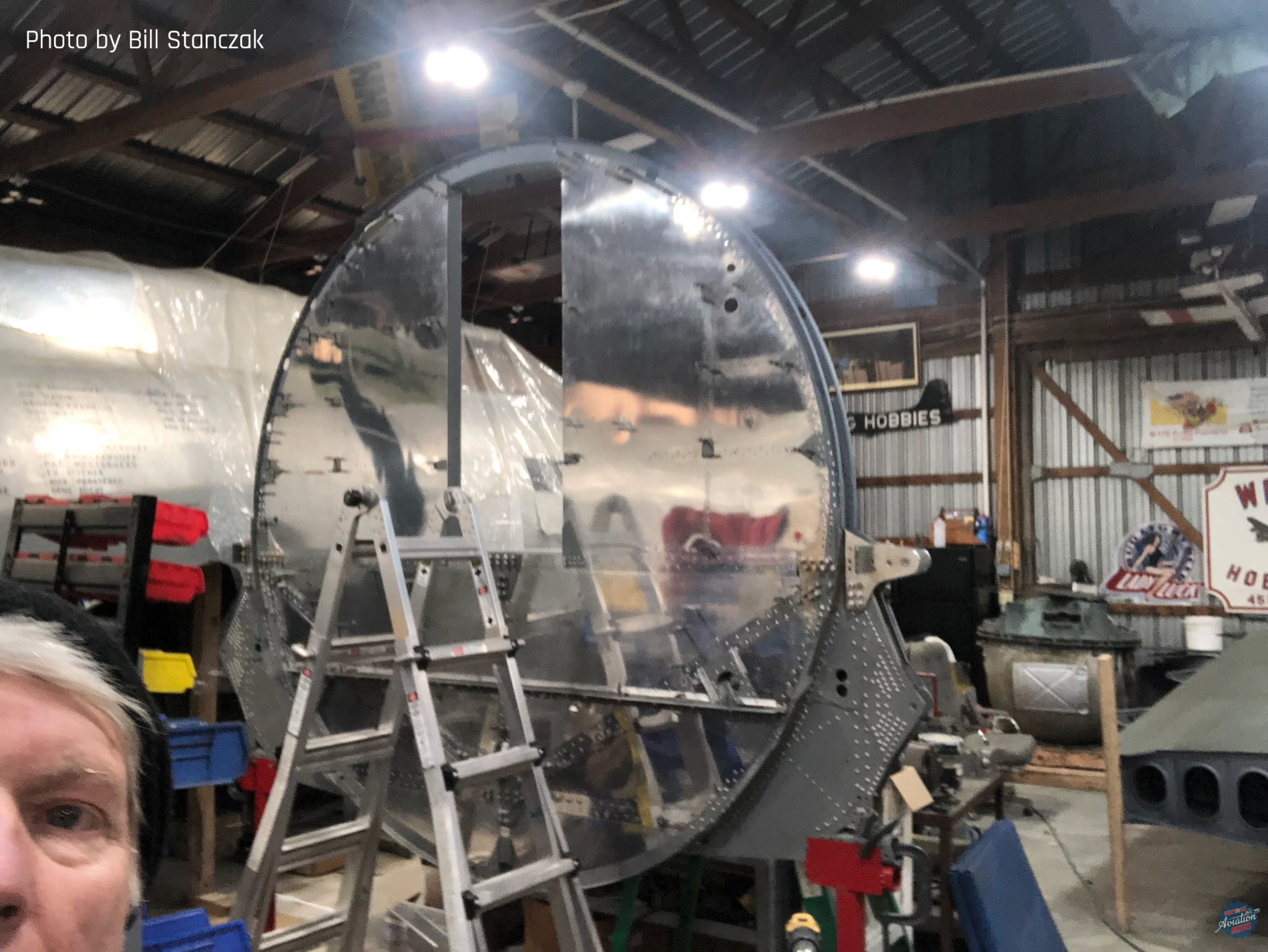
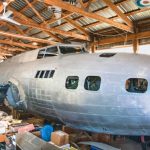
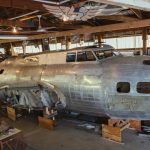
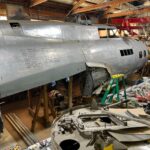
One of the most significant changes since our last report has been a major structural decision involving the fuselage. “We actually split the airplane at bulkhead five,” Stanczak explained. While not originally planned, separating the forward and rear fuselage sections proved to be the most practical way to properly install the bomb bay catwalk and bulkhead structure. This approach also allowed the team to inspect previously inaccessible internal areas. The decision paid off. “Once we opened it up, we were able to clean and inspect areas that hadn’t been touched before and apply epoxy primer to prevent future corrosion,” he added.
(Image credit: Bill Stanczak)
Tail Section Nearing Completion
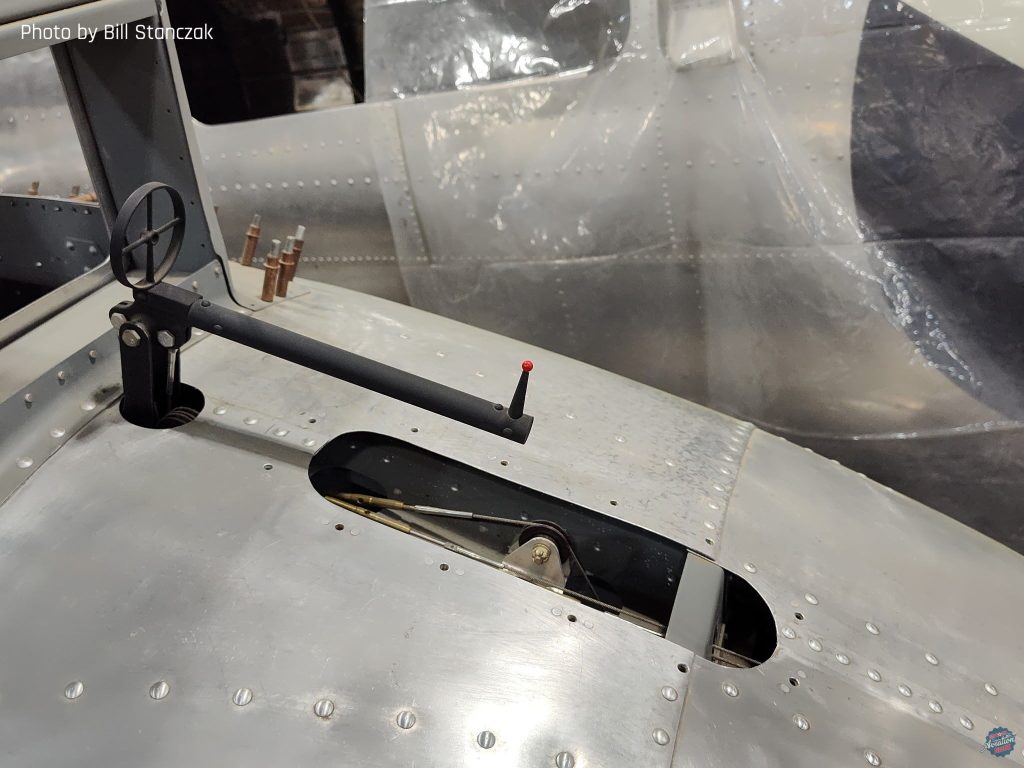
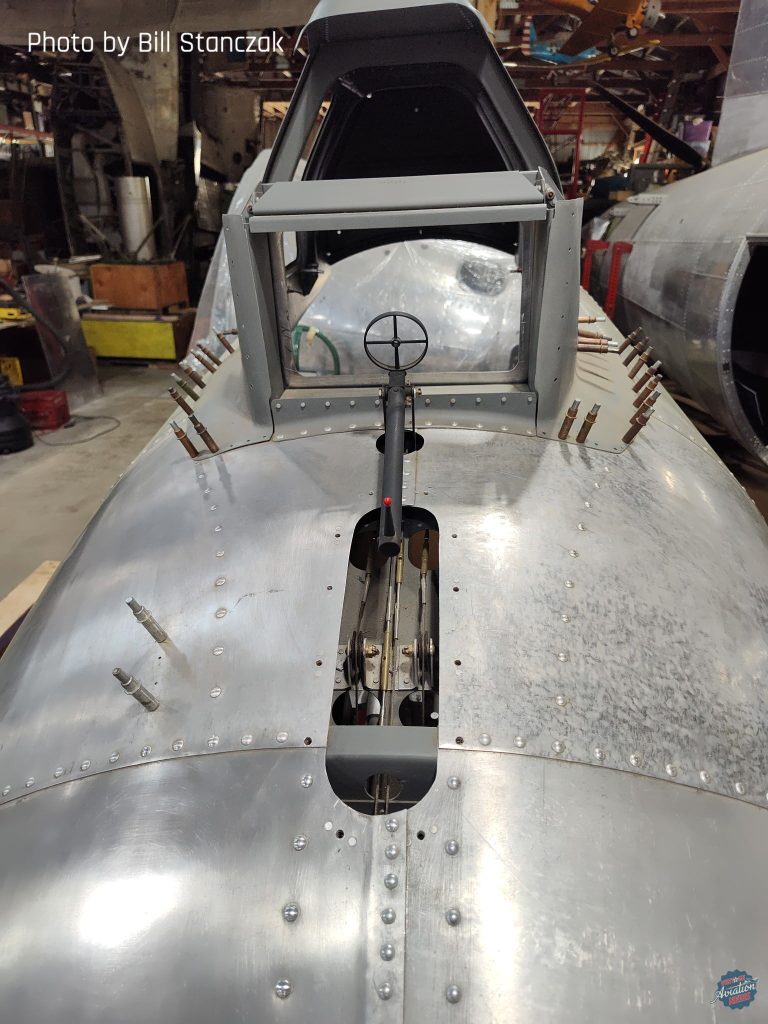
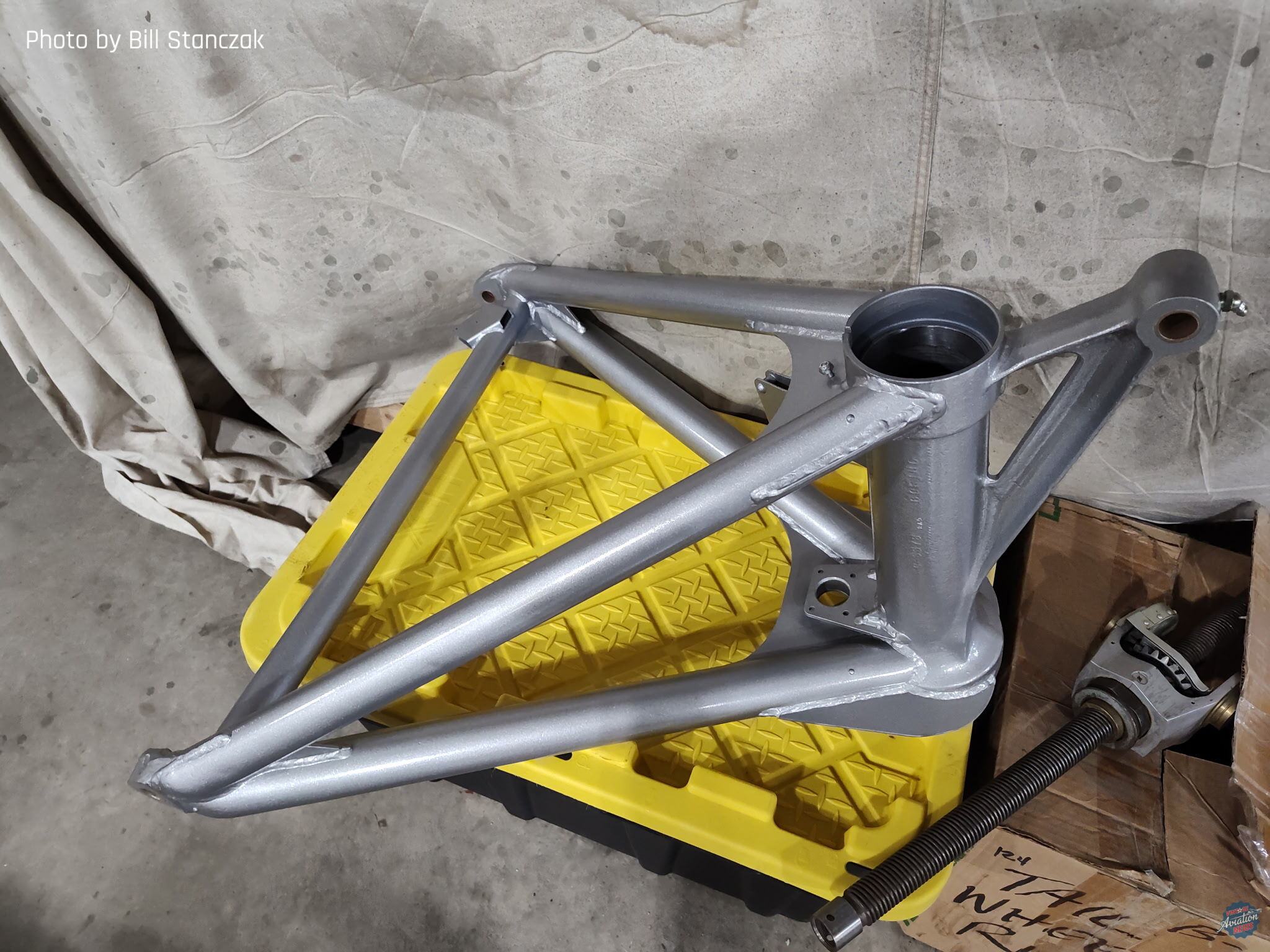
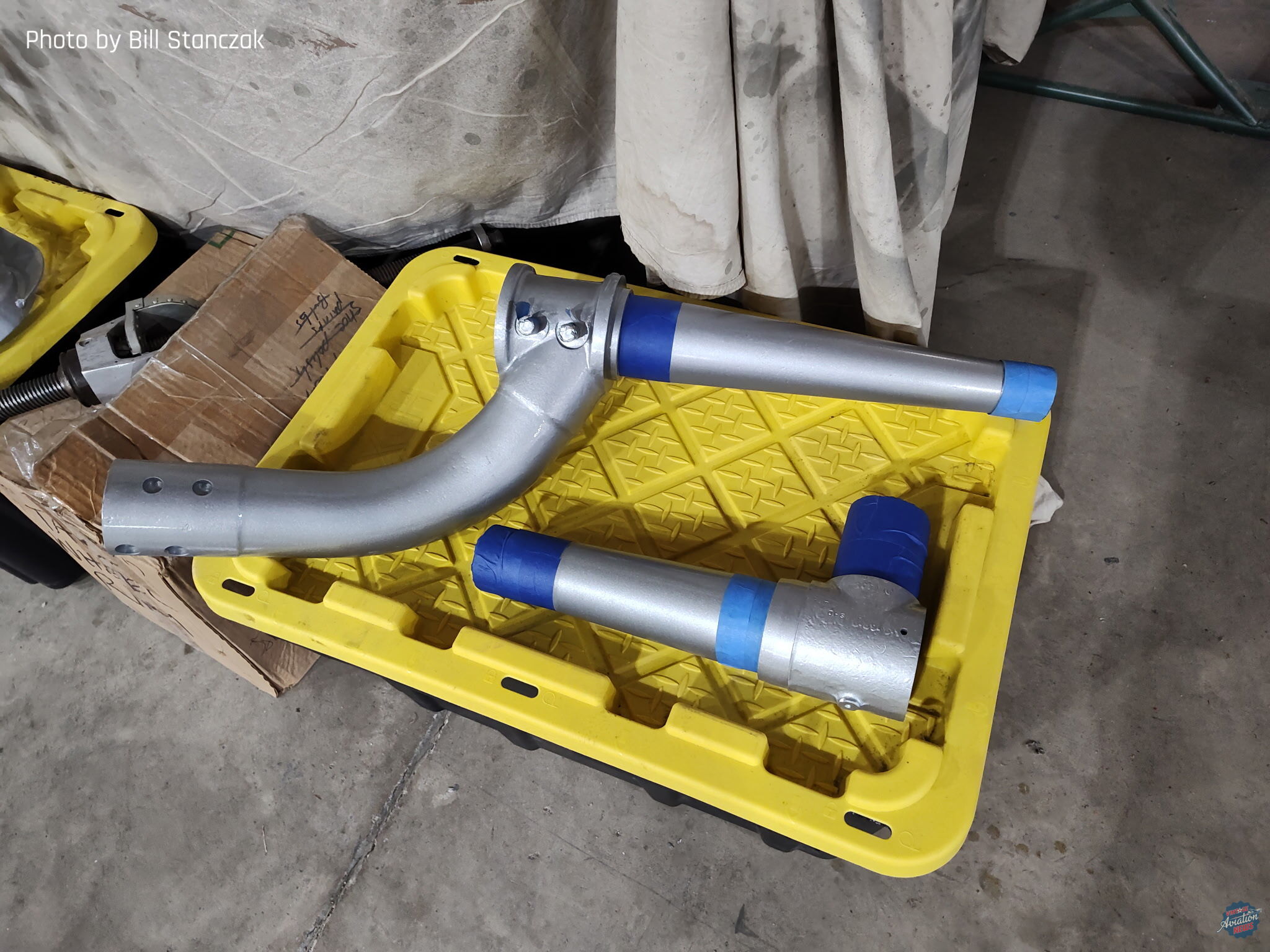
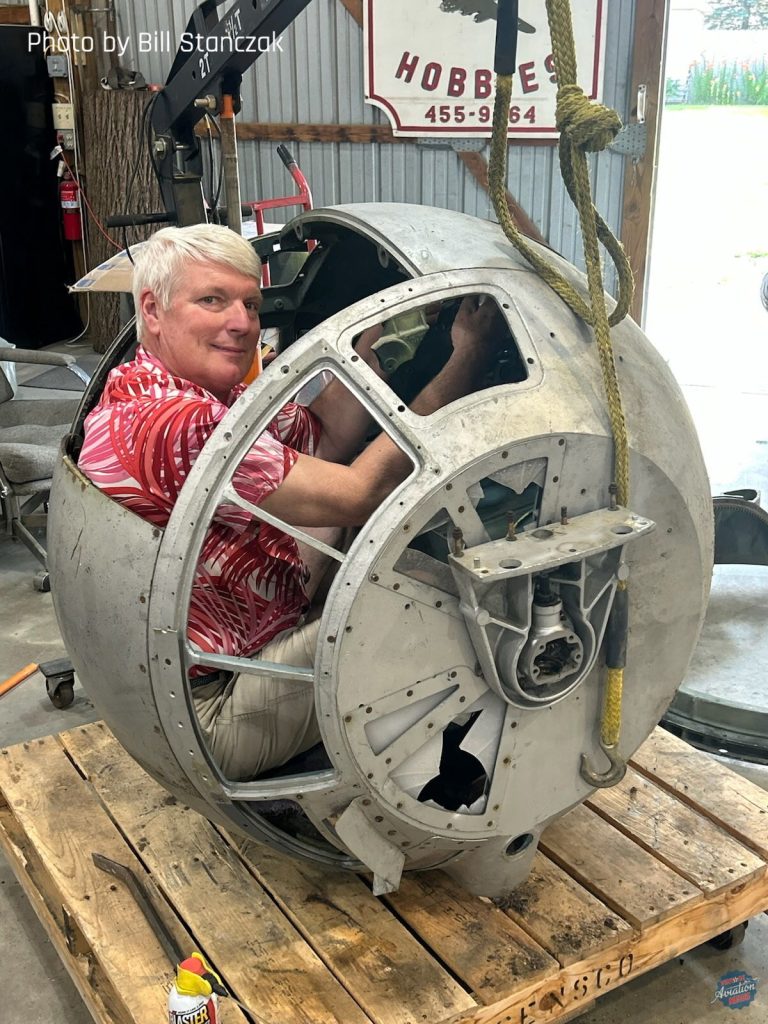
The tail section is now approaching a major milestone. The vertical stabilizer is currently being painted, with the team opting for a factory-fresh Olive Drab 41 finish rather than a weathered tone. Once complete, the aircraft’s serial number will be applied—marking a symbolic step forward. Additional progress includes: Completion of closeout panels using correctly installed rivnuts (nearly 300 in total); Restoration of the tailwheel assembly, now painted and ready for installation; Ongoing work on the tail gun enclosure, including plexiglass and internal components Notably, Desert Rat retains its original “stinger” tail gun configuration, featuring a rare mechanical linkage where the guns and gunsight move together—something Stanczak notes is seldom seen on surviving aircraft.
(Image credit: Bill Stanczak)
(Image credit: Bill Stanczak)
Wings and Structural Components
Work has also intensified on the wing structures, particularly the outboard panels. The team has repaired and reinstalled multiple ribs, while tackling the notoriously difficult corrugated skin sections. Some original material can be saved, but other areas—especially those damaged when the wings were dragged—will require complete replacement. Fabricating these corrugated panels remains a persistent challenge, both technically and financially. Meanwhile, attention is also turning to critical structural elements such as: A damaged inboard wing “gang channel” extrusion that must be remade; Bomb rack extrusions, which are essential not only for authenticity but also structural integrity. “The bomb racks are actually structural,” Stanczak noted. “There’s a warning not to fly the airplane without them installed.”


Cockpit and Systems Progress
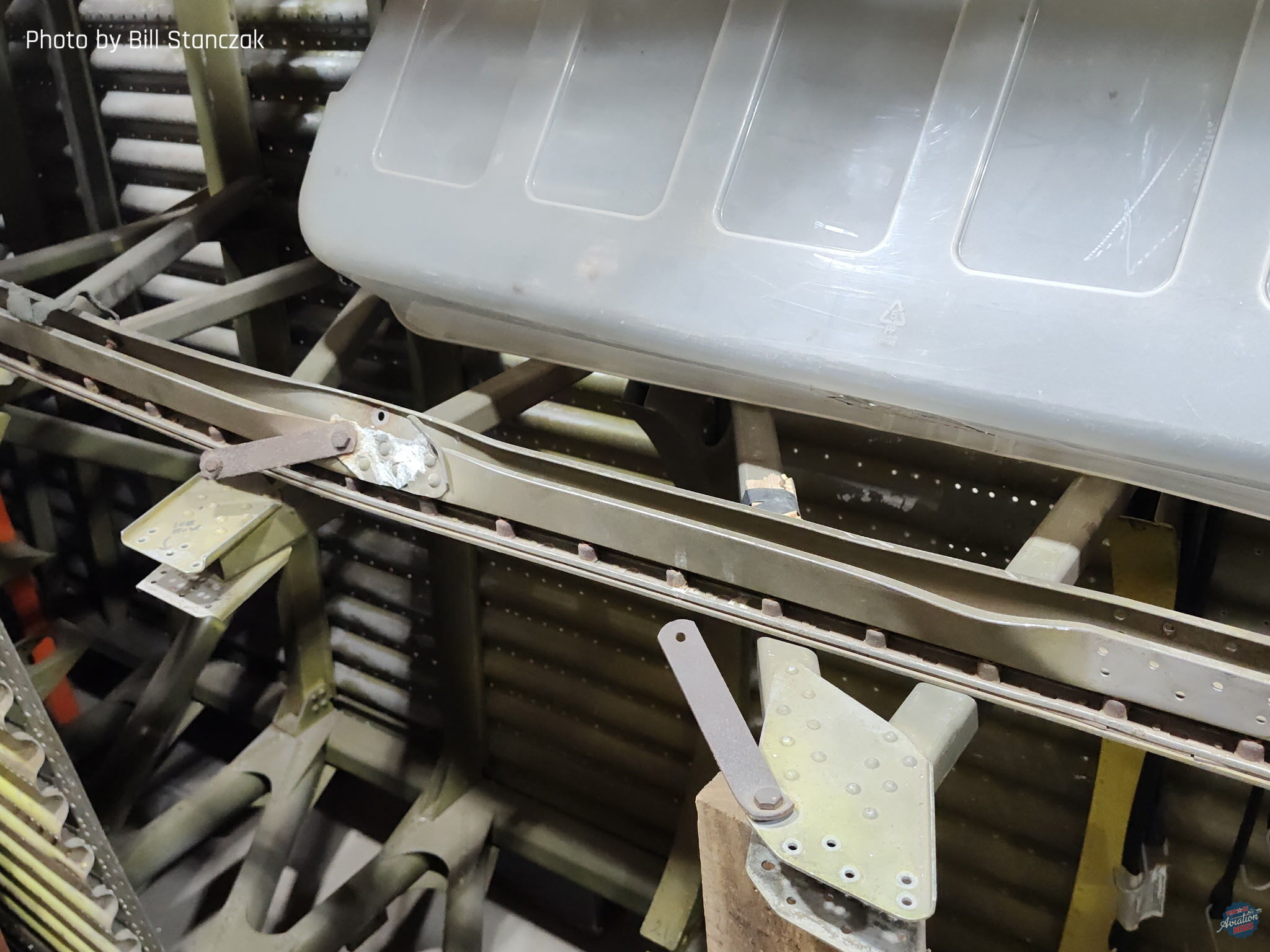
Progress in the cockpit continues, though it is heavily dependent on specialized fabrication. The team is currently working with a local aluminum casting specialist to reproduce: Control column components unique to early B-17 models; The distinctive six-handle throttle quadrant system. Many of these parts differ significantly from later B-17F and B-17G designs, requiring careful research and custom manufacturing. At the same time, work continues on the aircraft’s systems, including future plans to reinstall the oxygen system, electrical components, and hydraulics—much of which will require substantial effort and funding.
Nose and Plexiglass Work
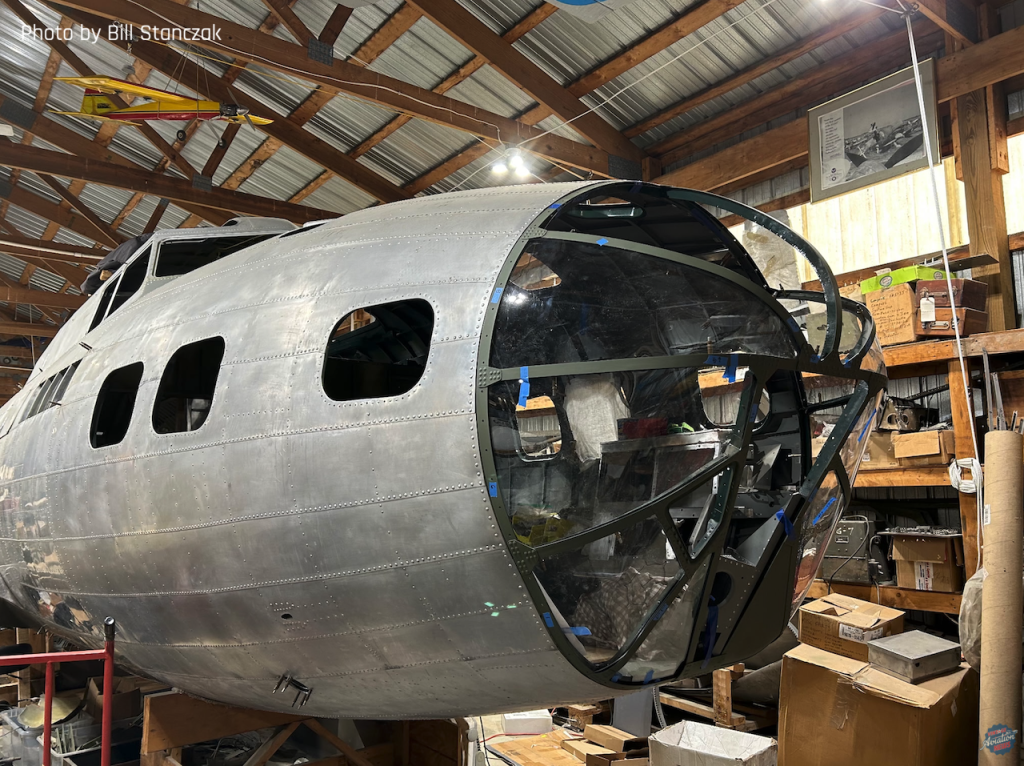
The complex nose glazing, a defining feature of the B-17E, has seen steady progress over the past year. The team has successfully formed and installed major plexiglass sections, using period-correct methods involving heat-forming and gasketed mounting systems—another example of the project’s commitment to authenticity.
(Image credit: Bill Stanczak)
Looking Ahead
As always, progress is shaped by the availability of parts, funding, and skilled labor. “A lot of the easy work is already done,” Stanczak noted. “Now we’re waiting on the big things—major components, systems, and fabrication.” Despite these challenges, the project remains firmly on track. Each completed component—no matter how small—brings Desert Rat one step closer to becoming whole again. For VAN readers, this latest update is a reminder that while restoration timelines may stretch, the dedication behind them never wavers.
Desert Rat also has its own dedicated Facebook page HERE, which some of our readers may enjoy viewing too. If you wish to contribute to the restoration of this important aircraft, whether it be with parts, labor, or cash, please contact the Desert Rat team HERE. Monetary donations can be placed HERE.





I was pleased to do a partial sale/ partial donation to Desert Rat. I am still on the lookout for critical items that the group will be needing.
Sherman Swofford
Spartanburg SC