






The biggest gathering of WWII warbirds in the Southern Hemisphere ever took place over the weekend of March 28–29, 2026, at Scone Airport (YSCO), located on Walter Pye Ave, Scone. While Warbirds over Scone has been a biannual show for some years, this was the first event under new management and direction, with Paul Bennet Airshows and Pays Flying Services joining forces to organise the event, having also recently taken over the running of the “Hunter Warbirds” Museum at the airfield, both of which were previously run by the local council. They put together a great show, which was said to be the biggest ever gathering of warbirds in Australia. The warbird scene in Australia is very vibrant at the moment, with new collectors and a number of recent imports from New Zealand, England and the US.
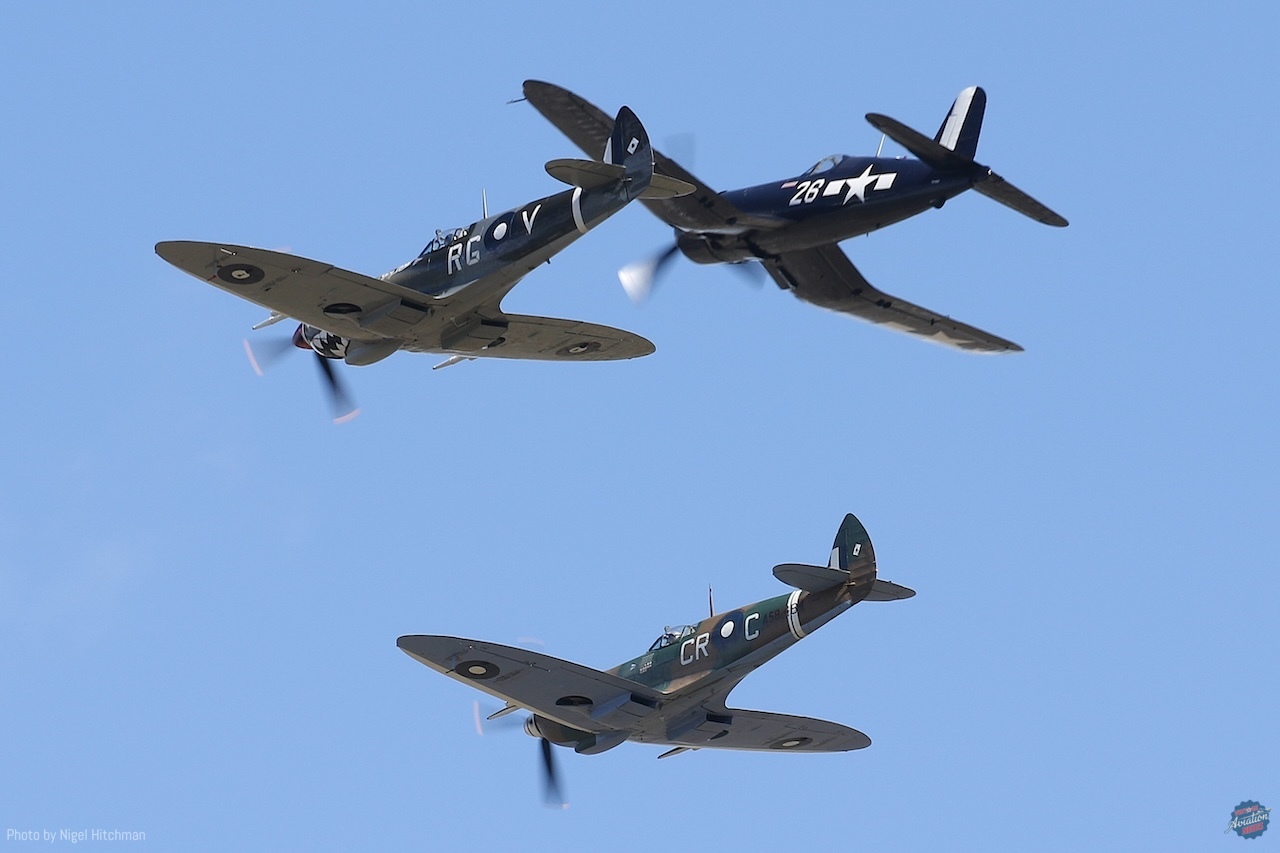
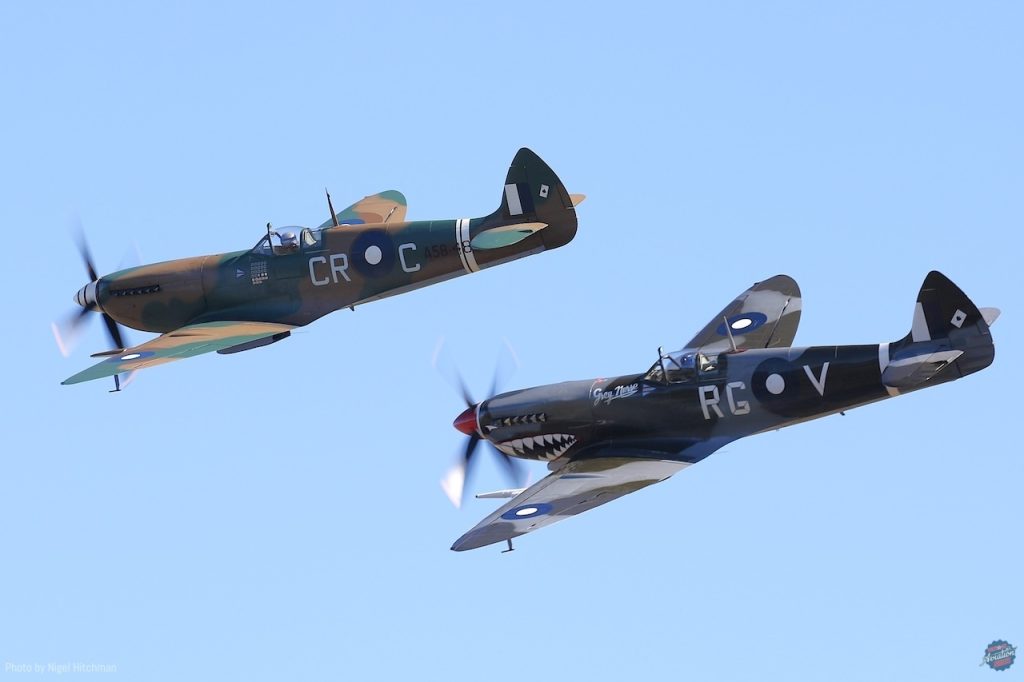
Although the number of Spitfires present was less than hoped for, with Mk.IX SL633 Czech AF “JT-10” having been sold in the Czech Republic days before the show, MH603 having a landing gear issue just before the show, and the new two-seat BS548 still in Customs in Sydney, there was still a very significant pairing of the two former RAAF Spitfire Mk.VIIIs flying together for the very first time. The two being A58-602 painted as “Grey Nurse,” formerly of the Temora Aviation Museum and now operated by RAAF 100sqn, and MV154 painted as Clive Caldwell’s aircraft A58-484 “CR-C” (Caldwell was the RAAF’s leading ace in WWII), recently imported by Peter Gartshore. They were last together in Sid Marshall’s yard in Sydney in the 70s before one was clandestinely exported to England as scrap metal. Restored by Robs Lamplough and displayed for many years in the UK, then sold to Maxi Ganzia and kept in Germany for a while, it returned to the UK in later years. Finally, it was for sale at the right time, and someone in Australia bought it back. The two flew together as the last items in the display and then joined the Balbo finale.
(Image credit: Nigel Hitchman)
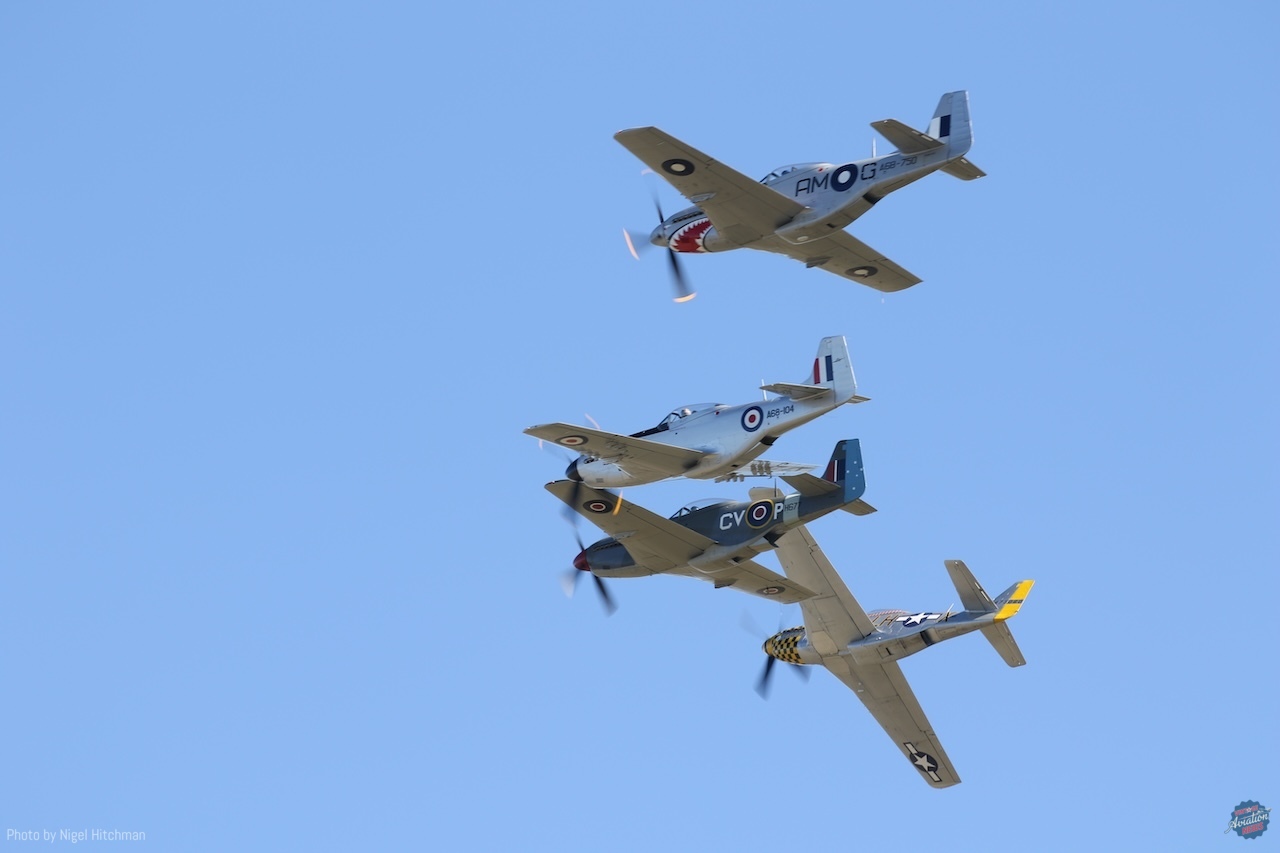
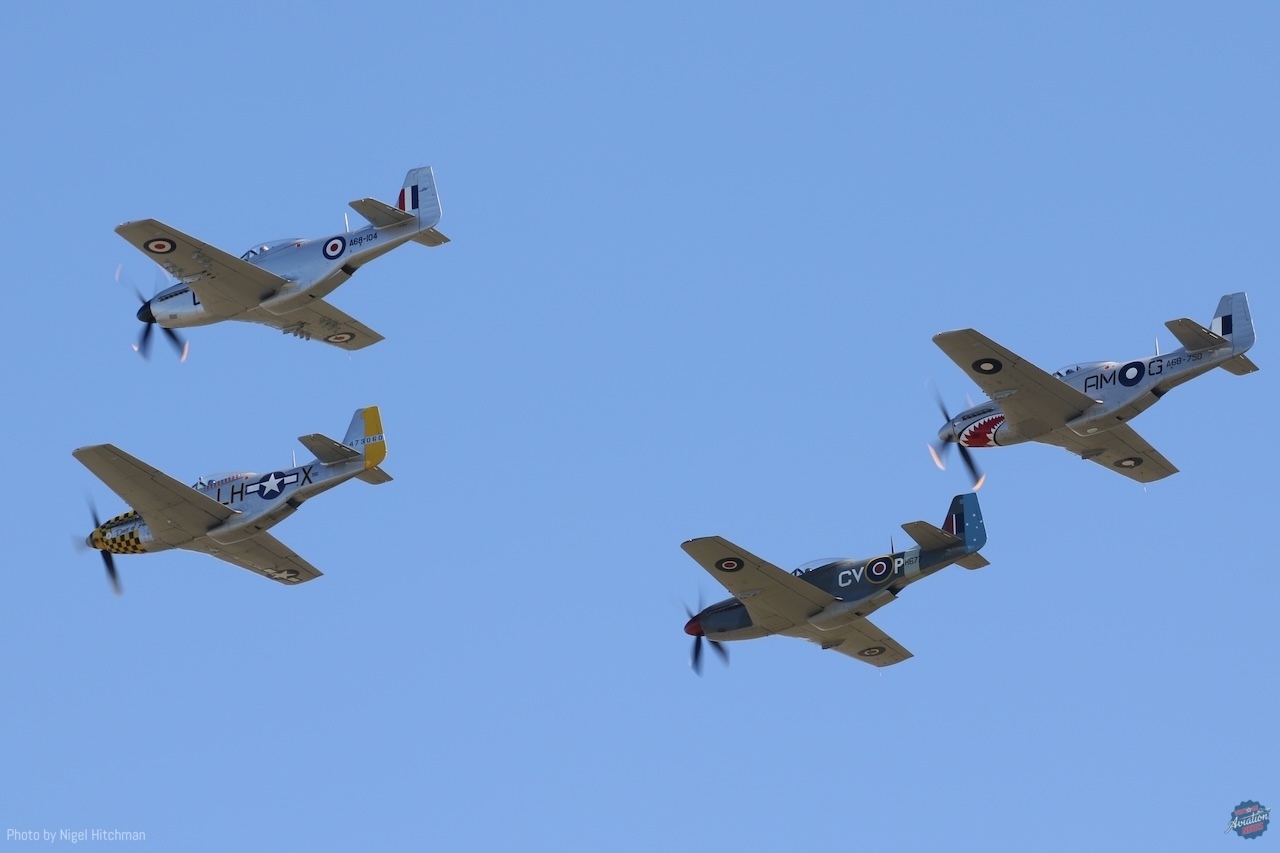
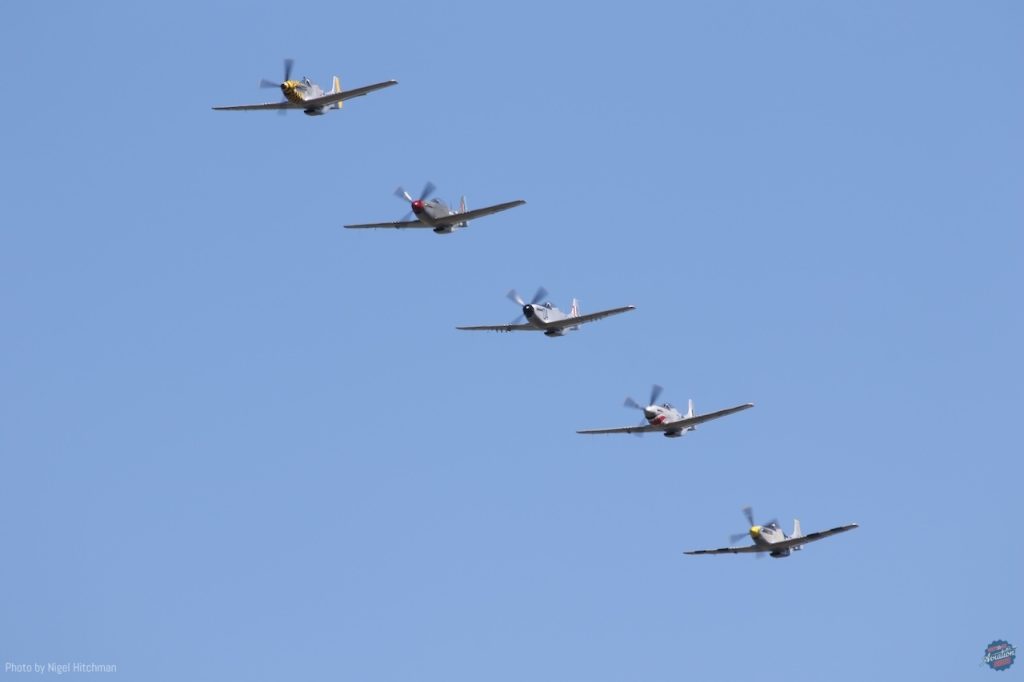
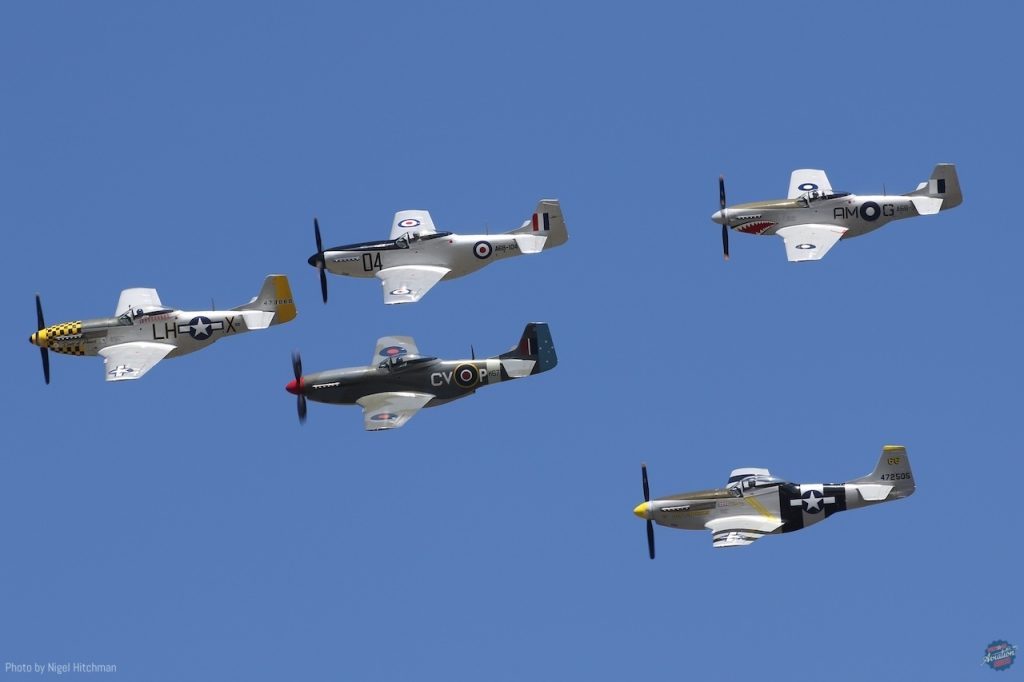
With five Mustangs in the flying display, that has only been bettered once in Australia, at Tyabb more than 10 years ago, but with eight on the field that was the most together since just after WWII. This included the static example in the Hunter Warbirds Museum and two in Pays’ hangar on maintenance: VH-AUB nearing the end of a comprehensive restoration and recently imported VH-TF8 NZ2415, unfortunately requiring more work than expected due to corrosion found during its annual inspection. The five put on a great formation display and then tail chase, and four flew together in the Balbo.
(Image credit: Nigel Hitchman)
The five Mustangs were: NA P-51D VH-LUI/473060 “Dove of Peace,” former RAAF A68-674, restored at Shafter, CA, flying again in 1984 and flying in New Zealand as ZK-SAS from 2004–2022. CAC CA-18 VH-JUC, formerly RAAF A68-105, painted as KH677 “CV-P,” which was the first RAAF P-51K in the colours worn in Northern Italy in 1944. CAC CA-18 VH-BOB/A68-104, restored by Bob Eastgate 1970–76, flown until 2008 when it belly-landed with the gear hung up, restored again and flying in 2023. Bob Eastgate sadly died in 2020; it is still owned by the family. P-51D VH-FST painted as 472505 “The Undertaker,” restored by John Seevers in California in the 80s, shipped to Australia for completion, and flew again in 2001.
(Image credit: Nigel Hitchman)
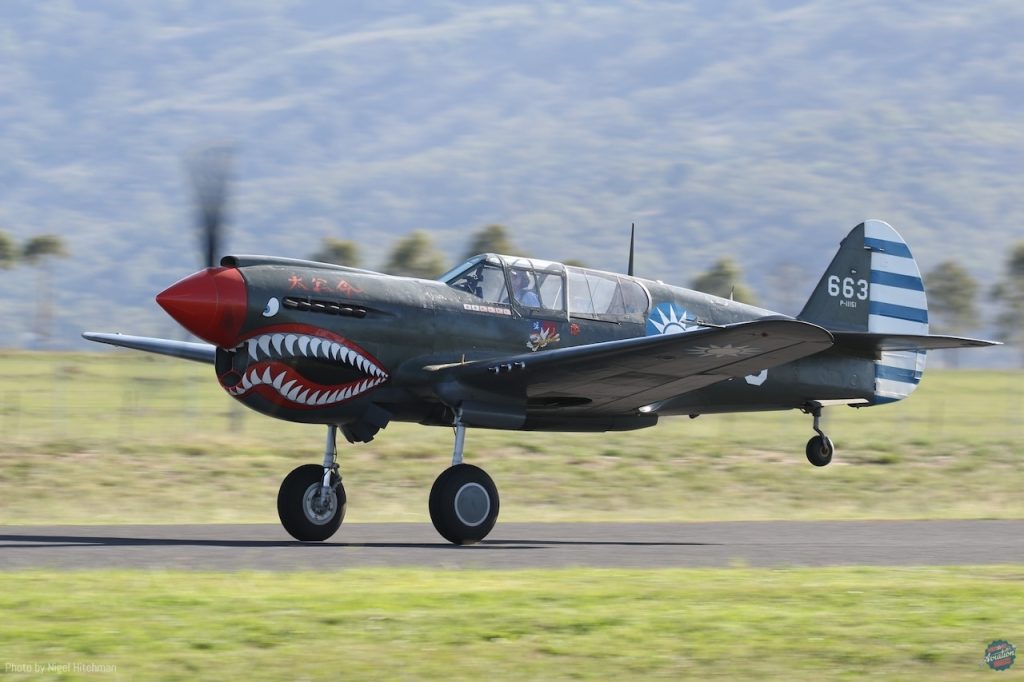
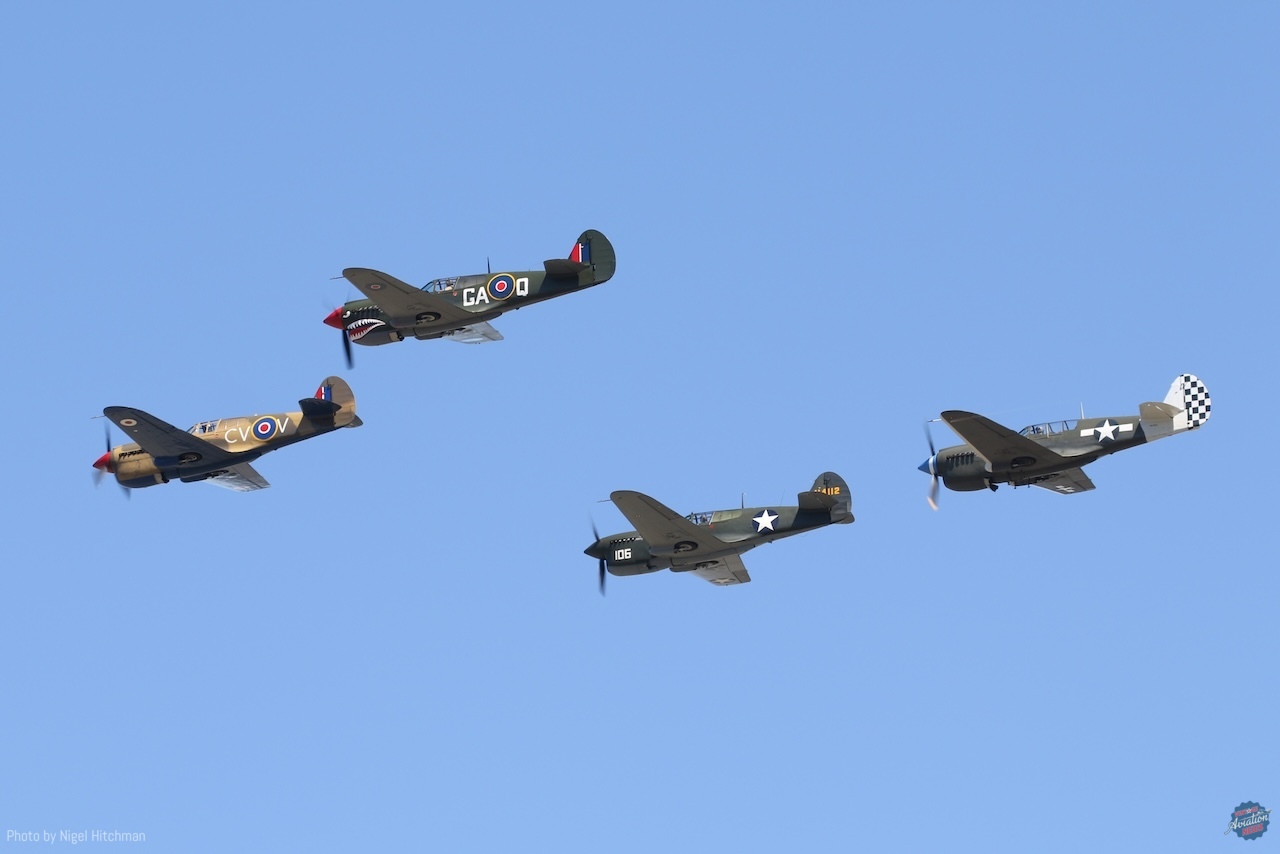
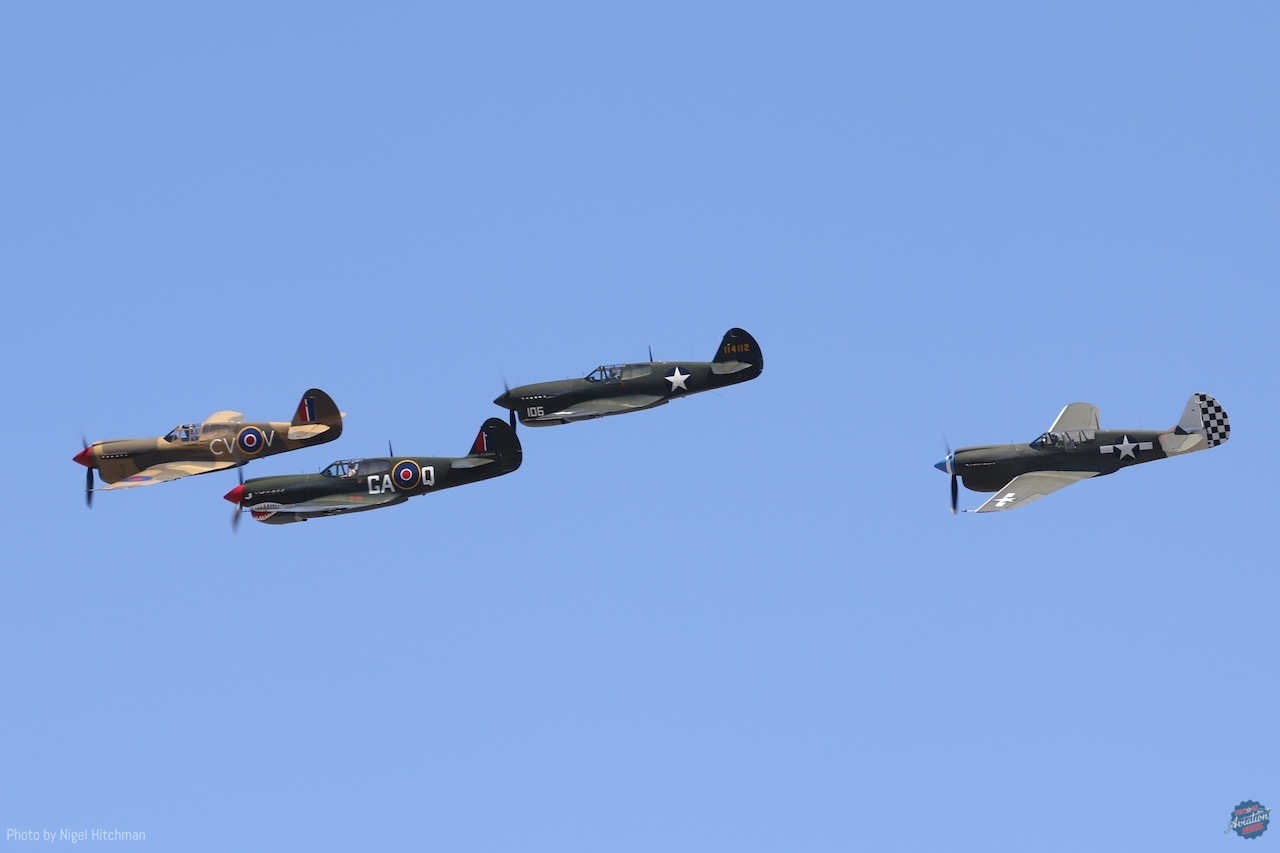
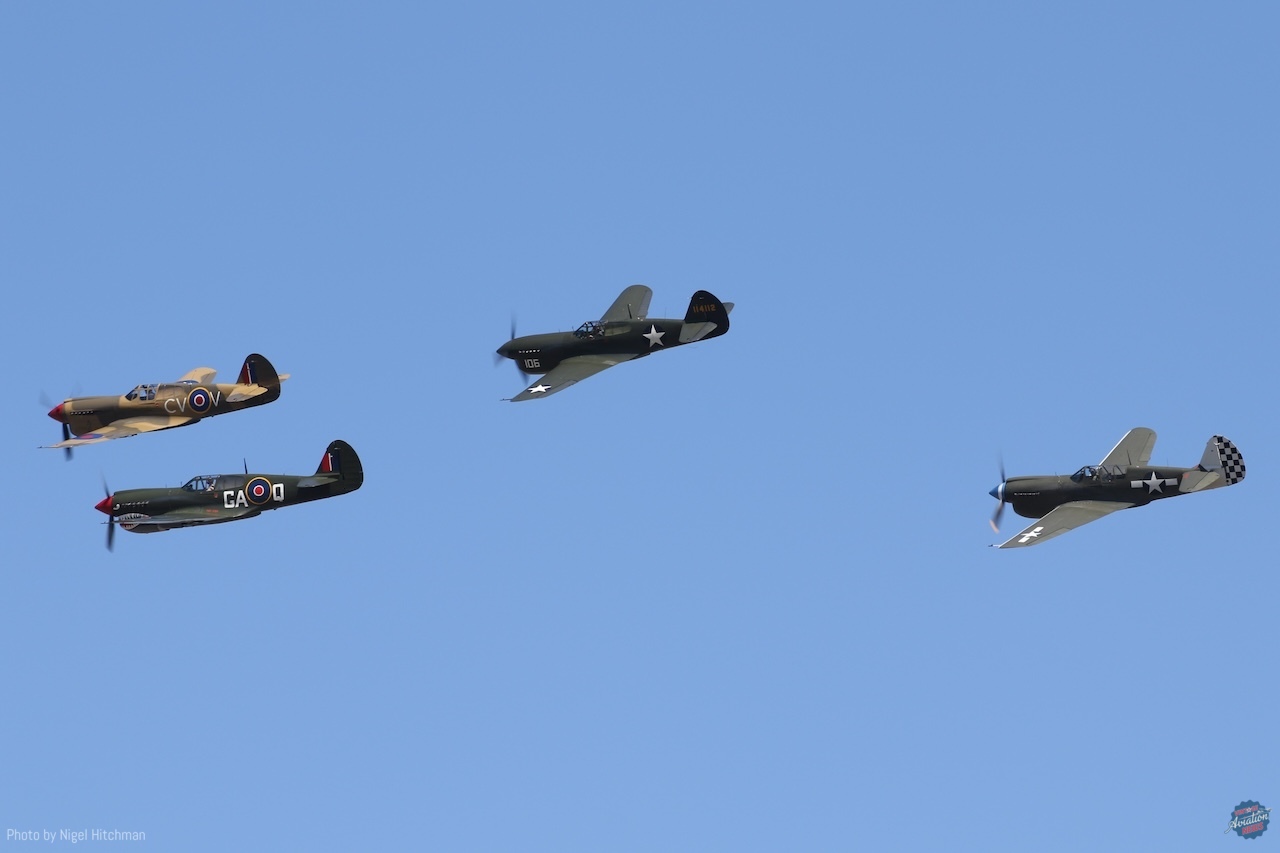
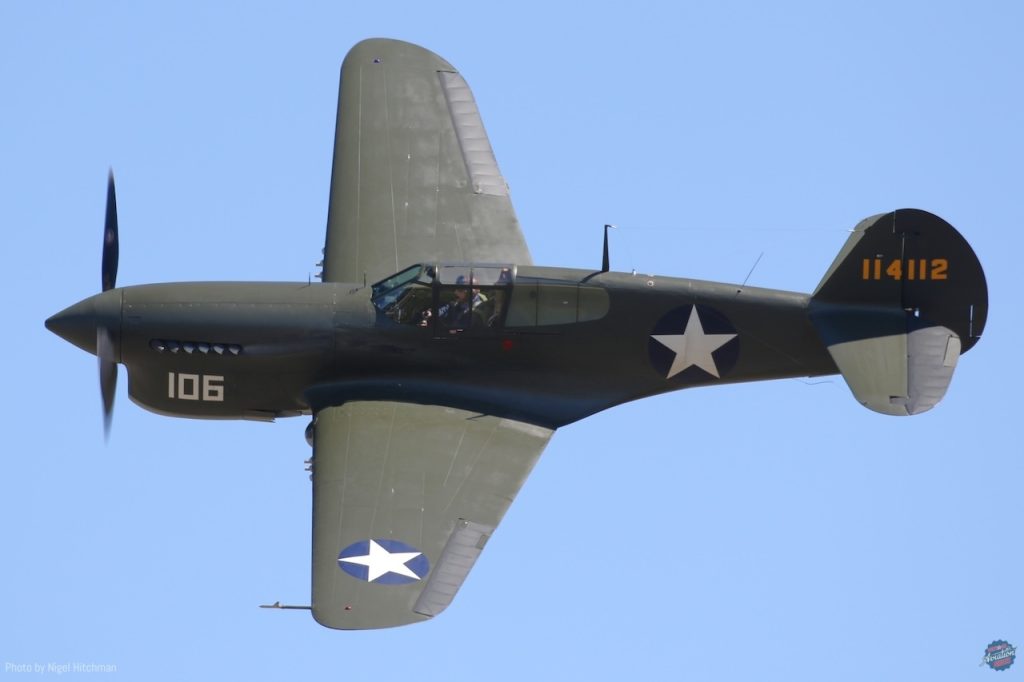
It was also the first time five Curtiss P-40s had been together in Australia, with four being displayed together in formation and then also in the Balbo. The fifth was just a visitor for the show on Saturday, but great to see, being NZ3009, a former UK and New Zealand resident restored for Ray Hanna as ZK-RMH, now VH-AK4. The four aircraft flown in the display were: VH-KTY “CV-V” P-40E ex RNZAF NZ3094 painted as ET953, Bobby Gibbes’ aircraft, the C/O of RAAF 3sqn in North Africa. VH-ZOC “GA-Q” P-40N ex RNZAF NZ3125 painted as RAF Kittyhawk III FR309. VH-HWK 114112/106 P-40F in its authentic USAAF colours as operated in the Pacific War and recovered from Vanuatu. VH-PFO 42-104986 P-40N in its authentic USAAF colours as operated in the Pacific and recovered from PNG.
(Image credit: Nigel Hitchman)
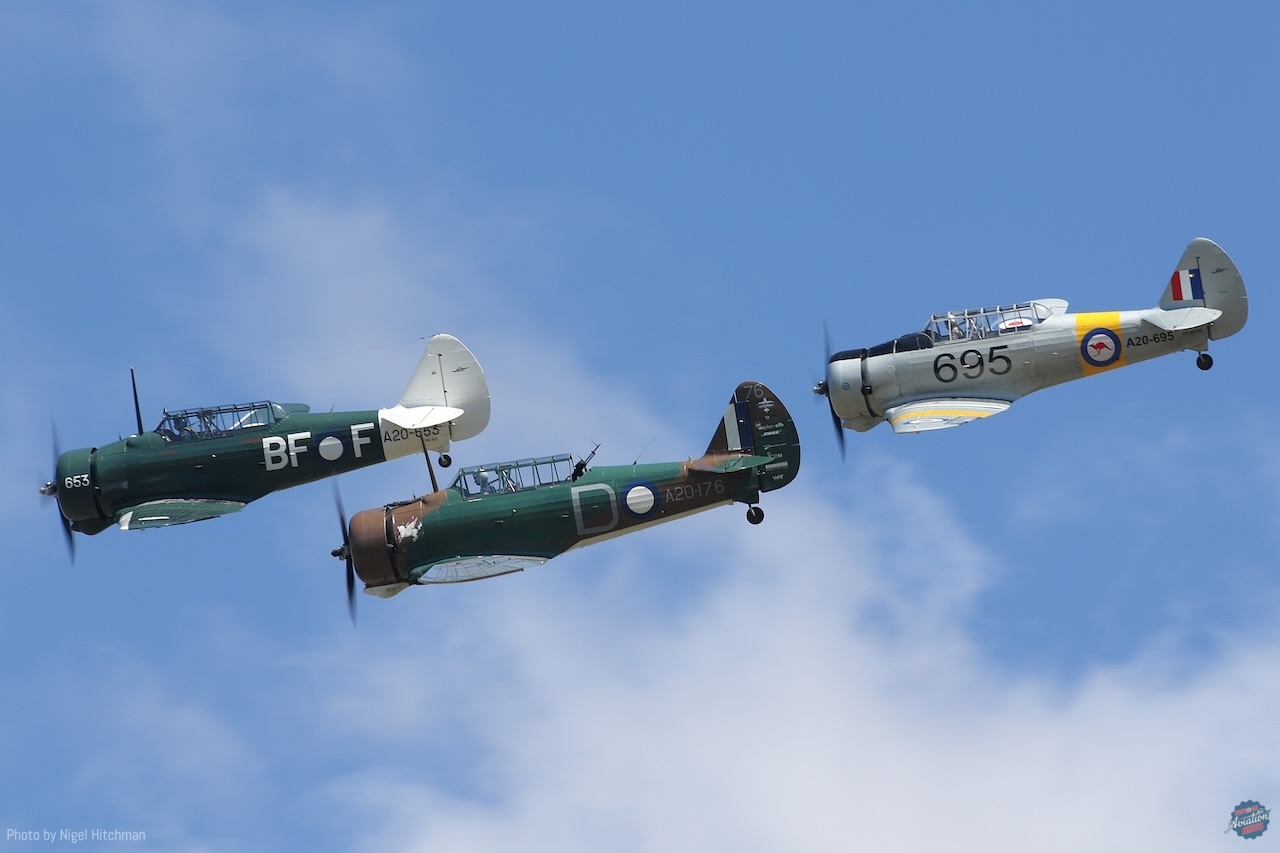
Another highlight was seeing the three CAC Wirraways flying together, a formation not seen for a long time, and currently, these are the only Wirraways airworthy in the world. The Wirraway was an Australian development of the North American NA-16 (which was also developed in the US as the T-6/SNJ/Harvard), serving mostly as a trainer/utility aircraft, but early in the Pacific War was also pressed into service as a fighter defending Rabaul (achieving one Japanese kill) and as a ground attack aircraft. The three aircraft in the formation are VH-WWY/A20-176 CA-3 Wirraway (actually A20-81), VH-BFF/A20-653 CA-16 Wirraway, and VH-MFW/A20-695 CA-16 Wirraway.
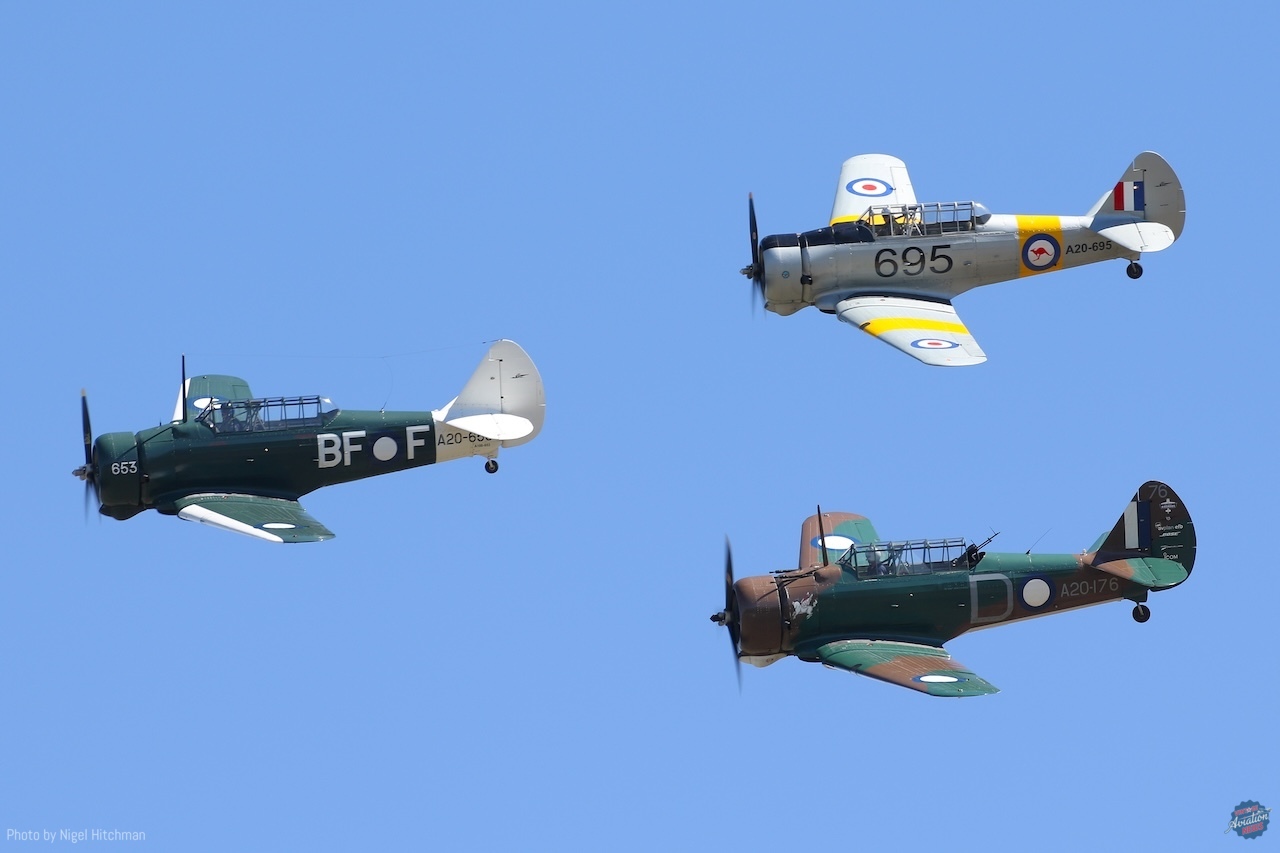
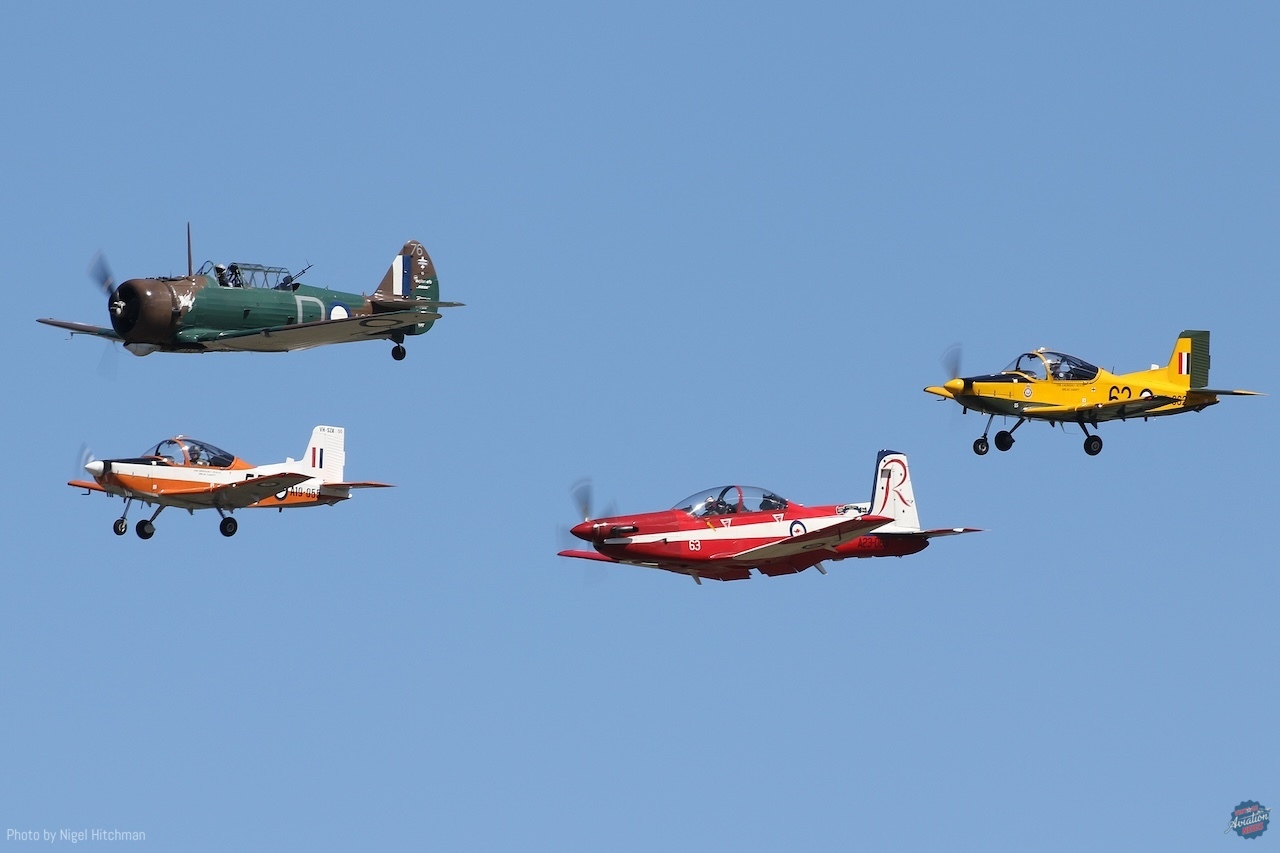
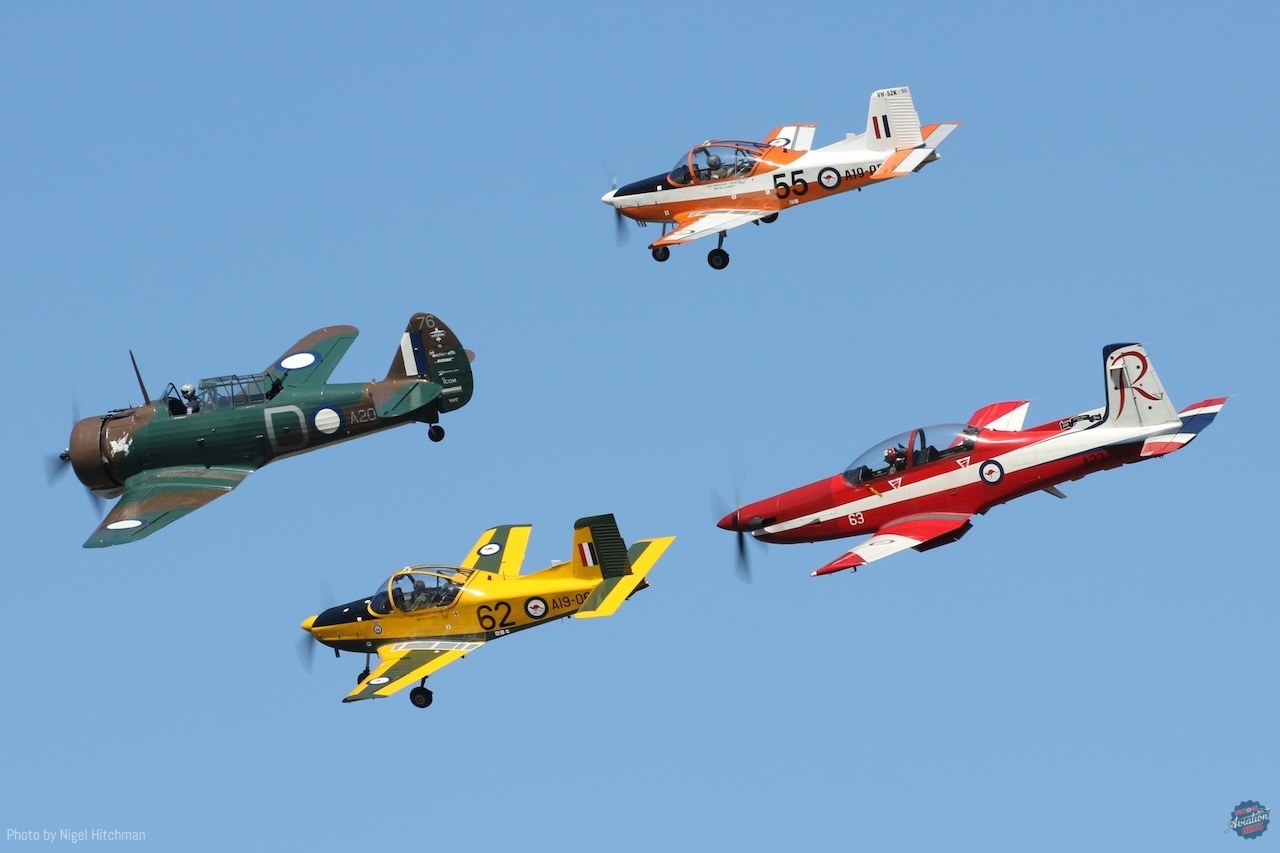
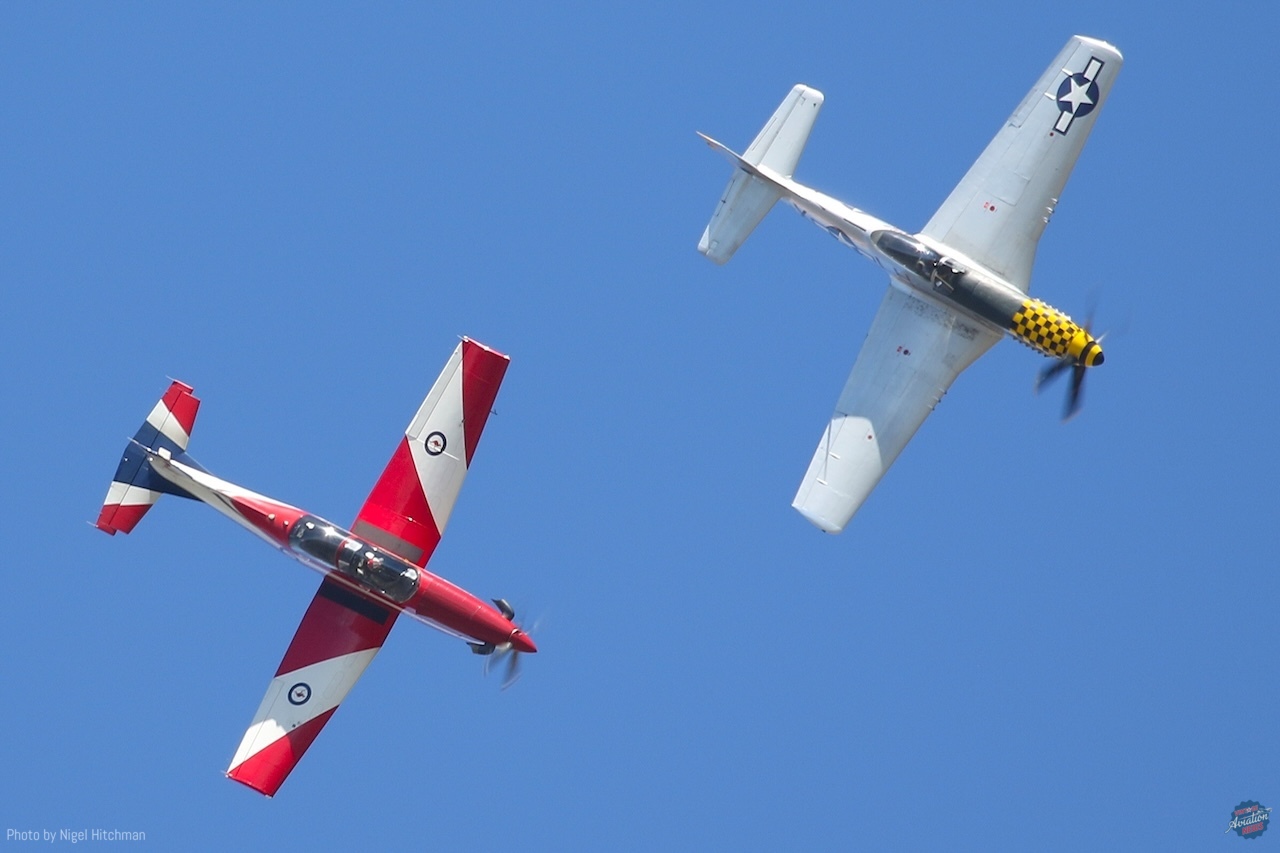
A Wirraway also led an excellent RAAF trainer formation, together with a CT-4A and CT-4B and Pilatus PC-9, representing RAAF training through the years. It’s thought this was the first time a formation of these types had happened.
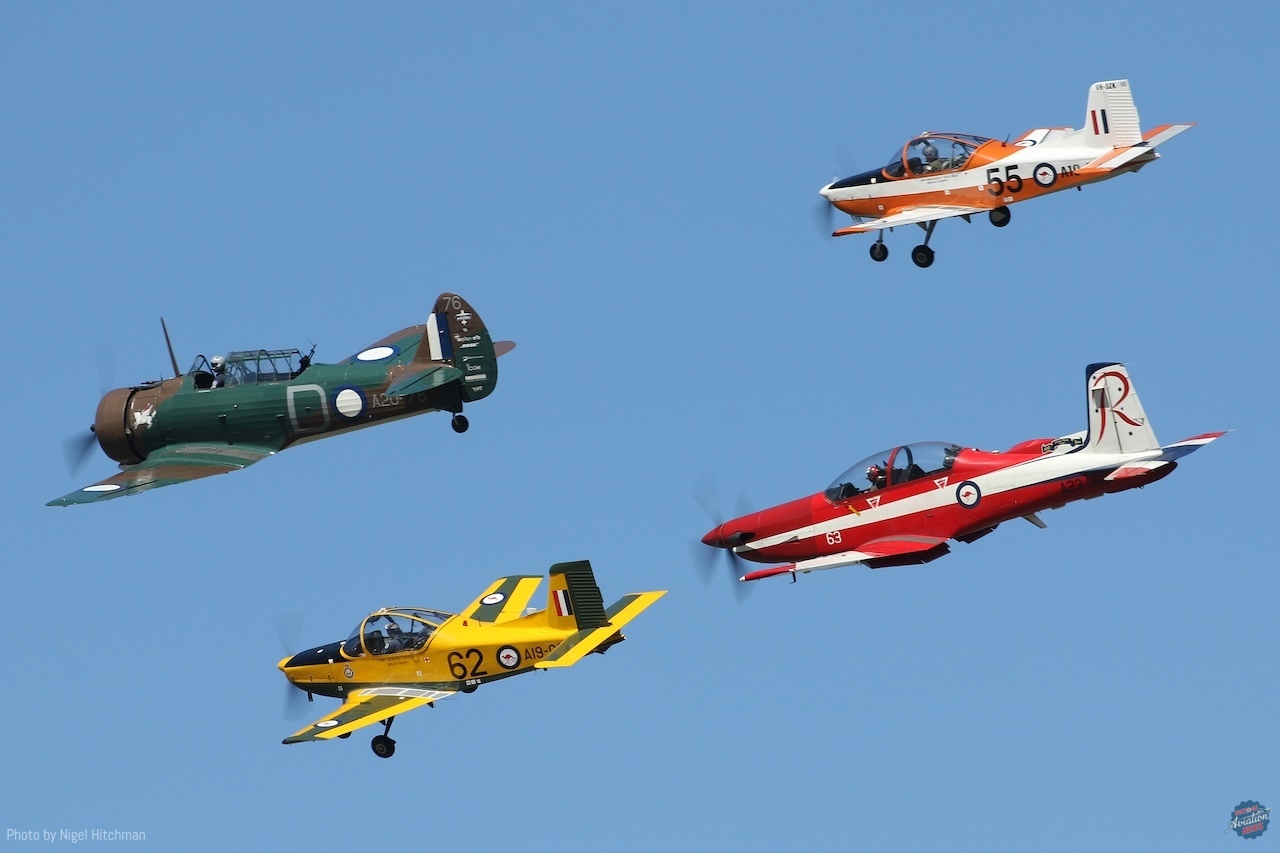
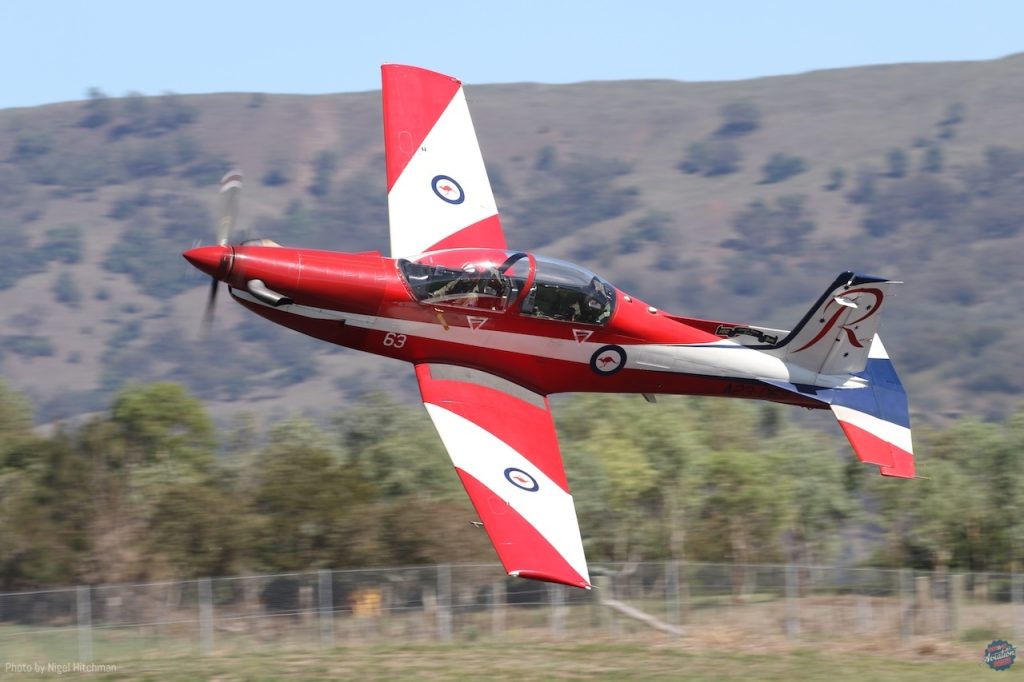
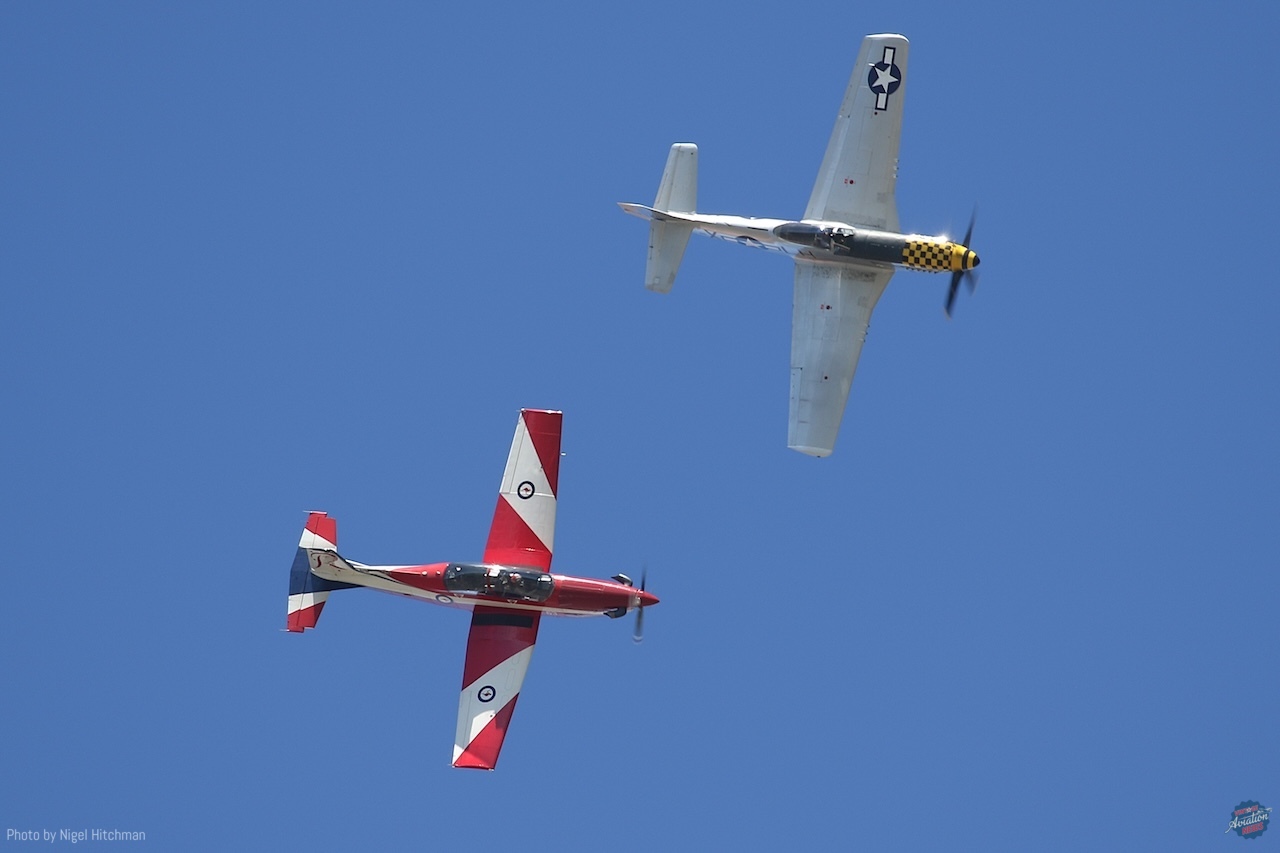
The PC-9 VH-T63/A23-063 was also flown in a fabulous aerobatic display and then formation aerobatics together with P-51D Mustang VH-LUI, which was a sight to see.
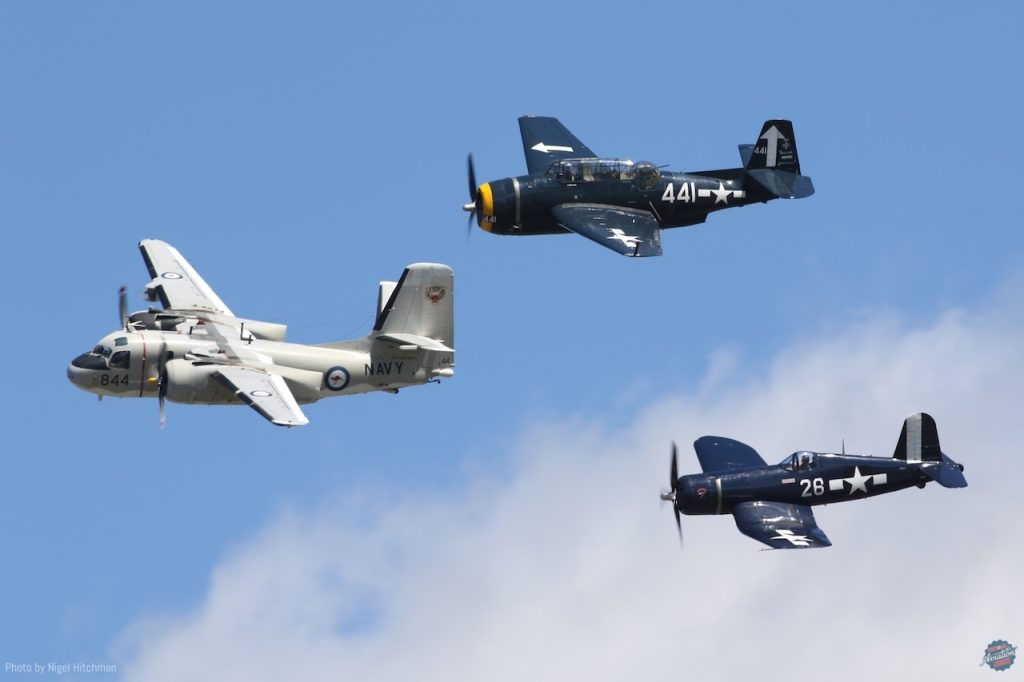
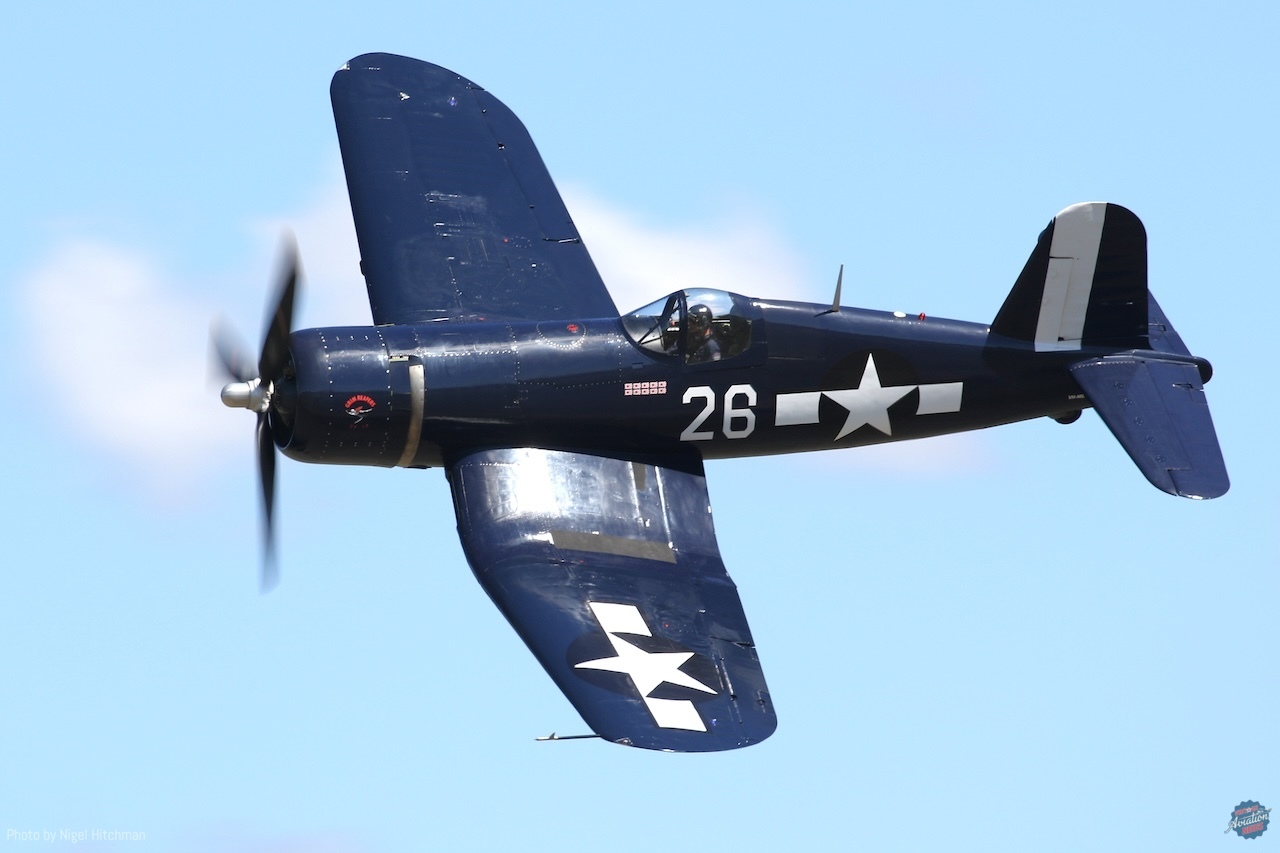
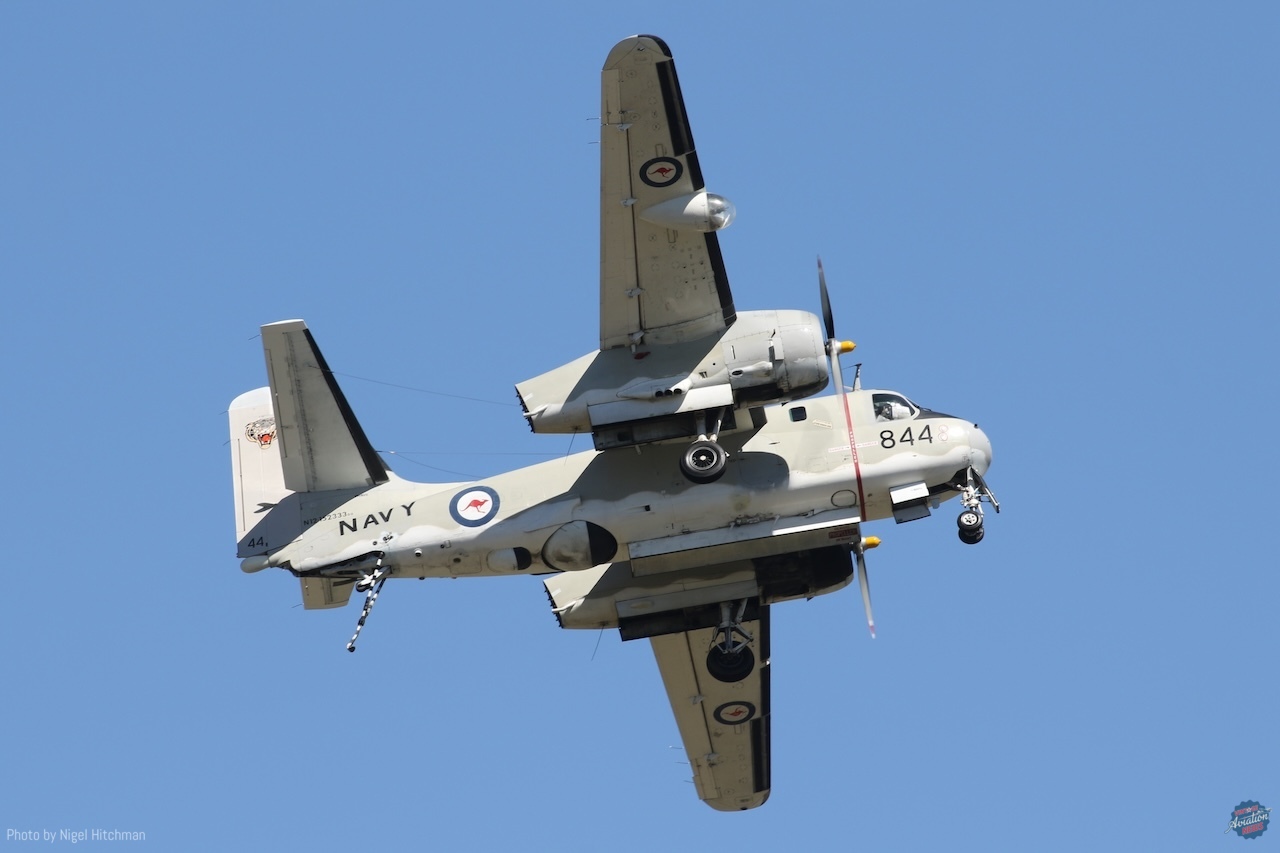
It was good to see the former RAN Grumman S-2G Tracker VH-NVX/844 operated by HARS as part of the display, starting in a Navy formation with the Vought F4U-1D Corsair VH-NQW/26 Bu 82640 and Grumman TBM-3E Avenger VH-MML/441 Bu53857, and then they all did solo displays. The Corsair is a recent full restoration in Australia, flying again four or five years ago.
(Image credit: Nigel Hitchman)
Continuing the Navy theme was the RAN scheme Hawker Sea Fury VH-HPB—well, actually an Iraqi Hawker Fury FB.11 converted with a Wright R3350 with a second seat added. This was restored by George Baker at New Smyrna Beach, FL, in the 90s and flew as “Southern Cross” for many years; later it became “Sawbones,” and the Australian roundels changed to Canadian, but on its arrival in Australia it reverted back to the Australian identity.
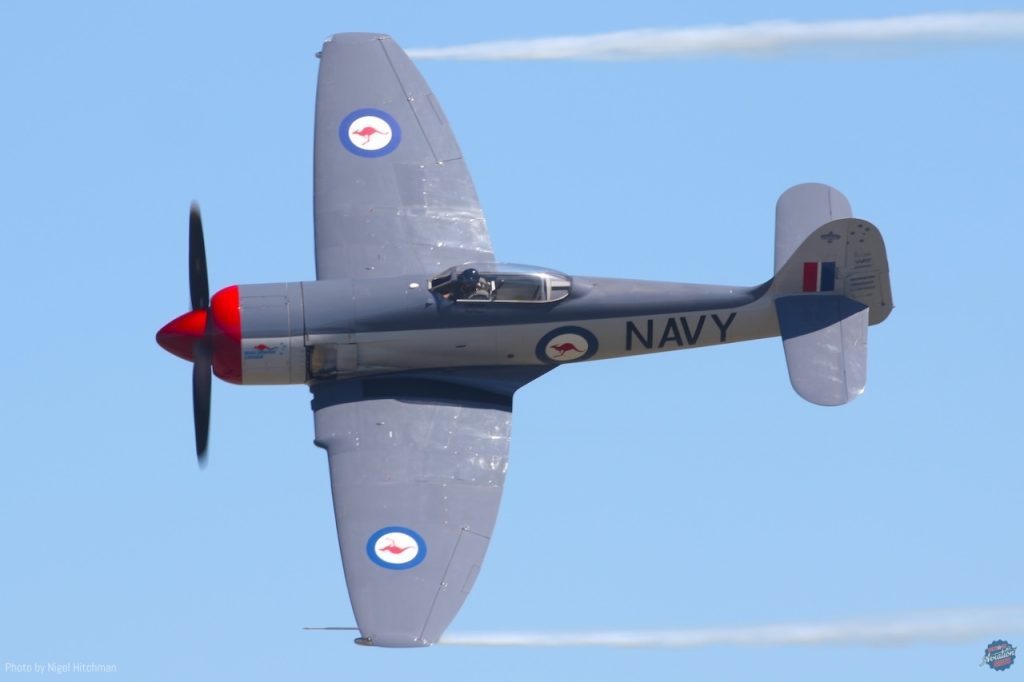
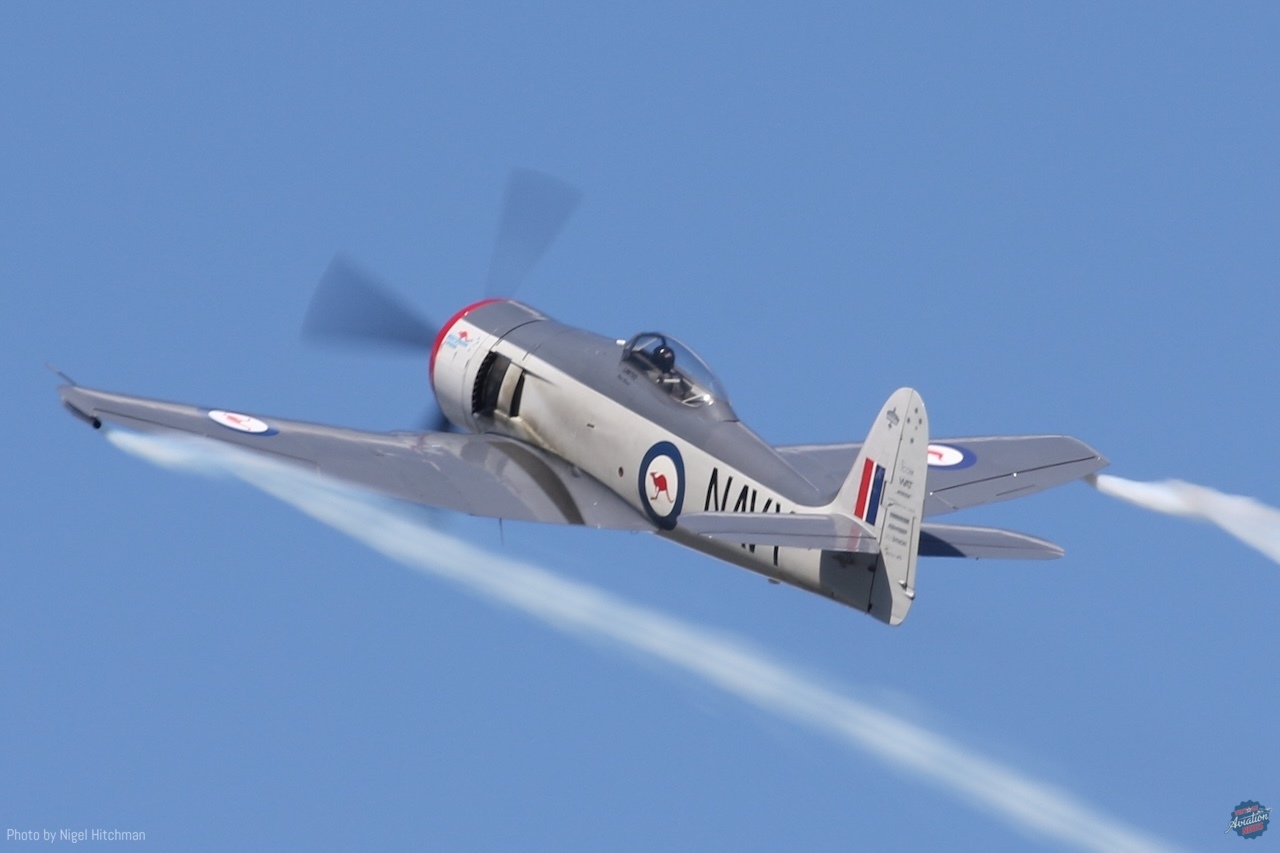
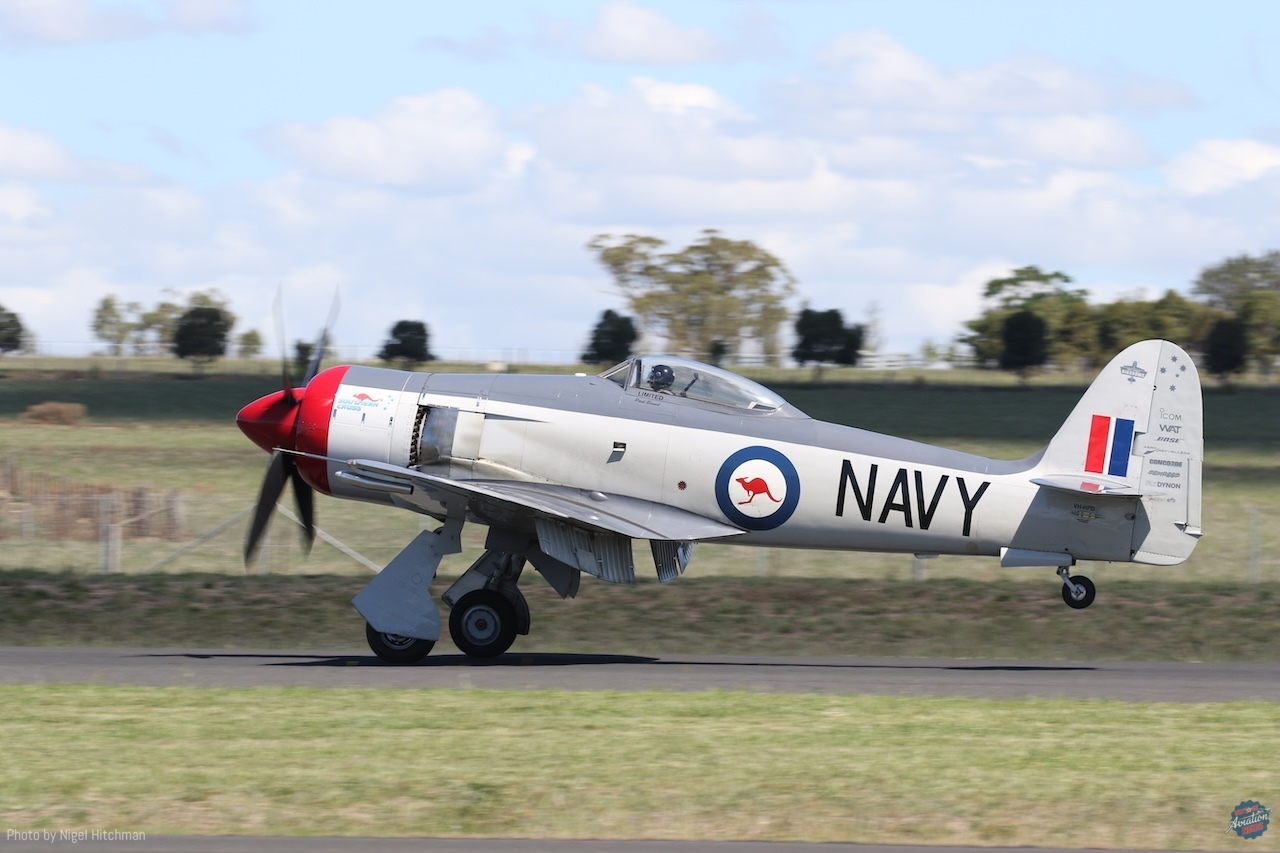
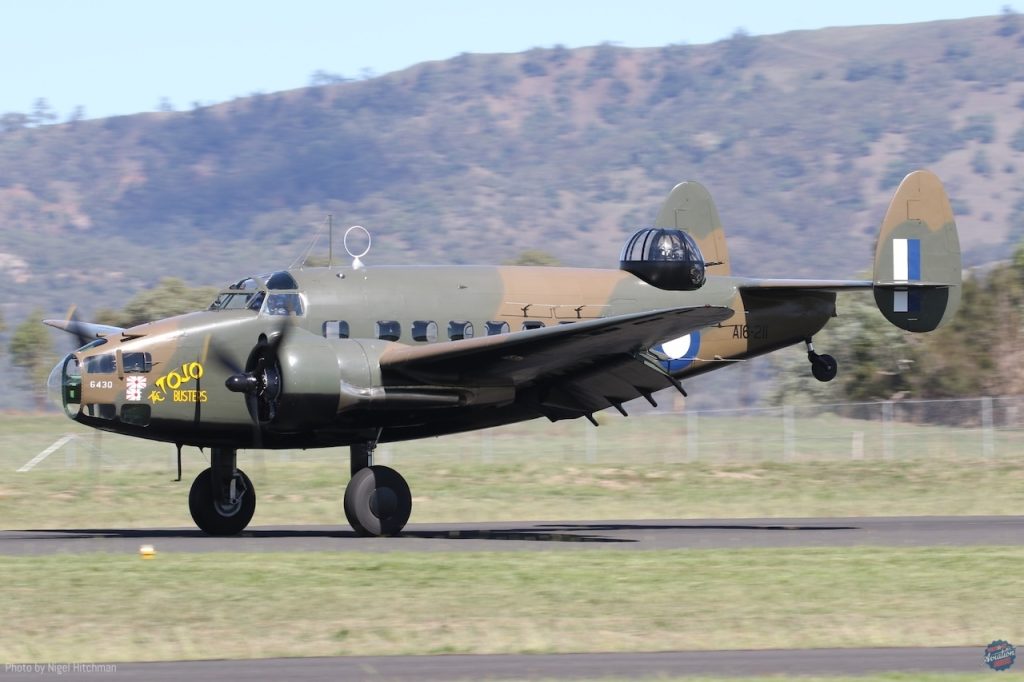
Unique to Australia is a flying Lockheed Hudson VH-KOY A6-112, another Temora Aviation Museum aircraft currently operated by 100sqn. Fantastic to see this display and then lead the Balbo. This is the only airworthy Lockheed Hudson in the world and is a Pacific War combat veteran, serving at Milne Bay, PNG in 1942–43. It was later operated as an airliner and then a survey aircraft in the 50s and 60s. Restored to full military configuration, it flew again in 1993. It is painted as “The Tojo Busters” A16-211, which was another Milne Bay combat veteran, and the remains of the original aircraft are still lying in PNG.
(Image credit: Nigel Hitchman)
We started the day with the lighter end, with two superb aerobatic displays in WWII trainers: a Boeing Stearman N2S-3 VH-YDF and de Havilland DH82A Tiger Moth VH-PCL.
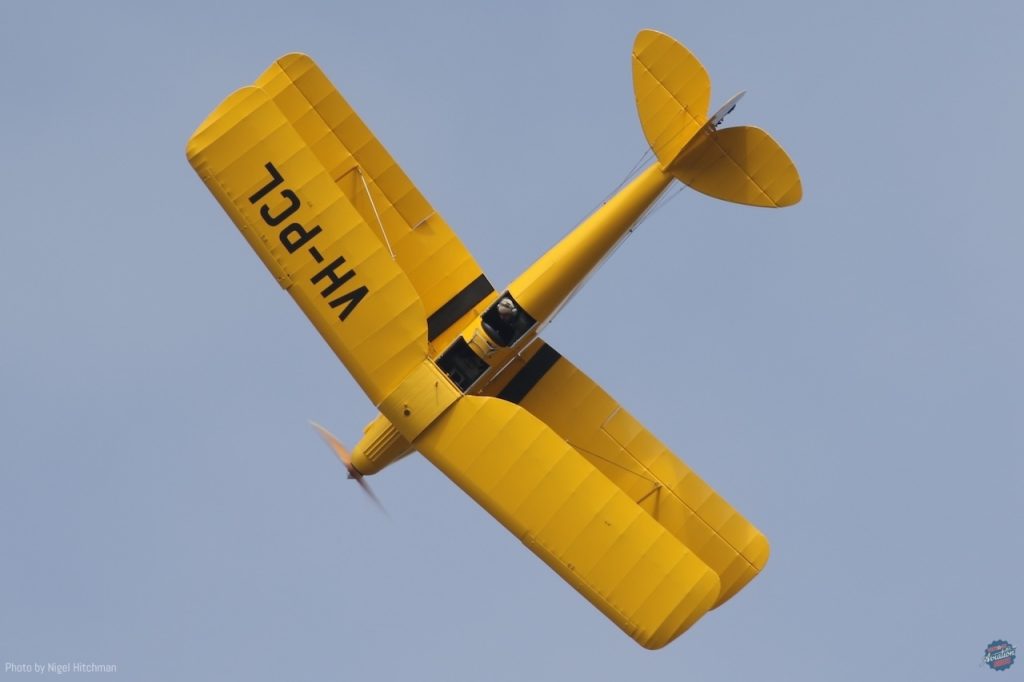
(Image credit: Nigel Hitchman)
An excellent display with three WWI replicas: a Fokker Dr.I Triplane VH-FXP and the rarer Bristol F2b Fighter VH-IIZ/B1229 and Nieuport 24 VH-IJI, with the Red Baron succeeding in shooting down the Nieuport and scaring off the Bristol Fighter!
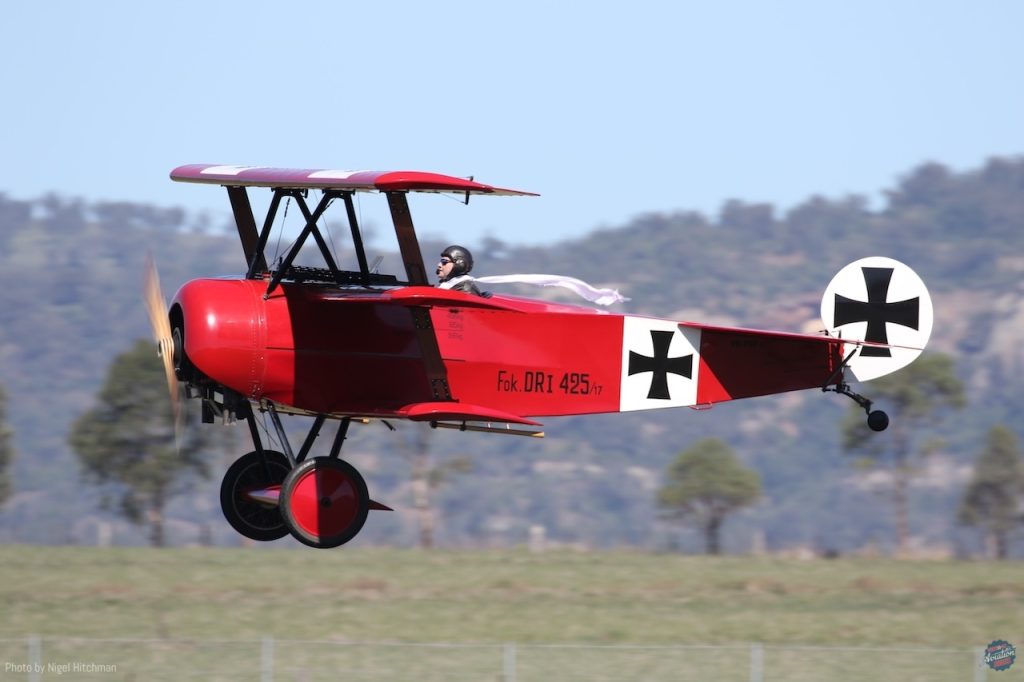
(Image credit: Nigel Hitchman)
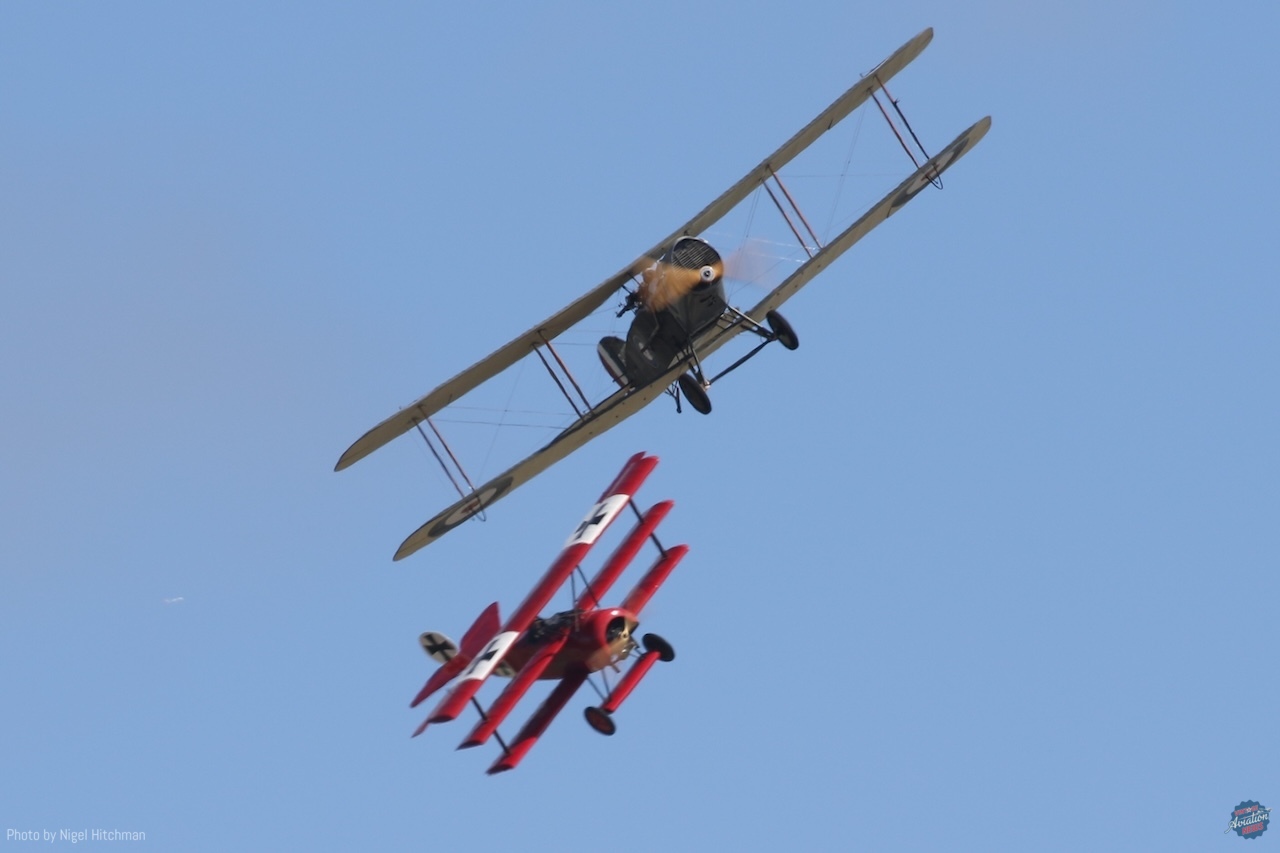
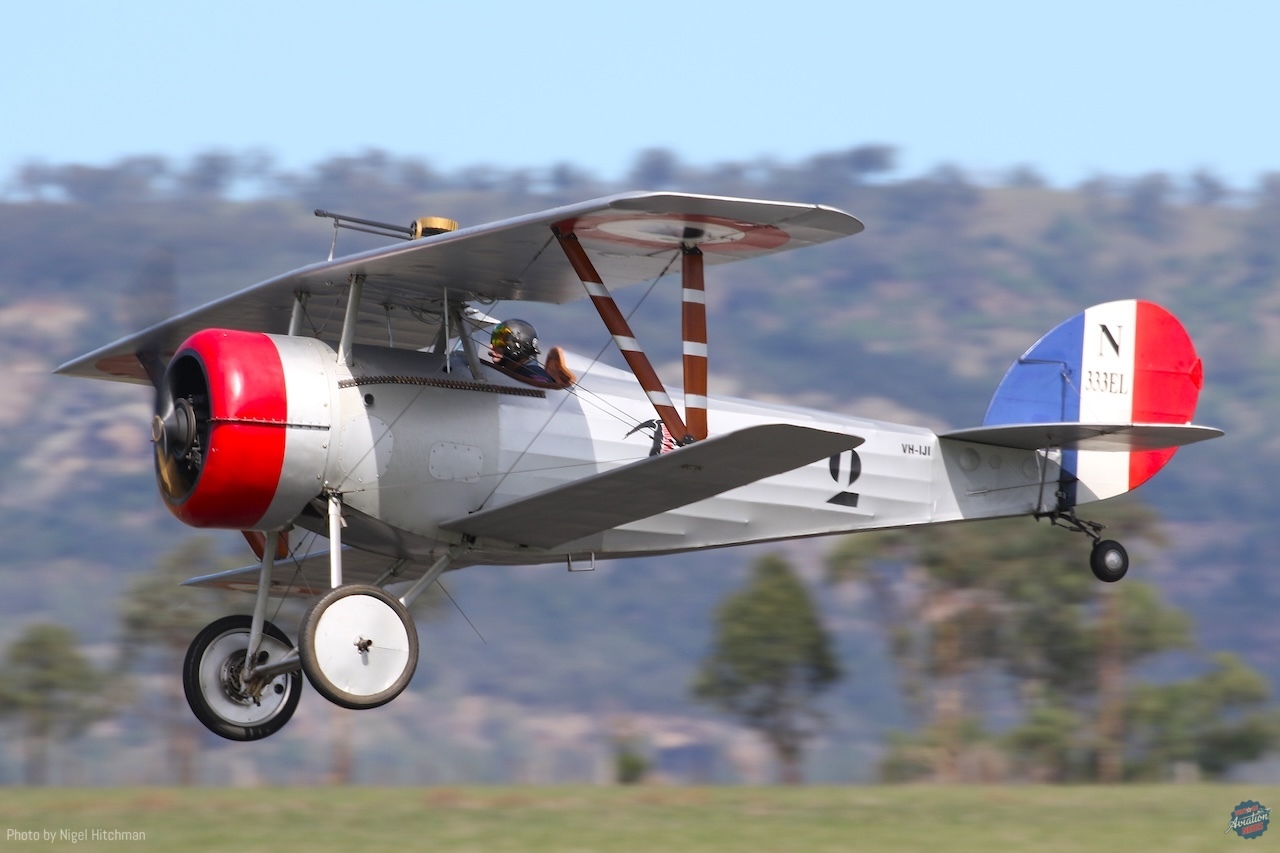
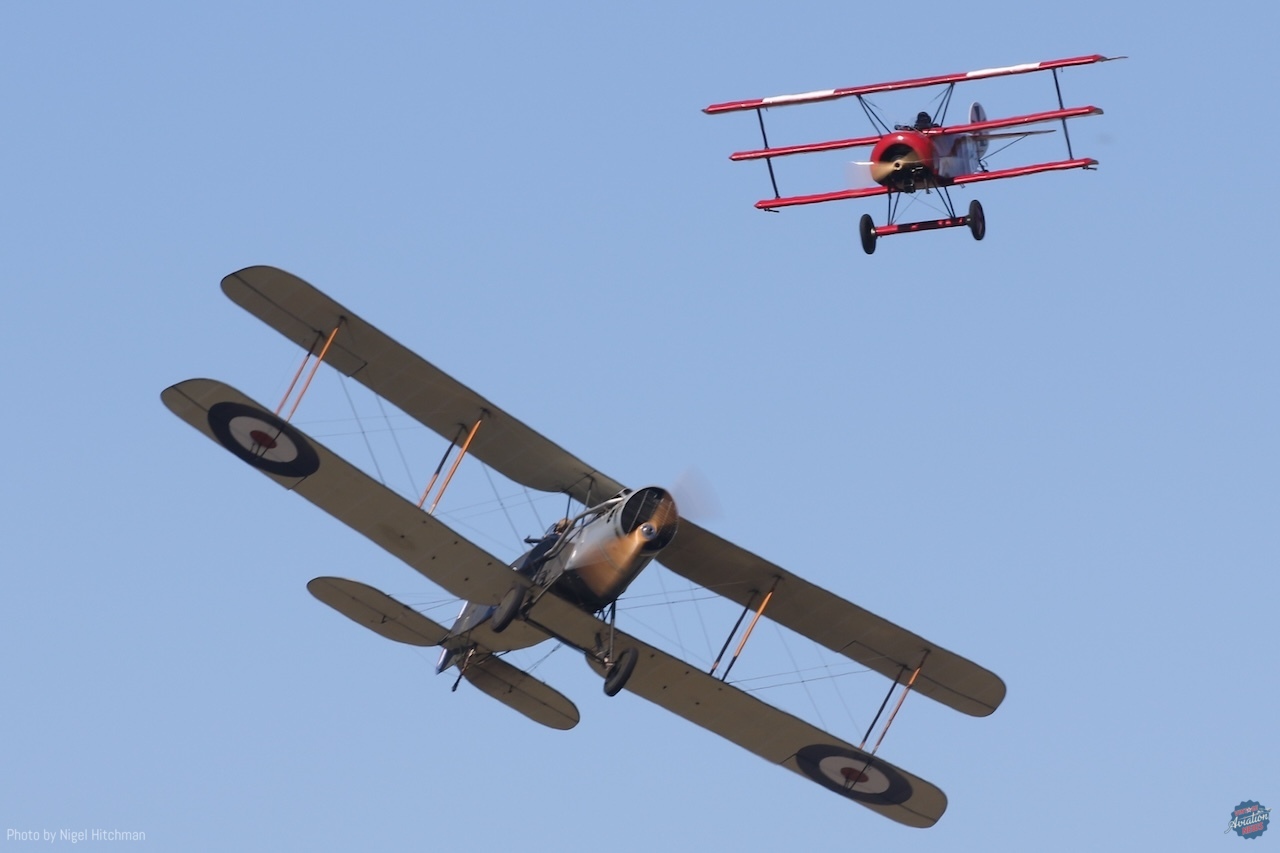
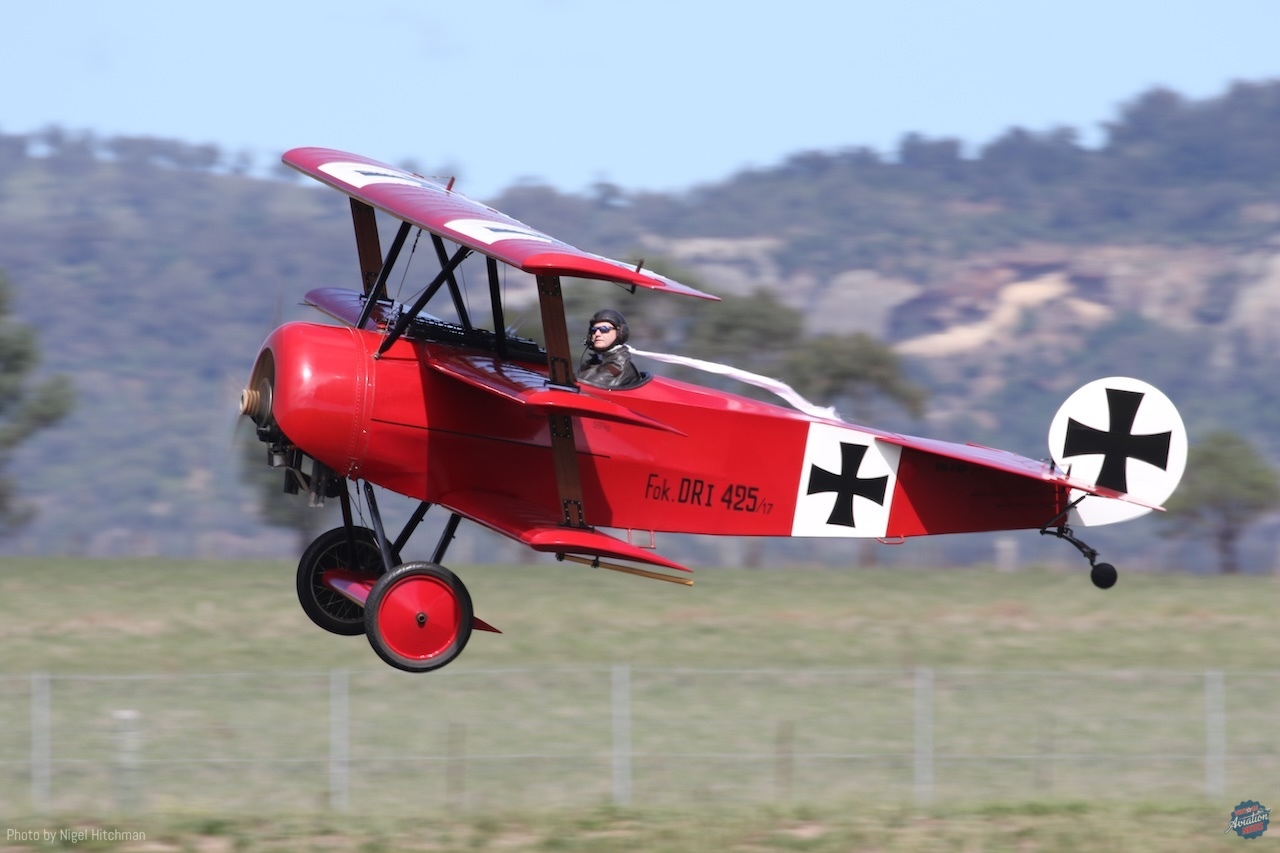
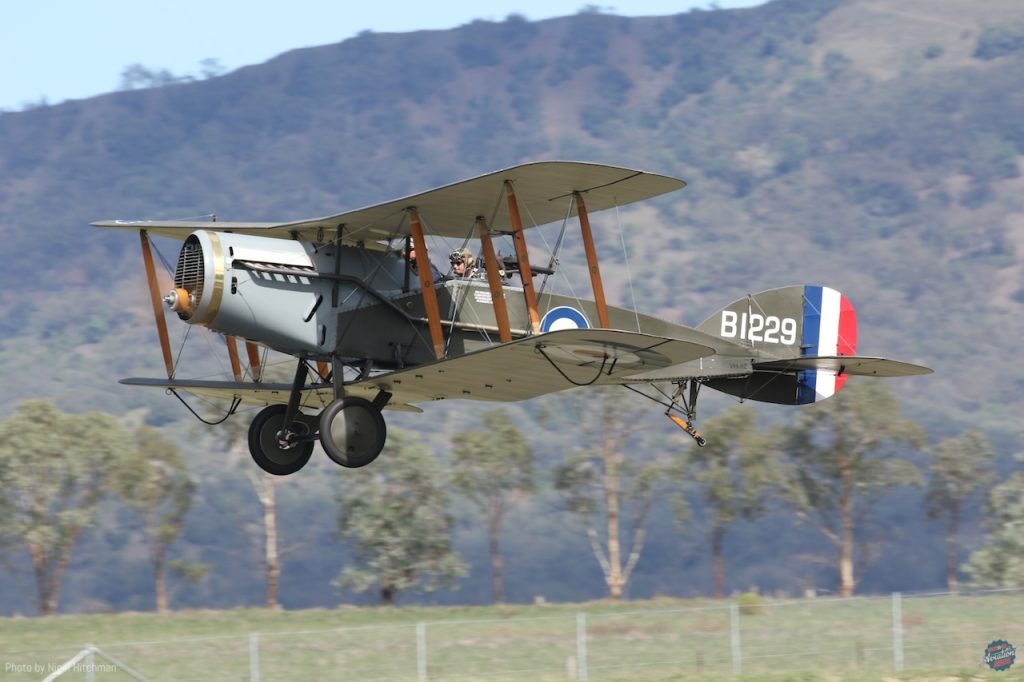
(Image credit: Nigel Hitchman)
There were also a few displays with modern aerobatic aircraft and more trainer displays from a Beech 18, a nice display of three Harvards, and another with three T-28s, but perhaps the most unusual were two firebombers. The first, a water drop demonstration from one of Pays Air Services’ Air Tractor “Fire Boss” aircraft VH-FHI.
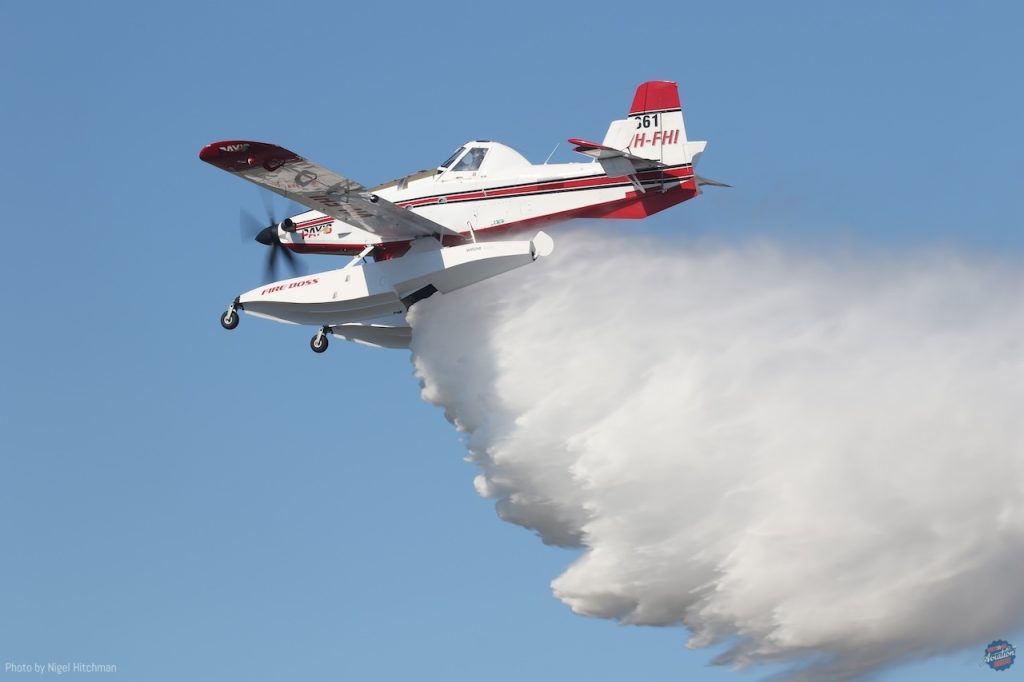
(Image credit: Nigel Hitchman)
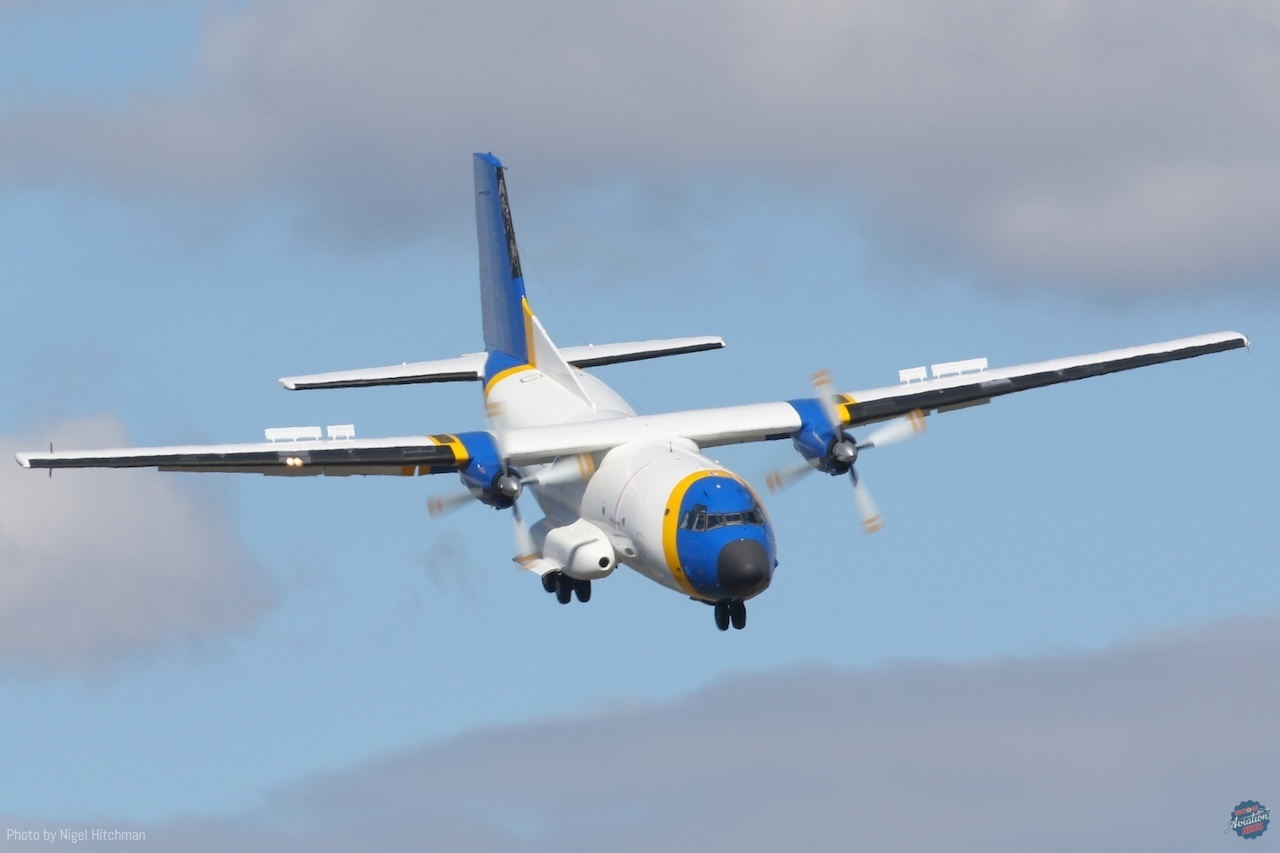
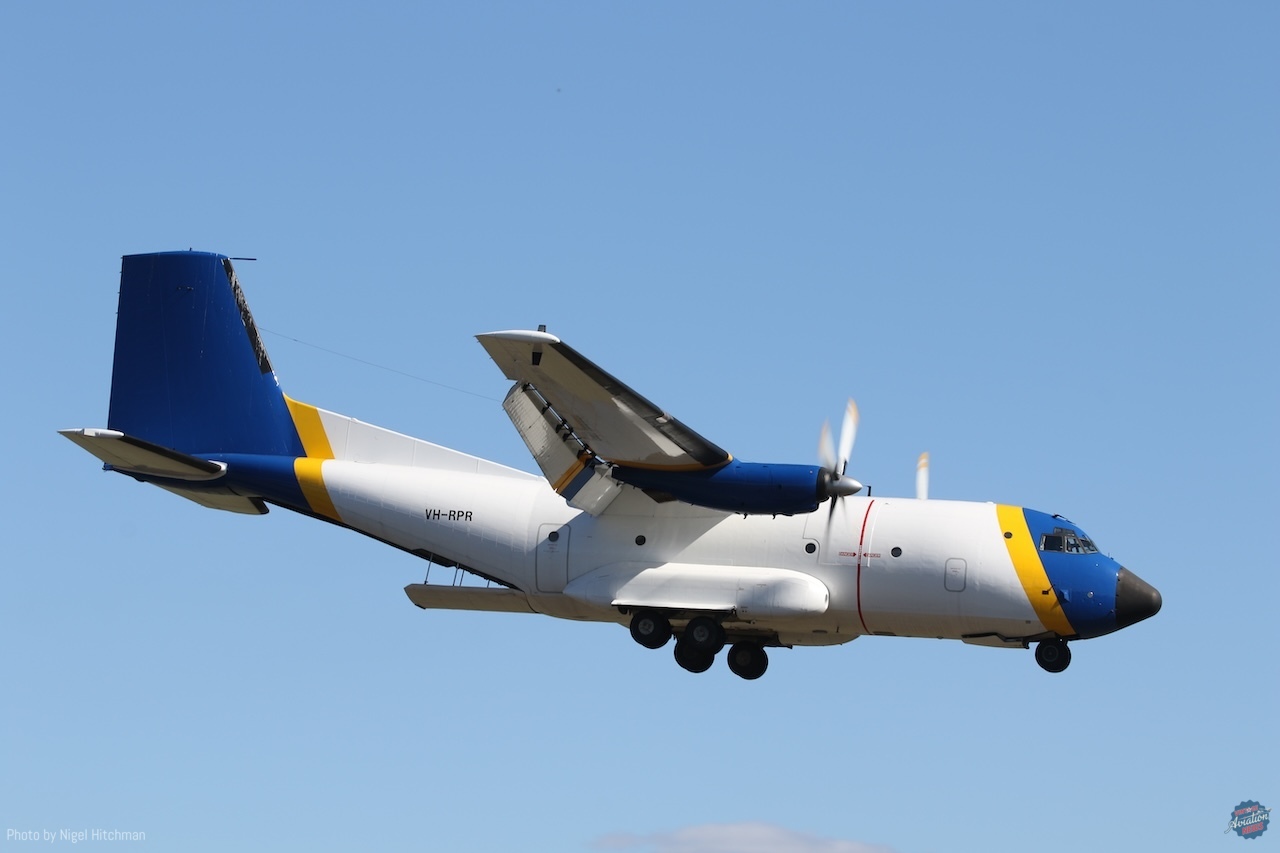
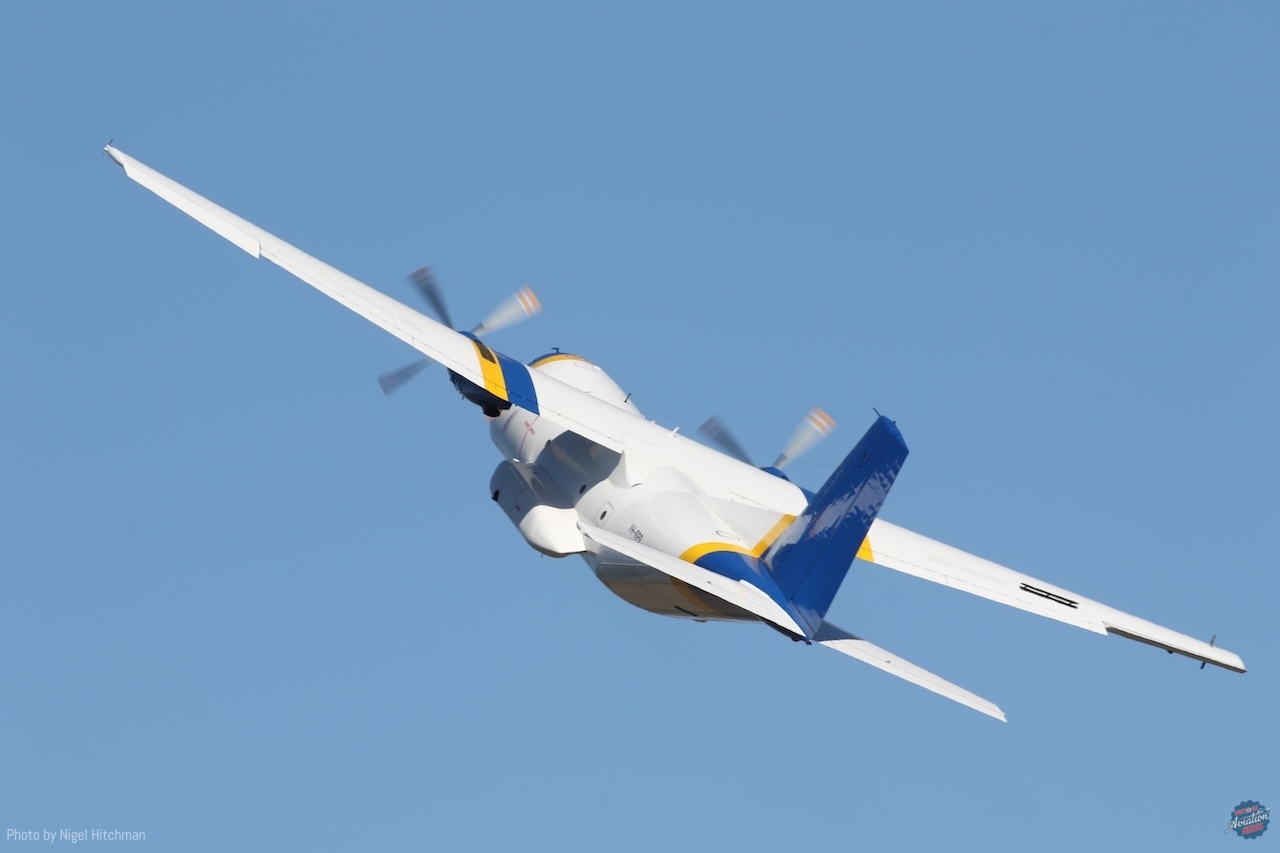
But the biggest surprise was a very sprightly display with a former German AF Transall C-160D, VH-RPR (ex GAF 50+83). This is one of three brought to Australia being converted to firebombers; this example doesn’t yet have the firebombing kit installed, but is being used as part of the test program for Australian certification. Perhaps not so surprising it was a great display, as it was being flown by long-time test pilot Klaus Plasa, more usually seen at airshows flying FW190s and Bf109s.
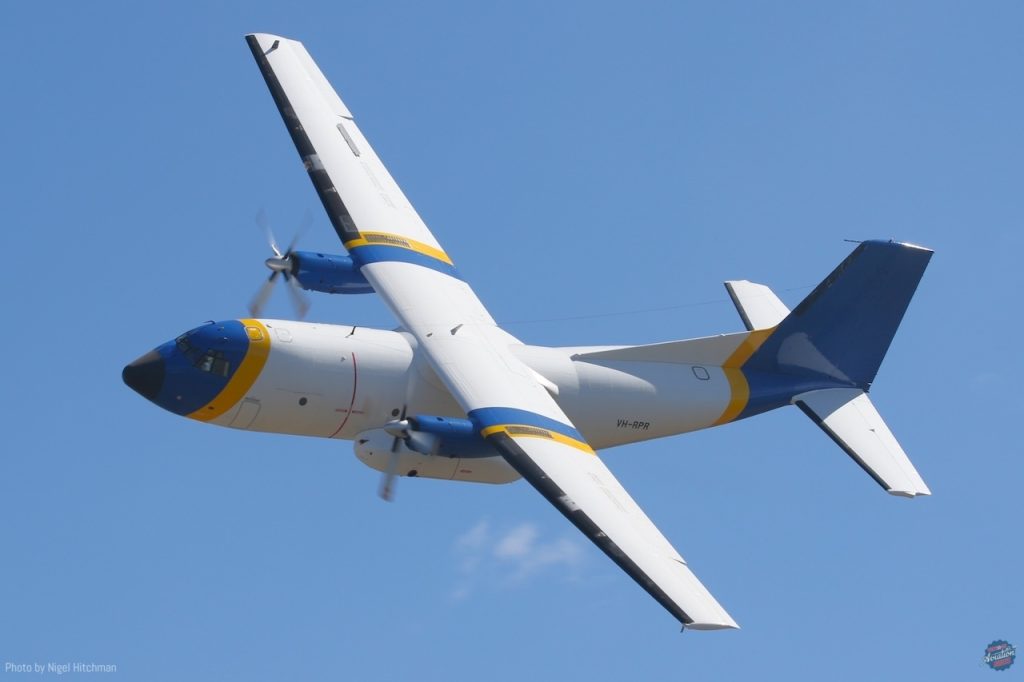
(Image credit: Nigel Hitchman)
The jet age was represented by the de Havilland DH115 Vampire trainer VH-T55, which was very nicely displayed, as was the BAC Strikemaster VH-AOE. The Vampire is a former Swiss AF trainer which was, until recently, flying in Canada, hence the false RCAF serial and Canadian roundels, now converted to RAAF, but it still looks great. The Strikemaster is ex-Saudi AF, but painted in Kuwaiti AF colours.
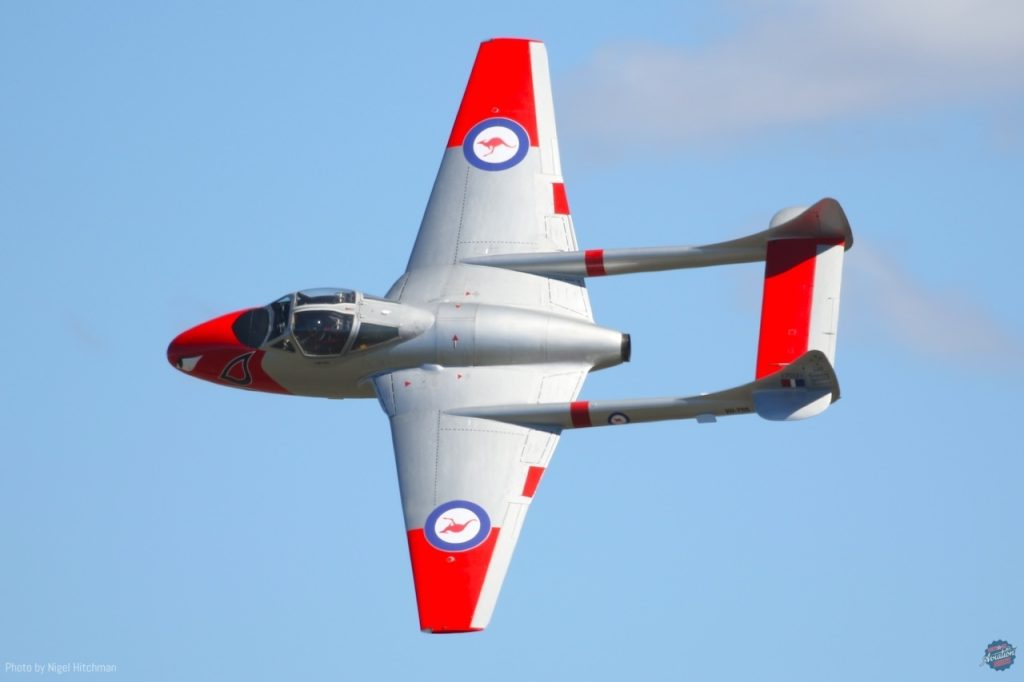
(Image credit: Nigel Hitchman)
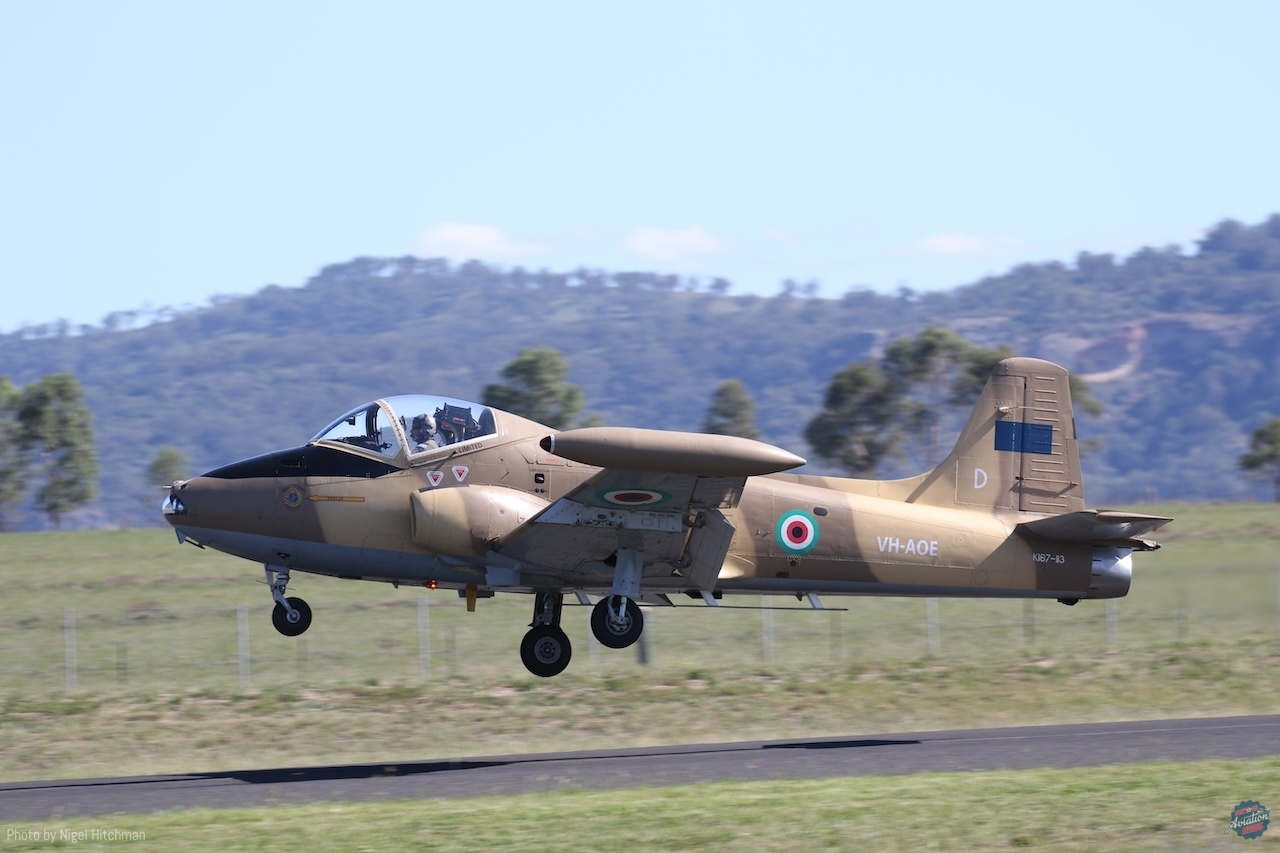
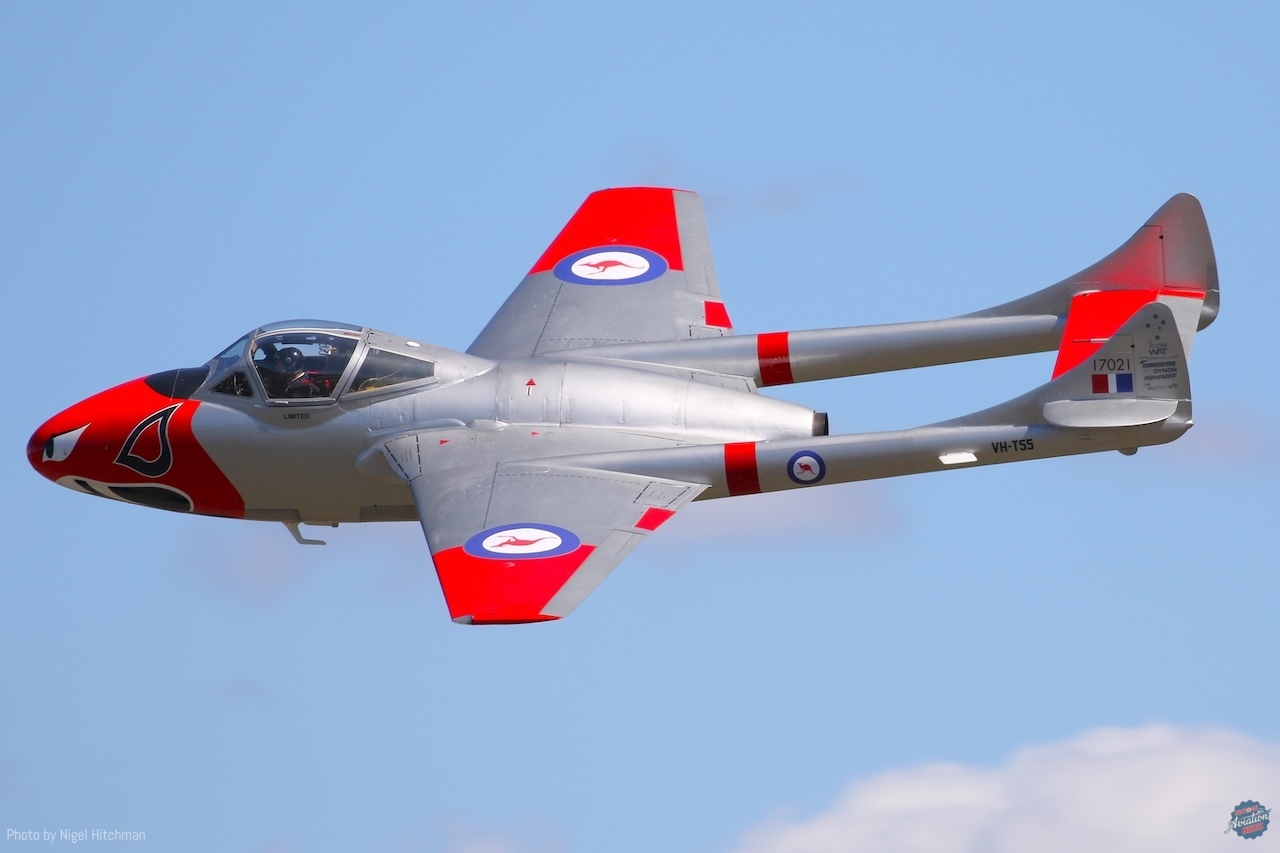
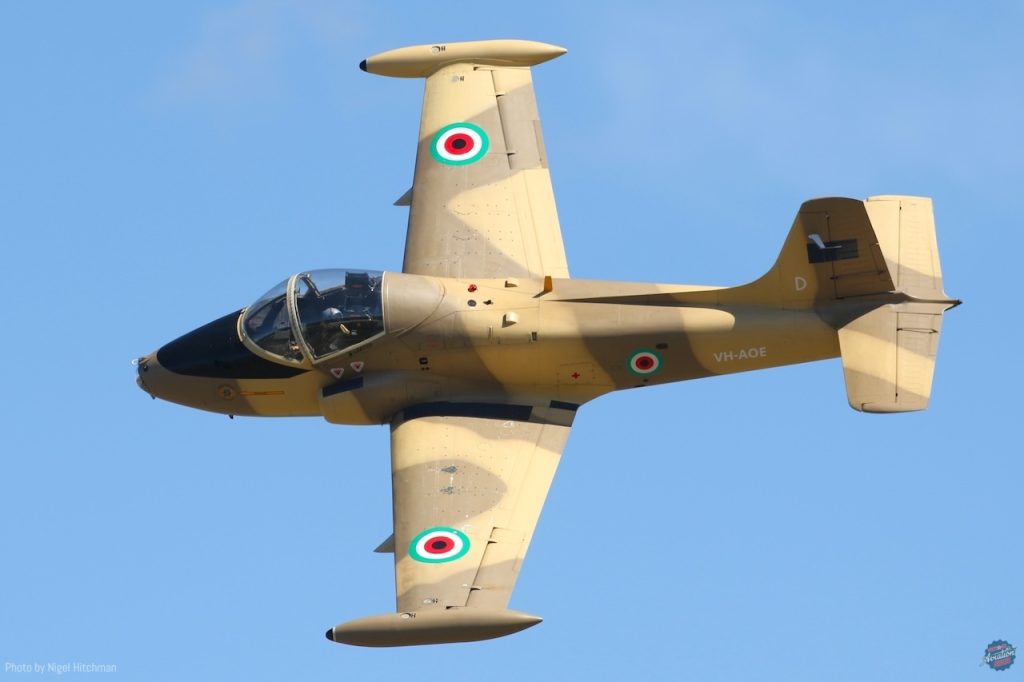
(Image credit: Nigel Hitchman)
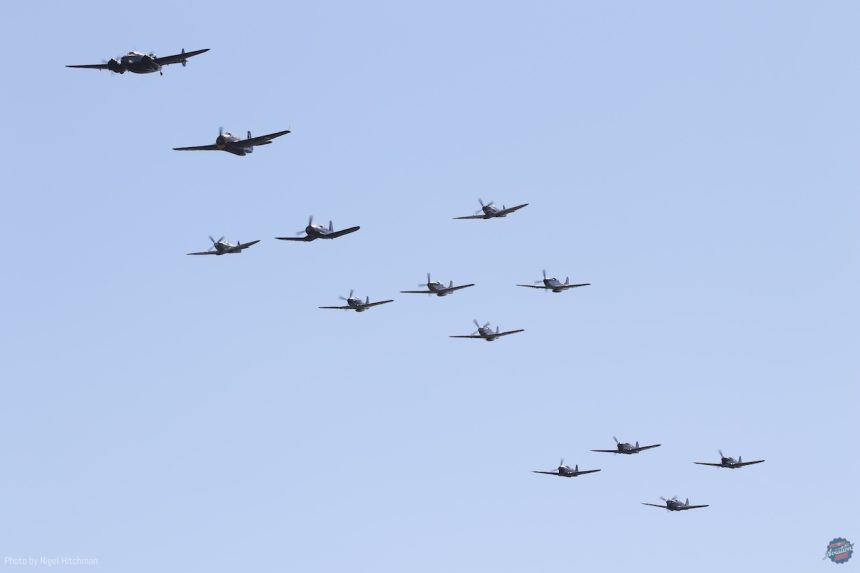
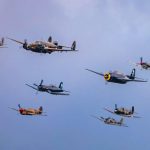
The finale and highlight of the show for many was the “Balbo,” and this was perhaps the biggest Balbo ever seen outside of the UK and the famous “Flying Legends” airshow at Duxford, which was the pinnacle of warbird airshows worldwide. Here, we get as many as possible of the WWII-era combat warbirds flying together in a big parade of formations along the crowdline. They then break up into smaller groups to eventually split up and land—it’s a fantastic spectacle, and this one was very well done. The Balbo was led by the Lockheed Hudson, followed by the Grumman TBM Avenger, then Corsair with two Spitfires, followed by four Mustangs and then four P-40s.
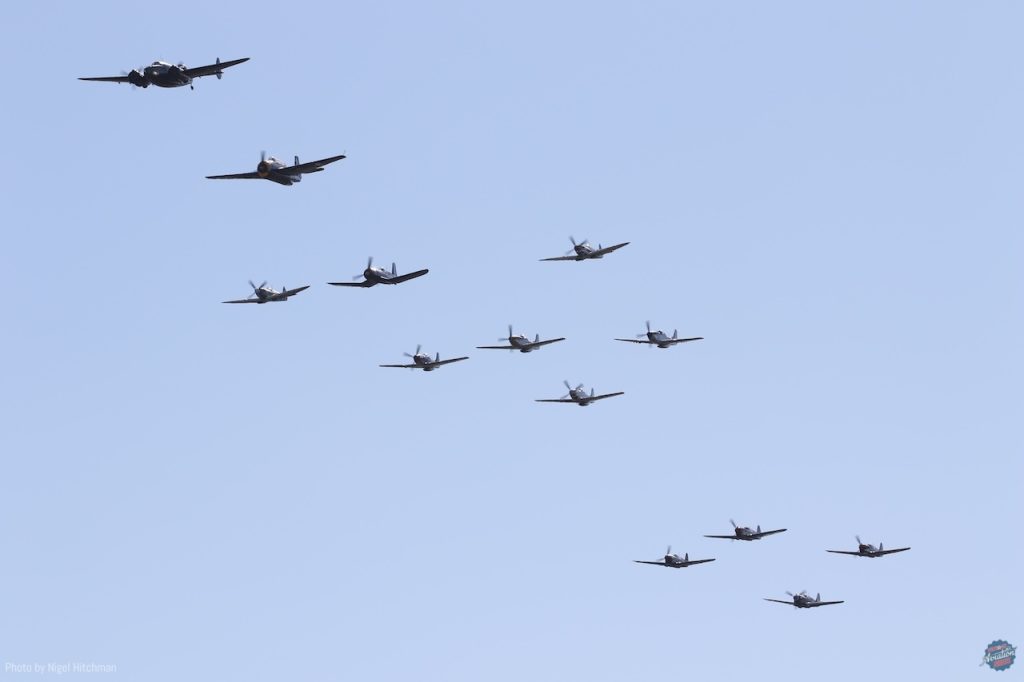
It was a really great show, well organised, great flying, and no gaps—always something in front of you. It helps that there is only one runway, so all the take-offs and landings are also right in front of you, and a big bonus—the sun is behind you most of the day. There were a few other aircraft just on static display, as well as the museum to visit, and a big bonus of 30 or 40 visiting aircraft coming in and out each day, including some interesting visitors such as a CAC Winjeel, Beech T-34, DHC-2 Beaver, Yak-18Ts, and even a Beech 18.
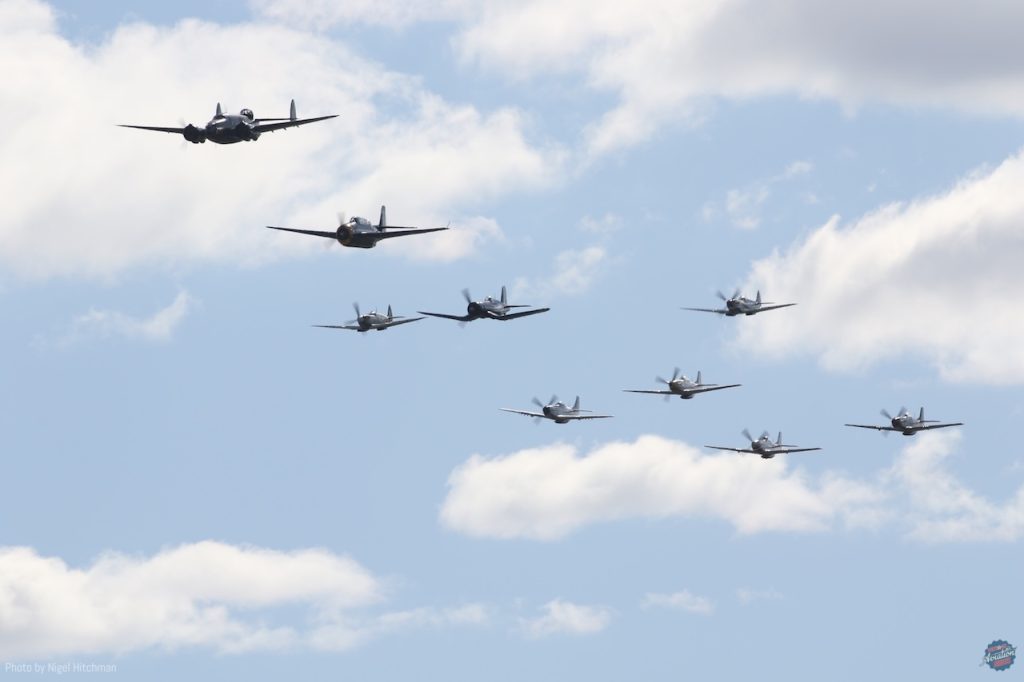
(Image credit: Nigel Hitchman)
I can certainly recommend looking out for the next “Warbirds over Scone” airshow, which will hopefully be even bigger and better. It’s expected to be March 2028. With the end of the excellent “Warbirds Downunder” shows at Temora, this promises to be Australia’s premier event. For more information, visit www.warbirdsoverscone.com.au.
![Sea Fury VH-HPB, formerly the Reno racer Sawbones, is unpacked in Australia after purchase by Paul Bennet. [Photo Paul Bennet Airshows via Facebook]](https://vintageaviationnews.com/wp-content/uploads/VH-HFB-202302xx-Paul-Bennet-Airshows-via-Facebook-01-150x150.jpg "Sea Fury Sawbones Sold to Australia 14")



It was an excellent show. With a little bit of imagination the whole event transported you to a time gone by era. Excellent stuff. The entry points however should.be better managed as it was disorganised. Overall though excellent day out.
I am very jealous! For years we used to enjoy the similar … ‘Flying Legends’ War Bird Show, at the former RAF Duxford; that ls until some … ‘Not So Bright Spark’ … threw a Spanner into the works.
Making The Legends leave, hundreds of miles to the North; where I no longer get to see them.
To my mind the Best looking, of All The Spitfire Marks, is The VIII, and here they were; Diamonds amongst so many other jewels!
As I say … Jealous, Very jealous …..