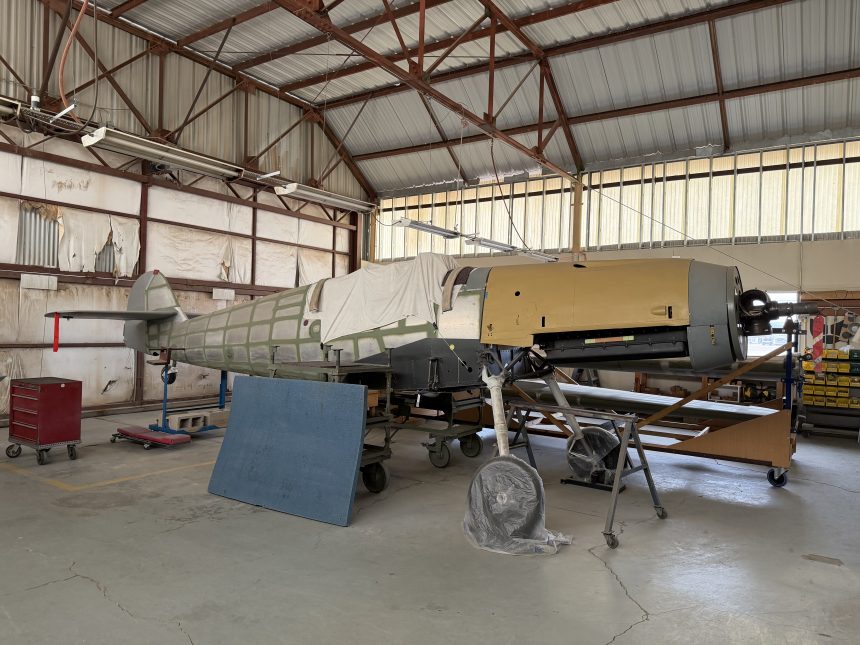

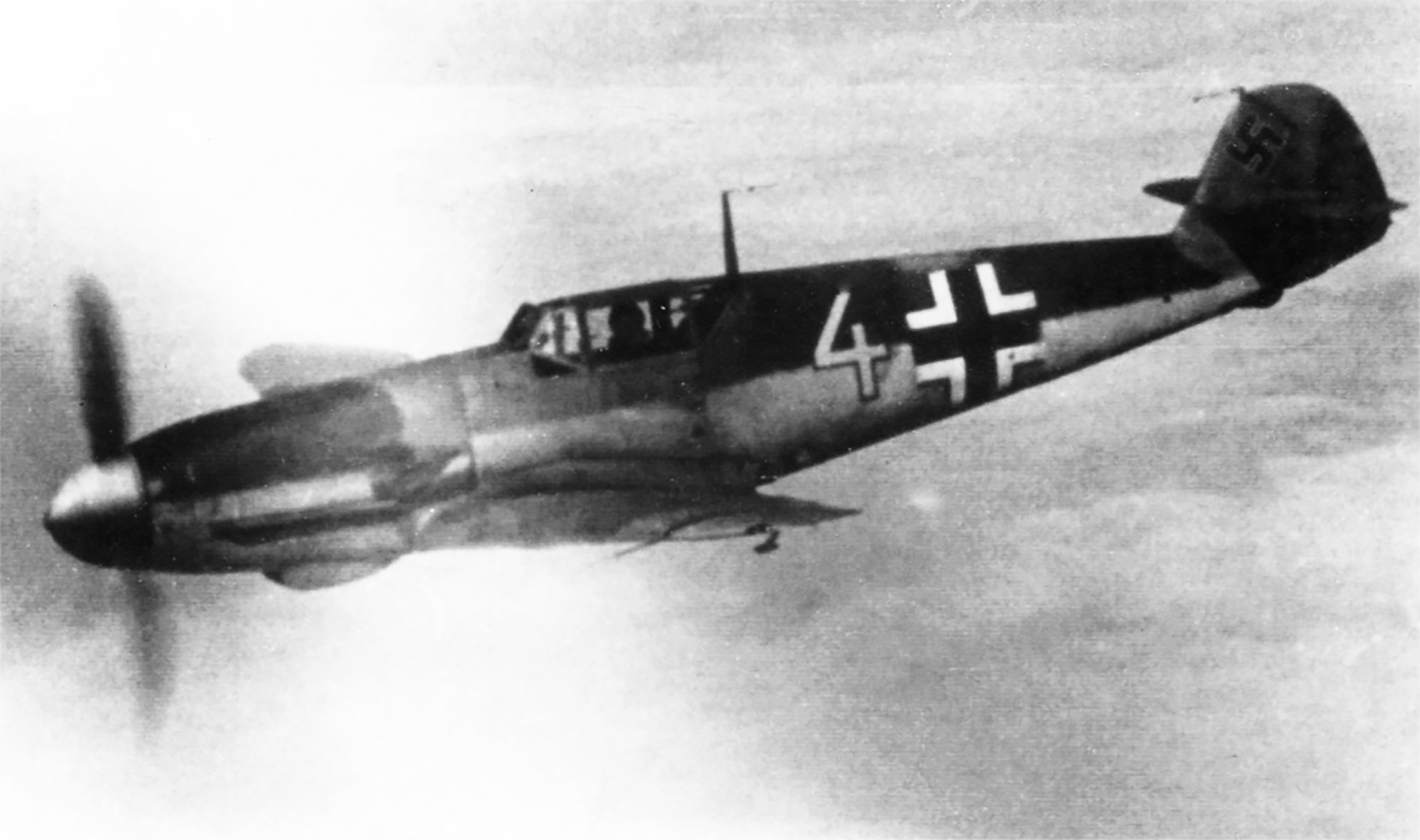
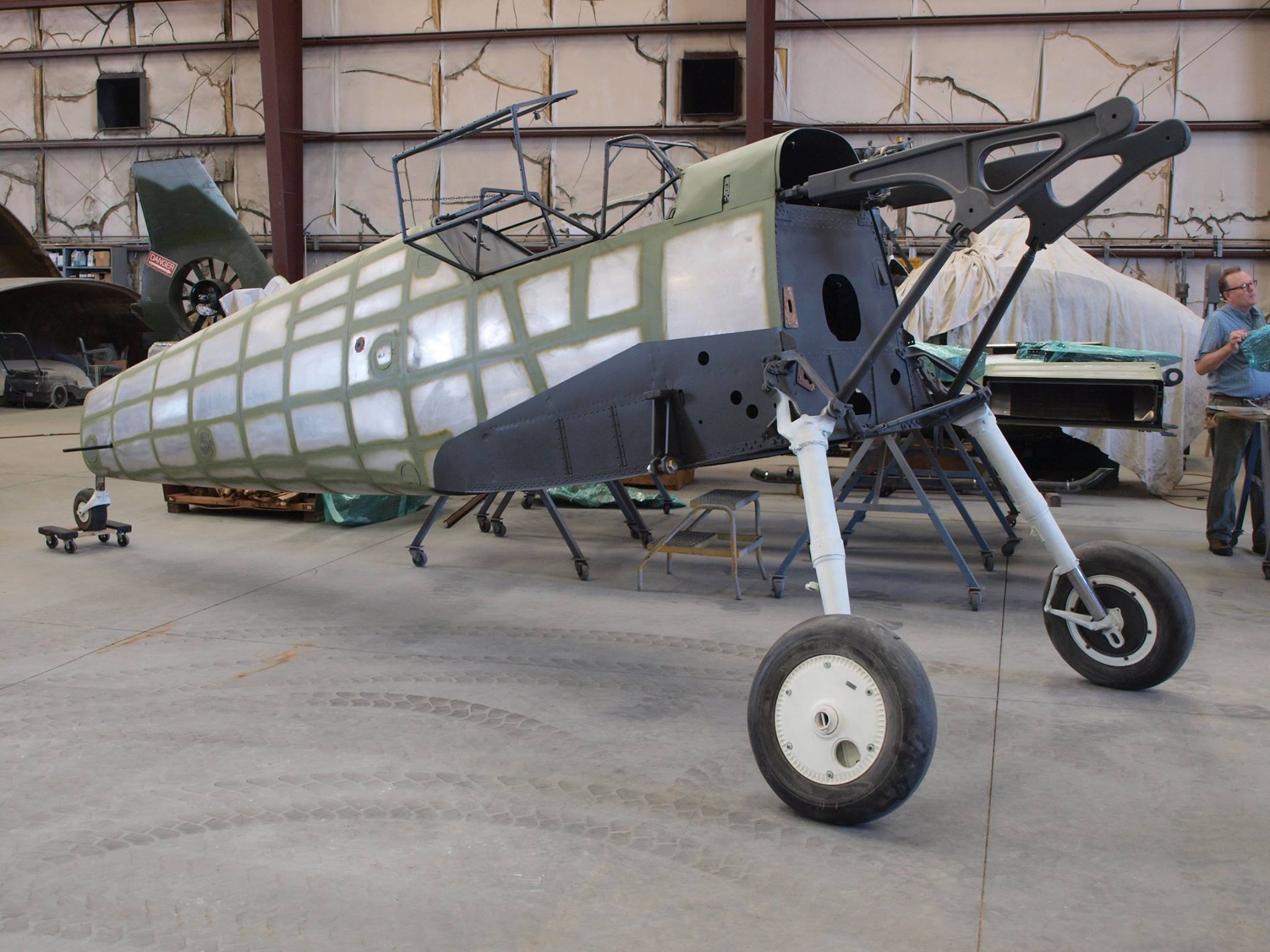
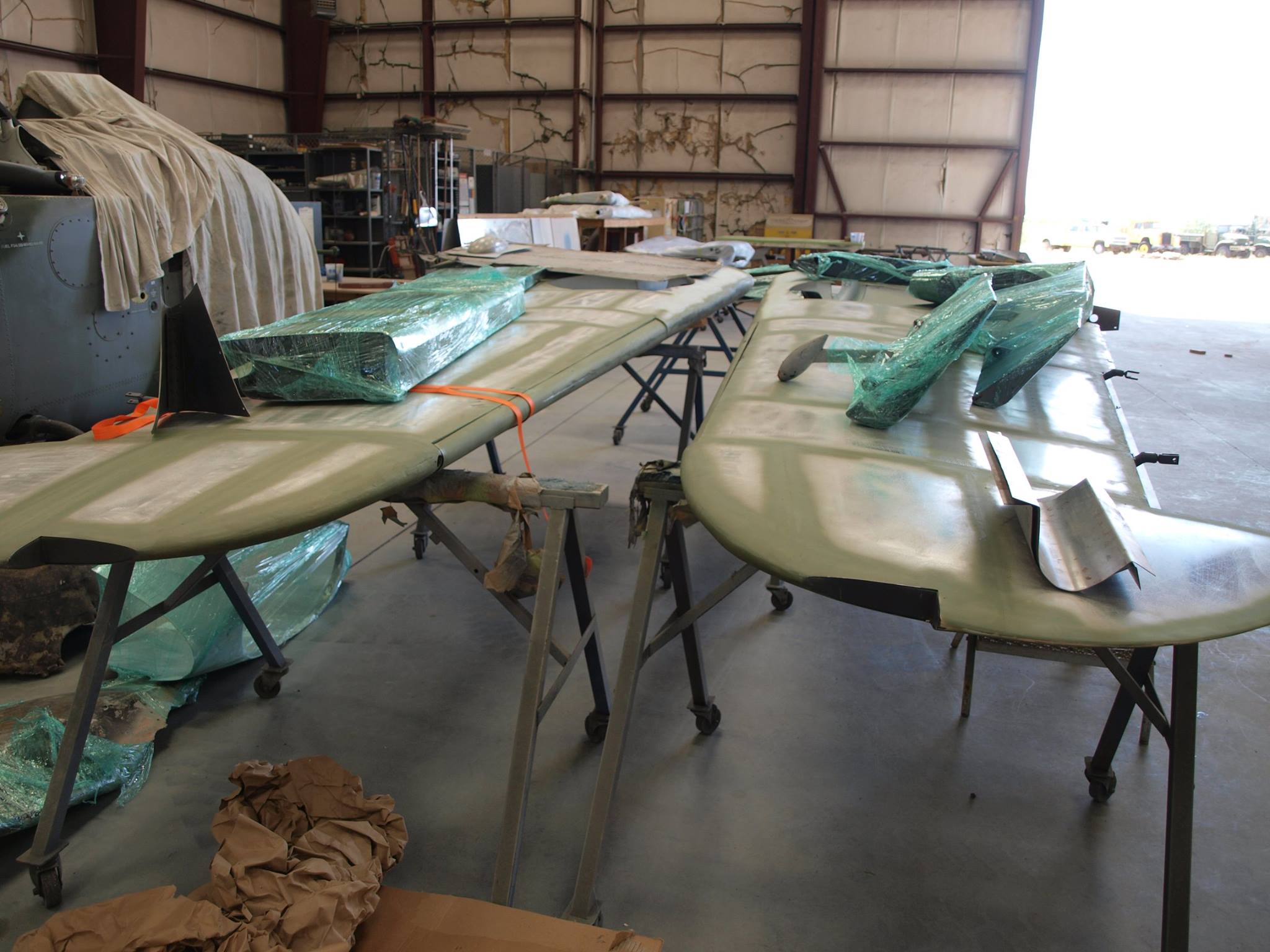
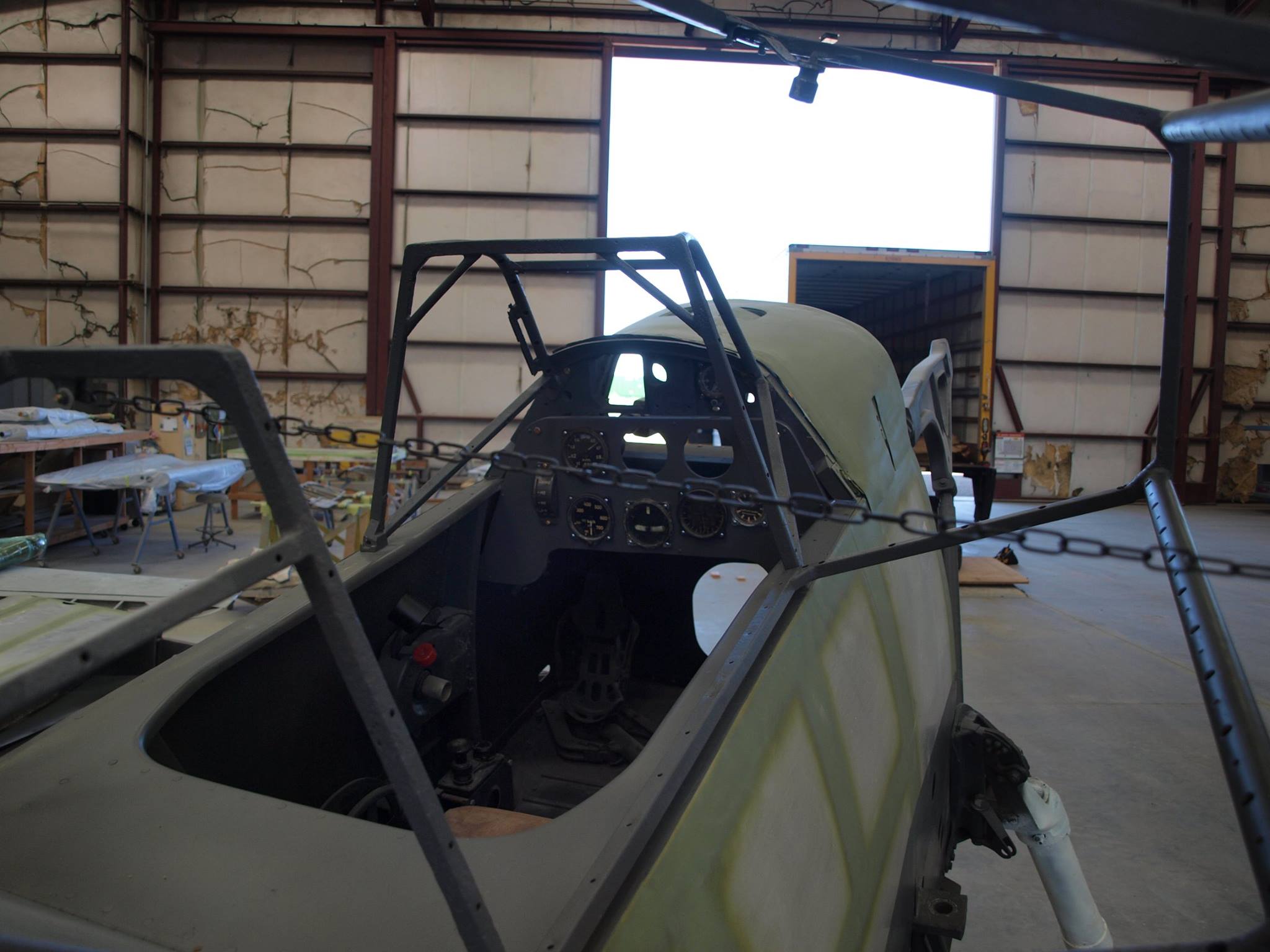
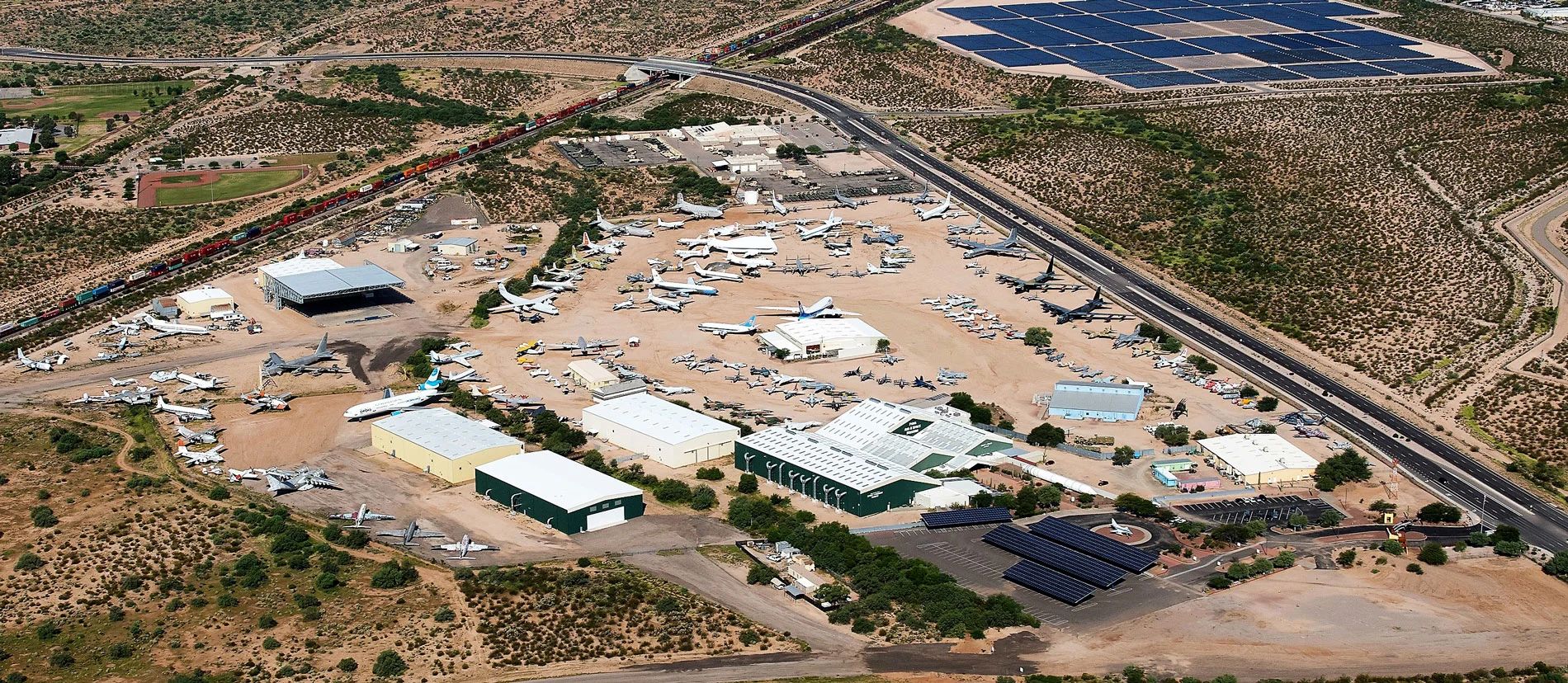
With more than 400 aircraft in its collection, the Pima Air and Space Museum is one of the largest aviation museums in the world, and yet its collection continues to grow. Inside one of the museum’s restoration workshops, a building referred to by museum personnel as “Area 51”, two German WWII aircraft are currently taking shape. These are an original Messerschmitt Bf 109 F-4 and a replica of a Messerschmitt Me 262 Schwalbe jet fighter. Both of these aircraft will not only be on display in the museum’s WWII exhibits but will also be painted in the colors of a forgotten German ace of the Second World War. The history of the Messerschmitt Bf 109 at the Pima Air and Space Museum is one that still has a shroud of mystery around it, but among the details of its story that can be verified, the aircraft was constructed at the Wiener Neustädter Flugzeugwerke (WNF) plant in Wiener Neustädt, Austria, in December 1941 as Bf 109 F-4/R1 Werknummer 13045 as part of a production batch at WNF for Werknummers 13001 through 13391. The R1 subvariant of the F-4 was capable of having two 20mm MG 151/20 cannons in underwing gondolas. In 1942, the aircraft was transferred to Jagdgeschwader 5 (JG 5), known as the Eismeer (Arctic Ocean) wing for its stationing in the north of Scandinavia, being posted from Norway to Finland, with one of the more active sectors under its purview being the Murmansk Front against the Soviets. As part of JG 5, Werknummer 13045 was attached to Gruppe II, 6 Staffel and was issued the fuselage code Yellow 4. However, 13045’s war would be very brief.
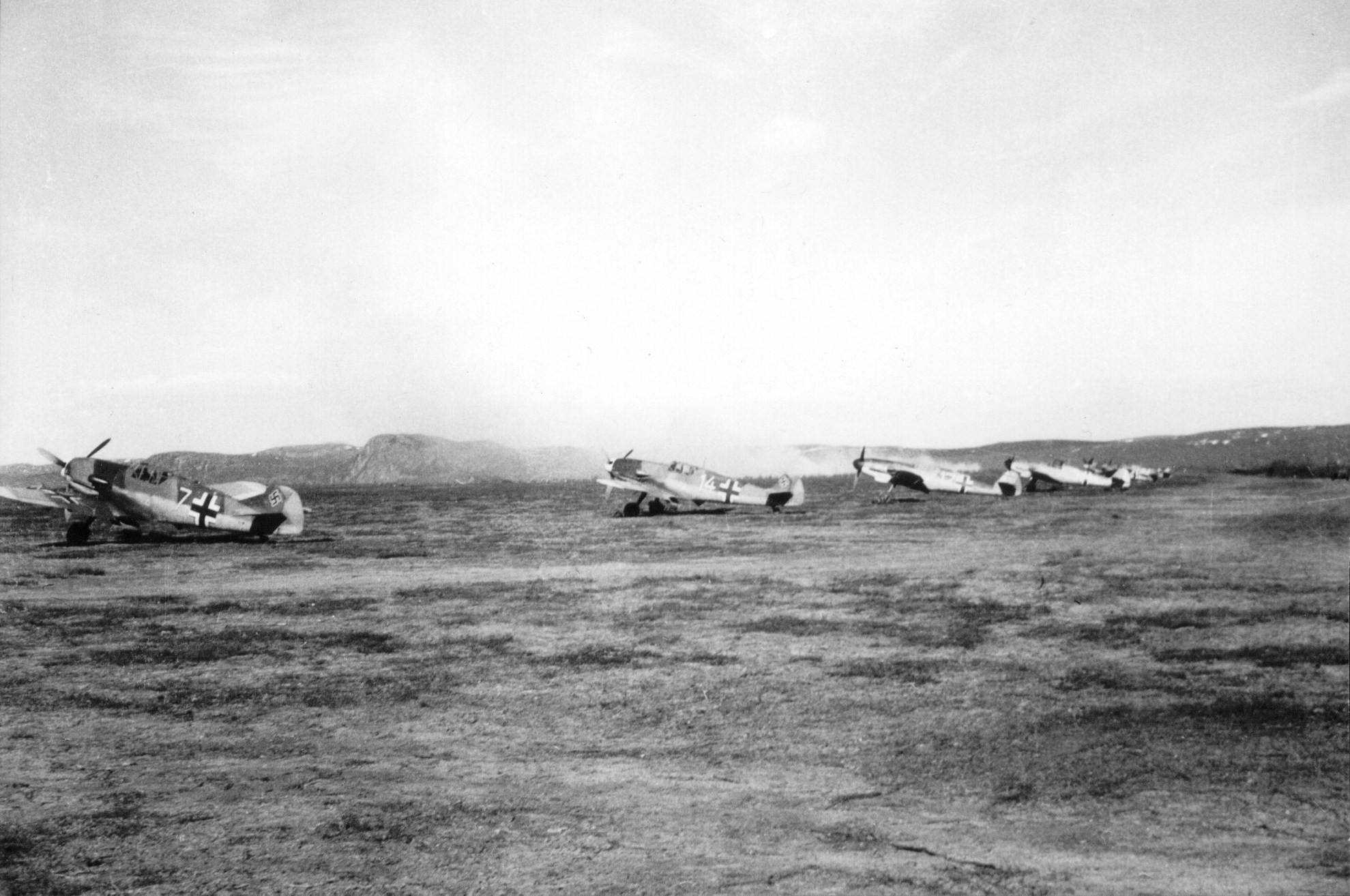
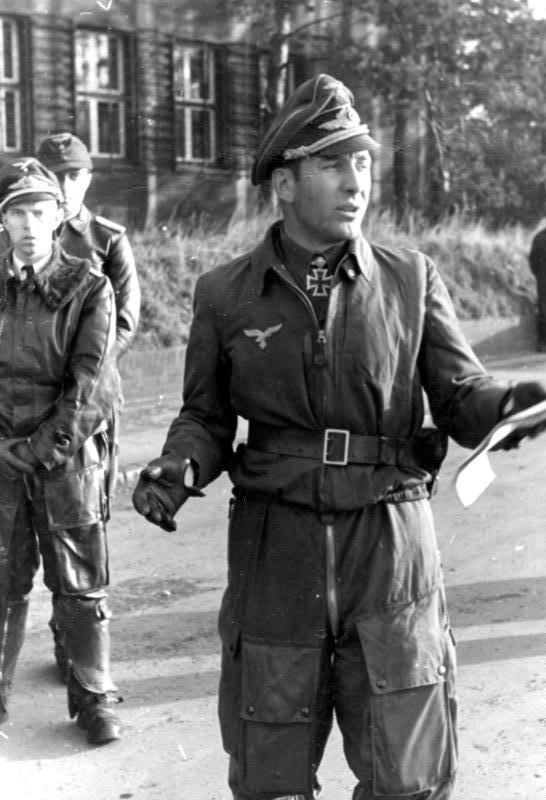
On October 22, 1942, Bf 109 F-4/R1 WkNr 13045/Yellow 4 would set out on an escort mission to protect reconnaissance aircraft from Soviet fighters while they gathered intelligence over the Soviet port of Murmansk. At the controls of Yellow 4 was 27-year-old pilot Leutnant Theodor “Theo” Weissenberger. By this point, Weissenberger was already a Luftwaffe ace, as his tally up to this day already stood at 33 aerial victories, with 23 of them having been scored in the Messerschmitt Bf 110 twin-engine heavy fighter. While the reconnaissance aircraft was able to successfully carry out its mission and eventually return to base, the Daimler-Benz DB-601E engine in Weissenberger’s Bf 109 would suffer complete failure just west of Murmansk. Unable to restart his engine, Weissenberger glided Werknummer 13045 just within German-airspace in Finland’s Petsamo Province (now incorporated into northern Russia) and bailed out. Weissenberger was then returned to JG 5 and continued flying against the Soviets, racking up victories against Soviet aircraft. Yet Bf 109 F-4 Werknummer 13045, which had crashed in the tundra after Weissenberger’s bailout, would be abandoned to the tundra for more than 45 years.
By the late 1980s and early 1990s, interest grew in the warbird community in the frozen tundra between Russia and Finland in recovering long-lost WWII aircraft wrecks, with a particular interest in German aircraft, especially. By the 1990s, one of the many expeditions out to the far northern tundras and lakes of the former Murmansk Front had recovered the wreck of Bf 109 F-4 Werknummer 13045, along with several other Bf 109s, mainly Bf 109Es and Fs of JG 5. By the 2000s, Weissenberger’s Bf 109 F-4 was being restored by pilot Malcolm Laing in Texas, and later, the project was transferred to restorer Jason Hodge in California. While restoring the Bf 109, Hodge received assistance from German aircraft restorer and builder of WWII replicas Holger Bull, who rebuilt the fuselage and wings with new skins before shipping them back to Hodge, who would eventually get the project to within 75% complete status. By October 2016, the aircraft was traded to the Pima Air and Space Museum in exchange for a Curtiss P-40 Warhawk, as the museum was then already nearing the completion of another P-40, P-40E 41-25163, which was completed in 2018 and is now on display at the museum.
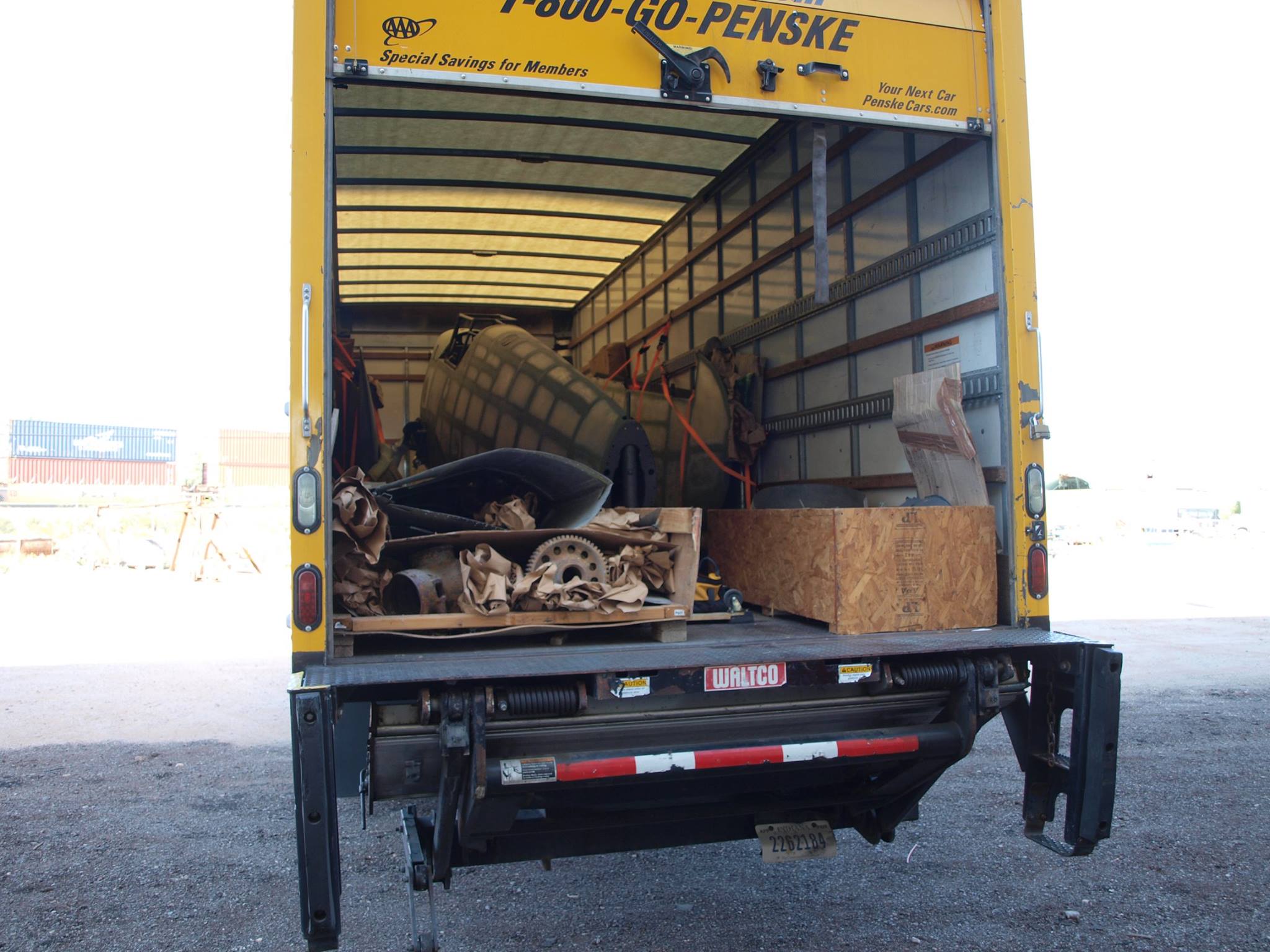
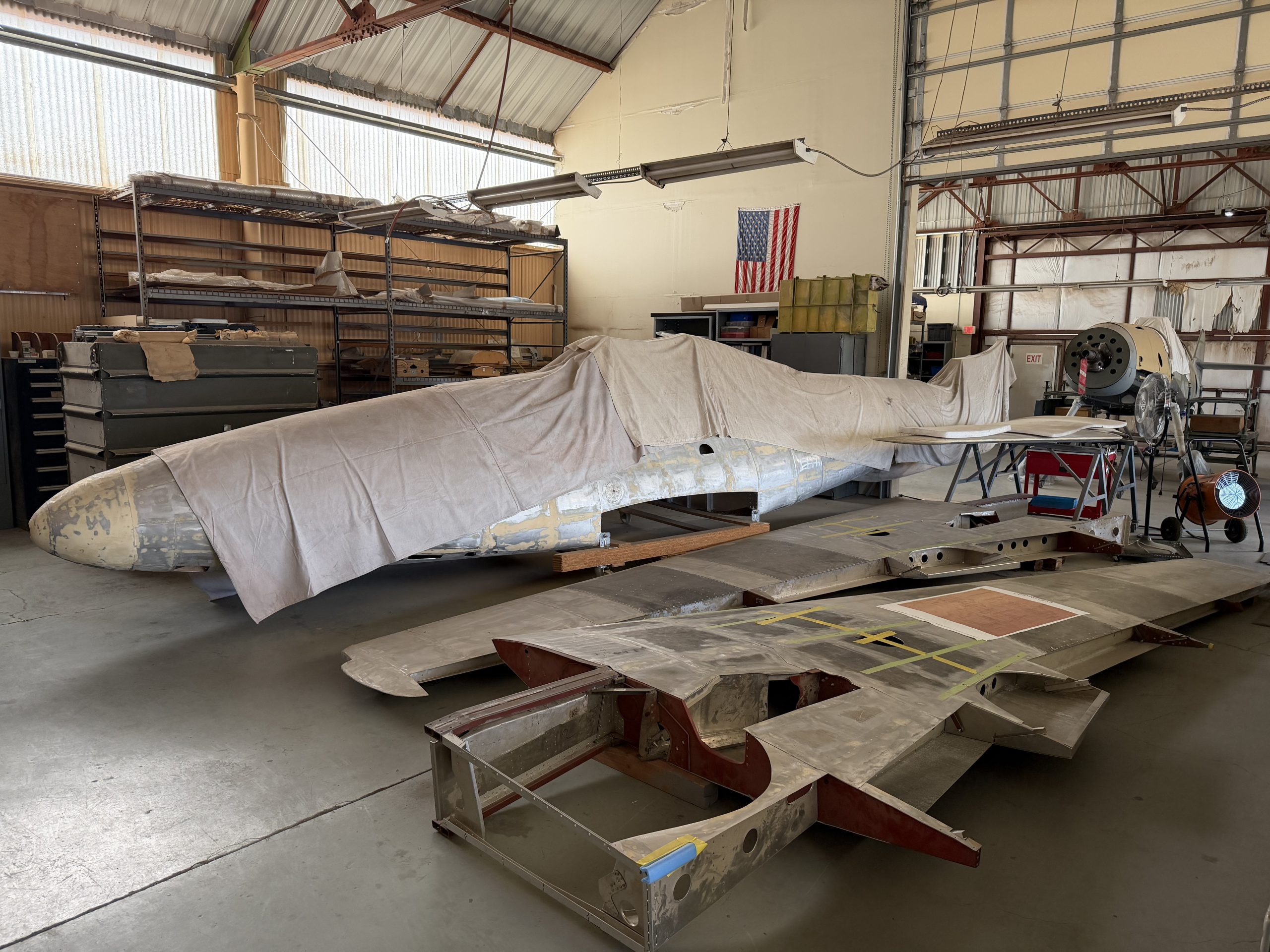
Sharing the workspace of Pima’s Area 51 with Bf 109 F-4 Werknummer 13045 is yet another long-term project revolving around a German fighter aircraft of WWII. This time, it is a full-scale replica of a Messerschmitt Me 262 Schwalbe constructed primarily by Holger Bull, but with a number of original WWII Me 262 parts. Museum director Scott Marchand explains that five sets of wing spars salvaged from the late-war Messerschmitt production lines were salvaged for use in the construction of a pig barn on a Bavarian farm, from which the wing spars were recovered during the late 1980s to early 1990s. Many tractors and haywagons on some farms situated near makeshift wartime production centers and airfields were also fitted with surplus Me 262 wheels and tires, which became highly sought after as the warbird industry grew. The PASM has also acquired a set of wheels, tires, landing gear legs, and cockpit components. The original cockpit components include a canopy frame, armored windscreen, parts of the instrument panel, rails for the gunsight, and a pilot’s seat, while the museum has also gained an original set of rocket-assisted takeoff (RATO) pods that would be slung under the Me 262’s wings and be jettisoned after takeoff.
The stated goal from the Pima Air and Space Museum on the Me 262 replica is that it will be painted in the markings of the Me 262 flown by none other than Theodor Weissenberger. After shooting down 175 Soviet aircraft from October 1941 to June 1944, Weissenberger was transferred to occupied France shortly after the Normandy invasion and began flying combat missions against American airmen while flying Bf 109Gs. After scoring his 199th and 200th victories on July 25, 1944, Weissenberger was temporarily withdrawn from combat, but after a short stint with JG 6, he was transferred to Kaltenkirchen airfield near Hamburg in November 1944, and joined Jagdgeschwader 7 (JG 7), the first operational jet fighter unit, equipped with the Messerschmitt Me 262, and nicknamed Nowotny for their fallen leader, Major Walter Nowotny. After qualifying on the Me 262, Weissenberger would be promoted to Major on New Years’ Day, 1945, and issued command of JG 7, and would hold this command until the end of hostilities in Europe on May 8, 1945. Before the war’s end, though, Weissenberger would achieve 8 further aerial victories while flying the Me 262, with his last victory scored against a B-17 Flying Fortress near Bremen on April 4, 1945.
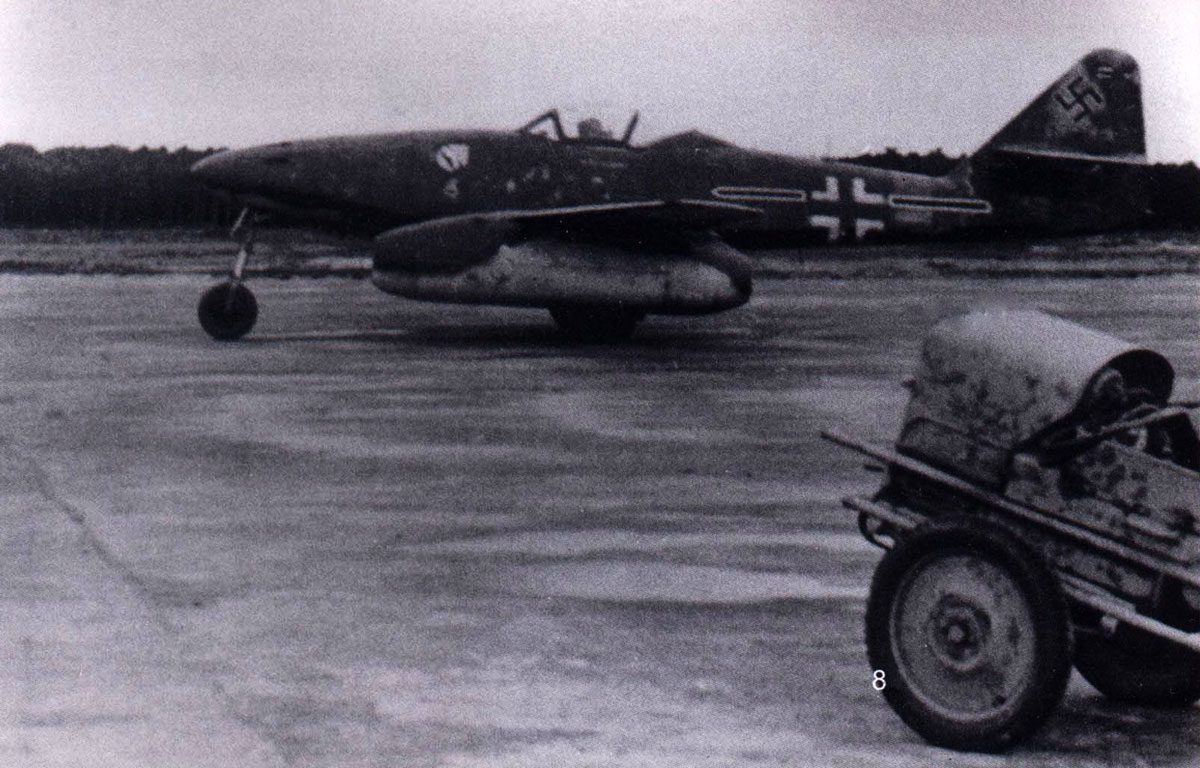
By war’s end, Theodor Weissenberger had shot down 208 aircraft, been awarded the Knight’s Cross of the Iron Cross with Oak Leaves, and 11 times, he was made an “Ace-in-a-day”. Yet Weissenberger was never celebrated as much as other Luftwaffe aces of WWII, as he largely did not play the political game with the Nazi higher-ups like other German aces did, and remained modest about his achievements. After the war, Weissenberger got into sports car racing in the Formula 3 races. On June 11, 1950, Theo Weissenberger was killed in the first lap of the Eifelrennen at Nürburgring.
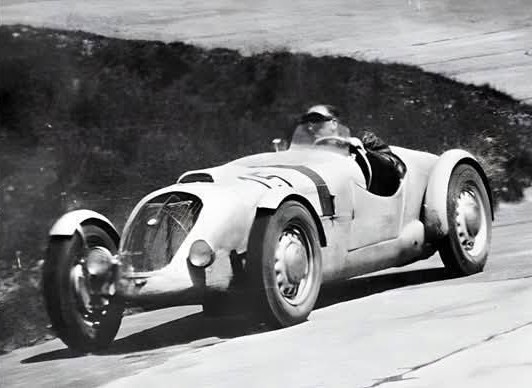
Compared to other Luftwaffe aces of WWII, Weissenberger never published a memoir of his exploits, but his war record is enough for the Pima Air and Space Museum to dedicate two aircraft to him. The addition of the Bf 109 and Me 262 also represents a closure of a gap in the museum’s WWII collection, with the Bf 109 being the most widely produced fighter aircraft in aviation history and the Me 262 being the first jet fighter to engage in air-to-air combat. So far, both projects have no estimated time of completion, but are dependent upon the resources at the Pima Air and Space Museum’s disposal, and will likely remain long-term projects, since the restoration staff are not only responsible for restoring other aircraft in the Pima Air and Space Museum’s collection, but also the ground vehicles in the collections of the newly established Tucson Miliary Vehicle Museum, which was opened next to the Pima Air and Space Museum in March 2025. To learn more, visit the Pima Air and Space Museum’s website HERE.
![Only minor work remains to be carried out before the R5O is placed on outdoor display at the Pima Air and Space Museum. [Photo by Casey Asher]](https://vintageaviationnews.com/wp-content/uploads/Pima-Air-and-Space-Museum-R5O-Restoration-Update_3-150x150.jpg "Pima Air and Space Museum R5O Restoration Update 12")