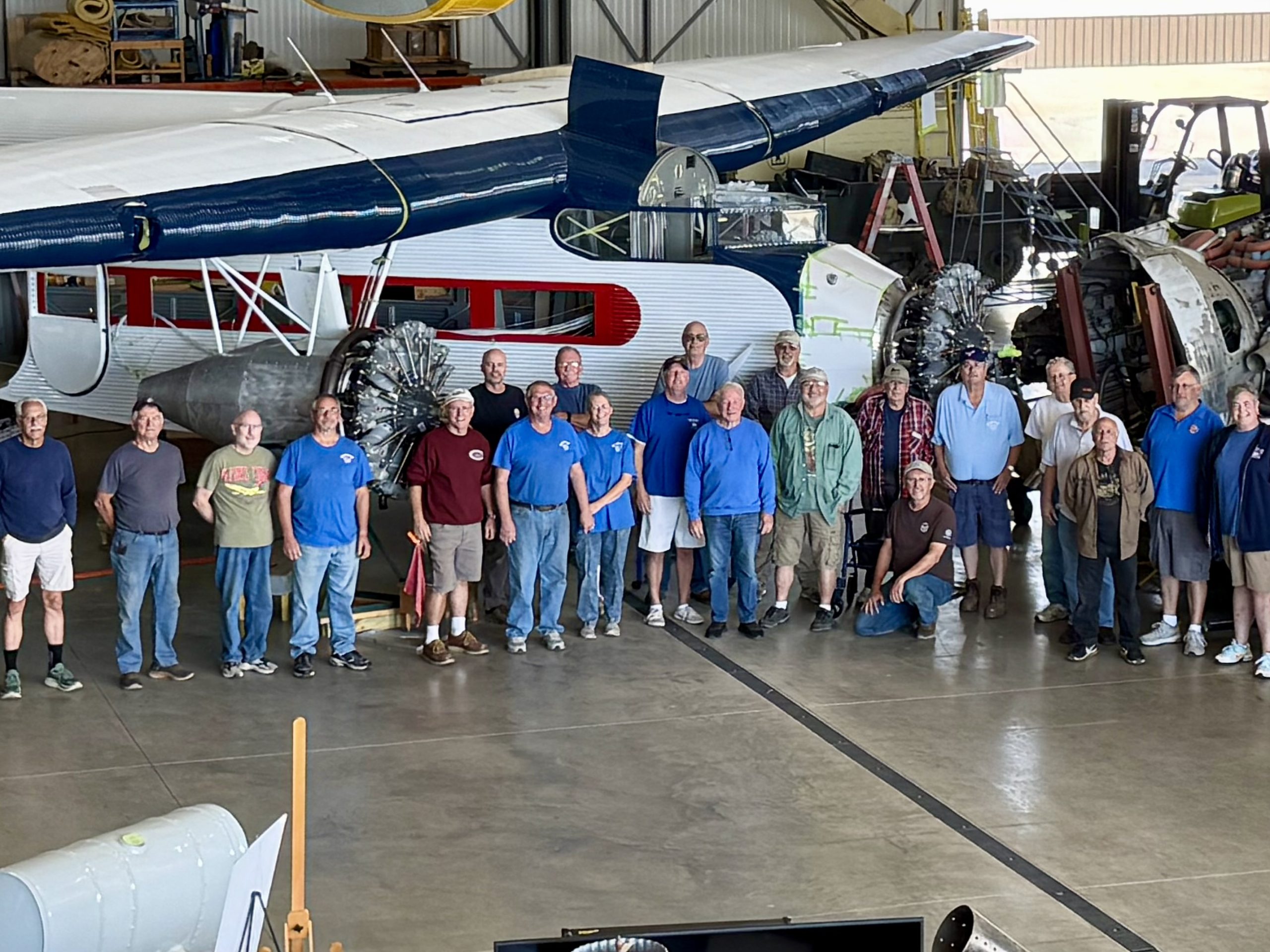
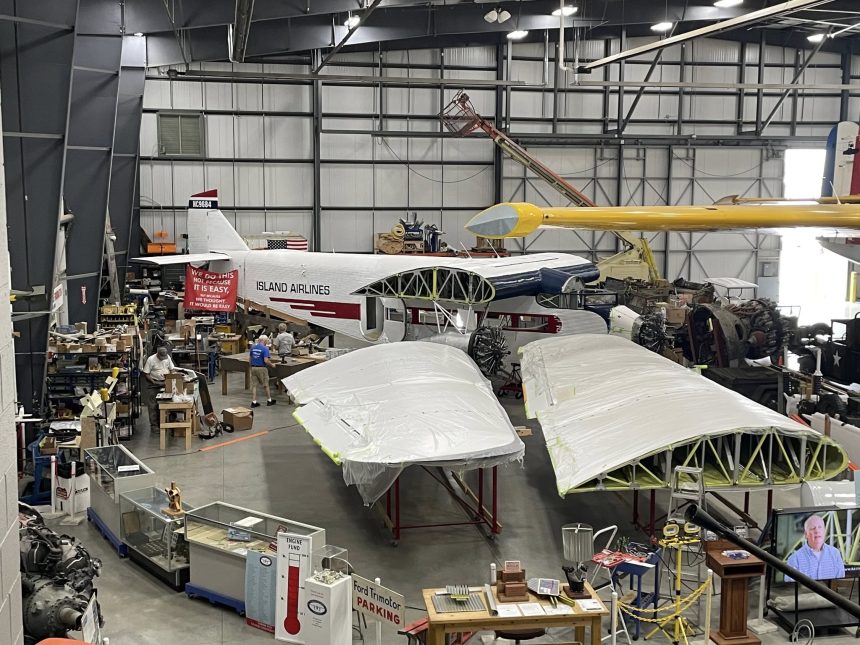

Last year, we covered the history and the ongoing restoration of Ford Tri Motor 5-AT-B NC9684 at the Liberty Aviation Museum at Erie-Ottawa International Airport in Port Clinton, Ohio. Now, in working with the Liberty Aviation Museum and the Tri-Motor Heritage Foundation, we are able to provide an update to this restoration project, which has come a long way from the wreck that was recovered from the Flathead National Forest of Montana.
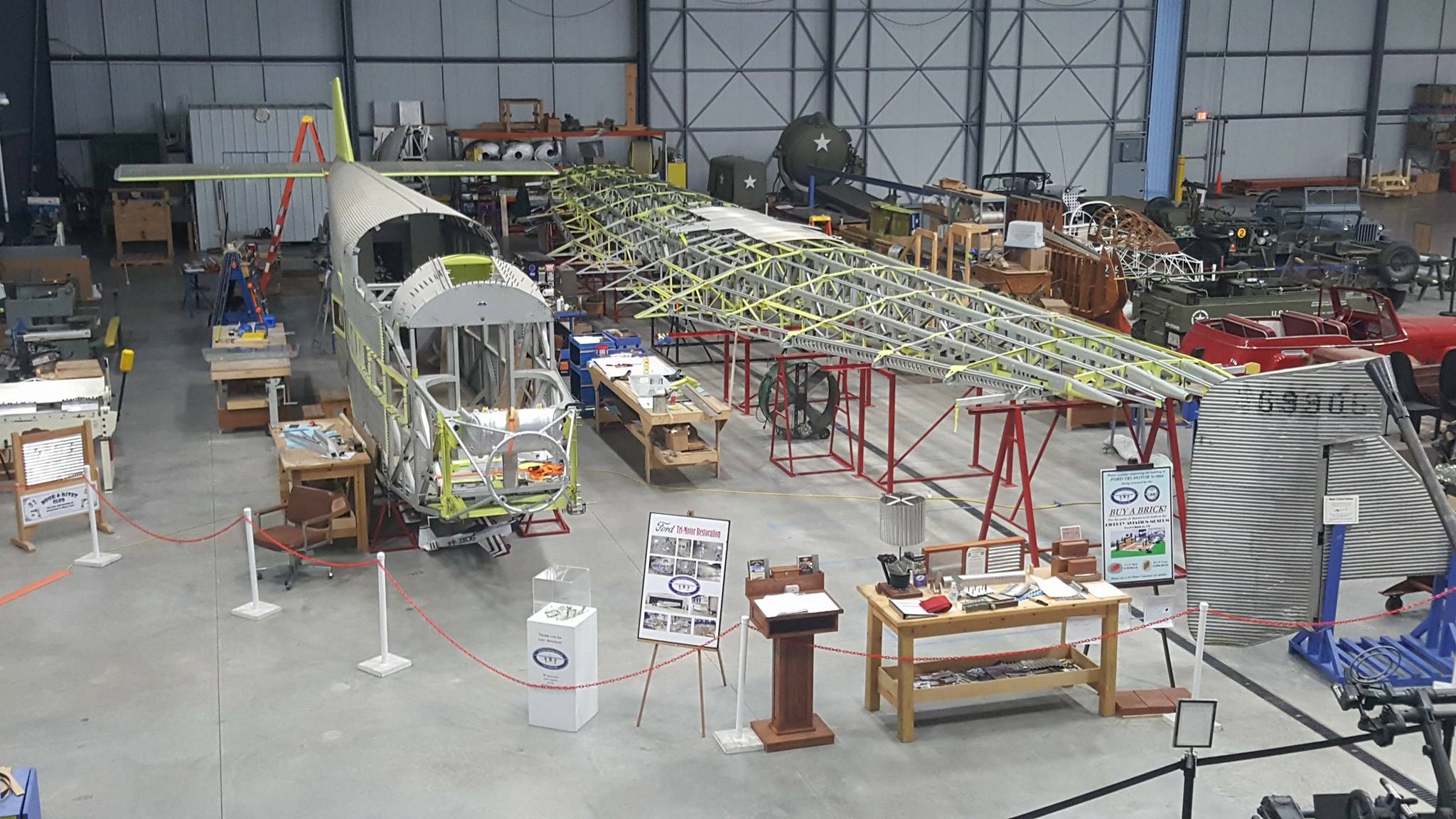
As mentioned in our prior article, the restoration of NC9684 (5-AT-B construction no. 40) began in earnest in 2004 when the late Maurice Houvious agreed to transfer the remains of the aircraft from his workshop in Vicksburg, Michigan to Port Clinton, Ohio, to become the subject of a restoration project for EAA Chapter 1247, known as the “Tin Goose chapter”, and has been generously been granted space in the Liberty Aviation Museum’s hangars since 2013.
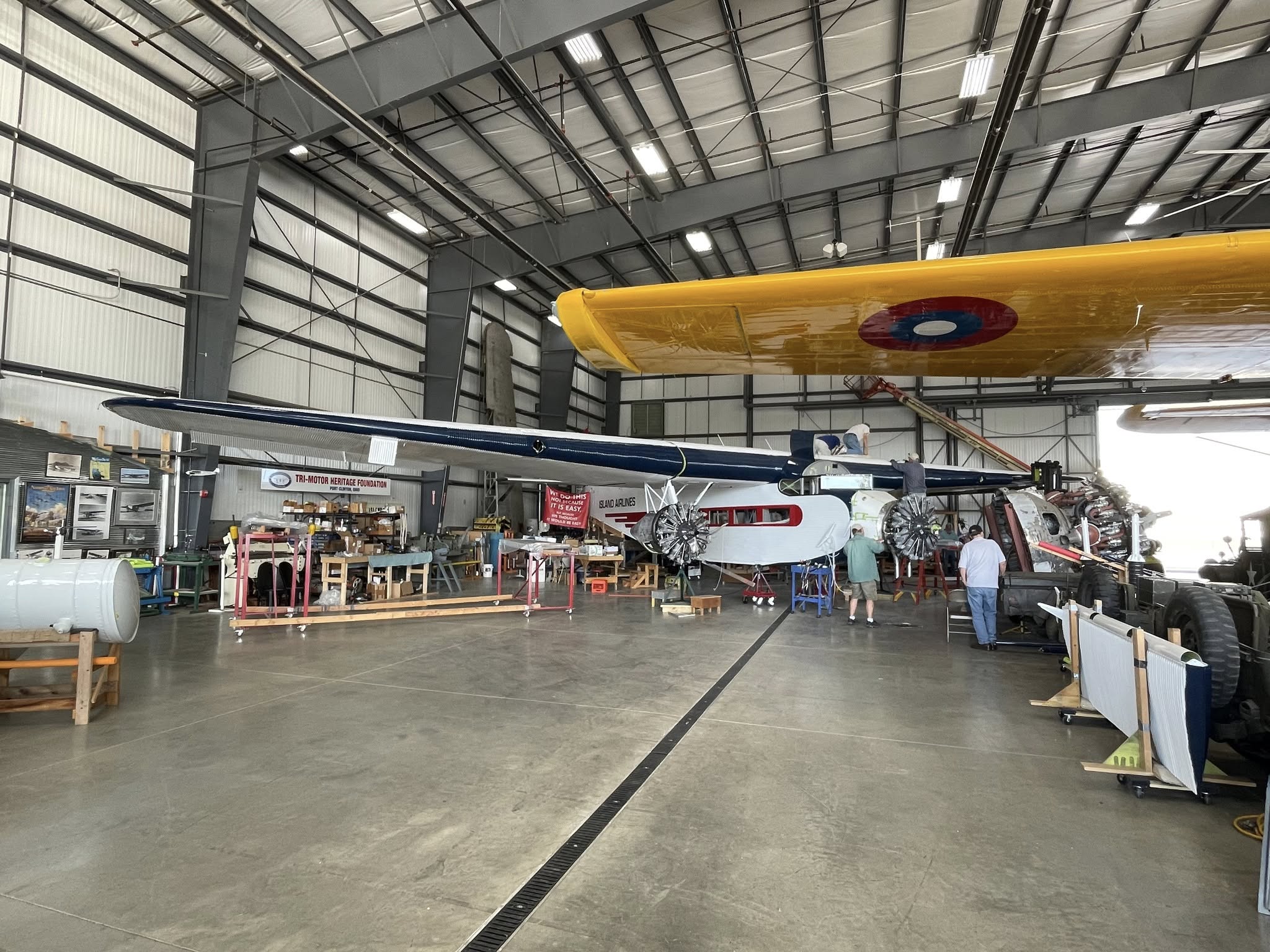
Port Clinton and the nearby Bass Islands in Lake Erie hold a special place in the history of the Ford Trimotor. From the 1930s to the 1970s, the islands were serviced by the Trimotors flown by Island Airlines at a time when the Ford Trimotor had already been replaced by a host of new airliners among the national carriers. Up to seven Ford Trimotors flew with Island Airlines during the company’s nearly 50-year history, which was often dubbed The World’s Shortest Airline. The Trimotors of Island Airlines flew a 17-mile round trip to the various islands with such regularity that residents took the Trimotors to work and back home, while schoolchildren also took regular trips on the Fords as though it were a flying school bus. The airplanes were also used to haul freight and mail, and even flew oversized items such as pianos and Christmas trees. From 1946 to 1952, Trimotor NC9684 (also registered as N69905) served with Island Airlines and has now been repainted in the red, white, and blue colors of the airline.
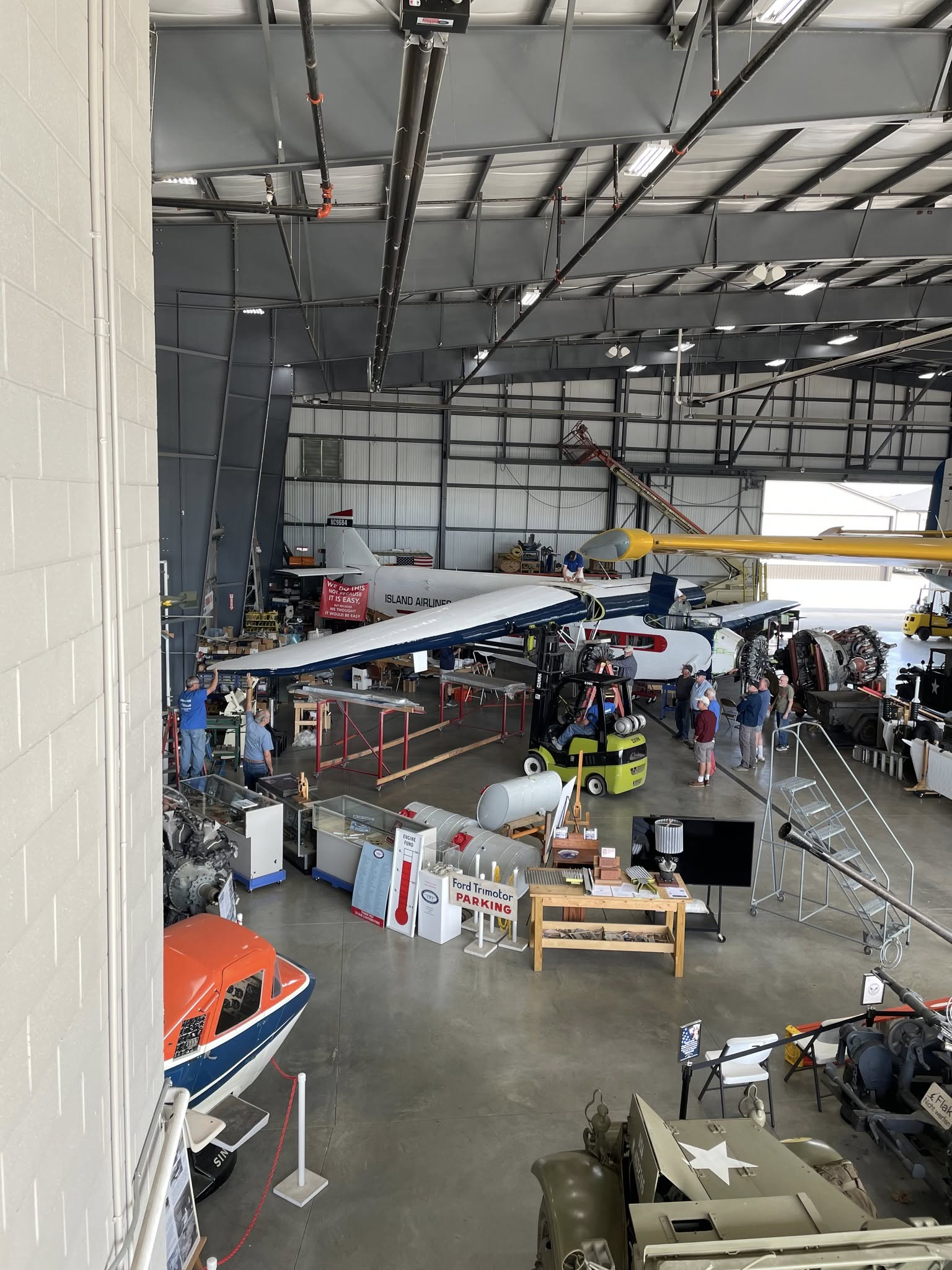
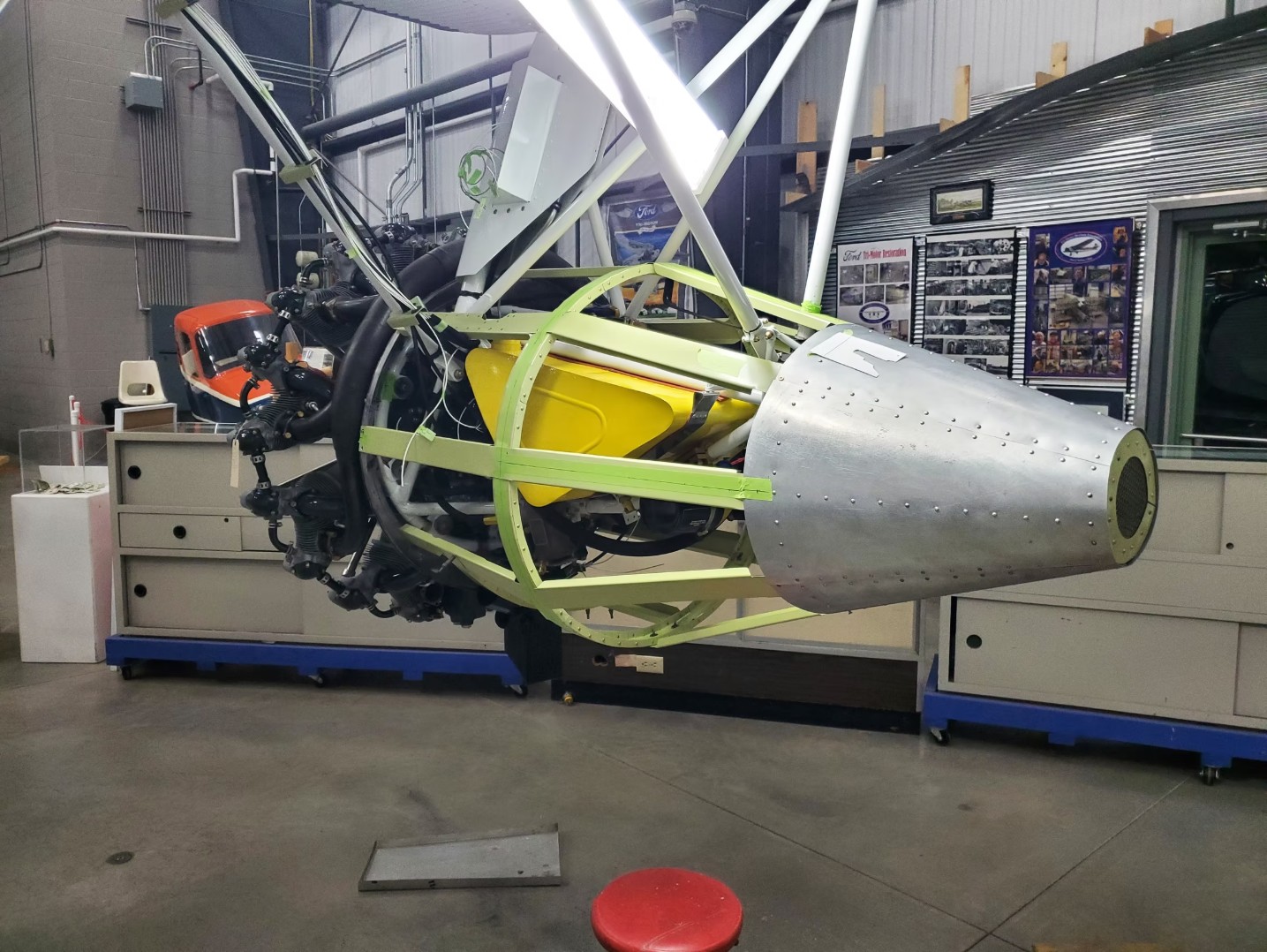
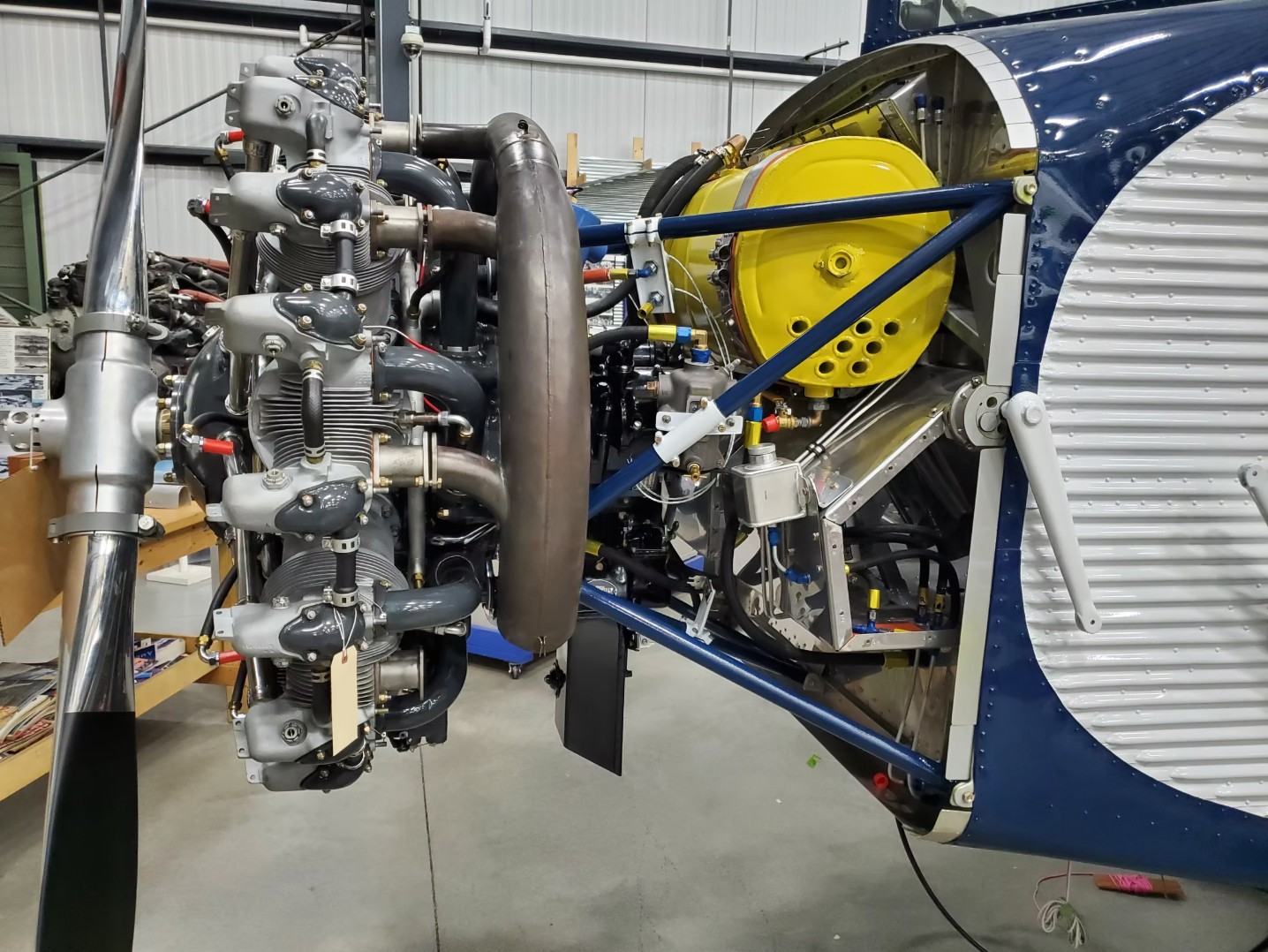
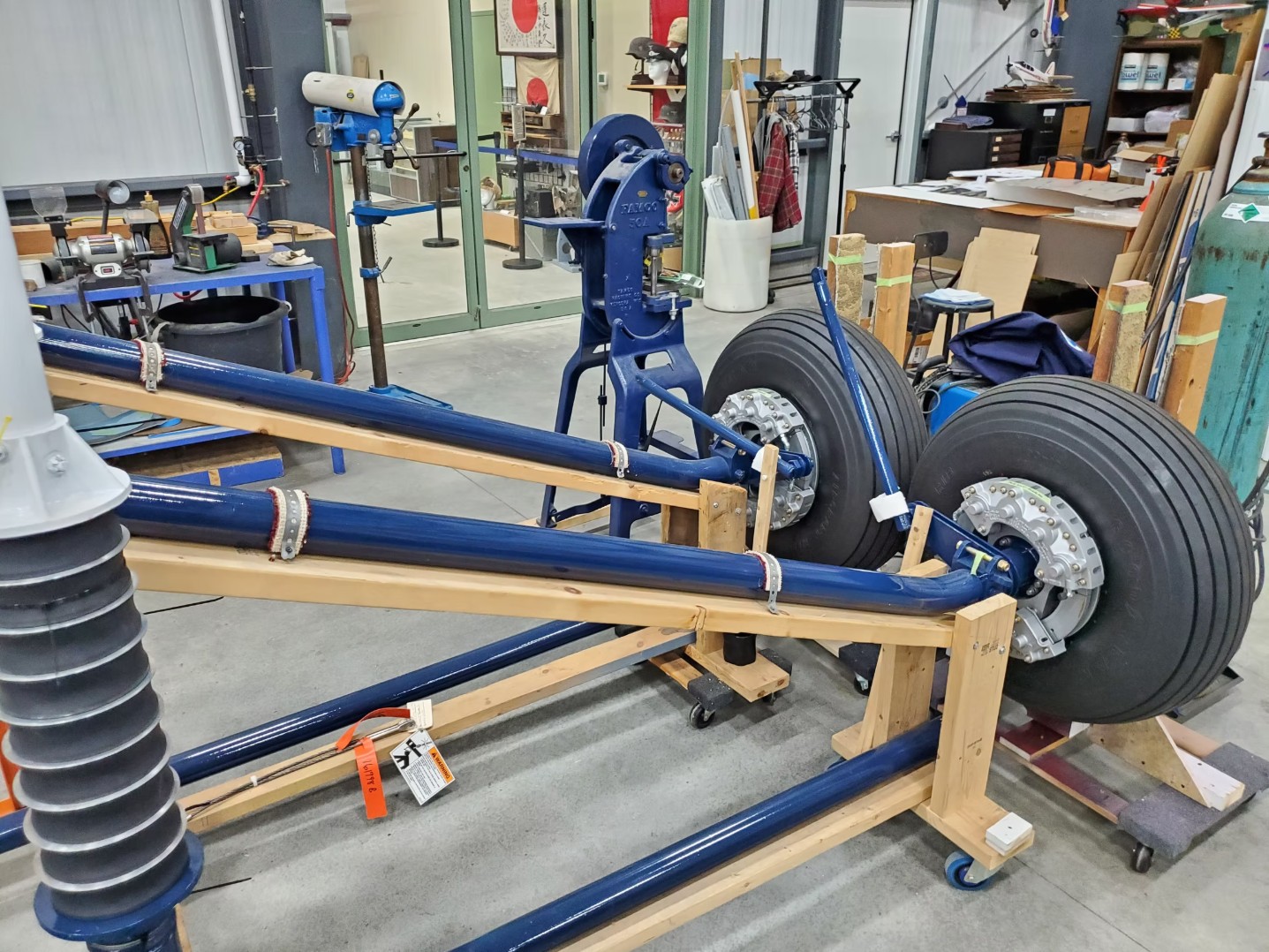
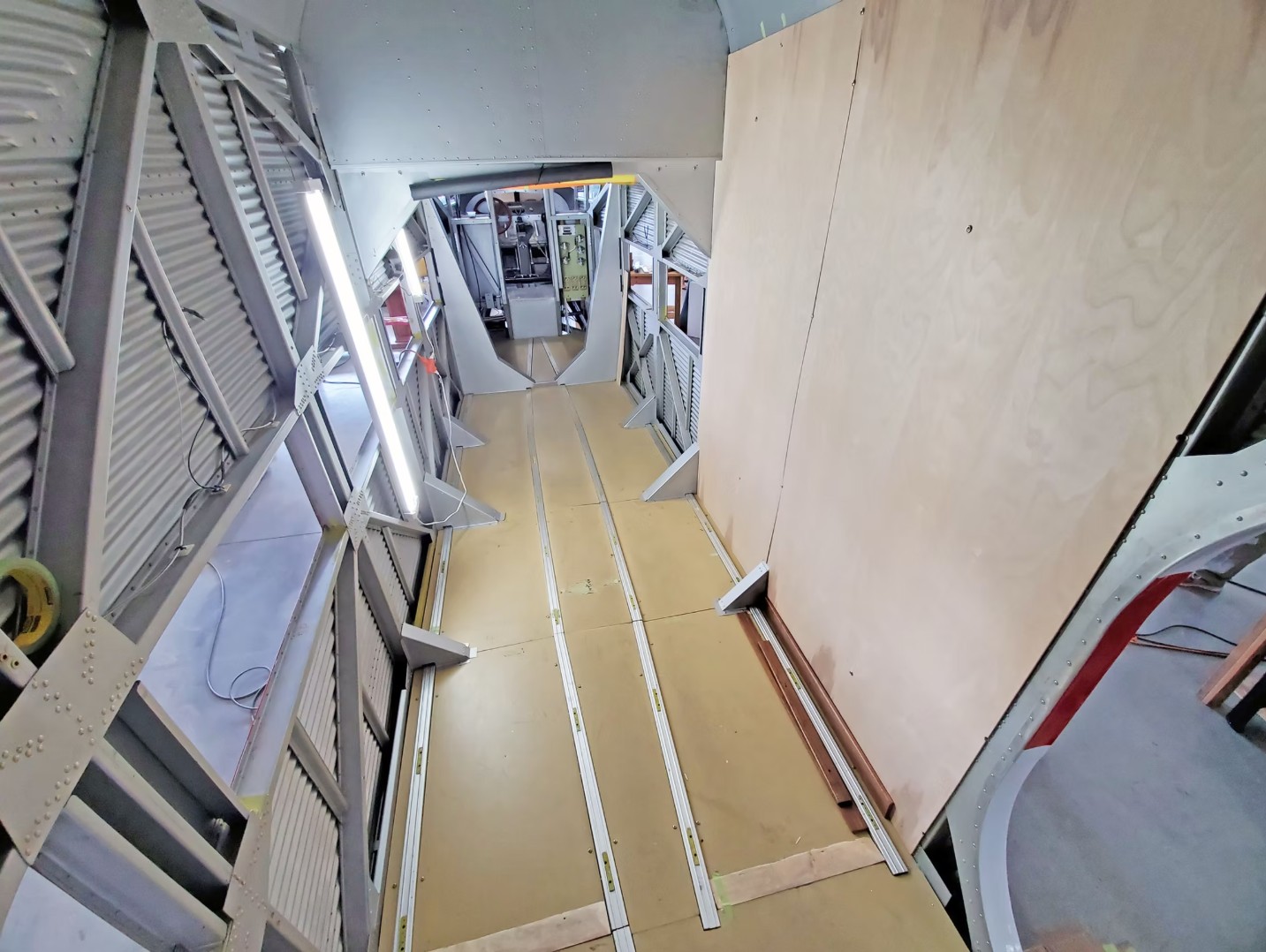
In collaboration with the Tri-Motor Heritage Foundation, restorer Jody Brausch has provided us at Vintage Aviation News with an update on the progress made to NC9684. “The wings went on without a hitch; no surprises or unexpected challenges. With the installation of the wings, NC9684 now has a horizontal stabilizer, a vertical stabilizer, and wings attached. In addition, all three engines have been installed, and we are continuing to put the finishing touches on the exhaust systems, which are expected to be completed within the next couple of weeks. Engine nacelles for engines one and three are almost finished. The electrical system is in progress, with the instrument panel finished and awaiting completion of the electrical system for final installation. The wheels and brakes are currently with Cleveland Wheels and Brakes. They are applying a new finish to these components that will match our paint scheme. We anticipate landing gear installation in early spring. Interior components are ready for installation, which will occur once the systems are fully operational. Lastly, now that the wings are in place, we can complete the fuel systems, which we anticipate will happen over the coming winter months.”
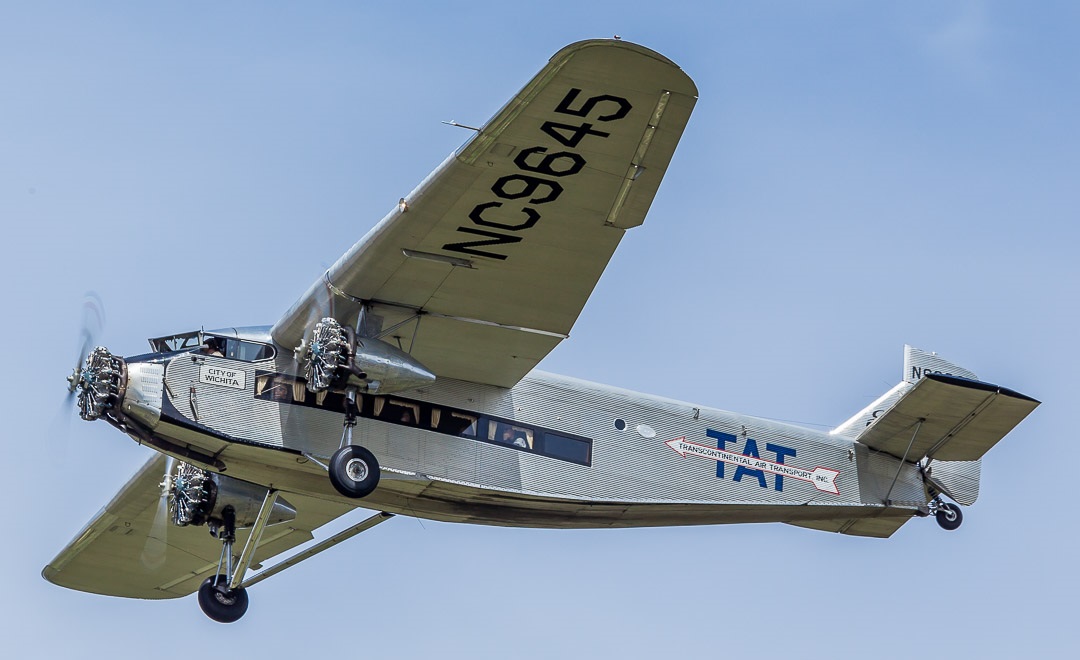
Once the Trimotor is ready for engine runs and flight testing, the aircraft will become one of two airworthy Ford Trimotors based out of the Liberty Aviation Museum. The other is Trimotor NC9645 (5-AT-B construction no. 8), which was acquired from the Evergreen Aviation and Space Museum in McMinnville, Oregon, and flies in the colors it wore during its operational service with Transcontinental-Air-Transport (T-A-T), a forerunner of TWA. This aircraft flies with both its historic name, “City of Wichita,” and the name “City of Port Clinton,” and has taken part in flying tours across the United States for paying passengers. The museum plans to take NC9684 on round-trip rides from Port Clinton over the Bass Islands. Though an FAA guideline called Part 91 restricts flights to a 25-mile radius and requires the sight-seeing flights to land at the same airport from which the flight departed, the 25-mile radius is well within the range of the entire route of the Island Airlines flights with the Ford Trimotors, giving future passengers a unique impression of what flying to the Bass Islands in an old Ford Trimotor feels like.
Special thanks to Jody Brausch for providing information on the restoration of Ford Trimotor NC9684. For more information about the Liberty Aviation Museum, visit their website HERE. If you would like to support the restoration of the Ford Trimotor, visit the Tri-Motor Heritage Foundation at About Us | (restoretheford.org) and EAA “Tin Goose” Chapter 1247 at Welcome to Tin Goose Chapter 1247 of the Experimental Aircraft Association (tingoose1247.org).