
(Image credit: VAN)
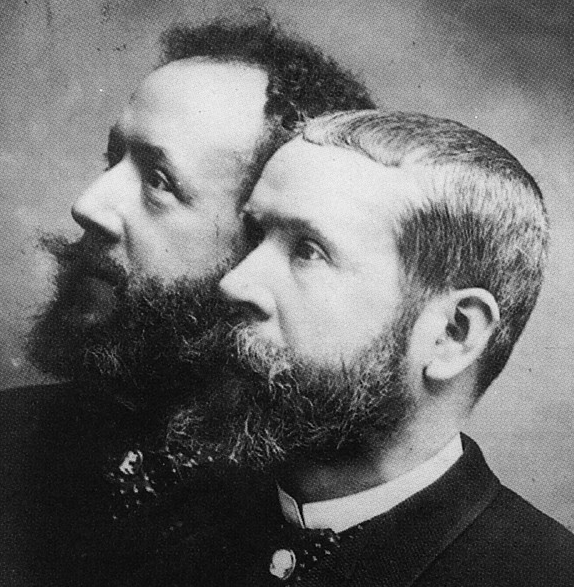
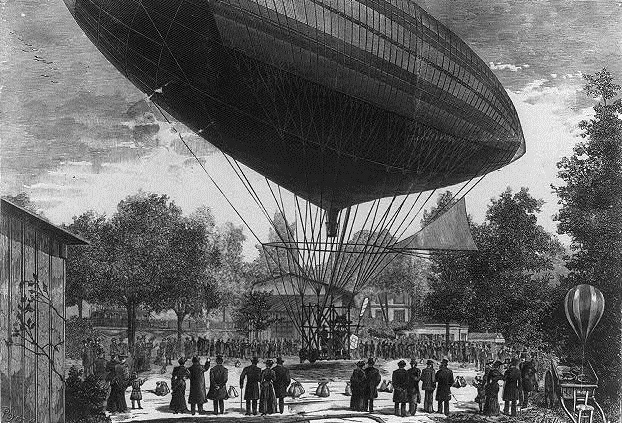
One hundred forty-two years ago today, on October 8, 1883, the first flight of an electric-motor powered airship took place. French brothers Albert-Charles and Gaston Tissandier piloted the dirigible on its maiden voyage at Auteuil, a suburb of Paris. Experienced balloon designers and aviators, the Tissandier brothers had spent years experimenting with lighter-than-air craft, and this airship represented the culmination of their efforts.
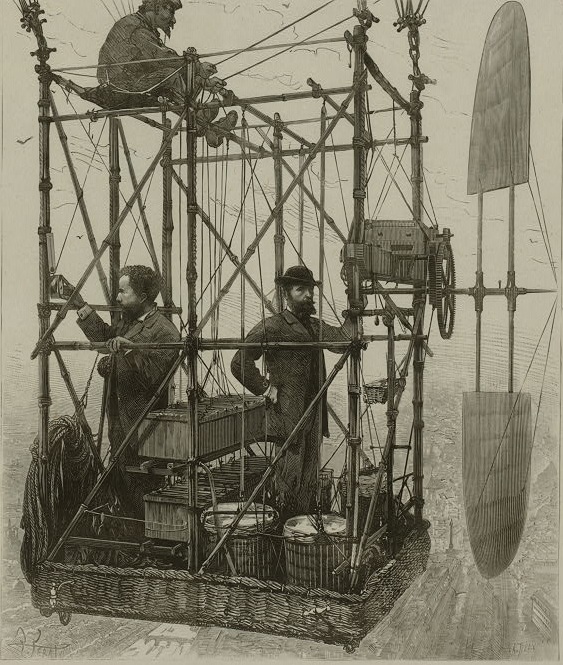
The dirigible was powered by a Siemens electric motor producing 1.5 horsepower. A reduction gear turned a two-bladed propeller at 180 revolutions per minute, generating a total of 26 pounds of thrust. Electricity for the motor came from 24 potassium bichromate cells. The airship could reach a maximum speed of roughly 3 miles per hour. In terms of size, the Tissandier dirigible measured 91 feet 10 inches in length with a maximum diameter of 30 feet 2 inches. It contained 37,434 cubic feet of gas and could carry a total weight—including crew and equipment—of 2,734 pounds. Gaston Tissandier provided a firsthand account of the first flight: “At twenty minutes past three, after piling up the ballast in the car and balancing the latter, we slowly ascended into the air through a slight E.S.E. wind. At the surface the wind was nearly null, but, as frequently happens, it increased in velocity with altitude, and we ascertained by the movement of the balloon over the earth that it attained at a height of 500 meters a velocity of 3 meters per second.”
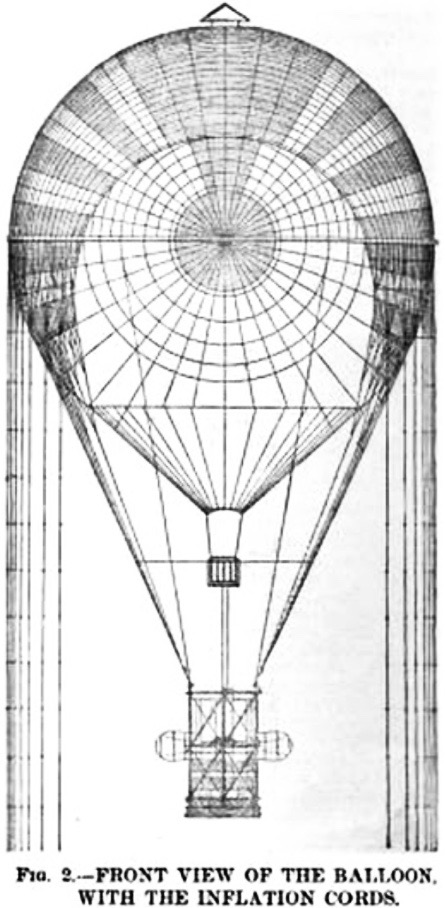
He further noted the flight characteristics of the airship: “The balloon hovered over the earth very regularly at a height of four or five hundred meters. It remained constantly inflated, and the gas in excess escaped through expansion by opening, under its pressure, the lower automatic safety valve, the operation of which was very regular. At thirty-five minutes past four we effected our descent upon a large plain in the neighborhood of Croissy-sur-Seine, where the maneuvers connected with landing were performed by my brother with complete success.” This pioneering flight marked a major milestone in the development of powered lighter-than-air flight, demonstrating the potential of electric propulsion for dirigibles long before the advent of modern aviation engines.