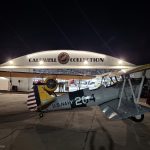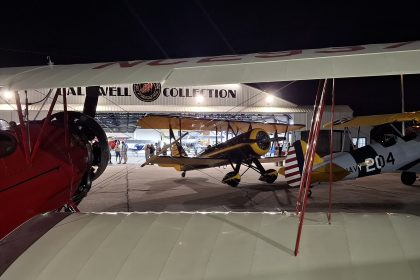

One year after opening at El Reno Regional Airport in Oklahoma, the Caldwell Collection has grown from 24 to 36 aircraft, welcomed approximately 5,000 visitors, and announced plans to expand its facilities to more than 50,000 square feet while preserving another historic WWII-era hangar. The Caldwell Collection at Mustang Field in El Reno, Oklahoma, is celebrating its first anniversary with significant growth in its aircraft collection, increasing visitor numbers, and ambitious plans to expand its facilities. In an October 22, 2026, update titled “One Year at Mustang Field”, Tony Caldwell, Founder and Chairman of the Caldwell Collection at Mustang Field, reflected on the museum’s first year, highlighting the development of its collection, the enthusiasm of its growing volunteer community, and plans to preserve another historic hangar at El Reno Regional Airport. As previously reported by Vintage Aviation News in our article, “The Caldwell Collection Opens at Mustang Field in El Reno, Oklahoma”, the museum was established to preserve and celebrate aircraft from aviation’s Golden Age while creating a welcoming environment where visitors could experience historic aviation firsthand. Just one year later, the Caldwell Collection has built upon that vision, expanding its fleet, attracting thousands of visitors, and embarking on an ambitious project to preserve additional historic airport infrastructure. Since opening, the museum has welcomed approximately 5,000 visitors and expanded its collection from 24 to 36 aircraft. Plans are now underway to increase the museum’s exhibition space from approximately 30,000 square feet to more than 50,000 square feet, providing room for additional historic aircraft and related exhibits.
From a Private Collection to a Living Aviation Museum
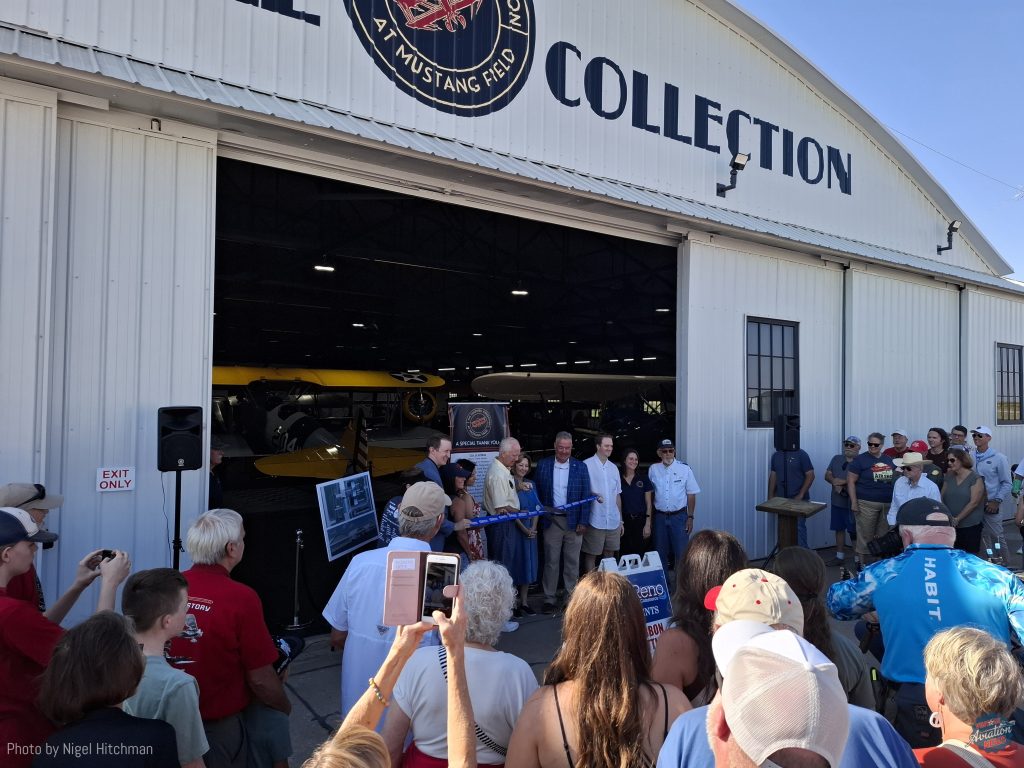
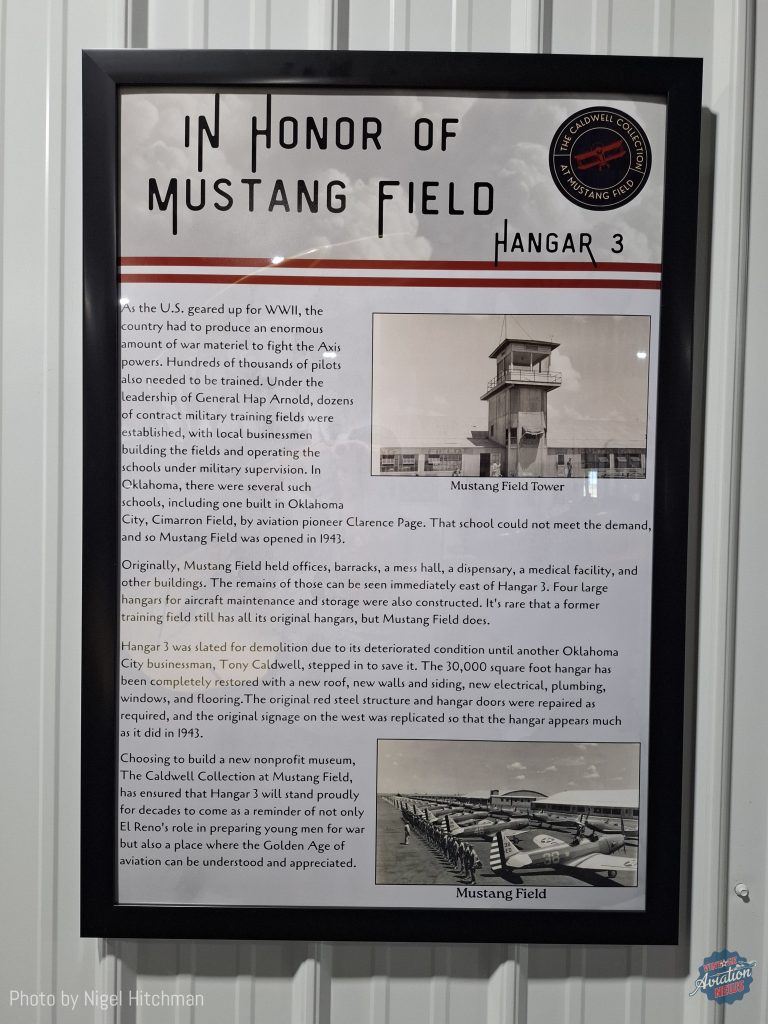
The origins of the Caldwell Collection at Mustang Field can be traced to October 2024, when Caldwell met with El Reno Regional Airport manager Scott Law and then-city manager Matt Sandidge to discuss the possibility of constructing a hangar for his growing collection of antique aircraft. At the time, Caldwell was restoring a 1929 Travel Air equipped with 30-by-5-inch wheels and was concerned about operating the aircraft from paved runways, particularly given Oklahoma’s unpredictable winds. He was looking for a suitable location where his historic airplanes could be housed and operated safely. During the meeting, Sandidge mentioned that the city was preparing to demolish two historic airport structures, Hangars 1 and 3. Caldwell immediately recognized the historical significance of the buildings and expressed interest in preserving one of them. Although Hangar 1 was in better condition, it would not be available for several years. Hangar 3, meanwhile, required extensive rehabilitation. After consulting with contractor David French, his family, and financial advisers, Caldwell decided to undertake the restoration. What initially began as a practical solution for housing his airplanes gradually evolved into a broader vision: creating a museum where visitors could experience historic aircraft up close, observe restoration work, and watch vintage airplanes take to the skies. Unlike his previous airport, where security gates and restricted access had limited public opportunities to see the collection, El Reno offered a more welcoming environment. Caldwell envisioned a place where visitors could stop by whenever the hangar doors were open and discover the aircraft for themselves. That approach has become one of the museum’s defining characteristics. Initially accessible by appointment, the Caldwell Collection is now open five days a week, with visitors regularly stopping in for informal conversations about aviation history, aircraft restoration, and flying.
A Growing Collection of Golden Age Aircraft
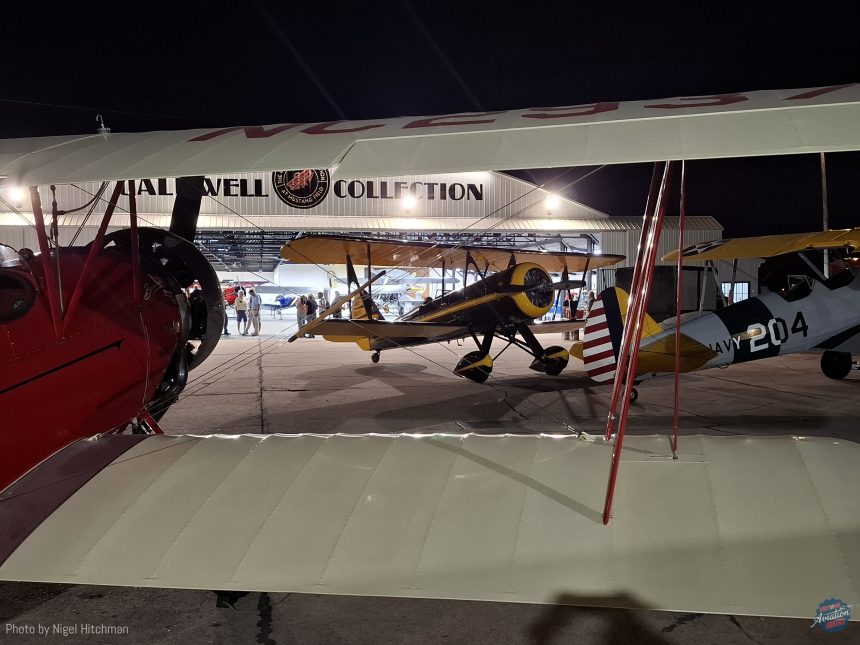
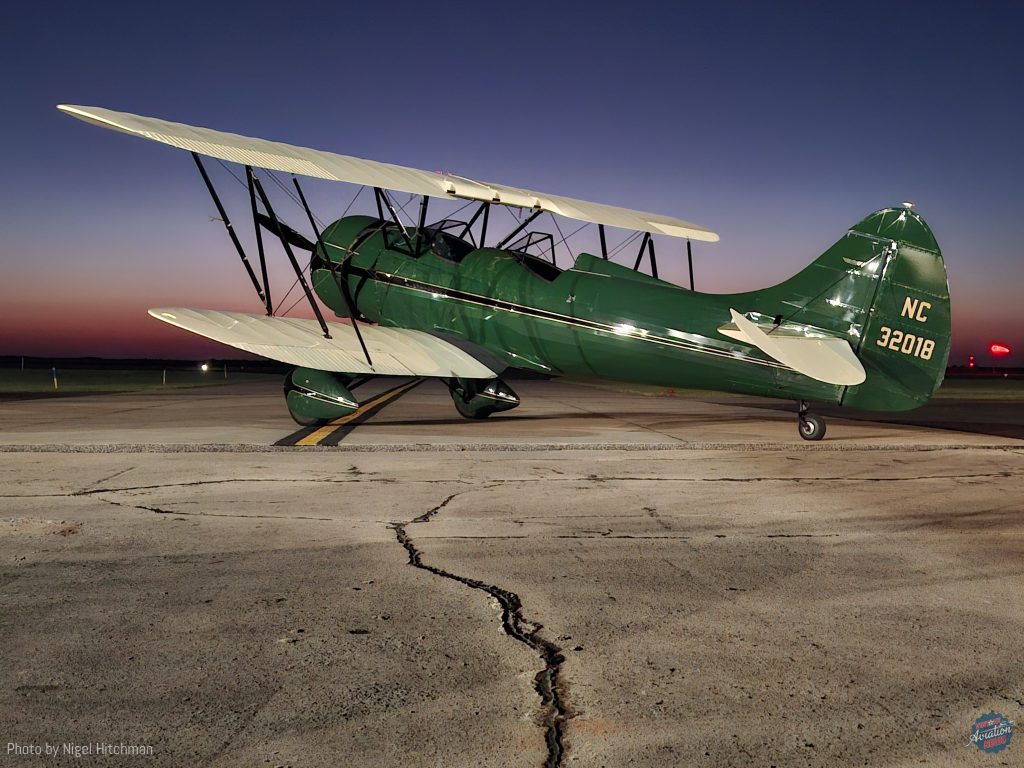
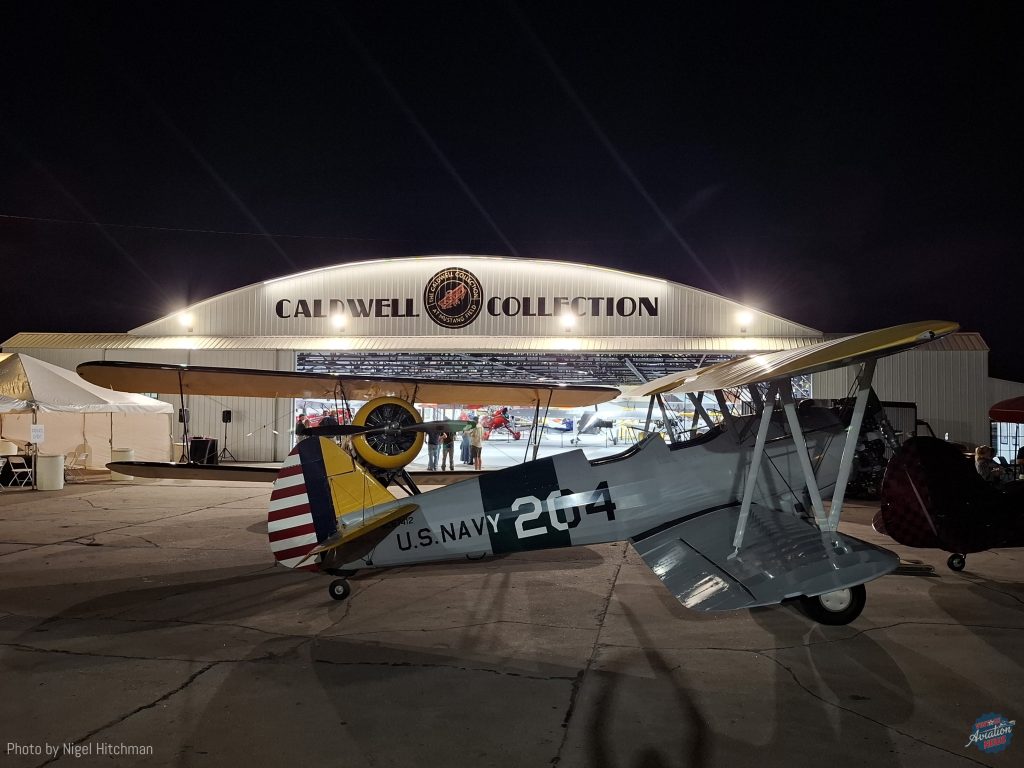
One of the most notable developments during the museum’s first year has been the rapid expansion of its aircraft collection. When the Caldwell Collection opened, approximately 24 airplanes were on display, along with several historic ground vehicles. Over the following year, Caldwell continued acquiring aircraft, increasing the collection to 36 examples, an average of roughly one addition per month. The museum focuses primarily on aircraft representing aviation’s Golden Age, particularly the period between 1918 and 1942, when aviation experienced remarkable technological and commercial development. Rather than presenting aircraft solely as static exhibits, the Caldwell Collection emphasizes their continued operation whenever practical. Flying demonstrations allow visitors to experience the sights and sounds of historic aviation, including the distinctive engines and handling characteristics of aircraft built nearly a century ago. The museum’s location at El Reno Regional Airport is particularly well suited to this approach. Its grass runway provides an appropriate operating environment for many vintage aircraft originally designed to use unimproved airfields. On flying days, volunteer pilots prepare the aircraft and conduct demonstrations that visitors can observe from the museum’s dedicated viewing deck. The museum has also begun developing a collection of historic ground transportation associated with the airport’s WWII history. Inspired by Caldwell’s curiosity about how personnel traveled to the airfield during wartime gasoline rationing, the collection now includes automobiles, motorcycles, bicycles, and other forms of transportation representative of the period. These additions are intended to provide a broader understanding of everyday life at Mustang Field when it served as a military training facility during WWII.
Aircraft Restoration at the Heart of the Museum
Aircraft restoration has been a central part of the Caldwell Collection’s mission from its earliest planning stages. Recognizing that many rare antique aircraft can only be preserved through extensive rebuilding, Caldwell incorporated a dedicated restoration workshop into the museum’s original design. To lead this effort, he recruited Rob Lock of Waldo Wright’s Flying Service, an organization specializing in the maintenance and restoration of vintage aircraft. Lock relocated his restoration operation to El Reno, where the workshop now supports projects involving aircraft from the Caldwell Collection as well as those belonging to outside clients. According to Caldwell, the shop typically has between three and five aircraft undergoing restoration or maintenance at any given time. The workshop also provides visitors with an opportunity to observe traditional aircraft construction and restoration techniques, particularly the specialized skills involved in working with wood-and-fabric aircraft. By making restoration work visible to the public, the museum hopes to demonstrate the craftsmanship required to preserve early aviation technology and encourage greater appreciation for the people who maintain these historic machines. The workshop is an important component of the museum’s broader objective of keeping Golden Age aircraft operational rather than simply preserving them as static artifacts.
Building an Aviation Community
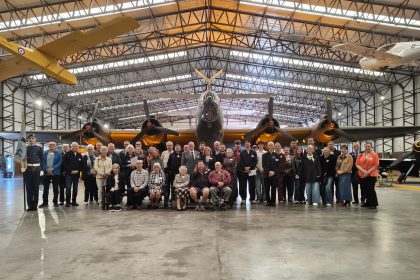
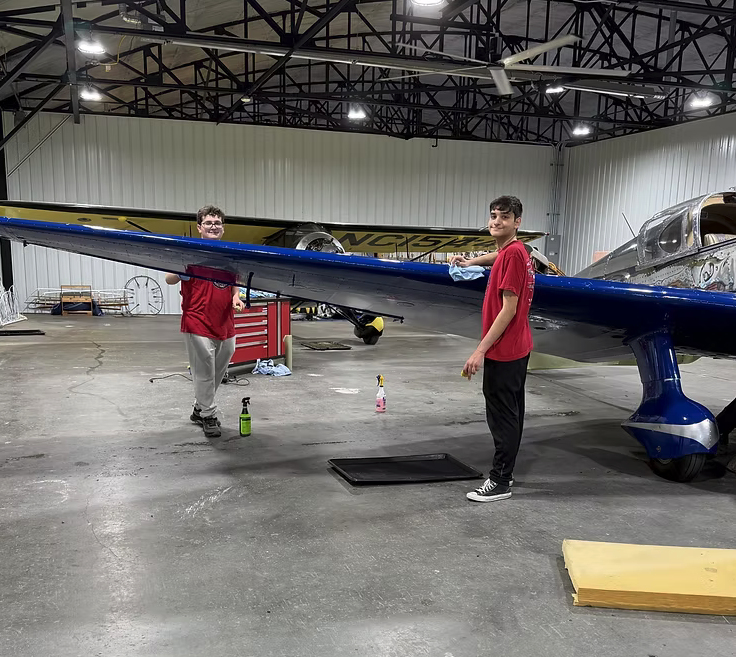
Beyond the aircraft themselves, Caldwell considers the development of a welcoming aviation community one of the museum’s most important accomplishments. Each Saturday, volunteers gather at Mustang Field to maintain aircraft, assist visitors, and share their enthusiasm for aviation. The volunteers range in age from 14 to 85, bringing together people with different backgrounds and levels of experience. The group has grown to several dozen participants, including longtime airport regulars who have found a new gathering place at the museum. Caldwell’s vision extends beyond the conventional museum experience. He wanted to create a location where pilots, mechanics, enthusiasts, and visitors could spend time together, exchange stories, and develop friendships around their shared interest in aviation. To support that atmosphere, the museum incorporated Wiley and Will’s Hangar Flying Cafe, a gathering space designed to encourage the informal conversations traditionally associated with airport hangars. The facility also includes an aviation library containing more than 2,000 books, along with magazines dating back to the earliest years of powered flight. The library reflects Caldwell’s own childhood interest in aviation, which developed through reading aviation books and magazines at his local library. Together, these facilities have helped transform the museum into a community destination rather than simply an exhibition space.
 Preserving Another Historic WWII Hangar
 Preserving Another Historic WWII Hangar
Perhaps the most significant development announced during the museum’s first anniversary is the planned expansion involving the preservation of Hangar 1. The building was originally scheduled for demolition as part of the city’s airport development plans. However, as the Caldwell Collection expanded, the need for additional exhibition space became increasingly apparent. The museum’s existing 30,000-square-foot facility, once considered more than sufficient, was approaching its practical capacity. During 2026, Caldwell and city officials began discussing an alternative to demolishing Hangar 1. Rather than losing another historic airport structure, the proposal called for relocating the building and reconstructing it as two separate hangars while retaining its architectural character. Following several months of discussions, the city agreed to proceed with the preservation and redevelopment project. Under the plan, Hangar 1 will be dismantled and reconstructed across from the existing museum facility, creating two additional exhibition hangars. The expansion is expected to accommodate another 20 to 25 aircraft, providing substantial room for the collection’s continued growth. As of Caldwell’s October 22 update, dismantling of Hangar 1 was underway, with construction of the new facilities expected to begin soon. The project represents an important preservation achievement in its own right. In addition to expanding the museum, it will save elements of another historic airport building that might otherwise have been lost.
Looking Ahead to the Second Year
With its first year completed, the Caldwell Collection is preparing for further growth. The planned expansion will increase the museum’s total space to more than 50,000 square feet, while the aircraft collection is expected to exceed 40 examples. For Caldwell, the success of the first year has reinforced the importance of making historic aviation accessible to the public. The approximately 5,000 visitors who have passed through the museum’s doors represent a promising beginning for an institution that hopes to remain relevant for generations. Equally important has been the enthusiasm of the volunteers, pilots, restorers, and aviation enthusiasts who have embraced the project. The Caldwell Collection’s approach offers an interesting model for aviation preservation: combining historic aircraft, active flying demonstrations, restoration workshops, educational resources, and community engagement within a working airport environment. Its rapid development also illustrates how preserving historic airport infrastructure can create opportunities for aviation education and tourism while strengthening the connection between an airport and its surrounding community. As Mustang Field enters its second year as the home of the Caldwell Collection, the museum is positioning itself as an increasingly important destination for enthusiasts of Golden Age aviation. For those interested in experiencing historic aircraft in an environment where they can still be maintained, restored, and flown, the Caldwell Collection offers an opportunity to see aviation history as something more than a static display.
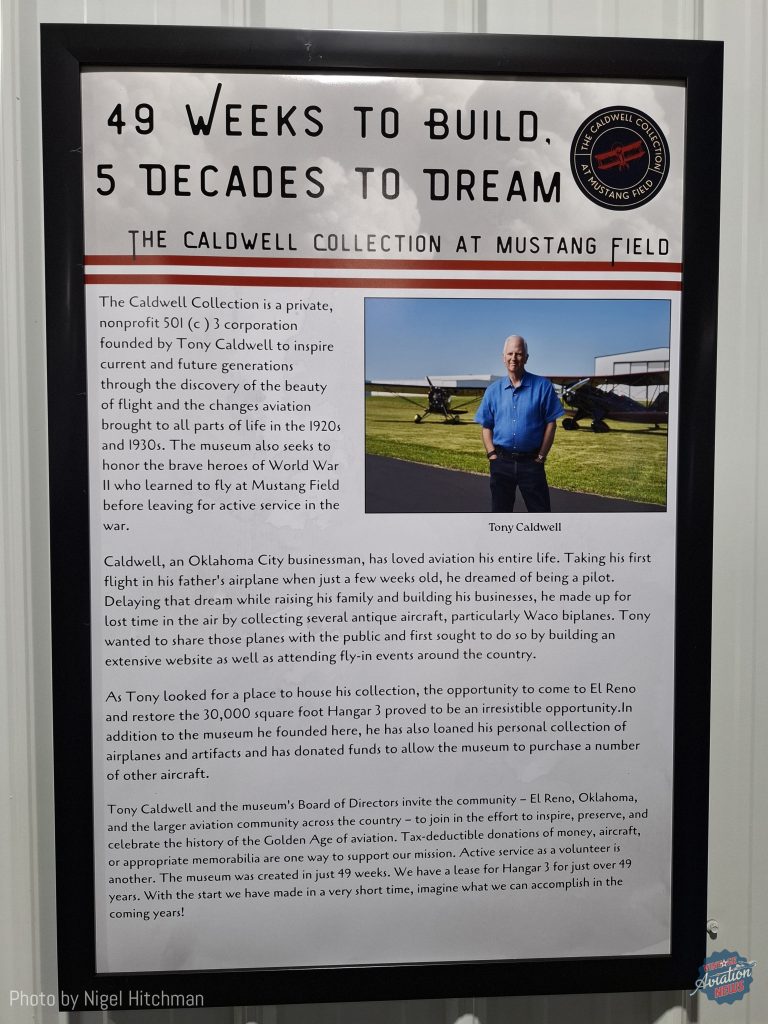
The Caldwell Collection at Mustang Field is located at El Reno Regional Airport in El Reno, Oklahoma. Admission is free, and the museum is open Tuesday through Friday from 10 a.m. to 4:30 p.m. and Saturday from 10 a.m. to 2 p.m. For additional information, visit thecaldwellcollection.org.
Source: Tony Caldwell, Founder and Chairman, The Caldwell Collection at Mustang Field, “One Year at Mustang Field,” October 22, 2026. Vintage Aviation News acknowledges the Caldwell Collection for providing information about its first anniversary, collection growth, and expansion plans.