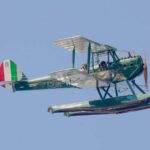

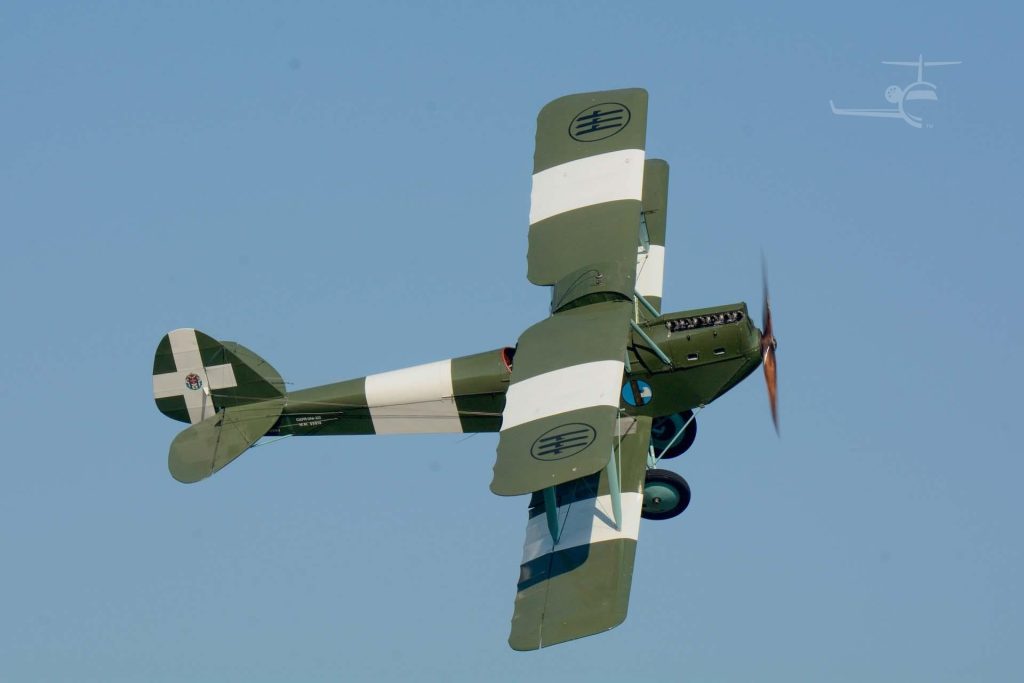
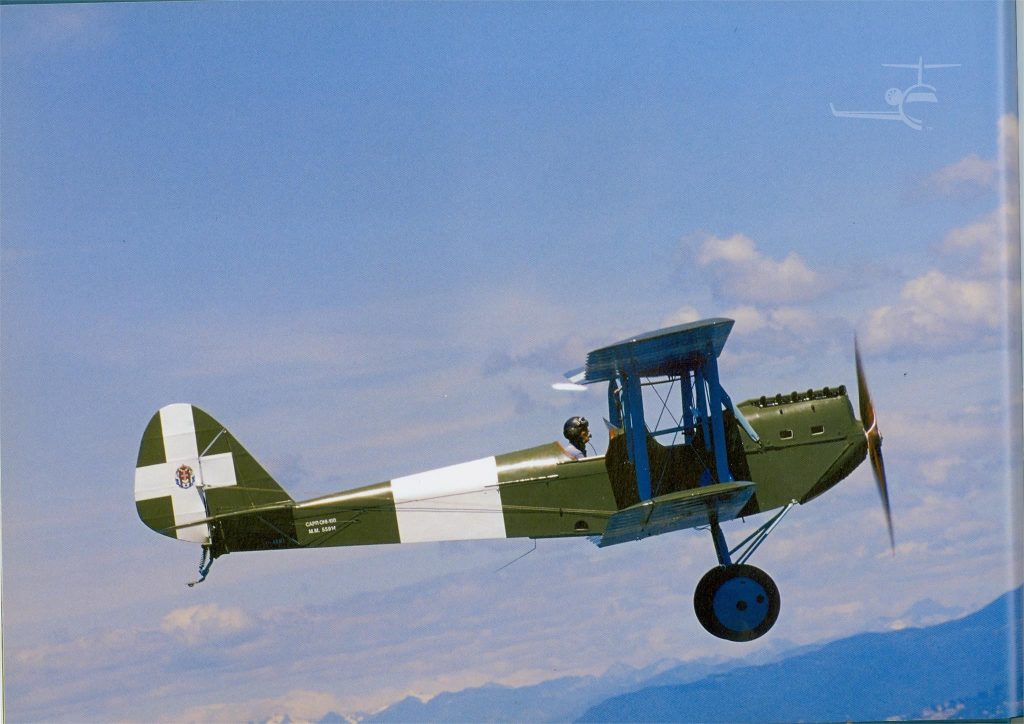
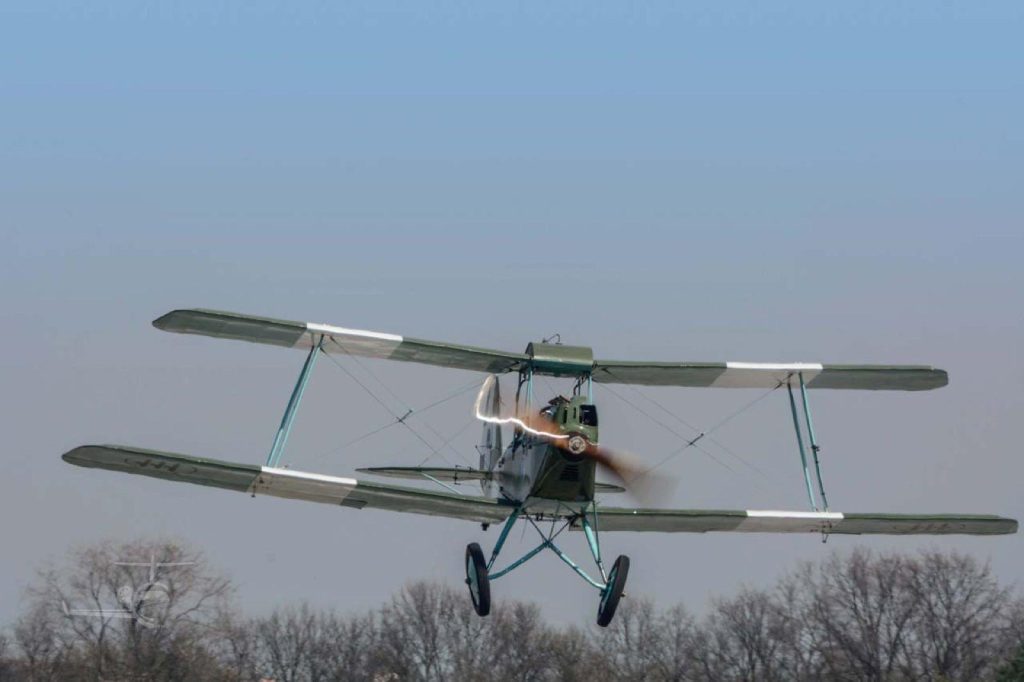
After approximately three years on the ground, the Italian-built Caproni Ca.100 biplane I-ABMT has returned to the skies at the end of August, following an extensive maintenance program. The historic aircraft is now scheduled to make its first public appearance since returning to flight at the Festivolare airshow in Trento, Italy, on September 12 and 13. Vintage Aviation News spoke with display pilot Renato Cortelletti about the work carried out on the aircraft, the Ca.100’s distinctive handling characteristics, and the reasons Festivolare was chosen for its public return.
(Image credit: Ugo Vicenzi)
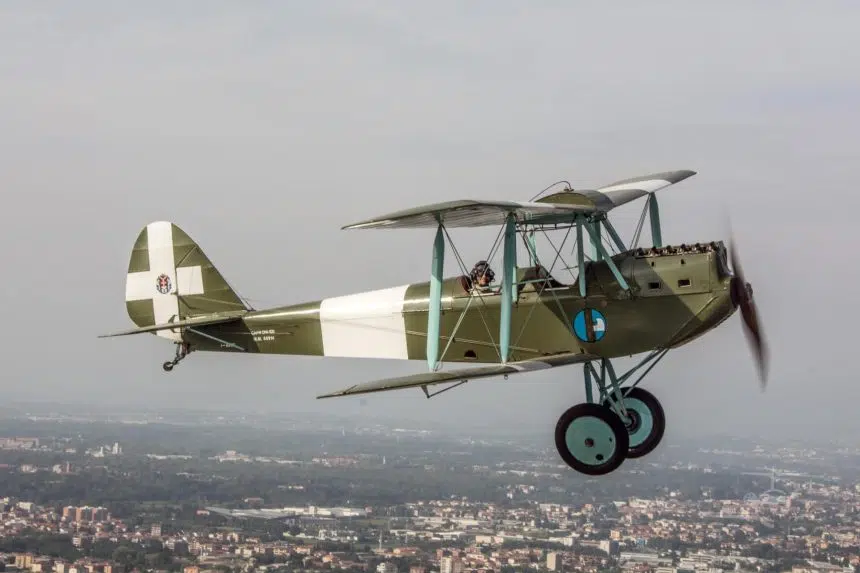
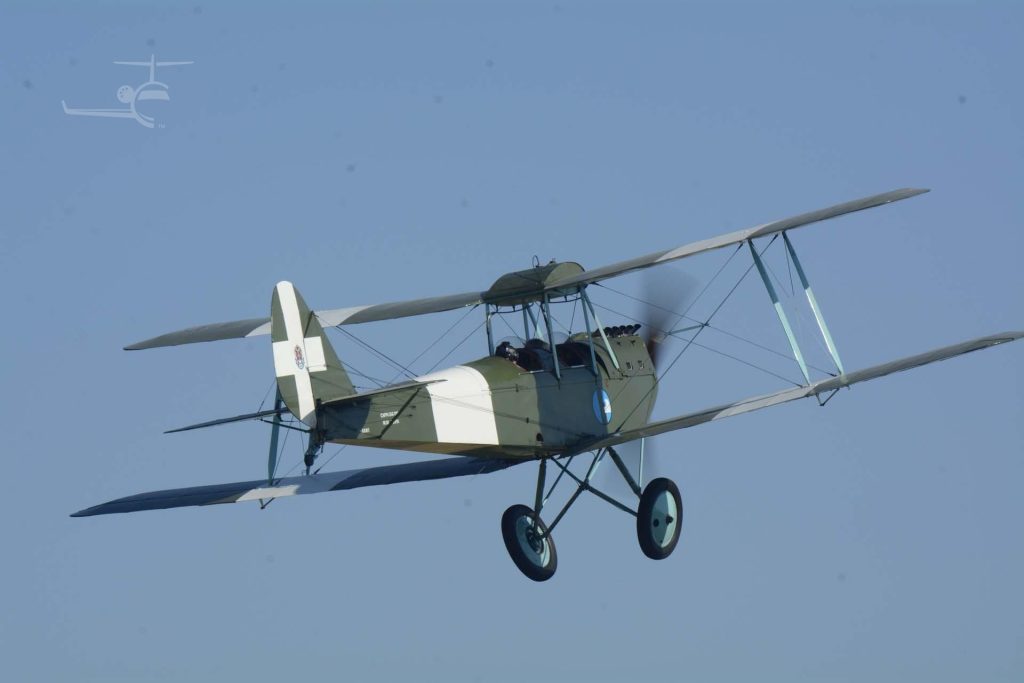
According to Cortelletti, the extended period out of service began while the aircraft was being offered for sale. During that time, additional maintenance deadlines came due, and the engine remained preserved during the lengthy layup. Before the Caproni could fly again, the entire aircraft required a thorough inspection. “The work involved the whole airplane because of the length of time it had been inactive,” Cortelletti explained. “Everything was checked again, from the engine to the braking system.” The maintenance was entrusted to Air Support of Biella, Italy, under the supervision of engineer Adriano Perardi. Designed by aeronautical engineer Gianni Caproni, the Ca.100 was developed from the de Havilland DH.60 Moth but incorporated several changes to the original design. These included a redesigned vertical tail and the use of the 130-hp Alfa Romeo Colombo S.63 engine, equipped with two carburetors. Various versions of the Ca.100 were fitted with other powerplants, including lower-powered radial engines.
(Image credit: Ugo Vicenzi)
From Military Trainer to Advertising Aircraft
Built in 1933, I-ABMT is an original and remarkably authentic example of the Caproni Ca.100. The aircraft was originally produced for the Italian military and operated in Rome as a trainer, helping prepare pilots during the years preceding WWII. After the war, the biplane began a very different chapter in its career. It was employed for skywriting and aerial advertising over Milan, promoting several well-known Italian brands. It was later withdrawn from use and remained idle for many years before being discovered abandoned during the 1960s.
(Image credit: Ugo Vicenzi)
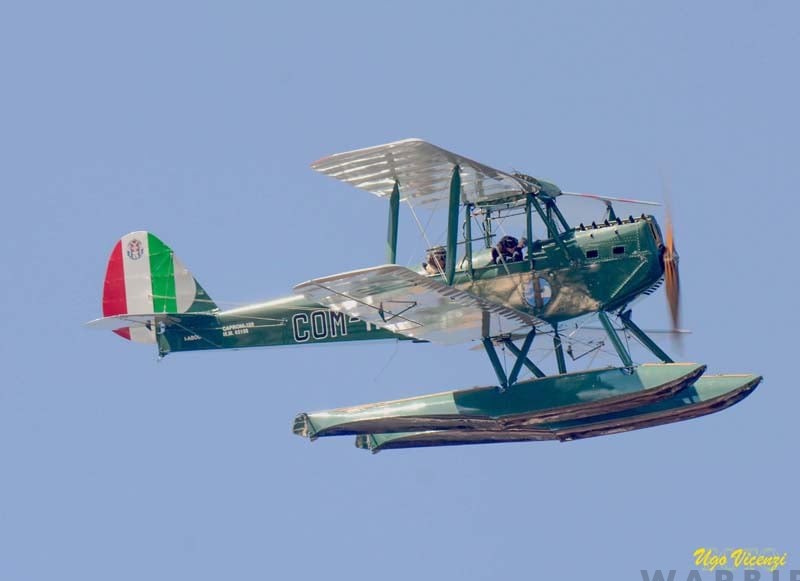
Italian businessman Gerolamo Gavazzi subsequently led an extensive restoration that returned the aircraft to flying condition. Wherever possible, the work was completed using original components, preserving the Ca.100’s authenticity as well as its distinctive period character. Gavazzi also owns the float-equipped Caproni Ca.100 I-ABOU. Affectionately known as the *Caproncino*—Italian for “Little Caproni”—I-ABOU is considered the world’s oldest airworthy seaplane. It is appropriately based with the Aero Club Como, recognized as the world’s oldest seaplane operator. Located on the shores of Lake Como, the flying club traces its origins to 1932. Among its unusual surviving features are a Sonia clock designed for the Regia Aeronautica, the Italian Royal Air Force; a “Diavoletto,” or “little devil”; and a Pezzani compass distinguished by its elegant, dome-shaped design. Today, I-ABMT is based at Milan’s Bresso Airport and is regarded as the oldest airworthy aircraft in Italy.
(Image credit: Ugo Vicenzi)
Although Cortelletti describes the Ca.100 as straightforward to fly, its engine demands careful attention from the pilot. The ignition-advance lever must be continually adjusted in coordination with the throttle to keep the engine operating correctly. Takeoffs and landings also require particular care. The aircraft’s large wheels and unusual inverted-sesquiplane configuration—with the lower wing having a greater span than the upper wing—leave its lower wingtips comparatively close to the ground. If the aircraft yaws during takeoff or landing, a wingtip could strike the surface, potentially causing serious damage. For Cortelletti, Festivolare was a natural choice for I-ABMT’s first official public outing after its return to flight. “I chose Festivolare because it is an important airshow that continues to grow each year, attracting international participants such as the Flying Bulls,” he said. “But there is also a personal connection: Gianni Caproni was from Trentino, just as I am.” The appearance will bring the historic Caproni back before the public in the region most closely associated with the celebrated aircraft designer, marking a fitting new chapter in I-ABMT’s flying career.
(Image credit: Ugo Vicenzi)