






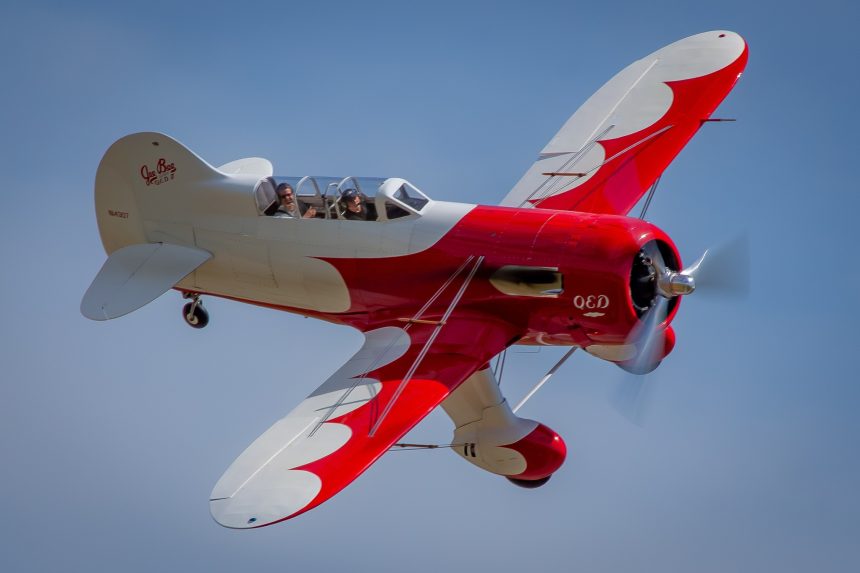

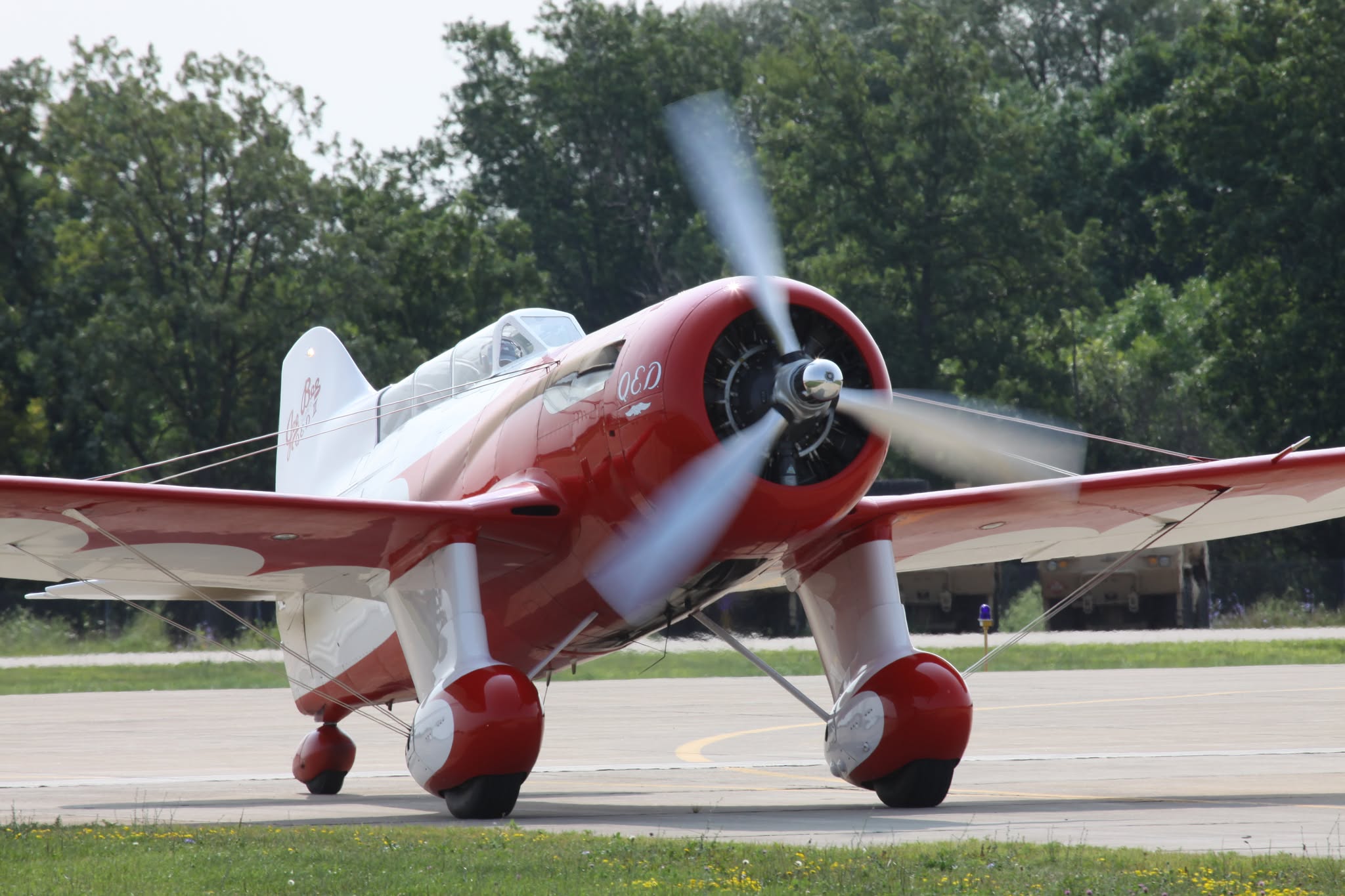
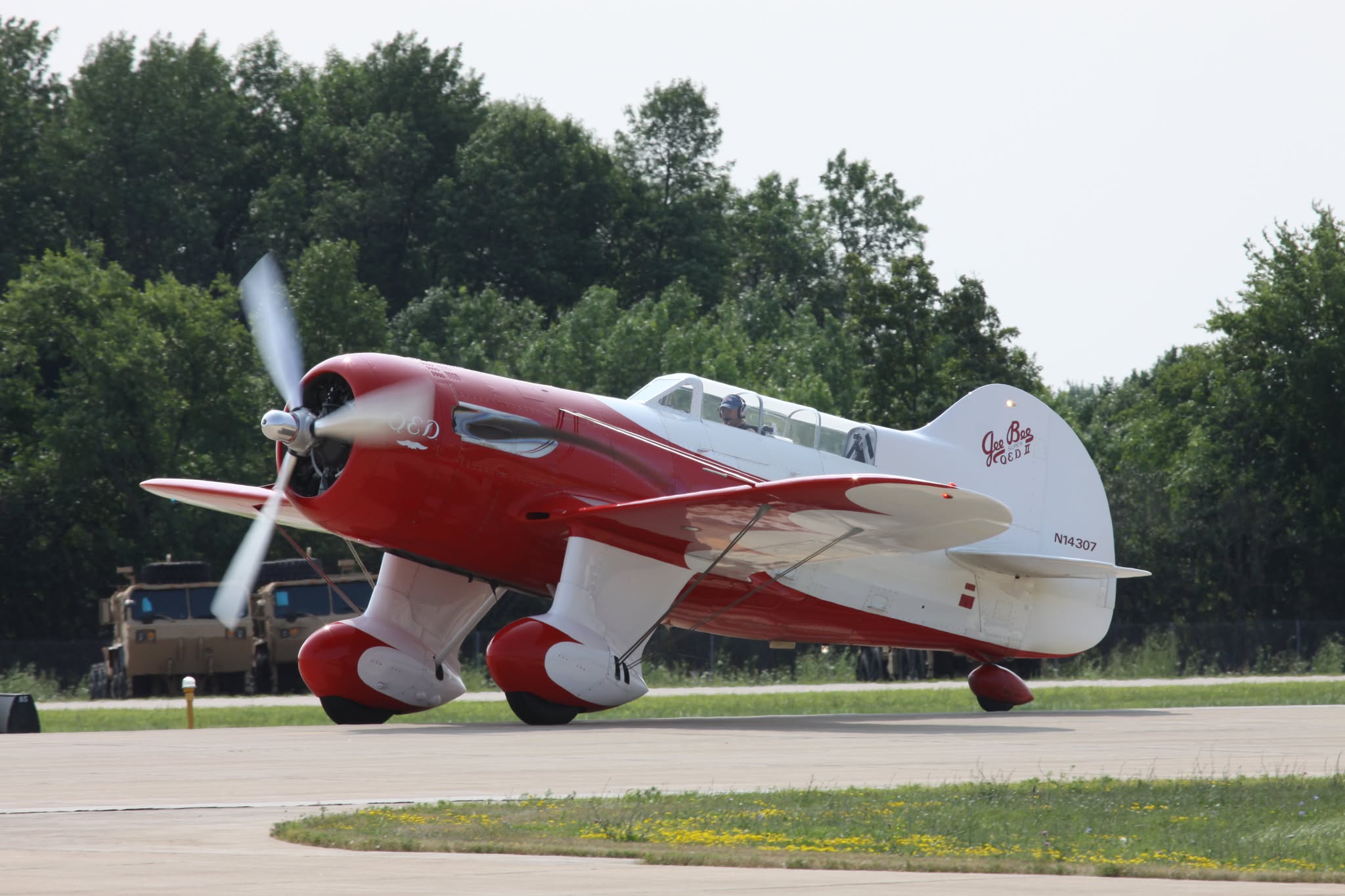
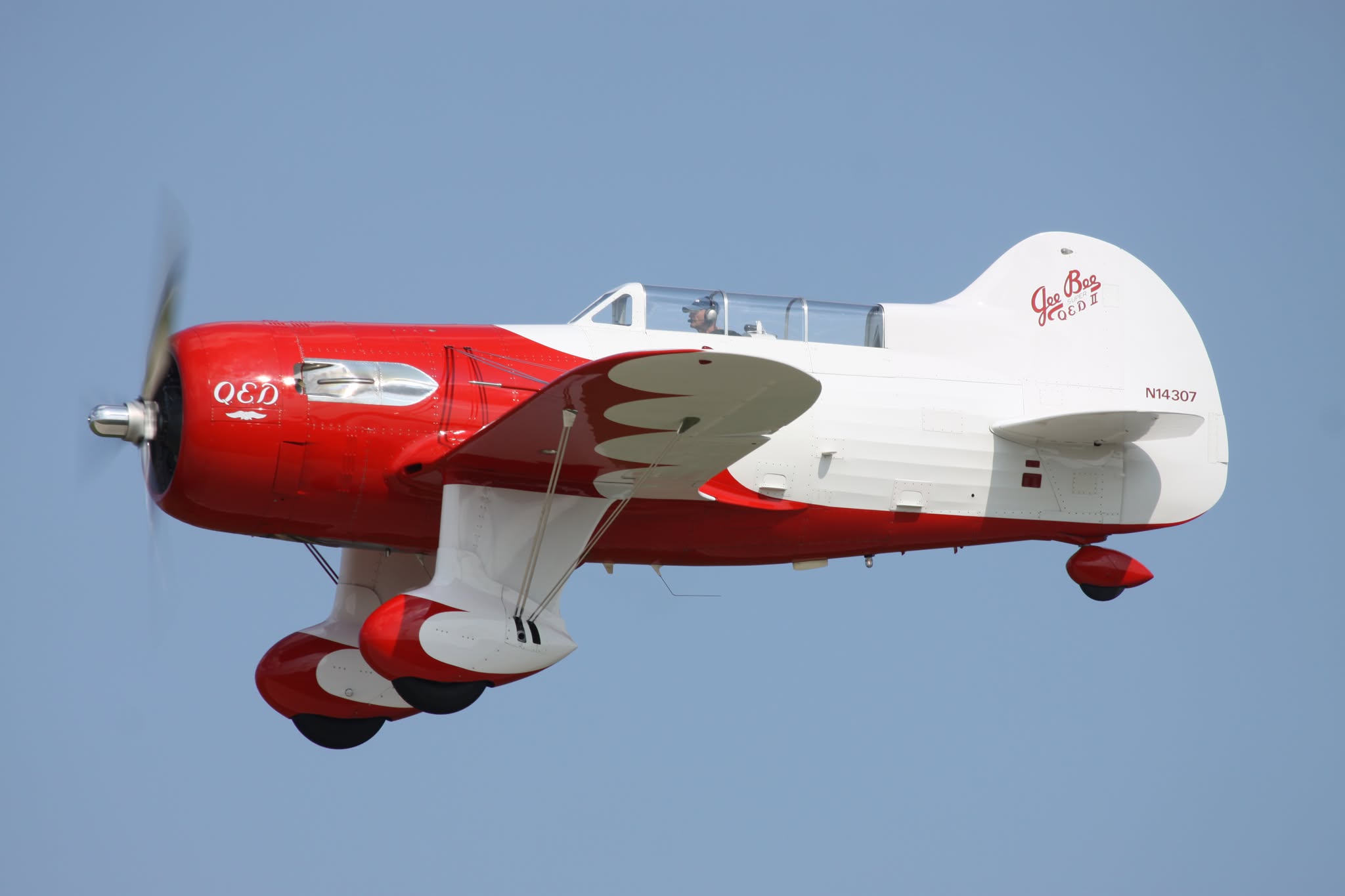
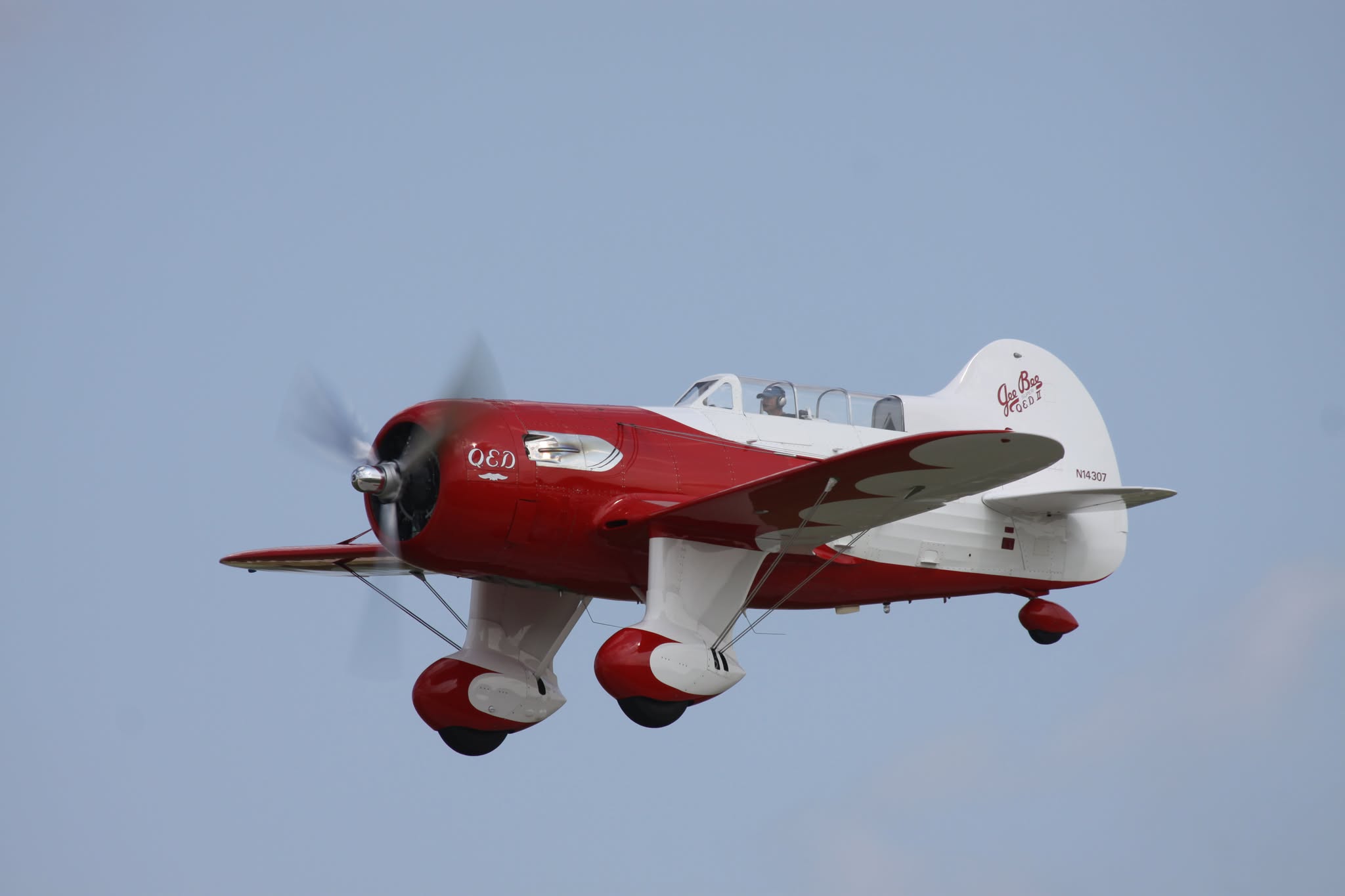
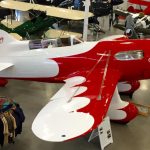
Having already built a reputation for being one of the fastest growing aviation museums in the United States, the Mid America Flight Museum has now completed the first post-restoration flight of their Gee Bee QED II replica at Grimes Municipal Airport near Urbana, Ohio. The aircraft has been a labor of love for the MFAM’s restoration team in Urbana, lead by Doug Smith, for nearly three years, and after further flight testing, the Gee Bee QED II will be flown to the Mid America Flight Museum’s main location at Mount Pleasant, Texas.
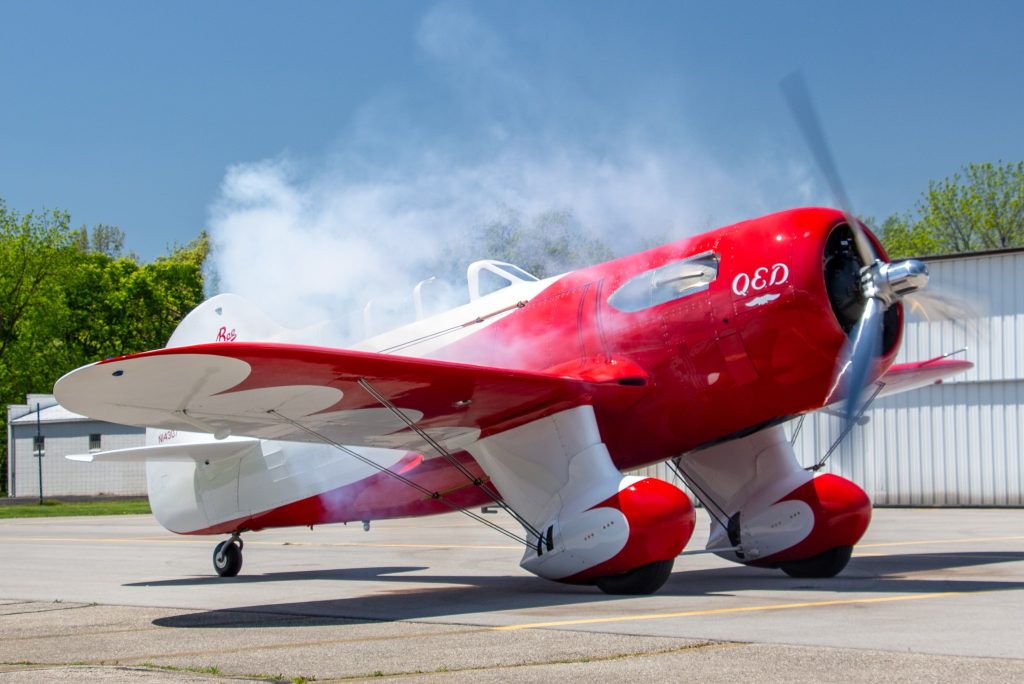
Museum founder Scott Glover praised the restoration team, calling the project proof of “what a well-led team can do.” Glover noted that the effort brought together numerous talented craftsmen, mechanics, and vendors to complete a project many believed was not worth pursuing. He described the completed aircraft as “stable, fast, and safe,” adding that it may now be the fastest Gee Bee model after the ailerons were counterbalanced.
Glover also highlighted the successful first day of flying, which included three flights between two airports and carrying the aircraft’s first passenger. “That is pretty good for day one,” he said, adding that the aircraft demonstrated hands-free stability at 200 mph. He concluded by teasing future restoration projects underway at the Mid America Flight Museum’s North location in Urbana, Ohio, while congratulating the entire team for their efforts.
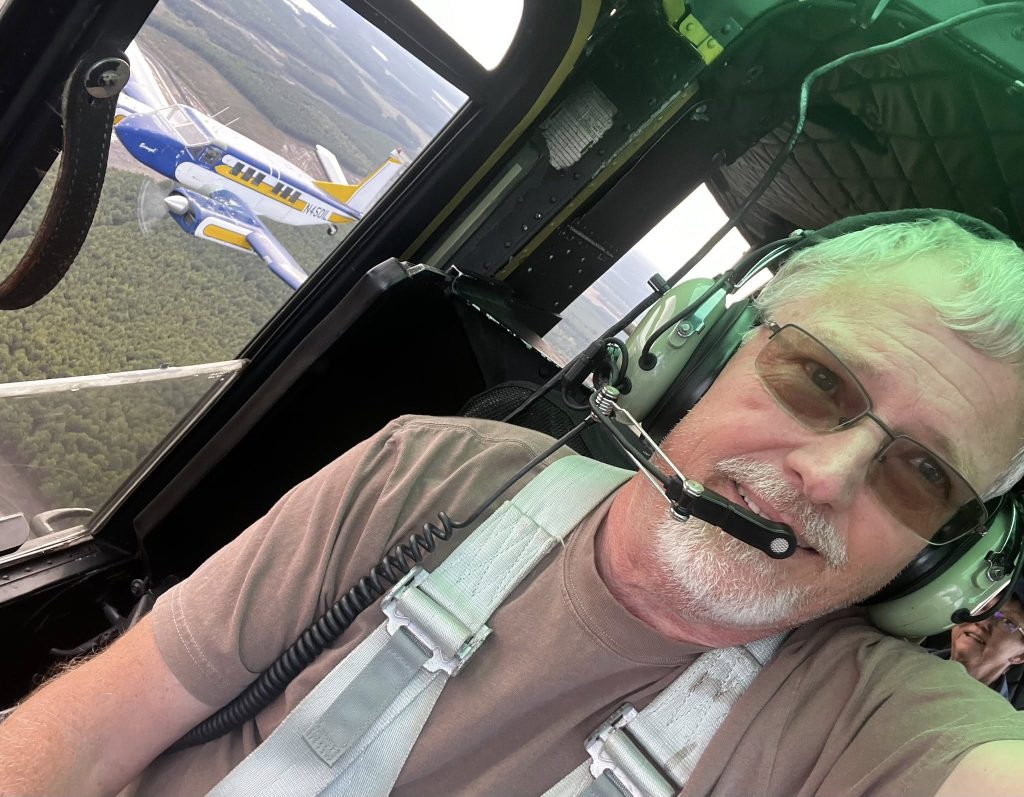
Kelly Mahon, Director of Operations for the Mid America Flight Museum and the original test pilot for the Kodiak 10-place turbine aircraft, recently conducted the first flights of the newly completed Gee Bee QED II replica. Raised in a flying family immersed in antique aircraft, Mahon has spent his entire career in aviation, beginning with fueling airplanes at a local airport. His experience ranges from seaplanes and vintage airliners to fighters and helicopters.
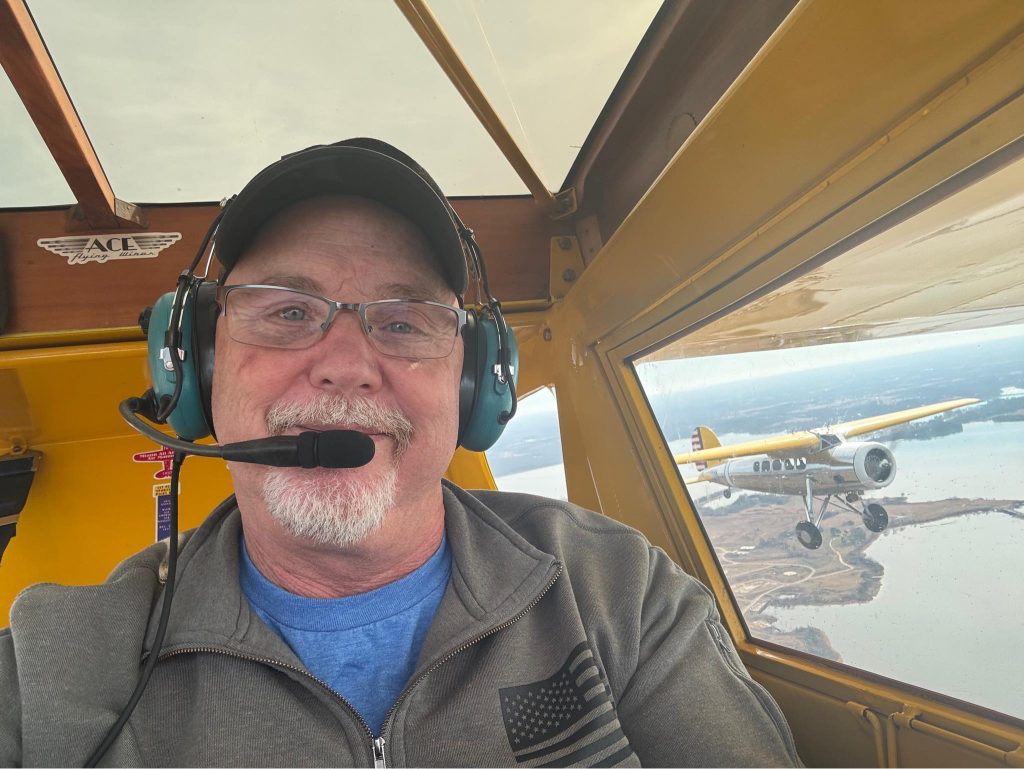
“Just the Gee Bee history tells you that you ought to be nervous about the airplane,” Mahon said. “And then with it having more horsepower than the original QED, you have to wonder how that’s going to affect things. You really can’t say enough about the stress and anxiety leading up to a first flight on an airplane with the Gee Bee name.” Despite the reputation surrounding the Granville racers, Mahon said the airplane itself immediately inspired confidence during preflight inspection. “When I showed up and did the preflight, the airplane presented itself beautifully. It’s ergonomic, well thought-out, and really inspires confidence. But there were still concerns. It has original Beech 18 brakes, which are a little weak for the airplane, and with any wire-braced airplane, you always think about how those flying wires are going to behave.”
(Image credit: Kelly Mahon)
The first high-speed taxi test quickly revealed the airplane’s impressive performance. “It was surprising how much power it had and what a beast it was. Honestly, after that first run, my anxiety level probably went up rather than down.” After returning to the ramp and allowing the brakes to cool, the second taxi test felt far more manageable. “The brakes were working better, the engine was running great, and everything seemed normal. At that point we decided to let the brakes cool one more time, do a quick preflight, and put it in the air.” The QED II made its first flight from Urbana, Ohio, though Mahon elected to perform the initial landings at nearby Springfield, which offered a significantly larger runway. “Urbana’s runway is 100 feet wide and 4,400 feet long, while Springfield is 200 feet wide and 9,000 feet long. For a first landing, the bigger runway just made more sense.” The maiden flight lasted approximately 40 minutes and included two touch-and-go landings and a full stop at Springfield. “The airplane was stable, powerful, and fast — all the things you would expect from a Gee Bee. What surprised me most was how stable it was. It would actually fly hands-off.” Landing characteristics also exceeded expectations. “Touchdown speeds were slower than I anticipated, around 90 knots, and the airplane cruises somewhere near 200 knots.” The only major criticism, Mahon noted, involved control forces. “The only thing keeping me from calling it a fantastic airplane outright is that the controls are really heavy. But we’ve completed three flights now, and every step has been successful.”

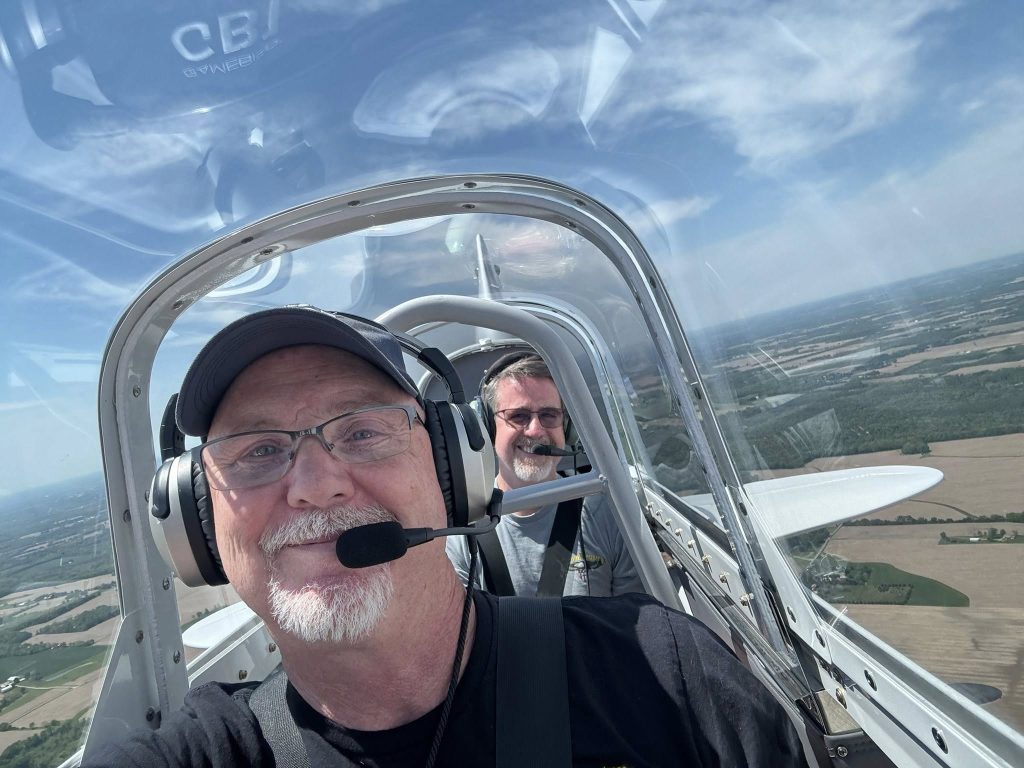
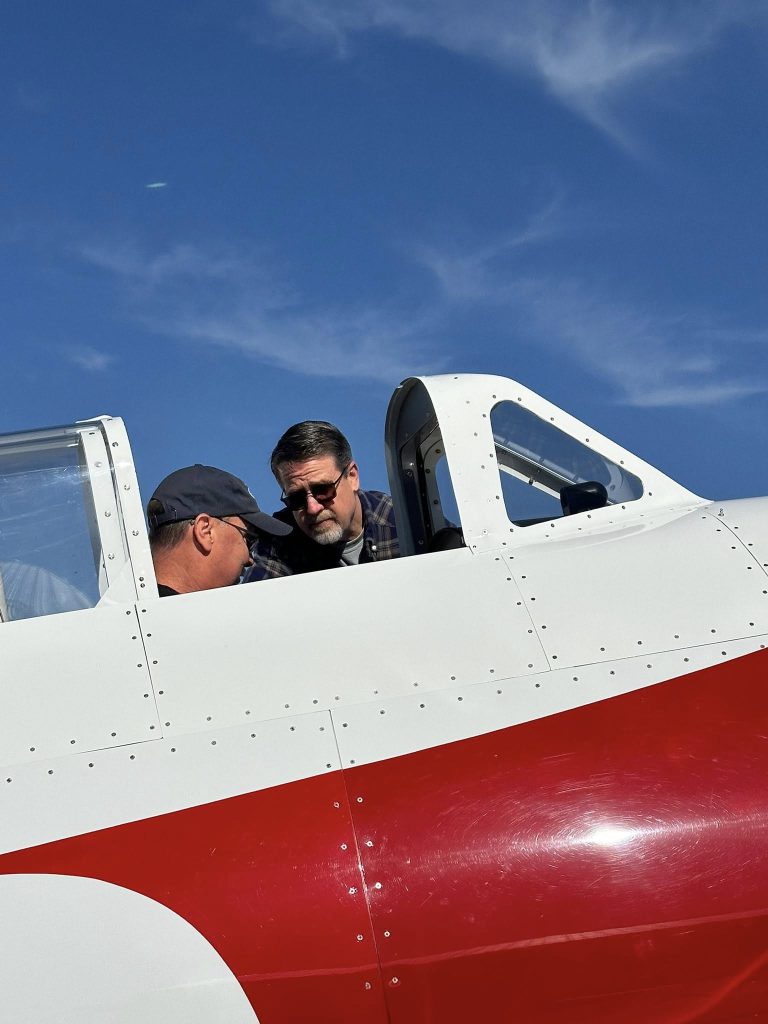
Following the successful first flight, Mahon carried builder Doug Davis in the rear cockpit for the airplane’s second flight — the first time the QED II had ever carried a back-seat passenger. “Doug rebuilt the airplane, so he has a huge emotional attachment to it. It has dual controls, so he got to fly it around a little bit.” Even so, Mahon admitted that the airplane’s legendary reputation never fully leaves a pilot’s mind. “You can never completely forget that you’re in a Gee Bee.” The second flight revealed only minor changes in handling, with stall and touchdown speeds increasing by approximately five miles per hour with a passenger aboard.
The third flight involved returning the airplane to Urbana, where Mahon discovered that runway width — not runway length — posed the greater challenge. “With the weak brakes and higher touchdown speed, I thought runway length would be the concern, but 4,400 feet turned out to be plenty. The surprise was the width. I flew a turning approach so I could keep the runway in sight the whole time, but when I rolled wings level at the threshold, the entire airport disappeared until the tires touched. One hundred feet wide is about as narrow as I’d want for this airplane.” Overall, Mahon praised the aircraft’s handling qualities, particularly in light of the Gee Bee lineage. “Landing characteristics are very nice. The roll rate isn’t especially exciting, and the ailerons lose effectiveness a little as you slow down, but I flew the airplane all the way to the stall and there’s none of the rumored aileron reversal issues associated with the early Gee Bees.” He also highlighted modern improvements incorporated into the replica. “We counterbalanced the ailerons, so there’s almost no risk of the flutter problems the early airplanes had. I’m very happy with the airplane. It’s going to be a successful aircraft that we’ll be able to share with people.” As for future testing, Mahon said only minor refinements are planned before additional flying begins. “For an airplane with this level of complexity and performance, it’s remarkable that we’re making such small changes. We need to round off a couple of sharp canopy rail corners that touch my shoulders in cruise flight, rig the ailerons down about three-eighths of an inch per side, and adjust one flying wire that’s singing to us a little bit. That’s really it.” He expects additional refinements as operational experience grows, particularly once the airplane arrives in Texas. “I’m sure once we get it to Texas and start flying it more regularly, we’ll discover other small things to tweak. But overall, the airplane is in fantastic condition, and there are no major changes needed.”
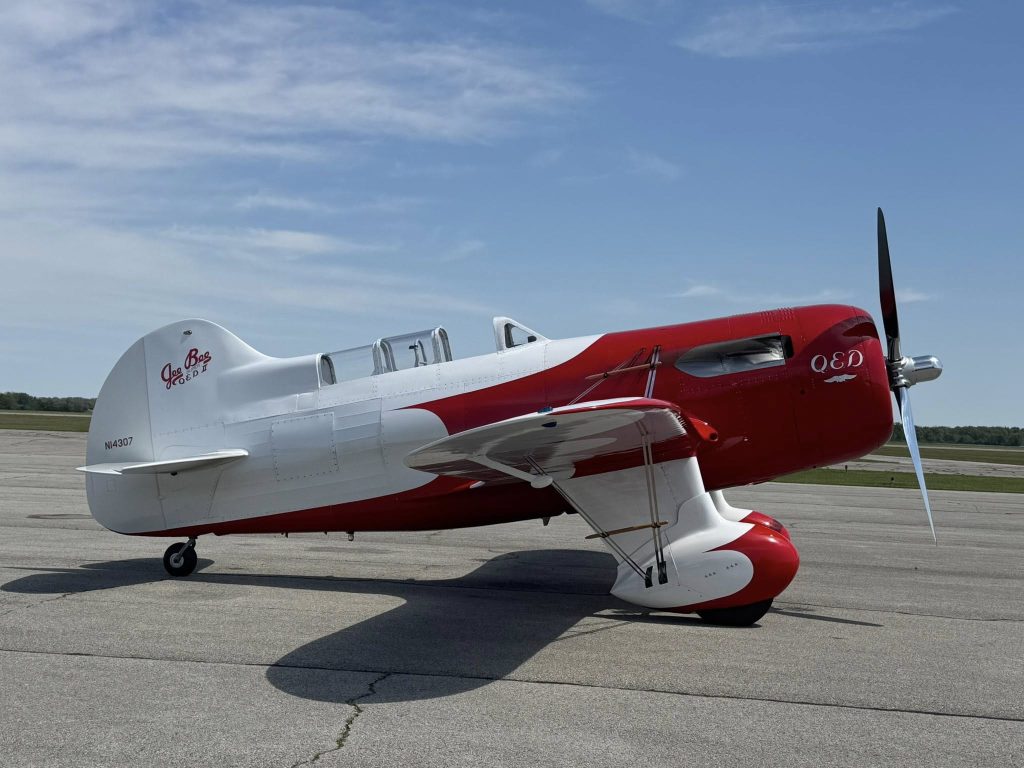
This aircraft is an upscaled replica of the Granville Gee Bee R-6, better known as the QED (acronym for the Latin phrase quod erat demonstrandum, meaning “that which was to be demonstrated”). The original aircraft was built in 1934 as the final example of the Granville Brothers’ “Gee Bee” Super Sportster air racers built in Springfield, Massachusetts, and was powered by a 675 hp Pratt & Whitney R-1690 Hornet radial engine. The aircraft was originally built for industrialist Floyd Odlum, who was supporting the efforts of his girlfriend, famed aviator Jacqueline Cochran, who later wed Odlum in 1936.
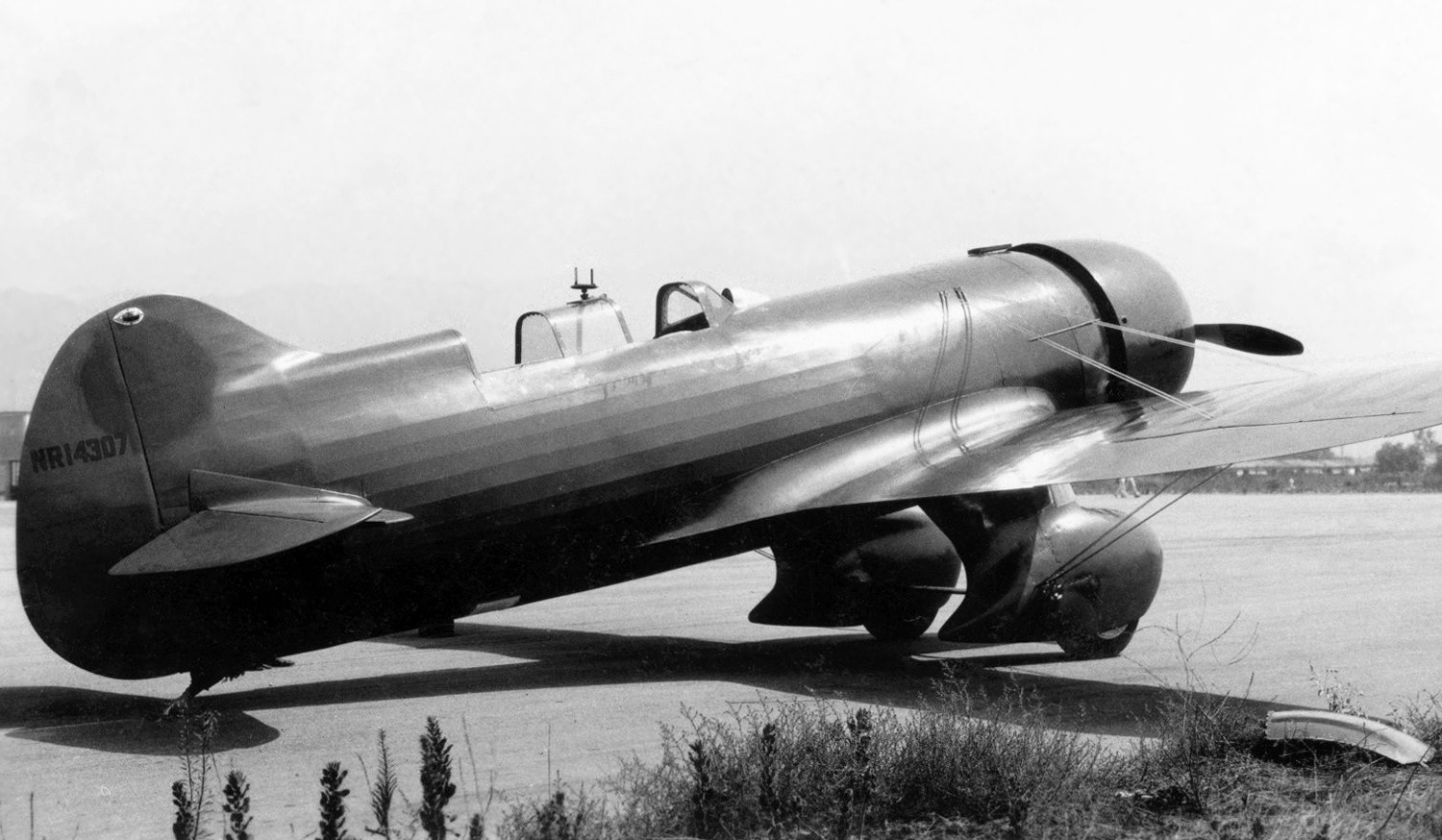
The QED made its air racing debut at the 1934 Bendix Trophy Race as race number 77, with pilot Lee Gehlbach at the controls. During the cross-country race from Los Angeles to Cleveland, Gehlbach was forced to land in Des Moines, Iowa after the QED’s cowling came loose and got pulled into the spinning propeller. Though a replacement cowling was sent out and the aircraft made it to Cleveland, Gehlbach and the Gee Bee arrived too late to qualify.
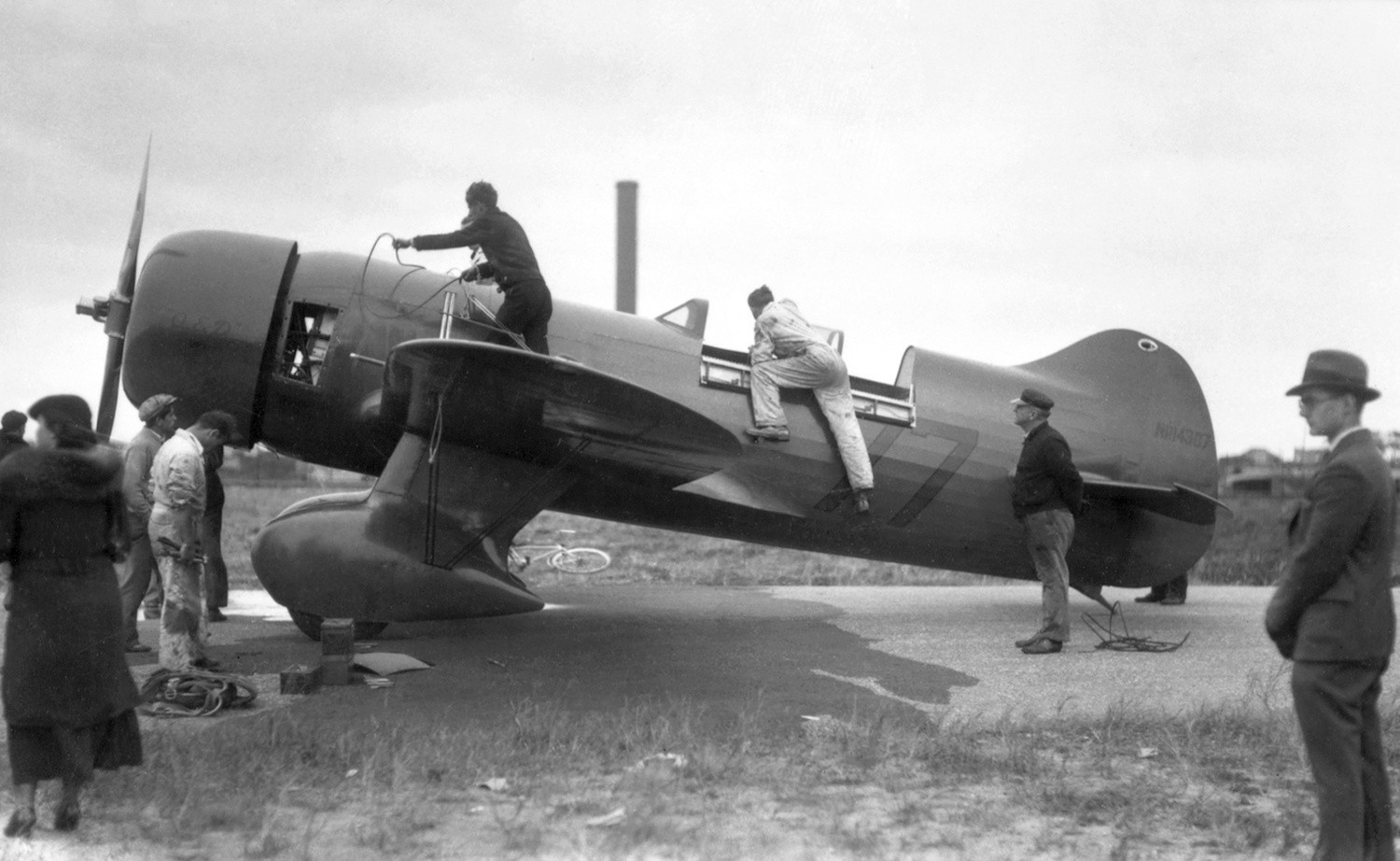
The same year that the QED raced in the Bendix, Jacqueline Cochran entered the aircraft into the MacRobertson Air Race to be flown from England to Australia after the previous aircraft she entered, her Northrop Gamma fitted with a Curtiss Conqueror inline V12 engine, was unable to be prepared in time. Together with her copilot, Wesley Smith, they set off from the race’s starting point at RAF Mildenhall, England in the QED, race number 46, and made their way nonstop across continental Europe to Bucharest, Romania, where they would proceed to the finish line in Melbourne, Australia, But in Bucharest, the Gee Bee R-6 suffered damage to one of its stabilizers and had a malfunctioning flap. The necessary repairs to the aircraft could not be completed in time for Cochran and Smith to continue the air race, and after dropping out in Bucharest, the Cochran, Smith, and the Gee Bee QED returned to America.
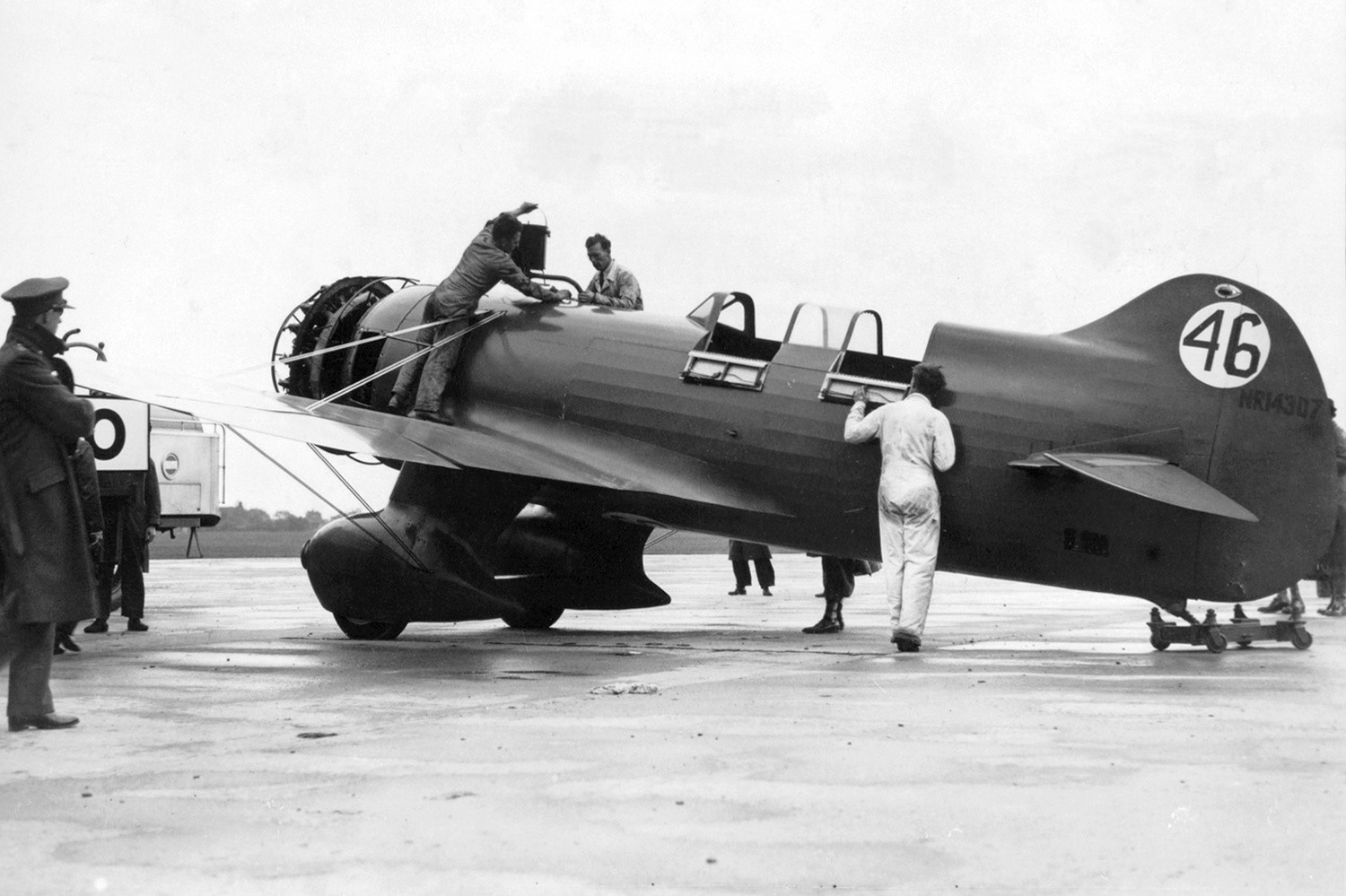
In 1935, pilot Royal Leonard entered the Gee Bee QED into the Bendix Race as race number 90, but was forced to land in Wichita, Kansas due to engine failure, The next year, pilot Lee Miles would fly the QED the 1936 Thompson Trophy race in Los Angeles as race number 77 and completed 10 of the 15 laps in the course before engine trouble forced him down in the 11th lap, allowing Frenchman Michel Detroyat to win the race in his Caudron C.460 Rafale. The aircraft was then purchased by aircraft broker Charles Babb, who had it repainted from its original green color with orange N-numbers to a cream scheme with red trim, and installed a supercharger for the Pratt & Whitney Hornet.
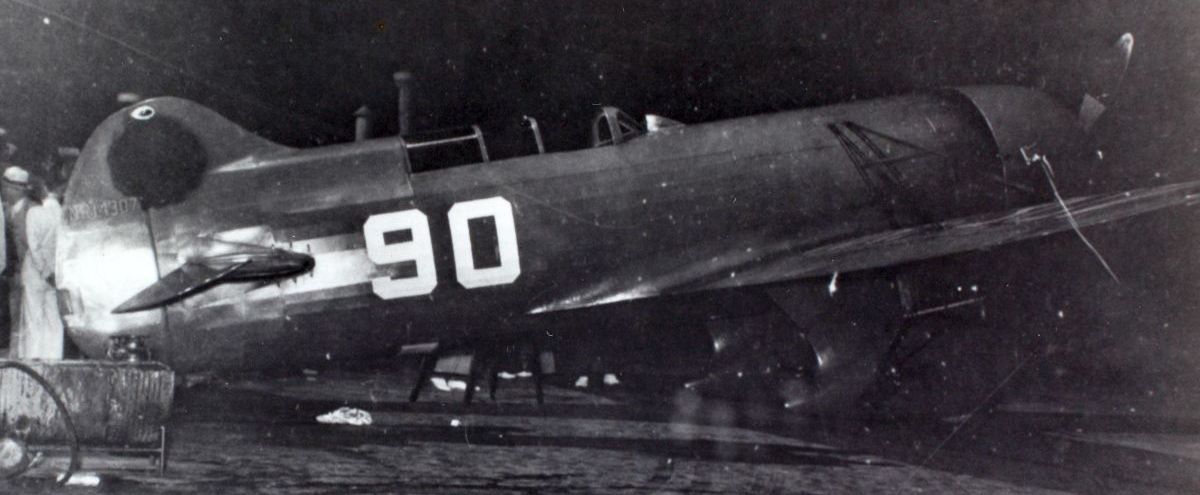
In 1938, George Stratton Armistead, a pilot working for Babb, entered the Gee Bee R-6H QED into the Bendix Races for what would be the fourth time the aircraft would participate in this transcontinental air race. After departing Los Angeles, Armistead was flying over Kingman, Arizona when the engine in the QED began losing oil pressure at an alarming rate while the oil temperature began rising above safe levels. With his radio having failed and experience icing issues, Armistead managed to land in Winslow, Arizona, where he then dropped out of the race. This would be the Gee Bee QED’s final race, and it had earned the dubious distinction of having never finished a race it was entered into.
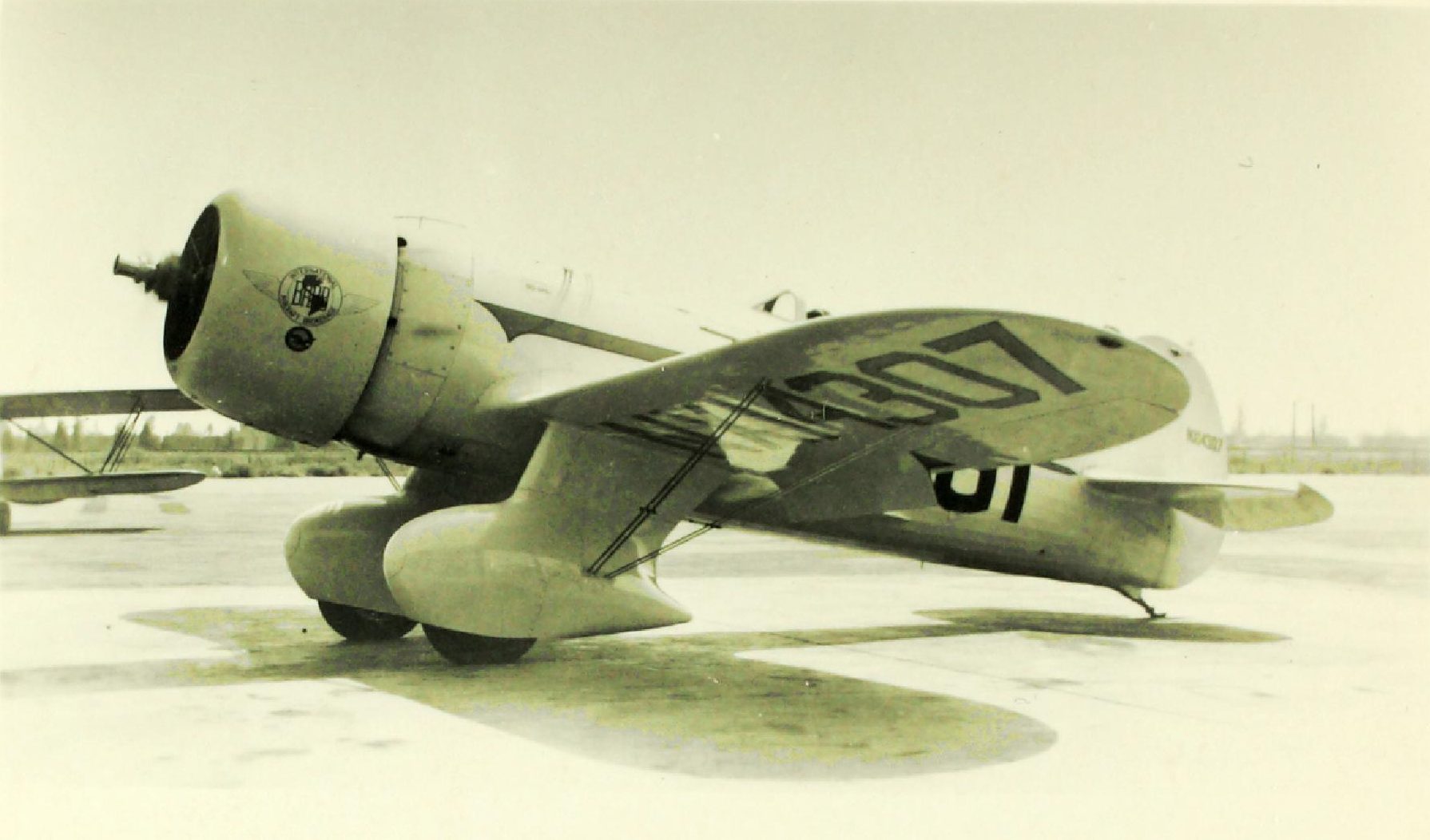
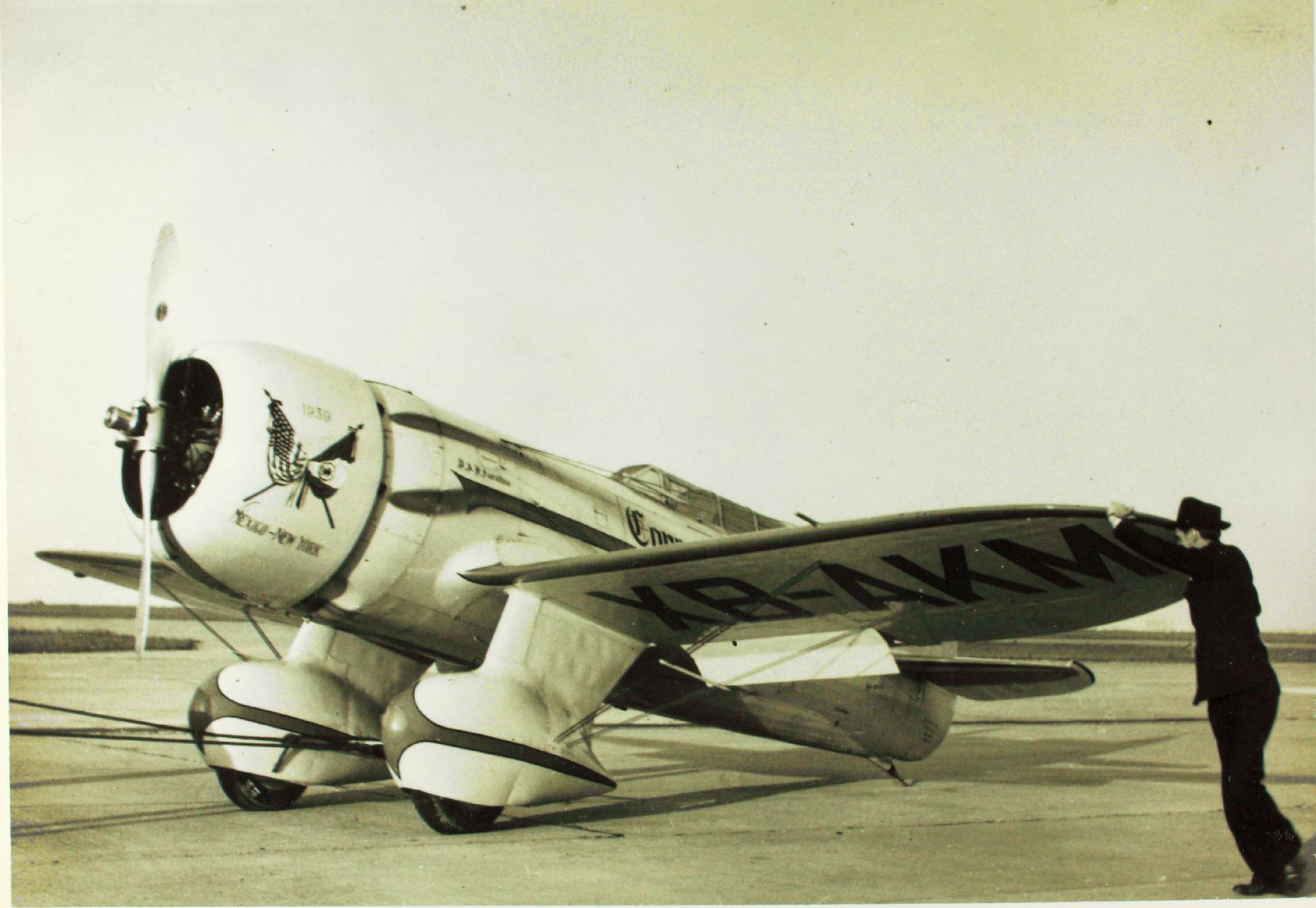
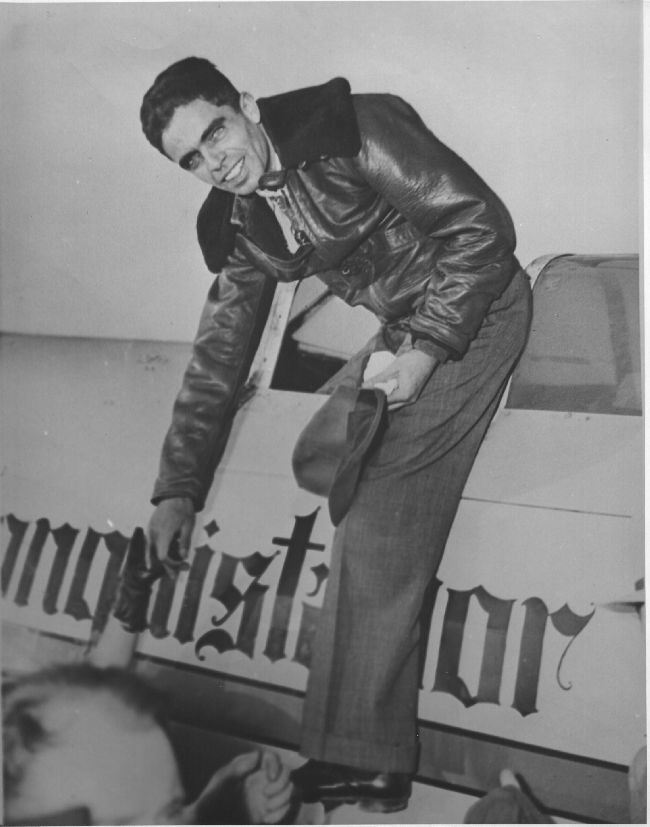
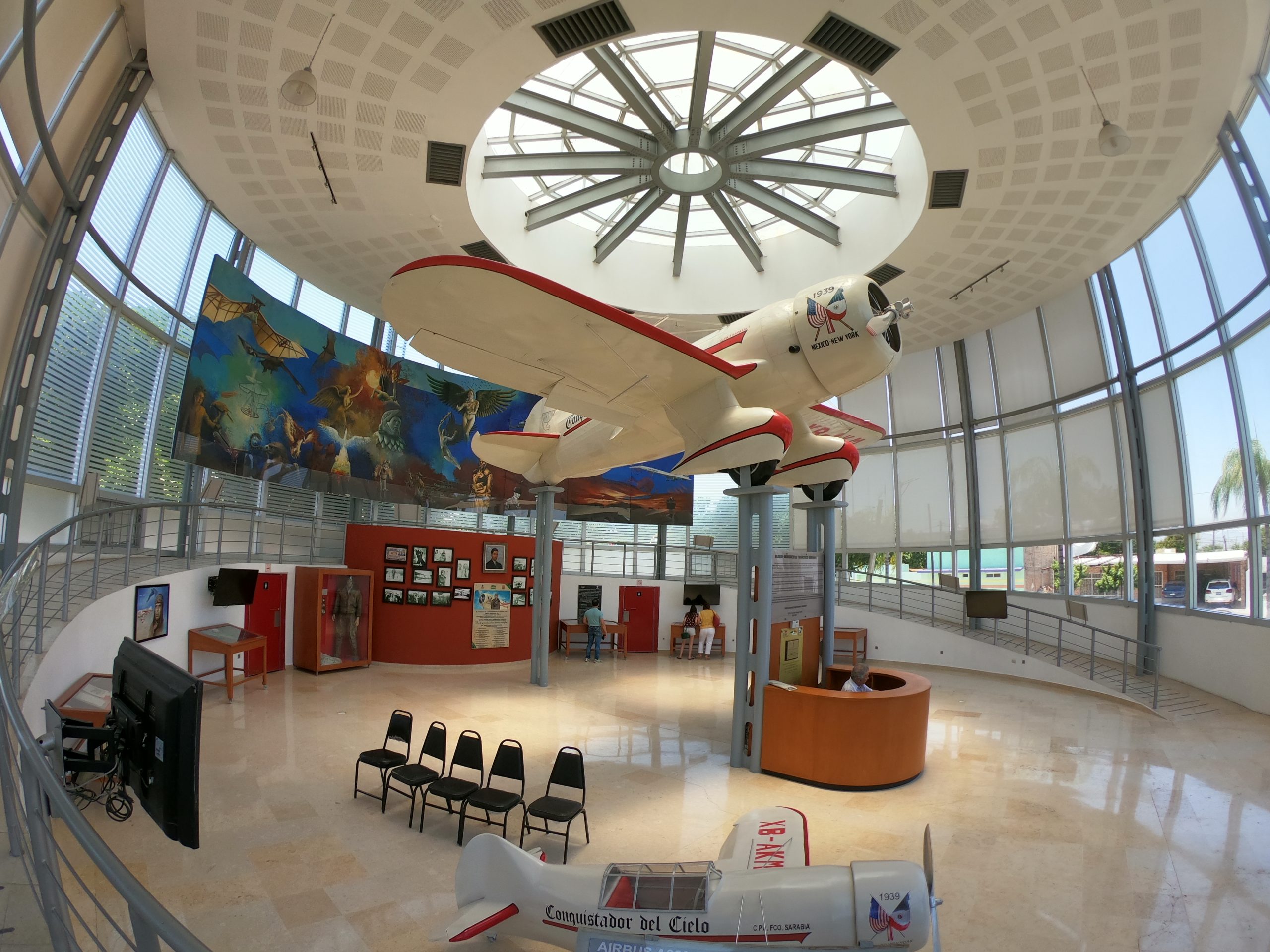
By the end of 1938, though, the aircraft was purchased by Mexican aviation pioneer Francisco Sarabia, who had pioneered civil air routes airliners to fly across Mexico, and he sought to gain further prominence on an international level. Sarabia purchased the former racer, had it registered under the Mexican civil aviation authorities as XB-AKM, and named the plane Conquistador del Cielo (Conqueror of the Sky). He would fly the Conquistador del Cielo on numerous record-setting flights between cities, setting the records for fastest flights from Los Angeles to Mexico City, Mexico City to Chetumal, Mexico City to Mérida, and Mexico City to Guatemala City. But his most famous flight would take place on May 24, 1939, when he flew nonstop from Balbuena Airport in Mexico City (now Mexico City International Airport) to Floyd Bennett Field in Brooklyn, New York in 10 hours and 47 minutes, a new record between two of the biggest cities in North America. Soon afterwards, Sarabia flew to Bolling Field, Washington, D.C. to begin a nonstop record flight back to Mexico City.
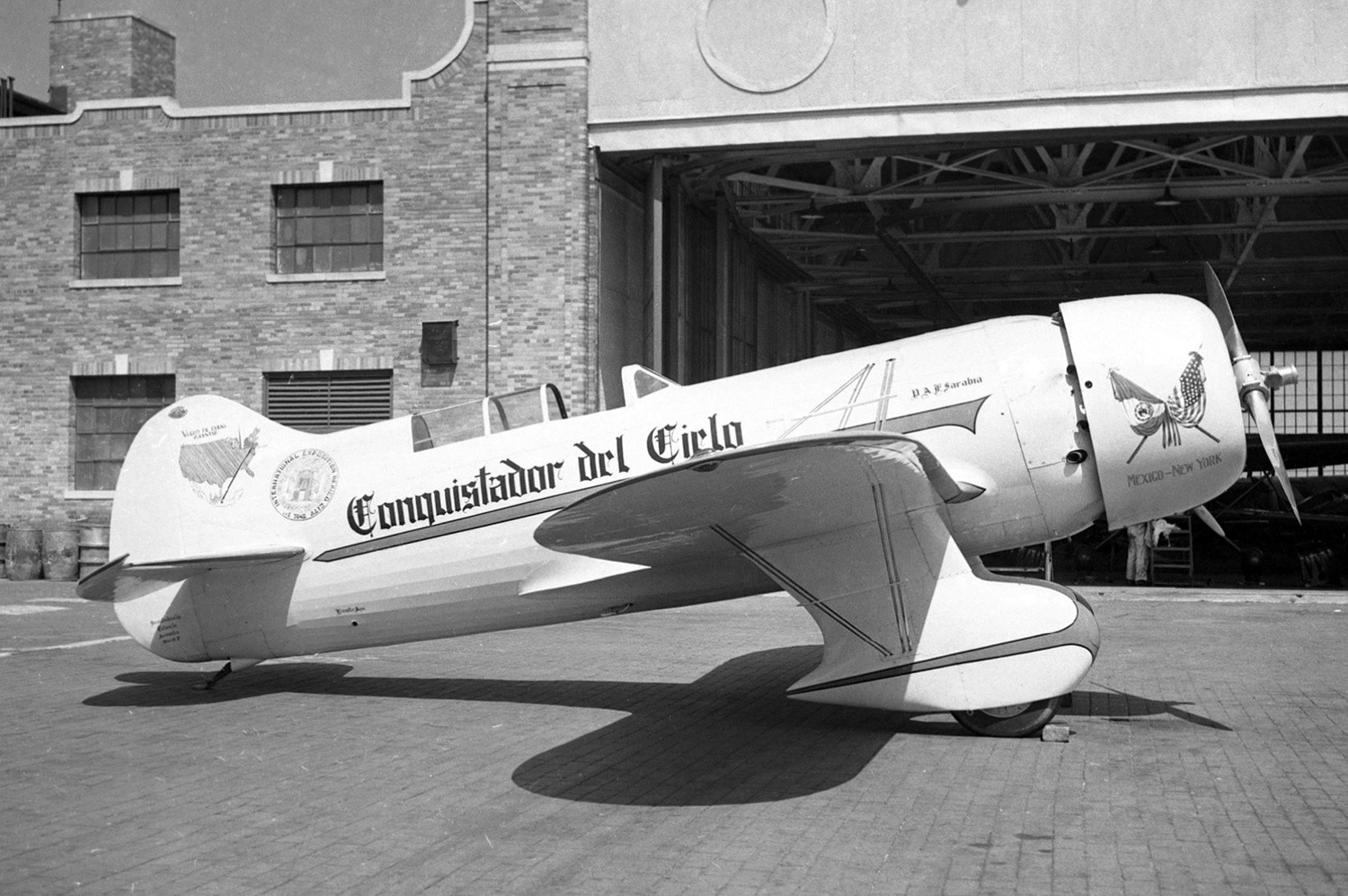
Tragically, just a few minutes after taking off from Bolling Field, the Conquistador del Cielo’s engine failed and it crashed into the Potomac River. Despite efforts to free him from the aircraft, Francisco Sarabia drowned in the cockpit, ending the life of Mexico’s most famous aviator. When the Conquistador del Cielo was pulled from the Potomac, a discarded cleaning rag had been found to have been sucked into the carburetor, seizing the engine, with the incident ruled as an accident. Francisco Sarabia received a hero’s funeral in Mexico City and buried in the Rotonda de las Personas Ilustres (Rotunda of Illustrious Persons) in the Panteón Civil de Dolores, alongside numerous other luminaries of Mexican history. As for the Gee Bee QED, it was also sent back to Mexico and initially stored in a hangar in Mérida, Yucatan, but was later brought to Sarabia’s birthplace of Ciudad Lerdo, Durango, where it has been restored as the centerpiece of the Museo Francisco Sarabia, where it remains to this day, one of only two original airplanes built by the Granville Brothers to survive today, with the other being a Gee Bee Model A biplane stored at the New England Air Museum in Windsor Locks, Connecticut.
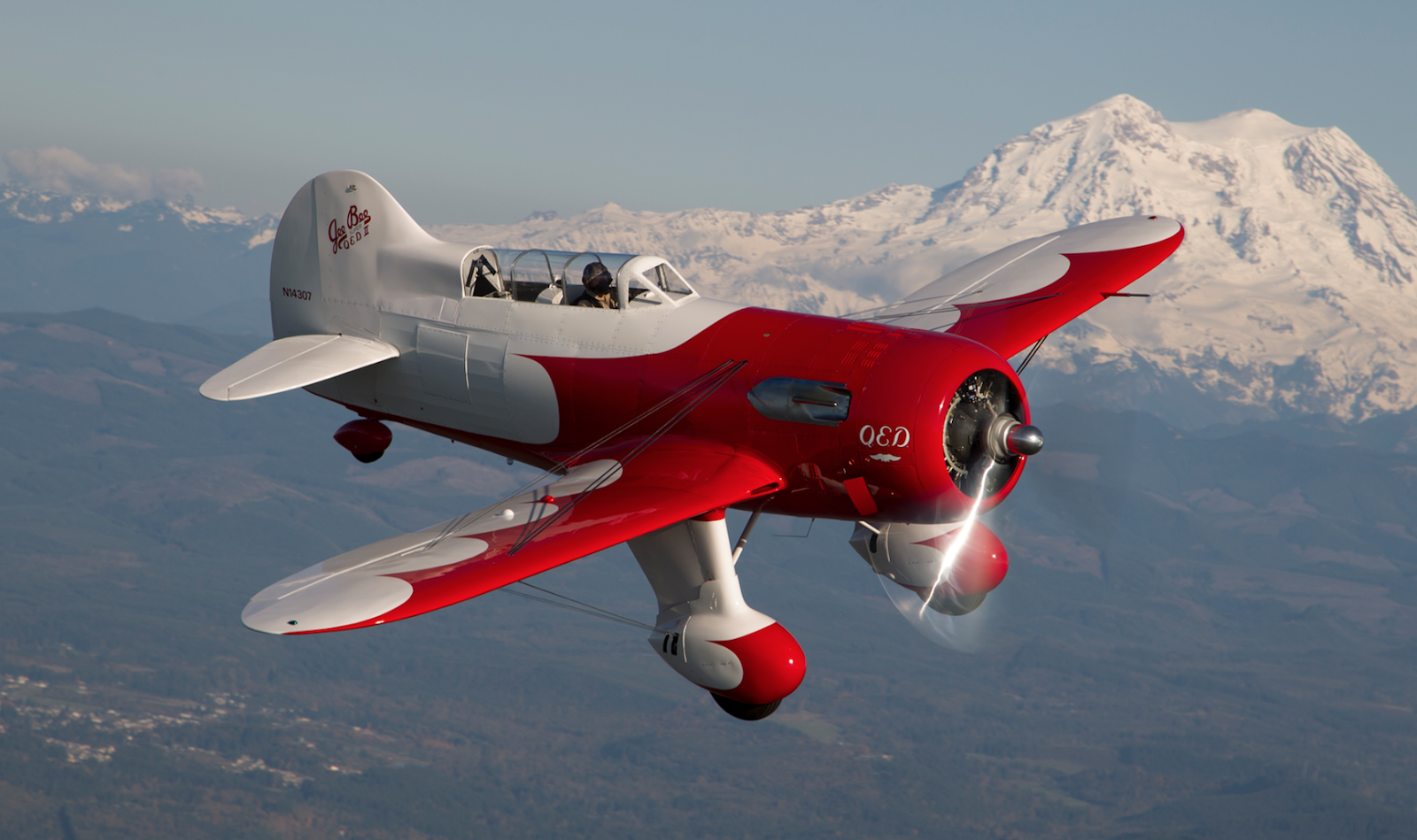
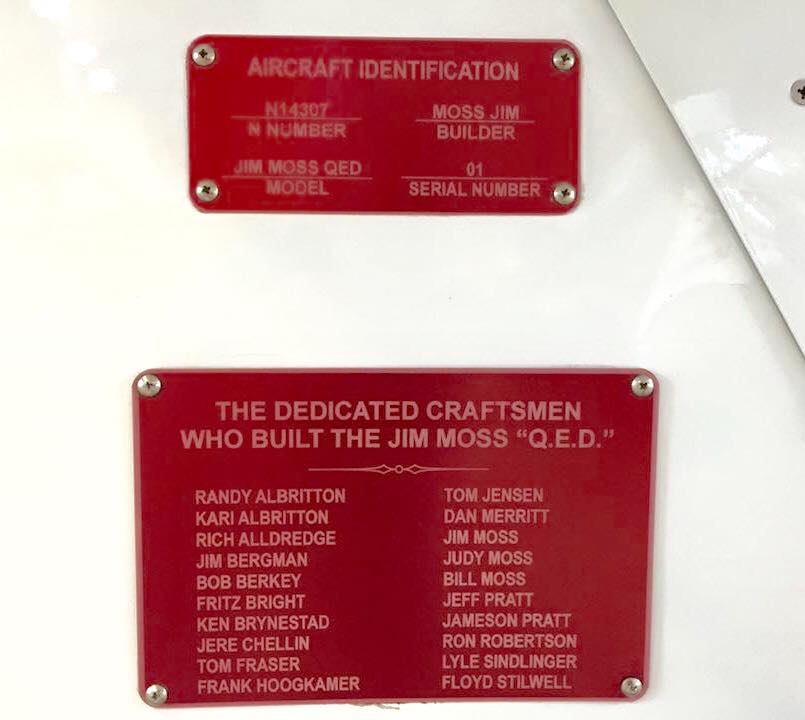
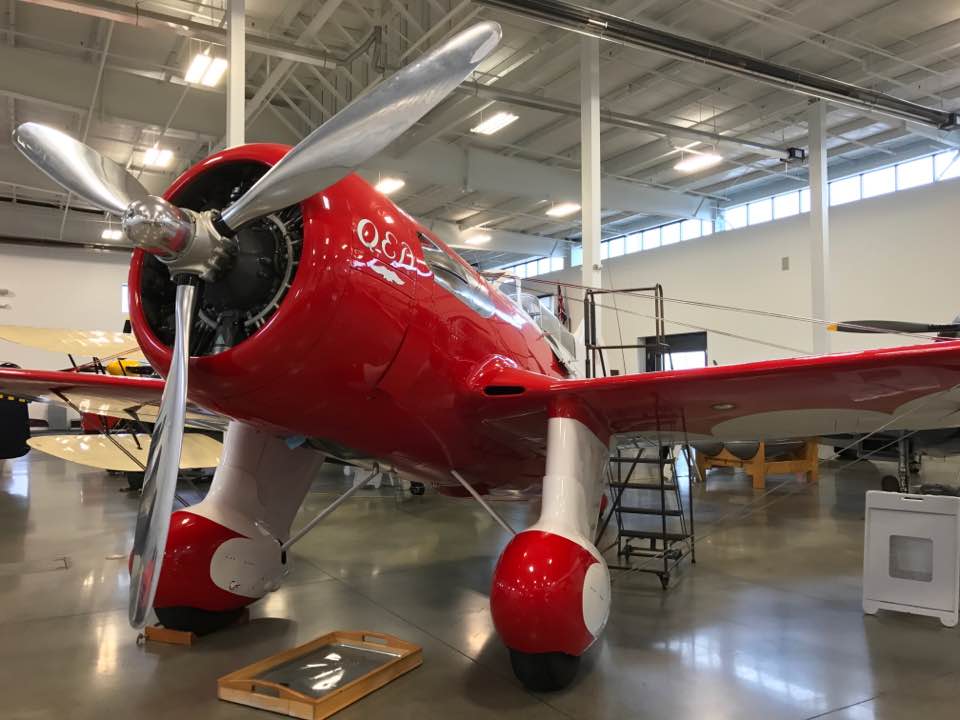
As for the QED II replica, it was originally constructed in Washington state by Jim Moss, a former Northwest Airlines Boeing 747 pilot turned builder of award-winning vintage aircraft replicas, many of which became fixtures at EAA AirVenture in Oshkosh, Wisconsin. Moss began building his QED replica in 2002 and originally had to work with historic photos and only basic plans before he was able to get some measurements of the original Gee Bee QED in Mexico. One thing that Moss was also able to contribute to the project was registering his QED II with the original US civil registration of the original Gee Bee R-6 QED, N14307.
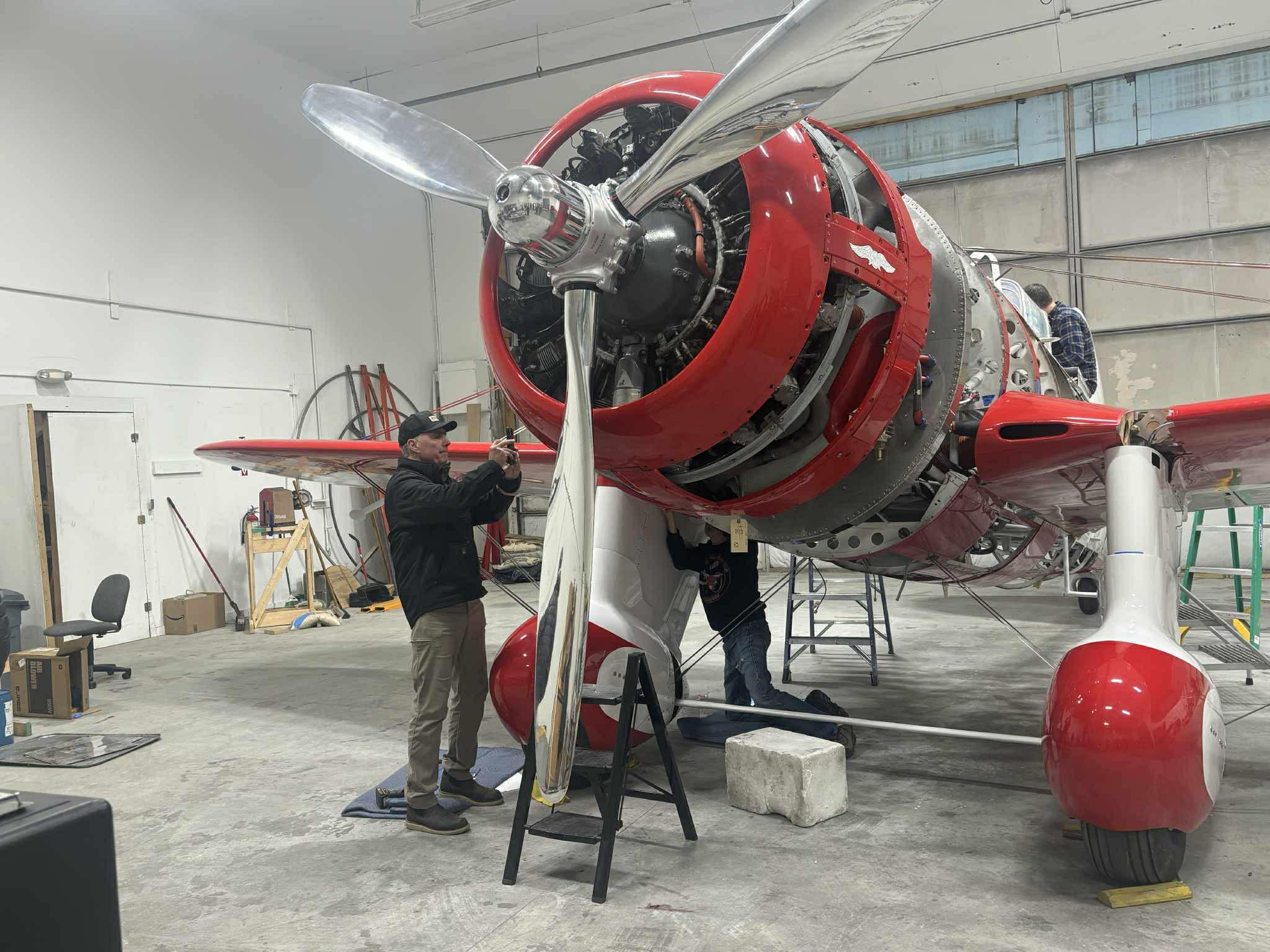
However, Moss also made some changes to the construction of his QED II. Instead of using a 650 hp Pratt & Whitney R-1690 Hornet with a two bladed propeller, he used a 1,450 hp Wright R-1820 Cyclone radial engine from a North American T-28 Trojan fitted with a three-bladed propeller from a Douglas DC-3, and Moss and his team also fitted the landing gear with the shock struts from a Beech 18. This was done not only to secure more power from the aircraft, but also with consideration for operating costs, as the Wright R-1820 Cyclone is a more common engine to find spare parts for than the original Pratt & Whitney R-1690 Hornet is. As Jim Moss explained in the June 2011 issue of EAA Sport Aviation: “I had bought a Pratt 1340 when I realized that the Wright 1820 had the same diameter as the 1690 with twice the horsepower.”
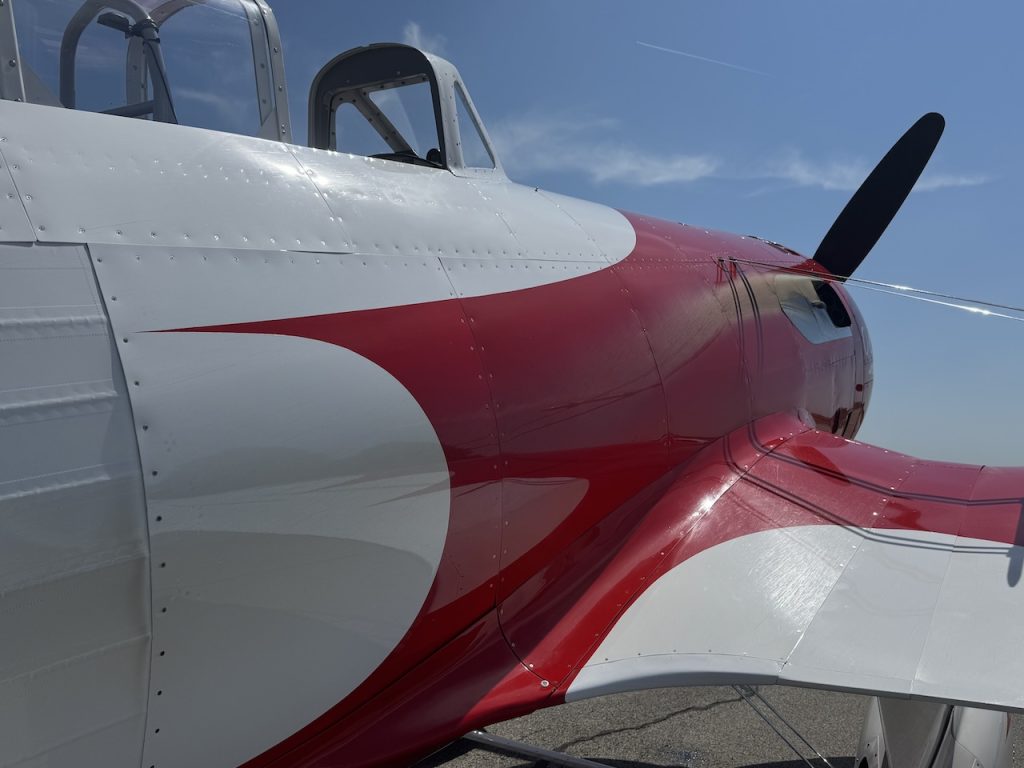
Moss also widened the fixed landing gear, lengthened the wings, and enlarged the vertical tail fin by 20% for better safer handling characteristics. The aircraft was also painted in a scheme inspired by the red and white scheme on the earlier Gee Bee R-1/R-2 Super Sportster racers raced by Jimmy Doolittle in the 1932 Thompson Trophy race. After spending 50,000 manhours working on this aircraft, dubbed the QED II, Jim Moss lived long enough to see the taxi tests of the aircraft but passed away at the age of 81 on September 1, 2013, just before the first flight of the aircraft on September 26 at Olympia Regional Airport in Washington, with Carter Teeters at the controls.
By 2014, the QED II was being flown by Jim Moss’s friend and fellow pilot Rich Alldredge, who flew the Gee Bee QED II to the 2014 EAA AirVenture show in Oshkosh, Wisconsin, and later that year, he flew it to the National Aviation Heritage Invitational held at the 2014 Reno Air Races. (Interview with Rich Alldredge HERE) (EAA video of the Gee Bee QED HERE) After this, the QED II was displayed in airworthy condition at the Historic Flight Foundation on the Mukilteo side of Paine Field, Washington. (Video of the Gee Bee QED II flying HERE)
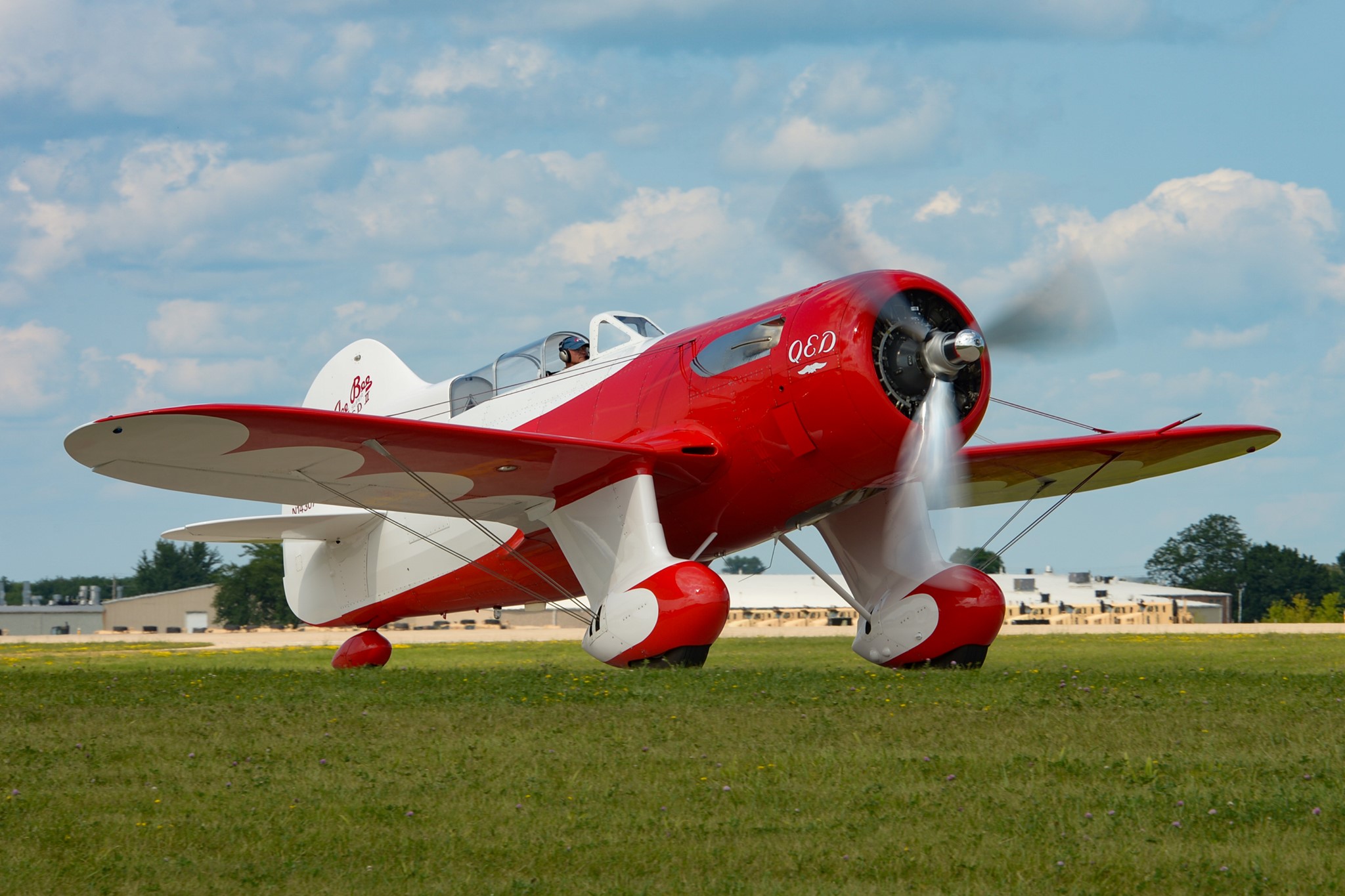
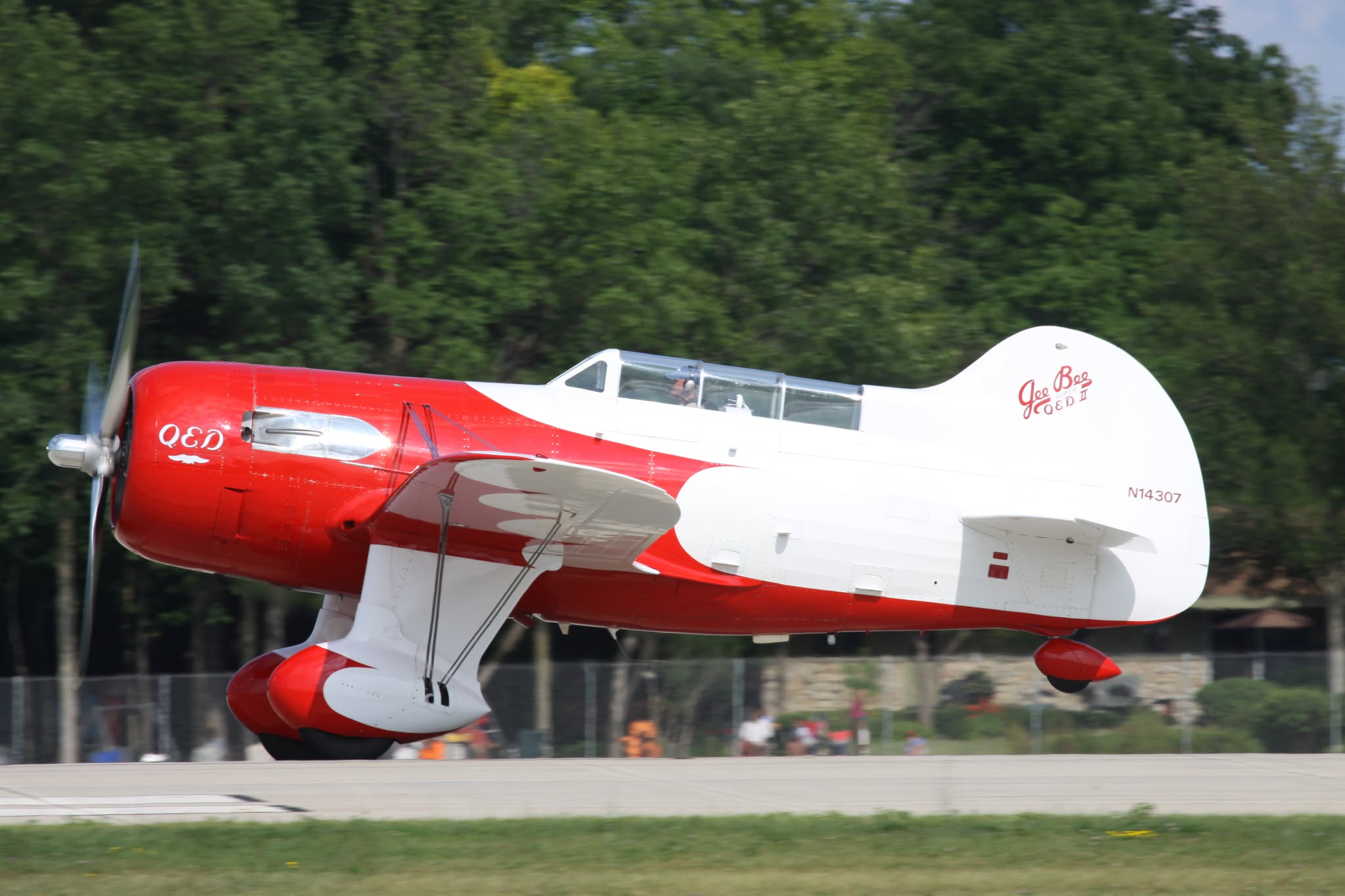
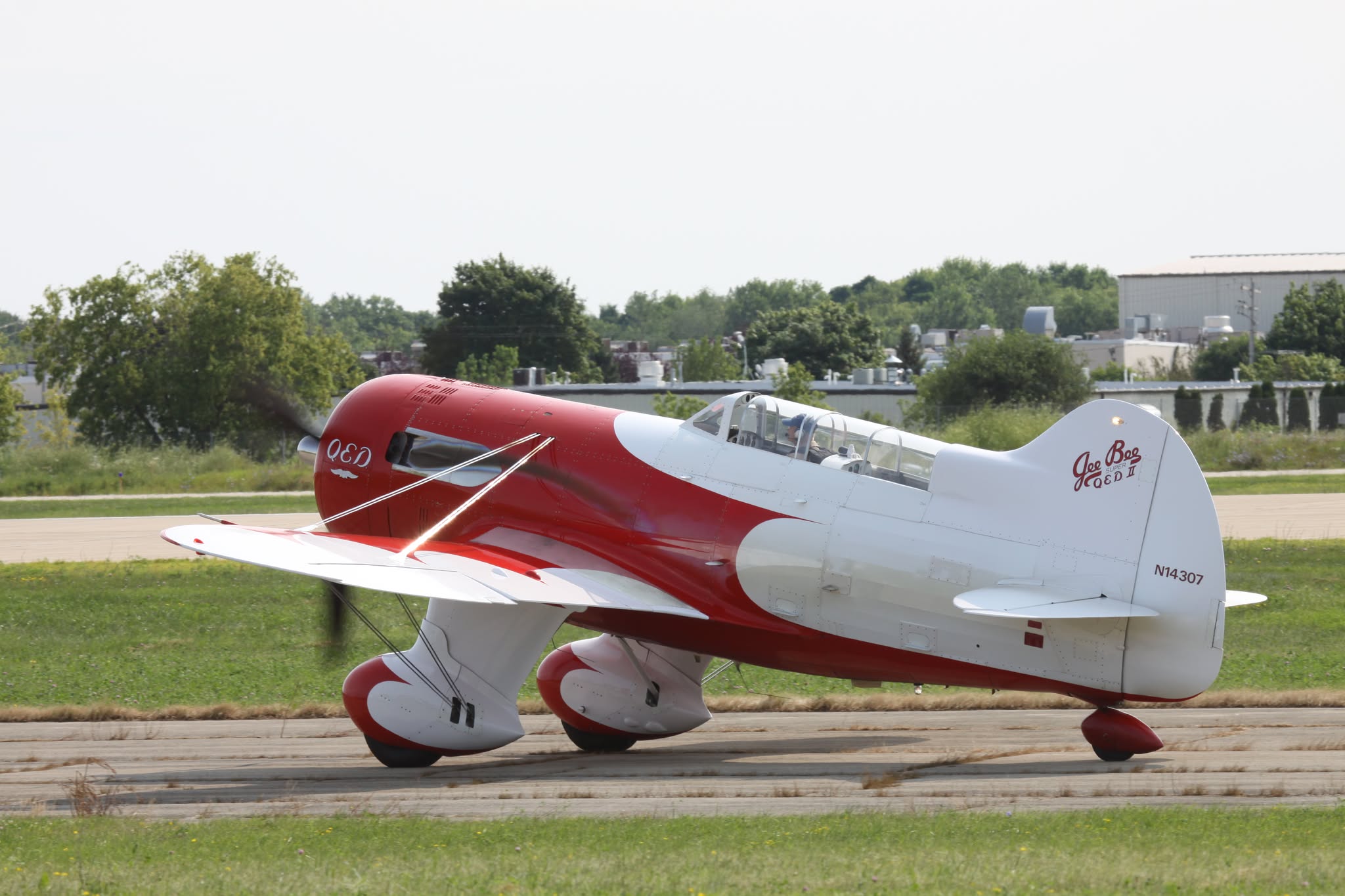
Before the Historic Flight Foundation moved to Spokane in 2023, and its eventual dissolvement in 2024, Jim Moss’s Gee Bee QED II went up for sale on Platinum Fighter Sales in 2022 and was sold to the Mid America Flight Museum of Mount Pleasant, Texas in 2023.
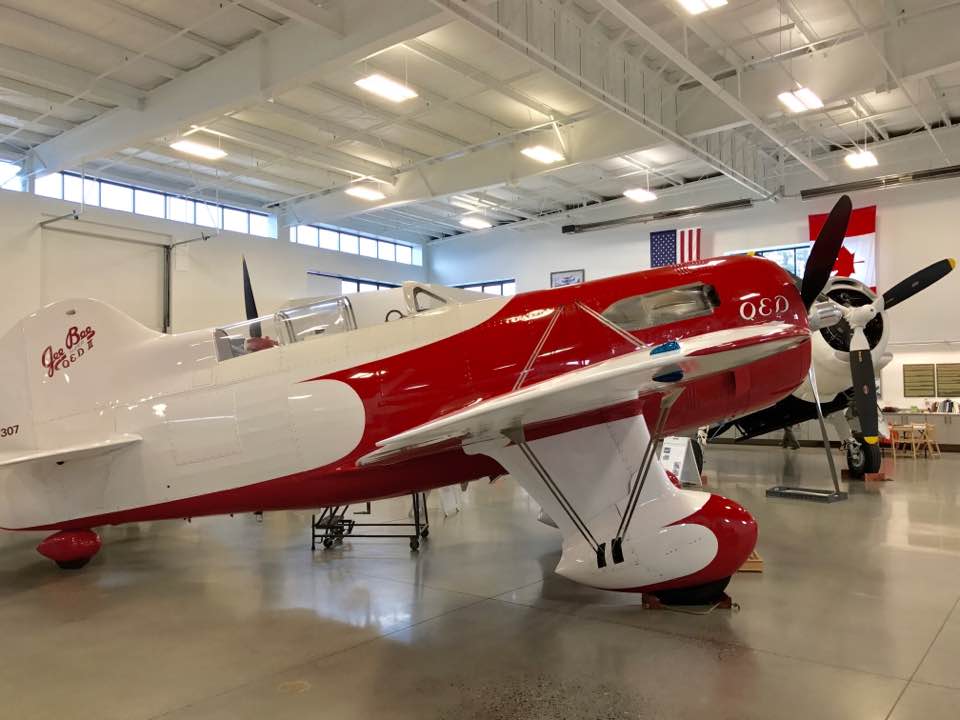
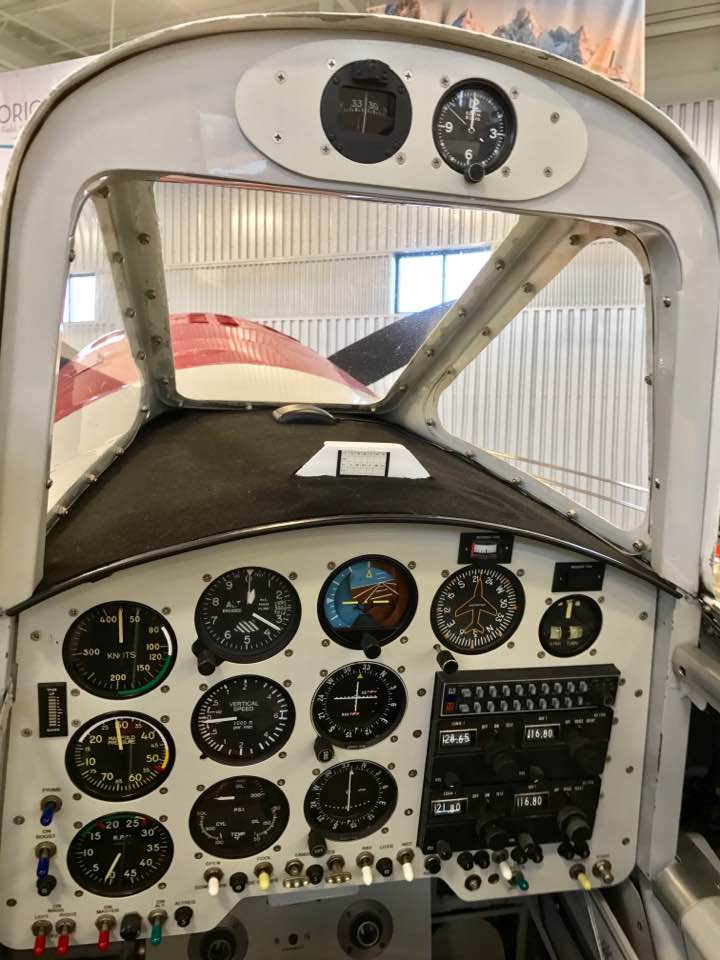
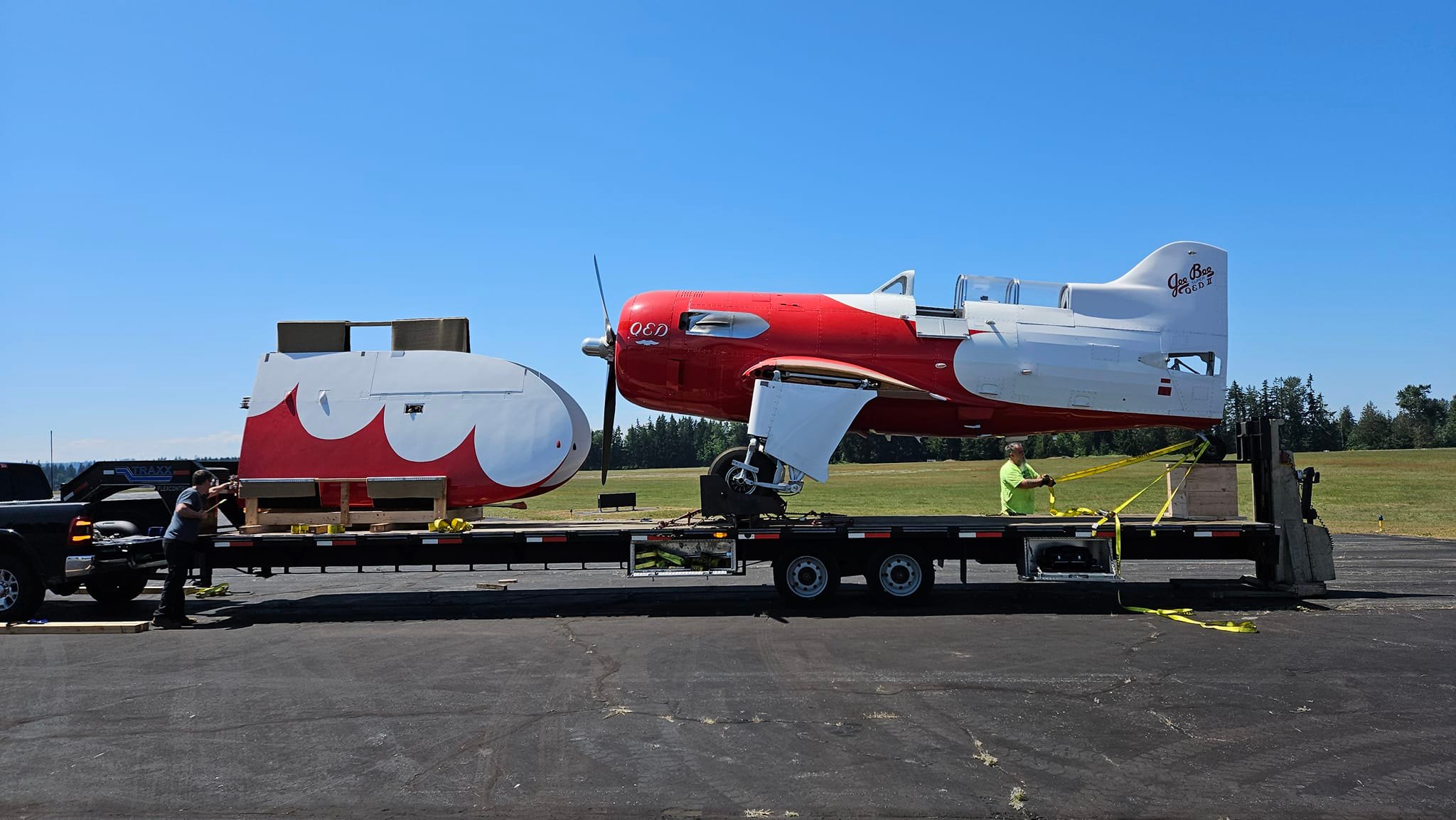
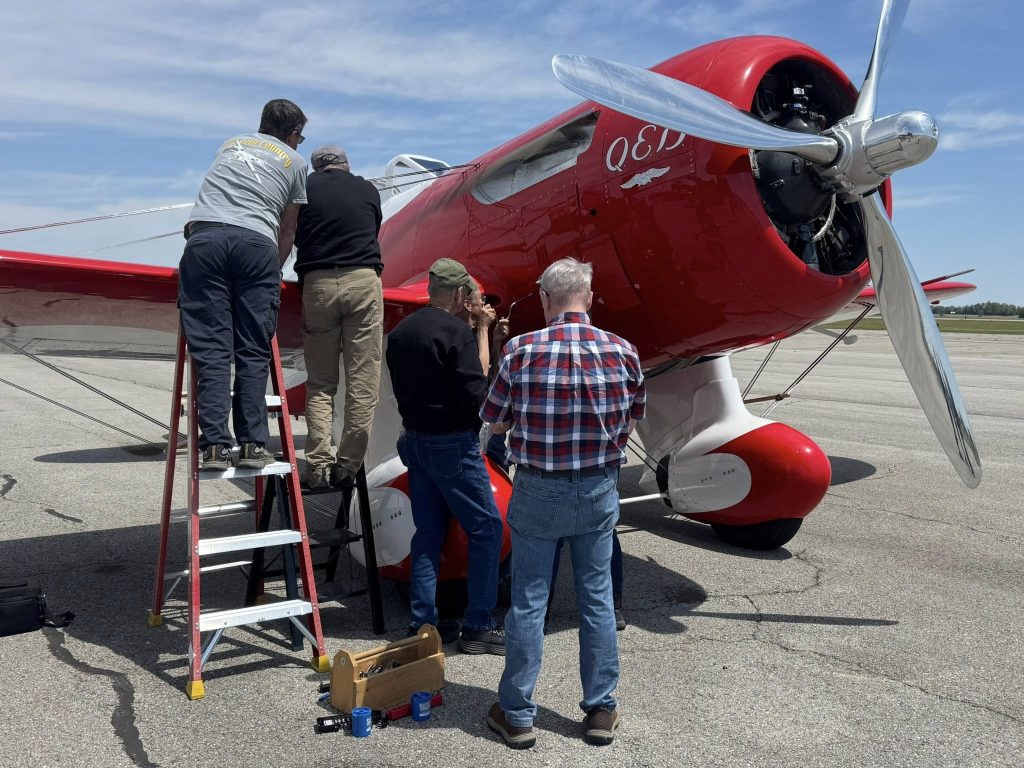
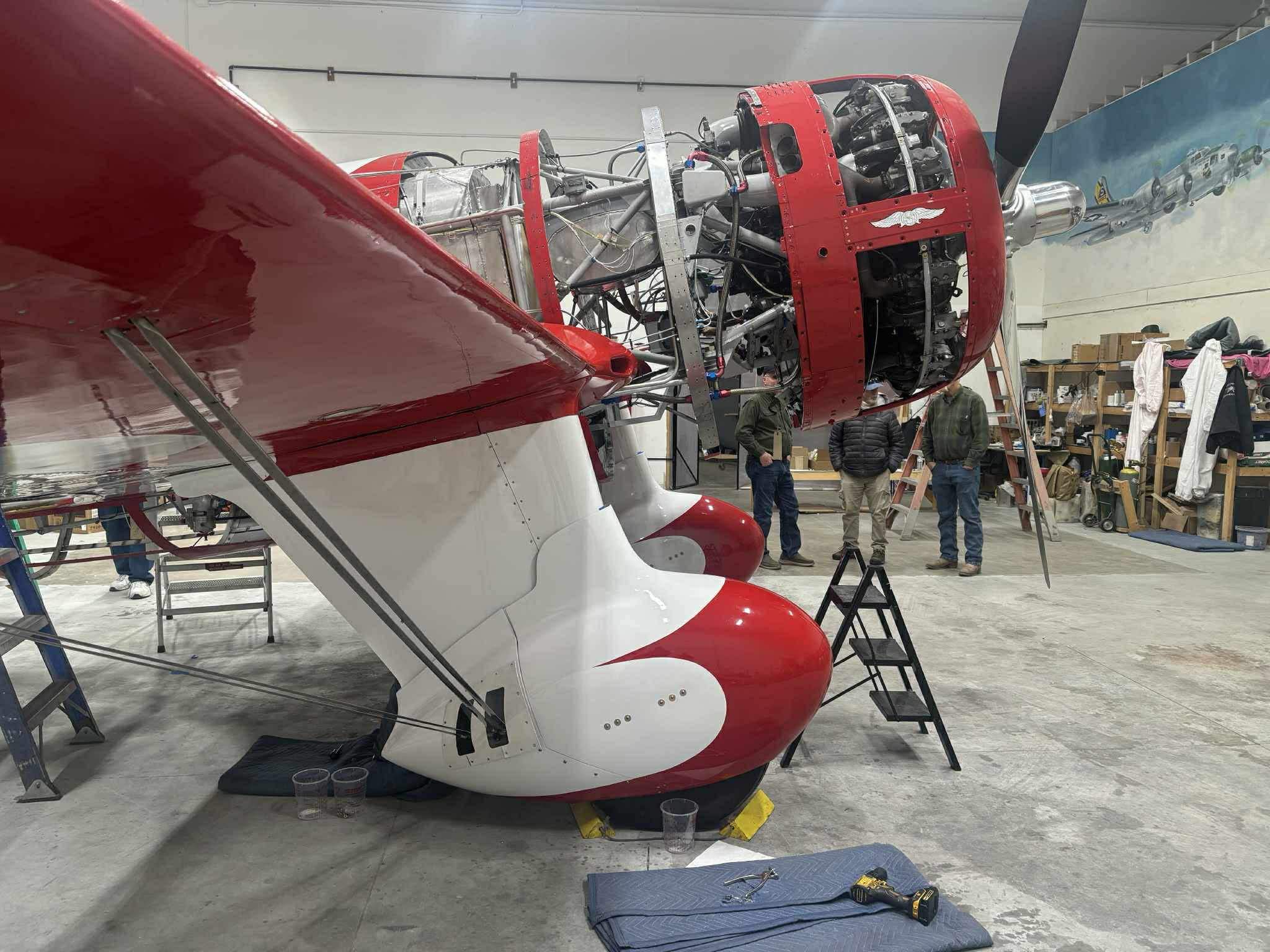
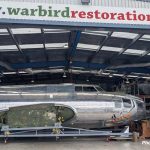
However, since the aircraft had not made many recent flights before its purchase, the Mid Flight Air Museum would send the aircraft from Washington state to their restoration hangar at Grimes Municipal Airport in June 2023, where the aircraft has been under restoration for nearly three years. On arrival at Grimes Airport, the team in Urbana has carefully taken the aircraft apart, sent its Wright Cyclone engine out for an overhaul at Anderson Aeromotive in Grangeville, Idaho, installed a new firewall, and taken the fabric off the wings, tail, and fuselage to check the state of the internal framework of spars, ribs, and longerons.
One issue that has been altered from Moss’s original construction has been the landing gear. The Mid America Flight Museum has built stronger V-struts for the internal framework of the fixed landing gear housed in streamlined fairings, and replaced the streamlined tubular struts that extended from the fuselage to the bottom of the landing gear for a spreader bar fixed between the two main landing gear legs to strengthen the landing gear, which is actually inspired by the original QED, which also had a spreader bar fixed between its landing gear.
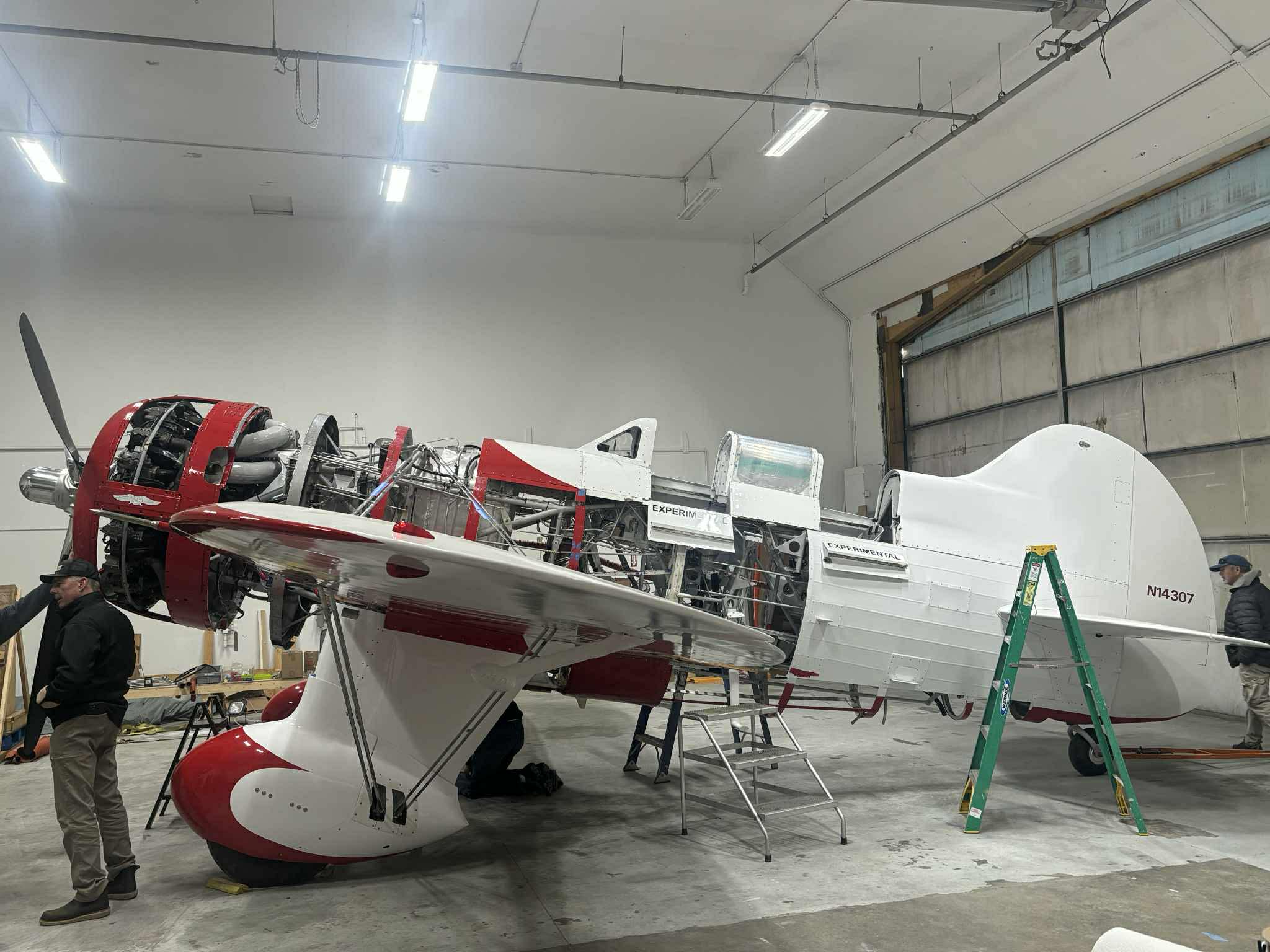
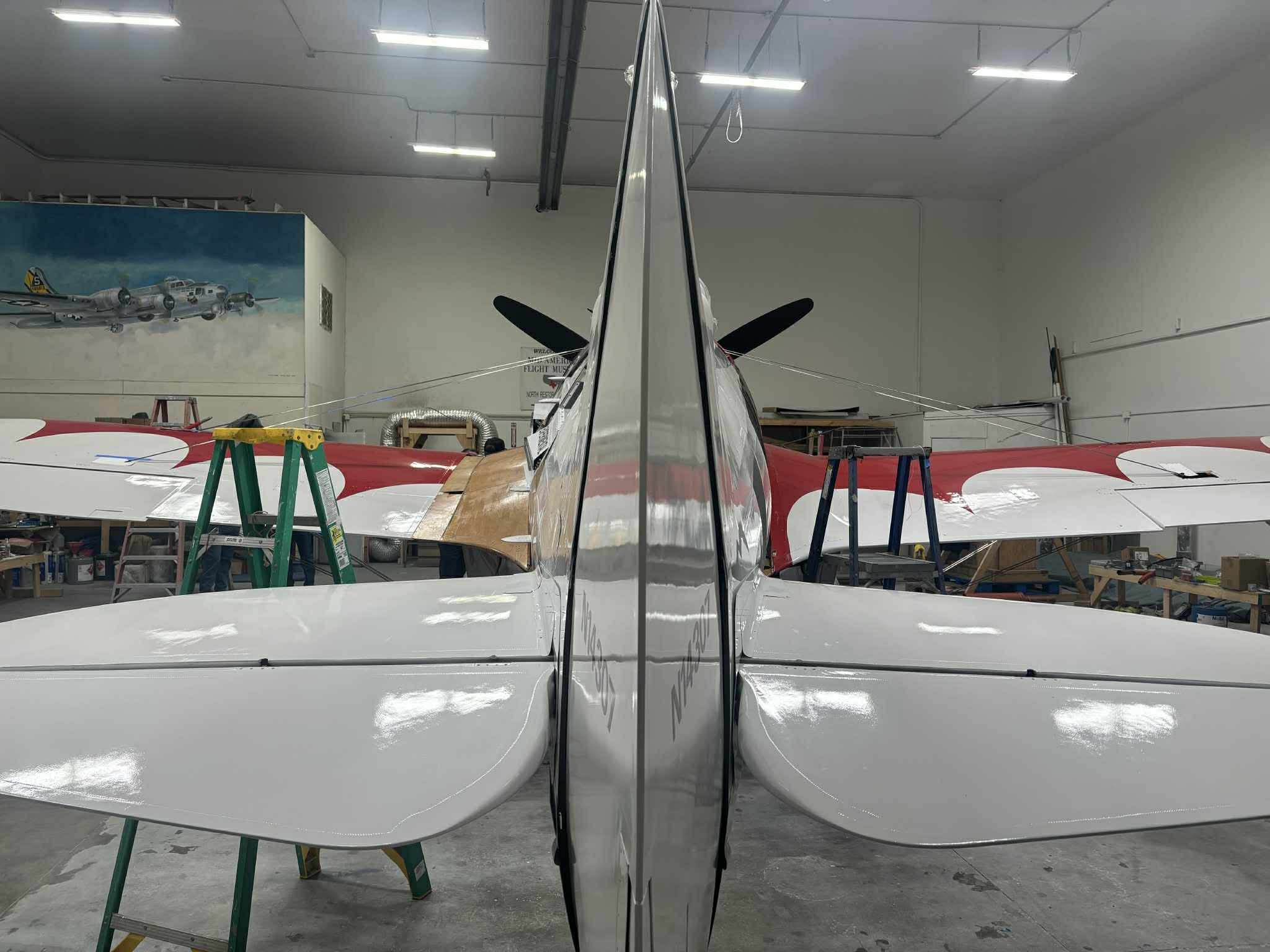
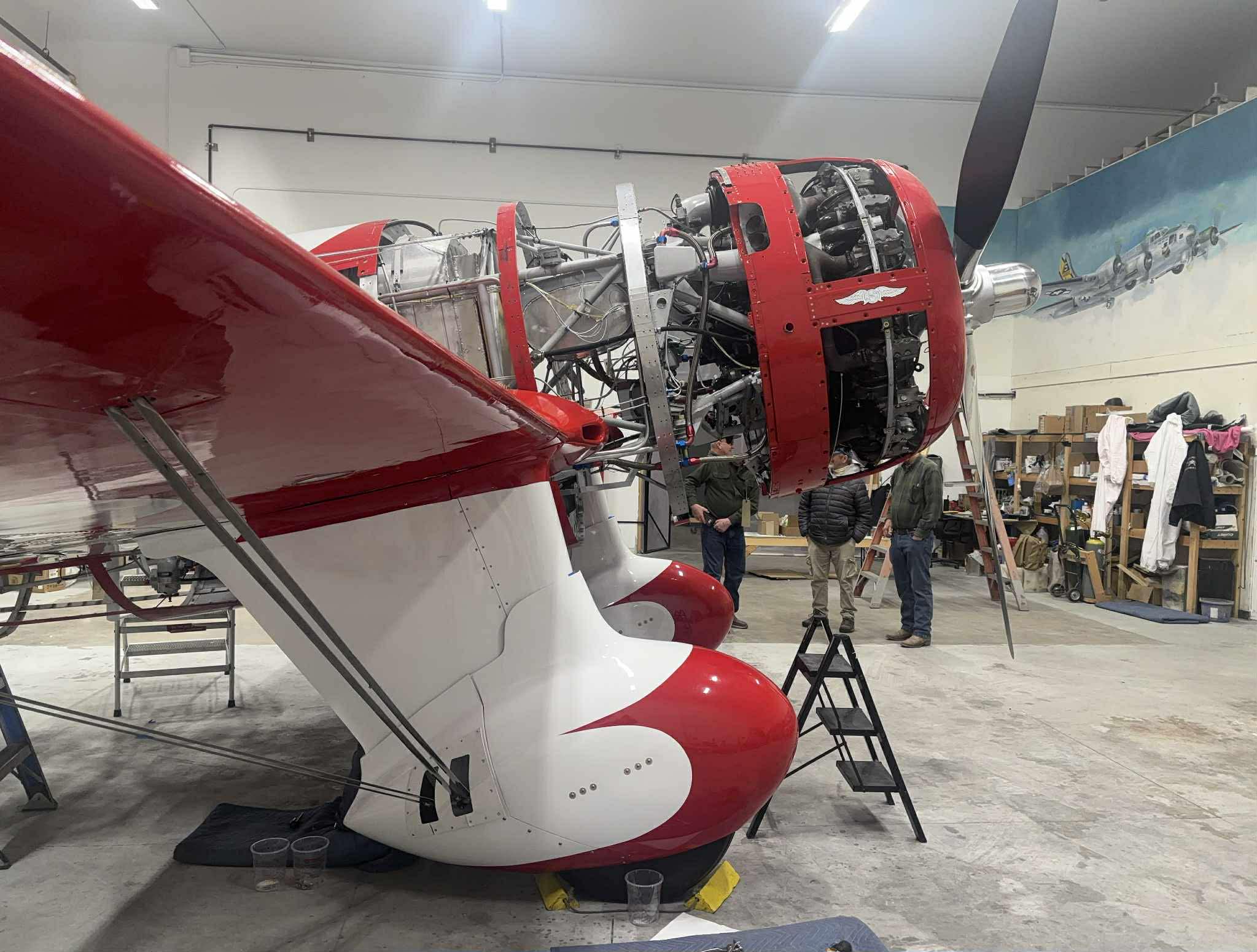
Another aspect of the QED II’s restoration has been the balancing of the ailerons. Like the wings, they are scaled-up versions of the ones on the original QED, but Moss’s team of builders did not balance the ailerons, which the MAFM’s team in Urbana has since completed. This has been done in the interest of safety, as the Gee Bee Super Sportsters had a history of aileron flutter, which was not well understood when the Granville Brothers were building their racers in the early 1930s, and such issues contributed to the unfortunate reputation that the Gee Bees have had in aviation circles. To help with the balancing, both ailerons now have counterweights.
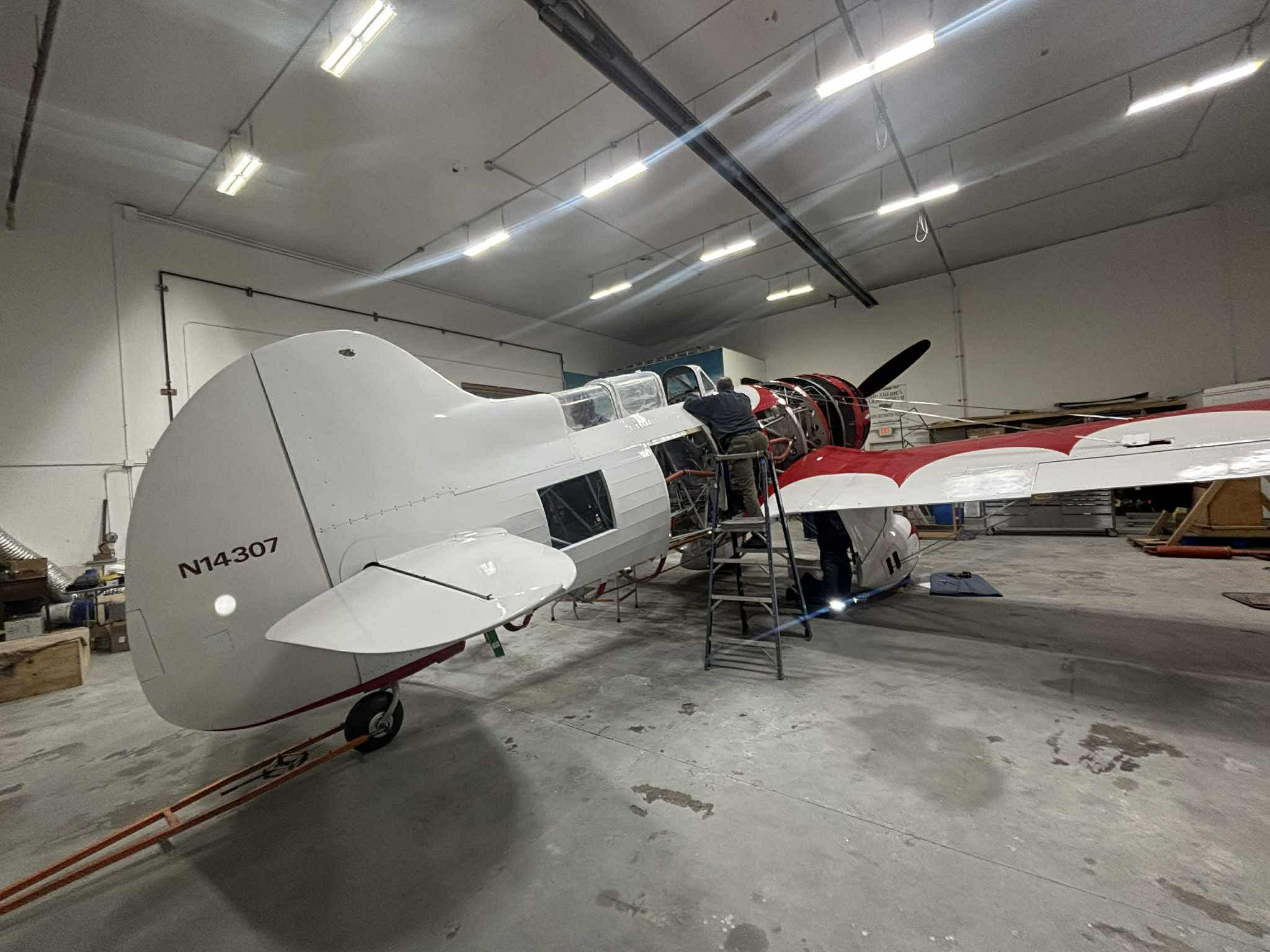
Meanwhile, the propeller has been overhauled by Maxwell Aircraft Service in Minneapolis, Minnesota, the brakes and pitot tubes have been given new lines, the navigation lights in the wings are fully functional, the new fabric on the fuselage has been stitched, doped, and painted, and the Gee Bee QED II’s turtledeck that connects with the vertical stabilizer has also been repainted. The tailwheel strut has been overhauled, and a new tailwheel has been installed. Another feature of the aircraft that has been refitted has been its main fuel tank with a capacity of 180 gallons. With the R-1820 Cyclone installed, the museum estimates the QED II will have a fuel consumption rate of 50 gallons per hour. The oil tank will hold 12 gallons.
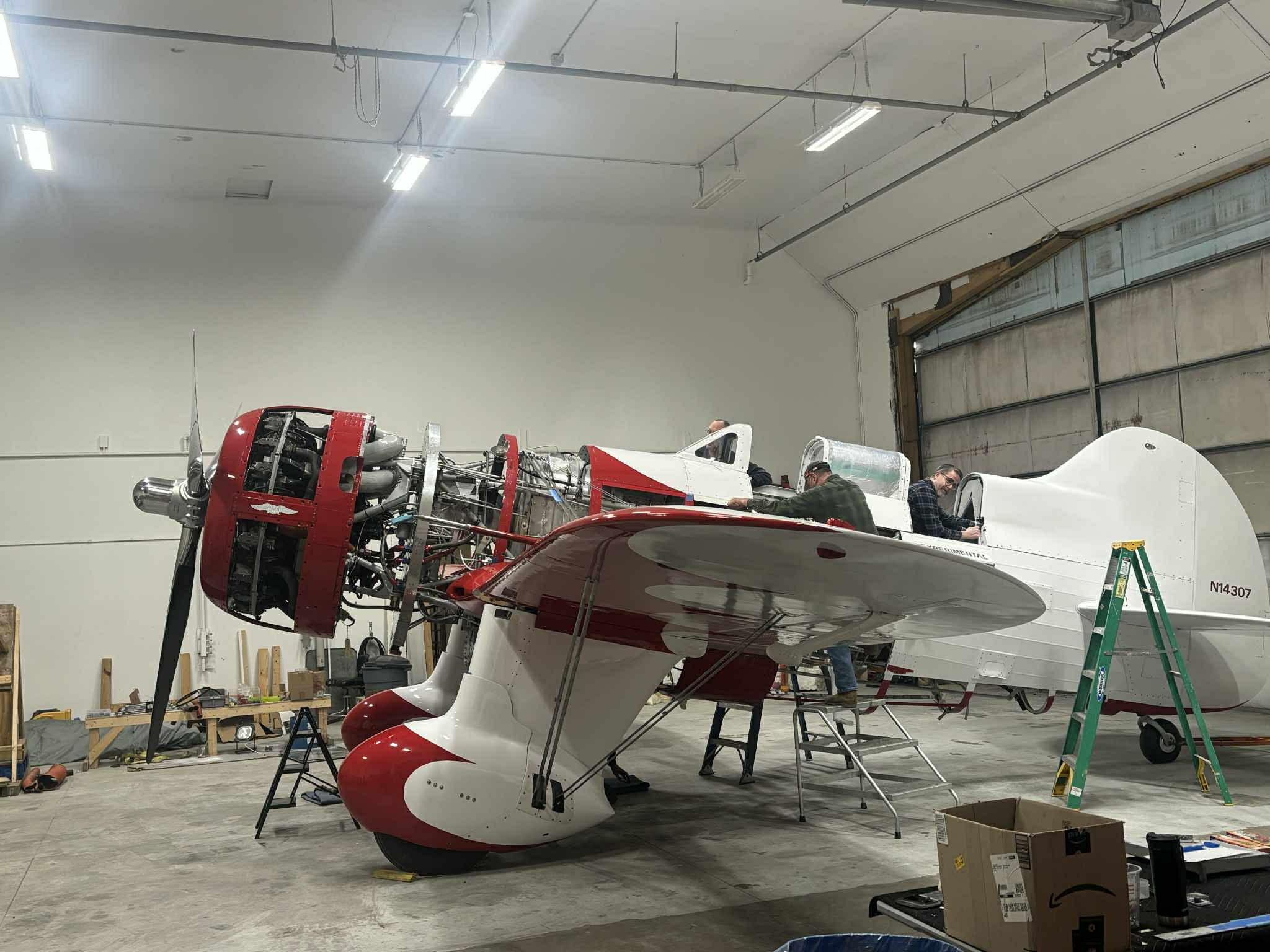
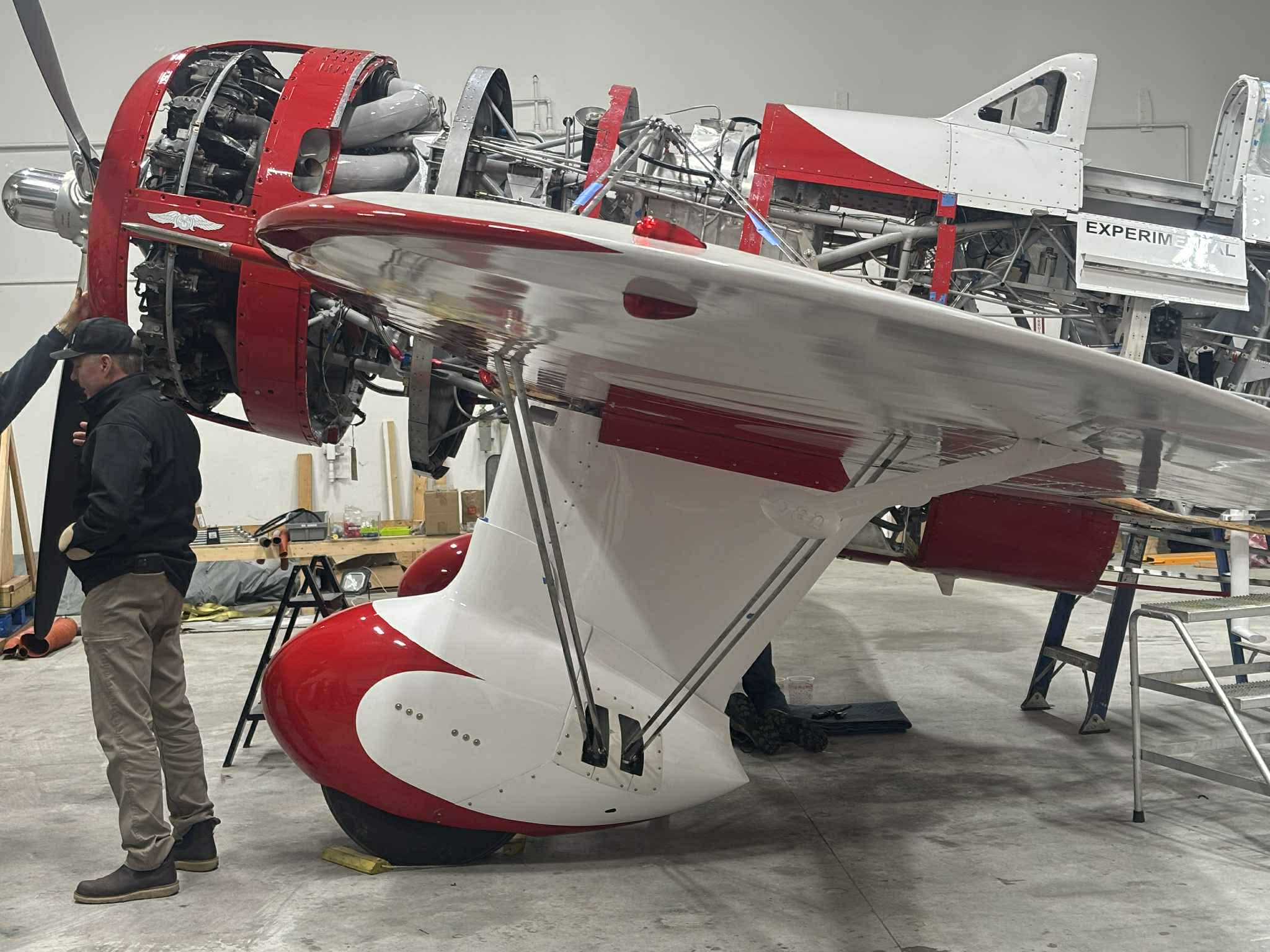
Once the aircraft goes through its regimen of flight testing, it will be flown back to the Mid America Flight Museum’s Mount Pleasant location and join the extensive airworthy collection down there. One thing’s for certain, though, and that is that the Gee Bee QED II will be one of the many star attractions in the MAFM’s fleet. For more information, visit the Mid America Flight Museum’s website HERE.











A fascinating aircraft, from the … Golden Age of Flying.
Those Air Races, and the Britain to Australia Record Attempts, must have been a Wonderful Sight to Behold!
The Days When Pilots Really Flew …. ‘By The Seat of Their Pants’ … life with a Capital ‘L’!!!
A Hollywood film would make an interesting viewing – Indiana Jones, on Full Blast!