







By Randy Malmstrom
Since his childhood, Randy Malmstrom has had a passion for aviation history and historic military aircraft in particular. He has a particular penchant for documenting specific airframes with a highly detailed series of walk-around images and an in-depth exploration of their history, which have proved to be popular with many of those who have seen them, and we thought our readers would be equally fascinated too. This installment of Randy’s Warbird Profiles takes a look at the Flying Heritage & Combat Armor Museum‘s Focke-Wulf Fw 190D-13 “Yellow 10”.

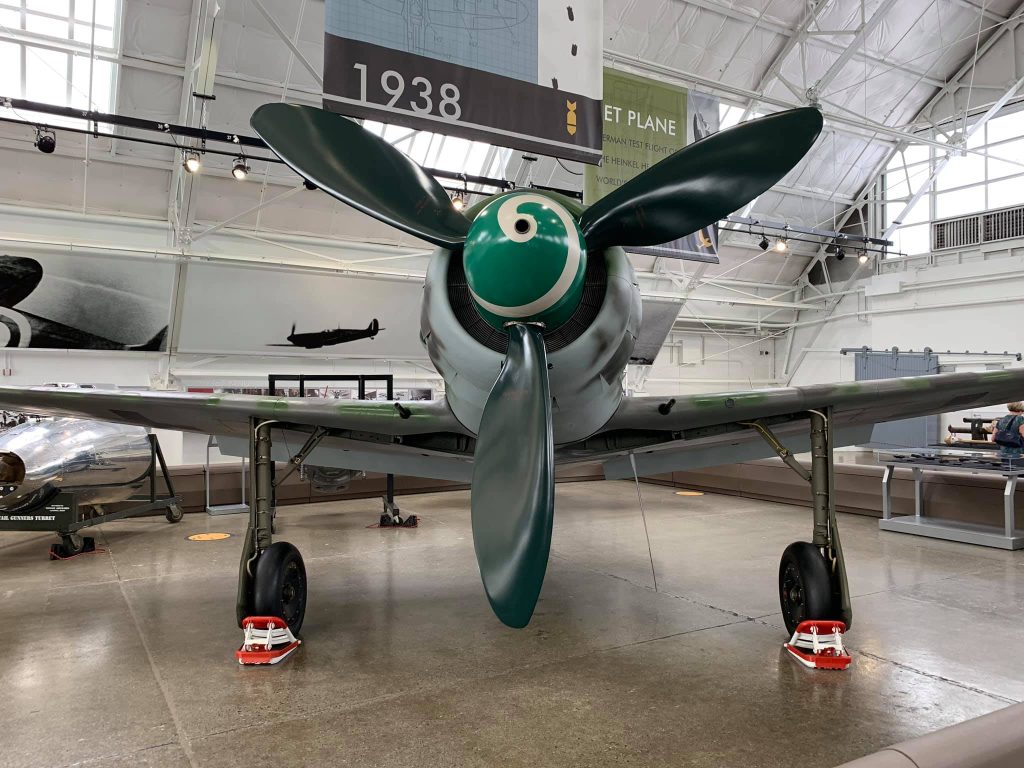
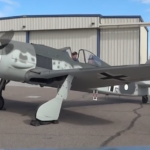
Focke-Wulf Fw 190D-13/R11 Dora, WkNr. 836017, s/n 174013, “Yellow 10.” This particular aircraft is the sole long-nosed D-13 to have survived World War II. It was flown by Maj. Franz Götz (Knights Cross of the Iron Cross) after he was posted January 28, 1945 (his 32nd birthday) as the Geschwaderkommodore of Jagdgeschwader (JG) 26 “Yellow 10” when the unit was flying out of Feldflugplatz Fürstenau, a forward base southwest of Hamburg.
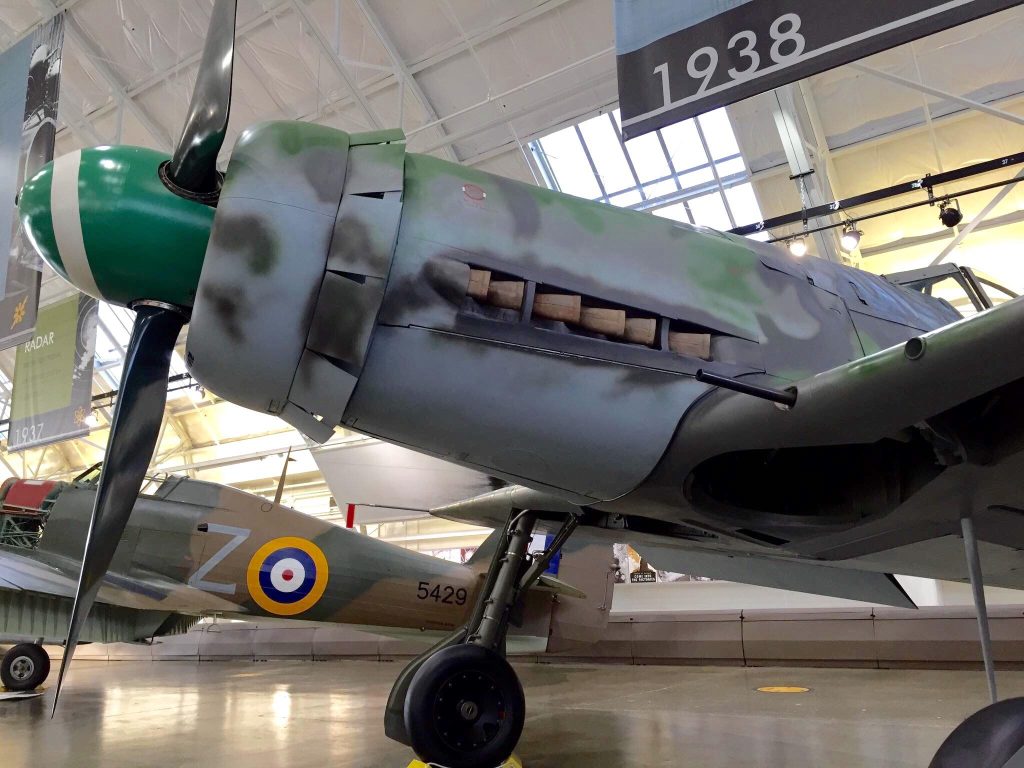
I have gotten flak over this assertion but it seems that JG 26 was nicknamed the “The Abbeville Boys” or “The Abbeville Kids” by Allied pilots in reference to the unit’s involvement in the years following the re-occupation of the Rhineland on March 7, 1936 (Abbeville is a town in northeastern France). Götz’s aircraft had the “Pik-As” (Ace of Spades) insignia, and he was referred to by his unit as “Altvater” (Old Father). He was credited with 63 total victories in 766 combat missions.

Among other missions while stationed at Fürstenau, JG 26 took part in Operation Bodenplatte, the air offensive during what became known as the Battle of the Bulge, and it flew missions over Brussels during that operation. JG 26 evacuated the base on March 25, 1945 to help defend the Fatherland (and from what I have seen, from bases everywhere from Celle – near Hamburg, where I have been – to north of Hamburg and to the Drope field (near Lingen).
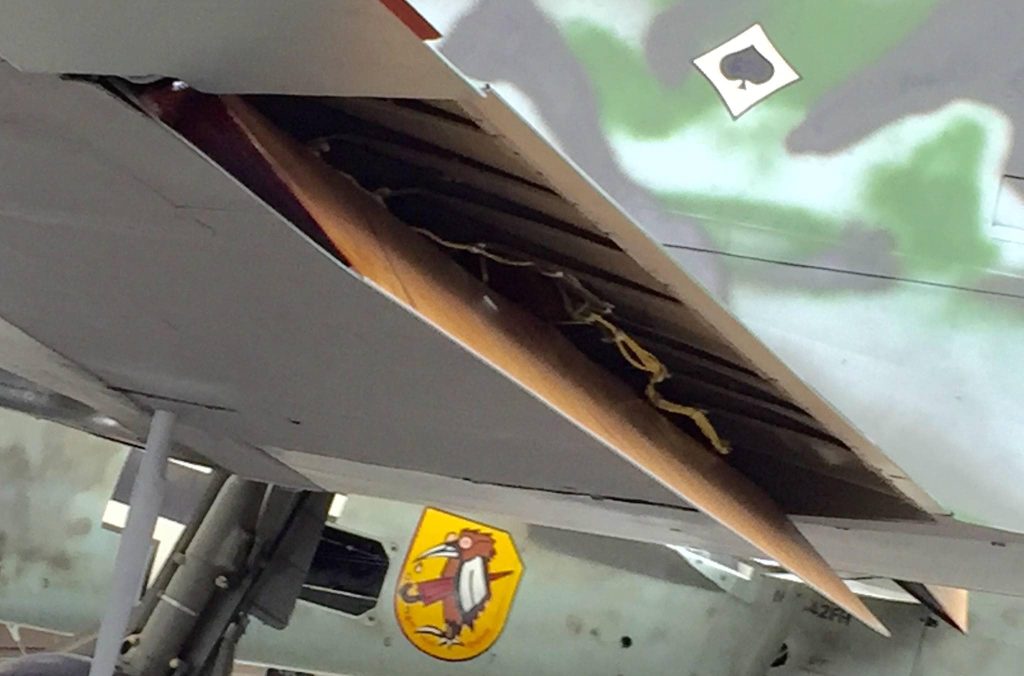
Note the JG 26’s black-white Reichsverteidigung (RV or Defence of the Reich) fuselage bands that were over-sprayed with camouflage on top of the fuselage to help hide it while hidden in forests including along the Autobahn). Unit markings appeared before of course, but on February 20, 1945 an order had been given by the Luftwaffe that all Jagdeschwaderen aircraft were to be painted with unit-specific colored bands around the fuselage – ahead of the tailfin – to aid in identification in an effort to avert friendly fire.

In May 1945, Götz flew this aircraft to the Royal Air Force base established at the Baltic town of Flensburg, Germany (which had been the location of the so-called “Flensburg Government,” the last Nazi government in the closing days of WWII and the headquarters of General Admiral Karl Dönitz).

This aircraft was later sent to The Netherlands; Cherbourg, France; then crated onto HMS Reaper and shipped to the U.S. Sometime during the 1950’s while in Arizona getting some restoration work its wings were accidentally swapped with those of the then-USAF Museum’s D-9 until being swapped back. It went through a list of private owners after which the Champlin Collection acquired it in 1972. I understand it was shipped to Germany for some restoration work with the assistance of Prof. Kurt Tank and his initials are inscribed on the airplane.

While the Jumo engine was given some run-ups while part of the Champlin collection (during the 1980s -1990s), the aircraft has not flown since the war. Gosshawk Unlimited rebuilt it in 2001, and Vulcan Warbirds Inc. acquired it in 2007 with the stipulation it be put on static display only at Flying Heritage & Combat Armor Museum on Paine Field in Everett, Washington. It is listed on the FAA registry as a Focke-Wulf TA-152.
About the author
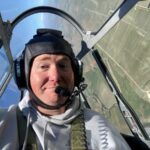
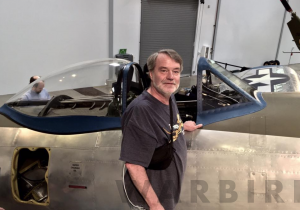 Randy Malmstrom grew up in a family steeped in aviation culture. His father, Bob, was still a cadet in training with the USAAF at the end of WWII, but did serve in Germany during the U.S. occupation in the immediate post-war period, where he had the opportunity to fly in a wide variety of types which flew in WWII. After returning to the States, Bob became a multi-engine aircraft sales manager and as such flew a wide variety of aircraft; Randy frequently accompanied him on these flights. Furthermore, Randy’s cousin, Einar Axel Malmstrom flew P-47 Thunderbolts with the 356th FG from RAF Martlesham Heath. He was commanding this unit at the time he was shot down over France on April 24th, 1944, spending the rest of the war as a prisoner of war. Following his repatriation at war’s end, Einar continued his military service, attaining the rank of Colonel. He was serving as Deputy Wing Commander of the 407th Strategic Fighter Wing at Great Falls AFB, MT at the time of his death in a T-33 training accident on August 21, 1954. The base was renamed in his honor in October 1955 and continues to serve in the present USAF as home to the 341st Missile Wing. Randy’s innate interest in history in general, and aviation history in particular, plus his educational background and passion for WWII warbirds, led him down his current path of capturing detailed aircraft walk-around photos and in-depth airframe histories, recording a precise description of a particular aircraft in all aspects.

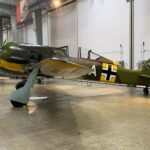
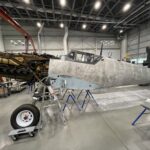
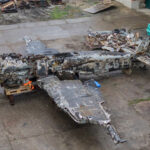







The wing mixup is not correctly described here; it occurred at Dobbins Field, Georgia where the D-9 and D-13 had both been shipped post war for a show. They remained mismatched until the early 2000s during the D-13s second restoration by Dave Goss for Champlin. The chutes for the upper fuselage guns were present in the wings, which did not exist on the D-13. Further research discovered where the mixup occurred. Goss, Champlin and crew can be credited with achieving a near miracle overcoming Government bureaucracy to re-unite the correct wings to the correct airplane. Credit Jerry Crandall “Yellow 10) for documenting this part f the story.
Why does it have the JG 53 ‘Pik As’ Geschwader emblem on it, instead of the JG 26 ‘Schlageter’ emblem?